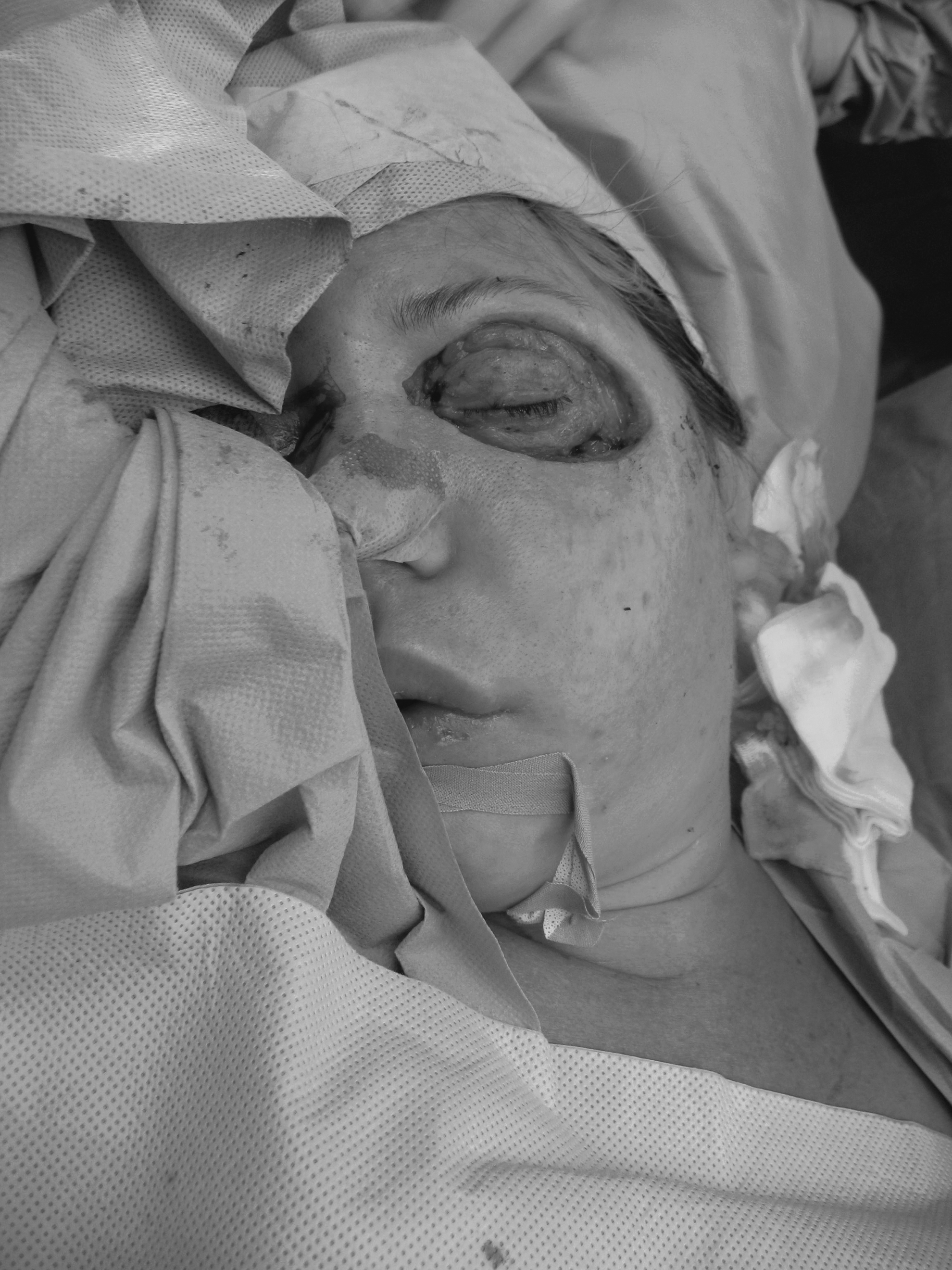
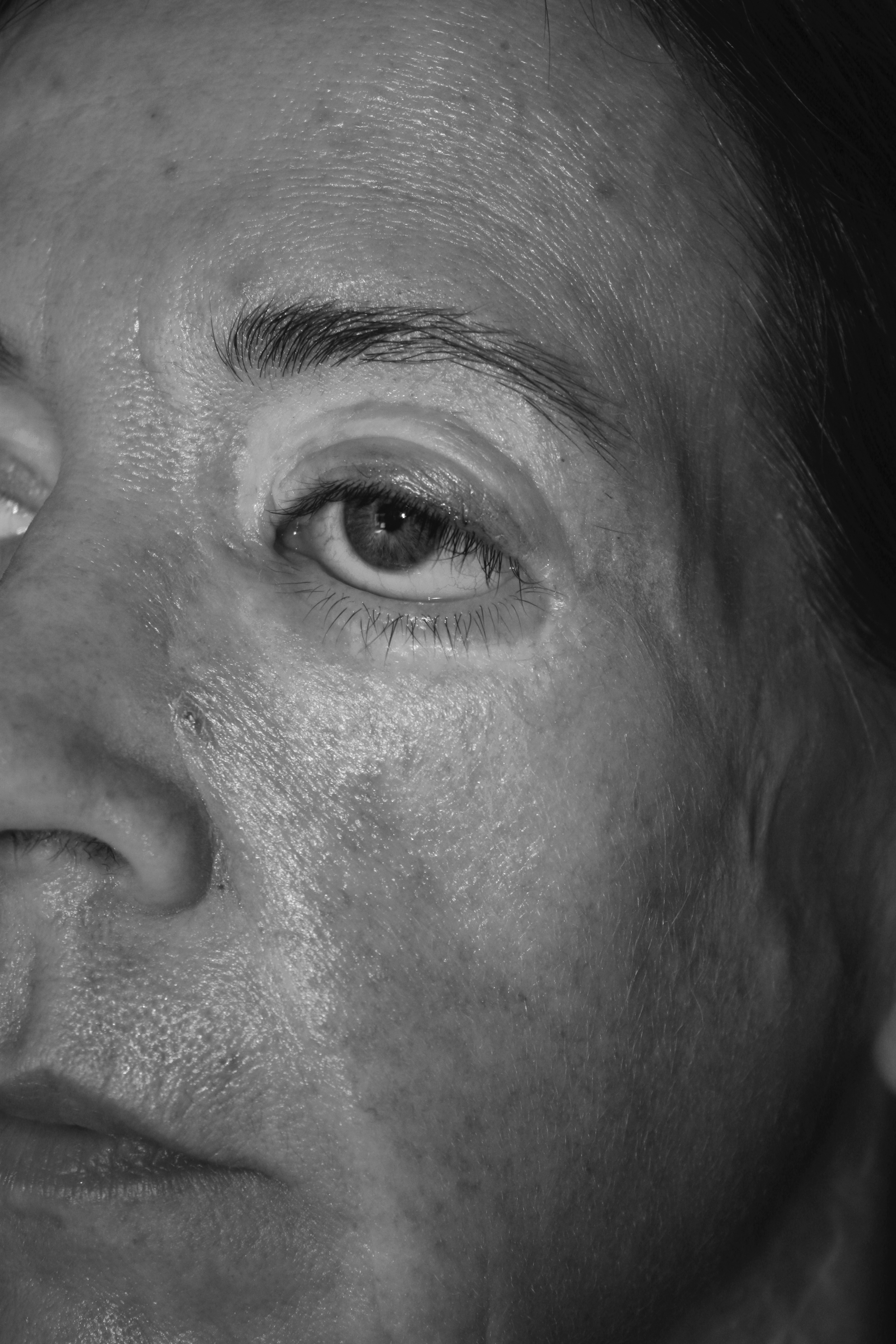
A43-year-old female came to our hospital with facial edema, pain in the left peri-orbital region, and fever (40°C). The previous day she had scratched a small lesion under her left eye and subsequently developed diffuse swelling and blushing of the face that spread rapidly to the trunk. The patient was admitted to the intensive care unit, where intravenous antibiotics were administered (Fig. 1). Despite this, the signs of infection increased, hypotension developed, and she developed respiratory insufficiency. Because of suspicion of necrotizing fasciitis, the patient was intubated and an incisional biopsy was performed. Gram staining revealed gram positive cocci (Streptococcus pyogenes), whereupon the affected tissue of the eyelids and face was excised (Fig. 2).The next day the blush had extended further and a second resection of the underlying necrotic tissue was performed, after which the patient became stable. Figure 3 shows the patient one year later.
Diffuse swelling and blushing of the face.
After excision of the affected tissue of the eyelids and face.
After multiple reconstructions one year later.
Necrotizing fasciitis is a rapidly progressive, life-threatening condition characterized by fulminant destruction of skin and subcutaneous tissue that spreads along superficial fascia [1,2]. Invasive group A streptococci are often identified and can cause substantial morbidity and mortality [3]. Although necrotizing fasciitis occurs mainly in the lower extremities, trunk, and perineum, it can occur in all soft tissue, including, albeit rarely, that of the face.
O'LoughlinRE, RobersonA, CieslakPRet al.The epidemiology of invasive group A streptococcal infection and potential vaccine implications: United States, 2000–2004. Clin Infect Dis, 2007; 45:853–862.