




Abstract

A77-
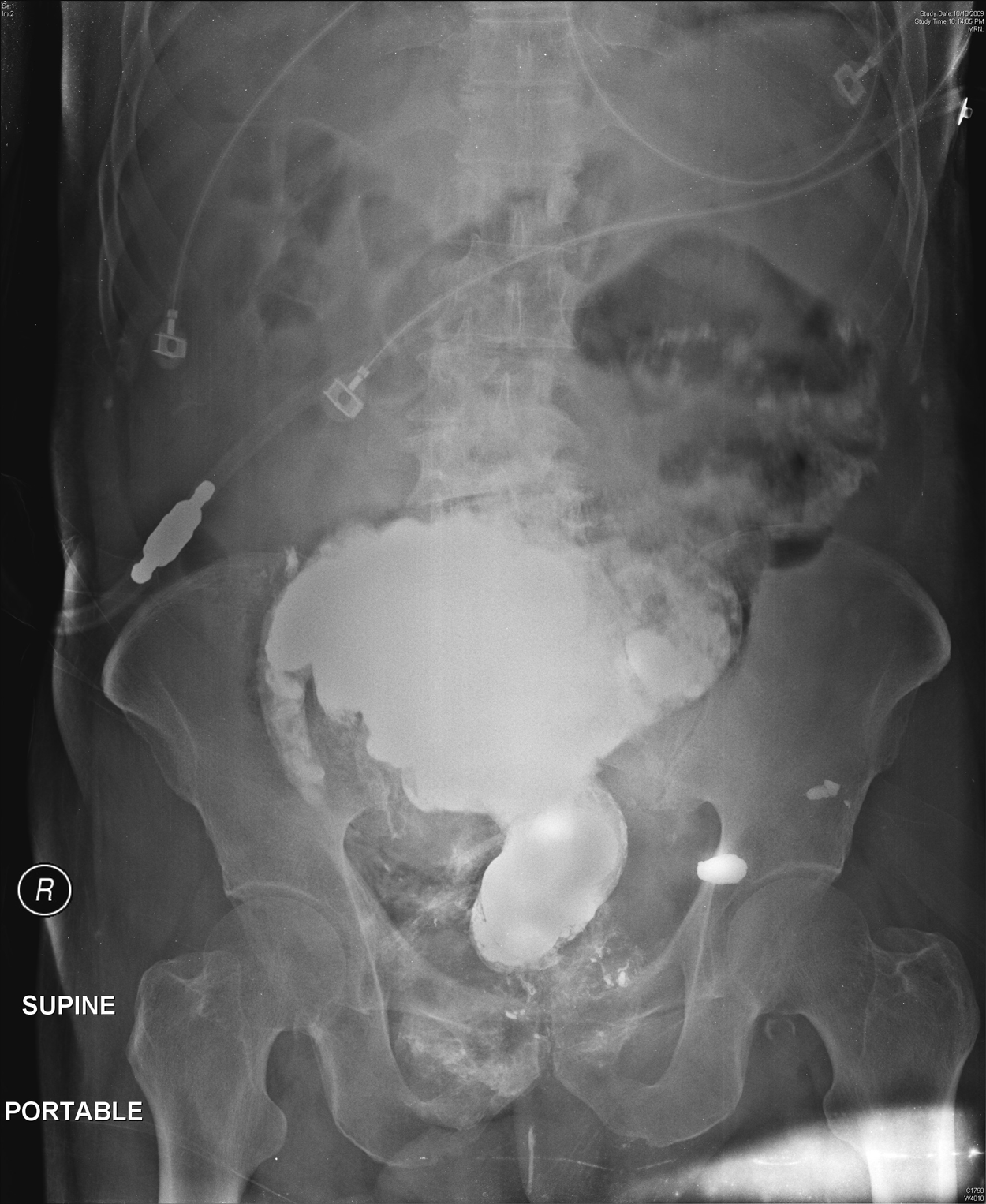
Supine abdominal radiograph obtained upon patient presentation demonstrating extracolonic contrast within the peritoneal cavity and pneumoperitoneum.
Barium peritonitis is a rare but morbid complication of contrast enema studies. Himmelmann was first to describe the extensive inflammatory reaction induced by intraperitoneal spillage of barium following an enema in 1932 [1]. The incidence is reported to be as high as 0.23% and the mortality rate as high as approximately 35% [2]. Concomitant fecal spillage, delayed recognition/management, and venous intravasation of contrast are confounders associated with poor outcome [3]. Management consists of thorough irrigation, definitive resection or repair of the perforated viscus, and critical care support for severe sepsis and organ dysfunction. Postoperative ileus is common (as many as 30% of cases), likely secondary to intense inflammation and fibrosis [4]. Long-term morbidity includes stricture formation, retroperitoneal fibrosis, and fistulae. Successful non-operative management has been reported in cases of contained extraperitoneal rectal perforations or perforations with minimal barium spillage [5].