




Abstract
Abstract
Background:
The aim of this submission is to demonstrate the need for broad antimicrobial therapy, including empiric anti-fungal therapy, if rim-enhancing lesions are noted on cerebral imaging.
Methods:
A retrospective microbiological and radiologic review of the management of a rare case of multiple Scedosporium apiospermum and vancomycin-resistant Enterococcus faecium intra-cranial abscesses in an immunocompromised patient was performed. A manual chart review assessing clinical and epidemiologic characteristics was completed including procedures and operative notes, use of invasive devices, biochemical and haematological blood test results, antimicrobial agents received, and documentation of a travel history.
Results:
Antimicrobial therapy combined with source control, typically surgical drainage, is considered the gold standard management of an intra-cranial abscess. Fungal abscesses produce rim-enhancing lesions, and where this radiographic feature is identified, evidence suggests that anti-fungal agents should be added. Antimicrobial therapy with linezolid and voriconazole failed, and the patient died. There was extensive disease progression evident on serial imaging despite therapy. A definitive surgical drainage procedure could not be performed.
Conclusions:
Interval imaging assisted with the management of this challenging case. A low index of clinical suspicion for fungal intra-cerebral abscesses is necessary when treating immunosuppressed patients.
C
These radiographic images are of multiple Scedosporium apiospermum and vancomycin-resistant Enterococcus faecium brain abscesses in an immunocompromised patient. Despite antibacterial therapy with linezolid and anti-fungal chemotherapy with voriconazole, there was continued progression of multiple left hemisphere brain abscesses, which was associated with global neurological decline and eventual death. Three cerebral washouts were performed with persistence of both organisms. A radical left hemispherectomy was refused given the potentially catastrophic functional consequences.
Fungal abscesses produce rim-enhancing lesions, and where this radiographic feature is identified, evidence suggests that anti-fungal agents should be added to the antimicrobial regimen of immunosuppressed patients pending biopsy results or if biopsy is not possible [4]. Voriconazole is most frequently used in the treatment of Scedosporium central nervous system infections as it can penetrate human brain tissue and abscess material [5].
The relentless progression of the brain abscesses is most striking on serial imaging taken at four-week intervals from initial presentation (Fig. 1–3). The contribution of interval imaging to the overall management of this patient cannot be over-stated as it helped assess for any resolution in the absence of definitive source control.
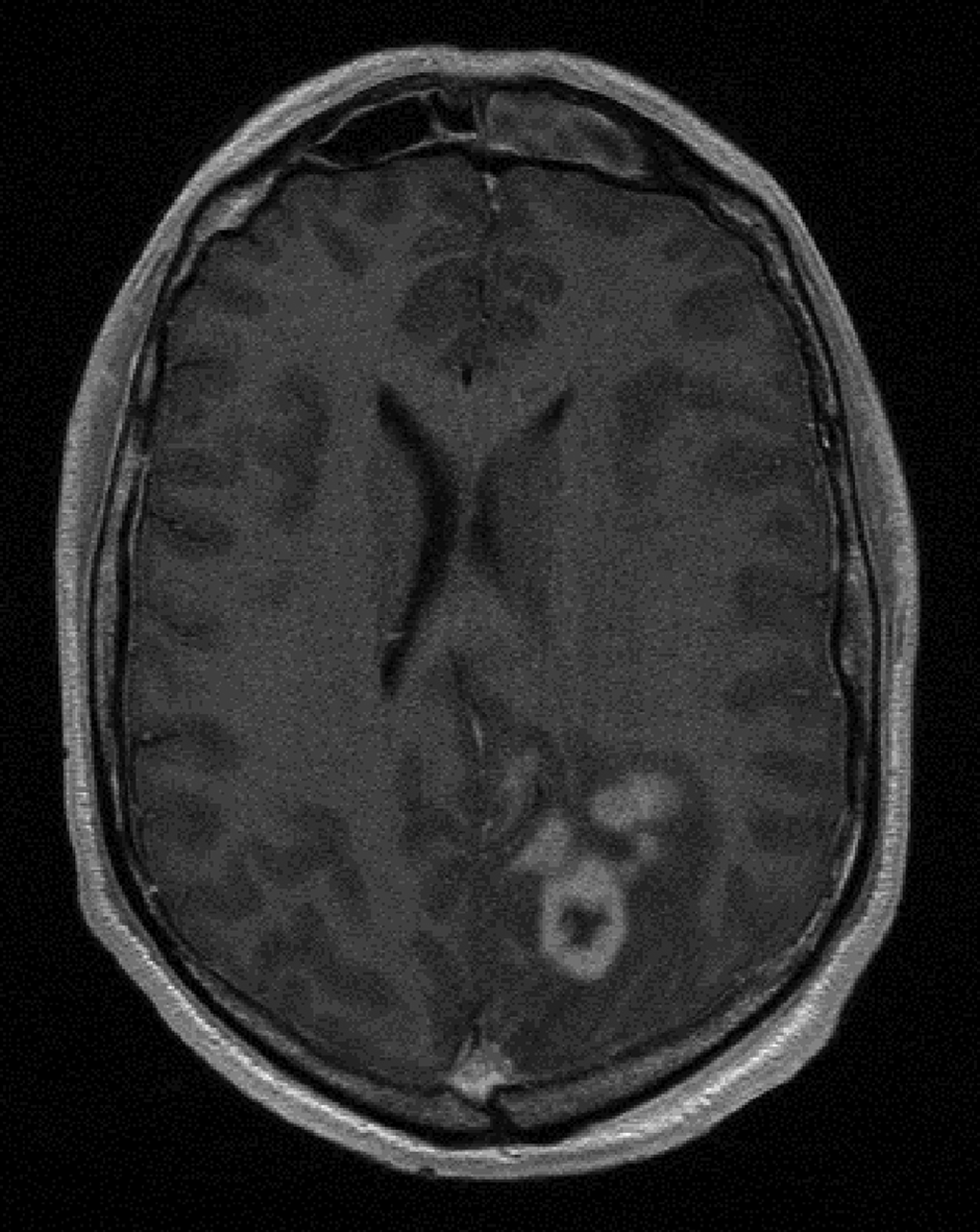
MRI brain with contrast shows a multi-loculated rim-enhancing mass or collection in the left parietal lobe.

MRI brain shows marked increase in the size in the rim-enhancing abscesses now involving the left parietal, frontal, and temporal lobes.

MRI brain with contrast demonstrates no improvement since earlier imaging.