




Abstract

To the Editor:
Wet gangrene is a rare fatal complication of aortic dissection. To our knowledge, this is the first report of wet gangrene in the right lower extremity after aortic dissection caused by Bacillus subtilis, wherein the patient eventually survived following amputation and without an aortic dissection operation.
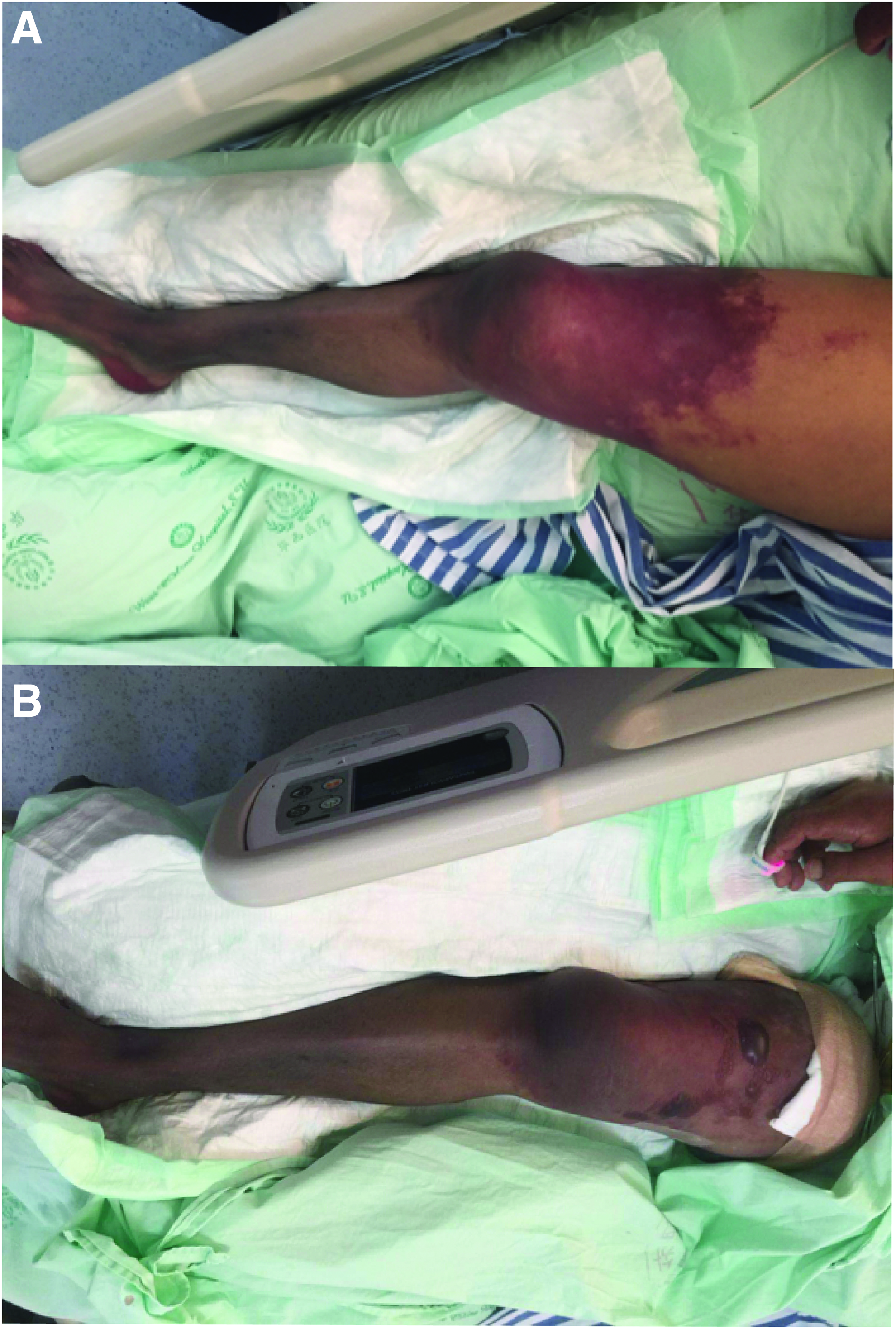
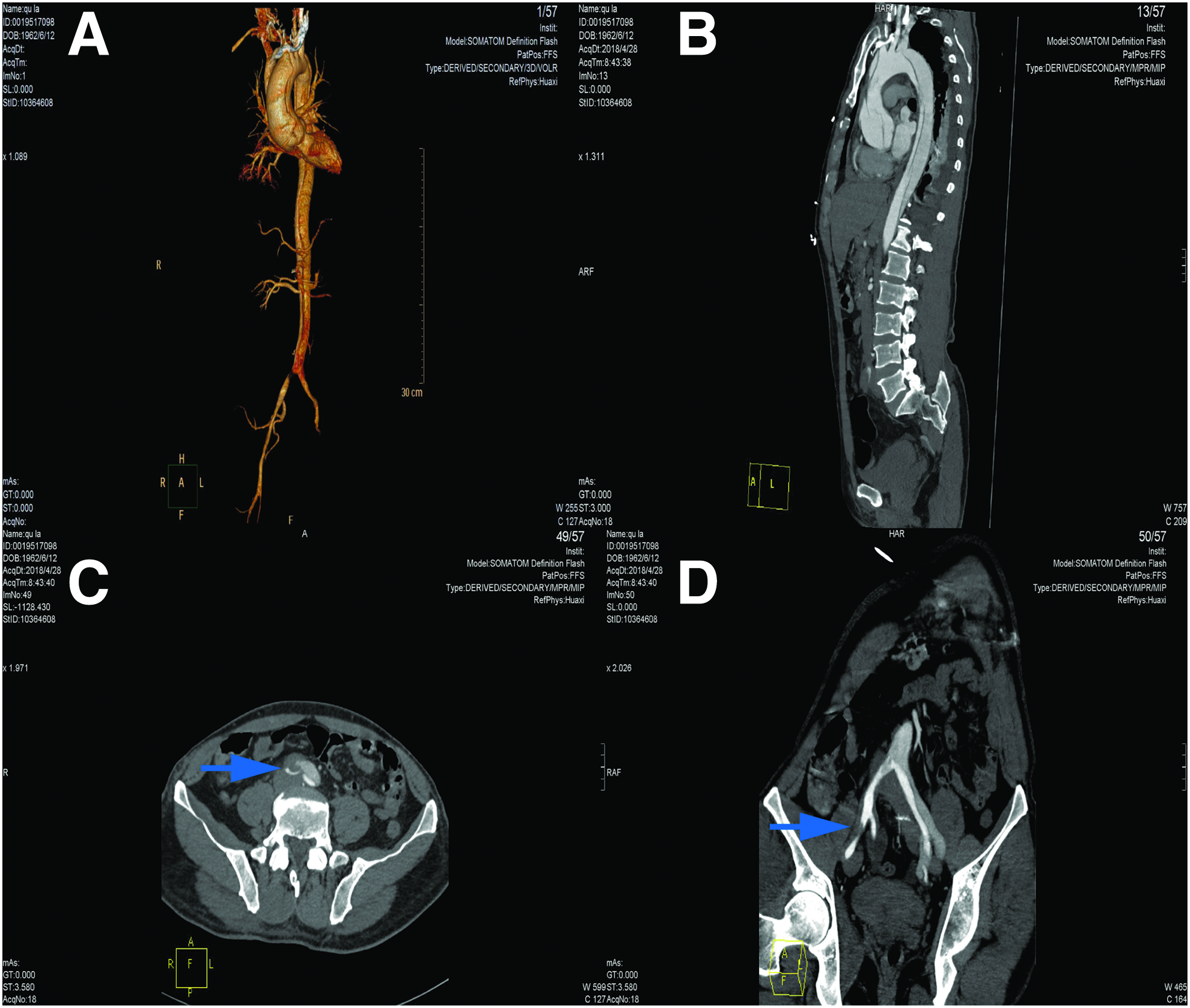
A 56-year-old man presented to a local Tibetan hospital with a severe tearing pain in his back, which was diagnosed as aortic dissection. As the local hospital was unable to treat the aortic dissection, the patient was transferred to our hospital after three days. After the transfer, the patient developed paralysis of the right lower extremity, along with progressively cyanotic skin changes from the feet to the groin (Fig. 1A). Computed tomography angiography indicated aortic dissection (Stanford classification type A) with false lumen formation from the aortic root to the iliac artery, as well as an arcuate high-density shadow at the edge of the lumen in the plane below the right iliac artery bifurcation, which was indicative of intramural hematoma formation (Fig. 2).
(
(
On the advice of the orthopedist, surgical amputation was not considered the best option in a patient without a clear amputation plane, therefore, emergency ligation of the inguinal region was performed instead to prevent the toxins produced by the gangrene from entering the body prior to the surgical treatment of the aortic dissection. However, the skin at the right lower extremity exhibited progressive ulceration and exudation (Fig. 1B), and culture of the ulcerating wound indicated Bacillus subtilis, therefore, surgical amputation was immediately performed. The patient was then treated with multiple systemic antibiotic agents and negative pressure wound therapy in the intensive care unit. Because of the high cost and risk associated with the aortic dissection operation, his family preferred conservative treatment and the patient was discharged in good general condition after 70 days.
Gangrene is a rare fatal complication of aortic dissection. To our knowledge, this is the first report of wet gangrene in the right lower extremity after aortic dissection. Moreover, the patient eventually survived after amputation and without an aortic dissection operation. Only two reports have been published on gangrene after aortic dissection, including one case involving gas gangrene of the left gluteal area on the fourth day after admission because of left iliac artery occlusion [1]. In another report, dry gangrene developed because of thrombosis and total occlusion resulting from aortic bifurcation of the bilateral common femoral arteries; the patient died of dry gangrene-related sepsis [2]. In the present case, although the patient did not receive surgical treatment for aortic dissection, the patient recovered well after comprehensive and systematic treatment, and the aortic dissection progressed to chronic dissection. For patients with aortic dissection involving the lower extremity arterial blood supply, we recommend that prompt surgery should be performed, as the risk and mortality associated with the surgery will significantly increase once gangrene occurs in the lower extremities.