




Abstract

To the Editor:
I
A 41-year-old male presented to the hospital with a palpable painless mass in the left cephalic epididymis. He denied symptoms such as night sweats, fever, and weight loss. The patient also denied tuberculosis infection and contact history. Relevant laboratory tests showed no obvious abnormalities. Ultrasonography revealed an enlarged volume of the left epididymis with a 2.6 × 2.1 cm mass with a regular shape and well-defined boundary. Color Doppler showed no obvious blood flow signal filling. A cephalic epididymal tumor was considered possible (Fig. 1).
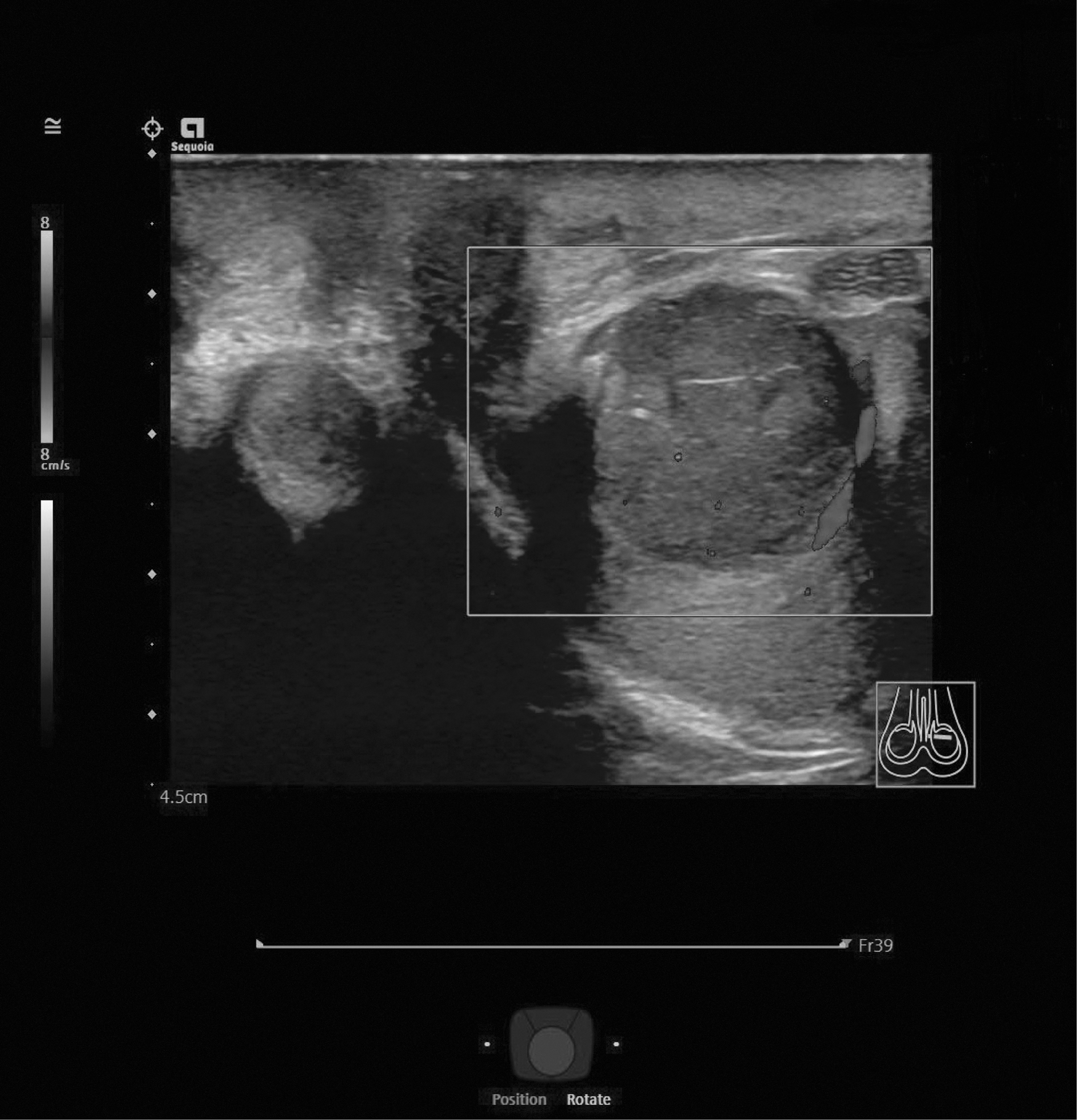
Ultrasonography showed an enlarged volume of the left epididymis with a 2.6 × 2.1 cm mass with a regular shape and well-defined boundary. Color Doppler showed no obvious blood flow signal filling.
The patient subsequently underwent a mass resection of the caput epididymis. The mass was eventually removed in its entirety. Post-operative histopathology showed granulomatous inflammation with caseous necrosis, and the final diagnosis was epididymal tuberculosis (Fig. 2). Post-operative recovery was good, and the patient was subsequently treated with regular antituberculous therapy at the infectious disease department.

Post-operative histopathologic examination revealed epididymal granulomatous inflammation with caseous necrosis.
Epididymal tuberculosis is rare and often presents as a painless mass of the scrotum. Most patients have no previous history of tuberculosis, so they are often misdiagnosed as epididymal tumors.2,3 The imaging findings were similar to epididymal tumor and inflammation and had no correlation specificity. The differential diagnosis was difficult. Diagnosis is often based on histopathology and needle biopsy. Because epididymal tuberculosis can involve the testis and cause male infertility, regular antituberculosis treatment is recommended after diagnosis. Epididymal tuberculosis may be primary or secondary. Once a diagnosis is made, further examination should be performed to determine the presence of a primary lesion. For the painless mass of the male scrotum, the possibility of epididymal tuberculosis should be considered. Although the prognosis of this disease is good, this disease can further cause male sexual dysfunction; once diagnosed, regular antituberculosis treatment should be carried out.