




Abstract

To the Editor:
R
A 60-year-old female presented to our hospital with abdominal pain. There are no symptoms such as fever and wasting. She denied any history of infection. The patient underwent enhanced abdominal magnetic resonance imaging after admission, and the results showed that an uneven 4.0 × 3.3 cm mass with irregular shape and unclear boundary was visible in the retroperitoneum, which was considered to be a retroperitoneal tumor (Fig. 1).

Contrast-enhanced abdominal magnetic resonance imaging revealed a retroperitoneal mass approximately 4.0 × 3.3 cm in size with irregular shape and unclear boundaries.
Because the possibility of malignancy was not ruled out, the patient was subsequently subjected to computed tomography (CT)-guided retroperitoneal mass biopsy. Post-operative histopathologic examination revealed necrotizing granulomatous inflammation (Fig. 2). Further tests for Mycobacterium tuberculosis were positive. The final diagnosis was isolated retroperitoneal tuberculosis. The patient was subsequently transferred to the tuberculosis department for further treatment, recovered well, and no related complications have occurred during follow-up so far.
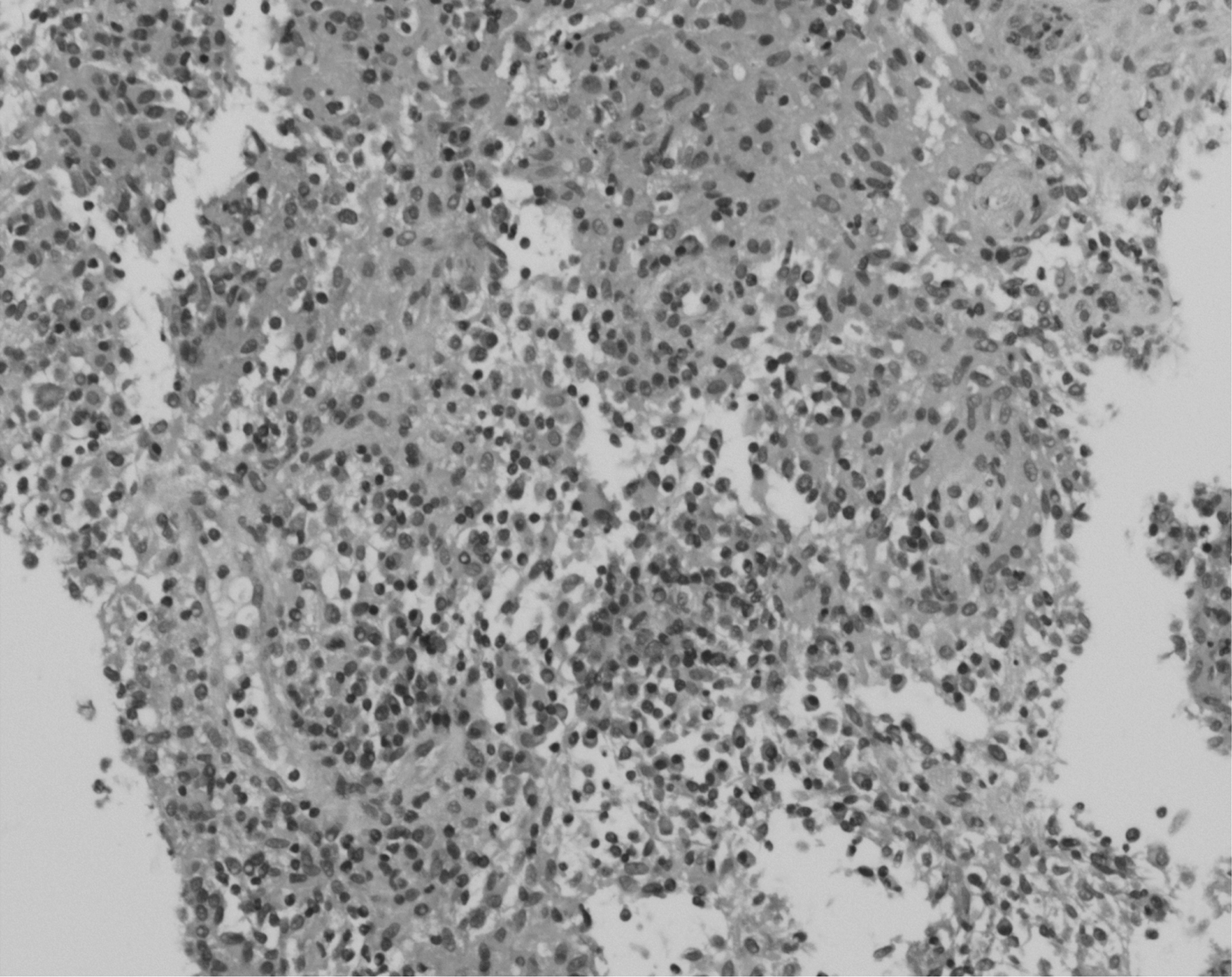
Biopsy pathology of retroperitoneal masses reveals necrotizing sarcogranulomatous inflammation.
Retroperitoneal tuberculosis is a serious extrapulmonary tuberculosis that is easily confused with diseases such as retroperitoneal tumors, leading to delayed diagnosis and treatment. 2 Because of the lack of specific clinical signs and imaging examination, the diagnosis of retroperitoneal tuberculosis is very challenging, and early diagnosis and treatment of retroperitoneal tuberculosis is of great significance. 3 In the absence of a previous history of tuberculosis, the diagnosis of retroperitoneal tuberculosis is often overlooked. Through CT-guided puncture biopsy, the nature of the tumor can be defined further, which is helpful to avoid unnecessary laparotomy and make clear diagnosis as soon as possible, thus reducing the misdiagnosis rate and reducing the trauma caused by various medical procedures.