




Abstract

To the Editor:
Isolated testicular tuberculosis is a rare disease that resembles testicular tumors and often leads to misdiagnosis. 1 Here, we report a case of isolated testicular tuberculosis mimicking testicular tumor.
A 28-year-old male patient presented to the infectious diseases clinic with fever and right testicular swelling and pain for 10 days. Physical examination revealed significant tenderness of the right testicle. Enhanced pelvic magnetic resonance imaging showed that the volume of the right testicle increased significantly, and the whole testis showed a relatively uniform and significant enhancement (Fig. 1). The pre-operative diagnosis was a right testicular tumor.
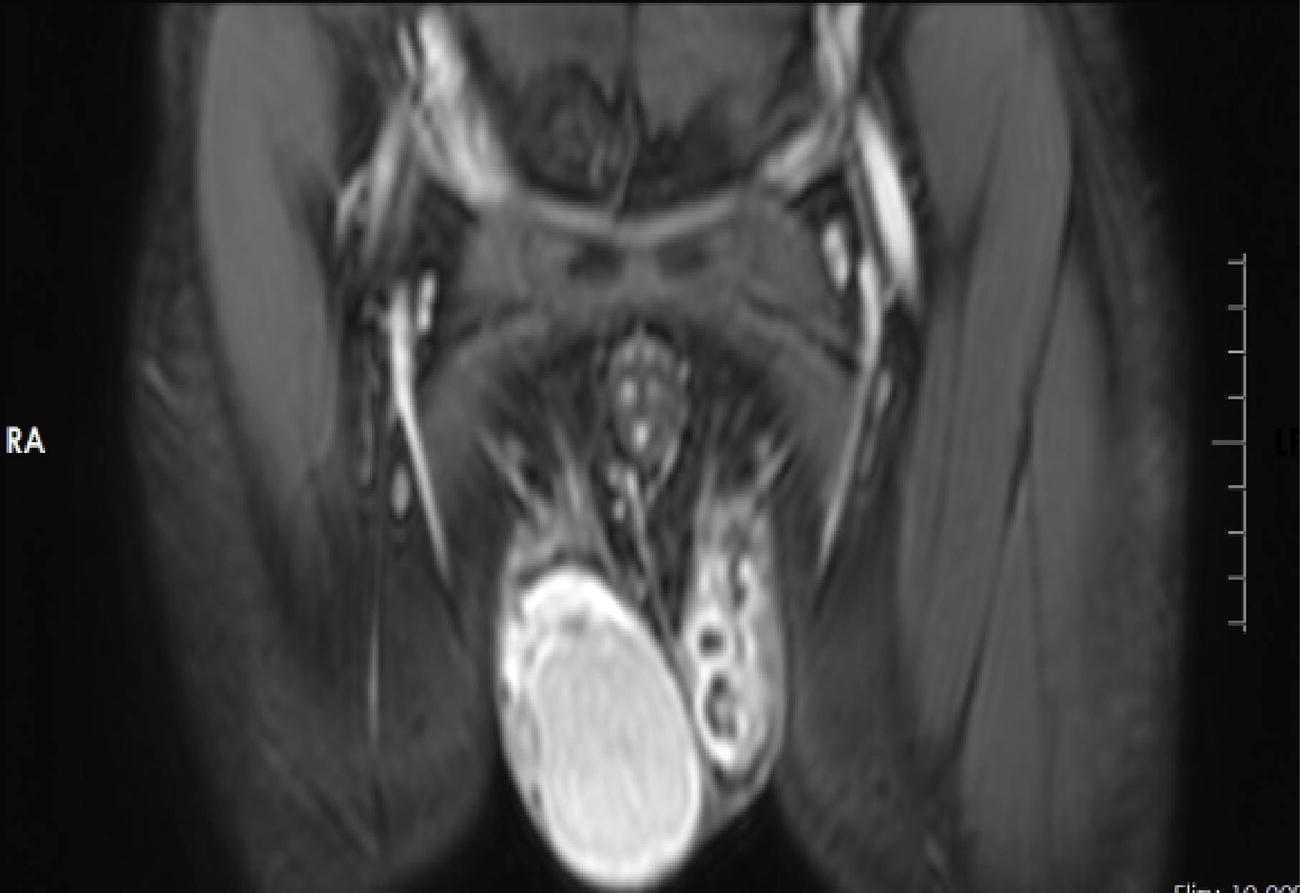
Enhanced pelvic magnetic resonance imaging showed that the volume of the right testicle increased significantly, and the whole testis showed a relatively uniform and significant enhancement.
The patient subsequently underwent radical excision of the right testicle. During the operation, the right testicle was found to be abnormal and swollen. Post-operative histopathological examination revealed right testicular tissue granulomatous inflammation with extensive necrosis and microabscess formation, and mycobacterium tuberculosis nucleic acid test was positive (Fig. 2). The final diagnosis was isolated testicular tuberculosis of the right testicle. The patient recovered well after the operation, and then received regular antituberculosis treatment in the tuberculosis clinic.
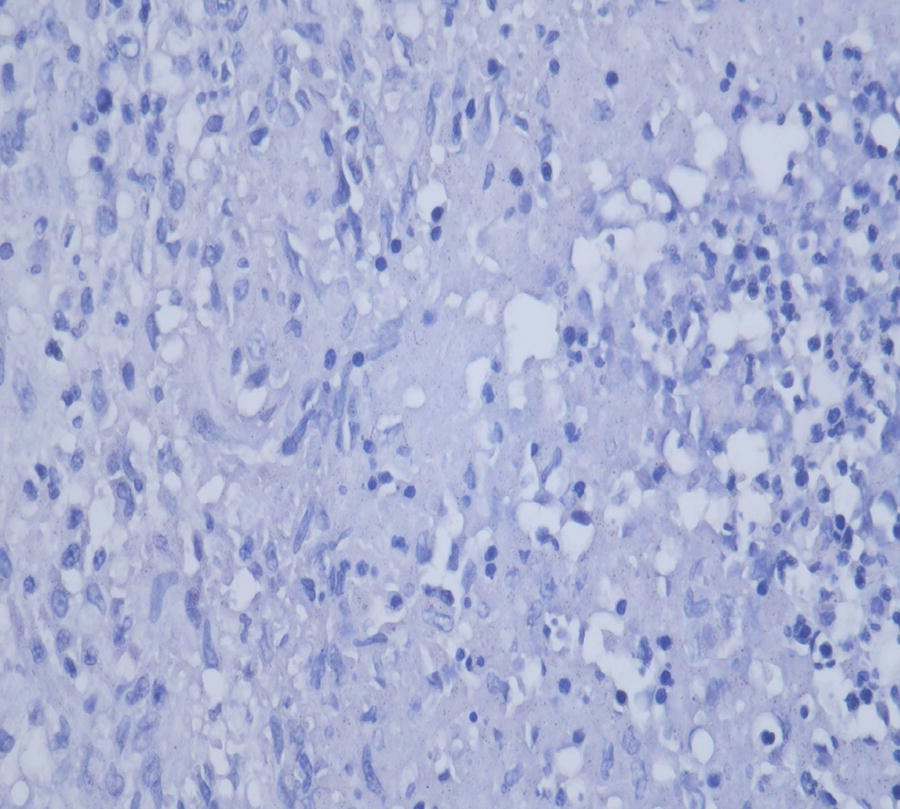
Post-operative histopathological examination revealed right testicular tissue granulomatous inflammation with extensive necrosis and microabscess formation.
Genitourinary tuberculosis accounts for 8%–15% of extrapulmonary tuberculosis, and genital tuberculosis is most commonly found in the male epididymis, and involvement of the testicles is extremely rare.2,3 The main clinical manifestations are diffuse testicular enlargement, similar to testicular tumor, which is very difficult to distinguish. Laboratory examination and imaging examination are not specific. About 60% of the cases are positive for acid-fast staining, which is helpful in suggestive diagnosis of the disease. In addition, fine needle aspiration biopsy and cytological examination can also help to accurately diagnose the disease, and once diagnosed, it can be cured with regular antituberculosis therapy, avoiding unnecessary surgery. However, in patients with serious complications such as testicular torsion, surgery may be performed if necessary. The disease may cause damage to the male reproductive system, which in turn affects male fertility, so the possibility of testicular tuberculosis should be considered in patients with unexplained testicular enlargement.
Ethics Approval and Consent to Participate
Informed consent from patients was obtained for this study, and their anonymous information will be published in this article.
Footnotes
Author Disclosure Statement
The authors declared no potential conflicts of interest with respect to the research, authorship, and/or publication of this article.
Funding Information
None.