




Abstract

To the Editor:
Pulmonary paragonimiasis is a parasitic disease of the lung caused by Paragonimus. 1 Herein, we report a case of pulmonary paragonimiasis misdiagnosed as eosinophilic pneumonia.
A 9-year-old child came to the doctor with difficulty breathing after activities and no symptoms such as cough or sputum. History of raw crab eating before 1 month. Admission laboratory examination showed that the proportion of eosinophils increased significantly. Chest CT showed multiple exudations from the lower lobe of the left lung with a left pleural effusion (Fig. 1). Combined with the relevant data of the patient, the initial consideration was eosinophilic pneumonia.
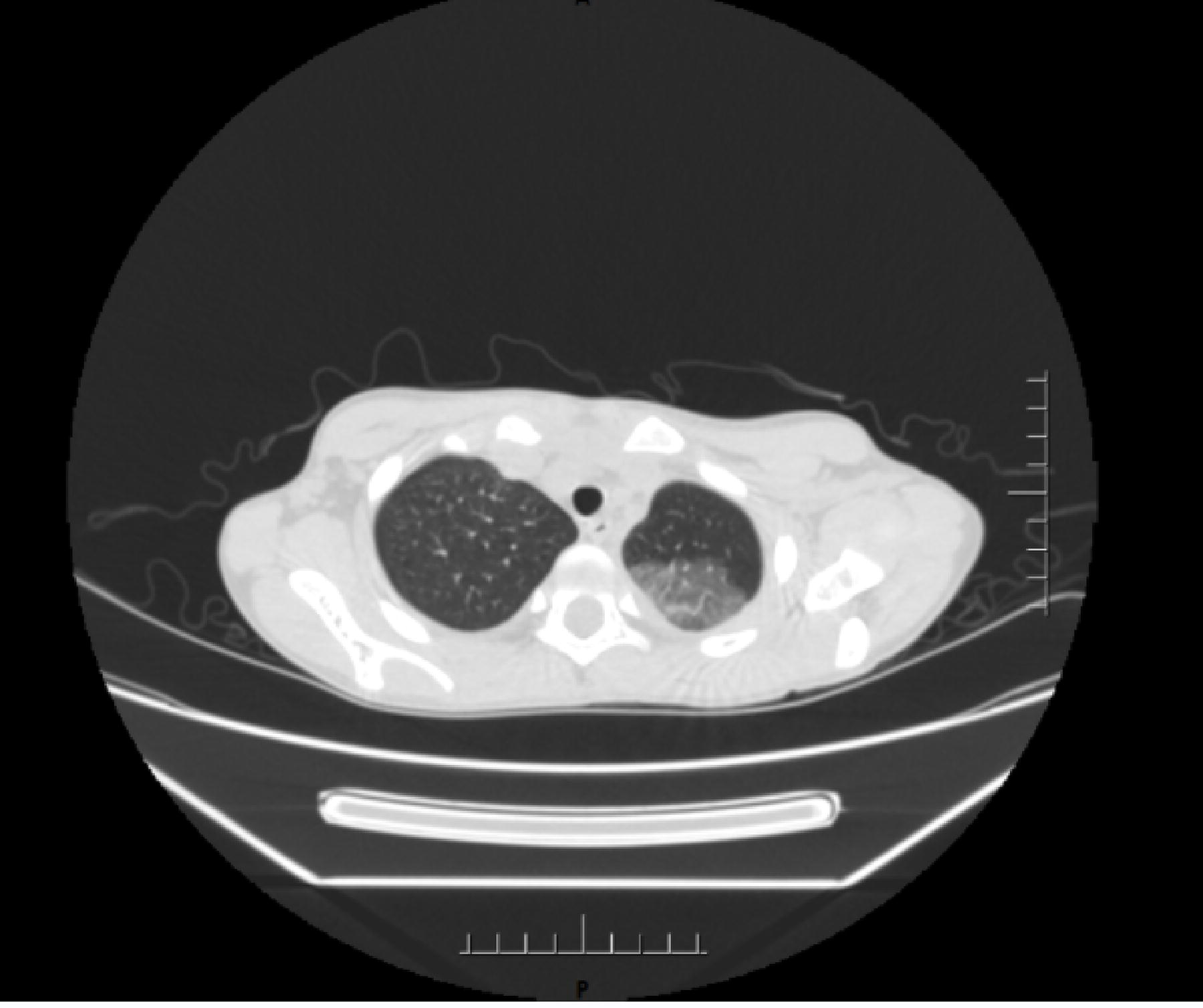
Chest CT showed multiple exudations from the lower lobe of the left lung with a left pleural effusion.
After admission, the patient’s symptoms did not improve significantly, and the left pleural effusion increased progressively. The patient then underwent a left pleural puncture under local anesthesia. The subsequent paragonimiasis antibody test was positive, and combined with the patient’s previous medical history, the patient’s condition was considered to be pulmonary paragonimiasis, and the patient’s condition was significantly improved after treatment with praziquantel.
Pulmonary paragonimiasis is a food-borne zoonotic disease that is widely distributed in the world. 2 The main clinical manifestations were cough and sputum, the specific manifestations were rust-colored sputum. The laboratory examination mainly showed elevated eosinophils. The history of raw food was helpful for suggestive diagnosis of the disease. 3 Positive antibody detection and positive egg detection of paragonimiasis can confirm the disease. The main treatment means is drug therapy, the commonly used drugs are praziquantel, thiochlorophenol, and triclobendazole. For patients with pneumothorax, skin nodules and abscesses, thoracic drainage and other operations can be taken to keep drainage smooth and control lung infection. Most of the prognosis is good. In patients with unexplained dyspnea, with or without sputum, eosinophilia, pleural effusion, and a history of raw food, the possibility of pulmonary paragonimiasis should be considered.
Ethics Approval and Consent to Participate
Informed consent from patients was obtained for this study, and their anonymous information will be published in this article.
Footnotes
Author Disclosure Statement
The author declared no potential conflicts of interest with respect to the research, authorship, and/or publication of this article.
Funding Information
No funding was received for this article.