




Abstract
Abstract
Learning to drive is a coveted and exciting rite of passage for many teens. What if during this time, however, teens practiced teaching others about air pollution and how responsible driving strategies impact air quality (e.g., carpooling, refraining from idling, trip‐chaining, riding the bus, etc.)? This idea was the basis for a 2017 clean‐air poster contest involving over 400 teens across six high schools in Cache Valley, Utah, a community that suffers occasionally from some of the worst air pollution in the nation, particularly during winter inversion season. As Utah State University faculty, we piloted the contest two years earlier at a local high school as part of a broader university‐community engagement initiative addressing sustainability issues. This article provides an overview of the literature on children's influence on others in marketing and social settings and a review of our past clean‐air poster contests that were piloted on smaller scales. Details about the launch and outcomes of the expanded 2017 Utah High School Clean Air Poster contest as the context for educating teens about air pollution and clean air actions are discussed, along with the results of a voluntary post‐contest survey of contestants' self‐reported direct impacts and their social influence on others. We investigated both the contestants' self‐reported direct personal behavioral impacts and their unprompted behavioral influence on others in what was termed the “Inconvenient Youth” effect because adults often feel uncomfortable having youth instruct them about pro‐social behaviors. Parents, in particular, feel obliged to comply in order to maintain their children's respect. Approximately two‐thirds of surveyed contestants reported engaging others, primarily parents and siblings, about clean air actions. Only 43 percent believed, however, that they had actually changed others' behaviors. We conclude with a discussion of the implications of the study and future research directions to help guide others crafting their own school‐based environmental education initiatives.
Introduction
Northern Utah's Cache Valley suffers from a serious air pollution problem. Situated about 80 miles north of Salt Lake City with a population of about 120,000 residents, the valley's bowl‐like topography is prone to winter inversions in which upper‐level warm air traps ground‐level cold air within the valley, along with a cocktail of pollutants from motor vehicles, buildings, agriculture, and factories. News headlines often proclaim Logan, the largest city in Cache Valley and home of Utah State University (USU), as being one of the most polluted cities in the nation. 1 Of particular concern is fine airborne particulate matter that once embedded into the lungs and passed into the bloodstream can pose serious health threats. 2
The U.S. Environmental Protection Agency has threatened to change Cache Valley's “moderate nonattainment” status of national air quality standards to that of “serious nonattainment,” which would require the state to develop a new clean air implementation plan and potentially restrict local use of federal transportation funding. 3 Cache Valley currently maintains its “moderate nonattainment” status because it has demonstrated some progress toward improvement through a car emissions testing program and other initiatives. Nevertheless, despite health and regulatory threats, many residents remain apathetic because they perceive the murky haze as being beyond their control. 4
A 2014 Cache Clean Air Consortium conference held at USU attended by faculty, students, local government officials, civic leaders, and concerned citizens sought to establish a forum to address air pollution and concluded that existing awareness programs were not reaching many segments of the local population. As part of a broader university‐community engagement initiative to address local air pollution (and other sustainability issues), we attempted to fill this void by launching a pilot study in which a clean air poster contest at Logan High School was designed to teach novice teen drivers about 1.) the air pollution implications associated with their new driving privilege, and 2.) proactive driving behaviors that could lessen their personal impacts (e.g., carpooling, refrain from car idling, trip‐chaining, taking the bus, etc.). 5
Over 100 high school students participated in the 2015 contest, resulting in about 75 poster entries. Many were creative, funny, and edgy, tapping into teen pop culture, entertainment, and personal values. Fourteen students received prizes donated by local businesses (mostly $50 gift cards), with the best overall poster receiving a cash award of $100 from Logan City's Mayor Craig Petersen. The winning posters were then displayed in local shop windows, businesses, and libraries for broader outreach.
Results of a voluntary post‐contest survey of participants (N=45) indicated that about 58 percent of the students believed that the contest impacted them positively. Responses to a series of Likert scale questions indicated that the contestants perceived that their participation in the contest increased their awareness about local air pollution as well as their willingness to adopt eco‐friendly driving behaviors and transportation choices to protect air quality.
Contestants' open‐ended comments also uncovered, however, an unanticipated outcome: Some teens were pestering and convincing others about clean air behaviors, even though they were not instructed to do so. One contestant revealed, for instance, “I tell my parents not to idle, and they haven't as much.” 5
The prospect that the poster contest was encouraging teens—without prompting—to become persuasive, clean‐air evangelists within their homes and social networks motivated us to consider the initiative's broader audience implications. Could the contest have greater reach beyond the school grounds? With whom were the contestants talking about air pollution? How widespread was the effect? How much influence did the teens perceive that they had with others to take action? And could this social influence be managed and amplified to help transform the general indifference many local citizens had about Cache Valley's air pollution problems and their unwillingness act?
Two years later, these questions drove the 2017 iteration of our initiative, which was expanded to six local high schools involving over 400 teens in what was renamed the Utah High School Clean Air Poster Contest in anticipation of reaching a growing number of high schools in subsequent years. 6 Our investigation's objectives were to 1.) replicate and measure the self‐reported direct impacts the contest had on awareness and willingness to engage in air‐protective driving behaviors, and 2.) explore the contestants' self‐reported nature of their unprompted social influence on others about air pollution.
The “Inconvenient Youth”
In 2007, the Wall Street Journal reported an amusing, but potentially annoying trend facing parents: Increasing environmental education programs in schools and in the popular media were empowering youth to lecture their parents about environmental problems from the backseats of family minivans. 7 Called the “Inconvenient Youth” (after Al Gore's popular 2006 climate change documentary, An Inconvenient Truth), children were admonishing their parents to engage in environmental behaviors ranging from taking no‐idling pledges to recycling to buying solar panels and gas‐electric hybrid cars.
The Inconvenient Youth was bucking the conventional order of parent‐child relationships, where parents typically strived to be teachers in guiding and shaping their children's values. Hapless parents were forced into the inconvenient role of pupils, and at times, grudgingly, they felt compelled to comply with their children's environmental petitions to maintain their children's respect.
Though the Inconvenient Youth seemed to signal an uncomfortable role reversal of sorts, in practice, many social advocacy and public service announcement campaigns have long targeted children as a proxy to reach adults and broader audiences. For example, the success behind the renowned Smokey Bear “Only you can prevent forest fires” campaign has been its call‐to‐action aimed at school children, who in turn have educated their parents about camp fire safety. 8 Likewise, the U.S. Department of Transportation's late‐1980s “You could learn a lot from a dummy” safety belt campaign employed humor through talking crash‐test dummies named Larry and Vince who were unbuckled in high‐speed collisions, but would survive and crack witty commentary about people not using safety belts (e.g., “Thanks to you, my life's a wreck!”). Larry and Vince became pop culture icons among youth, motivating them to remind their parents to buckle up. The campaign was credited for increasing safety belt use nationwide. 8
While much academic research has examined the traditional role of parents molding their children's values and behaviors, it has become accepted that parent‐child interactions typically result in parents and children influencing each other, and growing literature demonstrates how children and teens specifically guide their parents' values and actions. 9 Consumer research, for instance, has long shown that children and teens wield significant influence on family purchase decisions, including selecting restaurants, recreation/entertainment, cars, and vacations. 10 Children have been shown also to influence parental health behaviors such as convincing parents to quit smoking. 11
With regard to the shaping of environmental attitudes and behaviors, many studies have shown that school environmental education programs aimed at youth can, in turn, influence their parents and others. 12 Specifically, a review by Ballantyne, Connell, and Fien noted that students act as catalysts of environmental communication and learning beyond school boundaries, and as they mature, adolescents increasingly can influence their parents' values and attitudes. 9
Why are parents susceptible to their children's influence? Kuczynski et al. found that parents are receptive to their children's requests and persuasion if 1.) they make sense; 2.) the child appears to be mature enough to understand the issue and/or is speaking from authority; 3.) the child makes a logical argument, is passionate, expresses a sense of responsibility, and/or conveys vulnerability concerning the request; and 4.) the parent wants to maintain a mutual relationship with the child. 13
We wanted to see if the Inconvenient Youth effect was a natural outcome of our Utah High School Clean Air Poster Contest, as a school environmental education initiative. Would teens voluntarily engage and pester their parents and others about local air pollution without outside prompting or instruction? If so, we sought to understand the parameters of the effect before attempting to better harness it for future education outreach efforts.
Background
In 2014, during the onset of Utah's winter inversion season, we recognized that air pollution was not likely to be an issue at the top of the list of concerns for teens. Consequently, our education outreach strategy was ambitious: Launch an exciting, high profile clean‐air poster contest at Logan High School where teens would not only learn about driving strategies to preserve air quality, but also gain the kind of savvy marketing know‐how employed by professionals for creating compelling poster messages, win desirable prizes, and have their winning posters celebrated and displayed throughout the community. We also envisioned that contest winners could list their achievements on college applications.
Blending environmental education with art and clever marketing techniques was intended to entice students to view the contest as a fun creative opportunity to learn and apply real‐world marketing practices. The resulting posters from our 2015 pilot initiative displayed the students' sense of humor, pop culture, and ingenuity. One winning entry, for example, spoofed the movie The Terminator, with a picture of a student striking a menacing Arnold Schwarzenegger‐like pose with the warning, “Stop Idling or … Idle be Back for You!” written across his black sunglasses. Another parodied The Hunger Games with, “May the air be ever in your favor,” above an image of a hand pulling a slip of paper from a glass bowl that read, “Carpool.” Finally, another lampooned children's juvenile schoolyard behavior with a photo of a presumptuous boy hounding the reader with, “My mom idles less than your mom!” (For a full description of our pilot 2015 Logan High Clean Air Poster Contest and its outcomes, see Stafford and Brain, 2015.) 5
We replicated the contest in the winter of 2016, partnering with Logan High's student club, Logan Environmental Action Force (LEAF) as the on‐campus sponsor. We perceived this would give the students greater ownership of the initiative and broaden its appeal. Again, the poster entries aligned with contemporary issues and pop culture, including many edgy take‐offs on then presidential‐candidate Donald Trump and clever movie tie‐ins. LEAF club members selected the winners, and the top prize went to a Star Wars parody, “CAR WARS… Resist the Dark Side. Stop idling,” accompanied by an exquisite rendering of an idling car's exhaust spewing images of Darth Vader, the Death Star, and other icons of the “Dark Side of the Force.” 14 (See Figure 1.)
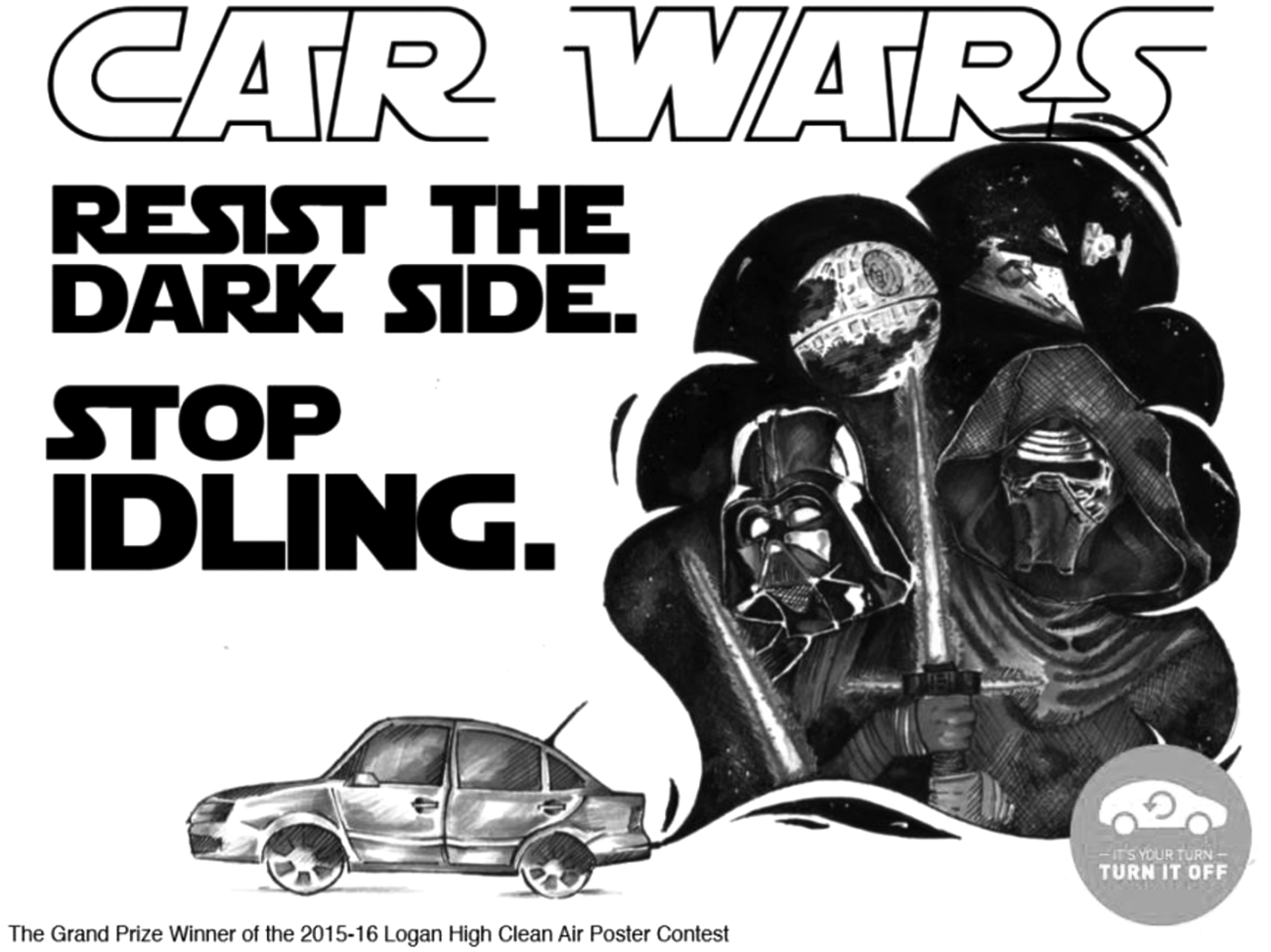
Sample 2016 winning poster
Working with High School Teens
The two iterations of the poster contest gave us two insights about working successfully with high school students. One, students are busy! The poster contest competed with students' myriad extracurricular activities (e.g., part‐time jobs, athletics, homework, etc.), and securing teachers and advisors to serve as contest “champions” was critical for keeping students on task. While the poster contest was technically open to all students voluntarily, participation was assured when faculty who agreed to have their students engage in the contest made it a required class assignment.
Two, despite teens' presumed proficiency with snapping smartphone photos for social media, it became apparent that students had varying proficiencies with photography and art. Frustratingly, some witty and provocative poster entries were disqualified because the students resorted to using copyrighted Internet images and memes, a violation of contest rules. Subsequently, we recognized the need to involve contestants with skills in fine art, photo editing, and/or graphic arts software and to encourage students who lacked such skills to collaborate with those who did.
As we expanded the contest across Cache Valley for 2017, we invited art and photography teachers at various high schools to engage their students in the contest as a class assignment. We also approached high school marketing and environmental science teachers (given the poster contest's integration of environmental science, art, and marketing), anticipating that their students may need more assistance in preparing their posters.
Ultimately, teachers representing fine arts, graphic arts, and environmental science classes from six high schools accepted (Logan, Ridgeline, South Campus, Sky View, InTech Collegiate, and Fast Forward). Logan High's LEAF club also agreed to recruit student contestants not affiliated with these classes on their campus as well. All told, over 400 students participated.
2017 Iteration of the Contest
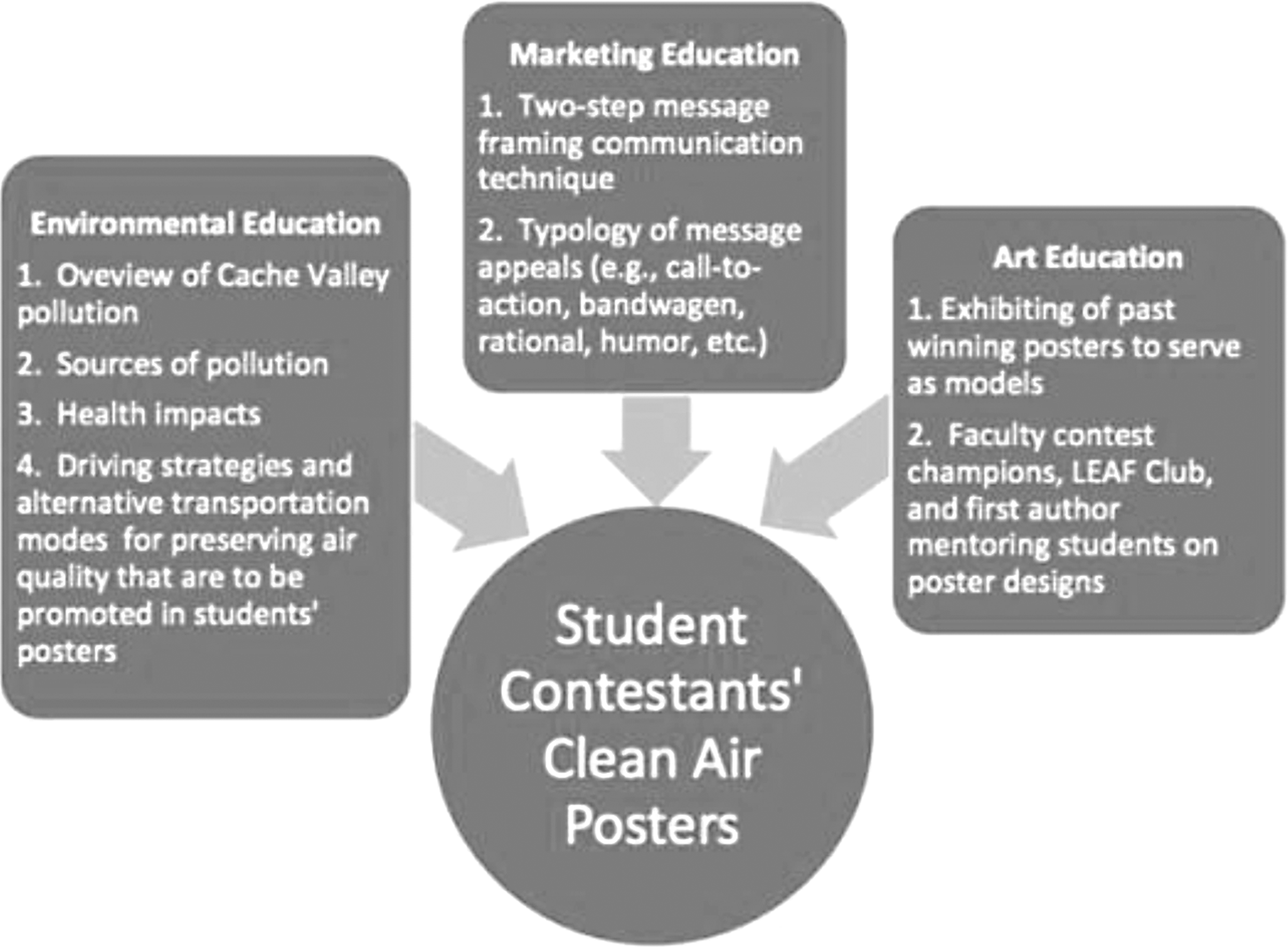
Beginning in October 2016, classes and groups of students across the participating high schools were introduced to the poster contest via a high‐energy, interactive 45‐minute presentation by Edwin Stafford. The presentation gave an overview of the environmental, marketing, and art education components of the contest. In short, the students' posters would be an application of these three education inputs (Figure 2).
Overview of criteria for students' clean air posters
Environmental Education
The presentation included an overview of Cache Valley's winter inversion air pollution, sources of that pollution, health impacts, and driving strategies for helping to preserve air quality that the students could promote in their posters (e.g., refrain from idling, carpooling, trip‐chaining, taking the bus, biking, walking, etc.).
Marketing Education
We encouraged the high school students to be bold and inspired, drawing on their wit and convictions to craft attention‐grabbing clean‐air messages that would speak to their target audiences: their high school peers and local Cache Valley residents. We showed examples of past winning posters from Logan High and provided an overview of two marketing tools to foster students' creativity. The first tool is a two‐step communication technique employed to inspire provocative messaging. 15 Specifically, students were instructed to identify the core values, concerns, and issues that mattered most to their target audiences. For their fellow high school students, these include school/grades, friends, social media, looking cool, popular entertainment, etc.; for local Cache Valley residents, these involve their Mormon religious faith, children, families, saving money, love of outdoors, etc. The second step was to associate those values, concerns, and issues in novel and persuasive ways with clean air actions that would resonate with their intended audiences. 15
To initiate creative thinking using this tool, the students engaged in some brainstorming on how to connect a target audience's core values to clean air actions. In one example, we discussed how most Utahns detest cigarette smoking, which is against Mormon beliefs. Though controversial, Utah Physicians for a Healthy Environment has asserted that the risks of breathing Utah's polluted air is comparable to involuntary cigarette smoking. 16 The students were asked how anti‐smoking values may connect with advocating clean air action. After some discussion, the students were shown a striking image of an idling car's tailpipe, depicted as a smoldering cigarette with the message, “Thank you for not smoking.” Some laughed, but most students agreed that the picture associating car idling with smoking would resonate with local anti‐smoking sentiments. Students were encouraged to come up with similar connections, serious or humorous, to speak to their fellow students' and neighbors' values and beliefs.
The second marketing tool is a typology of “message appeals” commonly used to promote clean‐air in public service announcements by professionals. These include call‐to‐action, bandwagon, rational, emotional, fear, and humor (e.g., parody, play on words, juvenile, satire, surreal, and sarcasm). 17 Students were encouraged to pick a specific type of appeal for their posters.
For example, a bandwagon appeal uses social influence to encourage audiences to follow others. A past winning poster illustrated this appeal by drawing on school pride and featuring a photo of Logan High's beloved mascot, Grizzwald the Grizzly Bear, in a car with other high school students coupled with the caption, “Grizzwald says carpool for clean air.” An emotional plea triggers a state of arousal to encourage a desired behavior, and another past winning poster tapped into local Mormon values of family by showing a pregnant woman with the tagline, “Let their first breath be a clean breath. Reduce car idling.”
The remainder of the presentation centered on deadlines, prizes and their sponsors, and contest rules. The main requirements were that all poster entries had to have an overt or implied clean action statement (e.g., “don't idle” or “take the bus”) and that all artwork and illustrations had to be original—no copyrighted or Internet images.
Art Education
Throughout the presentation, students were shown past winning posters as models for them to emulate and serve as sources of inspiration. Given that most of the student contestants were in the fine arts and graphic arts classes at their respective high schools, the art teachers served as mentors for designing their posters. At Logan and South Campus high schools, however, the contestants were primarily students taking environmental science classes, and they were encouraged to use their smartphone cameras to take appropriate photos for poster images and/or partner with fellow art students. Logan High's LEAF club members mentored many contestants, and at South Campus, Edwin Stafford and the South Campus High School environmental science teacher advised the students on the development of their posters' creative designs.
Competition and Prizes
The contest had two phases. In the first phase, each high school held its own competition in January 2017, and each school was responsible for selecting its winners. At Logan High, LEAF club members selected the winners, but at the other high schools, winners were selected by student votes, by faculty, or by their respective student councils. Contestants of winning posters were awarded either $50 gift cards or the equivalent in merchandise (e.g., skateboards, ice cream tokens) donated by local businesses and named after them (e.g., Aggie Ice Cream Prize) to acknowledge and publicize their support of the students and clean air. Our intention was to associate these businesses publicly with the clean‐air poster contest to secure their owners'/managers' commitment in future years as well as increase the likelihood that they would both support and engage in similar environmental actions. This is a common strategy to foster broad‐based sustainable behaviors. 18 Winning posters were then displayed at their respective high schools for on‐campus outreach.
In total, there were 24 winning posters across the six high schools, and these posters became the finalists in the second phase of the competition at the county level, where contestants were eligible to win cash grand prizes ranging from $100 to $250 donated by local businesses. Again, these awards were also named after their donors (e.g., Zions Bank Award, Cache Valley Electric Award).
A panel of “celebrity” judges (including some prominent citizens and most of the principals from the participating high schools) evaluated each finalist poster entry on scales related to its environmental message, marketing appeal, and overall artistic merit (via an online Qualtrics survey). The top nine with the highest overall scores were selected for the cash grand prizes, and the student winners were announced at an awards ceremony held at the Nora Eccles Harrison Museum of Art at USU in mid‐February 2017. Over 100 people attended, mostly parents and families of the poster contestants, but also principals and faculty involved in the contest, local government officials, and community leaders. The winning students and their posters were featured in the local newspaper and on social media. 19
Winning Posters
Clearly the faculty “champions” at each high school influenced the outcomes. For example, many of Logan High's posters followed previous years' themes of light‐hearted parodies of pop culture and entertainment, whereas Ridgeline High School's entries, which came from art classes, were all accomplished watercolor paintings and colored hand‐drawings focused on the subjects of the environment, nature, and the love of the outdoors.
The judges were impressed with Ridgeline's polished artistic entries, and most of the top cash prizes went to those posters. One, for example, was an inspiring painting of a young woman reaching toward the sky that was fractured into vivid blue and muted gray colors, with the headline, “Clean air isn't just a dream. Reach for it. Take the bus or carpool” (see Figure 3). Another winning Ridgeline watercolor commanded, “Clean up your act,” showing a distressed ballerina on a stage crowded with cars and dirty air (see Figure 4).
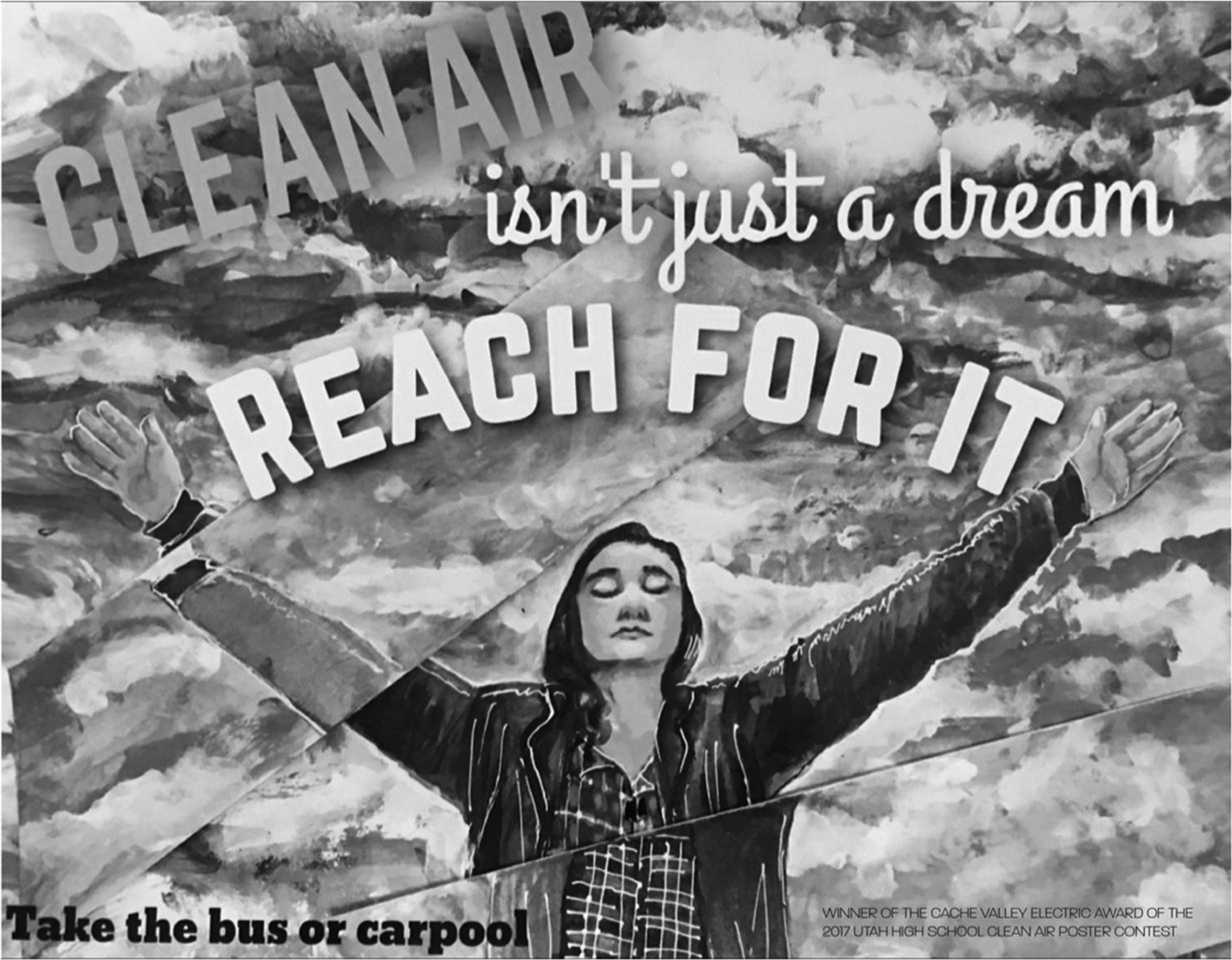
Sample 2017 winning poster
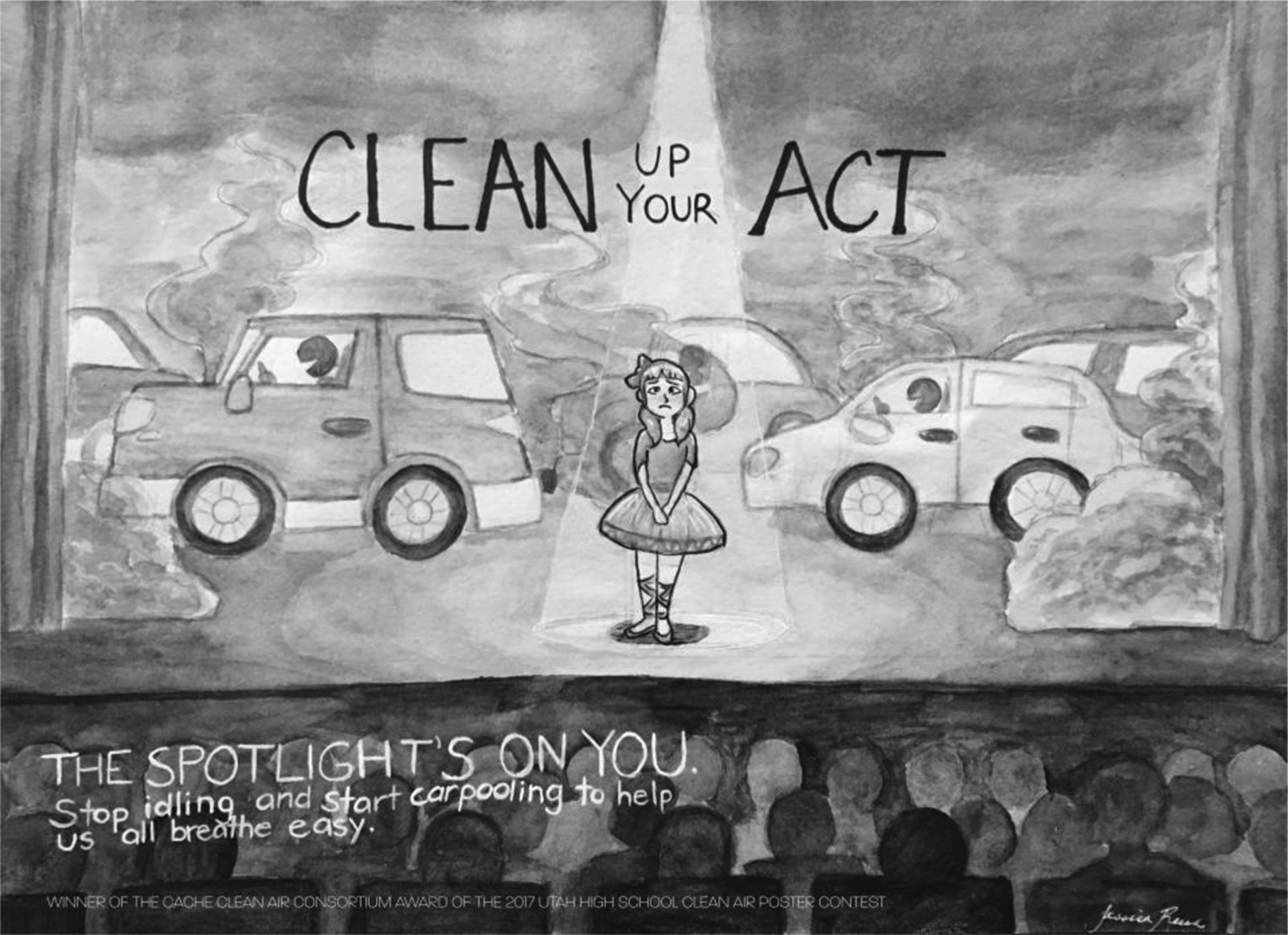
Sample 2017 winning poster
From Logan High, a top award went to a poster featuring a simple three‐paneled drawing with rhyming phrases that advocated walking, biking, and riding the bus: “Get on your feet. Cruise on your street. Sit on your seat. Keep your air clean” (see Figure 5). Another winning poster from Logan High featured a split photo of the Logan Mormon Temple, half of which was engulfed in a polluted inversion and the other half under beautiful clear skies with the caption, “Where do you want to live?” From InTech Collegiate High School, one clever poster showed an idling car emitting from its tailpipe dollars and cents signs with the tagline, “Don't let your money go up in smog” (see Figure 6).
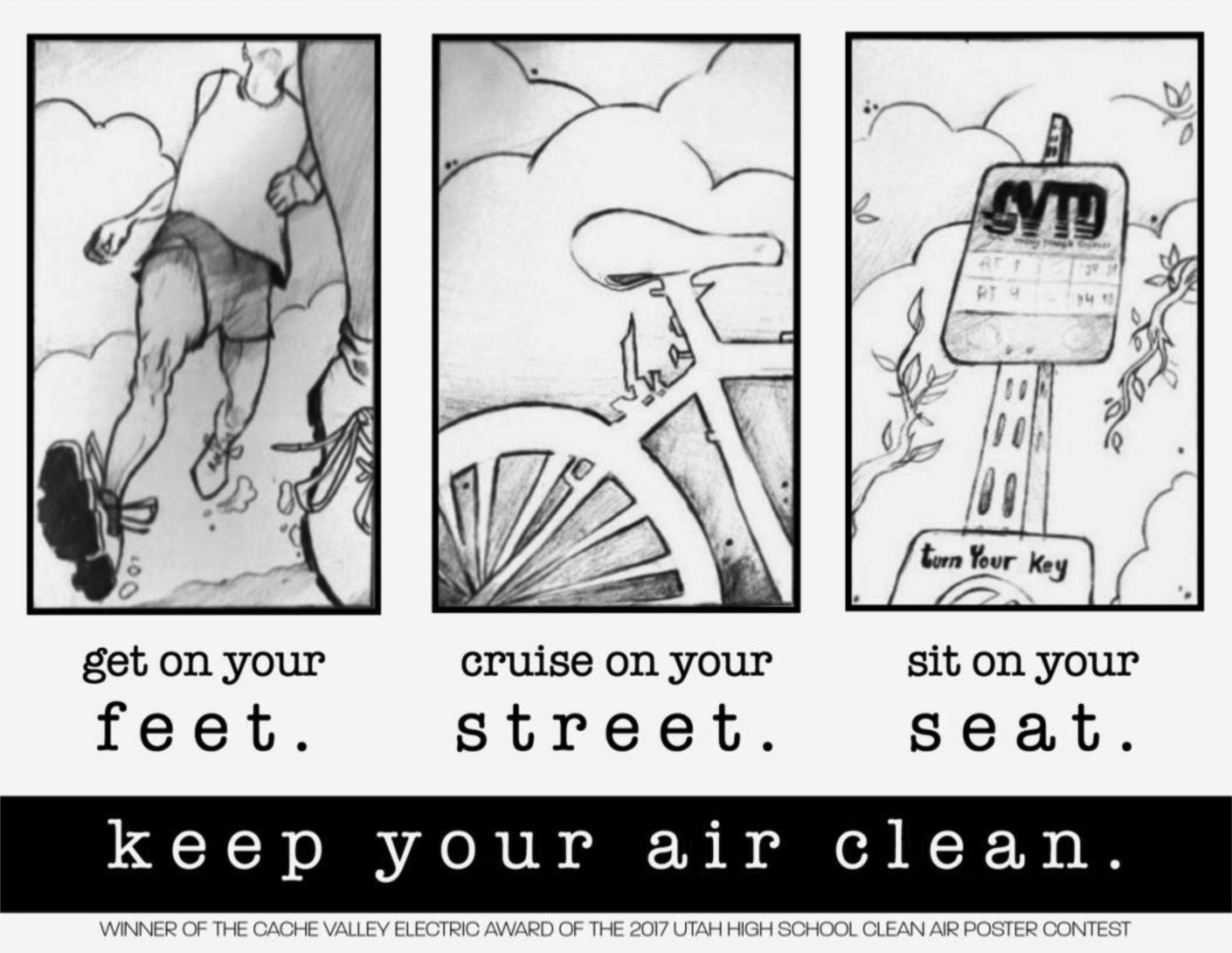
Sample 2017 winning poster
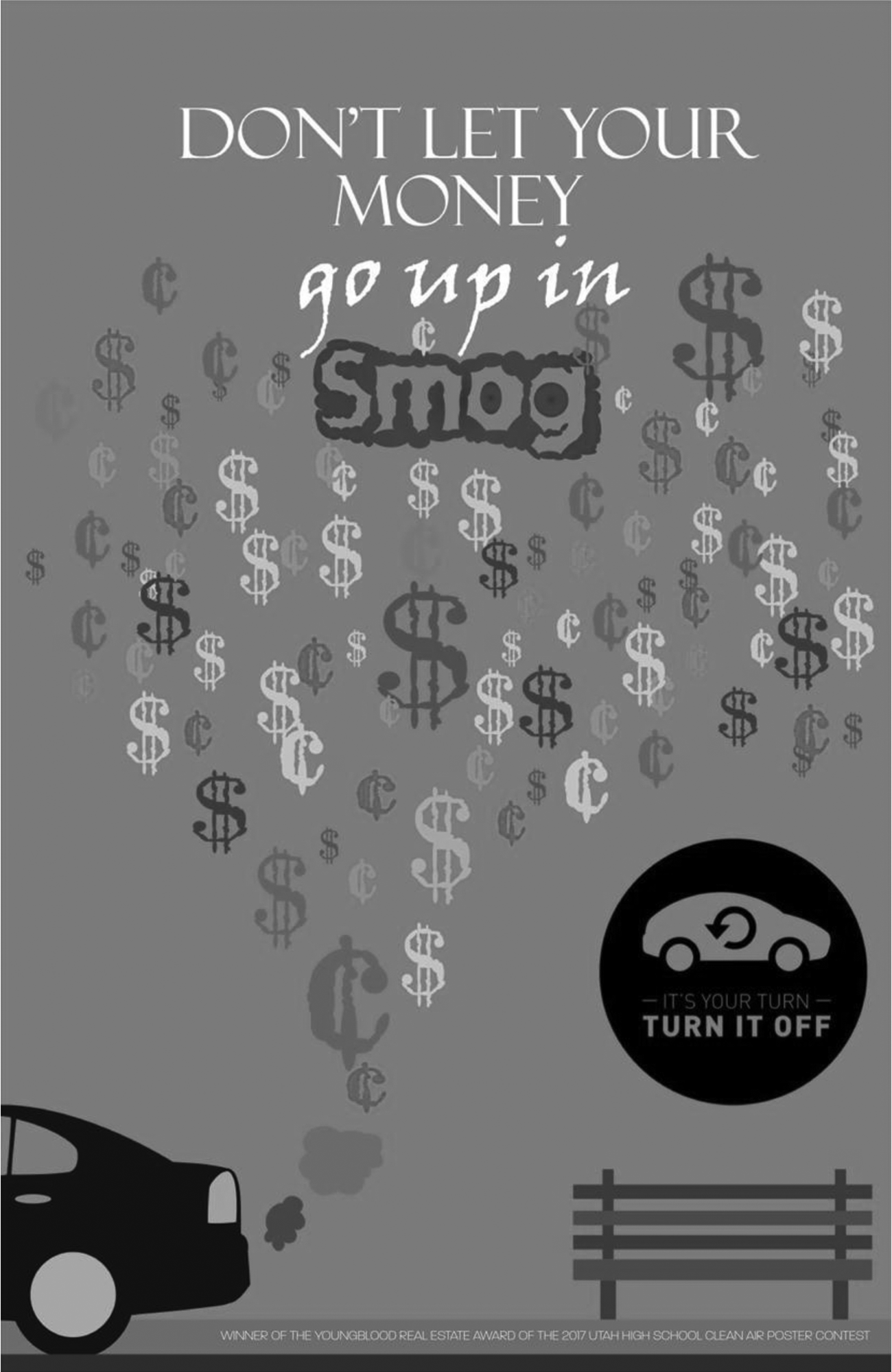
Sample 2017 winning poster
Some of the finalists that didn't win cash prizes were also noteworthy, including a Broadway Hamilton playbill parody that declared, “BE A STAR. Don't idle your car,” and another tapping local family values showing a toddler yearning to play outside with the headline, “Billy has to wait for the air outside to be safe … Be kind to Billy and don't idle.”
From South Campus High, one humorous poster showed a photo of a young woman stealing a car with the panicked owner chasing after it in the background with the headline, “Don't get your car stolen. Turn your key and be idle free!!” (see Figure 7). This highlighted the fact that cars left idling in the winter create opportunities for them to get stolen. All in all, we were pleased by the high caliber and diversity of poster themes for this latest iteration of our clean air poster contest, and many were displayed throughout the community at libraries, schools, offices, and shop windows.
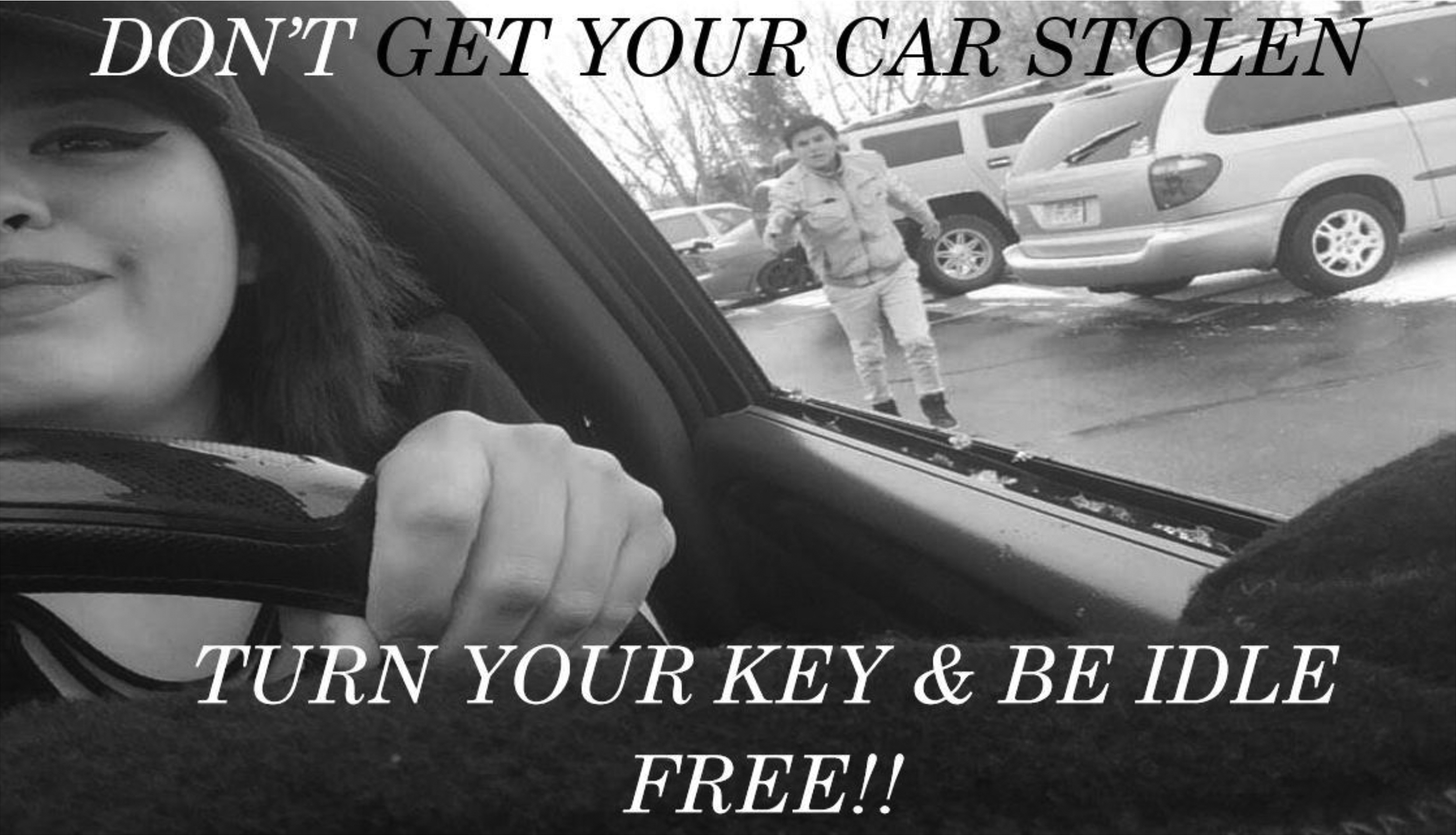
Sample 2017 finalist poster
Self‐Reported Outcomes of the Contest
Prior to the announcement of the poster finalists from each high school, a voluntary survey was administered to evaluate the contestants' self‐reported direct impacts of the contest on contestants' skills, behaviors, and unprompted engagement and social influence on others using Likert scales, yes‐no, and open‐ended questions. We received 225 surveys for our analysis (though not all the contestants answered all the questions on the survey).
Skills
We first asked the contestants: “Please rate your level of confidence before and as a result of this poster contest” on 11 specific skills related to art, science, marketing, and personal behaviors. Each skill was evaluated on a five‐point scale (1=Not at all confident; 5=Completely confident). Table 1 summarizes the results.
Contestants' Perceived Confidence Level of Skills Before and as a Result of Participating in the Utah High School Clean Air Poster Contest
Paired t tests revealed that the mean scores of contestants' perceived confidence on each of the skills were significantly higher after their participation in the contest. This suggests that our education initiative increased students' perceived awareness and scientific understanding of Cache Valley's air quality, and students also perceived that their artistic and marketing talents were enhanced by the experience as well.
Personal Behaviors
In terms of exploring the contest's impact on contestants' personal behavior, paired t tests on two scale questions (see Table 1) indicated that collectively students reported that they were more likely to engage in air pollution‐reduction behaviors promoted in their posters than before the contest, and they believed that the contest deepened their abilities to make a difference.
Results from the yes‐no and open‐response questions, however, presented more mixed and nuanced outcomes (see Table 2). For example, contestants were asked, “Did this contest positively impact you? Yes/No.” Of the 217 contestants who answered this question, 130 (60 percent) answered affirmatively, a result that was similar to the feedback we received from contestants in our 2015 pilot contest (58 percent). 5
Summary of Contestants' Responses Regarding Contest's Impact on Their Personal Behavior
In a follow‐up question, however, contestants were asked, “Have any of your personal behaviors changed as a result of this contest? Yes/No.” Of the 216 students who answered, only 84 (about 39 percent) answered affirmatively. This statistic appeared to contradict our scale results. Of the 131 contestants who answered “no,” we inquired why. Only 19 contestants chose to elaborate, of which six said that they didn't have a car (and thus couldn't practice carpooling, not idling, etc.), and another seven noted that they were already aware of Cache Valley's air pollution and were engaging in clean air actions prior to the contest. Six contestants admitted, nonetheless, that they weren't motivated and/or didn't believe that changing their personal behaviors would make a difference. For instance, one contestant noted, “Because one person can't change everybodies [sic] behaviors” and another confessed, “I'm too lazy.” Because so few students explained why they didn't perceive that the poster contest impacted their personal behaviors, it is difficult to gauge how pervasive these perceptions were among the broader pool of contestants.
Inconvenient Youth Effect
With regard to exploring the potential unprompted social influence contestants may have had on others, we inquired, “With whom have you discussed preventing air pollution as a result of participating in this contest?” (see Table 3). Of the 205 contestants who answered this question, 130 (about two out of three contestants) said they had talked with others even though they were not instructed to do so. Specifically, 94 of the 130 contestants (72 percent) mentioned talking to one or both parents; 102 (78 percent) mentioned talking to their parents, siblings, and/or families in general; and 59 (45 percent) mentioned non‐family members, such as friends, classmates, work colleagues, and/or neighbors (the totals add to more than 130 because many contestants reported talking to multiple individuals across these three groups).
Summary of Contestants' Responses Regarding Their Social Influence on Others
One contestant wrote, “I tell everyone.” Another said, “I've been bugging my parents about idling,” and one more said, “I'm very convincing!” These outcomes align with previous research showing that school environmental education programs can encourage youth to become natural evangelists and pester others about what they learn, particularly with their parents and families.
When asked, “Do you believe you helped change their behavior? Yes/No,” 55 of the 127 contestants who answered this question said yes (or 43 percent), 8 said they were not sure, and 64 (just over half) replied no. When asked, “Why not?” only 28 students offered explanations. Four noted that weather was a factor. For example, one said, “It's too cold to stop idling right now,” and another added, “… I would rather my mom run the engine and keep herself warm than get cold and sick.” Five other contestants noted that the other people with whom they talked about Cache Valley's air pollution problems were already aware and had been taking action before the poster contest.
However, 19 contestants (68 percent) reported that the others with whom they conversed about local air pollution simply didn't care. For instance, one noted, “They're stubborn so they don't care much about it.” Another added, “They don't think idling pollutes the air,” and one more said, “No one likes to listen to me.” In short, while many students had become evangelists about clean‐air action, slightly more than half believed they were not successful in convincing others to change their behaviors.
Discussion and Future Research
Our primary interest with the 2017 Utah High School Clean Air Poster Contest was to 1.) replicate and measure its direct impacts on participants' self‐reported awareness and air‐protective driving behaviors; and 2.) explore students' unprompted social influence on others (i.e., Inconvenient Youth effect). We were generally encouraged by the outcomes, especially with regard to the seemingly high numbers of contestants' unprompted engagement with and pestering of others. Harnessing and expanding that process may be the most promising direction for future iterations of the contest in terms of both directly educating and empowering contestants regarding their own behaviors and influencing others. A few ideas for doing so include the following.
While it may be difficult to operationalize and instruct students to engage in “sweet talk” or “to cry or pout” to convince family and friends to engage in clean‐air action, encouraging contestants to engage others and exploring what techniques contestants say they employed that resulted in either success or failure could uncover effective ways to amplify the Inconvenient Youth effect.
One limitation of our investigation was its focus on contestants' self‐reported outcomes. Incorporating the perspective of parents, families, and others about how their driving behaviors may have been influenced by the contestants' pestering and why they did or didn't comply may uncover additional insights about the social influence process. The perceived reasons that contestants were not more influential may illuminate some strategic implications and future research directions on how teens may become more empowered to influence others on pro‐social behaviors. Such insights may help construct better poster contest instructions and procedures to help reinforce positive contestant behaviors and facilitate positive influence on others.
Conclusion
Like many places around the world, air pollution is threatening Cache Valley, Utah's cherished quality of life. One of our USU colleagues, Paul Rogers, is calling upon other USU faculty, civic leaders, and residents to view Cache Valley and its pollution problems as a laboratory to experiment with practical solutions and to conduct cross‐disciplinary applied investigations that in turn may help other communities striving to tackle their own air pollution challenges. 23 Our annual high school poster contest and its potential to empower teens into an army of Inconvenient Youth to influence and pester their families and friends on clean‐air action may inform other educators, community leaders, and advocates about designing more impactful environmental education programs. Identifying ways to channel and strengthen the Inconvenient Youth is our next objective.
Footnotes
Acknowledgments
The authors thank Jill Galloway, Antje Graul, Cathy Hartman, Alexi Lamm, and Randy Martin for their constructive comments on an earlier draft of this article.
Author Disclosure Statement
No conflicting financial interests exist.