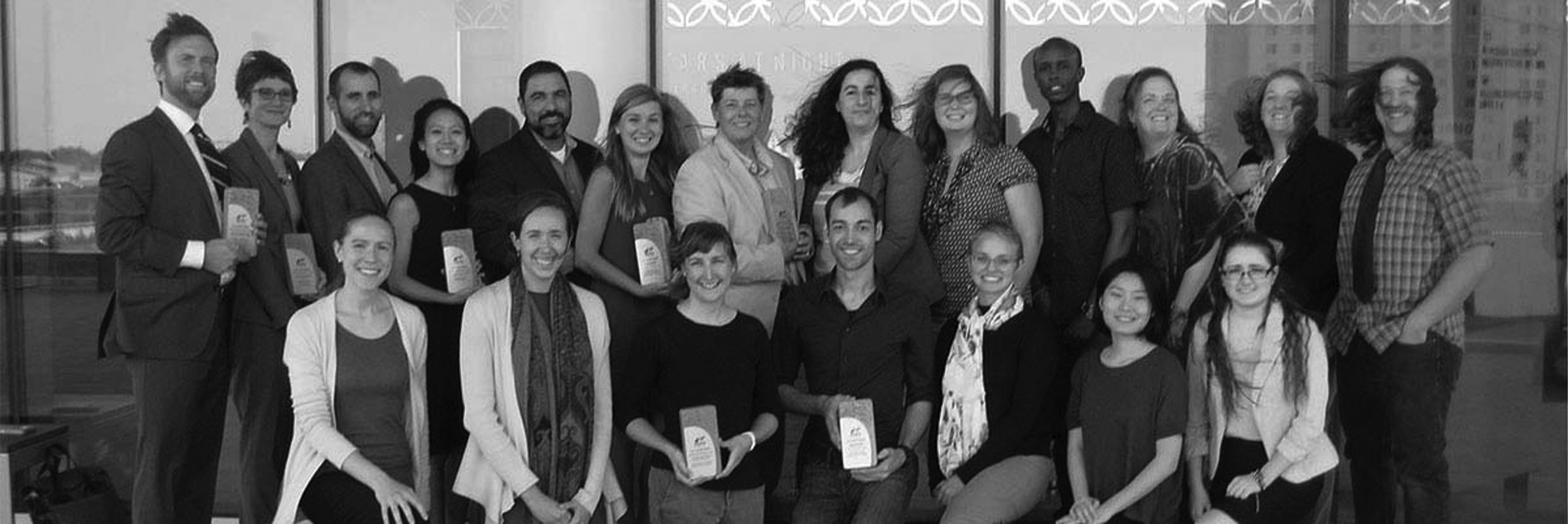
The Association for the Advancement of Sustainability in Higher Education (AASHE) presented its 11th annual Sustainability Awards at the 2017 AASHE Conference & Expo in San Antonio. The winners were recognized for their progress in sustainability science, campus achievements, and student leadership. AASHE presents its annual awards “to the institutions and individuals that are leading higher education to a sustainable future.”
In 2017, AASHE received a record 230 entries to consider and named winners in the following categories.
Campus Sustainability Research Winners
This award recognizes research that contributes to the advancement of higher education sustainability.
Research team: Ethan D. Schoolman, Mike Shriberg, Sarah Schwimmer, and Marie Tysman for “Green Cities and Ivory Towers: How Do Higher Education Sustainability Initiatives Shape Millennials' Consumption Practices?” published in the Journal of Environmental Studies and Sciences. This study found that millennial students do not become more committed to sustainable consumption during their time on campus, suggesting the need for new approaches to encourage sustainable consumption among students.
The 2017 AASHE Sustainability Award Winners in San Antonio, Texas
Research team: Katja Brundiers and Arnim Wiek of Arizona State University for “Beyond Interpersonal Competence: Teaching and Learning Professional Skills in Sustainability,” published in Education Sciences. This article argues that academic sustainability programs do not sufficiently facilitate students' acquisition of professional skills in communication, teamwork, and stakeholder engagement and presents a model for how these skills can be taught in an undergraduate course.
Research team: Elizabeth A. Castner, Allison M. Leach, Neil Leary, Jill Baron, Jana E. Compton, James N. Galloway, Meredith G. Hastings, Jacob Kimiecik, Jonathan Lantz‐Trissel, Elizabeth de la Reguera, and Rebecca Ryals for “The Nitrogen Footprint Tool Network: A Multi‐Institution Program to Research and Reduce Nitrogen Pollution” published in Sustainability: The Journal of Record. This article shares the results of a collaborative effort to assess the amount of nitrogen pollution caused by seven different institutions.
Research team: Allison K. Wisecup, Dennis Grady, Richard A. Roth, and Julio Stephens of Radford University for “Comparative Study of the Efficacy of Intervention Strategies on Student Electricity Use in Campus Residence Halls” published in the International Journal of Sustainability in Higher Education. This study found that communications and programming around energy conservation is a cost‐effective way to reduce student electricity use.
Researcher: Nick Morris of Kent State University for “Relocating Education for Sustainability: From the Campus to the Community.” This dissertation examines the benefits of partnerships between higher education institutions and environmentally oriented community partners, such as parks.
Researcher: Danielle Chun of Messiah College for “The Drivers behind Edible Food Recovery Programs at Institutions of Higher Education.” Based on a survey of 100 AASHE members, this study found that an institution's “sustainability mindset” was the most significant determinant of whether a food recovery program was in place. Interestingly, institutional wealth did not seem to have a significant impact.
Campus Sustainability Achievement Award Winners
This award honors higher education institutions for successful implementation of projects that advance sustainability.
Institution: Johnson County Community College for their Student Sustainability Committee initiative that helps develop student leadership skills and sustainability knowledge. The committee has funded over 100 individual grant proposals since its inception, totaling nearly $3 million.
Institution: Illinois State University for the Fix It Friday project, in which fashion students offer free sewing, mending, and clothing repair services to anyone in need.
Institution: Black Hills State University for the Black Hills Food Hub: Rural Food Hubs Serving a Wider Demographic project, a partnership between the university and the local community that reduces barriers to distributing locally grown food.
Student Sustainability Leadership Award Winner
This award honors students and/or student teams from higher education who have demonstrated outstanding leadership in promoting sustainability on campus.
Student team: The Engineers for a Sustainable World chapter at Georgia Institute of Technology for the Natural Herbicides Project, which developed an effective natural herbicide and conducted tests to demonstrate its efficacy for use on campus lawns.
Of the 2017 award winners, AASHE Executive Director Meghan Fay Zahniser says: “They demonstrate an inspiring passion for solving some of the world's most complex challenges. They are truly pioneering the campus sustainability movement.”