Abstract

Green New Deal Is a Big Deal among US Voters, Politicians
The Green New Deal, a wide‐reaching proposal that calls for all of the nation's electricity to be generated from renewable sources within 10 years, has overwhelming public support—even if most Americans have never heard of it. According to a survey by the Yale Program on Climate Change Communication and George Mason University, 82 percent of respondents have “heard nothing at all” about the plan, but 81 percent “somewhat support” or “strongly support” the concept. Green New Deal also requires an upgrade to the United States' power grid, investment in energy‐efficiency and renewable technology, and training for jobs in the “new, green economy.” Government officials also give it a thumbs‐up: 92 percent of Democrats, 64 percent of Republicans, and 88 percent of independents endorse the policies. “They understand that they all live on the same planet, the same country,” explains Corbin Trent, a spokesperson for Rep. Alexandria Ocasio‐Cortez (D‐NY). Ocasio‐Cortez has been a driving force behind the proposal. “We need highways, jobs, and improved infrastructure, and we need a 100 percent renewable‐energy economy,” Trent adds. The Green New Deal came to light during the November 2018 midterm elections as a way to describe the economic overhaul required to keep the global temperature increase to less than 2.3 degrees Fahrenheit, the scientific community's consensus cutoff for noncatastrophic weather. How the proposal will be dealt with in Congress is uncertain, but climate change policy is expected to be a major issue in the 2020 elections. “Given that most Americans strongly support the components, it becomes a communication strategy problem,” survey coauthor and Yale postdoctoral associate Abel Gustafson says. “It's about how you can pitch it so you can maintain that bipartisan support throughout the rest of the process.”
AASHE Unveils Diversity, Equity, and Inclusion Statement
The Association for the Advancement of Sustainability in Higher Education (AASHE) has issued a statement on Diversity, Equity, and Inclusion (DEI) designed to solidify its stance on race, gender, and sustainability issues. “Though the statement is new, we have been working to advance DEI for several years throughout our programming and operations,” AASHE Executive Director Meghan Fay Zahniser asserts. “Now, more than ever before, there's a sense of urgency to not only publicly proclaim our commitment, but to reaffirm our resolve to advancing DEI as a core value.” Diversity refers to respecting and celebrating the attributes and characteristics that make a person who they are. Equity upholds an equal, fair, and just distribution of power and resources. Inclusion puts the practice of diversity into action by “creating spaces that support equal and active participation, and mutual respect and connection.”
More information may be found at www.aashe.org.
Sustainability: The Journal of Record is a collaborating partner with AASHE.
Brighter Days May Be Ahead for Spain's Dying Coal Industry
Spain's departure from its once‐massive coal industry could lead to a mandatory transition toward green energy. According to a report in the Huffington Post, the last of Spain's privately owned coal pits closed last December, costing 5,000 workers their jobs, and ending an industry that stretched back generations and once employed 100,000. In response, the government has allocated $285 million over the next 10 years toward retraining. “The objective we have is that the miners will be offered [green‐collar] jobs,” says Laura Martin‐Murillo, an employment advisor with the Spanish government. “Instead of one year, it may take one year and three months, but that is very much the plan.” The jobs could be in solar or wind energy, or in related fields such as biomass or retrofitting buildings to be more environmentally friendly. Miners impacted by the shutdowns are hopeful, nervous, and depressed, according to Brad Markell, executive director of the industrial union council of AFL‐CIO, the largest federation of unions in the United States. “Clean air and a climate‐safe future mean little when you can't put food on the table right now,” he notes. Ironically, environmental safety is not the cause of the coal industry's downfall. The blame lies with cheaper imports from developing countries, as well as falling renewable energy prices, according to the Huffington Post report. But lack of a carefully planned and managed eco‐transition could increase resistance to and skepticism about the concept of global warming, Markell warns. That's what helped bring Donald Trump to power in the United States. “There is no question that people in coal mining regions and around coal‐fired generation plants thought that Trump was going to save them,” he asserts. “He said he would, and they thought it was worth taking a chance on him.”
Cleveland State Urges Students to Skip the Straw
Cleveland State University (CSU; Cleveland, OH) has launched its Skip the Straw campaign to help reduce the negative impact of plastic straws on the environment. According to CSU Dining Resident District Manager Dan Miller, various on‐campus eateries will now only offer customers straws if they ask for them, or if the beverage normally requires one, such as a frozen coffee drink or smoothie. Miller notes that millions of single‐use plastic straws currently pollute the waters of the neighboring Great Lakes, harming wildlife and littering beaches. These straws cannot be recycled. The campaign follows a similar action from earlier in 2018, when CSU Dining replaced disposable plastic tableware with 100 percent bio‐based compostable tableware. “CSU is exploring a number of avenues to reduce our waste to landfill and to be good stewards of Northeast Ohio,” declares CSU Director of Sustainability Jennifer McMillin. “Minimizing unnecessary use is one way to prevent more plastic waste from potentially reaching our local waterways and ultimately the world's oceans.”
Coal mines in Spain are officially extinct, but the government is hopeful it can lead unemployed workers into green jobs.

Drinking straws will be harder to find at Cleveland State University, thanks to the school's new Skip the Straw program.
Today's Climate Change Headed for Yesterday's “Great Dying”
If anyone wants an example of what global warming is doing to the planet, they only need to look at the Great Dying of 252 million years ago. That's when 80 percent of all species died out, including 96 percent of all ocean life. According to a first‐ever study from the University of Washington (UW; Seattle, WA), there's a direct parallel between past and present, and it's not good. “Should we continue unabated fossil fuel use, we could unavoidably kick off another crisis like the Great Dying by about 2300,” study lead author Justin Penn asserts. “Fast forward another thousand years, and we could be looking at all of the extinction, just much, much faster.” For example, during the Great Dying, the oceans lost about 76 percent of their oxygen. So far, modern oceans have lost only about 2 percent of oxygen, but with continued rapid warming, that is quickly going to worsen, according to Penn. Some people believe the problem is only bad for humanity, not the Earth as a whole. But UW climate scientist Sarah Myhre is uncomfortable with that line of thinking. “This is not just about temperature,” Myhre explains. “It's about changing the biological, chemical, and physical identity of the planet forever. It's about changing the Earth in a way that has no precedent, and it's permanent.” The report appears in the journal Science.
Study: No Matter How It's Made, Palm Oil Is Unsustainable
Palm oil forests certified as sustainable are being destroyed faster than those that are not certified—a blow to some environmentalists who have maintained that the oil can be produced in an enviro‐friendly fashion. According to a study led by Roberto Gatti, research associate at the Department of Forestry and Natural Resources at Purdue University (West Lafayette, IN), plantations with eco‐friendly endorsements have lost 38 percent of their forest cover since 2007, while non‐certified areas have lost 34 percent. The use of sustainability labels has also enabled expansion of plantations that are threatening orangutans in Southeast Asia and destroying natural carbon‐absorbing rainforests, the study notes. “Our research shows quite unequivocally that, unfortunately, there is no way to produce sustainable palm oil that did not come from deforestation, and that the claims by corporations, certification schemes, and nongovernment organizations are simply greenwashing, useful to continue business as usual,” explains Gatti. “No shortcuts: If you use palm oil, certified or not, you are definitely destroying tropical forests.” The only sure‐fire way to prevent such destruction is to completely stop production of palm oil—a very unlikely occurrence, Gatti notes. Critics of the study, such as the Roundtable on Sustainable Palm Oil, say the tree cover loss data used does not differentiate between manually planted and natural forest cover. The study appears in the journal Science of the Total Environment.
Palm oil forests, certified sustainable or not, are equally at risk from clear‐cutting, according to researchers at Purdue University.

Stanford Plans to Go 100 Percent Solar by 2021
Stanford University (Palo Alto, CA) has authorized construction of a second solar power plant to help the school reach its goal of running on all‐renewable energy by 2021, almost a quarter century ahead of schedule. According to Stanford President Marc Tessier‐Lavigne, the 88‐megawatt solar photovoltaic plant to be constructed near Lemoore in central California will go online in late 2021 and make the school “power green” far sooner than Stanford's original goal of 2045. “As a university, we are pursuing an ambitious plan to further reduce our carbon footprint, and our second solar plant is a critical new component of that plan,” Tessier‐Lavigne says. “Completing our transition to clean power marks a major advance in our efforts to provide a sustainable learning environment for our campus.” Stanford achieved a 50 percent reduction in its greenhouse gas emissions in 2016, when the university's first solar electricity‐powered heating and cooling facility replaced an aging, gas‐fired cogeneration plant that had served the university since 1987. The school's clean electricity use increased from 27 percent to 65 percent. Reaching the all‐green power goal early will mean Stanford can focus on implementing other facets of on‐campus sustainability, according to Stanford Vice President of Real Estate Robert Reidy.
A new solar power plant at Stanford University, combined with other efforts, will enable the school to function entirely on renewable energy within two years.

Groups Pull $8 Trillion from Fossil Fuels via Divestments
More than 1,000 public and private institutions with a combined $8 trillion in assets have vowed to divest from fossil fuel‐based companies, according to environmental group 350.org. Pledges now span 37 countries, with more than 65 percent of commitments coming from outside the United States, 350.org Executive Director May Boeve says. Participants now include major capital cities; mainstream banks and insurance companies; massive pension funds; faith groups; and cultural, health and educational institutions. The fact that the list has exponentially grown from an initial 181 when the group's campaign began in 2012 shows that more of society is dedicated to “slamming on the brakes of fossil fuel expansion,” Boeve adds. “This is a major milestone for the movement, as just a transition to a zero‐carbon means a sustainable future for everyone,” asserts Ric Lander, a divestment campaigner for Friends of the Earth. “Behind almost every one of these commitments is a group of committed people fighting for climate action, and they should be proud of their achievements. They've persuaded, protested and brought the inarguable evidence of their case to decision makers, and won them over.” According to 350.org, the next goal for the global movement is 2,020 divestments totaling $12 trillion in combined assets by 2020.
Maine, Icelandic Schools Partner in Green Learning Program
The University of New England (UNE; Biddeford, ME) has partnered with University of Akureyri and Holar University College, both in Iceland, in an effort to improve educational offerings to students in both countries. According to UNE President James Herbert, the new agreement allows students working toward a Professional Science Master's (PSM) in Ocean Food Systems to collaborate directly with Icelandic faculty, build international teams with students enrolled in counterpart programs, and develop the global competencies needed to be leaders in sustainable food systems. In addition, UNE PSM students will travel to Iceland to develop a deeper understanding of the common issues facing fishing and aquaculture industries, and use global classroom technology to engage in lectures and classes at Akureyri and Holar. Icelandic students will visit Maine and engage with UNE faculty in a similar manner. “This new agreement creates a one‐of‐a‐kind international transdisciplinary master's program in ocean food systems,” explains Barry Costa‐Pierce, executive director of UNE NORTH—The Institute for North Atlantic Studies. “After receiving this degree, our students will be prepared to not only be internationally capable employees but also entrepreneurs who can compete on a global stage.” Enrollment begins in summer 2019. This is the second agreement between UNE and the two Icelandic institutions. In 2016, the schools partnered on undergraduate exchange and travel courses.
California's Mandatory Solar Roofing Law Set for 2020
All new homes built in California as of 2020 or later must include solar rooftop panels, following unanimous approval by the state's Building Standards Commission. California is the first state in the nation to mandate solar‐energy installations on most single‐family homes as well as multi‐family residential buildings up to three stories, including condos and apartment complexes. The state estimates that the standards will save California residents and businesses millions of dollars in energy costs. “We hope other states will look at what California has done and consider similar policies to encourage clean and low cost solar energy,” says Sean Gallagher, vice president of state affairs for the Solar Energy Industries Association. While there are no true opponents to the mandate, some in the building industry are concerned that it may result in higher home prices—and reduced affordability in one of the nation's most expensive states. The California Energy Commission expects that the requirement will add about $9,500 to the cost of a new home, but generate about $19,000 in energy savings over a 30‐year period.
An ordinance requiring mandatory solar panels on new homes in California takes effect in 2020.

Grocers' Plastic Bag Ban Could Go Nationwide in Australia
A ban on single‐use plastic bags by Australia's two largest supermarkets—Coles and Woolworths—has “kept an estimated 1.5 billion bags out of the environment,” according to a press release from Australia's National Retail Association. Spokesperson for the association, David Stout, says the ban was met with public “bag rage” when the two stores implemented the plan in summer 2018. The ban requires consumers to pay 11 cents per bag if they fail to bring their own. But use of plastic bags has since dropped by 80 percent nationwide and in some cases is as high as 90 percent, Stout says. “The ban was a brave move from the major supermarkets and it's paving the way for smaller businesses, who typically can't afford to risk the wrath of their customers, to follow suit,” he says. “Such supermarkets are seen as the product stewards, so a lot of people will come back to them … [even so], they should be able to consider that strategy without fear of backlash.” But there is still more work to do: New South Wales is the only state or territory in Australia that hasn't moved to legislatively to phase out plastic bags. “Major businesses have done so voluntarily,” Stout notes. “It's time for everyone else to step up and quit relying on the supermarket ban to do the work.”
Supermarket chains in Australia have experienced great success with bans on plastic bag use—and other stores may follow.

Sustainable Content Helped Sell Clothes in 2018
Sustainability was a key selling point for apparel in 2018, with product IDs such as “organic” and “vegan” pushing up sales by almost 50 percent, according to a report by global search platform Lyst. The fashion search engine tracked more than 100 million searches by 80 million shoppers on its site during 2018 to analyze the biggest trends and most‐buzzed‐about brands. Among the findings: A 47 percent increase from 2017 in shoppers looking for items that have “ethical” and “style” credentials; a 113 percent increase in searches for shoes made of environmentally friendly materials; and a 200 percent week‐to‐week gain in searches for any brand of clothing worn by British Royal family member Meghan Markle, who is known for wearing garments that are Earth friendly.
The Duchess of Sussex's Earth‐friendly garments were all the rage among online shoppers in 2018.

Alaska Land Sales Lower than Expected in a Boon for Environment
The Trump Administration's latest effort to open Alaska to oil and gas drilling resulted in the sale of 174,000 acres out of 2.85 million acres available, for $8.61 per acre or $1.5 million total. That's a huge drop from the $1,000 per acre and $1 billion in sales the parcels in National Petroleum Reserve‐Alaska (NPR‐A) were expected to generate, according to the Center for American Progress (CAP). Only three companies, ConocoPhillips, Emerald House, and Nordaq Energy, made bids, and they acquired 16 out of 254 available land tracts when they were up for sale in December 2018. “The results show that the fiscal arguments made for drilling in the Arctic National Wildlife Refuge were a complete scam,” CAP tweeted. Federal officials attribute the weak sales to lack of access to most of the lands offered, according to the Anchorage Daily News. A similar effort in October 2017 resulted in $1.16 million on sales of seven out of 116 tracts.
Thousands of acres of Alaskan wild lands eligible for natural gas and oil drilling were up for sale in December, but only a fraction caught the interest of oil companies.

Climate Change Now Unavoidable without World Cooperation
A new Reuters/Ipsos poll indicates that 35 percent of U.S. adults now see global warming as an “imminent” threat, up from 32 percent in 2017 and 24 percent in 2015. More than half of those polled (57 percent), also think global warming is caused by “human activity” or “mostly human activity,” according to the survey, up from the 47 percent who attributed it to human activity in a similar poll in 2012. In addition, 69 percent said that the United States should work with other nations to curb climate change, including 64 percent of Republicans and 80 percent of Democrats. These findings mark a decline from 72 percent in a similar poll in 2017. An article about the poll and a link to the results can be found at: https://reut.rs/2QTCmrm
New Fuel Tech Might Run Factories Instead of Coal
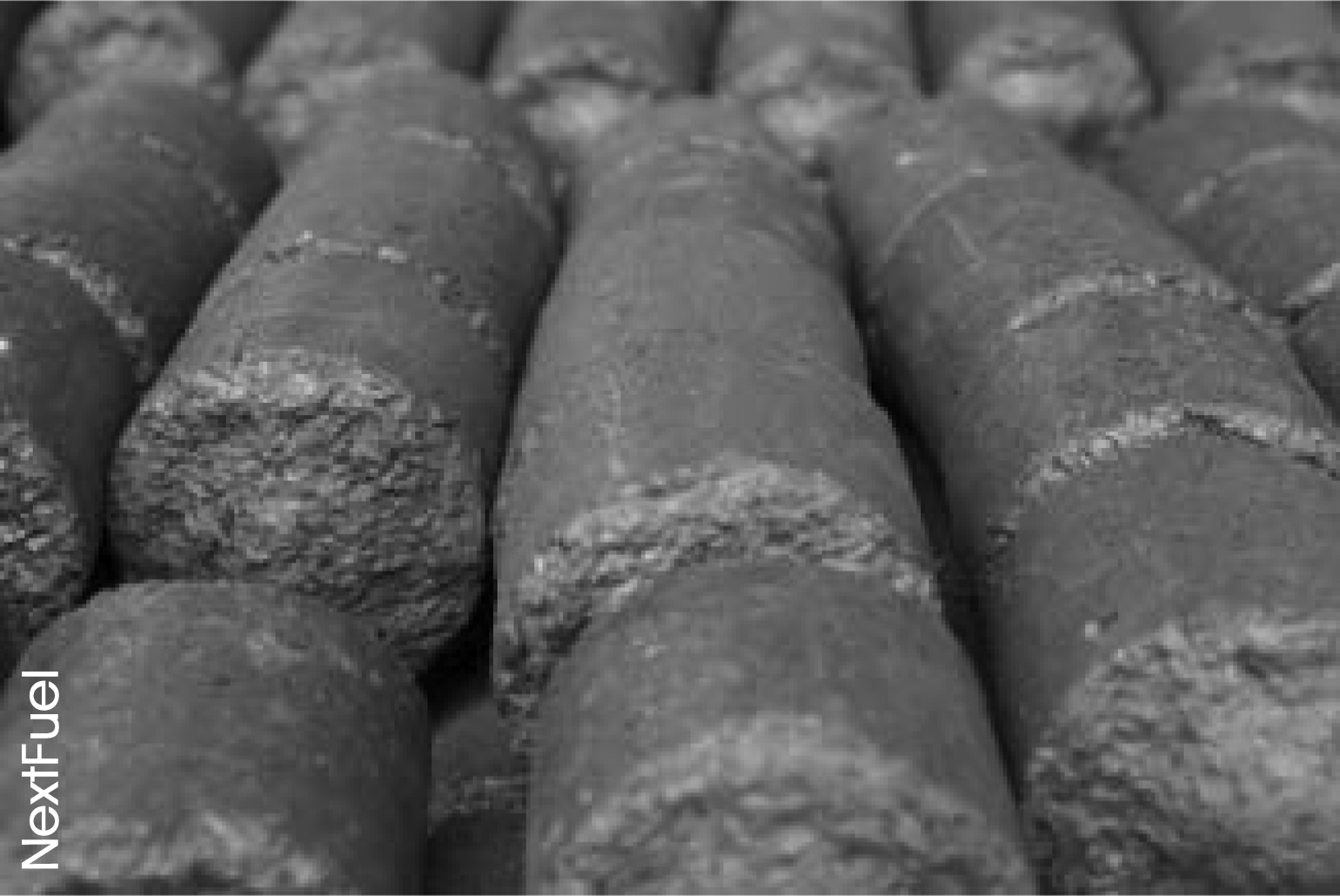
Swedish alternative fuel technology firm NextFuel has unveiled a “CO2 negative” briquette that could replace the coal or wood pellets used in fossil fuel‐burning power plants. According to NextFuel CEO Stefano Romano, the product is made in about a half hour from elephant grass using a low‐oxygen rotary reactor. The grass can be grown on a regular basis using the same parcel of land, making it more environmentally friendly than coal or wood. A typical factory could see its carbon footprint decrease dramatically during a year of use. “We can produce an infinite amount of clean, renewable energy,” Romano says. “We can produce our fuel with consistent high quality, and are able to produce at a cost that can compete with fossil fuels in terms of prices, thereby giving mankind a clean, cost‐effective alternative to burn.” The briquette has been tested at NextFuel's first plant in Austria and is being prepared for several large projects in East Africa, Asia, and South America. “Going forward we will begin exporting and licensing our technology to companies around the world,” Romano asserts.
As a fuel source, coal and wood pellets may give way to environmentally friendly briquettes made of elephant grass.
Say No More: Climate Change Will Soon Change How We Speak
The environment and physical structures aren't the only things being impacted by climate change. Languages are also under siege. According to a study by the United Nation's Intergovernmental Panel on Climate Change (IPCC), only half of the 7,000 languages spoken on Earth today will survive the century. Climate change will account for much of the loss, as evolving weather patterns will force smaller cultures to relocate and become “climate change refugees,” says study author Anastasia Riehl, director of the Strathy Language Unit at Queen's University in Ontario, Canada. “The resultant dispersal of people will lead to the splintering of linguistic communities and increased contact with other languages,” she explains. “These changes will place additional pressures on languages that are already struggling to survive.” When a language is lost, society also looses knowledge of the world, as descriptive words for items such as plants or social practices disappear, Riehl adds. “Some of climate change's effects are easy to see and to fear: homes destroyed by a wildfire, people swept away in flooded streets, crops withering in a drought,” she notes. “Other effects, like language loss, are less tangible and more complicated but also devastating.”
Canadian Green Seafood Labels Are Not Always Green
More than half of Canadian diners doubt that they are getting the truly sustainable seafood that they read about on the label, according to Marine Stewardship Council Canada (MSCC). Lenient Canadian laws toward labeling are a big part of the problem. For example, more than 200 fish species can legally be sold as snapper, making likely the accidental use of the wrong name and classification on a label. “Seafood mislabeling can happen due to an honest mistake, but in other cases it's fraud—a deliberate attempt to cheat people out of their hard‐earned money,” MSCC Program Director Jay Lugar says. “[In addition], illegal, unreported, and unregulated fishing undermine global sustainability efforts to protect our oceans and conserve marine biodiversity.” When it comes to brand and supermarket claims about sustainability, 70 percent of consumers want to see independent, third‐party verification and 64 percent want to know that the fish they buy can be traced back to a known and trusted source, Lugar adds. MSCC and the Aquaculture Stewardship Council are providing some of that oversight. Also, new food safety regulations that took effect in January 2019 will require every food business and importer to record the immediate supplier and lot number to certify their products' origins and identify sellers.
Green seafood may not be as sustainable as advertised, a situation that is not very surprising to Canadian consumers.

Firm Touts Lab‐Grown Beef
An Israeli food tech firm has developed the world's first beefsteak grown in a lab. According to a press release from Aleph Farms, the meat was created using a variety of cells painlessly extracted from a live cow that was otherwise left unaffected and unharmed. The finished product looks just like conventional beef, CEO Didier Toubia asserts. The taste needs some perfecting, but it otherwise “establishes a new benchmark in cell‐cultured meat technology.” The process is a breakthrough for an industry that has long been criticized for its treatment of animals used for human nourishment. “We're shaping the future of the meat industry—literally,” Toubia says. Other companies are producing lab‐grown meats, but only for unstructured items such as nuggets, burgers, and sausages. “Making a patty or a sausage from cells cultured outside the animal is challenging enough,” Toubia explains. “Imagine how difficult it is to create a whole‐muscle steak?” The prototype costs $50 per strip, and it's still three or four years away from commercial sale. But a few upscale establishments have already begun offering it to customers. Amir Ilan, chef of the restaurant Paris Texas in Ramat Gan, Israel, says the initial product is quite thin and will cook in a minute or so. “Aleph Farms meat has high culinary potential,” he notes. “But for me, it is a great experience to eat meat that has the look and feel of beef, but has been grown without antibiotics and causes no harm to animals or the environment.”
Food technicians have created the first edible, animal‐based meat grown inside a laboratory.