



Abstract

Books
Biodiversity and Climate Change: Transforming the Biosphere
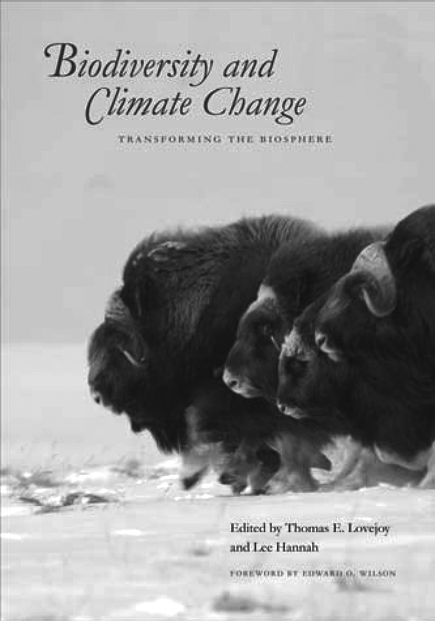
Thomas E. Lovejoy and Lee Hannah, editors
Yale University Press, 2019, $40
https://yalebooks.yale.edu/book/9780300206111/biodiversity-and-climate-change
Leading experts in the field of biodiversity are contributors to this book, which summarizes the current state of the biosphere and how it might change in the future. From climate change biology to saving biodiversity, the book includes the latest research, including the risk of extinction of some species, ocean acidification, ecosystem changes, and geo-engineering.
This resource comes at a time when it is known that human activities are changing the biosphere, and those impacts have not been fully addressed. Millions of species are being lost as climate change continues unabated. The changes to the climate due to greenhouse gas emissions threaten the atmosphere and the planet's living conditions.
The book explains climate change biology, what is happening now in regard to the interaction between climate change and biodiversity, dynamics of pollinator-plant associations in the era of climate change, and examples of what is happening to salmon and other species. The effects of climate change can be observed in the Bering Sea and among coral reefs, as people change the biosphere.
Research reported in this book suggests that most people trust information about global warming. The editors aim to explore the various links between biodiversity and climate change.
(Note: Thomas Lovejoy serves on the editorial board to this Journal.)
The End of Ice: Bearing Witness and Finding Meaning in the Path of Climate Disruption

Dahr Jamail
The New Press, 2019, $25.99
https://thenewpress.com/books/end-of-ice
Climate change is reducing the amount of ice on the earth. Author Dahr Jamail has traveled around the world to better understand what is happening to nature and people due to the loss of ice and glaciers. His book chronicles his journey and his conclusion—human-caused climate disruption has put the Earth in a “hospice situation.”
The book takes readers on a trip around the world so as to understand the damaging effects of greenhouse gas emissions, which have led to the Earth warming 10 times more quickly than in the past and the consequences of that heating, including extreme weather. Changes are happening more quickly than anticipated.
Those changes are not limited to ice. Jamail also discusses “sunny day flooding” in Miami, during which rising sea levels bring water into Miami and Miami Beach. He believes important historical artifacts should be moved to higher ground.
The book includes photographs of the author's journey. Jamail states he wants to do all he can to raise awareness about the situation and hopes that his journey will help people understand the urgency of the crisis on planet Earth.
Climate-Resilient Infrastructure: Adaptive Design and Risk Management
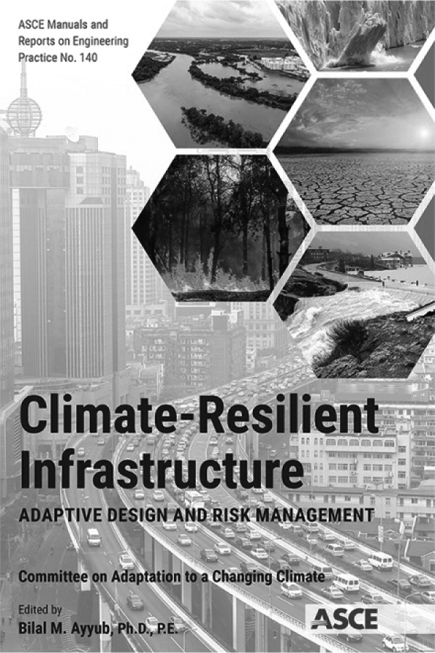
Bilal M. Ayyub, editor
American Society of Civil Engineers, 2018, $130
https://ascelibrary.org/doi/book/10.1061/9780784415191
This manual of practice offers guidelines for analyzing and designing infrastructure during a time when risk profiles are changing. Scientists predict continued extremes of climate and weather, and engineers must design to meet these challenges. The authors of the book, with the Committee on Adaptation to a Changing Climate at the American Society of Civil Engineers, based this manual on probabilistic methods of quantitative risk analysis.
The stated goal is to help engineers design infrastructure for the long-term while balancing it with reasonable costs. Engineers and decision makers need to stay informed about threats to critical infrastructure and conduct a risk-benefit analysis for added resilience.
The book begins by explaining the hazards associated with climate change, the importance of standards, and topics warranting more analysis. For example, weather changes that should be considered include changes in precipitation: Increased precipitation can have negative impacts on slopes and erosion while decreased precipitation can affect soil strength, leading to excessive drying, cracks, and loss of organic matter. The book defines the problems climate change is causing and the drivers and projected changes still ahead. Whole chapters are dedicated to flooding, including coastal components and elevation standards.
The focus remains on designing ways to make projects more resilient. Chapters feature examples and case studies, and content includes life-cycle engineering and economics, and risk management options. In addition to engineers, the book should be of interest to planners, researchers, and other people concerned with infrastructure resilience.
Reports
2019 State of Green Business
Joel Makower and the editors of GreenBiz.com
Available as a free download after registration at:
https://www.greenbiz.com/report/2019-state-green-business-report
This report features 10 trends in green business for 2019. Findings include: Programs in sustainability are becoming more embedded throughout business; there will always be a need for sustainability executives, and these leaders' role will expand; and while initially focused on managing risk, sustainability professionals now also harvest opportunities for companies.
Another trend identified in the report is the focus on soil and how it can be used to stabilize the changing climate. A few main points from the report include: Earth soils contain three times more carbon than the atmosphere and four times more living animals and plants; companies are already engaging in soil enhancement; large companies are providing agricultural suppliers with measurement tools; and agriculture contributes greatly to greenhouse gas emissions.
Corporate action on deforestation is another important trend cited in the report. Wildfires and loss of forests across the Earth have been ongoing for decades with replanting as the remedy, but forests remain in danger as more are destroyed to plant crops or allow animals to graze. Because trees help reduce carbon emissions in the atmosphere, several companies are investing in forests for conservation.
Green loans are identified as a trend that could be a game changer for corporate sustainability programs. The report notes that about $36.4 billion in sustainability and green loans were issued in 2018, with rates linked to sustainability performance. See the State of Green Business report for further details.
Assessing the Global Climate in 2018
National Oceanic and Atmospheric Administration (NOAA)
Available as a free download at:
https://www.ncei.noaa.gov/news/global-climate-201812
Global warming continues, with 2018 being the fourth warmest year on record during the past 139 years, behind 2016, 2015, and 2017, according to this report from NOAA.
Global land and ocean temperatures were at least nominally higher than the 20th-century average for the past 42 consecutive years. From 1880 to 1980, new record-high temperatures were set on average every 13 years. Since 1981, a record high has been set every three years on average. Also since 1981, the average rate of increase has been 0.31 degrees Fahrenheit.
Global land and ocean surface temperatures also have gone up and are higher than the 20th-century averages. In the Gulf of Mexico and Hawaii, annually-averaged ocean temperatures were the third highest in their respective records. The Caribbean, however, saw the lowest annual average ocean temperatures over the past six years.
Both the Atlantic and Eastern North Pacific hurricane seasons had above average activity in 2018. Annual precipitation in the contiguous United States was the third highest ever recorded, while Alaska had its second warmest year on record, and Hawaii experienced record-breaking rainfall with flash floods and mudslides.
NASA, the United Kingdom Met Office, and the World Meteorological Organization confirmed these findings.
Environmental Rule of Law: First Global Report

United Nations Environment Programme
Available as a free download at:
This report emphasizes the importance of staying “within the bounds of critical ecological thresholds” and understanding and accepting existing environmental laws to achieve the Sustainable Development Goals adopted by the UN in 2015. Such laws have been associated with slowing or reversing degradation to the environment. However, environmental rule of law is an evolving topic and the report states that strengthening such laws should be a priority.
In this first-ever look at global environmental rule of law, the report found that as of 2017, 176 countries had passed environmental framework laws, and 150 counties had included environmental protections or the right to a healthy environment in their constitutions. Additionally, cabinet-level departments dedicated to environmental protection exist in 164 countries.
Topics covered in the report include institutions, civic engagement and public participation, rights, justice, and future directions, which includes a section on laws and the Sustainable Development Goals, especially Goal 16—Peace, Justice, and Strong Institutions.
The report recommends undertaking a regular assessment of the state of environmental rule of law and supporting countries that are trying to strengthen their rules. More research is needed to determine what approaches are most effective. However, the report can provide a “roadmap for tracking the effectiveness of efforts to improve the environmental rule of law globally.”
Films
Decoding the Weather Machine
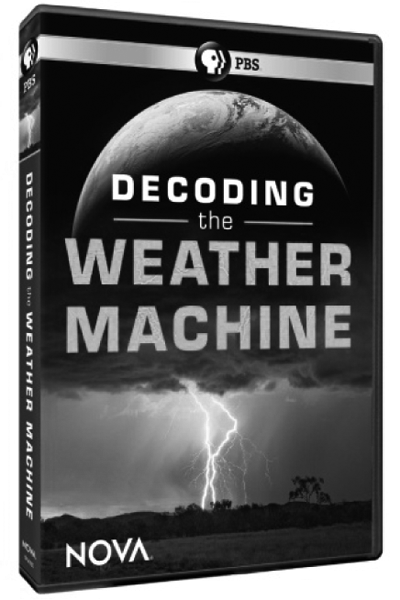
Doug Hamilton, producer, writer, director
PBS NOVA, 1 hour, 53 minutes
Available as a free download at:
https://www.pbs.org/wgbh/nova/video/decoding-the-weather-machine
Severe weather—including wildfires, floods, and storms—has changed as climate has changed. This documentary takes a historic adventure into the ice sheets, deserts, and oceans to determine where the planet is headed and explores how to alter this path. Glaciers are melting and sea levels are rising; more intense storms are leading to natural disasters. Earth's climate drives the weather and the extreme weather events. The film explains how science points to humans burning fossil fuels as the cause of climate change.
Sharkwater Extinction
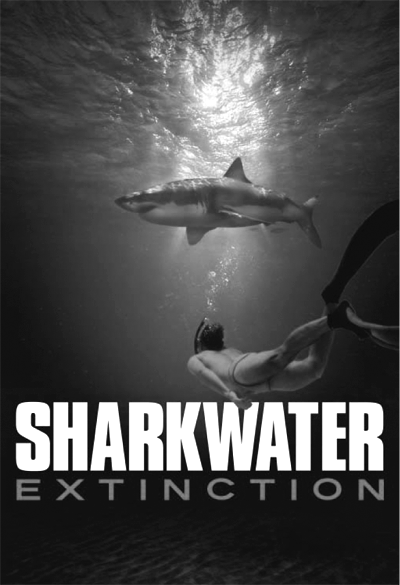
Rob Stewart, director
d films, 1 hour, 24 minutes
iTunes download, $12.99
Available at:
This film takes viewers to West Africa, Costa Rica, France, and Spain to expose the illegal shark fin industry that is leading the animals to extinction. Millions of sharks die annually, including many considered endangered species, to make shark fin soup, a pricey status symbol in some cultures. The shark population has declined by more than 90 percent over the past 40 years and the brutal killings continue even with conservation efforts. The documentary urges people to take action.
Websites/Apps
Global Recycling Day
https://www.globalrecyclingday.com
Started in 2018 to encourage people to recycle, Global Recycling Day provides information, educational resources, and many other resources on recycling. The focus is on how recycling reduces carbon dioxide emissions and protects the Earth's natural resources.
The site posits: “There are six major natural resources on the planet: water, air, coal, oil, natural gas and minerals. Recyclables have joined them, as the world's Seventh Resource.” It goes on to explain that recycling used materials allows people to avoid using the Earth's finite resources.
The Bureau of International Recycling created the global awareness day and established the Global Recycling Foundation to oversee the event and fund educational programs that focus on recycling activities. The founders consider recycling an urgent global issue and ask people to reuse, not waste, goods.
Recommendations include using less plastic, encouraging friends to recycle, repairing old things, putting only clean and dry items in the recycling box, learning more about recycling online, recycling electronics, and recycling packaging.
Ten Threats to Global Health in 2019—World Health Organization
https://www.who.int/emergencies/ten-threats-to-global-health-in-2019
The World Health Organization (WHO) outlines on this webpage what it considers threats to global health, listing air pollution and climate change as the “greatest environmental risk to health.” WHO reports that every day, 90 percent of the population breathes polluted air, which can damage heart, lungs, and brain. The organization estimates that annually seven million people die prematurely due to pollution. Low- and middle-income countries are especially hard hit. WHO cites the cause as burning of fossil fuels, which also contributes to climate change and estimates that an additional 250,000 deaths will occur annually between 2030 and 2050 due to climate change.