



Abstract

Books
Climate Change Science: A Primer for Sustainable Development

John C. Mutter
Columbia University Press, $20
http://cup.columbia.edu/book/climate-change-science/9780231192231
Readers will discover the basic and essential physics of planetary climate science and how it is changing. The book discusses hurricanes and glaciers, and the short- and long-term deleterious effects associated with a warming planet.
Three climate zones—tropical, temperate, and polar—exist in each hemisphere and relate to the vegetation found in each zone. Many things influence climate, including wind, clouds, ocean currents, rainfall, and land surfaces. Small changes have major consequences. The book explains how these factors interact and form patterns affecting climate and how human actions change the natural dynamics of climate.
The book looks into the future and how the Earth will respond to climate change. Temperature warming leads to rising water in the oceans and lakes, and the momentum continues to contribute to further warming, even if greenhouse gas emissions are reduced or remain the same. Emissions would need to drop to zero for warming to be impeded.
Harms of climate change include an increase in tropical diseases, such as malaria, and in weather events such as cyclones, which cause serious damage to both developed and developing countries. Poorer communities have fewer reserves to enable rebuilding. Damage to ports interrupts the flow of goods and commerce. Additionally, in tropical regions, climate will become more variable, increasing challenges to agriculture. The book concludes that “collective action” is needed to mitigate climate change.
The Future We Choose: Surviving the Climate Crisis
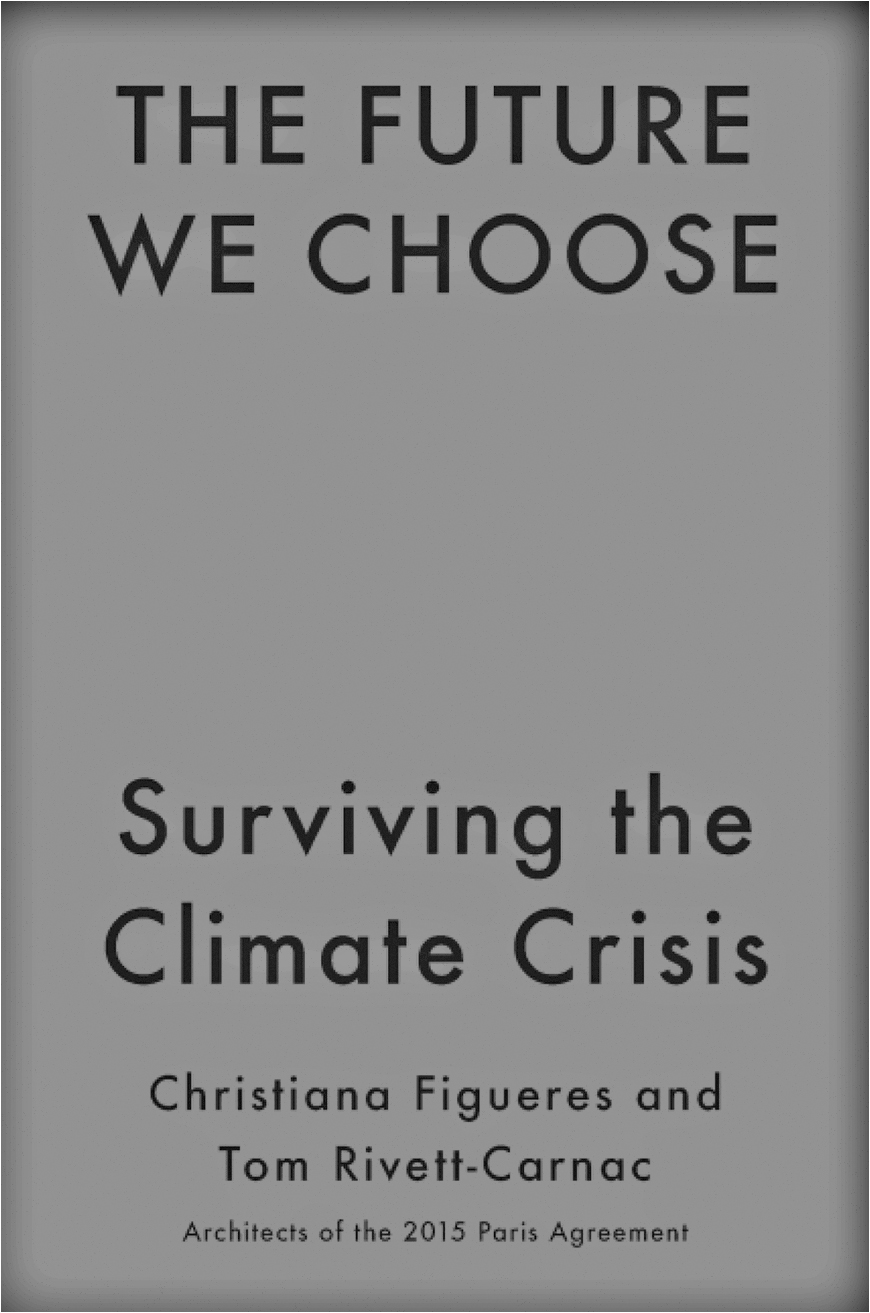
Christina Figueres and Tom Rivett-Carnac
Alfred A. Knopf, $23
The authors, who participated in negotiating the Paris Agreement of 2015, consider climate “the most urgent and consequential issue humankind has ever faced,” and their book makes the case for the need to create a different world and choose a brighter future. The authors describe the Paris Agreement as a unifying strategy to address climate change and what life will be like if its targets are met, and if they are not met. The authors caution that time is running out.
To meet the goal of carbon neutrality by 2050, greenhouse gas emissions must decline in the early 2020s, and by 2030, the level of current emissions must be cut in half. That means, according to the book, people must take action now. The decisions made today about transportation, land use, and energy will determine whether or not the world meets the 2050 goal.
Climate change should matter to people who care about health or social justice. Burning of fossil fuels releases greenhouse gases that contribute to climate change and pollute the air. The authors report that poor people are disproportionally affected by climate change because they are more exposed and “vulnerable to climate-related shocks,” and have fewer resources to react to disasters. Climate change also plays a role in economic stability and is a threat to future generations.
The 100% Solution: A Plan for Solving Climate Change

Solomon Goldstein-Rose
Melville House, $17.99
https://www.mhpbooks.com/books/the-100-solution/
A guide to explain what people will need to do to achieve negative greenhouse emissions by 2050, a United Nations consensus goal, this book discusses projects to fund, technologies to invent, changes to make in industries, and other steps to reach this important goal. The author, Solomon Goldstein-Rose, states he has two goals: to show that everyone needs to think larger about how to meet the goal and to present a technically and politically viable plan for getting the job done.
The book presents five pillars of action that will lead to a 100 percent solution, including using clean energy to produce electricity, electrifying everything possible, and creating carbon-neutral fuels for those devices unable to be electrified.
The author maintains that zero emissions can be accomplished without people sacrificing their existing lifestyles or endangering global economic development. He makes the case for solving the climate change problem 100 percent, across the globe, not taking incremental actions; noting that all changes made to achieve to negative emissions in developed countries must be acceptable in developing countries as well. Additionally, each change along the path to 100 percent must be equal to or cost less than current practice.
Reports
2020 State of the Air
American Lung Association
Available as a free download at:
Though it's been 50 years since the Clean Air Act of 1970, many U.S. cities continue to experience the presence of ozone and particle pollution. Air pollution threatens people's health and impedes progress on climate change. About 45.8 percent of Americans, 150 million people, live in counties with unhealthy ozone or particle pollution; this is up from 141.1 million in the 2019 report, 133.9 million in the 2018 report, and 125 million in the 2017 report.
The report covers quality-assured air pollution data collected by the federal, state, and local governments, and Native American tribal governments, in 2016, 2017, and 2018. These years were among the five hottest on record. More than 137 million Americans reside in counties that earned an F for excess ozone in the air.
The city with the worst ozone pollution remains Los Angeles. Other cities with unhealthy ozone days include Phoenix, Las Vegas, Denver, Salt Lake City, Chicago, and Milwaukee. Additionally, several smaller cities also are dealing with increased ozone. The most-polluted city for year-round particle pollution was Bakersfield, CA. Cities in the West and Southwest dominated the most-ozone-pollution list, particularly California with 10 of the top 25 most polluted cities. Wildfires were a serious contributor to spikes in California. The cleanest cities for ozone, year-round particle pollution, and short-term particle pollution were Bangor, ME; Honolulu, HI; Burlington-South Burlington, VT; and Wilmington, NC.
Consumer, Sustainability and ICT: Perceptions and Actions around Climate and the Role of ICT in Living Sustainably

Ericsson Consumer Lab
Available as a free download at:
This international survey assessed consumer attitudes, challenges associated with living an environmentally sustainable lifestyle, and the role of information and communications technology in helping people reduce their environmental footprint. The study was conducted prior to the COVID-19 pandemic, and Ericsson Consumer Lab notes that habits and attitudes may have changed due to the coronavirus.
Consumers are more concerned about pollution and climate change than they have been in the past. In the last 20 years air and water pollution concerns have increased from one in five people expressing concern to one in two, and climate change concerns have increased from 13 percent to 50 percent during that time frame. Most of the respondents stated that governments are responsible for protecting the environment, and 69 percent say citizens are responsible; 55 percent did not consider themselves responsible.
However, people were not able to identify what actions and strategies are most successful in helping the environment. For instance, up to 84 percent of those surveyed did not understand the significance of their own diet on the environment. More than one-third of the respondents, 36 percent, said they would use their devices for information about a more environmentally friendly lifestyle. They also indicated that they consider information and communications technology as a tool toward living more sustainably.
2020 Corporate Energy and Sustainability Progress
GreenBiz Group and Schneider Electric
Available as a free download at:
In a survey of 265 energy and sustainability experts from around the world and various industries, 87 percent of the respondents reported energy management as a core business operation that includes energy managers in the shops and in management offices. Changes in energy markets are responsible for the greater attention.
Among respondents, 58 percent indicated that climate change is a top risk to the supply of resources and energy. Companies that have set ambitious energy and sustainability goals are more likely to feel confident they can meet those goals and that the goals will “contribute positively to limiting global warming.” Achieving the goals will require investments in new technologies. The survey also found that companies using innovative funding, such as energy-as-a-service, were more likely to set more ambitious goals. Another increase: 37 percent of respondents indicated they are using Internet-of-Things devices, up from 18 percent in 2019. The three takeaways offered by the authors are that businesses should not ignore market factors, they need to be flexible and resilient, and they should be aware that change happens more quickly than expected.
This year's report also includes a look back at the previous decade. By 2025, the report projects renewables will surpass coal as the primary source of global electricity. The number of companies disclosing their emissions increased from 2,903 in 2010 to 8,361 in 2019.
Films
My Octopus Teacher

Pippa Ehrlich and James Reed, directors
Off The Fence/ZDF Enterprises, 84 minutes
At film festivals, fall 2020
For a year, Craig Foster, the film's producer, developed a relationship with an octopus and learned about the animal by diving into its world and watching and filming it survive in a freezing-cold underwater forest. Foster witnessed the secrets of the octopus's world and the drama of her life. The film won the EarthxFilm Best Feature Film Jury Prize.
Dispatches from the Gulf 3: Ten Years after the Deepwater Horizon Oil Spill
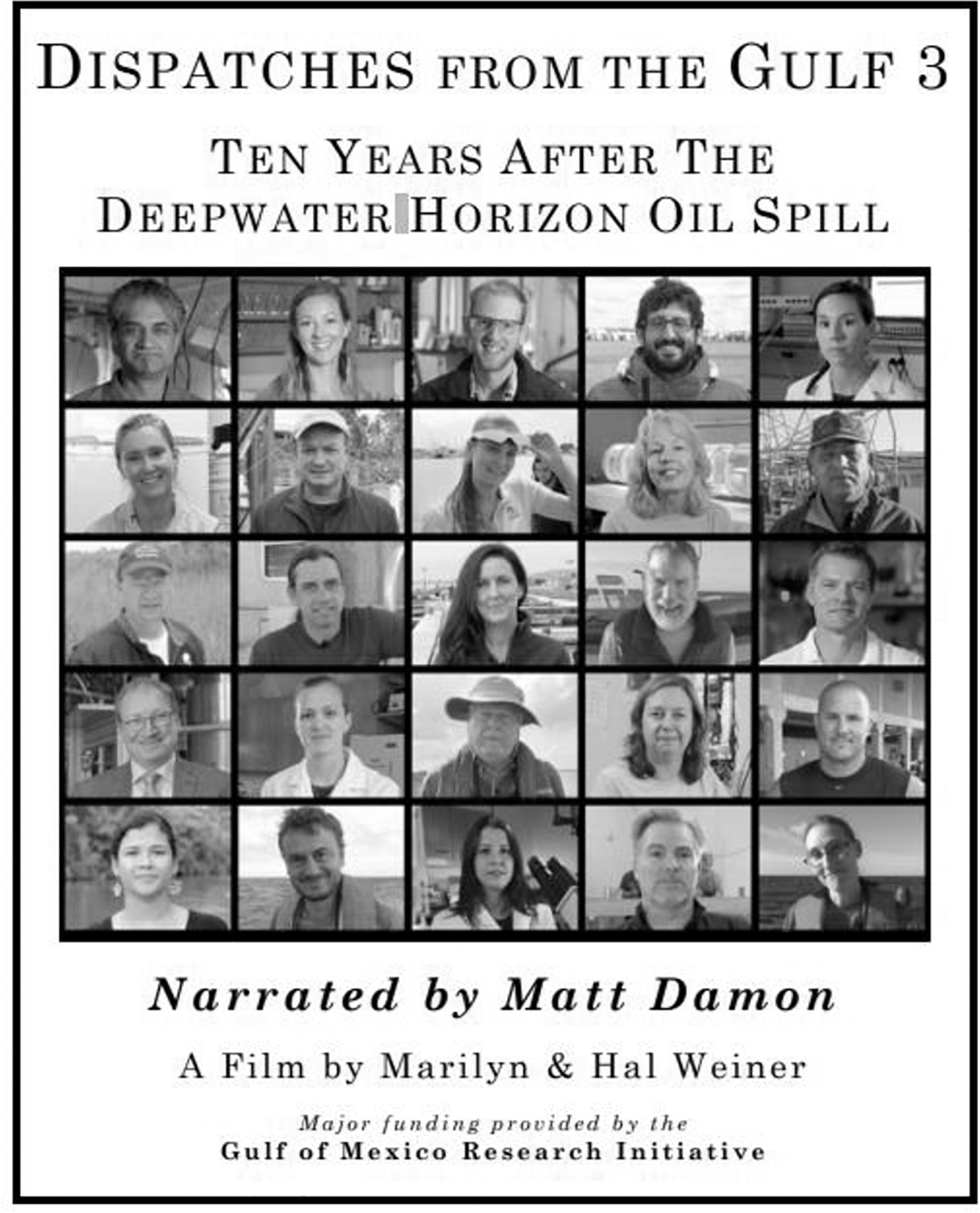
Hal Weiner, writer/director
Screenscope, 54 minutes
Amazon Prime, or $7.99 purchase; free to educators, museums, other nonprofits
https://www.screenscope.com/program_details/16-dispatches-3-details.pdf
Part of the Journey to Planet Earth series, this documentary explores the Deepwater Horizon oil spill and its aftermath and recovery process. The filmmakers found some environmental resiliency, but they also highlight how marine animals have been adversely affected. The dolphin population decreased by 1,000 in the area, and many are underweight or in poor health and are not reproducing at pre-spill levels. They discuss the use of dispersants and long-term problems that many people may not know about yet, as research continues. But ultimately this hope-filled documentary inspires a world still trying to recover from the largest offshore oil spill in history.
Online
Green Car Congress
https://www.greencarcongress.com/2020/05/20200517-psi.html
http://carculator.psi.ch/start
The Paul Scherrer Institut in Switzerland has developed the Carculator, a tool that can compare the environmental performance of passenger cars. The tool considers the vehicle's entire life cycle, including emissions from the manufacture of the car as well as from driving it. The user plugs into the Carculator where the vehicle will be driven and the size of the car. A battery electric car is the most environmentally friendly option.
Climate Science, Risk & Solutions: Climate Knowledge for Everyone
Created by the Massachusetts Institute of Technology, this website includes a history of climate science dating back to 1824, how people are affected by greenhouse gasses and carbon dioxide, health risks, and climate solutions. The website is interactive, asking users questions to improve their understanding of climate science.