







Abstract
In the realm of dental tissue regeneration research, various constraints exist such as the potential variance in cell quality, potency arising from differences in donor tissue and tissue microenvironment, the difficulties associated with sustaining long-term and large-scale cell expansion while preserving stemness and therapeutic attributes, as well as the need for extensive investigation into the enduring safety and effectiveness in clinical settings. The adoption of artificial intelligence (AI) technologies has been suggested as a means to tackle these challenges. This is because, tissue regeneration research could be advanced through the use of diagnostic systems that incorporate mining methods such as neural networks (NN), fuzzy, predictive modeling, genetic algorithms, machine learning (ML), cluster analysis, and decision trees. This article seeks to offer foundational insights into a subset of AI referred to as artificial neural networks (ANNs) and assess their potential applications as essential decision-making support tools in the field of dentistry, with a particular focus on tissue engineering research. Although ANNs may initially appear complex and resource intensive, they have proven to be effective in laboratory and therapeutic settings. This expert system can be trained using clinical data alone, enabling their deployment in situations where rule-based decision-making is impractical. As ANNs progress further, it is likely to play a significant role in revolutionizing dental tissue regeneration research, providing promising results in streamlining dental procedures and improving patient outcomes in the clinical setting.
Impact Statement
The utilization of artificial neural networks (ANNs) in medicine and dentistry, particularly within the domain of research on dental tissue regeneration, is witnessing a surge in popularity in contemporary times. This growth can be attributed to their potential as promising tools for decision-making support. ANNs are being highly suggested to enhance the precision of outcome predictions and the optimization of treatment strategies. Therefore, this review holds significance as it will enrich our comprehension of the incorporation of artificial intelligence technologies, particularly ANNs, into regenerative dentistry, thereby paving the way for novel opportunities in advancing this field.
Introduction to Artificial Intelligence
Artificial intelligence (AI) can be described as the combination of science and engineering in the production of intelligent machines, especially intelligent computer programs. 1 Compared with other fields, AI has a relatively short history. 2 The development of AI began over eight decades ago, in 1943. It was not until 1956, 13 years later, that the term “artificial intelligence” was coined by John McCarthy at a conference held at Dartmouth. 3
AI uses computers and technology to replicate human-like intelligent behavior and critical thinking, such as recognizing patterns in data and using this understanding to process new information.4,5 This means that computers empowered by AI can acquire knowledge, think logically, and achieve specific goals with a minimum of human interaction.1,6,7 AI technology has recently been used in a wide range of medical applications, including diagnostics and patient monitoring,8–12 drug development,13,14 as well as treatment strategies.15,16
AI comprises various components, with the primary components being (1) machine learning (ML) and (2) deep learning (Fig. 1). Nevertheless, in contemporary usage, these three widely recognized terms are often employed interchangeably to refer to systems or software that exhibit intelligent behavior. 17 Machine learning depends mainly on data to acquire and improve the ability to perform tasks, often in conjunction with new or improved algorithms. 18 It uses input data such as photos or text to generate output using models, allowing computers to learn from experience. 19 This technology empowers machines to comprehend and store enormous volumes of data without requiring explicit programming, 7 thus enabling them to address predictive challenges without direct human intervention. 3 Machine-learning algorithms can be categorized into several primary segments, namely regression, classification, and clustering. 18
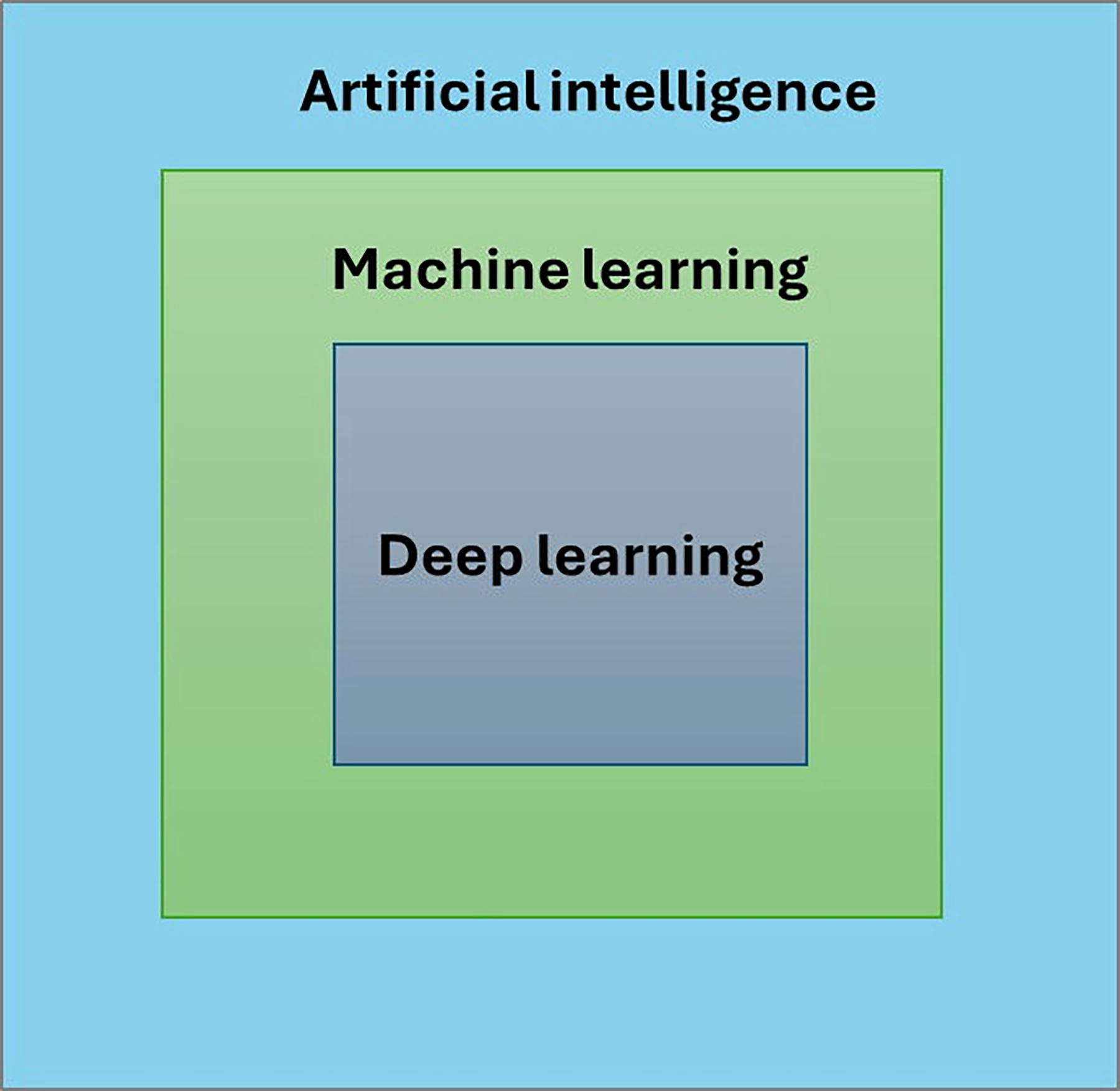
Artificial intelligence system with its primary components: machine learning and deep learning.
Deep learning is a branch 17 and a specialized subset 20 of machine learning. Deep-learning architectures generally utilize large or massive data sets and rely on perceptrons as fundamental elements of neural networks (NNs). 18 Hence, the term “deep” basically highlights the model’s architecture, which consists of multiple layers. 20 Each layer in deep-learning models reflects a degree of knowledge that has been learned. The layer nearest to the output showcases a higher degree of abstraction and discrimination, whereas the layer closest to the input focuses on the fundamental details of the data. 21
Various models are utilized in deep learning, with continuous advancements in both models and architectures consistently being made. Notable examples include (1) convolutional neural networks (CNNs), (2) artificial neural networks (ANNs), (3) recurrent neural networks (RNNs), and (4) long short-term memory networks (LSTM). CNNs are a type of NN, 22 specifically designed for processing sequential data and analyzing time-series information. By utilizing convolutional layers, CNNs excel in handling image and video data, with an emphasis on spatial hierarchies. They are extensively used and perform exceptionally well in image classification studies, 22 particularly within large image datasets like ImageNet. 23 Training a CNN typically involves estimating millions of weight parameters, necessitating a substantial number of data samples for effective model training and parameter optimization, given the depth of layers in the network. 24
ANNs are an information processing framework that draws inspiration from the biological neural systems of the human brain. This architecture consists of neurons, activation functions, input and output layers, as well as hidden layers. 22 It boasts greater generalization across various applications. RNNs are a type of ANNs designed to handle temporal data, including handwriting and speech. 24 It is particularly effective for sequential data and time-series analysis due to its incorporation of loops that facilitate the processing of such data. Essentially, it functions as a feedforward NN that utilizes an internal memory for input processing. 22 This architecture applies the same function across all inputs, with the output of each current input reliant on computations from prior inputs. 22 LSTM is an enhanced variant of the RNN specifically designed to handle longer sequences. It addresses the vanishing gradient issue present in traditional RNNs. LSTM networks facilitate the retention of previously stored information more effectively. 22 Conclusively, although they all are NNs in similarity, which involve backpropagation for training, and are based on layered architectures for learning complex patterns, each of them has its own specific parameters, such as number of units, number of layers, learning rate, activation function as many others.
Among the various systems available, this study aims to enhance understanding of ANNs, 25 a system that has facilitated the evolution of weak AI. 26 Following an extensive review, it has become clear that although the integration of AI in medical and dental research is on the rise, the use of ANNs in dental tissue regeneration remains largely limited. Current existing literature on tissue engineering is expanding; however, in the niche of dental tissue regeneration, the volume of available research is notably sparse, often depending on constrained technological resources, small sample sizes, or predominantly theoretical frameworks. This situation underscores a significant deficiency in knowledge and potential for further investigation into the application of ANNs in dental tissue regeneration. Hence, researchers in the field need to acknowledge and address this concerning gap.
Despite the dearth of research, further development is essential in this emerging field, as research utilizing AI will likely be crucial in the near future. To make it complicated, this niche area is complex and requires a thorough and profound understanding by the researchers. Therefore, the main goals of this article are to provide a foundational guide, particularly for dental tissue engineers, scientists, and dentists, and to stimulate further exploration. This article elucidates the essential principles of ANNs in clear terms and compiles previous research on the application of ANNs in dental tissue regeneration, thereby offering valuable references for future investigations.
ANNs—Basic Structure and Function
According to Park and Park (2018), the history of ANNs can be traced back to 1943, 26 when McCulloch and Pitts first introduced NNs as a means of emulating the human brain. 27 Subsequently, in 1951, Minsky and Edmunds pioneered the development of the initial NN with the creation of the stochastic neural analog reinforcement calculator. 28 Driven by the development of various efficient network topologies and learning algorithms, NNs emerged as a significant focus within the fields of ML and AI in the late 1980s. 29
ANNs are computational algorithms of sophisticated computer processor systems.26,30,31 They represent a versatile and robust machine-learning approach, 32 which enables computers to autonomously learn how to process data. 3 These NNs can be classified into three categories: (1) learning algorithms, (2) network structure, and (3) topology. 19 Drawing inspiration from biological nervous systems, ANNs are designed to replicate the structure and function of the human brain. 5 Structurally, NNs are organized in layers, with single-layer networks comprising input and output nodes, and multilayer networks incorporating hidden layers to handle more intricate tasks (Fig. 2). 32
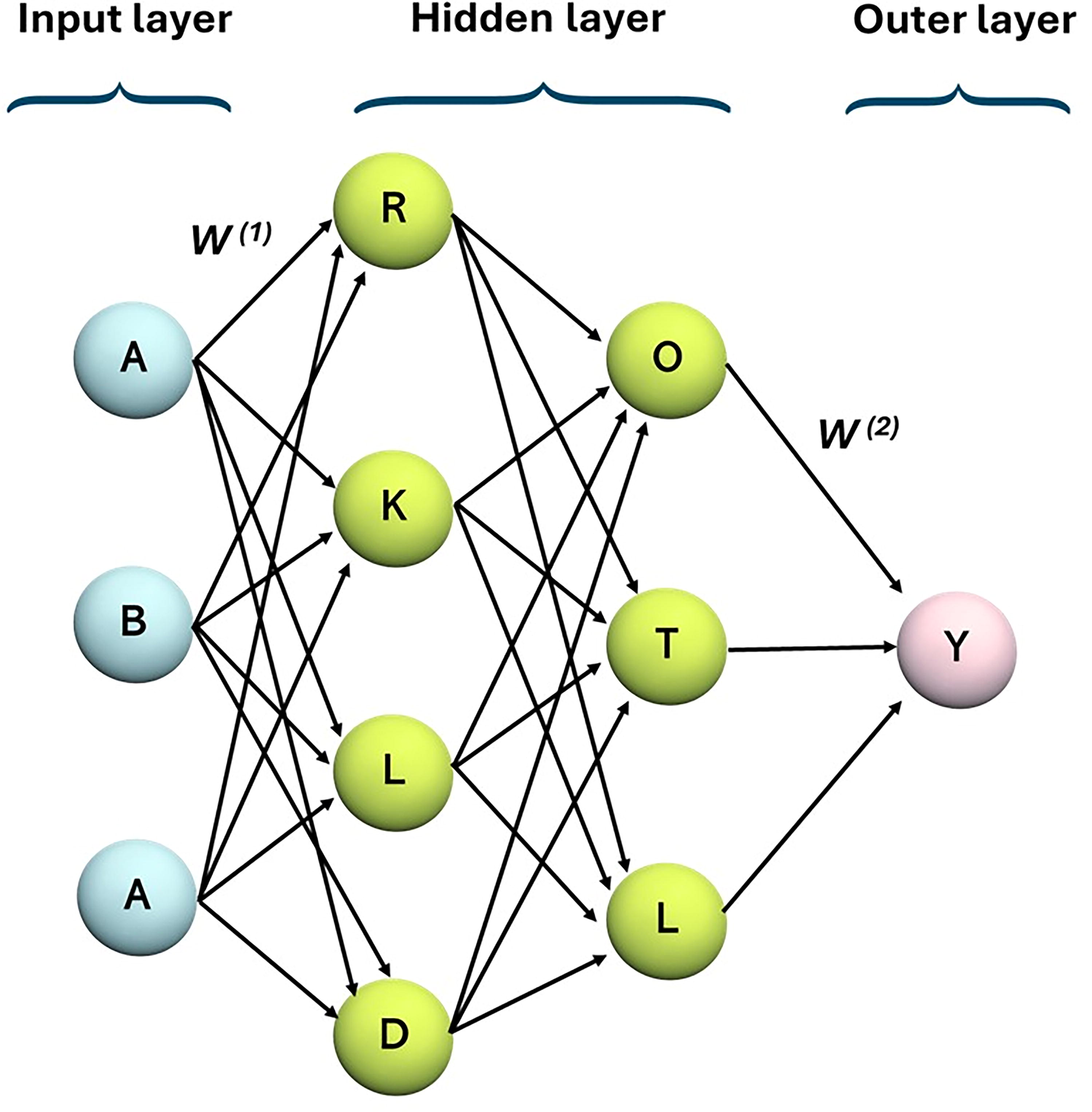
The network structure of ANNs is comprised of three layers: input, hidden, and output layers. The alphabets represent the data received and transformed. The symbol W(1) represents the synaptic weights connecting neurons, which encode the data’s representations and are acquired through input/output samples. ANN, artificial neural network.
The width, which describes how wide an NN refers to the largest number of neurons in one layer, and the depth expresses how many hidden layers it consists of. 33 The depth of the NN is responsible for hierarchical feature extraction but the width increases the ability to capture complex patterns in data. They jointly set the ability of a network to learn and generalize across training data. Provided the ability to train networks of greater depth, the ANNs were rebranded to be “deep networks.” 33 It has been observed by Xu et al. (2005) that NNs with one or two hidden layers demonstrate the highest predictive accuracy. 34 This fundamental structure of ANNs can be depicted using the plug-in function plot.nnet(), a versatile tool that allows a range of customizations to the visual representation of ANNs. 32
Using mathematical modeling, 35 these nonparametric modeling systems perform by adjusting interconnected weights between basic processing units known as neurons or nodes. These nodes, which are also known as units or features 36 are situated within the input, hidden, and output layers of ANNs. These nodes are similar to the ones in the human brain, interconnected through adaptive synaptic weights 35 and in NNs. 31 They vary in their design, the mechanism for adjusting weights as well as methods of information processing, and each exhibits unique characteristics such as the type and quantity of nodes in individual layers. 31
Similar to the human brain, ANNs work by receiving input signals and transforming them into output signals. The process involves the nodes in the input layers receiving feature variables, also known as predictors, input variables, and covariates 32 from raw data in the environment. The raw data could be in various representations, such as gene expression levels in specific transcriptomic experiments and the intensity value of a single pixel in an image. 36 The data were then transmitted to the hidden layers via weighted connections, activating neurons, summing values, and subsequently transmitting it to the output layer (Fig. 3). 35
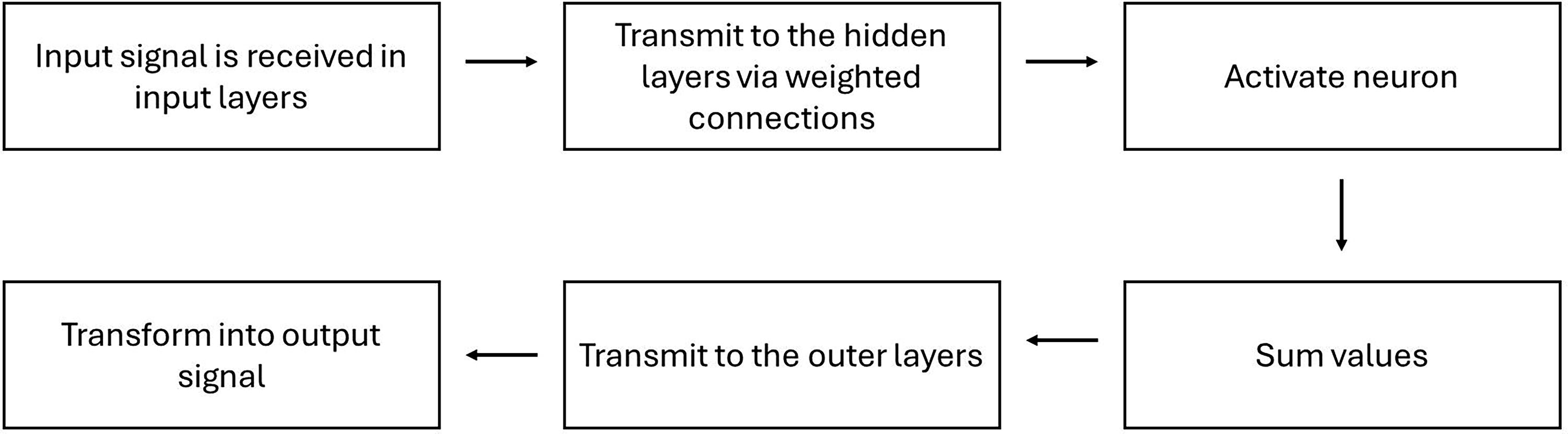
A basic illustration of the process of ANN, which is similar to the human brain.
The signal-processing procedure can be mathematically expressed as follows
32
:
The weight of each variable is determined by its significance before being subsequently aggregated and processed. 32 By determining the appropriate weight value, ANNs can produce output values that closely approximate the desired outputs. 35 Additionally, this process enables them to recognize more complicated patterns and make decisions based on the data in which they have been trained. 5
Methodology
A literature search was undertaken to identify relevant articles related to the use of ANNs in dental tissue regeneration. Articles published from 2000 to 2024 were gathered in electronic databases, including Web of Science, Scopus, PubMed, and Google Scholar using the keywords “artificial neural network and dental tissue engineering.” The articles were chosen according to the inclusion and exclusion criteria set, which comprised only research articles or reports published in the English language but excluded any review articles. The analysis found that, as scientific advancements progress rapidly, AI has made significant strides, particularly in the processing of complex data systems (Fig. 4).
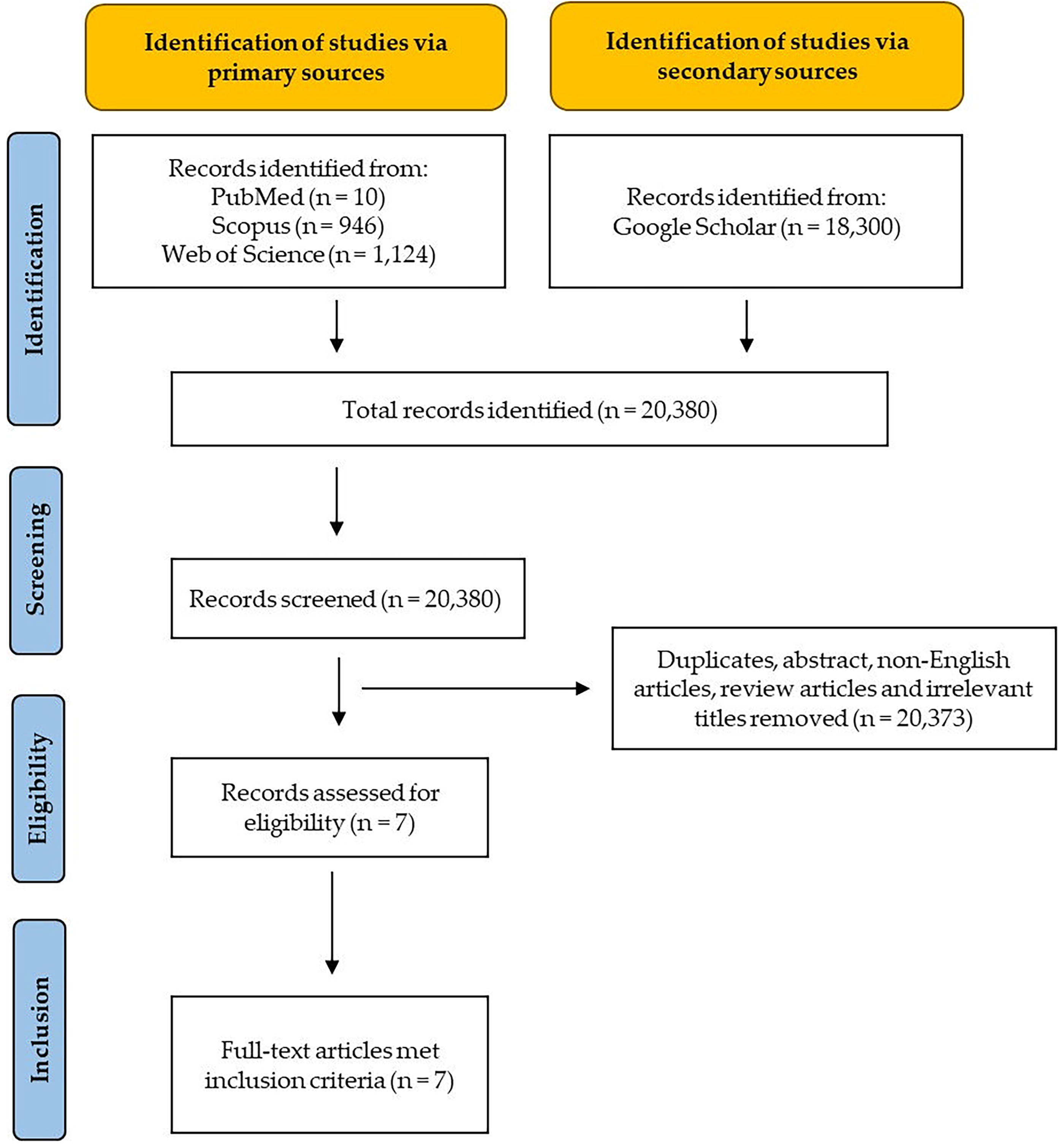
Flowchart of the article selection process.
Applications and Integration of ANNs in Dental Tissue Regeneration
Recently, the use of deep learning as one of the branches of AI especially in the medical field has been progressing rapidly 23 and has shown the potential to tackle complex medical tasks, 37 which has facilitated achievements once thought to be challenging for humans. Among the applications are in (1) prediction of diseases such as chronic obstructive pulmonary disease (COPD) using fractional dynamics foster deep learning (FDDLM), 38 Alzheimer’s disease using multimodal deep-learning models, 39 infectious disease using LSTM, deep NN method, autoregressive integrated moving average method, and the ordinary least squares method, 40 and COVID-19 using ResNet-101 CNN 41 ; (2) classification of disease such as in plant disease using EfficientNet deep-learning model 42 ; (3) detection of disease such as chronic kidney disease using image deep learning algorithm (DLA), risk factors (RF) as well as hybrid DLA combining image and RF; (4) treatment planning and assessment such as in the case of acute ischemic stroke using CNN 43 ; (5) radiology interpretation such as for chest radiograph diagnosis using CheXNeXt algorithm; and (6) neurology especially for neurons detection using DeNeRD–Detection of Neurons for Brain-wide analysis with Deep Learning, 44 and many others.
As for research in dentistry, advances in AI enhance various areas including image-based disease diagnosis, oral characteristic identification, and image segmentation within dentistry, 45 image-attribute identification including cavities, teeth, and implants, 19 dentin’s physical properties evaluation, 46 basal dental implant designation, 47 tooth surface loss prediction, 48 porous polymeric-based scaffold fabrication for dental tissue repair, 49 immune infiltration analysis and model diagnosis for periodontitis, 50 prostheses coloration, 23 and nanofluids heat transfer forecast. 51
Our comprehensive investigation using the keyword “artificial neural network and dental tissue engineering” disclosed that, while there are limited studies available, ANN models are being applied in various aspects of dental tissue engineering research—from forecasting tissue regeneration outcomes, deepening the understanding of material characteristics, optimizing scaffold design, and designing dental implants to predicting tooth tissue restoration. For example, Deng et al. (2009) used NNs and finite element analyses (FEA) to calculate the elastic modulus (Young’s modulus) of the tissue around dental implants. The study found that the NN model accurately determined the elastic modulus when analyzing displacement responses of implant–bone structures. The NN model proved to be robust in dealing with noise in the measurement data, making it suitable for clinical use. This inverse technique, which combined 3D FEA with NN, was successful in identifying essential elements in complex interactions between dental implants and bone. 52
Similarly, Zaw et al. (2009) used the reduced-basis method (RBM) and NN to estimate the elastic modulus of the tissue between dental implants and the surrounding bone. The findings showed that RBM-NN was able to precisely estimate the elastic modulus of the implant–bone interface. The study suggested that the use of RBM increased computational efficiency and the NN model could characterize the nonlinear correlations between structural parameters and nonstatic responses of complex dental implants. 53
In a study by Görler and Akkoyun (2017), a total of 96 panoramic computed tomography (CT) radiographs were used to train ANNs that evaluated canine root length and cervical width. The study found that the mean square error values for the estimates ranged from 2% to 4.4%. The study also suggested that ANNs are an alternative approach for predicting canine root length and cervical width that is suitable for dental implant surgery. 35
Another study by Roy et al. (2018) integrated ANNs, FEA, and genetic algorithms to optimize the porosity, length, and diameter of the patient-specific implant design. In this study, ANNs were trained to normalize the data and predict bone microstrain and implant stress for optimal osseointegration. 54
Moreover, Kung et al. (2022) used a deep learning network (DLN) with U-net, ANNs, and random forest models to optimize the design of dental implants concerning patient-specific characteristics such as occlusal force and bone properties. The study analyzed a data set that included 35 days of tissue development under different conditions. The DLN predicted daily tissue changes with an accuracy of 82% and successfully identified tissue types (fibrous tissue, cartilage, immature bone, mature bone, and resorption) with high precision (area under the curve, AUC > 0.86). 55 Taken together, these studies confirmed the use of ANN models to improve the precision and functionality of implant design and demonstrate their effectiveness in dental tissue engineering.
The use of ANN models for predicting tooth tissue structure 56 and restoration 49 was also investigated. For example, Vaccaro et al. (2014) developed a dental tissue classification system using ANN models and digital images of dental tissues from patients at different stages of treatment from a clinical database. The findings showed that the dental tissue classification system has good performance rates at discrimination among carious regions and healthy tissues, with the highest sensitivity achieved in the detection of the gingiva. The study suggested that integrating dental images and the ANN models can be used for the assessment of tooth structures and their surroundings. 56
Furthermore, Jiang et al. (2023) developed porous polymer-based scaffolds for tooth tissue restoration during fracture healing using RVE simulation and ANNs optimization. ANNs were used to predict the effects of different concentrations of titanium dioxide (TiO2) nanoparticles on the porosity and elastic modulus of the scaffold. Their results showed that increasing the weight percentages of TiO2 nanoparticles improved both the porosity and elastic modulus of the scaffold (Table 1). 49
Application of Artificial Neural Networks in Tissue Regeneration Research, Particularly Tissue Engineering
ANN, artificial neural network; NN, neural network; RBM, reduced-basis method; TiO2, titanium dioxide.
From our perspective, it can be proposed that advancements in the medical field may also apply to dental tissue regeneration, potentially utilizing similar or alternative advanced deep-learning techniques. For instance, insights from the prediction of healing stages in COPD 38 could inform the stages of dental tissue healing, ranging from the initial inflammatory response to complete tissue regeneration, utilizing FDDLM. This model may provide early insights into the likelihood of success for a regeneration strategy, indicating whether adjustments are necessary. In addition, similar to the approach taken by Nielsen et al. (2018) in predicting tissue outcomes following ischemic stroke through deep-learning and imaging biomarkers, 43 the modeling of tissue regeneration outcomes in dentistry can leverage deep-learning techniques, such as CNNs. This process can utilize various input features derived from CT, MRI, or histological images of regenerating dental tissues. The CNN model is capable of forecasting the success or failure of regeneration by analyzing spatial information alongside multiple biomarkers, including inflammation levels and bone density.
On the whole, this review suggests that while machine-learning and deep-learning approaches have been explored in recent dental research, significant gaps and discrepancies persist in the literature in the area of tissue engineering and regeneration. This could be because, although stem cell sources hold great promise as regenerative medicine and dentistry sources, assessing their effectiveness in different therapies necessitates a rigorous and complex simulation of clinical scenarios. Therefore, further research is essential to address these shortcomings and fully unlock the potential of these stem cells in tissue regeneration. Through continued exploration and enhancement of deep-learning techniques, the field of dental stem cell and tissue research can advance toward more precise modeling and prediction of their behaviors.
Advantages of ANNs in Dental Tissue Regeneration
Unlike traditional machine-learning methods that depend on manually extracted features from the data, properly trained deep networks have achieved remarkable success across a range of regression tasks and classifications. 29 Deep learning enables the automatic extraction and learning of representations directly from raw input data. 20 In terms of practicality and performance regarding medical images, traditional machine-learning methods represent these images in a matrix format, as these systems are limited to processing one-dimensional inputs. 57 In contrast, the image interpretation accuracy achieved by deep learning has been shown to match or exceed that of human specialists. 58 The testing phase of deep learning is relatively quick when compared with other machine-learning methods; however, the training of a model demands considerable time due to the large number of parameters involved. 59
As for ANNs specifically, among the advantages in dental research is that they are capable of learning from data without reliance on specific function assumptions, rendering them suitable for analyzing complex phenomena that lack distinct underlying functions. 32 The mechanism in ANNs enables the retention, storage, and application of information and scientific knowledge, mirroring the learning process in the human brain. 31 Hence, ANNs can aid in understanding the operations and functions of the human nervous system.
Additionally, these systems have the potential to be incorporated into the field of dentistry and facilitate dental professionals worldwide due to their high accuracy attributed to the presence of numerous hidden layers 23 and widespread applicability. 31 For example, in a study evaluating ANNs against logistic regression (LR) for predicting outcomes in head trauma, ANN models demonstrated superior performance, exceeding LR models 77.8% of the time in discrimination (the model’s ability to differentiate between positive and negative outcomes) and 56.4% in calibration (model fit). Conversely, LR proved to be more accurate in 68% of instances, likely due to the inherent simplicity of its connections. 60 However, the technical constraints of ANNs impede its widespread adoption in clinical medicine, notwithstanding its versatility and powerful capabilities as a machine-learning technique. 32
Moreover, NNs, together with fuzzy logic, and machine learning can be grouped as algorithms trained to perform tasks by analyzing patterns in data, rather than relying on explicit programming. 61 The utilization of different variables alongside the optimization of ANN structures using backpropagation algorithms has the potential for predicting tissue engineering strategies. 34 Tissue engineers are able to forecast the viability of dental tissue engineering approaches, furnishing guidance for experimental designers and ultimately mitigating ambiguity in identifying the most efficacious patient strategy. 34 Moreover, information access by nonspecialists to access information at an expert level due to AI-integrated decision-making 62 will be able to develop more preventive measures and efficient medications,6,51,62,63 thus lowering treatment expenses. This technology possesses substantial potential in supporting decisions for tissue engineering, furnishing precise advisory insights to tissue engineers, thus mitigating failures and enhancing therapeutic outcomes.
The application of deep learning can also ascertain the fate of dental stem cells by extracting fine details from extensive datasets through accurate and robust platforms and providing a strong NN model. This thus accelerates the advancement of stem cell applications. 3 This is because the physicochemical parameters of a molecule can be typically estimated in the form of tables and/or a set of rules using deep learning to predict the biological activity when it is not yet to be synthesized and tested in vivo or in vitro.
Challenges and Limitations of ANNs in Dental Tissue Regeneration
The advancement of AI in dental as well as medical research undeniably exerts a profound impact, aligning with the contemporary evolution of digital technology. Despite the potential benefits, the integration of AI specifically ANNs into dental tissue regeneration research presents numerous challenges, including the intricate nature of biological systems to accurately forecast cellular mechanisms. The complexity arises from the intricate interactions among various biological components and processes, involving multiple variables that can prove daunting for ANNs to effectively model and predict. Nonetheless, advancements in machine learning and DLAs, as well as computational models are continuously improving the ability of ANNs to analyze and comprehend the intricate behaviors of stem cells, thus unlocking their full potential in regenerative dentistry.
Another limitation is the deficiencies and biases in the available data. 64 NNs rely on extensive datasets to discern patterns, inadvertently introducing biases in data selection and fostering discriminatory outcomes. The AI algorithm is trained based on the existing data from particular populations or demographic groups in the past. Each data set could be biased according to gender, sexual orientation, ethnicity, environment, economic, and sociological factors. 65 Due to the lack of diversity in the trained data set, the AI model can develop a biased algorithm that can lead to false-positive or false-negative results. This complicates the treatment plan and the human decision. In the medical field, for example, a study by Larrazabal et al. found that gender imbalance in medical imaging datasets produces biased classifiers for computer-aided diagnosis based on AI algorithm systems. The authors demonstrated that while identifying different types of thoracic diseases using X-ray images, the diagnostic AI performed better on women when it was trained specifically to diagnose women, and vice versa. 66 This applies to ANNs in dental tissue regeneration as well. ANNs are only as reliable as the data on which they are trained. There are probabilities of measurement error, missing data, data not identified by algorithms, misclassification, and underestimation. Any data inconsistencies or biases can affect prediction accuracy. In addition, this system relies on massive volumes of high-quality data to produce accurate predictions. Hence, when the data are limited and heterogeneous, it results in difficulty in training ANN systems efficiently.
Another challenge could be within the realm of bioethics. 67 Ethical considerations surrounding NNs in dentistry underscore the imperative of striking a delicate balance between innovation and responsibility. As noted by Saudagar et al. (2021), ethical dilemmas frequently emphasized in the deployment of NNs within dental contexts encompass issues of privacy, confidentiality, informed consent, and security. 68 Furthermore, Baretto (2023) underscores the significance of justice, transparency, accountability, and the social repercussions of AI. 69 Techniques such as feature importance analysis and Shapley additive explanations can help explain how ANNs make predictions, making these processes more understandable for both clinicians and patients. 70 Comprehensive documentation of the AI model’s development, including information on data sources, preprocessing steps, and model architecture, is necessary to ensure transparency and accountability of ANNs. 71 Providing details about the training data, such as its demographic makeup, helps identify and address potential biases, promoting fair and reliable outcomes in clinical settings.
Another challenge is data quality, which compromises its trustworthiness. In the medical field, for example, previous studies have shown that AI algorithms are prone to bias and can make erroneous predictions, leading to misleading information and inaccurate decisions. Furthermore, the AI algorithm may not learn real medical pathology but only depends on inputs such as images, audio files, and text, which could affect its prediction or decision, especially if these inputs are altered.72,73 For example, Goodfellow et al. successfully misled the AI algorithm model, causing this model to misclassify a panda as a gibbon. 74 Zhang and Wu have shown that electroencephalogram-based brain–computer interfaces are vulnerable to adversarial attacks, by administration of a jamming module. The authors further reported that the attacks can be carried out without knowledge of the architecture and parameters of the AI models or data set. 75
Other than that, the proliferation of ANNs escalates concerns about privacy infringement and the safeguarding of individual data. 69 Since AI systems are built on huge data sets, security issues arise during data collection and sharing. 76 The expansive datasets raise apprehensions regarding the governance and oversight of data exploitation. Additionally, comprehending the decision-making process within AI frameworks, such as NNs, proves challenging, amplifying reliance on these systems. These systems need to be carefully validated to ensure their safety and effectiveness, especially in the clinical and laboratory setting. Transparent handling of data and clear explanations of AI decisions contribute significantly to the perceived reliability and ethical standards of AI systems in dental tissue research. Ensuring patient data privacy in dental tissue regeneration research that uses ANNs involves several important strategies. These include anonymizing and encrypting data to prevent unauthorized access, and using federated learning methods, which allow AI models to be trained on decentralized data without transferring it to a central location. 77 It is crucial to establish strict access controls, conduct regular audits, and secure informed consent from participants to maintain ethical standards. 78 Such measures are essential to building trust in AI applications and are key for their successful integration into clinical practice.
Additionally, the increasing use of patient data for analysis purposes when training AI algorithms can pose a threat to data protection and cyber security. 79 For example, in the medical field, insurance providers can gain access to patients’ confidential information in order to make financial gains. As a result, the patient will opt for privacy, which limits the availability of data for training the AI model and thus prevents it from realizing its full potential. 80
Because of these aforementioned challenges, there is growing skepticism regarding AI technology, especially in medical fields, raising fears of potential hazards and unforeseen consequences. These measures are directly linked to the quantification of AI trustworthiness, which encompasses the model’s accuracy, consistency, and fairness across diverse patient groups. Huang et al. defined the trustworthiness of AI systems through certification and justification in order to strengthen people’s trust in the accuracy of AI systems. 81 To address these issues, the researchers have developed several approaches to assess the trustworthiness of AI models and evaluated the trustworthiness of several common AI model designs. For example, Cheng et al. proposed DeepTrust, an NN for opinion and trustworthiness quantification that uses a formal trust metric, SL. DeepTrust is the first study to evaluate the opinion and trustworthiness of multilayer NNs based on their data and the topology of the NN. 82 In another study, Cheng et al. developed a trust-based max-pooling layer and TrustCNet, a building block for constructing trustworthy CNNs. In this study, the authors have shown how TrustCNets outperform the untrusted variants in terms of accuracy and reliability in situations where noise is present in the data. 83 These efforts have not only improved the accuracy of AI systems but also increased trust in their applications. Although these efforts are already established, they have not yet been fully integrated into the medical field.
By addressing these challenges, it is evident that further comprehensive studies are required to address the inconsistencies, and limitations present concerning ANNs and dental tissue regeneration research. It is necessary to focus on bridging these gaps through rigorous experimentation and analysis to enhance the efficacy and reliability of utilizing these deep-learning approaches in this field while maintaining patient trust and safety. Moreover, efforts should be made to standardize methodologies, data collection processes, and analytical techniques to facilitate more accurate and consistent results. Collaboration between experts in both the dental and deep-learning domains is crucial for advancing the understanding and applications of tissue regeneration, particularly tissue engineering through cutting-edge technological innovations. It is hoped that, by combining the knowledge and expertise of these two fields, more effective therapies and techniques that utilize ANNs can be developed to revolutionize the field of regenerative dentistry.
Footnotes
Acknowledgments
The authors would like to thank the Institute of Islamic Civilization, Faculty of Medicine, and Pusat Pengajian Citra Universiti, Universiti Kebangsaan Malaysia for the facilities provided.
Authors’ Contributions
Conceptualization: N.H.M.N. and N.I.M.; Methodology: N.H.M.N.; Writing—original draft preparation: N.H.M.N., N.I.M., and N.A.H.; Writing—review and editing: N.H.M.N., N.I.M., and N.A.H.; All authors have read and agreed to the published version of the article.
Disclosure Statement
The authors declare no conflicts of interest.
Funding Information
This study was supported by Universiti Kebangsaan Malaysia, under Dana Pecutan Penerbitan HADHARI (PP-HADHARI-2024) awarded to NHMN.