




Abstract
A comprehensive computational study modelling the operation of a rotating hollow-fiber bioreactor for artificial liver (BAL) was performed to explore the interactions between the oxygenated culture medium and the cultured hepatocytes. Computational fluid dynamics investigations were carried out using two-dimensional (2D) and 3D time-dependent numerical simulations, integrating calculations of diffusion, convection, and multiphase fluid dynamics. The analysis was aimed at determining the rotational speed value of the chamber to ensure homogenous distribution of the floating microcarrier-attached aggregated cells (μCAACs) and avoid their sedimentation and excessive packing, analyzing oxygen (O2) delivery and cellular O2 consumption as an index of cellular metabolic activity, and analyzing the fluid-induced mechanical stress experienced by cells. According to our results, homogeneous distribution of cells is reached at a rotational speed of 30 rpm; spreading of cellular concentration at around the initial value of 12% was limited (median = 11.97%, 5th percentile = 10.94%, 95th percentile = 13.2%), resulting in uniform suspension of μCAACs, which did not appear to be excessively packed. Mixing within the rotating fluid caused a maximum fluid-induced stress value of 0.05 Pa, which was neither endangering for liver-specific functions of cultured cells, nor causing disruption of the floating aggregates. Moreover, an inlet medium flow rate of 200 mL/m with a partial pressure of oxygen (pO2) value of 160 mmHg was found to guarantee an adequate O2 supply for the hepatocytes (2.7 × 10⁸ hepatocytes are simulated); under such conditions, the minimum pO2 value (23 mmHg) is above the critical threshold value, causing the onset of cellular hypoxia (10 mmHg). We proved that numerical simulation of transport phenomena is a valuable tool for the computer-aided design of BALs, helping overcome the unsolved issues in optimizing the cell-environment conditioning procedure in rotating BALs.
Introduction
Regarding design specifications required for BALs, it has been demonstrated that the devices that allow hepatocyte aggregation improve physiological cellular activities. 16 In addition, cultivated hepatocytes are anchorage-dependent cells; 17 therefore, in designing BAL support devices, it is important to choose the proper cell-environment conditioning procedure to permit cells to perform their functions correctly. Furthermore, maximizing oxygen (O2) and nutrient delivery to the hepatocytes is critical for optimal functioning, because insufficient oxygenation is the main limiting factor for cell viability in BALs, resulting in the most common cause of performance decrease for such devices.18,19 Viable hepatocytes have greater O2 consumption rates than other types of mammalian cells because of the intense metabolic activities of the liver.20,21
To guarantee adequate O2 supply, various design solutions have been developed. Table 1 summarizes the most relevant devices that have undergone clinical trials. 33 With reference to Table 1, several considerations can be drawn. First, most devices are based on hollow-fiber technology. Several studies have shown how hollow-fiber-based devices present relevant advantages over other bioreactors, such as flat-surface geometry and packed beads bioreactors, 19 ensuring efficient mass transfer, immunoisolation barriers during the dyalization treatment with xenogenic and allogenic hepatocytes, protection of the cells from flow-induced mechanical stress, and the possibility of culturing microcarrier-attached cells, allowing for hepatocyte aggregation. Despite this, hollow-fiber-based BALs suffer from some limitations, primarily related to O2 delivery to the viable cells. 34 The transport of substances within hollow-fiber BALs is non-physiological, characterized by diffusion rather than convection; the resistance to flow associated with the fiber thickness and the relatively low solubility of O2 in aqueous medium thus limit the delivery of O2 and nutrients. 35 Such limiting factors do not allow the realization of a well-oxygenated environment for high-density cell culture. All liver support systems (based on hollow-fiber technology) failed to completely and permanently replace the functionality of the damaged native liver.
Most of the devices are designed based on hollow-fiber technology. The plasma is perfused through the hollow fibers while microcarriers-attached hepatocytes are cultivated in the extra-capillary space (ECS).
RCT, randomized controlled trials.
Recently, particular interest has been shown in the design of rotating BALs: the Rotatory Cell Culture System (RCCS), introduced by NASA, 36 enables the growth and suspension of anchorage-dependent cells under a simulated microgravity condition within a three-dimensional (3D), low-shear-stress, high-mass-transfer, and high-oxygenation environment, allowing for the formation of 3D organized tissue-like structures and thereby preserving cell viability.37–39 Several authors reported encouraging results in culturing primary liver cells in RCCS,40–44 which seems to be the condition of choice for culturing hepatocytes. RCCS allows limitations related to cellular perfusion to be overcome, adding convection in O2 and nutrient delivery. This task is achieved thanks to the rotation of the breeding chamber, which mixes the oxygenated medium in which cells float under laminar flow. Avoiding the onset of fluid turbulence, which is responsible for cell damage, the microgravity condition improves the maintenance of cell viability in bioreactors based on the stirring and agitation mechanism. 40
In the present study, the functioning of a RCCS BAL that combines the advantages of hollow-fiber-based devices with the advantages guaranteed by operating in microgravity was analyzed using a computational approach. The bioreactor objective of our investigation was recently proposed by Wurm et al., 44 who reported the first experimental evidence of the efficacy of the BAL system in enabling high-density cell growth and viability maintenance, adequate O2 delivery to cultured cells, and better removal rates of urea and albumin from the blood plasma than the commercial device Synthecon, 44 (Synthecon Inc., Houston, TX) and by Pavlic et al., 45 in which the efficacy of the BAL in treating patients undergoing liver failure is reported. Recently, Wurm et al. 46 also reported encouraging results in using the rotating BAL for standalone liver support. On the basis of these previous in vitro tests,44–46 we aimed at searching for the optimal functioning conditions of the BAL developed by Wurm et al. 44 for long-time culture of microcarrier-attached aggregated cells (μCAACs) within the rotating breeding chamber.
In this study, we propose a comprehensive numerical investigation, providing a detailed analysis of the transport phenomena occurring inside the breeding chamber. A 2D model was first developed to investigate the effects of microgravity on suspension of μCAACs, in particular to search for the rotational speed value of the chamber that would ensure the appropriate homogenous distribution of aggregates within the fluid domain. Then, a 3D model was developed to describe the mass-transfer interactions between the oxygenated culture medium and the cells; the implemented 3D model provides a global analysis of the functioning of the device, describing the microgravity motion of the viable μCAACs, analyzing the internal filtration of the culture medium through the hollow fibers, predicting the delivery of O2 to the cells and the cellular O2 consumption, and providing for calculation of the fluid-induced stress experienced by floating aggregates, integrating diffusion, convection, and multiphase fluid dynamics calculations.
Materials and Methods
The BAL device
The investigated device (Fig. 1) is a hybrid BAL, owned by Fresenius Medical Care GmbH 44 (Bad Homburg, Germany). The device, designed for culturing viable hepatocytes under simulated microgravity conditions, provides mass exchange by internal filtration through a bundle of hollow, selective, semi-permeable, porous fibers (polysulfone, 340-kDa cutoff, 11-cm length) placed in the middle of the breeding chamber. The culture volume of the cylindrical breeding chamber is approximately 85 mL. This BAL is meant for culturing and growing suspension cells aimed at assisting the recovery of native organ functionality (bridge to recovery) or temporarily replacing it (bridge to transplantation) while supporting patients affected by end-stage hepatic diseases and is embedded in an extra-corporeal circulation circuit.
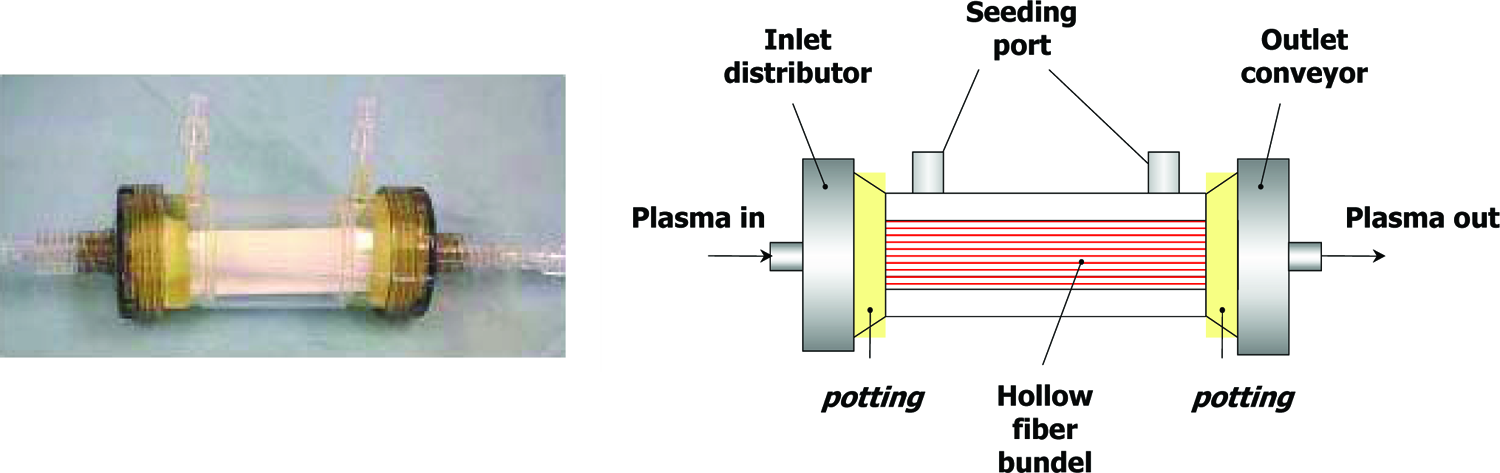
Picture of the prototype (left panel) and a schematic representation of the bioartificial liver (BAL) (right panel). It is a hybrid bioartificial device, in which viable hepatocytes are active components of the system. The patient's plasma is perfused through the hollow fibers while hepatocytes are cultivated in the extra-capillary space; the direct plasma–cell contact is due to plasma filtration in the cellular compartment enhance efficient mass transfer. The cutoff (pore diameters) of selective membranes of fibers avoids the filtration of proteins such as immunoglobulins (preventing immune-mediated injuries due to the use of allogenic and xenogenic hepatocytes). Permeable membranes separate the hepatocytes from the flowing plasma, effectively protecting the cells from flow-induced shear stresses. Culturing microcarrier-attached cells greatly facilitate nutrients and waste transfer. Color images available online at
Under in vitro conditions, a culture medium (10% bovine serum solution with a density value of 1.0065 g/cm3) flows through hollow fibers (the fiber compartment). The medium is oxygenated using an external oxygenator before entering the fiber bundle, thus working as an O2 fluid vector for the cultured hepatocytes.
Adhering on the surface of microspherical carriers of Cytodex 3 (Sigma, Vienna, Austria), which are uniform in size (mean diameter 175μm; range 135–215μm), cells float in the culture medium solution (the extra-fiber or cellular compartment), forming spheroidal aggregates with a mean diameter of 500 μm. Such aggregates are composed of Cytodex 3 microcarriers connected to one another by means of microvillous protrusions on the surface of the clustered, attached hepatocytes (which fill the gaps between the microcarriers). In vitro observations revealed that growing small human hepatocytes for 12 days in the presence of Cytodex 3 microcarriers under near gravity-free conditions, formation of μCAACs with a mean size of 15 beads (mean diameter = 500 μm) occur within the breeding chamber. 46 In vitro culture tests assessed the formation of approximately 180,000 μCAACs within the breeding chamber when 2.5 × 10⁶ microcarriers and 106 cells/mL are seeded within the bioreactor volume.
Preliminary analysis of internal filtration
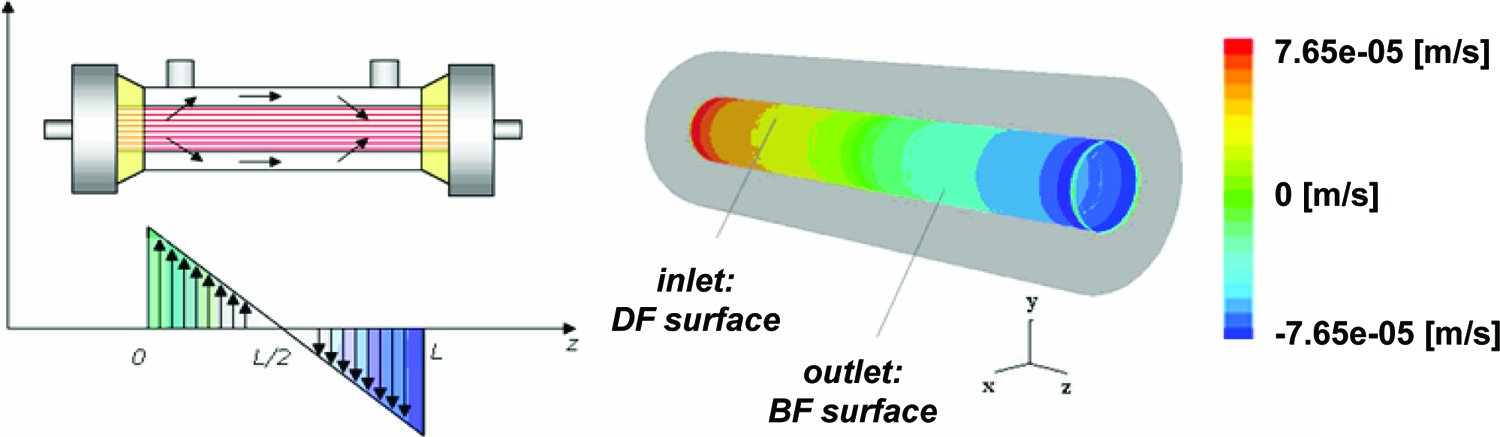
The flow rate QUF involved in the internal filtration process through the hollow fibers was estimated according to experimental tests over five prototypes. By deriving experimentally the hydraulic resistance (rf) of the fiber bundle and the hydraulic permeability (Lp) coefficient of the fiber wall (mean value rf = 0.327 mmHg × min/mL, range = 0.304–0.377mmHg × min/ml; Lp = 0.749 ml/min × mmHg, range = 0.693–0.796 mL/min × mmHg), it was found that a 3% share of the inlet flow rate Qin is available for perfusing the cellular space by participating in internal filtration (see Appendix for details). The ultrafiltration (UF) profile was linear and asymmetric with respect to the middle section of the active fiber length, as shown in Figure 2 (left panel).
Schematic representation of ultrafiltration (UF) profile through hollow fiber walls within the BAL (left panel) and contour plots of the radial UF velocity profile assigned in the model through a dedicated user-defined function (right panel). DF, direct filtration; BF, back filtration. Color images available online at
Working conditions
Before the computational fluid dynamics
Data provided by the analysis presented in this section were used as boundary conditions for the implementation of the CFD model.
CFD model
Two-dimensional and 3D time-dependent numerical simulations were carried out using a properly customized finite volume technique-based commercial software (Fluent 6.3.26, ANSYS Inc., Canonsburg, PA), integrating calculations of diffusion, convection, and multiphase fluid dynamics.
The concomitant presence of the fluid and of the cellular aggregates was modelled using the Eulerian-Eulerian multi-phase approach, which allows mixtures composed of multiple separated yet interacting phases to be described 47 (see Appendix for details). The oxygenated culture medium is the primary phase of the mixture, and the μCAACs represent the secondary immersed phase.
Based on the available experimental data, 47 we decided to model the μCAACs' motion (suspension, mixing, and sedimentation) modelling 500-μm particles, uniform in size and homogeneously distributed within the medium, as the initial condition. An initial value of 12% was set for the volume fraction (VF) of μCAACs within the medium, corresponding to a total number of 1.8 × 10⁵ μCAACs, with 2.7 × 10⁸ attached cells. The equations solved by the numeric solver and the mathematical formulations related to the numerical simulations are described in detail in the Appendix.
Two-dimensional microgravity condition analysis
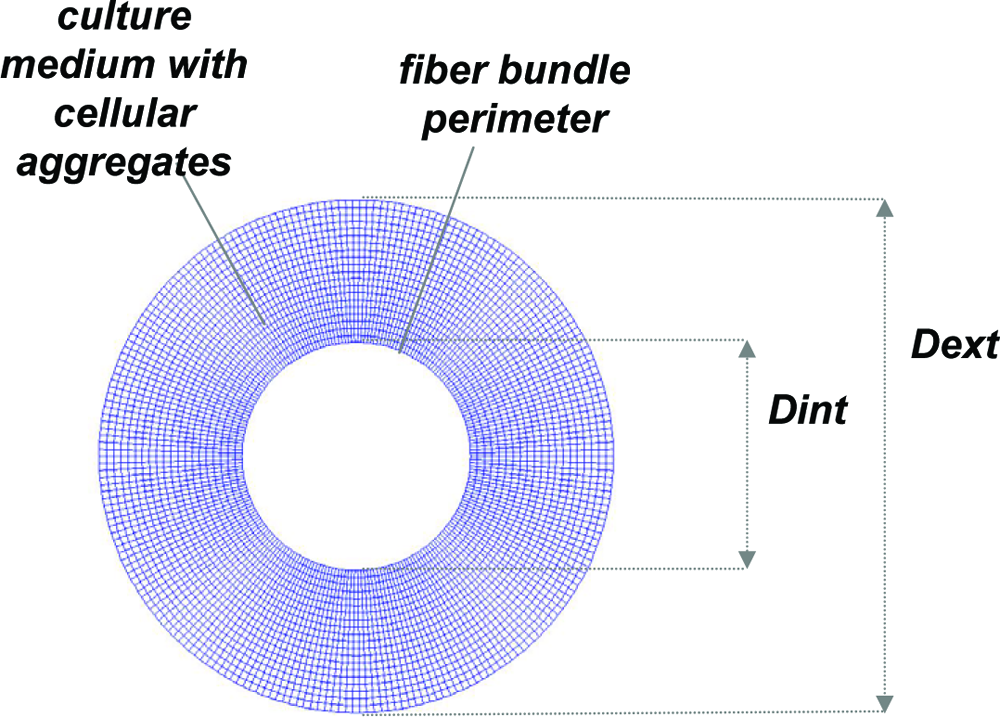
The 2D model (Fig. 3) was used to investigate the effect of microgravity on floating aggregates. The cross-section of the culture chamber's inner volume was simplified using the central fiber bundle modelled as a solid cylinder. The volume occupied by the fluid, hence, results in an annular area. The internal and external circumferential walls, delimiting the fluid region of interest, were modelled as rotational walls to simulate microgravity condition motion.
Mesh of the two-dimensional model simplifying a cross-section of the device. The inner volume's cross-section is modelled as an annular area (Dint = 1.8 cm, Dext = 3.6 cm); the central core represents the fiber bundle section. Color images available online at
The analysis was aimed at determining the appropriate rotational speed value that would ensure a homogenous distribution of the aggregates within the fluid domain, achieving cellular suspension and avoiding sedimentation on the device walls and the formation of excessively packed μCAACs.
A set of unsteady-state numeric simulations was performed with the 2D model, varying the rotational velocity of the device in the range of 5 to 35 rpm. The simulated time was equal to 300 s.
Three-dimensional model: Evaluation of O2 concentration profile
The analysis with the 3D model was aimed at predicting simultaneously the evolution in time of the motion and distribution of the μCAACs, the distribution of O2 within the cellular compartment as a function of the internal filtration of the oxygenated medium, and the cellular O2 consumption as an index of cell metabolic activity. Also, evaluation of the fluid-induced mechanical stress was performed during numerical simulations at various rotational speeds to check for no damaging fluid-induced stress values experienced by cells, which could be responsible for μCAAC disruption as well a decrease in specific liver functions of cultured cells.
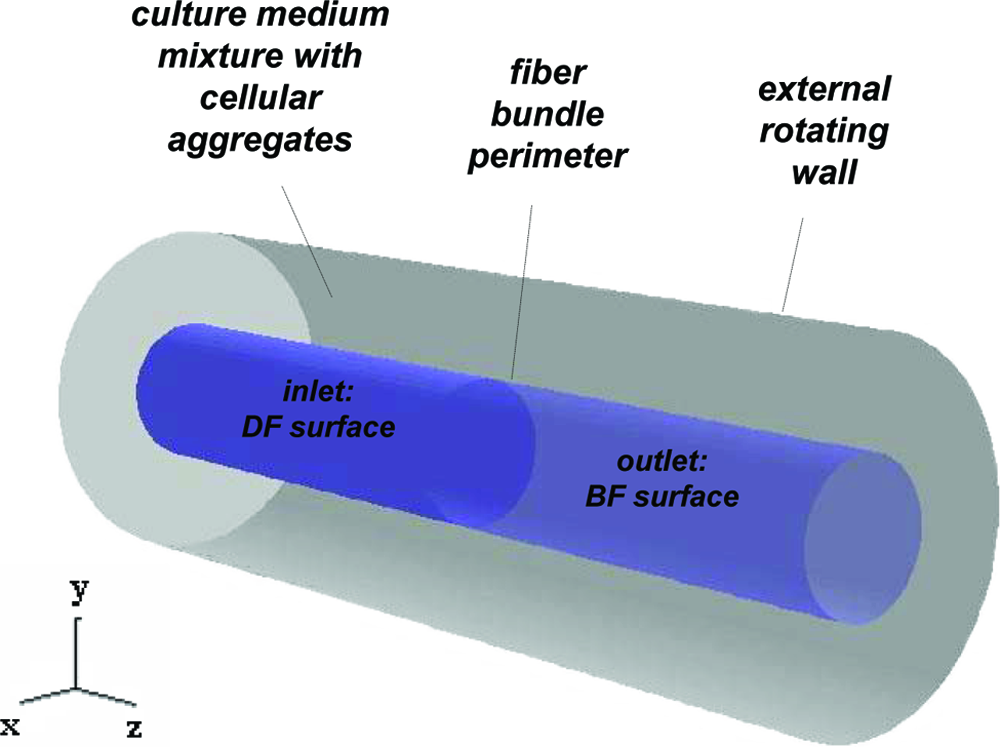
Figure 4 shows the 3D fluid domain; it is an annular region representing the fluid volume of the BAL, in which hepatocytes are immersed within the medium, excluding the central volume, occupied by the fiber bundle. In predicting O2 delivery to viable hepatocytes and O2 distribution within the medium, the numerical model accounts for calculation of diffusion and convection of the dissolved O2 filtering within the fluid. Furthermore, parameters related to O2 delivery (inlet flow rate and pO2 values) have been calculated and set considering the most demanding condition in cellular O2 consumption (i.e., that all the cultured cells have maximum O2 consumption rates during numerical simulations). This is as if to say that we are considering the bioreactor working in terms of maximum O2 consumption by hepatocytes; a sort of “worst case” analysis was carried out.
Three-dimensional computational fluid dynamic model of the fluid volume of the bioreactor. The annular region represents the fluid volume of the bioartificial liver where hepatocytes are suspended. Mass exchange between the fibers and the cellular compartment was modelled to occur at the interface surface of the central hollow cylinder, modelling the fiber bundle. L = 11 cm, Dext = 3.6 cm, Dint = 1.8 cm. DF, direct filtration; BF, back filtration. Color images available online at
Details related to the equations, the mathematical formulation, and the boundary conditions of computational model are reported in the Appendix. The simulated time is equal to 1200 s.
Results
Working conditions
A Qin value of 200 mL/min was evaluated to ensure appropriate O2 delivery when a pO2 value of 160 mmHg is set for the oxygenated culture medium; under such conditions, the medium flow rate involved in internal filtration produces, by sole convection, a global O2 delivery exceeding the requested O2 consumption for the given numbers of cells.
Two-dimensional and three-dimensional microgravity condition analysis
Figure 5 shows the contours of the VF of the secondary phase from six different 2D simulations, at various rotational speeds, all plotted at the end of a 300-s simulated period.
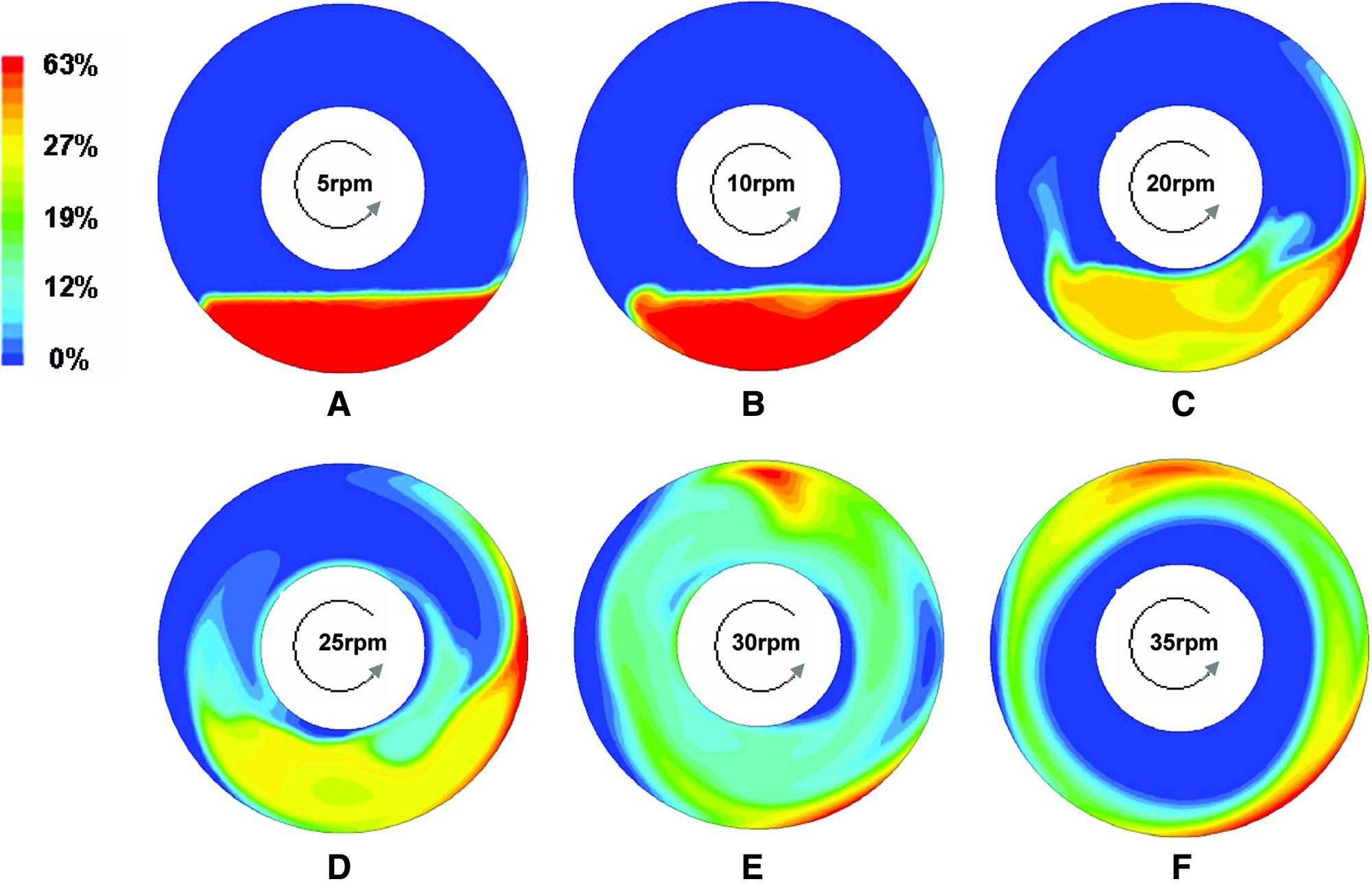
Contour plots of volume fraction of the secondary phase in the two-dimensional model at 5 rpm (
As the contour plots in Figure 5E show, with a rotational speed of 30 rpm, the secondary phase is homogeneously distributed, and no relevant sedimentation is observed; in a wide area of the fluid domain, VF is close to the initial uniformly distributed value of 12%. When the system is rotated at speeds lower than 30 rpm, however, sedimentation of aggregates is observed; the contour plots in Figure 5A-D show that VF falls to 0% in a wide portion of the fluid domain, indicating the absence of aggregates. Conversely, a broad area exists where VF is close to the packing limit value of 63%, indicating a high degree of sedimentation; therefore, no microgravity effect results. Rotation of the system at 35 rpm, in turn, causes centrifugal effects to influence cellular distribution; this is evident in Figure 5F, where VF is close to minimum near the perimeter of the fiber bundle and reaches the maximum values near the external rotating wall. Thus, according to the 2D CFD results, a 30-rpm rotational speed provides the desired microgravity effect, ensuring spatial uniformity of cellular aggregate concentration (which is considered optimal) in the whole fluid domain.
This result is confirmed in Figure 6; with a 30-rpm rotational speed (Fig. 6, right panel), VF keeps a ± 3% range close to the initial value in more than 80% of the total 2D fluid domain (median = 11.43%, 5th percentile = 0.82%, 95th percentile = 24.4%). Under such a condition, the deviation of the local VF from the homogeneously distributed value of 12% is due to the mixing effect triggered by the rotation. At 5 rpm (Fig. 6, left panel), conversely, VF is close to 0% in more than 90% of the fluid domain and close to the packing limit of 63% in the remaining zones (median = 0.0%, 5th percentile = 0.0%, 95th percentile = 62.3%).

Distribution of the volume fraction (VF) of the secondary phase within the two-dimensional fluid domain. Left panel: rotational speed 5 rpm. In more than 80% of the fluid domain, VF falls to 0%, indicating sedimentation. Right panel: rotational speed 30 rpm. In more than 80%, VF keeps a ± 3% range indicating homogeneous distribution of hepatocytes. No sedimentation and no excessive packing are observed. Color images available online at
Three-dimensional simulations validate these results, as shown in Figure 7, in which the contour plots of the VF of the secondary phase are depicted when a rotational speed of 30 rpm is assigned, after a 1200-s simulated time. Figure 8 shows that, in more than 90% of the 3D volume, VF keeps a ± 2% range close to the initial value, proving the absence of excessive packing and of sedimentation (median = 11.97%, 5th percentile = 10.94%, 95th percentile = 13.2%).
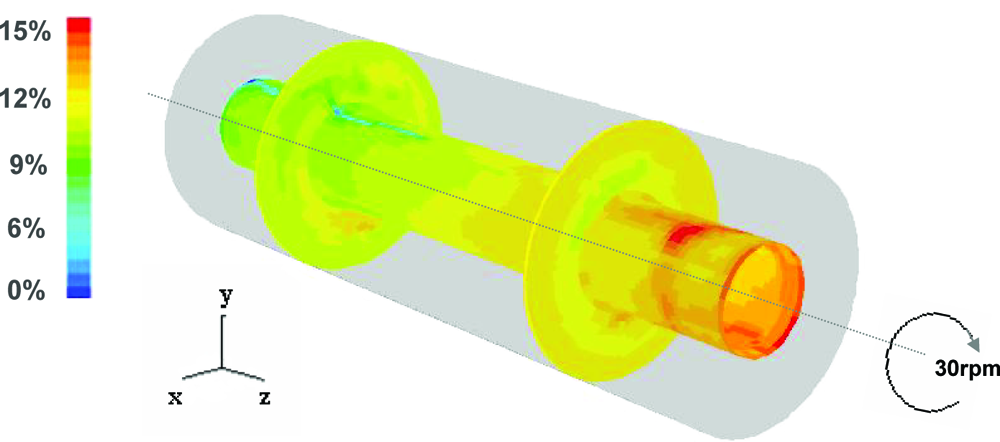
Contours of the volume fraction of the secondary phase of the three-dimensional (3D) model plotted along interesting internal surfaces. Rotational speed: 30 rpm. Simulations with the 3D model confirm that a rotational speed of 30 rpm allows homogeneous distribution of the secondary phase to be achieved. Color images available online at
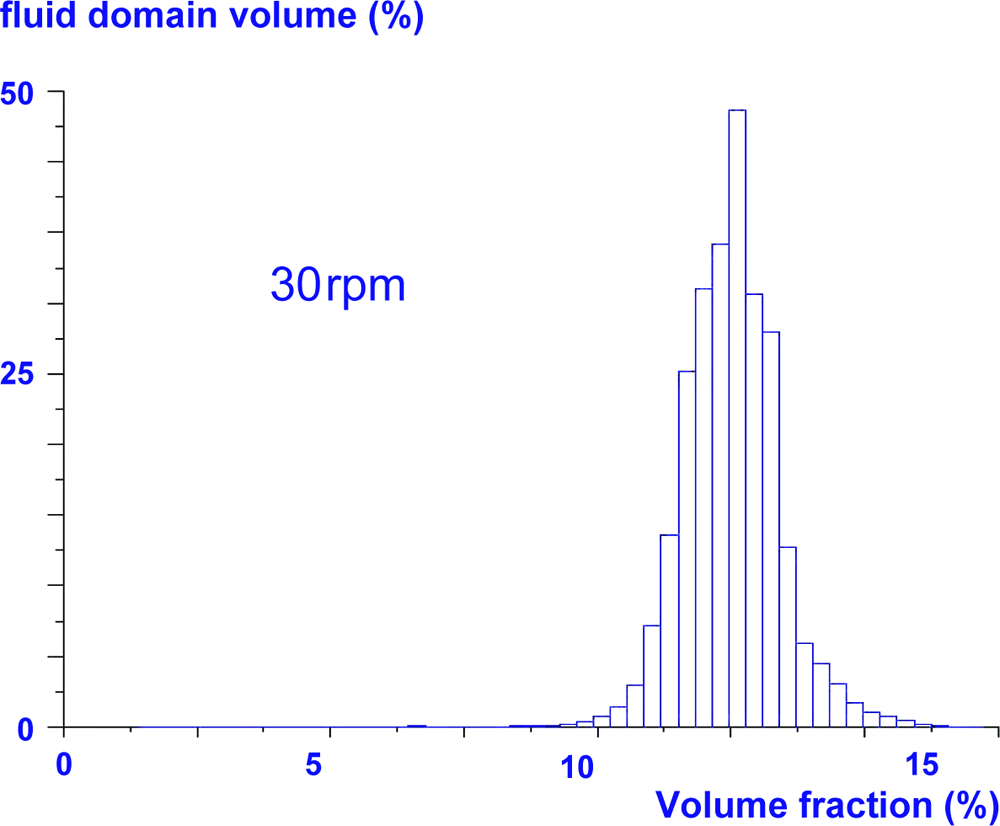
Distribution of the volume fraction (VF) of the secondary phase within the three-dimensional fluid domain with a rotational speed of 30 rpm; in no cells of the fluid domain VF goes above the value of 18% or below the value of 5%, proving the absence of excessive packing and of sedimentation. Color images available online at
Fluid-induced mechanical stress evaluation
Regarding fluid-induced stress on the surface of the μCAACs, because of the rotation of the breeding chamber, we found the highest values of fluid-induced stress near the outer wall. Contour maps and percentage volume distribution histograms of the fluid-induced stress (Fig. 9, left panel) and of the wall shear stress (Fig. 9, right panel) are shown in Figure 9, after a 1200-s simulated time when a rotational speed of 30 rpm is set with the 3D model. According to our numerical results, the maximum mechanical stress induced on the cellular surface occurs in correspondence with the end portion of the cylindrical rotating chamber that is equal to 0.05 Pa (Fig. 9, left panel). Hence, it is the contact of the floating aggregates with the outer solid rotating wall that could be mainly responsible for dangerous mechanical stress. However, the 0.05 Pa value is much lower than the critical range (0.5–2 Pa), compromising specific liver functions of cultured cells. 48

Distribution of the fluid-induced stress (left panel) and wall shear stress (right panel) within the breeding chamber of the three-dimensional model as experienced by floating cellular aggregates. Maximum values are reached in proximity of the external rotating wall. Greater viscous stresses are reached in proximity of the external rotating wall (max 0.05 Pa). Maximum wall shear stress due to solid–solid friction is 0.01 Pa. Rotational speed = 30 rpm; 1200 s simulated time. Color images available online at
Three-dimensional evaluation of O2 concentration profile
Figure 10 shows the contour plots of [O2] (and corresponding pO2) within the fluid domain after 1200 s of the evolution time with the 3D model rotating at 30 rpm.

Contour plots of molecular concentration of oxygen (O2) plotted as partial pressure of O2 (pO2) within the fluid domain of the three-dimensional model, after 1200 s of evolution time of the computational simulation; pO2 is higher than the critical value of 10 mmHg in the whole fluid domain, and no zones suffering from insufficient oxygenation are observed. Color images available online at
As shown in Figure 10, pO2 varies between 23 mmHg and 133 mmHg. Hence no regions suffer from insufficient oxygenation, and the pO2 is higher than the critical threshold value of 10 mmHg, causing a decrease in cell metabolic activities and hypoxic damage to cultured hepatocytes, 49 in the whole fluid domain. Thus, our numerical results indicate that a pO2 value of 160 mmHg within the oxygenated culture medium filtering through the hollow-fiber bundle guarantees an adequate O2 supply when an inlet medium flow rate of 200 mL/min is provided. The rotation of the breeding chamber increases the mixing of the oxygenated medium in which cells float, adding convective flow transport to diffusion; this leads to an improvement in O2 transport, thus enhancing O2 delivery to the aggregated cells.
Figure 11 displays different O2 concentration profiles related to the temporal evolution of the O2 delivery phenomenon. In the numerical simulations, the initial pO2 was set to 0 mmHg in the whole fluid domain to evaluate the temporal evolution of the O2 delivery phenomenon. Results show that, after a simulated time lapse of approximately 10 min (600 s), the whole volume of the breeding chamber is well-oxygenated, and no critical zones in O2 distribution are observed (pO2 > 10 mmHg). In addition, these data indicate the effectiveness of the developed numerical model in optimizing the perfusion phenomena within the device. This result is in agreement with in vitro tests 44 that found characteristic transient durations, for mass transfer phenomena, on the order of 10s of minutes.

Contour plots of molecular concentration of oxygen within the fluid domain shown in different steps of the three-dimensional model computational simulation (color maps not to scale). Color images available online at
Finally, Figure 12 shows the ability of the model to describe the mass exchange interaction between the two floating phases; regions of the fluid domain characterized by lower O2 concentration, indicating higher O2 consumption rates, correspond to zones characterized by higher VF values.
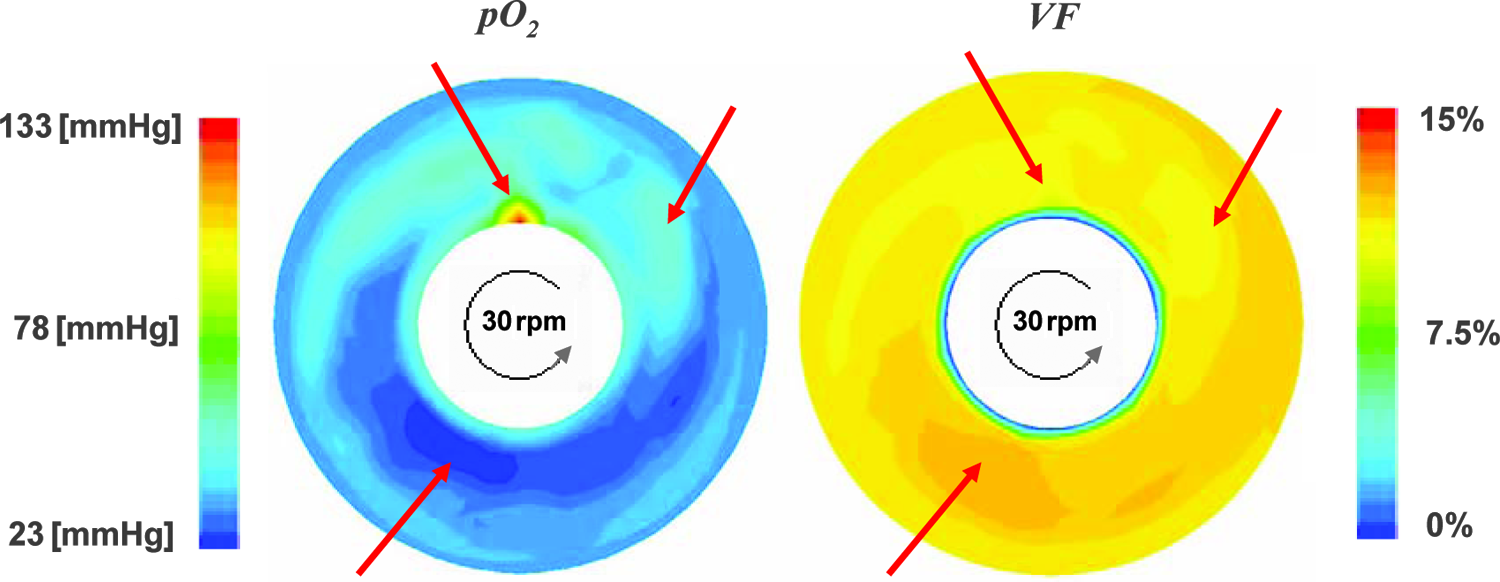
Relations between oxygen (O2) partial pressure (pO2) and volume fraction (VF) of the secondary phase in the fluid domain; where hepatocytes are more concentrated, O2 cellular consumption is higher. (Arrows indicate clearly visible correlations in contour plots.) Color images available online at
Discussion
In the present study, we analyzed the operating conditions of a recently developed BAL using CFD numerical simulations of fluid dynamics and mass transport phenomena occurring within the culture chamber. The computational approach has been found to be suitable for investigating the major aspects responsible for the optimal functioning of the device. These results agree with those of other groups, which made use of CFD to investigate or to predict working conditions of artificial devices in which mass transport plays a primary role,50–54 and particularly of in vitro culture systems.55–61 None of the mentioned studies, however, integrated cell–medium interactions in the numerical models while focusing the computational analysis in the study of flow patterns for assessing mass transport phenomena. Mareels et al., 62 who applied numerical methods to assess possible improvements in the design of the Academic Medical Centre-BAL, Amsterdam, The Netherlands (AMC-BAL), also recently analyzed fluid flow and O2 delivery and consumption using CFD numerical techniques, but the computational model that they developed considered only micro-models of the culture environment, neglecting O2 internal filtration occurring within the culture chamber in numerical calculations. Furthermore, steady-state simulations were performed, not considering the time-dependent evolution of the BAL functioning.
The CFD model of the rotating hollow-fiber BAL presented in this work represents, to the authors' knowledge, the first effort to furnish a fully 3D, comprehensive description of the main physical aspects of the interaction between the oxygenated culture medium and the cultured cells. This goal was reached by integrating diffusion, convection, and multiphase fluid dynamic calculations in a numerical model, which captures the most relevant features regarding the cell-conditioning environment in rotating BALs.
Technically speaking, the computational code used had to be extended by implementing several user-defined functions to describe simultaneously the internal filtration of the oxygenated culture medium through hollow fibers, the O2 delivery to the floating cells, and the O2 consumption of the cells floating within the fluid, together with the motion and distribution of the μCAACs within the rotating chamber. The task of adapting the chosen code to the complexity that biological and cell modelling involves was difficult but was shown to be feasible. Also, from a computational point of view, simulations were truly engaging; 3D simulations took approximately 300 CPU hours to simulate 1200 s (a parallel-architecture, 8-CPU workstation was used to reduce the computational time). For this reason, a preliminary 2D investigation was carried out specifically aimed at investigating the microgravity condition with respect to the distribution of the floating μCAACs within the device in order to reduce the computational costs. The influence of the variation of the parameters defining the functioning of the device was investigated, first individually and then using an integrated analysis aimed at evaluating, simultaneously, all the features regarding the behavior of the system in a 3D model. The set of parameters that optimize the performance of the proposed BAL design was extracted with minimum resort to experiments.
According to our computational results, a rotational speed of 30 rpm, in addition to maintaining μCAACs floating close to a gravity-free condition, can be considered optimal for culturing μCAACs within the rotating BAL, because it produces a non-damaging fluid-induced mechanical stress (0.05 Pa) for cell specific-liver functions and enhances aggregation of microcarrier-anchored hepatocytes. Such optimized conditions permit microcarrier-attached cells to be uniformly suspended in the fluid with minimum mechanical stress induced. According to data reported by Tilles et al. 48 the computed 0.05 Pa maximum stress value is much lower than the maximal tolerable range (0.5–2Pa) that compromises albumin and urea synthesis rates and detoxification functions of cultured hepatocytes. As for the effect of the shear stress on aggregation, our results agree with the observations by Miyazawa et al. 63 on the in vitro effects of fluid-induced mechanical stress on cultured hepatocytes within rotating bioreactors. Their analysis, aimed at individuating optimal fluid-induced mechanical stress conditions concerning liver-specific hepatocyte functions, demonstrated that, at a rotation speed of the breeding chamber of 30 rpm, no disruption of cellular aggregates was observed and hepatocytes reached the maximum in albumin production.
In addition, several studies have indicated the range of 20 to 40 rpm as the condition permitting microcarrier-anchored clustered cells forming aggregates and pieces of minced tissue in a suspension breeding environment.35,37–39
Results of the in vitro tests on cell viability support our results;45,46 hepatocytes grown under these conditions in the investigated BAL showed intact morphology and active mitochondrial potentials for 12 days. Moreover, cell viability never dropped below 90%, even when cells were treated with ethanol, diazepam, or oxazepam, indicating self-renewing potential of the cells.45,46
Concerning O2 delivery, data provided by our analysis demonstrated that, setting the appropriate Qin (200 mL/min) and pO2 within the filtering medium (160 mmHg), the pO2 was above the critical value (10 mmHg) that causes hypoxia and cellular death 49 in the whole fluid domain. The present result is of primary importance, proving the efficacy of the device in overcoming unsolved issues in O2 supply shown in previous hollow-fiber BALs. In addition, our analysis allows for defining targeted design specifications for the practical development of the bioartificial support device.
In modelling O2 delivery to cells, diffusion and convection in the fluid have been considered in our computational model. However, diffusion toward the inner parts of the aggregates has not been taken into account explicitly; rather, direct O2 uptake from the fluid was modelled. Neglecting O2 diffusion within μCAACs is acceptable according to experimental data from Curcio et al., 64 which mathematically analyzed and experimentally verified that only cell clusters larger than 200 μm suffer severe O2 limitation, attaining the lowest partial pressure in the center of the spheroids, resulting in decreased activity or necrosis of the deeper cells. 64 Within the investigated BAL, however, experimental data45,46 revealed that, within the μCAACs, the portion occupied by the hepatocyte clusters had a mean thickness that was lower than the critical 200 μm; hence, O2 delivery to deeper cells within the μCAACs is not a limiting factor for cell viability.
The presented numerical model suffers, anyway, from some simplifications, compared with the real design of the investigated device. First of all, it was developed to perform an evaluation of the device functionality in terms of O2 supply, aggregate distribution, and viability maintenance, rather than a clinical application: therefor, the removal of toxins, catabolic products, and hepatocyte-produced carbon dioxide from the patient blood plasma and the filtration of plasma proteins, such as plasma albumin, were not included in the current CFD analysis. However, these can be modularly added in future studies with relative ease. Second, the CFD model simplifies the real geometric fiber bundle design. The fiber bundle is modelled here as a single filtering cylinder surface; this assumption permits the model to be relieved of further computational costs required for the numerical solutions of the equations for several single filtering fibers. Floating within the medium, the μCAACs can come into contact with one another, triggered by motion due to the rotation of the breeding chamber, possibly inducing μCAAC–μCAAC bonds. However, modelling of such further aggregation and disaggregation of the 500-μm μCAACs was not considered in our mathematical model; μCAAC size is always coincident with the initial 500 μm. This choice was made based on the available experimental data, 46 revealing that the formation of μCAACs larger than 500 μm in diameter did not occur in vitro within the BAL. In addition, in Tao et al. and Li et al., microcarrier-attached hepatocyte clusters were formed on Cytodex 3 and gelatin microcarriers after a few days of culture, with diameters in the range of 500 μm.65,66 Concerning disaggregation of μCAACs, such phenomena could occur in vitro because of the fluid-induced shear stress effect due to the rotation of the breeding chamber. However, according to experimental data reported by Miyazawa et al., 63 the imposed rotational speed value of 30 rpm does not provoke disaggregation of μCAACs.
Finally, cell growth phenomena have not been included in the numerical model, so the total number of cultured cells remains constant during numerical simulations at the value of 2.7 × 10⁸. This could be considered to be a limiting factor, in particular concerning the prediction of adequate O2 delivery to cells, because lower cellular O2 consumption rates are calculated, with respect to considering higher cell density, as required for BAL support devices (at least 1010 cells). 5 However, because O2 delivery and consumption rate parameters have been set considering the most demanding condition in cellular O2 consumption, we overestimated the O2 request by the simulated 2.7 × 10⁸ cells. Also, to increase O2 delivery to a larger number of cells in future applications, possible solutions might involve increasing the number of internally filtering fibers (correspondingly increasing the inlet medium flow rate to enhance internal filtration), increasing the O2 saturation within the medium, or integrating additional fibers into the device for direct oxygenation.
In spite of these restrictions, our numerical model has proven to be a useful instrument in predicting and determining targeted design specifications for the development of the bioartificial device.
In conclusion, we have demonstrated the feasibility of using computational tools to search for optimal conditions for culturing viable microcarrier-attached aggregated hepatocytes in a simulated microgravity BAL. In the near future, this might become a key strategy to help overcome the challenging issues in optimizing O2 supply, uniform cellular distribution, and maintenance of viability of aggregated hepatocytes in rotating BALs. In addition, the proposed approach could be extended to similar applications in which the determination of the requirements of bioartificial devices is strongly based on the fluid dynamic and mass transfer patterns.
We believe that CFD provides a reliable and cost-effective way to assist and improve bioreactor design and analysis. Finally, the low-shear, well-oxygenated environment of the proposed BAL could be equally important in the growth of other cellular phenotypes; by establishing a long-term culture method of viable cells, it would be possible to develop systems able to generate ex vivo-grown tissue-like structures to be destined for organ transplantation. Present results may serve as criteria to set the parameters in designing rotating bioreactors for wide-ranging tissue-engineering applications.
Footnotes
Acknowledgments
The authors would like to thank SisTer-Fresenius Corporation for supplying the prototypes of the investigated bioreactors and Dr. M. Wurm for helpful indications and assistance.