




Abstract
Monitoring of cell differentiation is a crucial aspect of cell-based therapeutic strategies depending on tissue maturation. In this study, we have developed a noninvasive reporter system to trace murine skeletal muscle differentiation. Either a secreted bioluminescent reporter (Metridia luciferase) or a fluorescent reporter (green fluorescent protein [GFP]) was placed under the control of the truncated muscle creatine kinase (MCK) basal promoter enhanced by variable numbers of upstream MCK E-boxes. The engineered pE3MCK vector, coding a triple tandem of E-Boxes and the truncated MCK promoter, showed twentyfold higher levels of luciferase activation compared with a Cytomegalovirus (CMV) promoter. This newly developed reporter system allowed noninvasive monitoring of myogenic differentiation in a straining bioreactor. Additionally, binding sequences of endogenous microRNAs (miRNAs; seed sequences) that are known to be downregulated in myogenesis were ligated as complementary seed sequences into the reporter vector to reduce nonspecific signal background. The insertion of seed sequences improved the signal-to-noise ratio up to 25% compared with pE3MCK. Due to the highly specific, fast, and convenient expression analysis for cells undergoing myogenic differentiation, this reporter system provides a powerful tool for application in skeletal muscle tissue engineering.
Introduction
T
The majority of skeletal muscle tissue engineering strategies utilize bioreactor systems for physiologically relevant mechanical3–7 and/or electrical8–11 stimulation to increase myogenic differentiation and maturation. While there is a clear consensus in the field that mechanical/electrical stimulation benefits the myogenic outcome, defined stimulation regimes as well as standardized culture conditions to maximize muscle functionality and maturity in vitro remain elusive.12,13
Current approaches to assess cell differentiation, morphology, and function in vitro involve standard methodology, such as reverse transcription quantitative polymerase chain reaction (RT-qPCR), immunostaining methods, or enzymatic assays.14–16 However, none of these methods allows for quantification in a nondestructive manner. In this respect, noninvasive reporter systems offer a valuable monitoring tool as they enable large-scale online tracking of myogenic differentiation and cell morphological changes over time.
Since the success of cellular therapies and bioreactor approaches depends strongly on the optimization of culture conditions, future skeletal muscle tissue engineering strategies will rely on nondestructive methodology for several reasons: (1) noninvasive assaying allows for sample reduction, which is especially valuable for muscle progenitor cell types that are not available in large quantities; (2) online assaying of the same sample over time may provide more relevant results; (3) noninvasive methods do not require time-consuming sample preparation.
The 82 kDa enzyme creatine kinase (CK) is a central regulator of cellular energy homeostasis. CK catalyzes the reversible ATP-dependent interconversion of creatine into phosphocreatine (PCr), building up a pool of rapidly diffusable PCr for spatiotemporal buffering of ATP levels. 17 Thus, CK plays a pivotal role in tissues with high and fluctuating energy demands such as muscle. The muscle creatine kinase (MCK) isoenzyme is expressed in sarcomeric muscle, that is, in skeletal and cardiac muscle. It has generally been used as a myogenic differentiation marker as well as a marker for muscle integrity. The concentration of CK in blood has traditionally been considered an indirect marker of muscle damage, particularly for diagnosis of conditions such as myocardial infarction, muscular dystrophies (and muscle wasting), or cerebral diseases. However, there is an ongoing debate in the field on the reliability of serum CK levels in diagnostics. 18
A variety of transgenic and tissue culture studies have demonstrated that MCK is expressed exclusively in differentiated skeletal and cardiac muscle.19–23 Importantly, its truncated form, ranging from −80 to +7 bp relative to the transcriptional start site, is highly specific for skeletal muscle.24,25 The corresponding MCK enhancer contains a large number of conserved DNA patterns, referred to as E-boxes. These regulatory regions harbor a core consensus binding sequence for trans-acting myogenic transcription factors (TFs) as well as the consensus serum responsive factor-binding sequence CC(A/T)6GG. 26 Furthermore, E-boxes contain an AT-rich site, which is known to bind ubiquitously expressed factors such as MEF-2 and MHox. 27
We have developed a noninvasive reporter system to investigate the efficiency of murine skeletal muscle differentiation by placing either a secreted bioluminescent (Metridia luciferase) or a fluorescent (GFP) reporter protein under the control of a tissue-specific promoter. Depending on the differentiation status of the transfected cells, this system gets activated through the endogenous MCK promoter triggering reporter gene expression. In addition, to enhance the signal-to-noise ratio of the reporter, we have developed a further advanced reporter system carrying complementary microRNA (miRNA) targeting seed sequences (miRT) for regulatory myogenic miRNAs. The general strategy of this system is to integrate a subset of seed sequences into the 3′ untranslated region (3′-UTR) of the designed constructs to decrease background signal of the reporter genes in undifferentiated cells. Previously performed miRNA expression profiling experiments demonstrated that particular miRNAs such as miR-222, miR-550, and miR-659 are downregulated during myogenic differentiation (Table 1). 28 Their target genes are involved in the regulation of many biological processes, including muscle development, kinase activity, and regulation of cell signaling pathways.29,30
Arrows schematically indicate the extent of downregulation: ↓, fold change one- to threefold; ↓↓↓, fold change sevenfold or higher. 28
miRNA, microRNA.
Using a modular cloning approach, the aim of this study was to generate and evaluate four different modified versions of an MCK reporter plasmid containing a truncated MCK promoter. The effects of varying numbers of additional regulatory enhancer elements as well as the presence of miRNA seed sequences in the plasmids on reporter activity and specificity were studied in myogenic and nonmyogenic cells. In conclusion, our results demonstrate that expression levels of the modified MCK promoter combined with E-Box elements were significantly higher than those reached with formerly used versions of other truncated MCK promoters. Furthermore, we show that the addition of miRNA seed sequences targeting a subset of myogenic miRNAs increases the signal-to-noise ratio of the reporter system. Since the majority of current strategies for muscle repair utilizes cell-laden scaffolds, this framework can be a useful model for the noninvasive optimization of culture methods for myogenic differentiation in bioreactors.
Materials and Methods
Construction of tissue-specific reporter vectors
The murine muscle creatine kinease (MCK) promoter was used to drive the expression of reporter genes. As shown in Figure 1, the MCK enhancer has been truncated to increase its activity and the sequences have been deposited in the GenBank databases (Accession No. AF188002). 33 The enhancer encodes a tandem of two E-box sequences described as left, right, or MEF1, which is known to be a higher affinity MyoD-binding site. 34 The left site has been replaced with an additional copy of the MEF1 site, which has been named “2R” modification, as MyoD has not been detected within the left E-box (5′-AACACCTGCTGC). 35 Furthermore, another right E-Box sequence and modified S5 region (5′-GAGCGGTTA), which are shown above the wild type sequences in Figure 1, were constructed in 2R5S enhancer sequence to increase enhancer activity by reinforcing the MyoD-binding site. 36
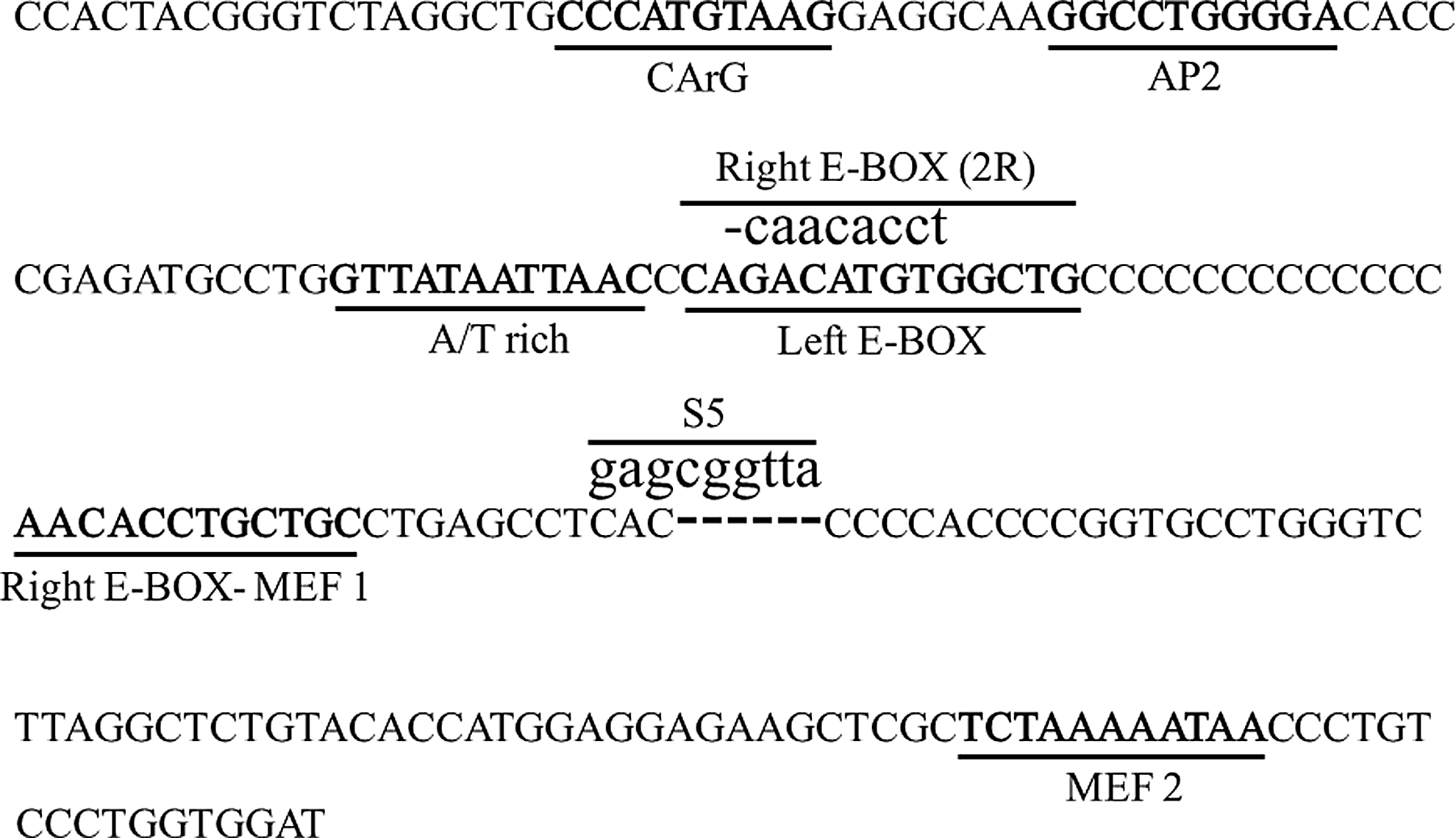
Sequences of modified E-Box sites (77 bp) in MCK enhancer. The sequence positions and alteration of 2R and S5 sequences are indicated. Core sequences are underlined in bold and the modified sequences indicated above, such as right E-Box (2R), S5, and right E-Box-MEF1. 33 The AP2 (activating protein 2) 37 as well as CArG 38 consensus sequences are known to be recognition sites for transcription factors. MCK, muscle creatine kinase.
In this study, we constructed four different reporter vectors and for each vector enhancer elements were ligated upstream to the highly truncated basal promoter. These constructs were named: (1) “E3MCK” containing three 2R5S enhancer sequences, resulting in a total of six E-boxes and 3S5 sequences (6R-3S5) due to the absence of a Cytomegalovirus (CMV) enhancer (Fig. 2A); (2) “E5MCK” encoding fivefold 2R5S sequences resulting in a total of ten right E-boxes and five S5 sequences (10R-5S5) (Fig. 2C); (3) “CE-E3MCK,” which additionally has a CMV enhancer (Fig. 2B); (4) “E3MCK-miRT” containing E3MCK, including miRNA seed sequences (Fig. 6). Myogenesis-associated miRNAs, such as miRNA-222, miRNA-550, and miRNA-659, were used as complementary target seed sequences (miRT). These seed sequences were ligated into the 3′-UTR downstream of the reporter gene to reduce the background activity and thus enhance the signal-to-noise ratio (Fig. 2). EcoRI and AgeI restriction enzymes were used to excise the cassette of the truncated MCK promoters from the plasmid pUC57-MCK (GenScript, Piscataway, NJ). The truncated promoter sequences were ligated into the pMetLuc2-Reporter vector (Clontech, Mountain View, CA) containing the secreted Metridia luciferase reporter gene. The CMV enhancer was amplified from the plasmid pMetLuc-control (Clontech) using the sense primer AGCTTTATTTAGGTGACACTATAGGGTAC and antisense primer CCTATAGTGTCACCTAAATAA. The GFP was created by AgeI/NotI digestion of pEGFP-N1 (Clontech) and was inserted into the AgeI/NotI-digested E3MCK and CE-E3MCK vectors, representing the fluorescent reporter plasmids (Fig. 1). All PCR reactions were performed using a Hot-Taq polymerase (VWR International GmbH, Erlangen, Germany) according to the manufacturer's instructions. All sequences were verified by control restriction digests and sequencing (data not shown).
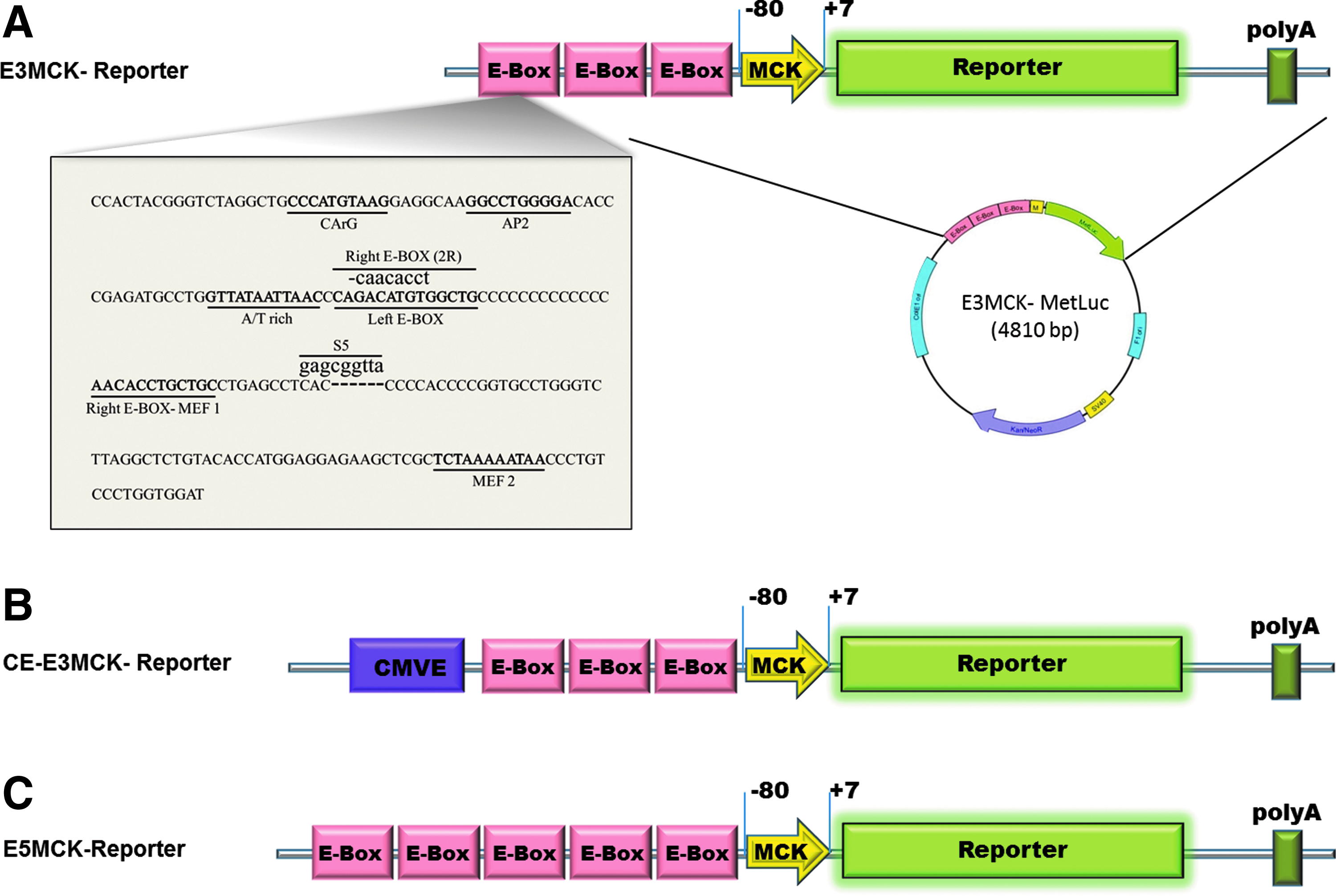
Schematic illustration of different MCK reporter vectors.
Cell culture and myogenic/osteogenic differentiation
The mouse muscle myoblast precursor cell line C2C12 (No. ACC565, Germany) was cultured in Dulbecco's modified Eagle's medium high glucose (DMEM-HG; Lonza, Basel, Switzerland) containing 4.5 g/L
Transfection
For transfection, cells were seeded into 24-well plates (Sigma-Aldrich, Darmstadt, Germany) at a density of 0.5 × 10⁵/well 24 h before transfection (2.5 × 10⁴/cm2). Transfection was performed using 3 μL of PerFect DNA Transfection Reagent (VWR International GmbH) mixed with 1 μg of the respective reporter plasmid. The medium was changed 3 h after transfection. The transfected cells were incubated in DM for 6 days posttransfection before readout.
Myogenic differentiation on fibrin matrices
Differentiation experiments on fibrin hydrogels of different stiffness were performed using the TISSUCOL DUO 500 5.0 mL Fibrin Sealant Kit (Baxter, Westlake, TX). Myogenic differentiation of C2C12 cells on standard cell culture plastic was compared with differentiation on fibrin matrices with varying fibrinogen concentrations. The 24-well plates (Starlab, Hamburg, Germany) were coated with 200 μL fibrin (final concentrations: 10 or 20 mg/mL fibrinogen, respectively, and 1 IU/mL thrombin) and left to polymerize for 45 min at 37°C, 5% CO2. Fibrinogen was diluted with DMEM-HG, and thrombin with 40 mM CaCl2. 5 × 10⁵ C2C12 cells were seeded per well and myogenic differentiation was induced by exchanging the GM with DM 4 h postseeding. For osteogenic differentiation as a control, C2C12 cells were induced using 300 ng/mL of rhBMP2 and cultured in DM.
Mechanical stimulation of skeletal muscle-like constructs
Mechanical stimulation of E3-MCK-MetLuc C2C12 cells was performed as recently described. 7 Briefly, the cells were embedded into ring-shaped fibrin scaffolds (final concentrations: 20 mg/mL fibrinogen, 0.625 IU/mL thrombin, 3.2 × 10⁶ cells per scaffold), which were mounted onto a custom-made spool-hook system and subsequently transferred into a bioreactor system that allows for uniaxial mechanical stimulation through magnetic force transmission. At day 3 of culture, myogenic differentiation was induced by exchanging GM with DM and mechanical stimulation was started by application of 10% static strain for 6 h followed by 3% static strain for 18 h (rest phase). This daily stimulation pattern was repeated for 6 days (including day 9).
DNA quantitation assay (CyQUANT)
DNA content was measured using the CyQUANT® Cell Proliferation Assay Kit (Invitrogen, Carlsbad, CA) following the manufacturer's instructions. Briefly, harvested cell pellets were incubated with 200 μL of CyQUANT GR dye/cell lysis buffer for 5 min protected from light at room temperature and fluorescence (excitation 485 nm, emission 520 nm) was detected on a fluorescence Polar Star plate reader (BMG Labtech, Ortenberg, Germany).
Secreted metridia luciferase assay
For bioluminescence quantification and comparison of expressed signal intensities induced by different combinations of enhancer elements, cells were transfected with the reporter plasmids as described above and incubated for 5 days. The medium was changed 24 h before supernatant sampling (50 μL samples) to assess 24-h luciferase expression on day 6 posttransfection. To collect the supernatant for Metridia luciferase assaying of the skeletal muscle-like constructs, the samples were taken out of the bioreactor system and incubated in 1 mL of DM for 24 h at the end of the culture period. Each sample was assayed for secreted luciferase activity using coelenterazine as substrate and the appropriate assay buffer (NanoLight Technology, Pinetop, AZ) and all measurements were performed on a Polar Star Omega Luminometer (BMG Labtech) with Omega software (OMEGA Software GmbH, Obersulm, Germany). Quantification of reporter activity relative to a CMV promoter was calculated by normalization of MetLuc activity to a negative control (osteogenic differentiation of C2C12) and to the basal MetLuc activity driven by a CMV promoter upon myogenic differentiation.
Quantitative reverse transcription–polymerase chain reaction
At day 6 posttransfection, C2C12 cells were harvested and total RNA was isolated using the TriFast reagent (VWR International GmbH) according to the manufacturer's instructions. RNA integrity was analyzed with gel electrophoresis and quantity was measured using a Hitachi U-5100 photometer (Metrohm Inula GmBH, Vienna, Austria). Two micrograms of RNA were subjected to DNaseI (Promega, Mannheim, Germany) digestion and subsequent complementary DNA (cDNA)-Synthesis was performed using the EasyScript™ cDNA Synthesis Kit (ABM Good, Richmond, Canada). qPCR was performed with the CFX96 Real-Time System (Bio-Rad, München, Germany) using 10 μL KAPA SYBR© Fast Universal qPCR 2 × master mix (VWR International GmbH), NH4+-Buffer (Taq-Buffer; Life Technologies, Carlsbad, CA), 40 ng cDNA, and either 250 or 400 nM Primers. qPCR for hypoxanthine phosphoribosyl transferase (HPRT), myogenin (MYG), and osteocalcin (OC) was carried out with the following primers: qMYGs (GGTCCCAACCCAGGAGATCAT) and qMYGas (ACGTAAGGGAGTGCAGATTG) for MYG, qOCs (GTCTGACAAAGCCTTCATGTC) and qOCas (CTGTTCACTACCTTATTGCCCT) for OC, and qHPRTs (AGTCCCAGCGTCGTGATTAG) and qHPRT as (TGGCCTCCCATCTCCTTCAT) for HPRT as housekeeping gene.
Fluorescence microscopy
Fluorescence microscopy was performed on day 6 posttransfection for E3MCK-GFP, E3MCK-miRT-222-GFP, and E3MCK-miRT-550-GFP transfected cells, using a Zeiss Axio Observer Vert.A1 microscope (Zeiss, Oberkochen, Germany) and Axio Imager software.
Statistical analysis
All data are presented as mean ± standard deviation (SD; box and whiskers) or mean ± SD (bar diagrams). n indicates number of samples in one independent experiment. For the evaluation of multiple groups we used one-way analysis of variance followed by Tukey's post hoc analysis. For the analysis of two experimental groups, unpaired t-test was used. Statistical analysis was performed using GraphPad Prism 5 software (GraphPad Software). Differences were considered significant at ***p < 0.001, **p < 0.01, and *p < 0.05.
Results
Successful construction of skeletal muscle-specific reporter systems was verified by sequencing and cellular morphology
As represented in Figure 2, three different skeletal muscle reporter vectors with MCK promoters and enhancer elements were constructed in reporter plasmids in a combination with either GFP or secreted luciferase. C2C12 cells, a mouse myoblast precursor cell line, were used to assess the levels of luciferase expression after transfection. Differentiation of C2C12 cells into the myogenic or osteogenic lineage was confirmed by morphological analysis and RT-qPCR after 6 days of differentiation.
Reporter gene expression of all constructed vectors is triggered upon myogenic differentiation
The E3MCK-MetLuc reporter vector gave approximately twenty-fourfold increased expression levels upon myogenic differentiation in C2C12 cells. In contrast, the CMV-enhanced CE-E3MCK-MetLuc reporter exhibited less bioluminescence signal (about sixfold increase compared with a negative control). Finally, E5MCK-MetLuc exhibited eighteen-fold higher signal intensity and thereby no significant improvement in comparison to E3MCK-MetLuc (Fig. 3). In addition, osteogenic differentiation of C2C12 cells transfected with the plasmids indicated above resulted in signal intensity comparable to negative control background levels (Fig. 4).
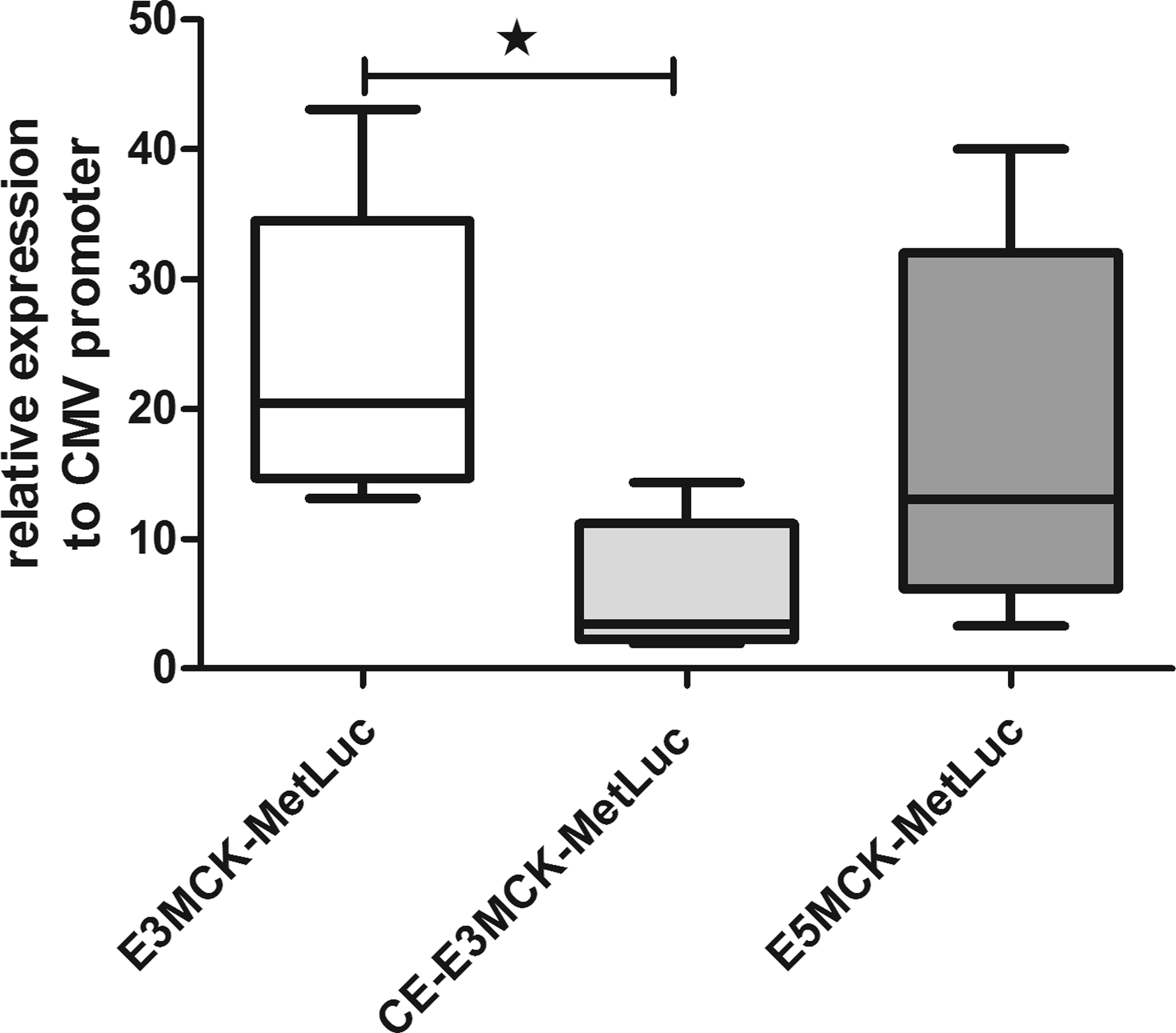
Comparison of E3MCK-MetLuc, CMV-enhanced CE-E3MCK-MetLuc and E5MCK-MetLuc bioluminescence readouts. Supernatants of C2C12 cell lines were incubated for 24 h 6 days posttransfection under myogenic and osteogenic conditions. Significant luciferase expression was detected in cells transfected with indicated reporter plasmids. n ≥ 5 of six independent experiments; values represent mean ± standard deviation; *p < 0.05; one-way ANOVA with Tukey's multiple comparison test. ANOVA, analysis of variance.
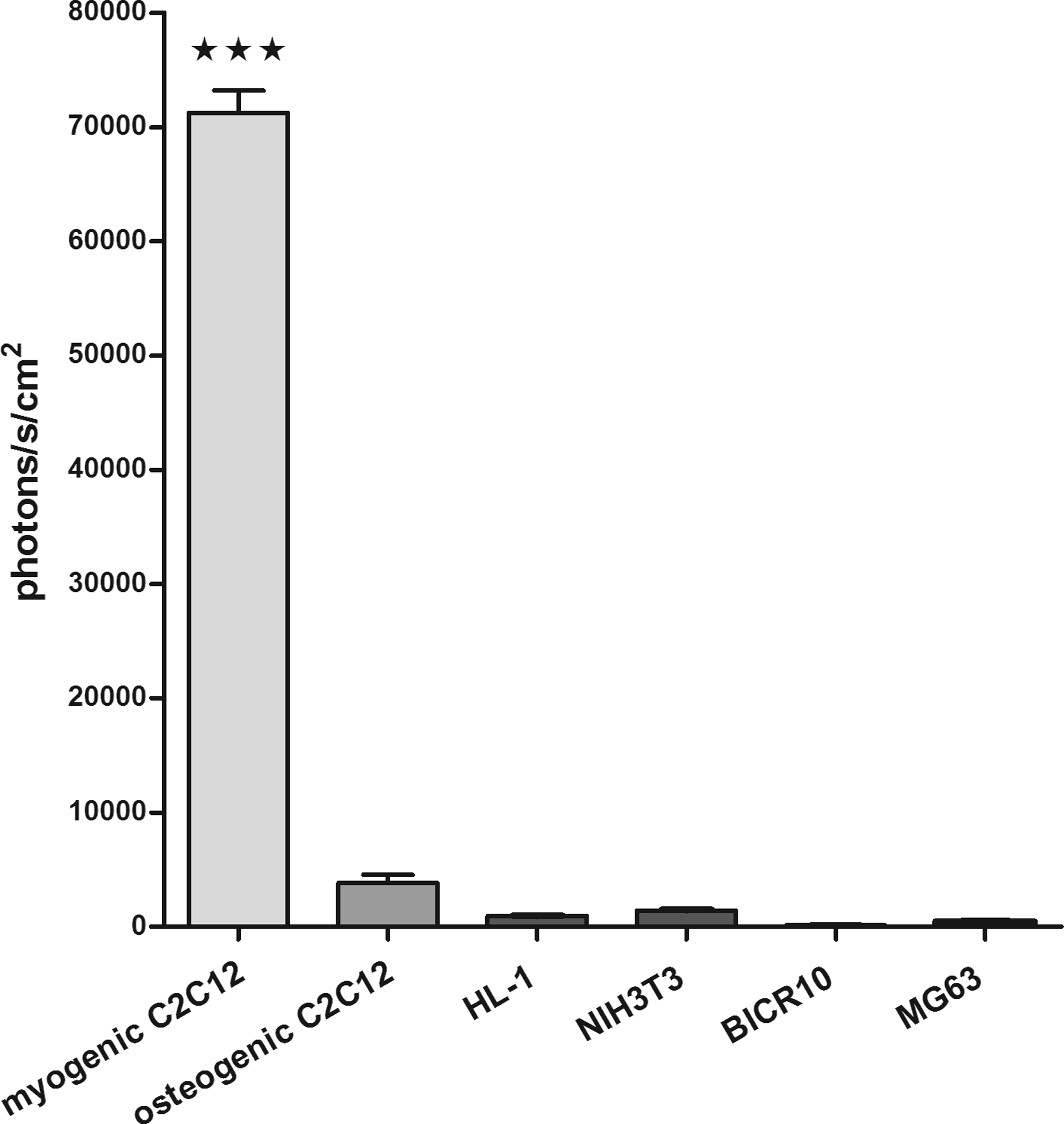
Comparison of E3MCK-MetLuc transfected cell lines. This promoter showed significantly higher levels (twentyfold increase) of luciferase expression in C2C12 (after 5 days of myogenic differentiation) compared with control cell lines. The promoter was essentially inactive in nonskeletal muscle cell lines (C2C12 after osteogenic differentiation, mouse cardiomyocytes [HL-1], mouse fibroblasts [NIH3T3], human keratinocytes [BICR10], and human osteosarcoma cells [MG63], respectively). n ≥ 5 of six independent experiments; values represent mean ± standard deviation; ***p < 0.001; one-way ANOVA with Tukey's multiple comparison test.
We also tested the reporter systems in nonmyogenic cell lines and in cardiomyocytes to determine lineage specificity. Luciferase expression driven by the promoter is highly upregulated in C2C12 upon myogenic differentiation, but not in nonskeletal muscle cell lines (C2C12 after osteogenic differentiation, human osteosarcoma cells, mouse fibroblasts, human keratinocytes, and mouse cardiomyocytes, respectively) as quantified by bioluminescence assaying (Fig. 4).
Introducing myogenesis-associated miRNA seed sequences to the MCK-specific reporter system reduces background activity
Although the MCK-specific reporter system showed a high signal-to-noise ratio, further reduction of background activity was aimed for by introducing complementary seed sequences. Several miRNAs associated with the regulation of myogenic differentiation are known to be downregulated during myogenesis. 28 These sequences were inserted into the 3′-UTR of the E3MCK construct to further enhance the signal-to-noise ratio of the reporter system due to decreased baseline signals (see Materials and Methods section for relative value calculation). Adding a triple combination of seed sequences (Fig. 5) to the plasmid (E3MCK-miRTtriple-MetLuc) gave bioluminescence activity comparable to the E3MCK-MetLuc plasmid containing no seed sequences. Insertion of a single seed sequence such as miRT-222 or mirT-550 resulted in the strongest signals. However, at the same time, ligation of a miRT-659 seed sequence into the E3MCK-MetLuc plasmid did not improve the signal-to-noise ratio at all (Fig. 6).

Schematic illustration of a MCK promoter-specific vector encoding additional seed sequences. These target sequences, complementary to miRNAs (miR-222, miR-550, and miR-659), were ligated separately or in combination (E3MCK-miRT-triple-MetLuc). miRNAs, microRNAs. Color images available online at
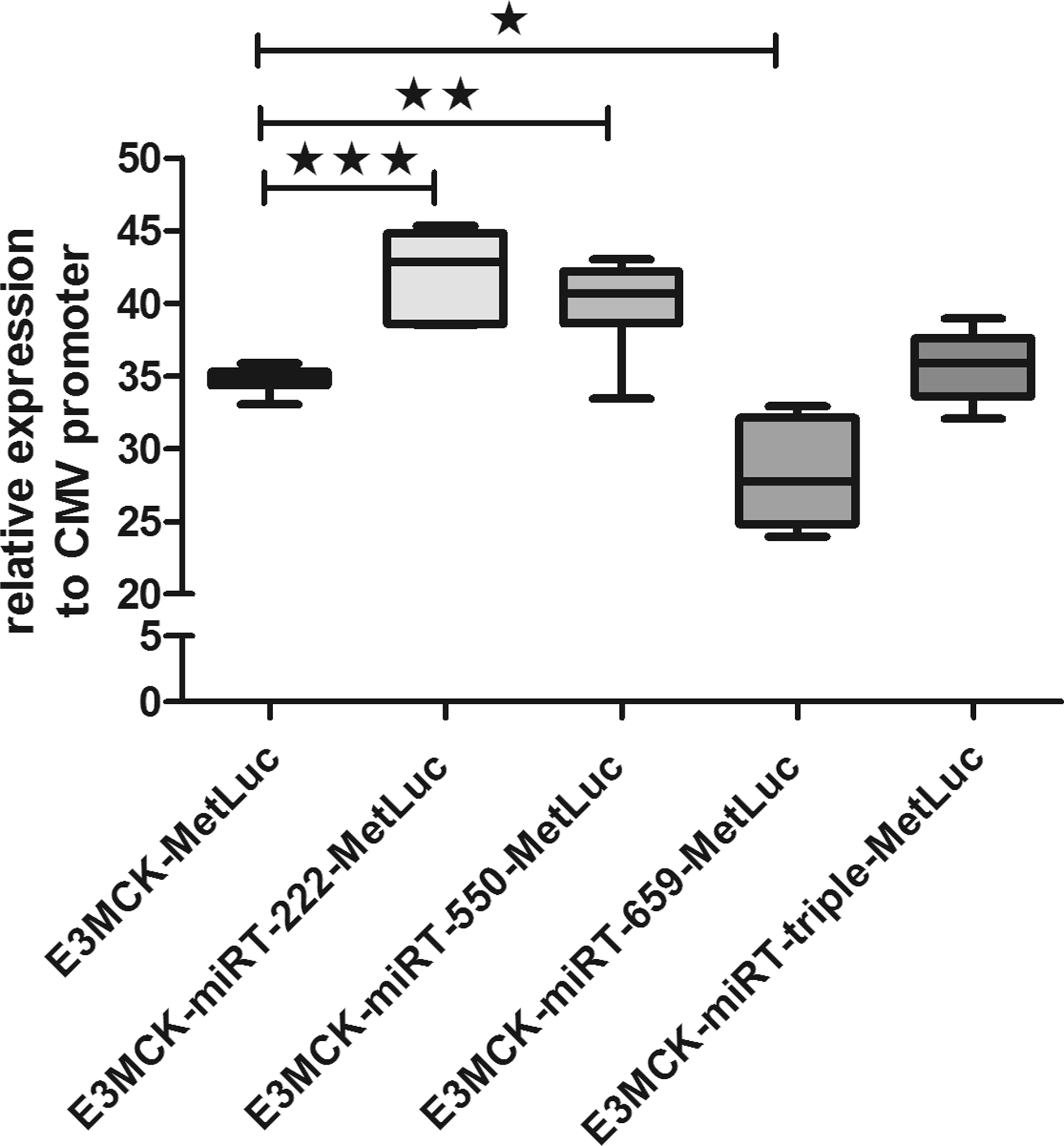
Activity of the reporter system combined with up to three different seed sequences for miRNAs (miR-222, miR-550, and miR-659), representing luciferase expression normalized to osteogenically differentiated negative controls. After C2C12 differentiation for 6 days, the E3MCK-miRT-222-MetLuc and E3MCK-miRT-550-MetLuc reporter plasmids showed significantly higher luciferase activity compared with E3MCK-MetLuc. The E3MCK-miRT-659 promoter gave the lowest bioluminescence readouts, whereas a triple combination of seed sequences (E3MCK-miRT-triple-MetLuc) showed no significant effect on background reduction. n ≥ 6 of six independent experiments; values represent mean ± standard deviation; ***p < 0.001, **p < 0.01, and *p < 0.05; one-way ANOVA with Tukey's multiple comparison test.
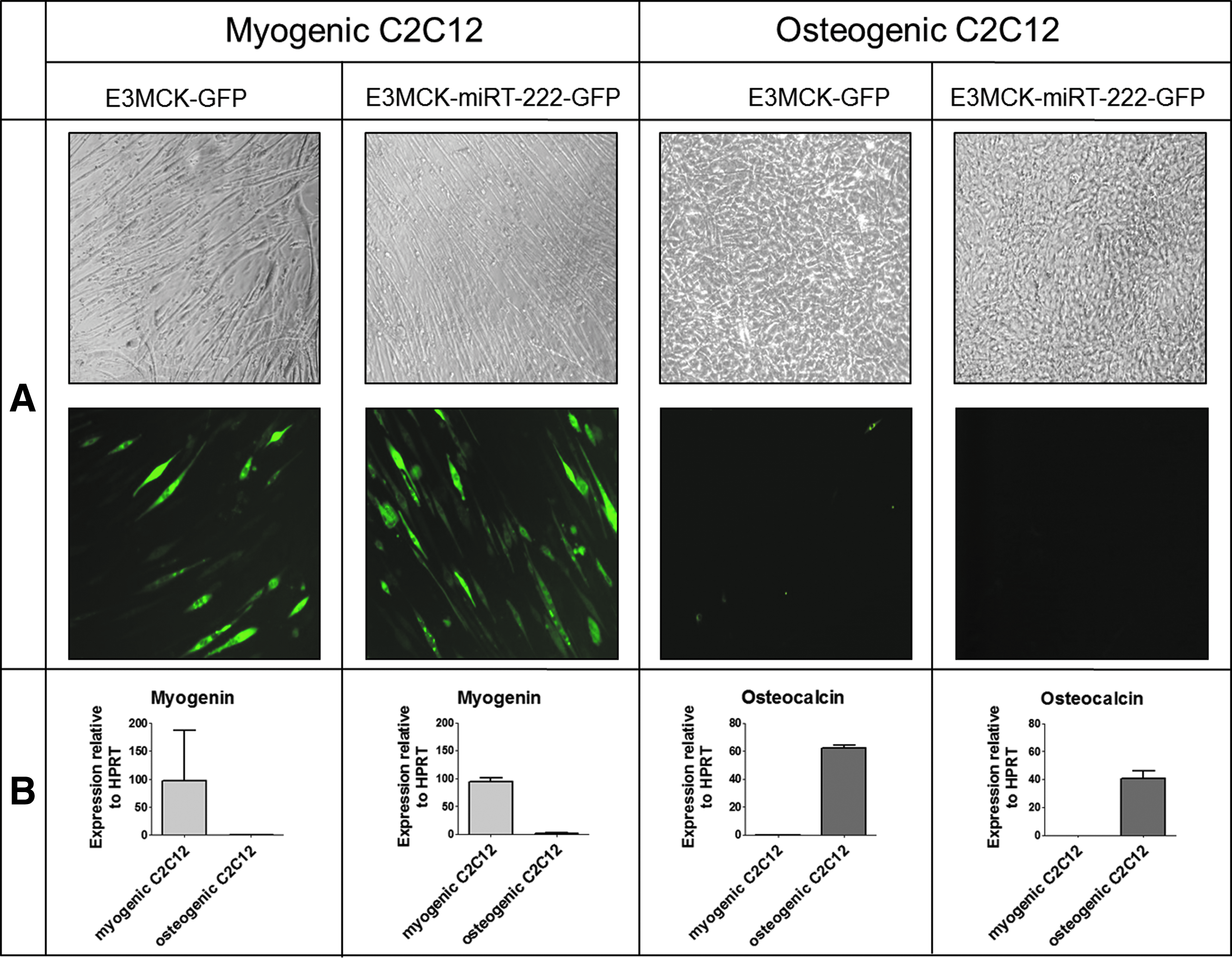
To directly assess the activity of the constructs combined with the GFP reporter, fluorescence microscopy was performed. The E3MCK-GFP and E3MCK-miRT-550-GFP plasmids demonstrated strong fluorescence intensity in C2C12 cells upon myogenic differentiation confirmed by a multinuclear myotube phenotype 6 days after transient transfection. In contrast, low background signal was detected in the control group with C2C12 cells differentiated along the osteogenic lineage (Fig. 7A). In addition, RT-qPCR control experiments demonstrated that OC was virtually not expressed after myogenic differentiation, whereas MYG expression was absent after osteogenic differentiation (Fig. 7B), which correlated with fluorescence microscopy results.
The E3MCK-MetLuc reporter system provides a sensitive and reliable screening and optimization tool for tissue engineering applications
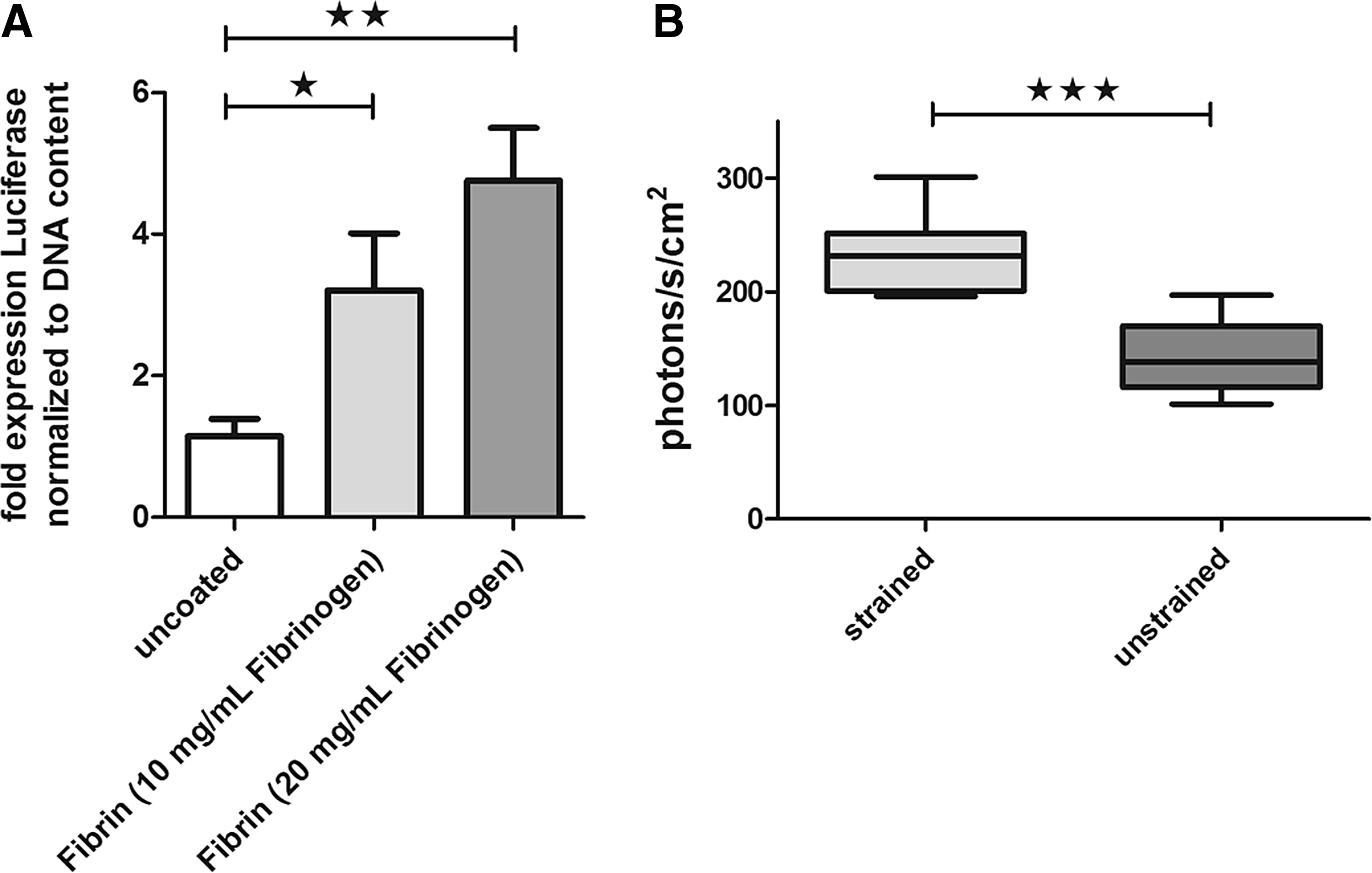
Muscle precursor/stem cells are known to sensitively respond to matrix stiffness, with pliant matrices (suggested Young's modulus of 8–17 kPa) giving a higher degree of myogenic differentiation and maturation. 39 We wanted to investigate whether the E3MCK-MetLuc reporter system is sensitive enough to detect even moderate differences in MCK expression as readout for the degree of myogenic differentiation. Therefore, myogenic differentiation of C2C12 cells on two pliant fibrin matrices of different stiffness was compared with differentiation on standard cell culture plastic. Both fibrin matrices triggered significantly higher luciferase expression upon myogenic differentiation after 7 days relative to the control, with the stiffer (20 mg/mL fibrinogen) fibrin matrix giving better results than the softer (10 mg/mL) fibrin matrix (Fig. 8A). These results indicate that the reporter system is able to reflect moderate differences in myogenic differentiation as, although not significantly different in signal, both fibrin matrices are considered myogenic in terms of their stiffness.
Tissue engineering application of reporter system.
Since mechanical stimulation of muscle precursor cells has been shown to be a feasible approach to achieve uniaxial cellular alignment as well as improved myogenic differentiation, we also tested whether the E3MCK-MetLuc reporter will give reproducible readouts in this setting. We have recently reported a bioreactor system that allows for uniaxial mechanical stimulation of cells embedded in fibrin matrices. 7 In this system, differentiation of C2C12 cells transfected with the E3MCK-MetLuc plasmid was monitored over 6 days. Application of static mechanical stimulation led to an approximately 1.7-fold increase of MCK expression signal compared with unstrained control samples at the end of the culture period (Fig. 8B). These results are in accordance with previous reports showing increased expression levels of early, mid, and late stage-specific myogenic markers after mechanical stimulation and once more underscore the versatility of this reporter system.
Discussion
We successfully constructed a novel nonviral reporter system for monitoring of myogenic differentiation. Three enhancer elements were placed in tandem proximal to a truncated murine MCK promoter. In addition, miRNA seed sequences were added to the 3′-UTR of the constructs, both modifications resulted in reduced background signal activity, whereas strong fluorescence/bioluminescence signal was obtained in skeletal muscle cells, but not in nonmyogenic cell lines (Table 2).
Plus signs indicate the estimated cell specificity, ranging from high specificity (+++++) to low specificity (+).
3′-UTR, 3′ untranslated region; CMV, Cytomegalovirus.
Secreted reporter gene assay and specificity of the reporter system
We have demonstrated the practicability of a secreted bioluminescent reporter gene assay (Metridia luciferase), which has been previously reported to be a suitable tool for monitoring of various biological processes in vitro and in vivo.40,41 Our reporter system, composed of a bioluminescent reporter gene under the control of a modified truncated MCK promoter, enables noninvasive tracking of skeletal muscle cell differentiation in vitro. Substitution of the bioluminescent with a fluorescent reporter additionally provides a feasible tool for cell morphological analysis during myogenic differentiation. The vector is valuable for the optimization of culture conditions for specific lineage differentiation as well as time-lapse monitoring of myogenesis in three-dimensional (3D) in vitro skeletal muscle tissue engineering approaches.
With regard to specificity, several studies have reported that MCK is expressed at high levels only in skeletal and cardiac muscle. 42 Also, Wang et al. demonstrated that even truncated MCK regulatory cassettes consisting of E-Boxes and the proximal promoter are active in skeletal muscle, but inactive in other cell types such as liver cells. 36 Our findings are consistent with this research; however, we aimed at the generation of a skeletal muscle-specific reporter system that displays higher reporter signal intensity than previous systems. Therefore, this study led us to further investigate how a modular approach can be used to modify the truncated MCK promoter in such a way that the reporter system is virtually off in cardiac muscle, thus maintaining specificity, while maximizing the signal.
We have successfully shown that all versions of altered Metridia luciferase MCK reporter systems, E3MCK, CE-E3MCK, and E5MCK (Fig. 2), gave stronger relative bioluminescence readouts compared with plasmids with the constitutively active CMV promoter. Since E3MCK displayed the highest signal intensity (Fig. 3), we chose to use this vector for subsequent evaluation and further modification. Myogenic differentiation of C2C12 cells transfected with E3MCK expectedly triggered strong reporter activity compared with nonskeletal muscle cells. In simple terms, strong luciferase expression was observed only in skeletal muscle, but the expression was almost absent in cardiac muscle cells (HL-1) as well as bone- (MG63, C2C12 after osteogenic differentiation), connective tissue- (NIH3T3), or skin (BICR10)-derived cell lines (Fig. 4). The high specificity and strong signal of the modified E3MCK reporter system for skeletal muscle is a direct result of the truncated MCK promoter per se being highly specific for skeletal muscle.1,42 However, the addition of multimerized E-boxes very likely further increases specificity and signal intensity alike. MyoD1 and MYG, two key regulatory TFs in myogenic differentiation, are likely to stimulate MCK expression through interaction with enhancer elements. 42 In fact, MyoD1 has been shown to have identical binding affinity for the MCK promoter as MEF1. 35 Since both TFs are only expressed in skeletal, but not cardiac muscle, the addition of multiple E-boxes is expected to increase reporter signal intensity through binding of endogenous MyoD1 and/or MYG with simultaneous restriction of reporter activity to skeletal muscle cells. Interestingly, there seems to be a cut-off for this endogenous MCK reporter activation, as addition of more than three E-boxes (e.g., in E5MCK) did not further increase signal intensity (Fig. 3).
Reporter gene activity driven from the improved MCK promoter obviates the use of constitutively active promoters
The tissue-specific MCK vector containing a triple tandem of 2R5S E-box elements and Metridia luciferase as a reporter gene (E3MCK) showed the highest levels of bioluminescence activity compared with CMV promoter-driven expression (Fig. 3). As stated above, this suggests that any addition of MCK enhancers harboring multimerized MEF1 sites and MCK enhancer elements increases skeletal muscle-specific gene expression.
In addition, we incorporated a CMV enhancer in one of the reporter constructs (CM-E3MCK). The CMV enhancer is commonly used in gene transfer vectors due to its high levels of gene expression in a large variety of tissues. It contains also consensus sequences that are recognized by TFs associated with myogenic differentiation. 43 Interestingly, our designed E3MCK reporter plasmid with a CMV enhancer was less active than the constructs lacking the CMV enhancer (E3MCK and E5MCK; Fig. 3). This was somewhat surprising as there is evidence that the CMV enhancer increases the capacity of expression due to high-affinity binding of TFs to consensus sequences within different cell types.40,44 However, the observed reduction in reporter activity may be explained by the existence of shared consensus sequences in the CMV and MCK enhancer, resulting in competitive binding of regulatory TFs. Another explanation for the inferior performance of the CE-E3MCK construct could also be unspecific binding of other TFs to the CMV enhancer sequence. These interactions may either negatively regulate expression directly or by blocking the binding sites for myogenic TFs in the MCK enhancer sequences. 43
Introduction of myogenic differentiation-associated miRNA seed sequences reduces background activity
Even though the E3MCK reporter system already gave decent signal intensity and specificity, we tried to further optimize the reporter plasmid to obtain minimal background signal. Several studies have previously shown that miRNA activity can be efficiently reduced by expressing complementary target sequences.28,29 To increase the signal-to-noise ratio (by reducing reporter background signal) of the reporter system, we hypothesized that this regulatory mechanism can be exploited to further reduce the effects of the leakiness of the E3MCK reporter system. Therefore, we explored the effects of three different miRNA seed sequences on reporter signal intensity upon incorporation into the E3MCK plasmid (Fig. 5). As shown in Figures 6 and 7, introduction of miRNA sequences into the E3MCK-MetLuc and E3MCK-GFP reporter plasmids not only resulted in stronger bioluminescence and fluorescence signals upon myogenic differentiation, but also reduced the background signal in osteogenically differentiated controls (Fig. 7A). Triple combination of indicated miRTs into main reporter construct (E3MCK) showed similar relative bioluminescence readouts. Interestingly, insertion of only mirT-659 seed sequences reduced relative luciferase expression due to increased osteogenic background signal. Our findings suggest that miRT-659 target genes might be involved in the regulation of transcription during osteogenesis in control cells. In fact, impact of miRT-550 and miRT-659 sequences on osteogenic differentiation is still unknown and should be investigated to get insight into the biological process. Conversely, miRT-222 and miRT-550 showed higher bioluminescence and fluorescence activity. This advanced reporter system combined with miRNA seed sequences might be a useful add-on to improve the signal-to-noise ratio in in vivo experiments.
Reliable noninvasive reporter systems present a feasible monitoring tool for skeletal muscle tissue engineering
We could demonstrate the feasibility of the reporter system in two-dimensional and 3D in vitro skeletal muscle engineering approaches. With the notion that secreted bioluminescent assays have been shown to be more sensitive than cytosolic luciferase- or fluorescence-based reporter assays, 45 we chose to evaluate Metridia luciferase reporter activity by varying conditions that are known to affect myogenic differentiation, namely substrate stiffness and mechanical stimulation. Using C2C12 cells transfected with E3MCK, we could demonstrate that the reporter system was able to reflect gradual changes in myogenic differentiation upon culture on fibrin matrices of different stiffness (Fig. 8A). Pliant matrices are known to promote in vitro myogenesis 39 and we observed an approximately threefold (10 mg/mL fibrinogen) and fivefold (20 mg/mL fibrinogen) increase in reporter activity after myogenic differentiation on fibrin compared with cell culture plastic. Furthermore, we could reproduce the well-established beneficial effects of mechanical stimulation on myogenic differentiation 7 in a bioreactor-based 3D bioartificial muscle model using our reporter system, with an approximately 1.7-fold increase in reporter activity when static mechanical stimulation was applied (Fig. 8B).
Nondestructive assaying methods become increasingly important in tissue engineering as they reduce sample numbers and allow for time- and cost-efficient monitoring of the same sample set over time. Our tissue-specific reporter system provides a nondestructive analysis tool that is suitable for analysis and optimization of bioreactor-based culture systems as well as in vitro/vivo live cell monitoring.
Footnotes
Acknowledgments
This work was supported by the European Union 7th Framework Program (BIODESIGN; No. 262948). The authors would like to thank Georg Feichtinger, PhD, for valuable input to this work and Dr. Christiane Fuchs for assistance with the MagneTissue bioreactor system.
Disclosure Statement
No competing financial interests exist.