




Abstract

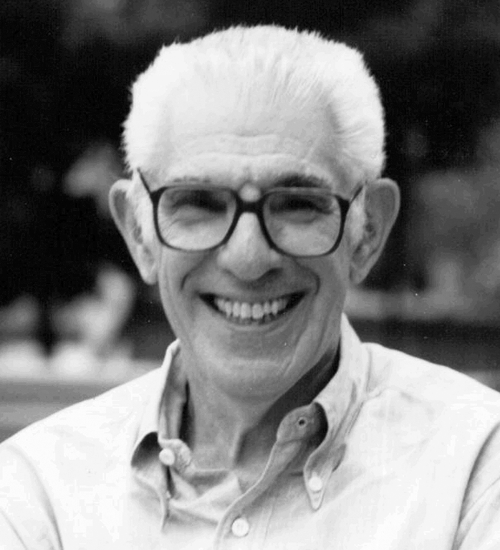
After discharge from the Army he obtained a residency in Internal Medicine at The New York Hospital. During his residency he was recruited to set up a radioisotope laboratory, and until 1995 he was the director of what eventually became the Division of Nuclear Medicine in the Department of Radiology. At the time of his death he was Professor of Radiology and Medicine at Weill Cornell Medical College and attending physician and radiologist at New York Presbyterian Hospital.
Dr. Becker had a broad range of interests. He was fond of describing himself as a nuclear endocrinologist, and his primary research focus was on the treatment of hyperthyroidism and thyroid cancer with radioiodine. He was a founding member of the cooperative thyrotoxicosis follow-up study which involved 26 clinics in a retrospective evaluation of 35,593 patients treated for hyperthyroidism between 1946 and 1964, 65% of whom had been treated with radioiodine. This study established the safety and efficacy of 131I treatment and led to its current, almost universal acceptance. His special interest was in the quantitative aspects of radioiodine treatment including the use of dosimetry in the treatment of both hyperthyroidism and thyroid cancer. He described the “small pool” syndrome in which diminished thyroidal iodine stores cause a more rapid turnover of 131I, resulting in a decreased radiation dose to the thyroid and often in failure of 131I treatment.
Together with investigators in other fields he studied iodine kinetics in dogs, cats, and bats and for a time maintained a beagle colony on the roof of one of the hospital buildings. He also participated in the early studies on the etiology, diagnosis, and treatment of hyperthyroidism in elderly cats who often had their thyroids scanned after hours in the isotope lab. Throughout his career he was able to maintain an active clinical practice in thyroid disease and was often cited as one of the “Best Doctors in New York.” His interests extended to the early history of radioiodine treatment of hyperthyroidism. He interviewed survivors of those early trials and presented his findings as his presidential address at the ATA meeting in 1983. Together with Clark Sawin he later published a more extensive history of that era in Seminars in Nuclear Medicine, Thyroid and Thyroid Today.
Dr. Becker also had a strong interest in public health and radiation safety. For over 25 years he served on many committees for the National Cancer Institute and also for the National Council on Radiation Protection and Measurements. He was especially interested in the effects of radioiodine exposure from fallout and nuclear accidents, and he participated in investigations into the increase in thyroid cancer in Marshall Islanders exposed to fallout from an H-bomb test. He was a major contributor to the investigations into the increase in childhood thyroid cancer after the Chernobyl nuclear reactor accident and contributed to the development of long-term monitoring policies for the exposed population. His behind-the-scenes diplomacy was largely responsible for the collaboration between the many contending national entities involved, including Russia, Belarus, the Ukraine, the United Kingdom, Japan, Germany, Italy, France, and the United States. In 1996 he received a White House Citation for Humanitarian Effort for this work. Even before Chernobyl he was a vigorous proponent of iodine prophylaxis for reactor accidents and published several papers documenting its efficacy. When he was chairperson of the Environmental Hazards Committee of the ATA their recommendations regarding iodine prophylaxis were published in JAMA. He also served on a National Academy of Sciences panel that recommended distribution of KI near nuclear reactors.
He was active in the ATA. In addition to serving as president in 1983 he was a member and chairperson of numerous committees and received the distinguished service award in 1989. He was also active in the Society for Nuclear Medicine at both the national and local levels and received their Berson-Yalow award.
Dr. Becker was an intellectually demanding but personally unassuming man with a great sense of humor; he was able to see the best in people and to encourage them to achieve their potential. He urged his technologists to take advantage of the support for further education offered by the hospital at that time and several went on to obtain doctorate degrees. When he established the isotope lab at The New York Hospital he persuaded his old army sergeant, Ed Nunez, to come to New York as his chief technologist. Ed co-authored several papers with him, eventually got a Ph.D. in biology and became a professor of anatomy. Several more joint papers followed on the thyroid glands of bats.
David Becker was born in New York on May 24, 1923, the only child of Albert and Miriam Becker. He was a graduate of Columbia University and the New York University School of Medicine. He lived in New York his entire life and participated actively in the life of the city but maintained a country home in Glen Cove on Long Island where he liked to garden. He collected folk art and early medical instruments relating to radiation. For over 20 summers he studied at the Haystack Mountain School of Craft on Deer Island in Maine and became an accomplished potter. He distributed his pots widely among his friends, and my children divided them into early, middle, and late Becker. His first wife, Naomi Isaacson Becker died in 1974. He is survived by their children, Daniel of Washington, DC, and Susan, of Maplewood, NJ, four granddaughters, and his second wife, Lois Lunin.
David Becker made major contributions towards our understanding of the effects of radioiodine on the thyroid gland. His studies included both treatment of thyroid disease in individuals and accidental exposure of populations. But his influence extends far beyond his scientific contributions. It is his intellectual honesty, wise counsel, and loyal friendship that will be missed the most.