




Abstract

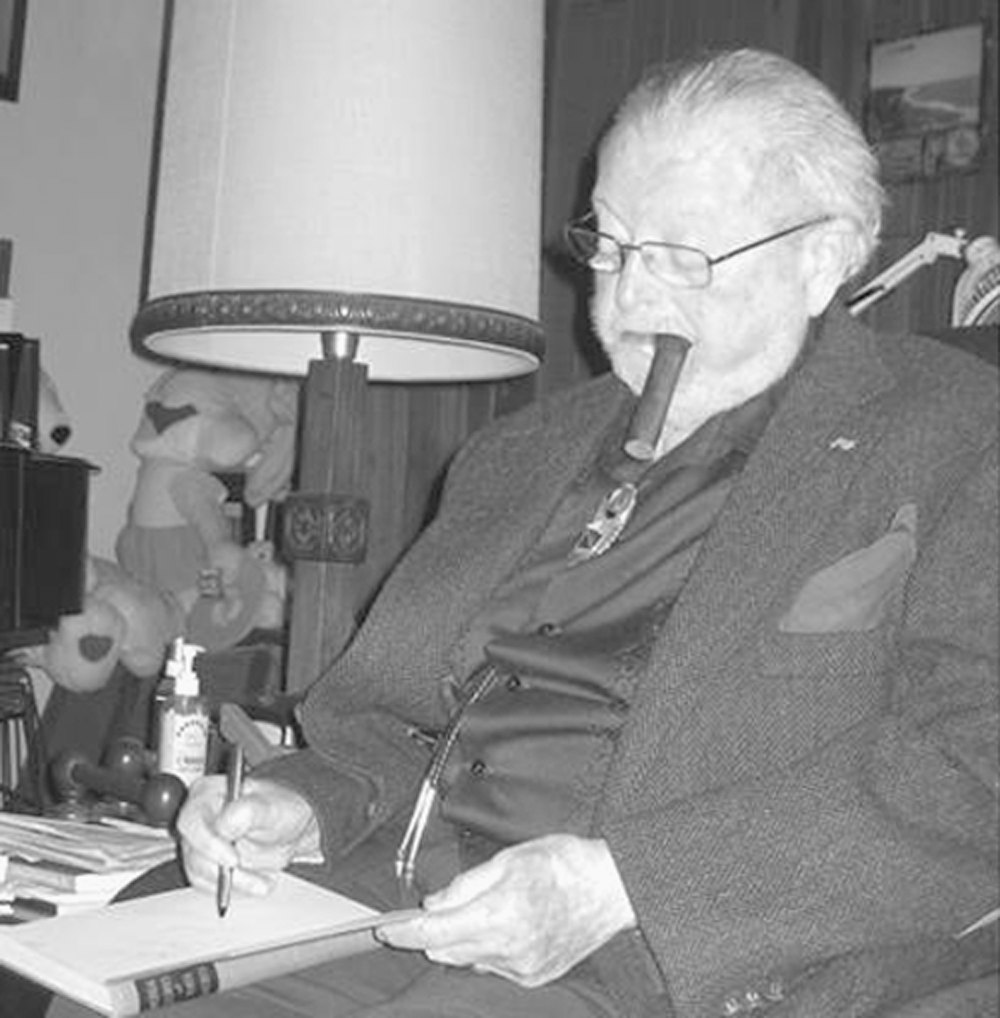
Boris was born in the Ukraine in 1923. At the age of 5, he moved with his family to Mexico City, where he received his education in Spanish, which became his native language. His early promise became evident when he received his MD degree in Mexico City. Shortly thereafter, Boris made the most critical move in his medical career when he emigrated with his wife Rebecca (Becky) to the United States in 1948 and was accepted as a postdoctoral fellow by Dr. Paul Starr at the University of Southern California, subsequently rising up the ranks to Clinical Professor. It was Dr. Starr who inculcated Boris' lifelong love for the thyroid and his humanistic concern for his patients. This formative experience was recognized and appreciated by Boris for the rest of his life. He was always proud, honored, and grateful to have had Dr. Starr as a mentor, to the extent that after the passing of Dr. Starr, Boris expressed his gratitude by supporting the Paul Starr Award Lectureship at the annual meeting of our Society for outstanding contributions to clinical thyroidology.
Dr. Catz's clinical career was notable for pioneering a number of therapeutic approaches for thyroid diseases. In the early 1950s, a number of years after the first use of radioactive iodine in the treatment of thyroid cancer, the widely held recommendation was to limit such therapy to nonresectable thyroid tumors. In 1953, Dr. Catz and colleagues, including Drs. Charles Sturgeon, Donald Petit, and his chief, Dr. Paul Starr, initiated a controversial (at the time) program for therapy of thyroid cancer involving routine total thyroidectomy followed by thyrotropin (TSH)-assisted radioactive iodine remnant ablation, the findings of which were reported by Drs. Catz and Starr in 1959 (1). It goes without saying that this approach is no longer radical today. A second therapeutic milestone achieved by Dr. Catz, reported in 1961 together with his resident, Dr. Stephen Russell, was the addition of triiodothyronine and glucocorticoids to the standard therapy for myxedema coma and shock (2). Whereas this condition had been almost universally fatal, 7 of 12 patients survived, representing the first report of moderate success in reversing this most serious situation.
Dr. Catz's final pioneering (and most controversial) contribution to thyroidology was his thesis, supported in the late 1960s by clinical studies together with Drs. Franz Bauer and Samuel Perzik, for total thyroidectomy and radioactive iodine thyroid remnant ablation for Graves' ophthalmopathy (3,4). I remember at an annual ATA meeting many years ago participants being invited, if they wished during the lunch break, to hear Dr. Catz present his findings, including the ability of Dr. Perzik to safely accomplish a total thyroidectomy. The scorn in the room was palpable and persists to the present day, despite accumulating evidence in recent studies by other groups for the efficacy of this approach. Dr. Catz deduced that high levels of thyroid-stimulating antibodies (termed long-acting thyroid stimulator, or LATS, at the time; the TSH receptor not having been discovered) indicated that not all thyroid tissue had been removed by prior therapy and that total ablation would ameliorate the autoimmune response. Many believe that further clinical studies will vindicate Dr. Catz and confirm his visionary outlook.
After becoming emeritus, Dr. Catz derived great pleasure in supporting younger investigators of the thyroid and in maintaining his ties, including by financial support, with the ATA and the Endocrine Society. The latter recently recorded his reminisces for the Oral History Collection within the Clark Sawin Library. In 1985, Cedars-Sinai established an annual Boris Catz Thyroid Lectureship that continued for 28 years with his participation until his final illness. Many eminent thyroidologists invited to deliver the lecture will recall Boris' famous hospitality, including a visit to his office, which would not have been out of place in a Dickens novel. In addition, visitors to his home were plied with excellent whisky, and left with presents of his ever-trademark cigars and other gifts. Indeed, Boris cannot be remembered without him chewing on one of his (unlit) favorite leaves. His love for cigars derived from his work after graduation in rural Mexico, where some of his grateful patients could only afford to pay him with cigars.
Boris lost Becky, his wife of more than 50 years, in 2001. He continued working as a clinician, seeing a few patients each day, until 2 weeks before his death—even when he was unable to walk. With this immobility, relatively few patients, and an exorbitant office rent, he saw his patients in his home, waiving his fees if not affordable. Visitors to Boris' home could only be aware of his simple living style and lack of interest in material objects. It was his patients and his family that mattered most to him. His mantra about the need to see the patient as a whole and the essential nature of a patient's family history remain fundamental values that are frequently missed with the extreme pressure of a modern medical practice. Boris is survived by his four children, 10 grandchildren, and six great-grandchildren. With Boris' passing, our Society has lost a dedicated member whose insight and humanism will be sorely missed.