




Abstract

D
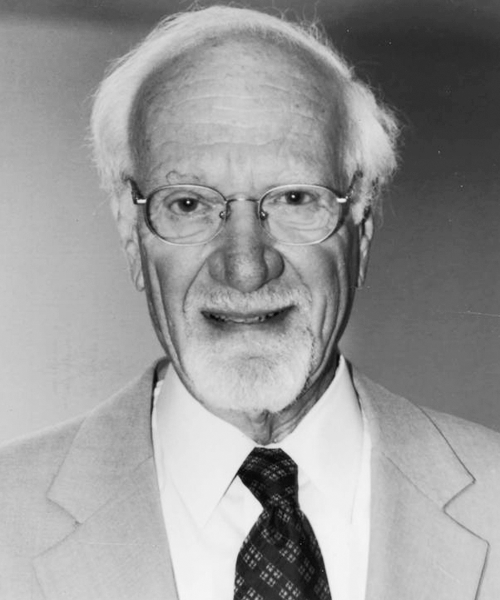
Dr. Solomon was born in Boston, Massachusetts, on March 7, 1923, and graduated from Harvard Medical School, magna cum laude, in 1946. He did his residency training at the Peter Bent Brigham Hospital and his fellowship training in endocrinology with the renowned Dr. Edwin B. Astwood. He served the U.S. Public Health Service at the Gerontology Research Center in Baltimore, Maryland. He married Ronda Markson some 65 years ago; she is a highly intelligent, loving, and supportive person, and Dr. Solomon always mentioned her with much love, affection, and respect.
Dr. Solomon joined the University of California–Los Angeles (UCLA) School of Medicine in 1952 and became chief of its Division of Endocrinology. In 1966 he became chairman of the Department of Medicine at the Harbor–UCLA Medical Center (formerly Harbor General Hospital) and contributed to the growth and success of that department for five years. He recruited productive and successful chiefs in many divisions and encouraged their growth and development, rendering the Harbor Campus to be a major research facility at UCLA. Dr. Solomon was also a force in the establishment and growth of the Research and Education Institute (now called LA Biomed) at Harbor–UCLA Medical Center; the Research and Education Institute has since done much to support research efforts of young investigators.
In 1971, Dr. Solomon was recruited back to the main UCLA campus in Westwood to become the executive chair of UCLA's Multicampus Department of Medicine, a post that he held until 1981. During this 10-year tenure, Dr. Solomon accomplished a great deal toward the development and expansion of the Department of Medicine, rendering it a nationally and internationally renowned research department. He often said that top research effort is essential for a university because developing and distributing new knowledge is one of its important functions. He also worked hard in creating and developing the Department of Medicine Professional (Practice) Group, which has become increasingly important over the years.
David Solomon did much to contribute and develop new research. His contributions to the understanding of the pathogenesis of Graves' disease have been exceedingly important. With Dr. Gildon Beall, Dr. Solomon demonstrated that thyroid microsomes neutralized thyroid stimulating activity of the long-acting thyroid stimulator (LATS) often found in sera (or immunoglobulin G, IgG) of Graves' disease patients. I joined Dr. Solomon's laboratory in 1968, when LATS was measured by a tedious mouse bioassay hardly used now. We worked for several years on the role of LATS (as measured in the mouse bioassay) in the etiology of hyperthyroidism in Graves' disease. Besides LATS, Beall and Solomon identified a LATS-protector activity in Graves' sera. They immunized rabbits with thyroid microsomes in an attempt to cause hyperthyroidism in these experimental animals. Dr. Jacques Orgiazzi came to the Solomon lab from Lyon, France, and developed systems to show the presence of a human thyroid adenylate cyclase stimulator in IgG of Graves' disease patients. These and several other studies added to the concept that hyperthyroidism in Graves' disease is caused by an IgG that specifically stimulates the thyrotropin receptor in the human thyroid tissue by causing an increase in the adenylate cyclase activity, leading in turn to the generation of cyclic AMP. These studies done in the early 1970s still remain the basis of our understanding of the etiology of hyperthyroidism in Graves' disease. Solomon, Orgiazzi, and their coworkers also identified in some Graves' disease patients' sera a thyrotropin receptor-blocking IgG, which they named human thyroid adenylate cyclase inhibitor, that functioned in some ways similar to the LATS protector. Dr. Solomon also contributed much to studies leading to the production of thyroid hormone–binding antibodies used to measure thyroid hormones and to develop an understanding of peripheral metabolism of thyroid hormones. Besides some names already mentioned, there have been a series of very illustrious fellows who went through the Solomon lab, including (but not limited to) Marguerite Hays, Yoshimasa Shishiba, Toshimasa Onaya, Jean Dussault, Yasunori Ozawa, Sadaki Kusunoki, Yasuko Nakamura, Tien-Shang Huang, Sing-Yung Wu, Rui Maciel, Wilmar Wiersinga, and Ferrucio Santini, who have made many important and innovative contributions to medicine. I have received communications from several former fellows of Dr. Solomon who remember their stay at UCLA with much fondness and expressed the serious loss they feel in the passing of David Solomon, how privileged they felt in working with David, and/or how great an influence he has had on their careers.
I for one always looked forward to our research meetings on Saturday mornings; this was one block of time David could arrange to hear, consider, and discuss research and advise on research findings and on further plans for research that may be pursued. These meetings began in 1968, continued well into the mid-1990s, and were very useful indeed. Dr. Solomon had published some 220 scientific articles, 5 books, 49 book chapters, 32 editorials, and various other articles.
Besides fostering endocrine/thyroid research, David's talents were also directed in the 1980s (and thereafter) toward developing geriatrics and gerontology at UCLA and nationally. He helped establish and develop the UCLA Center on Aging, became its director, and continued its service and growth until 1996. Dr. Solomon was editor-in-chief of the Journal of American Geriatrics Society for a five-year period ending in 1993. He was the past president of several professional organizations, including the American Thyroid Association, the Association of Professors of Medicine, and the Western Association of Physicians. He received many honors from several professional societies and was the initial recipient of the ICON Award from the UCLA Center on Aging. He was also named a “Legend” by the LA Biomed (Research and Education Institute) at the Harbor–UCLA Medical Center.
Dr. Solomon was a devoted family man. My wife, Usha, and I looked forward to our dinner meetings with David and Ronnie, which had sadly decreased lately to just once or twice a year. All of us who have experienced David Solomon's warmth, friendship, kindness, and help for so long will miss him sorely. He was truly a great leader, educator, investigator, and physician, and he did much to serve the community.