




Abstract


Professor Aldo Pinchera passed away on October 11, 2012, at the age of 78. Italian endocrinology lost a great mentor, one of the founders of endocrinology in Italy, and one of its greatest ambassadors in the world.
On Behalf of All of Aldo Pinchera's Pupils
Aldo had wide editorial activity. He founded and directed for many years the international Journal of Endocrinological Investigation, official journal of the Italian Society of Endocrinology, and the national journal, l'Endocrinologo. He served on the Editorial Board of all the major international journals in the field of endocrinology and metabolism. His scientific interests ranged from obesity to parathyroid diseases and calcium metabolism to thyroid diseases, with particular regard to thyroid autoimmunity, thyroid cancer, and endemic goiter. His scientific activity translated to the publication of more than 630 peer-reviewed papers in international journals, 10 international volumes as editor or co-editor, and 36 chapters in international textbooks.
Moved by his insatiable desire to bring endocrine research forward through the creation of a solid international network, Aldo, a bright and keen investigator, selected and helped a number of capable fellows become established, thus creating the Pisan Endocrinology School, one of the strongest in Italy. Many of his pupils have reached positions as full professors in several universities in Italy, after spending long periods of time in research and training in prestigious institutions abroad. He has been inspirational for generations of researchers. His intelligence and his drive were contagious for young (and less-than-young) fellows in Pisa and throughout Italy. His wisdom represented a reference point for good advice or suggestions in troubled times or difficult situations. We cannot believe that we cannot give him a call any longer to discuss any kind of issue with him.
We miss Aldo and will continue to miss him. We have lost our mentor. The endocrine community has lost one of the giants in this field. His achievements will continue to live after his death. He will live in our hearts forever.
—Luigi Bartalena, University of Insubria, Varese, Italy
Luca Chiovato, Fondazione Salvatore Maugeri, Pavia, Italy
Gianfranco Fenzi, University of Naples, Naples, Italy
Claudio Marcocci, University of Pisa, Pisa, Italy
Stefano Mariotti, University of Cagliari, Monserrato, Italy
Enio Martino, University of Pisa, Pisa, Italy
Furio Pacini, University of Siena, Siena, Italy
Paolo Vitti, University of Pisa, Pisa, Italy
Personal Remembrances from a Colleague of Half a Century
My first contact with Aldo and Chicchi Pinchera was in 1963 at the Thyroid Clinic of the Massachusetts General Hospital (MGH), Harvard Medical School, Boston. I was arriving from the University of São Paulo, Brazil, to spend two years as a Clinical and Research Fellow under the guidance of John B. Stanbury, supported by the James Picker Foundation. Aldo and I immediately became close friends. He was a veteran Research Fellow at the Thyroid Lab, where he had been since 1962, and guided me through the “secrets” of the institution. He also introduced me to the other fellows (John and Ann Dunn, Kenji Torizuka, Eduardo Pretell, E. Ramagopal, Maria Dufau, and Paul Walfish) and offered me several hints about Boston and how to survive at MGH.
Aldo's research project was focused on Graves' disease and the recently detected long-acting thyroid stimulator (LATS), previously described by Adams and Purves (1). Indeed, Aldo and Chicchi had worked with Max Mackenzie at the McGill University in Montreal. They carried to Boston the fundamentals for performing the biological test for LATS. It was quite arduous lab work, since serum from the patients had to be injected into female rats, followed by collection of blood specimens at specific intervals. Both Chicchi and Aldo often slept in the lab to collect the samples. They finally were able to perform the tests for LATS in a number of patients with Graves' disease who were either under treatment, not treated, cured, or relapsed. Later, they presented their data at the American Thyroid Association (ATA) meeting in Ann Arbor. The new lab tool to follow-up patients with Graves' disease was a great success.
At the end of 1963, Aldo and Chicchi departed for Rome, where Aldo became an Assistant Professor under Professor Lidio Baschieri (Department of Internal Medicine, University of Rome). Our friendship was then firmly established and solidly renewed when we went to Rome for the 5th International Thyroid Congress (ITC). It was my first international meeting, and Aldo and Chicchi were both very kind and friendly, introducing me to a vast group of thyroidologists from Europe and elsewhere. In 1970, Professor Baschieri was appointed Professor at the University of Pisa and Aldo was invited to be his Associate Professor. It was a new challenge in a new position, focused mainly on internal medicine and labor medicine. Later in 1980, Aldo became full Professor. From there, he then became the Head of the Institute of Medicine and Labor Medicine. At that time, Enio Martino and Gianfranco Fenzi were invited to be part of Aldo's department. In the coming years, a number of other fellows (Luigi Bartalena, Luca Chiovato, Claudio Marcocci, Stefano Mariotti, Furio Pacini, Paulo Vitti, and others) joined the group that rapidly became the Center for Clinical and Experimental Thyroid Research (Institute of Endocrinology). The group, under Aldo's leadership, presented papers at medical meetings in Europe, North America, and elsewhere, and published a significant number of excellent manuscripts in medical journals of solid impact factor. The center soon became an international reference, welcoming visitors from all over the world.
Aldo was unquestionably the leader, the source of energy for the team, the brain for new ideas, the absolute “Professore.” Chicchi was always working by his side at the then-renowned “Instituto di Endocrinologia.” Once, going to Europe to attend a European Thyroid Association (ETA) meeting, I stayed a few days in Pisa. Aldo invited me to the Tirrenia Hospital for medical rounds. They brought me a white coat and I followed the group of professors, assistants, and fellows led by Aldo. I was impressed by his charisma, his way of comforting the patients, his ever-present smile preceding the classical buon giorno greeting to everyone.
Through the coming years, our friendship increased steadily before and after the meetings, on both sides of the Atlantic Ocean. In 1980, the 8th ITC was organized by the Asia and Oceania Thyroid Association (AOTA) in Australia. After the meeting, Leslie DeGroot had organized a tour of a few countries in Southeast Asia. Lectures would be delivered by a group of thyroidologists. Aldo, Gerry Burrow, Sidney Ingbar, Shigenobu Nagataki, John Nicoloff, Bob Volpé, and I were part of the team of lecturers. The local arrangements provided lodging and meals to the group in exchange for a full day of lectures on thyroidology. Aldo's lectures always started with greetings in Italian followed by fluent British-accented English. At the end, he would ask for questions. If none, Aldo would produce questions and answers to make several points more clear. The audience loved this spontaneous and friendly attitude.
Aldo Pinchera and Chicchi Pinchera discussing politics with colleagues in Newton, Massachusetts, 1983.
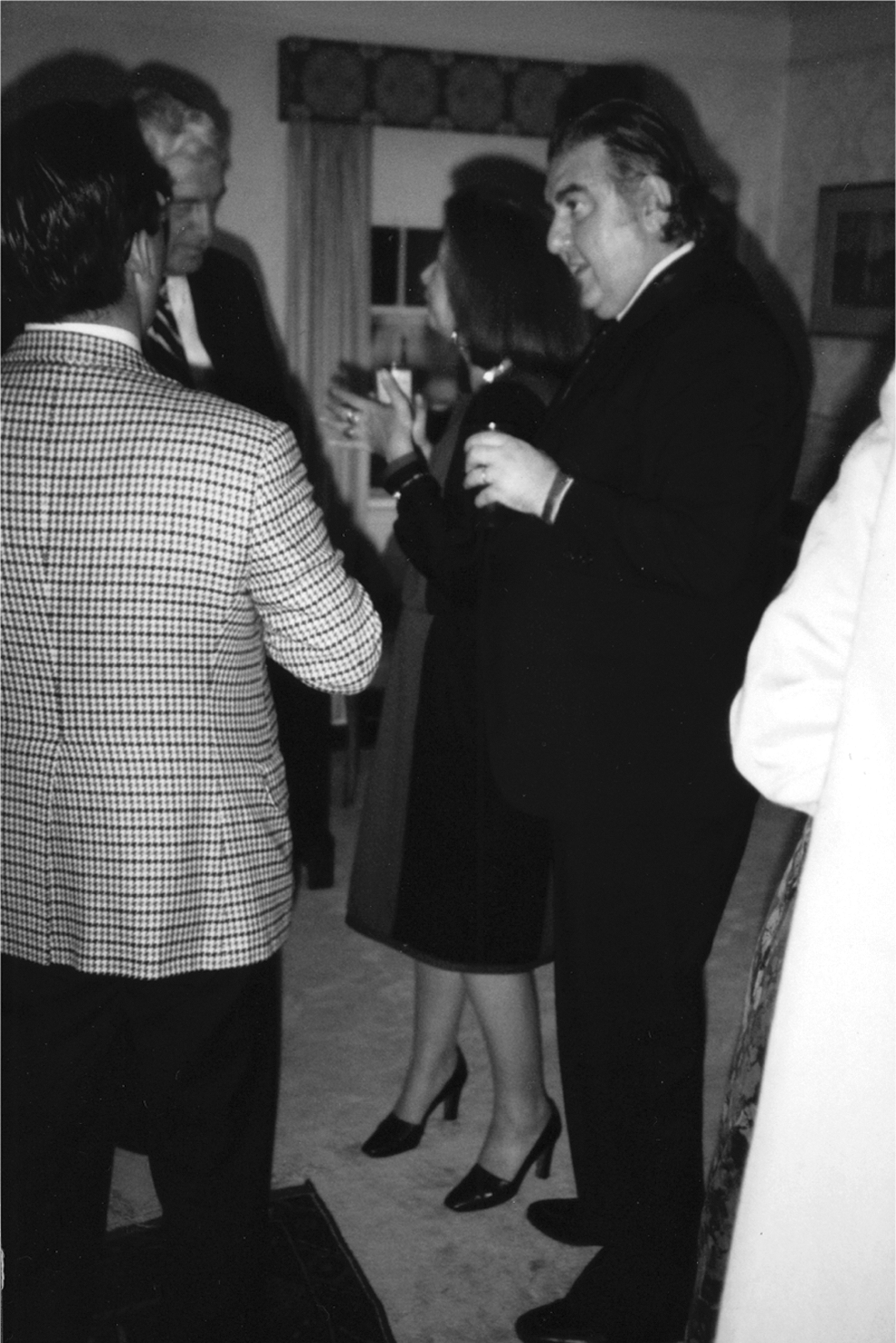
In 1986, my wife Suzana and I joined Aldo and Chicchi in Kathmandu, Nepal, for a much-needed meeting that resulted in the establishment of a new organization, the International Council for the Control of Iodine Deficiency Disorders (ICCIDD). This was the beginning of many trips together to distant places in the world, where iodine deficiency disorders were still a major public health concern. Aldo was also working hard in Italy to get the law for mandatory salt iodination approved. Despite strong opposition from the Green Party, Aldo succeeded in obtaining an agreement to finally have the salt iodized in Italy.
Coming into the 21st century, we met again at two ITCs: in 2005 in Buenos Aires and in 2010 in Paris. In 2012, the ETA meeting was in Pisa, where we had the chance to have a “family” dinner at “Da Bruno,” where the Pinchera and the Medeiros families merrily and loudly reminisced about wonderful memories.
In all these years together, what really marked me about Aldo's personality was his obvious (and always present) fine and astute diplomacy. He was definitely a “charmeur,” an excellent lecturer, and a natural leader. But he was at his best when in the background of arrangements for decisions to be made in a general assembly, in a large convention, or in a small committee. In this context, somewhere, sometime, in soft talk for my ears only, Aldo told me his secret: “Geraldo, never go to a general meeting without having a reasonable talk to each one present in order to know how they will be voting.” This may be one of the secrets in his life, probably the reason he successfully managed to have his former Assistant Professors firmly placed in strategic places all over Italy. This resulted in new centers of innovative and productive thyroid research.
Aldo was loved by all his patients from Italy and from abroad. He was a marvelous person, a passionate bookstore customer for new and old books, a true gastronome, a refined gourmet, a wine lover. In short, Aldo loved life and all the extraordinary surprises that life and love can bring to a unique man.
—Geraldo Medeiros-Neto, University of São Paulo Medical School, São Paulo, Brazil
Remembering a Beloved Colleague and Friend
We are so saddened by the recent death of our long-time dear friend, Aldo Pinchera. Aldo's accomplishments as a renowned physician, investigator, editor, and mentor are well known throughout the academic world. We would like to briefly discuss other personal attributes of this amazing man.
We first met the Pincheras in Jerusalem in 1973 at the abbreviated ETA meeting and again at the 1975 ITC in Boston. Aldo and Chicchi stood out as the up-and-coming couple in international thyroidology. He presented his data in perfect English and answered questions from a tough audience with accuracy and good humor. The Pincheras and their colleagues from Italy were spotted one late night emerging from the theater across the street from the meeting venue, having surreptitiously seen an adult film. This late night venture was discussed in great detail the following day!
Aldo Pinchera and Lewis Braverman enjoying an evening together in Newton, Massachusetts, 1983.
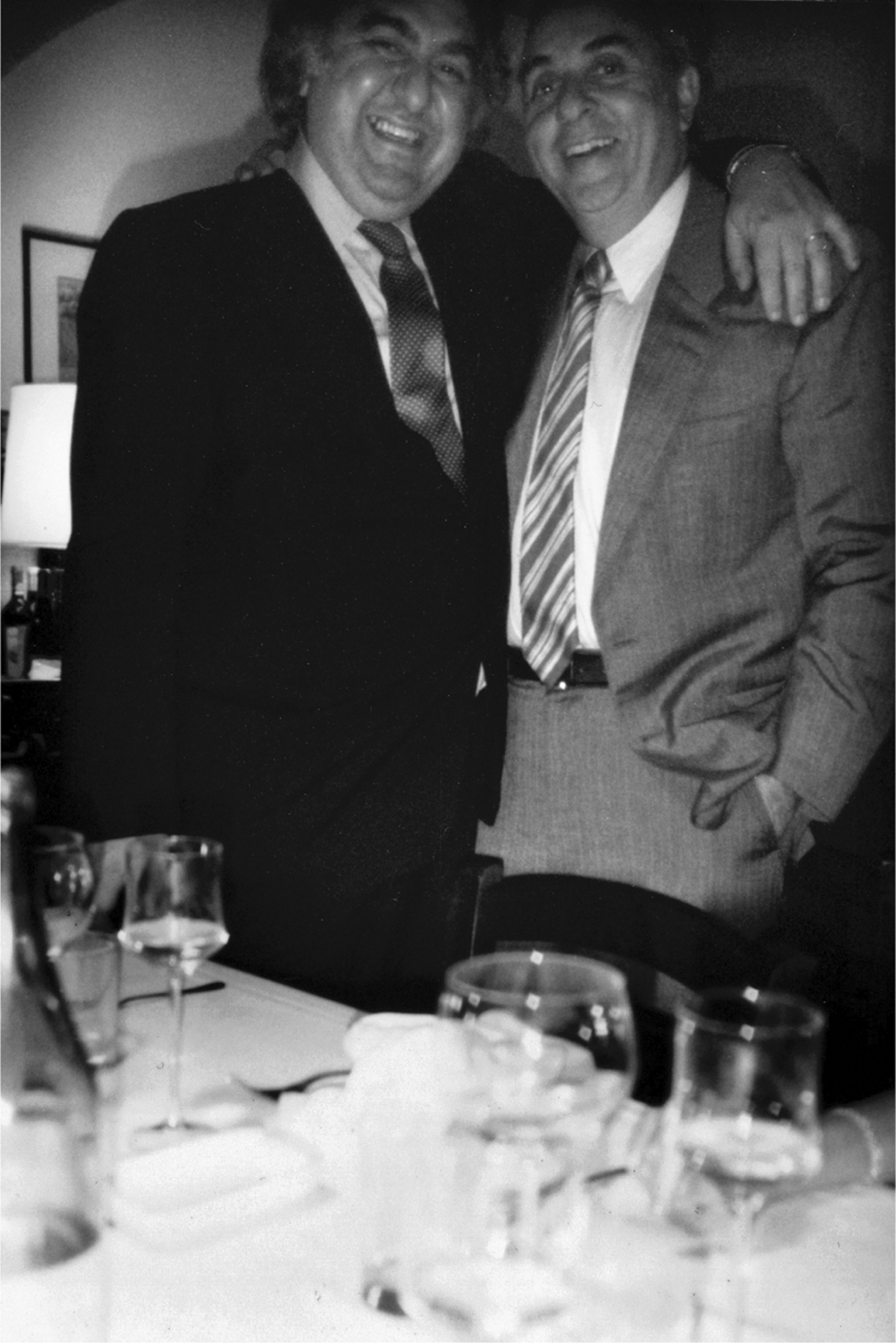
Aldo invited Lew to take a six-month sabbatical as the first Professore a Contratto with his group in Pisa during 1983, which we accepted with great joy and expectation. The Pincheras did everything for us, including finding a lovely house in Tirrenia, outside Pisa on the Mediterranean, where the University's Endocrine Unit was based. Aldo and Chicchi were the perfect hosts during our stay, arranging magnificent dinner parties for us, including his research group and leading members of the civic and academic communities in Pisa. The Pincheras' apartment was a joy, especially for Mimi, with a huge and scholarly library on subjects ranging from ancient history to the modern classics and art history. Mimi and Aldo would discuss and often argue about the virtues of a specific book. Aldo also arranged for us to visit and lecture at many of the leading academic centers in Italy, including Rome, Naples, and Catania. He was admired and beloved everywhere we went and, because of Aldo, we were treated like royalty. Our stay in Pisa also resulted in many joint papers with Aldo and his colleagues and our collaboration continued for many years.
We have many other fond memories of our stay in Pisa. Aldo was a true gourmet and introduced us to many of the outstanding restaurants in Pisa and Tirrenia. All the owners greeted the Pincheras with great respect and seated us at the best tables. The three that we remember most fondly were L'Arsella on the Sea for the best seafood, Martini's in Tirrenia for Sardinian “Flaming Pasta,” and Bruno's in Pisa near the Leaning Tower for the best boar and other meats in all of Tuscany. We also spent a wonderful long weekend with Aldo's family at their lovely home in Sardinia overlooking the sea. His siblings were like Aldo—warm, extremely intelligent, and fun-loving.
Aldo's junior and senior faculty and fellows showed great respect and reverence toward their outstanding leader. For example, as we boarded a small plane at the Pisa airport to attend a conference, one of his fellows would run toward the plane, carrying a briefcase full of loose slides and carousels so that the “big Professor” could arrange his slides into the correct order as we flew toward the site of the meeting.
We had the opportunity to have the Pincheras' daughter, Valeria, spend many weeks with us in Newton and Gloucester during the summer of 1985, including visits to the Museum of Fine Arts and to Mimi's niece in the Hamptons. We hope that Valeria, now a mother and faculty member at the University of Pisa, fondly remembers that summer in Boston.
It was so impressive that Aldo always took time to visit bookstores and museums during his worldwide travels. His thirst for knowledge in literature, art, and history was truly remarkable. He was a true Renaissance man. During the Pincheras' last visit to Boston, in 2011 for the Endocrine Society Meeting, Mimi led them on a tour of the new American Wing at the Museum of Fine Arts. They were extremely impressed with the art and the galleries, expanding Aldo's great interest in American history.
The last time Lew had the opportunity to see Aldo and Chicchi was a two-hour visit in the Montreal airport while waiting for a connecting flight to Quebec City to attend the 2012 American Thyroid Association annual meeting. Although a bit frail, Aldo was bubbling with enthusiasm over his latest scientific findings, his curiosity about the upcoming U.S. Presidential election, his interest in our 2 sons and grandchildren, news about their children, Valeria and Michele, and granddaughter, and how Mimi was doing following her trimalleolar ankle fracture in June. We also had lunch together during the meeting and vowed to see each other again in the near future. Unfortunately, this will not occur.
—Lewis and Miriam Braverman, Boston, Massachusetts
Aldo Pinchera left an indelible mark on the field of Endocrinology. He was held in the highest international renown. His loss will be mourned by patients, pupils, colleagues, and friends around the world.