




Abstract

Saturday, October 19, 2013
Thyroid Hormone Metabolism & Regulation Saturday Oral Basic
The primary product of the thyroid gland, thyroxine (T4), must be converted to T3 in order to be active. T3 nuclear availability is regulated by the activity of the deiodinases. D1 and D2 activate the thyroxine (T4), whereas D3, by inactivating T3, terminates TH action. Although a central role for TH and skeletal muscle function is well recognized, the molecular mechanisms by which TH regulates muscle development and regeneration are poorly understood.
We have previously demonstrated that D2 plays a key role in skeletal muscle development and regeneration. Here we show that, in the opposite direction, D3 is highly expressed in proliferating myoblasts and in the early phases of muscle regeneration. D3 co-localizes with Pax7 in myofibers and its expression is tightly regulated during cell lineage progression from quiescence to the activation phase. The mdx mice, the animal model of Duchene Muscle Dystrophy, have higher D3 levels than normal mice in all scheletal muscle compartments. To assess the functional role of D3 in activated myoblasts, we specifically deleted D3 in satellite cells in Pax7-CREER-D3Floxed mice. By injecting cardiotoxin in gastrocnemius and tibialis anterior muscles, we demonstrated that cell specific D3-genetic depletion drastically decreases the number of satellite cells and severely impairs the regeneration process.
In conclusion, our results suggest that a fine-tuned, sequential expression of deiodinases is strictly required during muscle regeneration. In addition, it set the stage to use thyroid hormone regulation as a tool to manipulate at will the physiology of muscle stem cells in a therapeutic context.
Thyroid Cancer Saturday Oral Basic
Thyroid cancer is a common type of endocrine malignancy that encompasses well differentiated cancer type as well as dedifferentiated cancer. The latter tumors include anaplastic and poorly differentiated carcinomas, which have high mortality and no effective treatment. Therefore, better understanding of their pathogenesis and new therapeutic approaches are important to improve patient survival.
In this study, we preformed whole-transcriptome sequencing analysis for 21 cases of papillary thyroid cancer negative for known mutations. RT-PCR and FISH were used to validate the results and to establish the prevalence of ALK fusions in thyroid cancer.
Of the 21 tumors selected for whole-transcriptome sequencing, 3 tumors revealed fusions involving the anaplastic lymphoma kinase (ALK) gene to either the STRN or EML4 genes. By RT-PCR, the ALK fusion transcripts were detected in 4/149 (3%) of papillary cancers, 7/35 (20%) of poorly differentiated cancers and 4/24 (17%) anaplastic cancers. The STRN-ALK fusion was the predominant fusion type, whereas EML4-ALK was detected in one case. The STRN-ALK fusion is a product of complex rearrangement involving the short arm of chromosome 2, and results in constitutive activation of ALK kinase due to dimerization mediated by the coiled-coil domain of STRN. STRN-ALK signals via MAPK and results in the increase in cell proliferation and cell transformation. Importantly, the kinase activity of STRN-ALK can be blocked in vitro by ALK inhibitors crizotinib and TAE654.
Our data demonstrate the occurrence of ALK fusions, particularly STRN–ALK in a subset of patients with highly aggressive types of thyroid cancer. Furthermore, we provide early evidence that ALK fusions may be exploited as a therapeutic target for these patients.
Thyroid Cancer Saturday Oral Translational
Molecular testing complements the cytopathological diagnosis of thyroid lesions by identifying patients with malignant or benign lesions who may benefit from initial total thyroidectomy or a more conservative clinical management. Both approaches are dependent on the variability of cytology practice which impacts cancer prevalence in indeterminate diagnostic categories and affects the performance of subsequent molecular testing. We conducted a case-control study to better understand the distribution and frequency of clinically relevant oncogenic gene mutations in various benign and malignant lesions and to develop a novel testing algorithm that would overcome current limitations.
Surgically resected thyroid lesions and independent preoperative US-FNA were evaluated for the presence of 17 distinct oncogenic gene alterations in the BRAF, HRAS, KRAS, NRAS, PAX8 and RET genes using the miRInform Thyroid testing service (Asuragen). miRNA expression analyses were performed in parallel by quantitative RT-PCR using LNA primer sets (Exiqon).
Oncogenic gene mutations were interrogated in 304 thyroid lesions classified as benign (n=113) or malignant (n=191) by histology. Mutations were present in 60 to 90% of papillary (classic or tall cell types), poorly differentiated, or anaplastic carcinomas and in <50% of follicular carcinomas and follicular variants of papillary carcinoma. The prevalence-corrected diagnostic sensitivity was 60–62%. To improve cancer detection rates, a miRNA expression-based algorithm was developed on a large subset of specimens. Cross-validation (n=254) and validation experiments in independent sets of surgically resected lesions (n=54) and preoperative US-FNAs (n=250) showed that thyroid cancer detection rates increased from 59–63% for genotyping alone to 75–85% for genotyping and miRNA expression combined. In addition, 55–65% of benign lesions were correctly identified.
Molecular testing for oncogenic gene mutations combined with miRNA expression analysis increases the yield of thyroid molecular cytology. Because this novel diagnostic modality can identify both malignant and benign lesions, it is less susceptible to variations in cytology performance and cancer prevalence.
Disorders of Thyroid Function Saturday Oral Translational
Thyroid hormone (TH) is essential for brain myelination and formation of white matter (WM) tracts. Rodents exposed to insufficient TH show reduced size of corpus callosum (CC), the largest WM tract in brain. CC, which allows for information transmission between hemispheres, develops abnormally in neurodevelopmental disorders such as autism and ADHD. Since CC development occurs early in gestation when the fetus is reliant on maternal TH for normal brain development, we asked whether children born to women with hypothyroidism during pregnancy show CC abnormalities. Further as anterior and posterior CC segments have distinct developmental trajectories, we also sought to determine if effects differed for segments.
Participants were 42 adolescents: 20 from mothers with inadequately treated in pregnancy (HYPO) and 22 matched controls from euthyroid mothers during pregnancy. All underwent neuropsychological testing and MRI scanning. CCs were manually traced from structural scans using ANALYZEv9.0. Areas of 6 subregions and lengths and shapes of specific structures were computed (see Figure). Results were compared between groups and correlations were performed within HYPO group.
CC measurements:
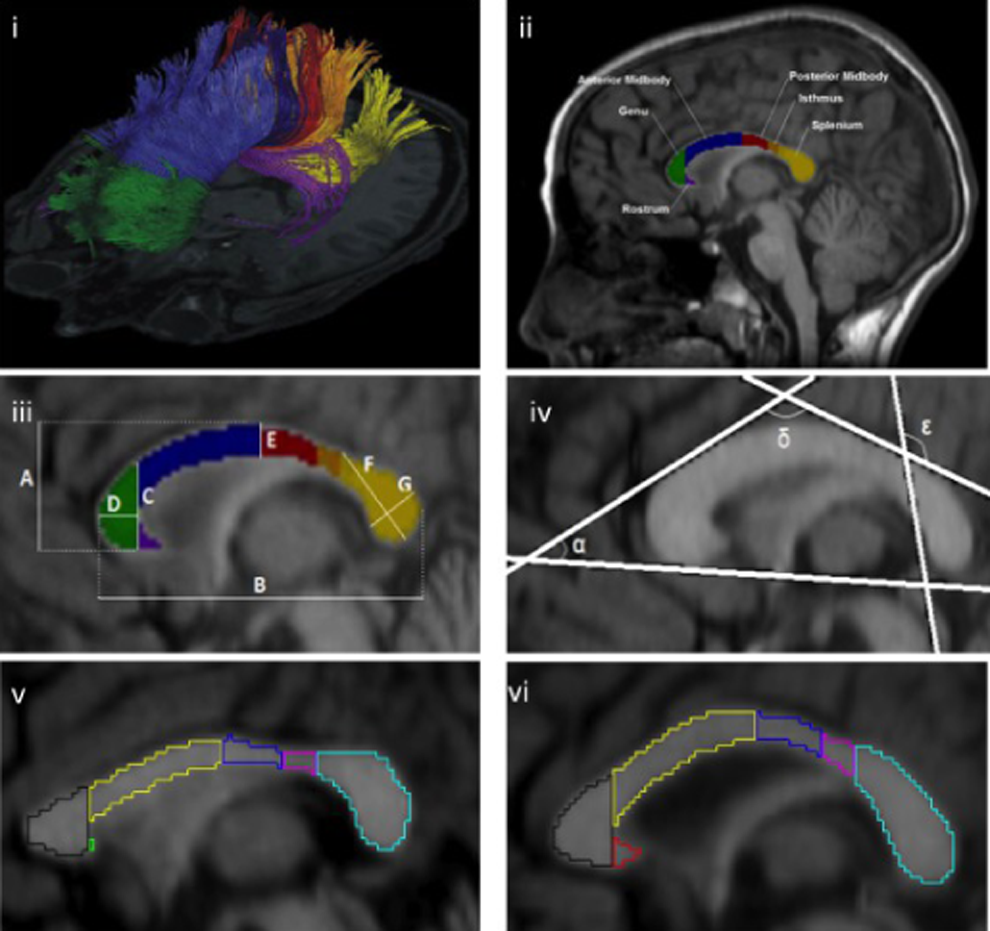
HYPO obtained a smaller genu and combined anterior section and a larger splenium and combined posterior section than controls. HYPO also showed a greater propensity for genu and splenium shape abnormalities, which were flatter and longer respectively than in controls. Effects were largest if mothers had longer pregnancy durations of hypothyroidism; higher second trimester maternal TSH was associated with shorter CCs in offspring. HYPO with more CC abnormalities had lower IQ and poorer reading abilities.
Maternal TH insufficiency in pregnancy contributes to CC abnormalities in offspring.
1. Hofer S and Frahm J 2006 Topography of the human corpus callosum revisited—comprehensive fiber tractography using diffusion tensor magnetic resonance imaging. NeuroImage
Thyroid Cancer Saturday Oral Clinical
Long-term levothyroxine suppression of thyrotropin (TSH) is applied indiscriminately to most patients with thyroid cancer despite lack of consensus on the optimal TSH concentration to reduce cancer recurrence while minimizing adverse effects from subclinical hyperthyroidism.
Using Cox Proportional Hazards Models we evaluated the effect of TSH suppression on recurrence and cardiovascular and skeletal toxicity on 771 patients with thyroid cancer who were not at high risk of recurrence based on their ATA risk at presentation. We excluded those patients with preoperative atrial fibrillation and osteoporosis.
A total of 43/771 (5.6%) patients recurred, 29/739 (3.9%) patients developed post-operative osteoporosis, and 17/756 (2.3%) developed postoperative atrial fibrillation over a median followup of 6.5 years. Despite similar rates of recurrence (HR: 1.02, p=0.956, 95% CI: 0.54-1.91), patients treated with a median TSH ≤0.4 mU/L were at increased postoperative risk of a composite outcome of atrial fibrillation and osteoporosis (HR: 2.1, p=0.05, 95% CI: 1.001-4.3) compared to those with a median TSH >0.4 mU/L. Given the small number of events, we were not able to detect a differential risk of postoperative atrial fibrillation among patients suppressed versus those not suppressed (HR: 0.78, p=0.63, 95% CI: 0.3-2.1). However, the risk of post-operative osteoporosis among women was dramatically increased (HR: 3.5, p=0.023, 95% CI: 1.2-10.2) when their median TSH was suppressed compared to those with a median TSH not suppressed. Among women with thyroid cancer at low-risk for recurrence, the risk of post-operative osteoporosis was even higher (HR: 8.4, p=0.046, 95% CI: 1.04-67.7). This increased risk of postoperative osteoporosis disappeared and recurrence rates remained unchanged when the patient's median TSH was maintained around 1 mU/L.
TSH suppression increases the risk of osteoporosis without changing recurrence in non-high risk patients with thyroid carcinoma. Therapeutic efforts should focus on avoiding harm in indolent disease.
Thyroid Cancer Saturday Oral Clinical
TERT C228T promoter mutation has recently been discovered in thyroid cancer. This represents an exciting genetic discovery in thyroid cancer, but its clinical significance is unknown. The objective is to explore the role of TERT C228T mutation in the recurrence of papillary thyroid cancer (PTC) with respect to the BRAF V600E mutation status.
TERT promoter mutation C228T and BRAF V600E were examined by Sanger sequencing of genomic DNA from 365 cases of PTC and their relationship with disease recurrence of PTC was analyzed.
The patients consisted 256 females and 109 males, aged from 12 to 85 years (25% percentiles 36, 75 percentile 55, median 45), with a clinical follow up time from 1 to 264 months (25% percentiles 7, 75% percentile 72, and median 24). TERT 228 and BRAF V600E mutations were found in 39/365 (10.68%) and 145/365 (39.73%) cases, respectively. Overall, PTC recurrence occurred in 63/365 (17.26%) cases. Recurrence occurred in 39/145 (26.90%) BRAF mutation-positive cases vs 24/220 (10.91%) BRAF-negative cases (P=7.6×10⁻⁵) and 17/39 (43.59%) TERT mutation-positive cases vs 46/326 (14.11%) TERT mutation-negative cases (P=4.1×10⁻⁶)). Furthermore, PTC recurrence occurred in 20/202 (%9.9%) cases without any mutation (N), 26/124 (20.97%) cases with BRAF mutation only (B), 4/18 (22.2%) cases with TERT mutation only (T), 13/21 (61.9%) with both TERT and BRAF mutations (T+B). (P-values per chi-square: B vs. N, 8.2×10⁻³, T vs. N, 0.117, B+T vs. N, 1.7×10⁻¹⁰, B vs. T, 1.000, B+T vs. B, 9.1×10⁻⁵, B+T vs. T, 0.023). The B+T group of patients also required more aggressive treatment for recurrent disease.
We provide strong data demonstrating that TERT promoter mutation is strongly associated with PTC recurrence, particularly when coexisting with the BRAF V600E mutation. The use of the two mutations can identify the group of most aggressive PTC.
Thyroid Hormone Metabolism & Regulation Thursday Poster Basic
Iodothyronine deiodinases are dimeric integral-membrane selenoproteins that activate or inactivate thyroid hormone. D3 is the main inactivating deiodinase, playing key roles in development, metabolism and adaptation to illness. Computerized 3D modeling using hydrophobic cluster analysis indicated that all three deiodinases contain a globular domain with a thioredoxin-like fold, but experimental data are lacking.
To gain further insights into the structure of deiodinases, an expression vector (pET26b) encoding the globular domain of 6-His-tagged human D3 with a cysteine-to-selenocysteine replacement in the active center (gD3-6H) was expressed in E. coli strain Rosetta 2 (DE3). Cells were lysed and gD3-6H was purified by Ni-nitrilotriacetate affinity beads and two rounds of size-exclusion chromatography. gD3-6H identity was confirmed by N-terminal sequencing and Western blotting, and purity by Coomassie SDS-PAGE. To probe the secondary structure of the gD3-6H, a far-UV circular dichroism (CD) spectrum was obtained using a Jasco J-810 spectropolarimeter and data analyzed with the SOMCD algorithm. Optimal conditions for gD3-6H crystallization were defined robotically after hundreds of screenings, and larger crystals grown manually using the hanging drop, vapor diffusion method in HEPES pH6.5
Routinely, ∼1.0 mg of purified monomeric gD3-6H (95% purity) was obtained from 1 L of bacterial culture. Analysis of the CD spectrum at 190–250 nm wavelength indicated that the gD3-6H secondary structure contains a mix of alpha helices and beta sheets, superimposable to the thioredoxin profile. When probed by heat denaturation, the structural folding of gD3-6H remained stable until 45°C. The best crystals of gD3-6H obtained from manual optimization are ∼0.2×0.1×0.02 mm in size.
These are the first experimental data that D3's globular domain contains a thioredoxin-like fold. These studies also define conditions under which D3 can be crystallized and processed for X-ray diffraction and in depth structural analysis.
Thyroid Cancer Thursday Poster Clinical
Based on compelling Japanese data regarding the safety and acceptability of an observational approach to papillary microcarcinoma, the Thyroid Cancer Disease Management Team at MSKCC implemented an active surveillance program as a standard of care alternative to immediate surgical resection in selected patients with intrathyroidal papillary thyroid carcinoma (PTC).
Patients with intrathyroidal tumors (PTC or suspicious for PTC) <1.5 cm in maximal dimension were considered for active surveillance (neck ultrasound 6 monthly until stable for 2 years, then annually). Indications for surgical resection included confirmed tumor enlargement by ≥3 mm in any dimension, thyroid capsular invasion, identification of metastases, or patient preference in the absence of disease progression.
Over an 18 month period, 97 patients were referred for consideration of active surveillance, of which, 73% (n=71) elected to undergo observation (median size 0.7 cm [0.4–1.2 cm], 70% female, median age 52 yrs [22–86 yrs], 72% PTC, 28% suspicious for PTC. After a median follow-up of 15 months, 92% (65/71) remain on active surveillance without evidence of disease progression, 3% (n=2) proceeded to surgery (one for tumor growth, the other due to thyroid capsular invasion and suspicious cervical lymphadenopathy) and 6% (n=4) with stable disease opted for surgery for other reasons. Conversely, 27% of the referred patient population (26/97) opted for immediate surgery (median size 0.7 cm [0.5–1.4 cm], 92% female, median age 45 yrs [26–85 yrs], 69% PTC, 31% suspicious for PTC). While thyroidectomy was recommended on clinical grounds in 16 (62%), this group included 10 patients (38%) who chose surgery despite being medically appropriate to undergo observation. Overall, of the 79 patients considered suitable candidates for observation clinically, 87% (69/79) agreed to enter an active surveillance program.
In properly selected patients with small thyroid nodules cytologically confirmed as PTC or suspicious for PTC, expectant observation is an attractive management option associated with a very low rate of short-term progression. Moreover, once patients are recruited into an active surveillance program, early retention rates are high.
Thyroid Cancer Thursday Poster Clinical
TERT promoter mutations C228T and C250T were recently reported in thyroid cancer from USA and Spain. If confirmed to be widely present across ethnic backgrounds, this could represent a major breakthrough in thyroid genetics research. Here, we aimed to establish the importance of TERT promoter mutations in thyroid cancer by 1) determining their prevalence in various thyroid tumors in an alternative ethnic background and determining their relationship with BRAF V600E mutation.
The two TERT mutations were analyzed by sequencing genomic DNA in 474 cases of thyroid tumors from Chinese, including benign thyroid adenoma, papillary thyroid cancer (PTC), and follicular thyroid cancer (FTC). BRAF mutation was similarly analyzed.
We found TERT promoter mutations in 0/ 44 (0%) thyroid adenomas, 46/408 (11.27%) PTC, and 8/22 (36.36%) FTC. C228T was far more common than C250T. Patient age was 53.40±16.14 years vs. 43.66±12.91 (p=1.08×10⁻⁵) in TERT mutation-positive vs -negative groups, suggesting an association with older age, respectively. There was no gender difference in the mutation distribution. In PTC, TERT mutations were found in 39/250 (15.6%) BRAF mutation-positive cases vs. 6/158 (3.8%) BRAF mutation-negative cases (P=2.1×10⁻⁴), demonstrating an association of the two types of mutations. We also analyzed the relationship of TERT promoter mutations with iodine intake and found no association of them with high iodine intake although we found a significant association of BRAF mutation with high iodine intake as previously reported.
We report here the finding of common TERT promoter r mutations in the largest series of thyroid tumors from Chinese population. We also found an interesting association of TERT promoter mutations with BRAF V600E mutation. These data provide strong evidence suggesting that TERT promoter mutations represent a major novel genetic even in thyroid cancer, with strong biological and clinical implications.
Thyroid Cancer Thursday Poster Translational
Anaplastic thyroid carcinoma (ATC) is the most lethal subtype of thyroid cancer, with a mean survival time of less than six months from the time of diagnosis. At present, all patients diagnosed with ATC are in stage IV and have aggressive metastasis. Early detection of ATC is critical for effective tumor treatment, for the study of tumorigenesis and for the development of effective therapeutics.
Recent evidence suggests that ATC contains a small subset of thyrosphere cells with characteristics of cancer stem cells and tumor-initiating potential. Here we describe the development and utilization of an expression vector containing the firefly luciferase gene stably transfected into two human ATC cell lines: THJ-11T and THJ-16T. The resulting cell clones were used to generate luciferase-expressing thyrospheres under stem cell culture conditions and orthotopically injected into the thyroid gland of immunodeficient NOD/SCID mice to initiate tumors.
We show that only 100 thyrosphere cells are needed to cause these mice to develop tumors and that tumor progression can be monitored in real-time by bioluminescent imaging. Mice injected with thyrospheres developed metastatic tumors in clinically relevant tissues within four weeks of injection. Tumors established by this method exhibited ATC characteristics of high-grade malignant neoplasms, including high mitotic indexes, atypical nuclei, cellular pleomorphism and necrosis.
To our knowledge, this is the first report of the detection of bioluminescent ATC cells in vivo using a noninvasive imaging method combined with a thyrosphere/cancer-stem-cell strategy. Such bright, bioluminescent cells can be effectively used to track the metastatic migration of cancer cells and to monitor the efficacy of drug candidates in mouse models. This approach offers rapid and highly sensitive detection options for the preclinical assessment of anti-ATC therapies in vivo.
Thyroid Hormone Action Friday Poster Translational
A novel syndrome resulting from mutation of THRA encoding thyroid hormone receptor α1 (TRα1) was recently recognized. Patients have skeletal dysplasia and short stature accompanied by a high serum T3/T4 ratio, constipation and intellectual deficit. Initial reports indicate treatment with thyroxine at doses that normalize the T3/T4 ratio ameliorates constipation but does not improve growth or bone age. Thra1PV mutant mice harbor a mutation that disrupts the same C-terminal α-helix in TRα1 that is affected in humans with THRA mutations, and they also display the same developmental abnormalities as children with THRA mutations. Thus, Thra1PV mutant mice represent an excellent disease model to study the continuing effects of TRα1 mutations in adults, and to investigate possible beneficial responses to treatment.
We determined in detail the adult skeletal consequences of Thra mutation in Thra1PV/+ mice and investigated the response to prolonged treatment with a supra-physiological dose of thyroxine (1.2μg/ml in drinking water from weaning at 4 weeks until 20 weeks of age).
Adult Thra1PV/+ mice had short stature and grossly abnormal bone morphology with persistently delayed ossification, defective remodeling and increased bone mass but reduced bone mineralization. These abnormalities were all resistant to thyroxine, although T4 treatment did increase long bone diameter in Thra1PV/+ mice resulting in increased cortical bone strength. Similar to TRα1 mutant receptors identified in patients, TRα1PV is a potent dominant-negative antagonist of wild type TR function. Importantly, wild-type mice became more thyrotoxic than Thra1PV/+ mice despite identical T4-treatment regimens, suggesting Thra1PV/+ mice may be resistant to exogenous thyroxine administration.
Taken together, these studies predict that adults with different THRA mutations will display varying degrees of skeletal dysplasia with high bone mass, and responses to thyroxine treatment that correlate with activity of the mutant TRα1. Effective treatment of patients may require high doses of thyroxine.
Iodine Uptake & Metabolism Friday Poster Clinical
Dietary iodine is an essential nutrient for the synthesis of thyroid hormone. During pregnancy/lactation iodine deficiency (ID) has untoward effects on the mother, fetus, and newborn. The National Health and Nutrition Examination Survey (NHANES) data over the last 30 years have shown a marked decline in median urinary iodine concentrations (MUIC). The most recent NHANES data reported a MUIC of 129 mcg/L in pregnant women (n=206) screened between 2005–2010 (Caldwell et al, Thyroid, 2013). The World Health Organization has set the following criteria for interpreting MUIC: pre-conception 100–199 mcg/L as adequate and during pregnancy <150 mcg/L as insufficient and 150–249/mcg/L as adequate.
A prospective study of iodine, thyroid function and pregnancy was begun in Washington DC in July 2012. The goals of the study are to 1) assess MUIC in women pre-conception and 2) assess TSH, free T4 (FT4), thyroperoxidase and thyroglobulin antibodies in the pre-conception period. Thyroid function tests and urinary iodine levels are obtained in women planning pregnancy at their pre-conception with an obstetrician and/or midwife.
To date, 116 women have been enrolled at pre-conception. The preconception MUIC was 98 mcg/L. Twenty-five per cent of the women had a MUIC<50 mcg/L, 52% had a MUIL<100 mcg/L, and 64% had a MUIC<150 mcg/L. The median TSH level was 1.7 and the median and mean FT4 were 1.3 and 1.245 respectively. The race/ethnicity of the 116 women were 56% Caucasian, 7% Hispanic, 30% African American, 4% Asian and 3% Other.
In summary, the present data represent the lowest median urinary iodine level reported in the US in women of child bearing age and present further evidence that mild iodine deficiency is present in this subgroup of the population. The data provides yet further evidence for the importance of including iodine in all prenatal vitamins and encouraging women of child bearing age to increase the iodine content of their diet.
Thyroid Cancer Friday Poster Clinical
From its first description by Askanazy in 1898, the thyroid Hurthle Cell (HC) has caused much thyroid diagnostic angst. A frequent metaplastic interloper in benign thyroid FNA's of colloid nodules and Hashimoto's thyroiditis, HC dominant biopsies may also presage malignant thyroid pathology. We present our surgical outcomes over 27 months using the Afirma GEC RNA expression marker to drive thyroidectomy, focusing on our results with indeterminate, HC dominant FNA's
From 1/2011-4/2013, thyroid cytology from our surgery practice was sent to Thyroid Cytopathology Partners along with Afirma GEC specimens of RNA preserved in FNA protect. All biopsies (3–5 passes per nodule) were performed following AACE/ATA Thyroid Nodule Guidelines. Thyroidectomy was performed by DNB and final pathologic reports were generated by the Memorial Health Systems Department of Pathology.
We performed 645 thyroid FNA's in 519 patients over 27 months. 58 returned with indeterminate cytology(9%). Of the 58 indeterminate FNA's, 36 were Afirma GEC suspicious (62%), 20 were GEC benign (34%) and 2 were GEC inadequate (3%). Cytologically, 21 of our 58 indeterminate FNA's showed prominent HC populations (41%) and 19 of these 21 HC dominant indeterminate FNA's were subsequently found to be Afirma suspicious (90%). 36 surgeries were performed in these 58 indeterminate patients with 17 relevant cancers in 30 operations in the 36 Afirma GEC suspicious patients and 2 relevant cancers in 6 operations in the 21 Afirma benign patients. Ten of the 36 tumors resected (28%) showed oncocytic pathology (7 HC adenomas, 2 MNG's with HC metaplasia and 1 HC Carcinoma). Nine of 13 Afirma false positive nodules (69%) had HC dominant pathology.
Our practice is rich in HC thyroid pathology (28% of thyroidectomy specimens vs 12% for Alexander et al). Afirma GEC disproportionately segregates HC dominant indeterminate cytology specimens into the 'suspicious' category (19 out of 21). Most of these patients turn out to have benign pathology. For HC rich indeterminate FNA's, our data suggests that Afirma GEC has limited utility in preventing surgery.
Thyroid Cancer Saturday Poster Translational
The BRAF V600E mutation (BRAF-MUT) confers an aggressive phenotype in papillary thyroid carcinoma, but unidentified additional genomic abnormalities may be required for full phenotypic expression. RNA sequencing was performed to identify genes differentially expressed between BRAF-MUT and BRAF-wild-type (BRAF-WT) tumors and to correlate these changes to patient clinical status.
BRAF-MUT and BRAF-WT tumors were identified and expression levels of genes were determined from RNA sequencing (RNA-Seq) data. Fusion transcripts were also detected. Multiplexed capture/detection and digital counting of mRNA transcripts (nCounter) was used to validate the RNA-Seq data for immune function related genes. Twenty patients were studied. BRAF-MUT-patients included 9 women, 3 men, 9 were TNM stage I and 3 were stage III, 3 (25%) had tumor infiltrating lymphocytes. BRAF-WT included 5 women, 3 men, all were stage I, 5 (62.5%) had tumor infiltrating lymphocytes.
RNA-Seq identified 560 of 13,085 genes that were differentially expressed between BRAF-MUT and BRAF-WT tumors. Approximately 10% (55) of these genes were related to MetaCore immune function pathways, with 51 being under-expressed in BRAF-MUT tumors, while only 4 (HLA-G, CXCL14, TIMP1, IL1RAP) were over-expressed. The 4 most differentially over-expressed immune genes in BRAF-WT tumors (IL1-B, CCL19, CCL21, CXCR4) correlated with lymphocyte infiltation. nCounter analysis confirmed the RNA-Seq expression level data for the immune genes. Eleven different high confidence fusion transcripts were detected in 13 of 20 tumors. All in-frame fusions were validated by RT-PCR, including MKRN1-BRAF.
Many immune response genes have reduced expression and correlate with lymphocytic infiltration in BRAF-MUT vs. BRAF-WT tumors. In contrast, immune suppressive genes, HLA-G and CXCL14, are over-expressed in BRAF-MUT tumors. In addition, 65% of tumors had between one and three fusion transcripts. Functional studies will be required to determine the potential role of these newly identified genomic abnormalities in contributing to the aggressiveness of BRAF-MUT and BRAF-WT tumors.
Thyroid Cancer Saturday Poster Basic
There are currently no effective therapies for patients with advanced thyroid cancer, especially those with distant metastases. We have shown that FAK is overexpressed and activated in thyroid tumors as well as in cell lines derived from advanced thyroid cancer patients. Inhibitors targeting the kinase activity of FAK have provided an opportunity to directly test the role of FAK kinase activity.
The effects of FAK kinase inhibition with PF-573,228 (Pfizer) on adherent and anchorage-independent growth in vitro was assessed via cell viability and soft agar assays, respectively. FAK and Src activity was evaluated via Western blot. Therapeutic efficacy was tested in vivo using an experimental metastasis model.
We show that inhibition of FAK kinase activity with PF-573,228 results in differential inhibition of growth in a panel of papillary and anaplastic thyroid cancer (PTC and ATC) cell lines. TPC1 (PTC) cells were most sensitive to 1 μM PF-573,228 treatment (83% inhibition), C643 (ATC) and K1 cells were intermediate (36–39% inhibition), while BCPAP, SW1736, and 8505C cells were relatively resistant (8–15% inhibition). In soft agar assays, PF-573,228 treatment inhibited growth of the TPC1 and C643 cells (84–86% inhibition), and the K1 and BCPAP cells (35–58% inhibition), while the 8505C cells were relatively resistant (18% inhibition). PF-573,228 treatment did not significantly inhibit invasion in vitro. Interestingly, while PF-573,228 treatment inhibited FAK activity (pY397FAK) by ∼80%, Src activity was not affected. In vivo, we previously showed that adjuvant treatment with PF-562,271 (50 mg/kg) inhibited BCPAP total metastatic burden by approximately 2-fold (p<0.001). Surprisingly, adjuvant treatment with PF-562,271 (50 mg/kg) enhanced 8505C total metastatic burden (p<0.02).
Taken together, these data indicate that while inhibition of FAK kinase activity can exhibit anti-tumor and anti-metastatic activity, under certain conditions inhibition of FAK kinase activity may promote metastasis. Ongoing studies are addressing potential mechanisms involved in these distinct responses in order to identify which patients will benefit from FAK-directed therapies.
Short Call Abstract Author Index
Alfano, F. SCO-1
Altschuler, D. SCO-2
Ambrosio, R. SCO-1
Asmann, YW. SCP-14
Bach, A. SCP-8
Balazs, G. SCP-7
Barila, G. SCO-2
Bassett, D. SCP-11
Beaudenon, S. SCO-3
Bianco, A. SCP-7
Bimston, DN. SCP-13
Bishop, J. SCO-6
Boucai, L. SCO-5, SCP-8
Bowers, BE. SCP-15
Boyde, A. SCP-11
Carr, J. SCP-14
Carty, S. SCO-2
Casler, JD. SCP-14
Cheng, S. SCP-11
Chindris, A. SCP-14
Copland, JA. SCP-14
Cradic, KW. SCP-14
Croucher, P. SCP-11
Dentice, M. SCO-1
Dong, L. SCP-7
Doso-Isonagie, E. SCP-12
Eberhardt, N. SCP-14
Egri, P. SCP-7
Evans, H. SCP-11
Fagin, JA. SCO-5, SCP-8
Ferris, RL. SCO-2
Gaba, N. SCP-12
Ganly, I. SCO-5
Giordano, TJ. SCO-3
Grebe, SK. SCP-14
Guan, H. SCP-9
Harrell, RM. SCP-13
He, X. SCP-12
Hodak, SP. SCO-2
Jeong Won, P. SCP-11
Jing, X. SCP-15
Kelly, LM. SCO-2
Kerege, AA. SCP-15
Labourier, E. SCO-3
Li, W. SCP-10
Lin, R. SCP-10
Liu, P. SCO-2
Liu, R. SCO-6
Liu, X. SCO-6, SCP-9
Luongo, C. SCO-1
Mahrous, A. SCO-5
McIver, B. SCP-14
Minkowitz, G. SCP-8
Morris, LG. SCP-8
Necela, B. SCP-14
Nikiforov, Y. SCO-2
Nikiforova, MN. SCO-2
Pace, MD. SCP-8
Pai, SI. SCO-6
Palmer, F. SCO-5
Patel, SG. SCO-5
Pearce, EN. SCP-12
Pike, LA. SCP-15
Qu, S. SCP-9
Reddi, HV. SCP-14
Reeb, A. SCP-10
Rivera, M. SCP-14
Rovet, JF. SCO-4
Salvatore, D. SCO-1
Samadi, A. SCO-4
Schweppe, RE. SCP-15
Serie, DJ. SCP-14
Shan, Z. SCP-9
Sharma, V. SCP-15
Skocic, J. SCO-4
Smallridge, RC. SCP-14
Smith, AW. SCO-5
Spencer, C. SCP-12
Stagnaro-Green, A. SCP-12
Sun, H. SCP-9
Tao, Y. SCP-7
Teng, W. SCP-9
Thompson, EA. SCP-14
Toh, Y. SCP-7
Trivedi, S. SCO-2
Tuttle, RM. SCO-5, SCP-8
Wang, LY. SCO-5
Williams, G. SCP-11
Wong, RJ. SCP-8
Wylie, D. SCO-3
Xing, M. SCO-6, SCP-9
Yu, H. SCP-9
Zeiger, M. SCO-6
Zhou, Q. SCP-15
Zhu, X. SCP-11
Zikmund, T. SCP-11