




Abstract
Background:
Rare cases of birth defects after the use of methimazole (MMI) or carbimazole to treat hyperthyroidism in early pregnancy have been reported since 1972, whereas propylthiouracil (PTU) has not been considered teratogenic. Recently, two studies reported birth defects after the use of MMI in early pregnancy to affect 2–4% of exposed children, and one study also found birth defects after the use of PTU. On the other hand, some published studies did not find associations between the use of thionamides and birth defects.
Summary:
The methods used in the two positive and the four negative reports are reviewed. The two positive studies included a sufficient number of children exposed to MMI (n = 1231 and 1097) to evaluate the studied outcomes, whereas the four negative studies included a much lower number of exposed children (n = 73, 108, 30, and 124). Considering PTU, the birth defects observed in one study were in general milder and tended to be diagnosed and registered only when they resulted in complications and led to surgery after one year of age. None of the negative studies has investigated outcomes after one year of age.
Conclusion:
Studies finding no associations between early pregnancy exposure to antithyroid drugs and birth defects were either not sufficiently powered or did not study outcomes at optimal ages.
Introduction
A
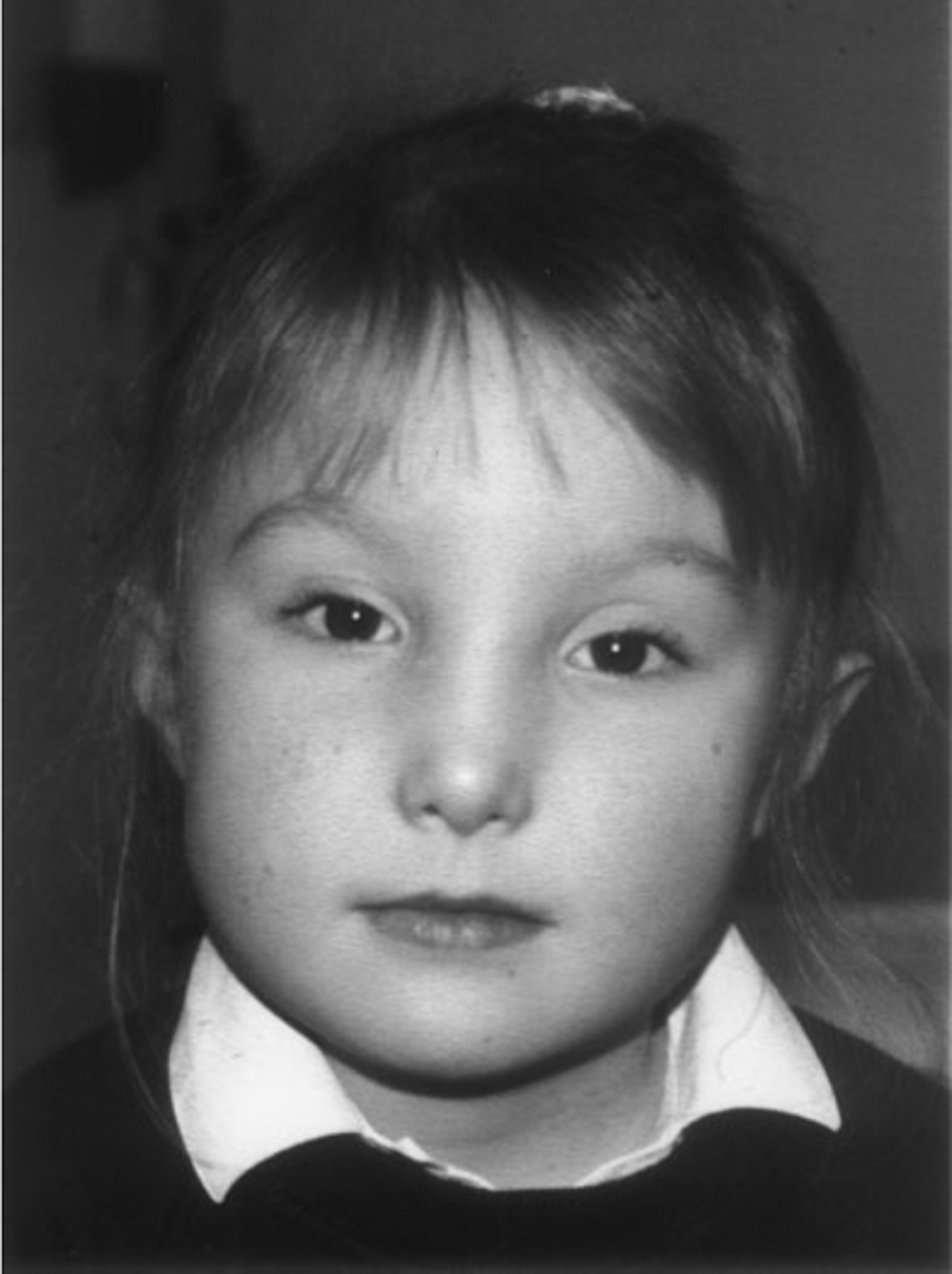
Picture published by Foulds et al. (3) of a six-year-old patient who was exposed to carbimazole during the entire fetal life. The patient had previously undergone surgery for a total choanal atresia on one side, and a partial on the other. The special facial features noted were: a very broad nasal bridge, short upslanting palpebral fissures with prominent epicanthic folds, and hypoplastic alae nasi. Reproduced with permission from the publisher (3).
Overall, birth defects after the use of MMI/CMZ have been considered rare. In 2010, the Food and Drug Administration (FDA) of the United States released a drug safety communication warning against the risk of severe liver injury with the use of propylthiouracil (PTU) (5). Between 1969 and 2009, the agency received 23 reports describing severe liver injury (13 deaths and 5 liver transplantations) associated with the use of PTU in nonpregnant adults, and 11 reports on pediatric patients (2 deaths and 7 transplantations).
On this occasion, the FDA also reviewed post-marketing data on potential birth defects after exposure to PTU or MMI (5). Between 1969 and 2009, there were 29 case reports on MMI-associated birth defects, 90% of which were craniofacial defects (aplasia cutis, facial dysmorphism, choanal atresia), often combined with gastrointestinal atresia or aplasia. The development of these defects was associated with the use of MMI during the first trimester of pregnancy, but not with the use of MMI later in pregnancy.
The FDA files also contained nine case reports on PTU-associated defects, but even when PTU had been used in the first trimester of pregnancy, there was no consistent pattern in the reported defects.
After this FDA review in 2010, there have been six published cohort studies that included data on birth defects after ATD exposure compared with control children. These studies made an attempt at describing in more detail the frequency and characteristics of the birth defects that may occur after the use of ATDs in pregnancy. Two of these studies have reported that birth defects after the use of ATD therapy in early pregnancy are relatively common (6,7), whereas four studies have been mostly negative (8 –11). Here, these six studies are briefly reviewed.
New Studies Showing Birth Defects to Be Rather Common After Exposure to ATD
The first study to indicate that birth defects after MMI exposure in early pregnancy are rather common was performed in Ito Hospital, Tokyo, Japan. Yoshihara et al. (6) reviewed hospital records of large groups of women with Graves' disease who had been treated with MMI alone (n = 1231) or PTU alone (n = 1399) in the first trimester (0–12 weeks' gestation) of pregnancy, or with ATDs for Graves' disease before but not in the first trimester of pregnancy (control, n = 1906; Table 1). Women who had received more than one ATD during the first trimester were excluded from the study. The majority of the control women were in remission of Graves' disease after previous ATD therapy (type not indicated), and the remaining subgroup had been treated with radioiodine or had undergone thyroidectomy before the pregnancy. Information about the presence of birth defects had been obtained from the mothers through a questionnaire at their first consultation for thyroid disease after delivery.
Age of child at the time of final assessment for abnormalities.
Study includes types of defects found associated with the drug in other investigations.
Types of defects having a statistically significant association with the use of the drug.
ATD, antithyroid drug; MMI, methimazole; PTU, propylthiouracil; NA, not applicable.
The main result of the study was that MMI exposure in early pregnancy was associated with birth defects in 4.1% of newborns (p = 0.002 vs. control), whereas this was around 2% in both PTU-exposed children and controls (Table 1).
The frequencies of detected birth defects in this study corresponded reasonably with textbook values for the frequency of birth defects, which affect about 3% of all newborns. Because some defects are only detected later in life, the prevalence of diagnosed birth defects is roughly 6% at the age of two years (12).
In the study by Yoshihara et al. (6), the thyroid function tests of the pregnant women had been recorded, and there was no association between maternal thyroid dysfunction in early pregnancy and birth defects. The results of this retrospective study are corroborated by preliminary data from a large Japanese prospective study on birth defects after the use of ATD (13).
The second cohort study to indicate a relatively high risk of birth defects after MMI exposure, and also for the first time an increase in risk after PTU exposure, was the Danish National Register Study (7). Danish health registries are very detailed and in general of high quality. Exposure (mothers taking ATD in the first trimester of pregnancy) was identified by combining data from the Danish Civil Registration System (live-born children 1996–2008, n = 817,093), the Medical Birth Register (identification of the mothers and the first 10 weeks of their pregnancy), and the National Prescription Register (time and type of ATD prescription). Outcomes (birth defects diagnosed before the child was two years of age) were identified in the Danish National Hospital Register (all ICD-10 diagnoses for hospitalized and ambulatory patients). Additional data to allow for covariate adjustments were retrieved from Statistic Denmark, the Danish National Hospital Register, and the National Prescription Register (7). In general, adjustments for maternal age, parity, and a series of other variables did not change the results of this study. In the nonexposed mothers (n = 811,730), 5.7% of children had a birth defect diagnosed before two years of age. This was not different from the prevalence of defects in the offspring of the 3543 mothers who had received ATD but not during pregnancy. On the other hand, 9.1% of MMI-exposed (p < 0.001 vs. control) and 8.0% of PTU-exposed (p = 0.017) children had birth defects.
One of the main reasons for the higher prevalence of birth defects in the Danish cohort compared with the Japanese study is that the Danish children were older (two years of age) at the time of evaluation for birth defects than the Japanese children were, who were evaluated as newborns. To illustrate the effect of age at the time of evaluation of the offspring on the prevalence of diagnosed birth defects, additional analyses were performed in the Danish cohort. In this cohort, the prevalence of birth defects diagnosed at two weeks of age in MMI-exposed children was 4.6%, and in control children, it was 2.5% (p < 0.001). However, at two years of age, the prevalence of birth defects was 9.1% in MMI-exposed children and 5.7% in the controls, as shown in Table 1.
MMI-associated defects fell into 7/13 birth defects subgroups listed in ICD-10, with the highest relative risk for various types of abdominal wall defects. Other types of birth defects were skin defects, digestive system abnormalities, and eye, urinary, respiratory, and cardiovascular defects. The latter were mainly ventricular septal defects (14).
The most common PTU-associated defect consisted of a pre-auricular sinus or cyst with fistula, a birth defect that is considered minor and is often not registered. However, nearly all the Danish cases had undergone surgery for the condition (15). The other abnormality seen after PTU exposure consisted of urinary tract defects.
Subanalyses of patients who had been shifted from MMI to PTU in early pregnancy showed that this was not protective against MMI-associated defects because the change had taken place too late (16). Apparently, the gestational period associated with the highest risk was weeks 6–10.
The main conclusion of the Danish study was that 1/30 of women treated with MMI/CMZ in weeks 6–10 of pregnancy had given birth to children with defects that were presumably related to this therapy, and many of these defects were severe. The use of PTU in early pregnancy was associated with defects in 1/40 children (7). PTU-associated defects were less severe but not negligible (15). A change in ATD from MMI/CMZ to PTU to prevent major birth defects or a withdrawal of ATD in patients considered to be in remission of Graves' disease after a period of ATD therapy had to take place in very early pregnancy, probably already in gestational week 5, to be effective (16).
Studies Reporting No Association Between ATD Exposure and Birth Defects
The first negative report in this field of research was based on Taiwan's National Health Registry and was published in 2011 (8). Exposure to ATD was defined as ATD use for more than 30 days during pregnancy, irrespective of gestational period. There were 630 PTU-treated and 73 MMI-treated mothers (Table 1). The birth defect outcome studied was the presence or absence of “major congenital abnormalities, for example cleft lip and palate, limb defects, heart defects, Down syndrome, hypospadia, hydrocephaly, anencephaly, microcephaly, meningomyelocele, encephalocele, and spina bifida.” This list of defects does not include most of the defects previously reported after MMI exposure, and none of the defects reported after PTU exposure. The age of the children at evaluation was not specified in the publication, but from the information given, it seemed to be the neonatal period. The types of birth defects indicated above were found in 0.65% of 14,150 nonexposed from a comparison group of children matched based on the mothers' age, and in five (0.79%) of the 630 PTU-exposed children. None of the 73 MMI-exposed children had any of these anomalies.
Several limitations are present in this study. The overall frequency of birth defects was much lower than the values from other studies. The defects examined for were not those associated with the use of ATDs in other studies. The number exposed to MMI was too low to study frequencies of birth defects with reasonable power, and the exposure time period of pregnancy was not specified. In conclusion, based on the methods and data used, this study is not expected to find associations between ATD exposure and birth defects.
The second negative cohort study (Table 1) was a large and detailed U.S.-based retrospective claims database analysis performed using data from 2005 to 2009 by Korelitz et al. (9). Prescriptions for MMI or PTU filled within six months before or during pregnancy were used to define exposure, and the outcome was an ICD-9 code of a congenital anomaly diagnosed within 12 months of birth. Among the 108 children exposed to MMI, six (6.5%) had birth defects, which was similar to the prevalence (5.9%) among the 634,858 control children born to mothers who did not suffer from hyperthyroidism. There were 66 birth defects (7.2%) among the 915 PTU-exposed children, which was not statistically different from controls. In this study (9), the number of MMI-exposed cases was rather low. One reason for this was that 31% of the women who had received MMI just before or during early pregnancy underwent early termination of pregnancy compared with 16% in controls. The authors discuss the possibility that the high frequency of early pregnancy termination in women who received MMI in early pregnancy might be caused by fear of MMI-induced birth defects leading to elective abortions. Considering PTU, the number of exposed cases was large (Table 1). However, data on the most common type of defects observed after PTU exposure in the Danish study were not presented in the study by Korelitz et al. (9). Moreover, the type of face and neck abnormalities observed in the Danish study had most likely not been diagnosed/registered during the first 12 months of age in the database used. Of note, only two out of seven cases of face and neck abnormalities occurring after exposure to PTU in early pregnancy had been diagnosed/registered before 12 months of age in the Danish study (15). These types of defects are typically only registered when they lead to complications such as infections.
The other type of PTU-associated defect in the Danish study—urinary tract defects—was also more common after PTU exposure in the study of Korelitz et al. (7.65/1000 children vs. 4.38/1000 in controls), but this difference was not statistically significant (p = 0.064, one-sided Fisher's exact test). In the Danish study, all cases of urinary tract defects after PTU exposure occurred in boys (15). When statistical analysis in the Danish study is restricted to boys, the hazard ratio for urinary tract defects after PTU exposure is 4.23 [CI 1.90–9.40]. In the entire cohort of PTU exposed Danish children the hazard ratio was 2.73 [CI 1.22–6.07] (15). In the publication by Korelitz et al. (9), no stratification according to sex was presented. It would be interesting to repeat statistical analyses in this study in boys alone. In conclusion, even though this was a large study, the number of MMI-exposed cases was rather low, and many PTU-associated defects had likely not been registered in the database used for the study.
The third negative study (Table 1) was published recently (10). It took advantage of a U.S. health database, the central electronic databases of Kaiser Permanente of Northern California. In this study, exposure was defined as ATD therapy at some point during pregnancy, and the presence of birth defects was evaluated by searching for a relevant ICD-9 diagnosis (apparently excluding congenital skin abnormalities and unspecified congenital abnormalities), as well as a chart review by a neonatologist. The age at evaluation was not specified but seemed to be shortly after birth, and the time of exposure in relation to week of gestation was only partly described. A total of 18 defects were detected among the 586 ATD-exposed children, whereas 52/1117 children born to mothers diagnosed with thyrotoxicosis but with no ATD exposure in pregnancy had birth defects. The majority of the pregnant women treated had received PTU (Table 1). Overall, differences between groups were not statistically significant. The ability of this study to detect MMI-associated defects was very low (Table 1), and as discussed above, many PTU-associated defects would probably not have been detected in this study because the children were investigated at a very young age.
The fourth negative study is a recent Italian multicenter study including eight endocrinology clinics (11). There were 124 MMI-exposed, 52 PTU-exposed, and 203 control children (born to mothers suffering from other types of thyroid disease). Outcomes were retrospectively studied based on the clinical records of the mothers, and no association was observed between ATD use and birth defects identified during the first days of life (Table 1).
A main systematic difference between the studies reporting positive associations and those reporting no associations is that the studies with positive results were specifically dedicated to investigating the presence of birth defects, whereas the other studies evaluated birth defects as well as other outcomes. For example, the Taiwanese study by Chen et al. (8) reported an increase in risk of low birth weight among babies of mothers who had been treated with ATD in pregnancy, which is in accordance with other population-based studies (17). Korelitz et al. (9) found some indication of an elevated risk of liver disease in mothers with a diagnosis of hyperthyroidism, and Lo et al. (10) reported an increased risk of preterm deliveries (in accordance with other population-based studies (17)) and one case of PTU-associated maternal hepatotoxicity.
A pertinent question is whether the abnormalities observed in the children might be caused or influenced by maternal hyperthyroidism despite the ATD therapy. As discussed above, the study by Yoshihara et al. (6) included data on maternal thyroid function in early pregnancy, and found no association between hyperthyroidism and birth defects. The Danish study (7) did not include data on maternal thyroid function, but the observed difference in types of defects after MMI and PTU exposure, and the overall publication of many more cases of birth defects after MMI than PTU use in pregnancy suggest that the defects observed are caused by the drugs and not by an abnormal thyroid function. However, more studies are needed to exclude firmly that an abnormal thyroid function in pregnancy increases the risk of birth defects.
Summary
Two studies with a high number of participants have detected that exposure to MMI during early pregnancy is associated with birth defects in 2–4% of exposed children, and that some of the defects are severe. Four studies have addressed the possibility of an association between MMI exposure and birth defects in different databases and in the clinical records of mothers and their offspring, but these investigations included in general a much lower number of participants, and the results were negative.
Considering PTU exposure during pregnancy, this was associated with birth defects in 1/40 of children in one study. PTU-associated defects were in general milder than MMI-associated defects, and most often they had been diagnosed when the child was evaluated after having passed one year of age. However, PTU-associated defects were not negligible, and the majority of identified cases had undergone surgery for the condition. Five studies on PTU and birth defects were negative. The primary reason for the negative findings is most likely that the relevant types of birth defects were not looked for at an appropriate age in the PTU-exposed children. However, the association between PTU exposure and some specific birth defects should be confirmed in other settings.
The conclusions of the present review are in line with the results of a new meta-analysis published by Chinese analysts (18).
Conclusion
The studies properly designed to detect birth defects associated with the use of MMI or PTU in early pregnancy have detected such defects in 2–4% of the exposed children. Some of the MMI-associated defects are severe. On the other hand, the PTU-associated defects belong to the group of “minor birth defects,” but they are not negligible.
Footnotes
Author Disclosure Statement
No competing financial interests exist.