




Abstract
Background:
Radioiodine therapy (RIT) is an established treatment for differentiated thyroid carcinomas, and is widely used throughout the world, given the increasing incidence of this malignancy. Although serious adverse effects are infrequent, complications such as dry mouth, sialadenitis, and dysphagia have been described. The involvement of the eyes and accessory visual structures is not commonly discussed, despite dry eye, keratoconjunctivitis, and lacrimal system obstruction (LSO) being reported, especially after high cumulative doses of radiopharmaceuticals. The incidence of LSO is not well established.
Objectives:
The aim of this study was to determine the frequency of LSO in patients undergoing RIT at 2, 4, 6, and 12 months after treatment.
Methods:
Patients with differentiated thyroid carcinoma undergoing (group 1) and not undergoing (group 2) RIT were evaluated in the preoperative and postoperative periods and 2, 4, 6, and 12 months post surgery or post RIT. Patients underwent tear film evaluation and lacrimal system probing and irrigation.
Results:
Group 1 (n = 44; 88 eyes) contained three patients (four eyes) with LSO, corresponding to an incidence of 4.55% (four events in 88 eyes) or 6.8% (three cases in 44 patients). Group 2 (n = 43; 86 eyes) did not present any cases of LSO.
Conclusions:
In this study, an active prospective investigation allowed LSO detection during the first six months after RIT. This finding demonstrates the importance of making this association clear to patients and health professionals, with a view to early diagnosis, appropriate treatment, and preventing LSO-related complications.
Introduction
T
Current gene therapy research is exploring the use of 131I in high-prevalence malignancies such as breast (10), prostate (11), and colon (10,11) cancer. The number of patients undergoing this type of treatment in the future may potentially increase.
Although serious complications are rare after treatment (12,13), adverse side effects with salivary gland involvement have been reported, such as dry mouth, sialadenitis, and dysphagia, even after the administration of low radiopharmaceutical doses (14 –18). However, adverse effects in the nasal system (such as epistaxis and nasal pain) (19) and ocular complications with this type of treatment are not often discussed in the literature (12). These complications include chronic and recurrent conjunctivitis, keratoconjunctivitis sicca, and dry eye, which affect 23% of patients undergoing RIT (1). Lacrimal gland dysfunction has been described in recent studies (20,21), especially after high cumulative doses of the drug. Likewise, epiphora and nasolacrimal duct obstruction have been reported as complications associated with the use of RIT (22,23), although there are no available studies indicating their true incidence by performing a prospective systematic evaluation of patients undergoing RIT compared with patients who did not undergo this treatment.
Therefore, the objective of this study was to determine the frequency of lacrimal system obstruction (LSO) in patients undergoing RIT.
Materials and Methods
This prospective, comparative, nonrandomized study was conducted with patients undergoing thyroidectomy for thyroid cancer. Patients from the Department of Head and Neck Surgery, Clinical Hospital, School of Medicine of the University of São Paulo (Hospital das Clínicas da Faculdade de Medicina da Universidade de São Paulo—HCFMUSP), of both sexes, and aged >18 years were included between January 2012 and June 2014 on a consecutive basis. All patients were contacted the day before thyroid surgery, at which time they signed a free and informed consent form and underwent the first (preoperative) evaluation.
Exclusion criteria were a history of ocular or lacrimal gland trauma of any type, previous radiotherapy, hormone therapy, dysthyroid orbitopathy, and current or previous use of anticancer drugs such as 5-fluorouracil and docetaxel. A history of lacrimal drainage disease, such as canaliculitis and dacryocystitis, was also regarded as an exclusion criterion.
The study was approved by the HCFMUSP Ethics Committee.
Grouping
After thyroidectomy, patients were divided into two groups: group 1 (RIT) and group 2 (control). The criteria for RIT indication followed the approved protocols at each stage of the disease established by the American Thyroid Association (24).
Patients with RIT indication underwent the usual preparation for radiopharmaceutical administration, with dietary counseling, the interruption of the use of cosmetics and drugs containing iodine, and the suspension of the use of thyroid hormone 30 days before admission for RIT as a measure to increase serum levels of endogenous thyrotropin (TSH; induced hypothyroidism) (25). They were submitted to only one RIT session.
Patients were asked about the presence of epiphora and ocular secretion, and were consecutively submitted to a fluorescein dye disappearance test (FDDT) (26 –28), lacrimal sac expression and catheterization of the canaliculi, and lacrimal system irrigation.
The FDDT was performed by inserting one drop of 0.25% fluorescein (27) (HCFMUSP Pharmacy Division) in the lower conjunctival fornix of each eye. The result was considered positive when fluorescein was still observed in the lacrimal meniscus after five minutes.
Lacrimal sac expression was performed by compression of the tissue located below the medial corner tendon in the lacrimal sac topography. The result was considered positive if secretion reflux was observed through the lacrimal points.
After topical anesthesia with 0.5% proparacaine hydrochloride drops (Alcon) in the lower conjunctival fornix of each eye, the catheterization of the canaliculi was performed using no. 0 or 00 Bowman probes (Petrovich), with prior dilation of the lacrimal points when necessary. The results were classified as “hard stop” if the top and bottom canaliculi and the common canaliculus were pervious, or “soft stop” if there was any point of high obstruction. Lacrimal system irrigation was performed by catheterization of the upper and lower canaliculi with a blunt tip 23-gauge cannula (Petrovich) and irrigation with 1 mL of 0.9% saline solution. The result was considered negative for obstruction if there was no reflux of the injected fluid and the patient indicated the presence of liquid in the oropharynx. In cases of suspected obstruction of the lacrimal system, dacryocystography using the digital subtraction technique with lipiodol ultra-fluid contrast was requested.
All evaluations were performed at the same time of day (between 1:00pm and 5:00pm) to minimize variations caused by the circadian rhythm.
Each patient underwent examinations the day before thyroidectomy, one month after surgery, and after 2, 4, 6, or 12 months of post-RIT or postoperative follow-up.
Statistical analysis was performed using correlation methods involving the values obtained in the various quantitative tests, the positivity or negativity of the qualitative tests, and the questionnaire responses.
Statistical analysis was performed using SAS® v9.0 (SAS Institute, Inc.). The following were calculated to describe quantitative variables: n, mean, standard deviation (SD), minimum, 1st quartile (25%), median (50%), 3rd quartile (75%), and maximum. For analyses involving qualitative variables, Fisher's exact test was used for associations between groups, and the McNemar test was used to test the effect of the intervention on each group. Student's t-test was used for comparisons between groups with respect to age.
Results
Eighty-seven thyroidectomized patients diagnosed with differentiated thyroid carcinoma were monitored between January 2012 and June 2014.
There were 44 patients (88 eyes) in group 1 (RIT) and 43 patients (86 eyes) in group 2 (not having undergone RIT). Table 1 lists the characteristics of the patients involved in the study.
p = 0.05; ** p = 0.75.
SD, standard deviation; RIT, radioactive iodine therapy.
The 12-month follow-up was completed by 38 (86.4%) patients in group 1 and 35 (81.4%) patients in group 2. patients who dropped out of the study before evaluations at the 4th, 6th, and 12th months were considered lost to follow-up. The mean RIT dose was 191.6 mCi (7089.2 MBq; SD = 37.7, range 101.2–266.7 mCi; SD = 1394.9, range 3744.4–9867.9 MBq).
During follow-up, two patients complained of epiphora. There were no complaints of eye discharge or the presence of reflux secretions in the lacrimal sac expressions of any patient. The FDDT scores did not significantly differ between groups (Fig. 1 and Table 2).
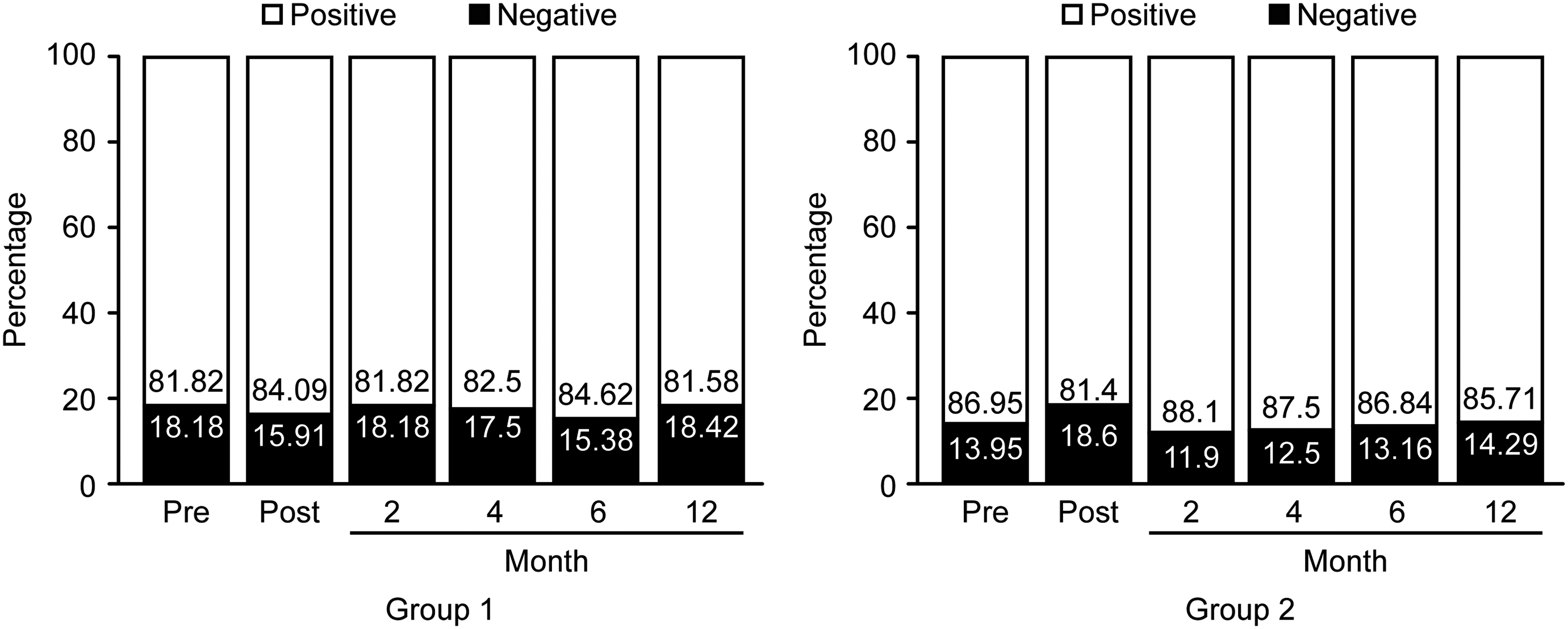
Results for fluorescein dye disappearance test per group.
FDDT, fluorescein dye disappearance test.
In the lacrimal system catheterization and irrigation, changes occurred only in the patients described below.
There were four LSO cases in three patients in group 1, corresponding to a frequency of 4.55% (four events in 88 eyes) or 6.8% (three cases in 44 patients), and no events in group 2. The three affected cases were as follows:
Case 1: A male patient aged 63 years, asymptomatic, with left upper canalicular obstruction and nasolacrimal duct (NLD) stenosis six months after administration of 206.1 mCi (7625.7 MBq; Fig. 2), with clinical findings characterized by hard stop on catheterization, left upper canalicular irrigation reflux and greater left inferior canalicular resistance (positive LSO irrigation test).
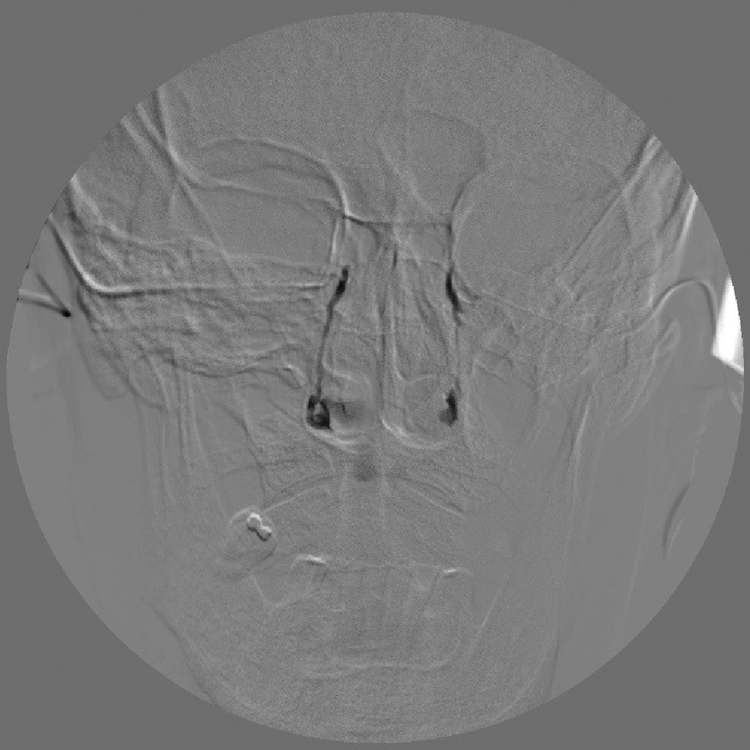
Dacryocystography infused with lipiodol ultra-fluid and digital subtraction, showing upper canalicular obstruction and left nasolacrimal duct (NLD) stenosis six months after radioactive iodine therapy (RIT).
Case 2: A female patient aged 56 years, with complaint of epiphora in the right eye after five months of RIT with an activity of 209.5 mCi (7751.5 MBq), presenting with soft stop on catheterization and irrigation reflux of both right canaliculi. High obstruction was evident (at the Rosenmüller valve level) in the right eye, and NLD stenosis in the left eye was revealed by dacryocystography (Fig. 3). After seven months of RIT, this patient also developed epiphora in the left eye, presenting with hard stop on catheterization in both left eye canaliculi and a positive LSO irrigation test, with evidence of obstruction in the upper third of the lacrimal sac in dacryocystography.
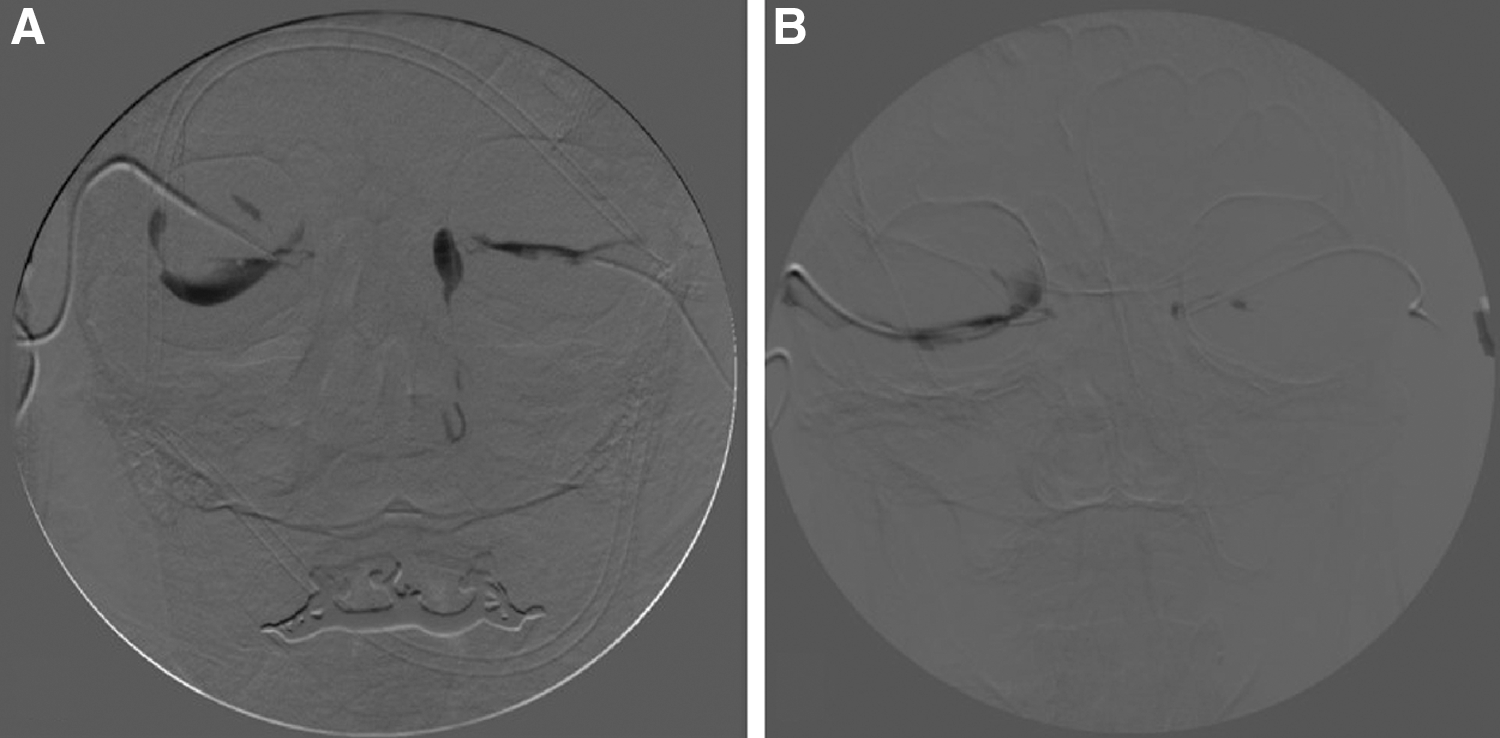
Dacryocystography infused with lipiodol ultra-fluid and digital subtraction, demonstrating obstruction at the Rosenmüller valve level in the right eye and NLD stenosis and lacrimal sac dilation in the left eye five months after RIT (
Case 3: A female patient aged 66 years, with complaint of epiphora in the right eye after two months of RIT with an activity of 189 mCi (6993 MBq), presenting with a hard stop on catheterization in the canaliculi of both eyes and a negative LSO irrigation test, albeit with greater irrigation resistance in the right eye. There was lacrimal sac dilation and NLD stenosis on the right (Fig. 4).
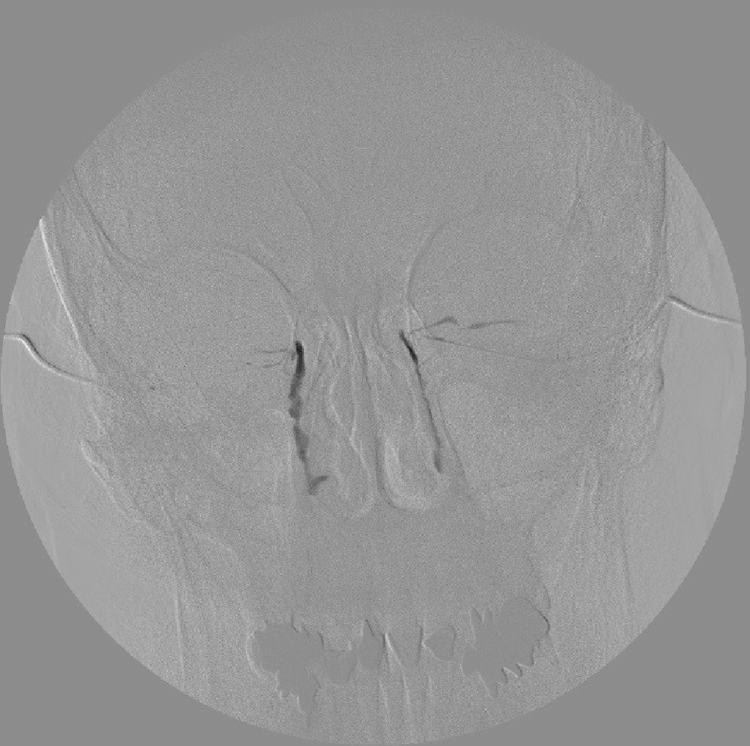
Dacryocystography infused with lipiodol ultra-fluid and digital subtraction, showing NLD stenosis and right lacrimal sac dilation two months after RIT.
There were no other epiphora findings in either group and no lacrimal sac expression reflux or ocular discharge complaints.
Discussion
Obstruction of the lacrimal drainage system in patients undergoing RIT is a recognized complication (22,23,29,30) for this type of cancer treatment. However, no prospective study has been available to evaluate the effect of 131I on the lacrimal drainage system.
In daily practice, these patients would normally be referred for ophthalmologic evaluation only when presenting a complaint, which occurs in the phase when LSO is already present after the use of high doses of RIT. Early evaluation of these patients allowed the ongoing obstruction process to be detected in order to study interventions that can prevent its definitive establishment.
Descriptive analysis of both groups revealed an epidemiological profile with regard to both age and sex that corroborates findings from other differentiated thyroid carcinoma studies, with a predominance of female patients, between the fifth and sixth decades of life (5, 8). The presence of patients with more advanced disease staging and stage in group 1 reflects current recommendations for ablation with 131I for differentiated thyroid cancer according to the TNM classification and the American Thyroid Association (24,31).
The LSO rate of 4.55% (events/eyes) or 6.8% (cases per patients) in group 1 is similar to the findings of pioneering retrospective cohorts in this line of research (22,23). However, given the short follow-up period and the number of patients, it is hypothesized that there may be a larger number of LSO cases than identified thus far. It is expected that there would be an increase in this sample over time, as lacrimal manifestations are described as occurring within 13–16 months after RIT administration (22,23), and the patients with LSO received a mean RIT activity of 201.5 mCi (7455.5 MBq; range 189–206.1 mCi, 6993–7625.7 MBq), which is higher than the mean activity administered in group 1 and the average radioiodine activities (3). This phenomenon seems to be to some extent dose dependent, and it occurs more commonly with activities >150 mCi, as shown by previous studies (32 –34).
None of the patients in group 2 had an obstruction, making it impossible to calculate the relative risk (RR) of LSO.
Among the population studies evaluating LSO prevalence, a long American prospective study (35) revealed that symptomatic idiopathic obstruction has a mean annual incidence of 30.5/100,000 (0.03%), or 20.2/100,000 (0.02%) when considering only nasolacrimal duct obstruction (NLDO). Most patients (73%) were women, with a mean age of 59.5 ± 22 years. All forms of dacryostenosis and NLDO were preponderant in patients >60 years of age. With regard to RIT-related LSO, American retrospective studies suggest an incidence rates ranging from 3% (22) to 3.4% (23) for NLDO and 4.6% (23) for LSO in younger patients, with mean ages of 48 years (range 13–74 years) (22) and 57 years (range 30–89 years) (23). In a retrospective study (34), 17 patients with post-RIT NLDO were found among 74 patients undergoing dacryocystorhinostomy over a period of three years, which corresponds to a mean annual incidence of 7.7% of post-RIT NLDO in this sample. The mean age was 49.7 years (range 30–80 years), and 59% of cases (10 patients) were <49 years of age. A predominance of females (82.3%) was also observed.
The mean age of the LSO patients in the present study was 61.6 years (range 56–66 years), which is higher than the mean ages in groups 1 and 2 (46.9 and 52.1 years, respectively). Although retrospective studies (22,23,34) emphasize lacrimal alterations in younger people, it is hypothesized that considering the proportions, LSO related to RIT can occur more frequently in older people, similar to idiopathic obstruction. In fact, RIT is more frequently indicated in older individuals, although the overall frequency of new diagnoses is higher in younger people.
It was also found that two cases of obstruction in the present study were situated in the upper portion of the lacrimal system. A previous retrospective study by the authors’ group (34) showed a more frequent involvement of the lower lacrimal system. Low obstruction often progresses with dilation of the lacrimal sac and secretion, which are more symptomatic and more noticeable by the patient when seeking specialized care. In the present cohort, cases of obstruction of the high portion of the lacrimal system might not have been routinely detected because one patient was asymptomatic and another had only epiphora without secretion (a clinical picture easily confused with dry eye or eye irritation in general). This aspect may suggest an under-diagnosis of high obstructions of the lacrimal system in previous studies (22,23).
The FDDT is considered a sensible and specific test to detect lacrimal obstruction (26,27), but in the present study, it did not show a difference between the two groups (Fig. 1), likely due to the limited number of LSO cases. Moreover, in these patients, probing and lacrimal irrigation were more effective for establishing an LSO diagnosis.
The presence of the sodium–iodine symporter (NIS) in extrathyroidal tissue such as the lacrimal system (36,37) and exocrine glands (37,38) can contribute to the occurrence of adverse effects related to RIT. Sialadenitis can occur more frequently in the parotid gland, in which serous tissue and ductal cells absorb more iodine than the mucous tissue of submandibular glands (39,40). Consistent with this finding, many studies have demonstrated a reduction in saliva (12,14,15,20,39).
Thus, with regard to the pathophysiological mechanism of post-RIT LSO, it is hypothesized that withdrawal of thyroid hormone before RIT and the consequent increase in TSH results in increased NIS expression in the basolateral membrane of the lacrimal system and an increase in 131I uptake, similarly to the situation in thyroid cells (10,25). This can result in tissue damage and consequent obstruction of the nasolacrimal duct lumen by fibrosis. A protocol using recombinant human TSH to prepare for RIT (instead of thyroid hormone withdrawal) seems to reduce lacrimal and nasal damage (19).
The synthesis and transmembrane translocation of NIS are influenced by several hormones, cytokines, and drugs (37). Therefore, it is interesting to note that the patient with bilateral obstruction in this study had epilepsy and had used carbamazepine for 30 years, a drug responsible for an increase of in vitro NIS expression in the presence of retinoic acid in an animal breast-cancer model (37). The biomolecular evaluation of the NIS expression pattern and its modulation by drugs in the accessory visual structures could further clarify the pathophysiological mechanisms underlying LSO and may constitute a new field of scientific research in dacryology.
This study has several limitations, such as establishing LSO using lacrimal system irrigation, which can result in the non-detection of partial obstructions or stenoses. These conditions could be detected by tests such as Jones I or complementary tests such as dacryoscintigraphy. Therefore, a possible under-diagnosis of early stage LSO cannot be ruled out.
Although the study had a small number of participants and a limited duration, to the best of the authors’ knowledge, it is the first prospective cohort study to evaluate post-RIT LSO frequency systematically. Frequencies of 4.55% (four events in 88 eyes) or 6.8% (three cases in 44 patients) were observed, which are significantly higher than those described for idiopathic LSO, but they were only found in patients receiving higher than average activities of RIT.
This condition is occurring in younger patients, and the disease incidence is increasing worldwide. Therefore, an increase in patients undergoing RIT and consequently suffering secondary LSO is expected.
These findings demonstrate the importance of alerting health professionals and patients to the possibility of LSO, which can allow early diagnosis and treatment and prevent the onset of complications such as dacryocystitis and orbital abscess (41,42), as well as the reduced quality of life associated with epiphora (43). Further prospective studies with larger sample sizes and longer follow-up periods are needed to determine measures of association such as RR of LSO in patients exposed to RIT, along with experimental research to better understand the pathophysiological mechanisms of lacrimal system injury by 131I and ways to avoid it without compromising the effectiveness of cancer treatment.
Footnotes
Author Disclosure Statement
No competing financial interests exist.