




Abstract
Background:
The purpose of this study was to assess the current status of the clinical thyroidology literature using bibliographic analysis.
Methods:
The subject “clinical thyroidology” was divided into six broad topics: iodine deficiency/iodine nutrition, hypothyroidism, hyperthyroidism/thyrotoxicosis, thyroiditis/autoimmune thyroid disease, thyroid nodules/multinodular goiter, and thyroid cancer. Using Scopus, an online bibliographic searching tool, this study sought to examine the trends in the publication of clinical thyroid disease–related research articles over the decade from 2006 through the end of 2015. Citation counts were also retrieved for individual research papers in order to find papers that might have had a bigger impact on clinical practice. Review articles, guidelines, and editorials were excluded.
Results:
A total of 19,055 articles were published in the broad area of clinical thyroid disease. The largest proportion was in the topic of thyroid cancer, accounting for >30% of the total. The numbers of papers published annually on thyroid nodules and thyroid cancer increased progressively over the decade. The largest proportion of clinical thyroid publications emanated from the United States, and the majority of papers were published in subspecialty journals. Within each clinical thyroid topic, the most highly cited papers published from 2006 to 2015 were identified, and outliers—that is, papers that had been cited far more often that others in the topic—were also identified. The most highly cited paper in all of clinical thyroidology was a 2006 study describing the increase in thyroid cancer incidence in the United States (JAMA 295:2164–2167). Most of the highly cited clinical papers were case series or cohort studies, rather than randomized controlled trials.
Conclusions:
The number of papers in clinical thyroid disease is expanding rapidly, with >1000 papers published annually over the last decade. Research papers on thyroid nodules and cancer accounted for 51% of all clinical thyroid disease–related papers. More randomized controlled trials have been published in the last few years, portending a bright future for clinical thyroidology.
Introduction
A
Methods
Elsevier's Scopus database was used for this analysis. Scopus is a web-based tool developed for bibliographic analysis. It was selected because it reports on the country of the affiliation of the authors of papers, as well as other details, including institutions where research was done. Scopus includes >18,000 journal titles in medicine, nursing, veterinary medicine, dentistry, and multidisciplinary health professions, including all of Medline (
Clinical thyroid disease was divided into six broad categories or topics, based on clinical grounds and the table of contents of a textbook on thyroid disease (1): iodine deficiency/iodine nutrition, hypothyroidism, hyperthyroidism/thyrotoxicosis, thyroiditis/autoimmune thyroid disease, thyroid nodules/multinodular goiter, and thyroid cancer. Search terms were developed for each topic (Table 1). For each topic, Scopus was searched for the years 2006–2015 (the last full decade). The search term had to be in the title of the paper to avoid retrieving papers in which the topic was not the main focus of the paper. The searches were limited to original research articles and meta-analyses, and excluded guidelines, editorials, and reviews. The total number of papers on clinical thyroid disease published during the last decade was retrieved, as were the numbers of papers published on each clinical thyroid topic, as defined above. Trends were also examined by extracting the number of papers published within each topic by year, 2006–2015. The countries and institutions from which the research originated and the journals in which the papers were published were also extracted.
For all papers published since 1996, Scopus provides the total number of citations for all papers within a topic, as well as citation frequencies for each published paper. The relationship between the number of papers published within a certain topic and the number of total citations to the papers within that particular topic was analyzed, since one principle of citation analysis is that the number of citations to papers in a field correlates with the number of published papers in that field (2).
There was also an interest in finding the most highly cited papers within each thyroid topic. The citation counting feature in Scopus were used, and the top 20 most frequently cited papers for each of the six topics from 2005 to 2015 were identified. Self-citations were excluded. If the citation number was the same for two papers, both were included. In order to recognize papers of unusual interest, the data were also analyzed using box and whisker plots. These enable the display of data that are not normally distributed (in this case, the number of citations), and allow the identification of outliers (defined as a number of citations greater than the third quartile of citations [Q3] plus 1.5 times the interquartile range [IQR] or Q3 + 1.5 IQR). It was reasoned that papers with outlier status would be those that had a particularly significant impact in the topic area. An online tool was used to construct the box and whisker plots (
Results
Figure 1 illustrates the number of published papers in the entire field of clinical thyroidology over the last century, from 1915 through 2015. In all, >58,217 articles were published, 19,055 (33%) of which were published between January 2006 and December 2015. Figure 2 depicts the total number of articles published within each topic over the last decade. The fewest were published in the area of iodine deficiency/iodine nutrition (n = 797), and the most were published on thyroid cancer (n = 8139; 31%). Figure 3 shows the trend over the decade by each topic, showing that thyroid cancer was the most frequent topic in clinical thyroidology as far back as 2006, but the numbers of papers accelerated over the decade, with a 1.8-fold increase in the number of publications. Only the topic of thyroid nodules showed a greater fractional increase in the number of publications, with a 2.4-fold rise (Fig. 3). In contrast, the numbers of papers in the other four clinical areas was relatively stable across the decade.
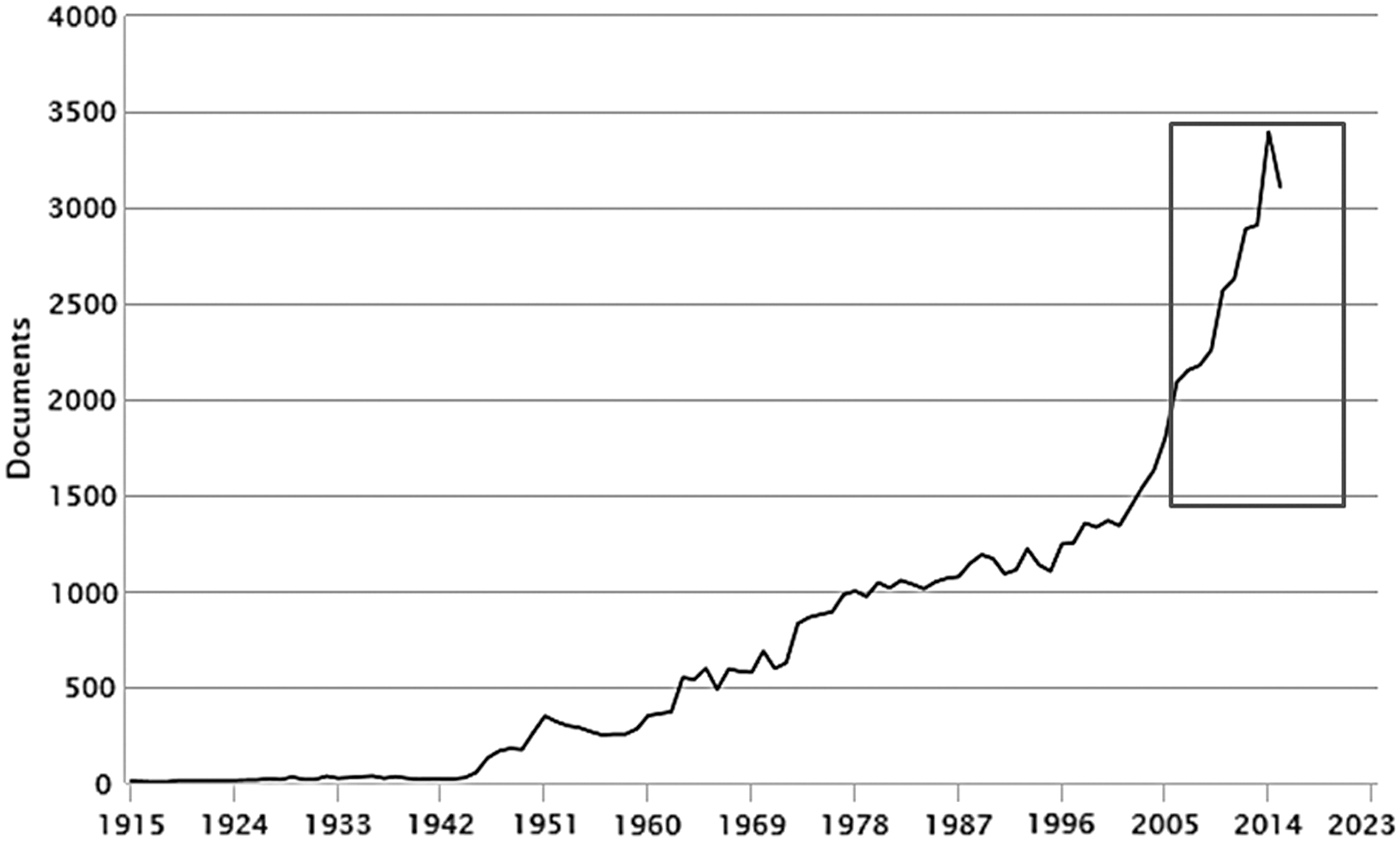
Total number of clinical thyroid disease articles published from 1915 to 2015. More than 30% of the papers were published in the decade 2006–2015. There were roughly 58,217 articles published from 1915 to 2015, and 19,055 papers published from 2006 to 2015.
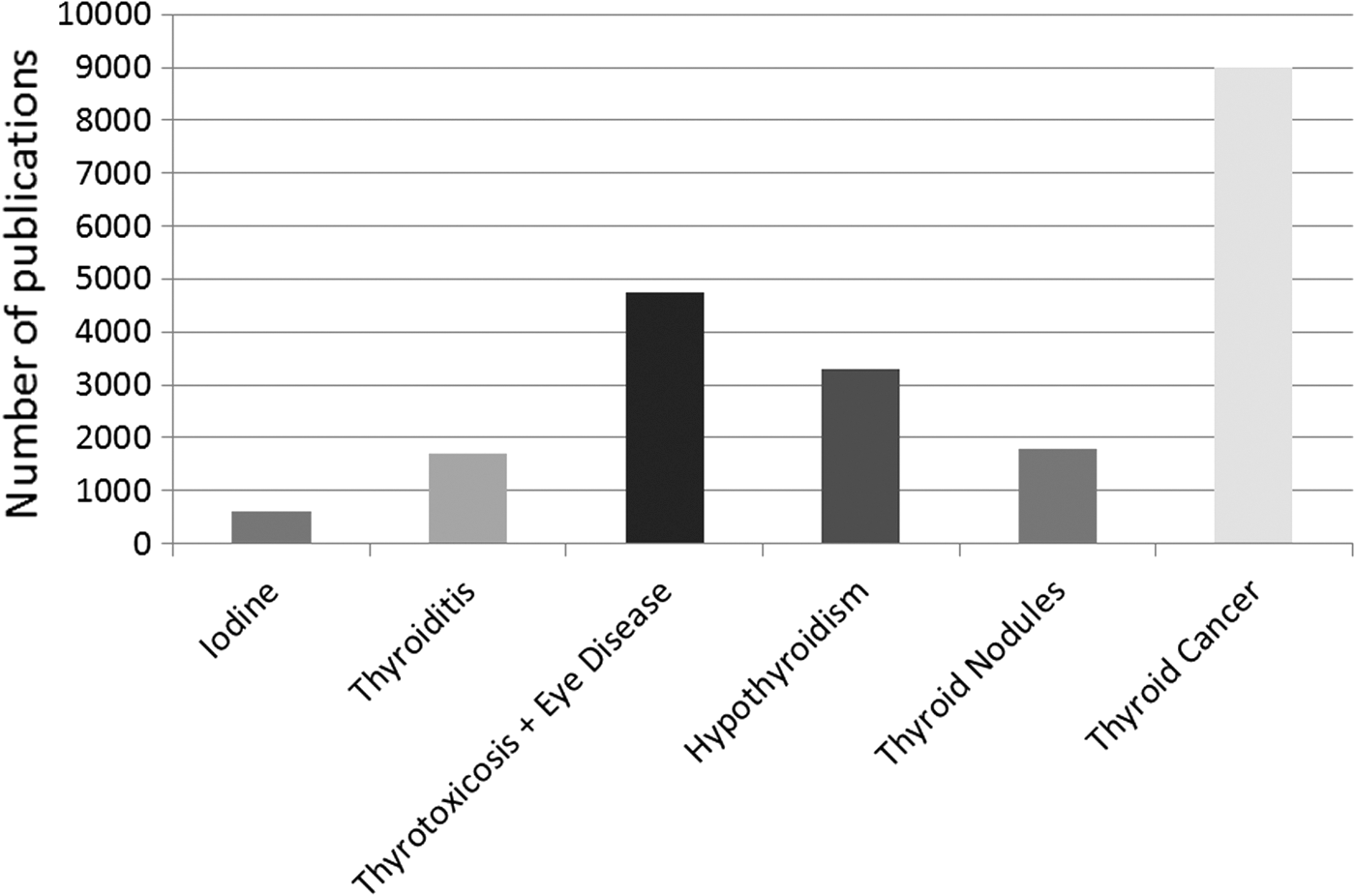
Number of articles 2006–2015 by topic.
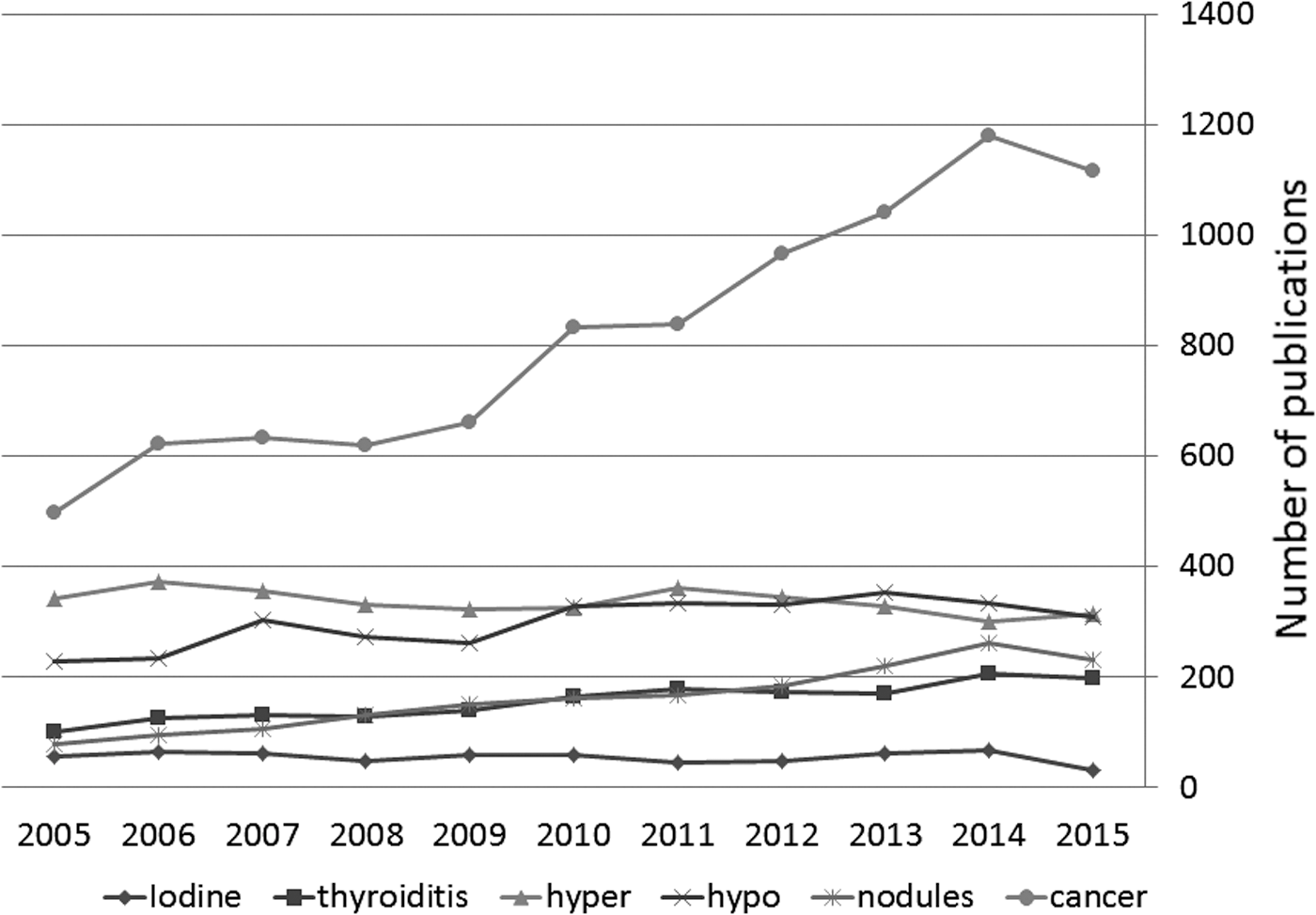
Trend in the publication of articles in the six clinical thyroid disease topics 2006–2015.
Figure 4 illustrates the top 10 countries from which clinical thyroid research has been published over the decade, led by the United States, China, and Italy. The United States led all other countries in five of the six clinical thyroidology topics (data not shown), but China was the top country from which research in iodine deficiency/iodine nutrition originated (Fig. 5). Figure 6 shows the top 20 institutions that have published clinical thyroid-related research over the last decade. Figure 7 displays the top six scientific journals in which thyroid research papers have been published over the decade, with Thyroid and the Journal of Clinical Endocrinology and Metabolism being the two dominant sources.
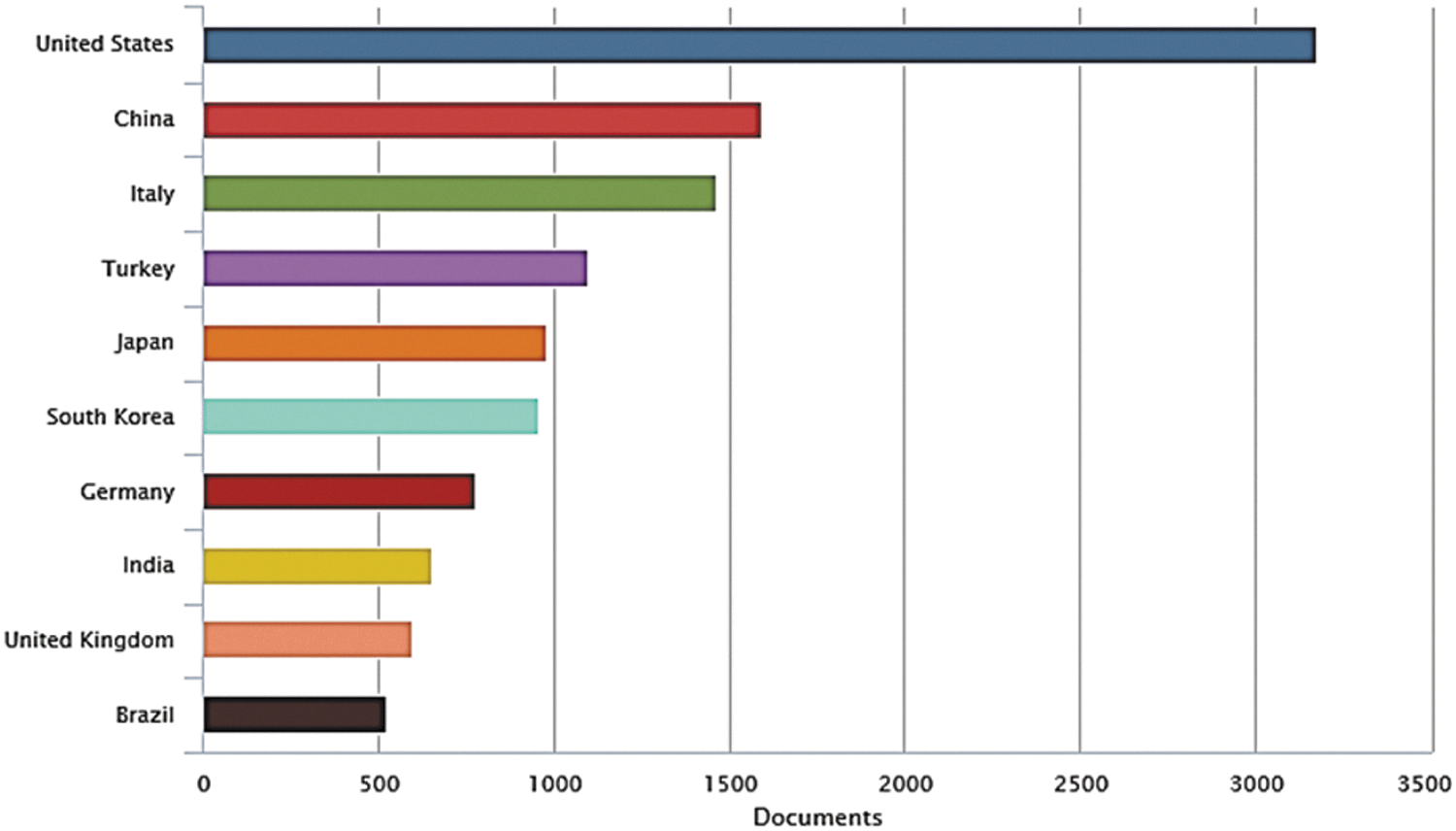
Country of origin for clinical thyroid research 2005–2015. From Scopus at
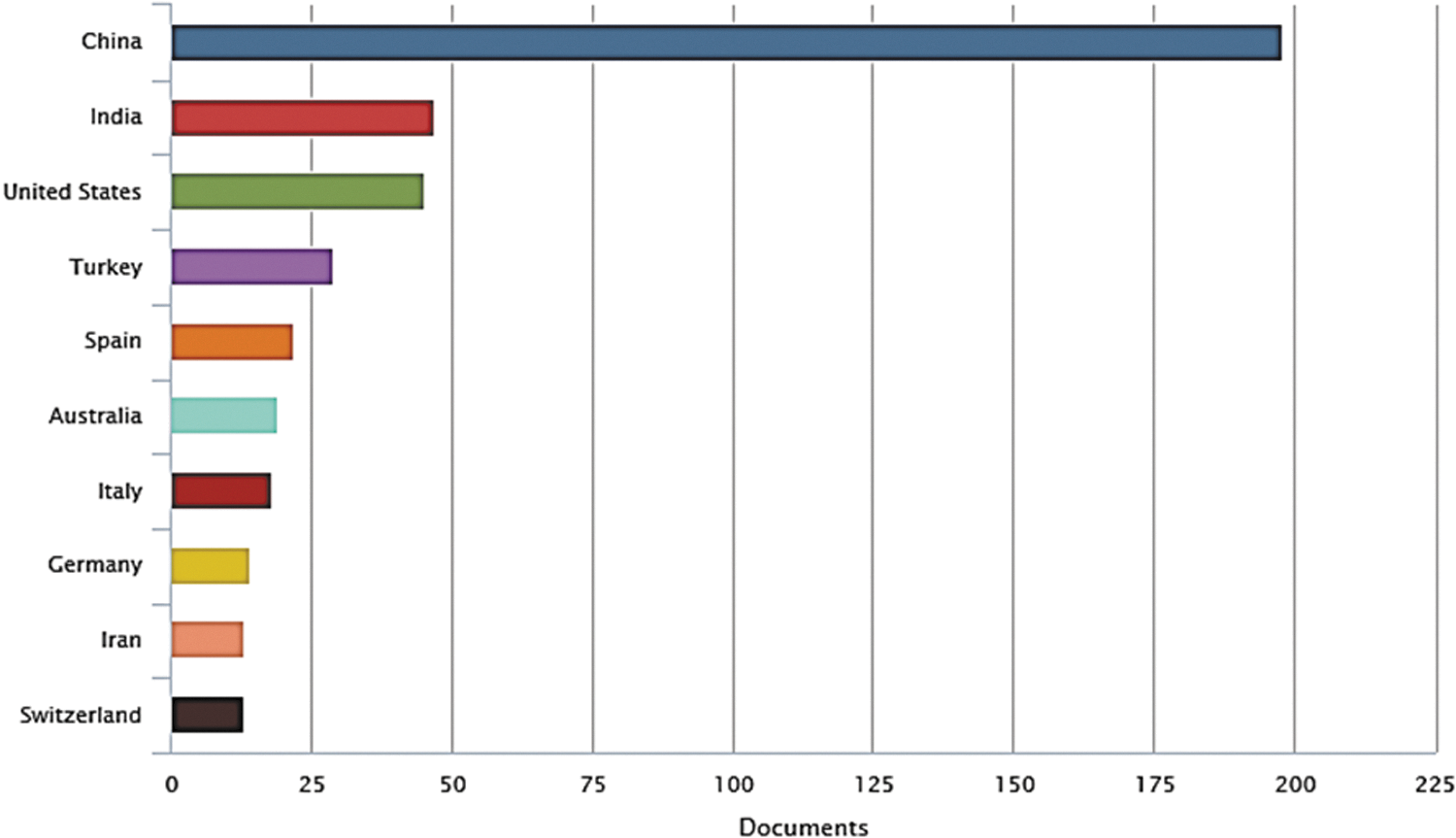
Country of origin for clinical thyroid research related to iodine deficiency. From Scopus at

Top 10 institutions publishing clinical thyroid research 2006–2015. From Scopus at
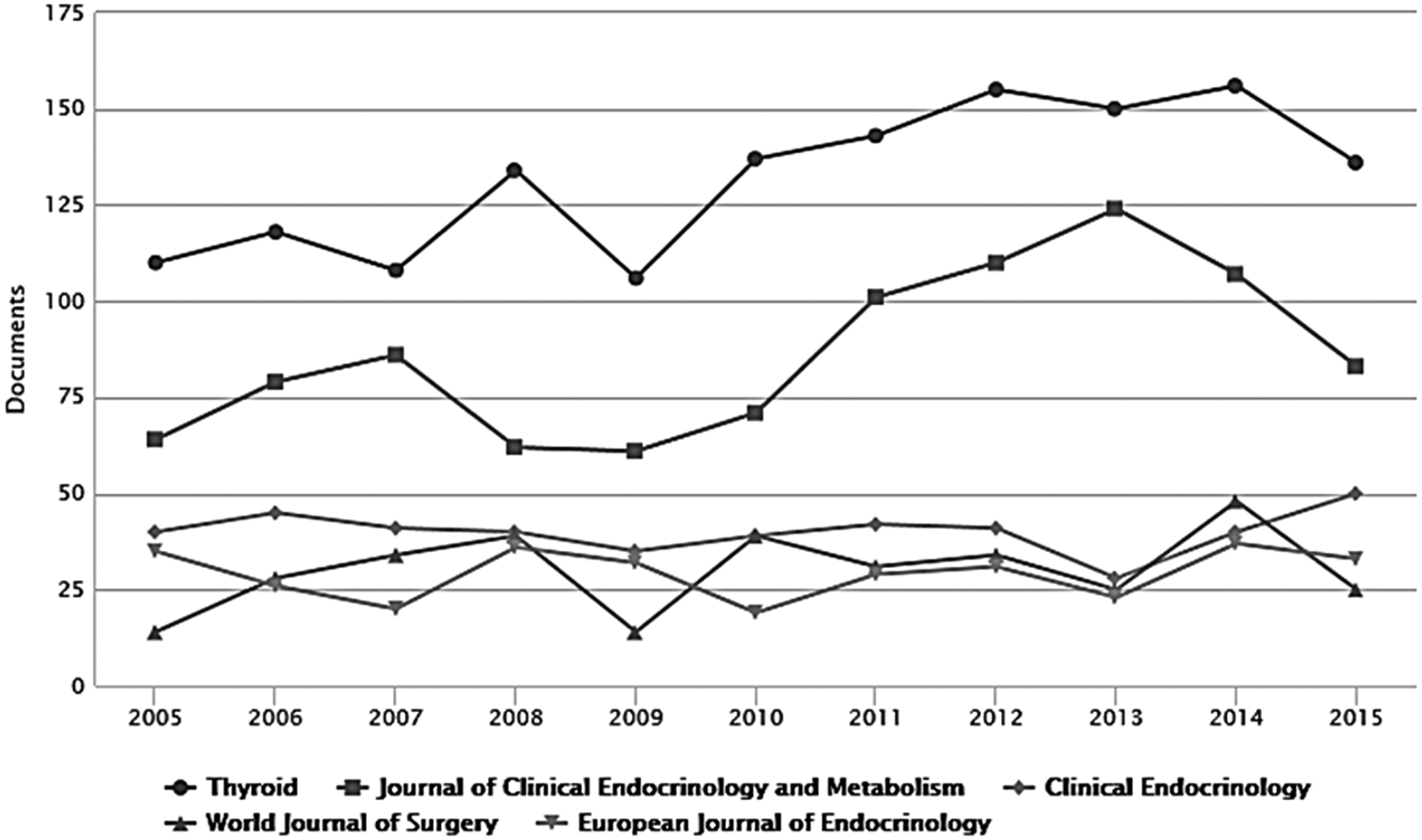
Top five journals that published clinical thyroid research 2006–2015. From Scopus at
Figure 8 illustrates the relationship between the number of citations within each thyroid-related topic and the number of publications within that same topic. Not surprisingly, there is a clear relationship between the number of times papers are cited within a field and the number of papers published in that field.

Relationship between the number of papers published in a thyroid topic area and the number of papers cited in that area.
For the citation analysis, counts were made of the citations to papers in each of the six thyroid-related topics published in the 10 years spanning 2006 through 2015. Since the number of citations to any paper tends to increase after the publication of the paper initially and then decrease, with the exception of one paper on iodine deficiency published in 2013, no papers published in 2013, 2014, or 2015 were in the top 20 for any of the six topics. The 20 most highly cited papers were found, and using box and whisker plot analysis, outliers—that is, papers that were cited far more frequently than the other top papers within the same topic area—were identified. Figure 9A shows the results within the topic of iodine deficiency/iodine nutrition. In this example, it can be seen that the median number of citations for the 20 top papers between 2006 and 2015 was 43.5 citations, and that there were two outliers. Box and whisker plots for the other five topics are displayed in Figures 9B–F, and display the three most highly cited papers for each topic.
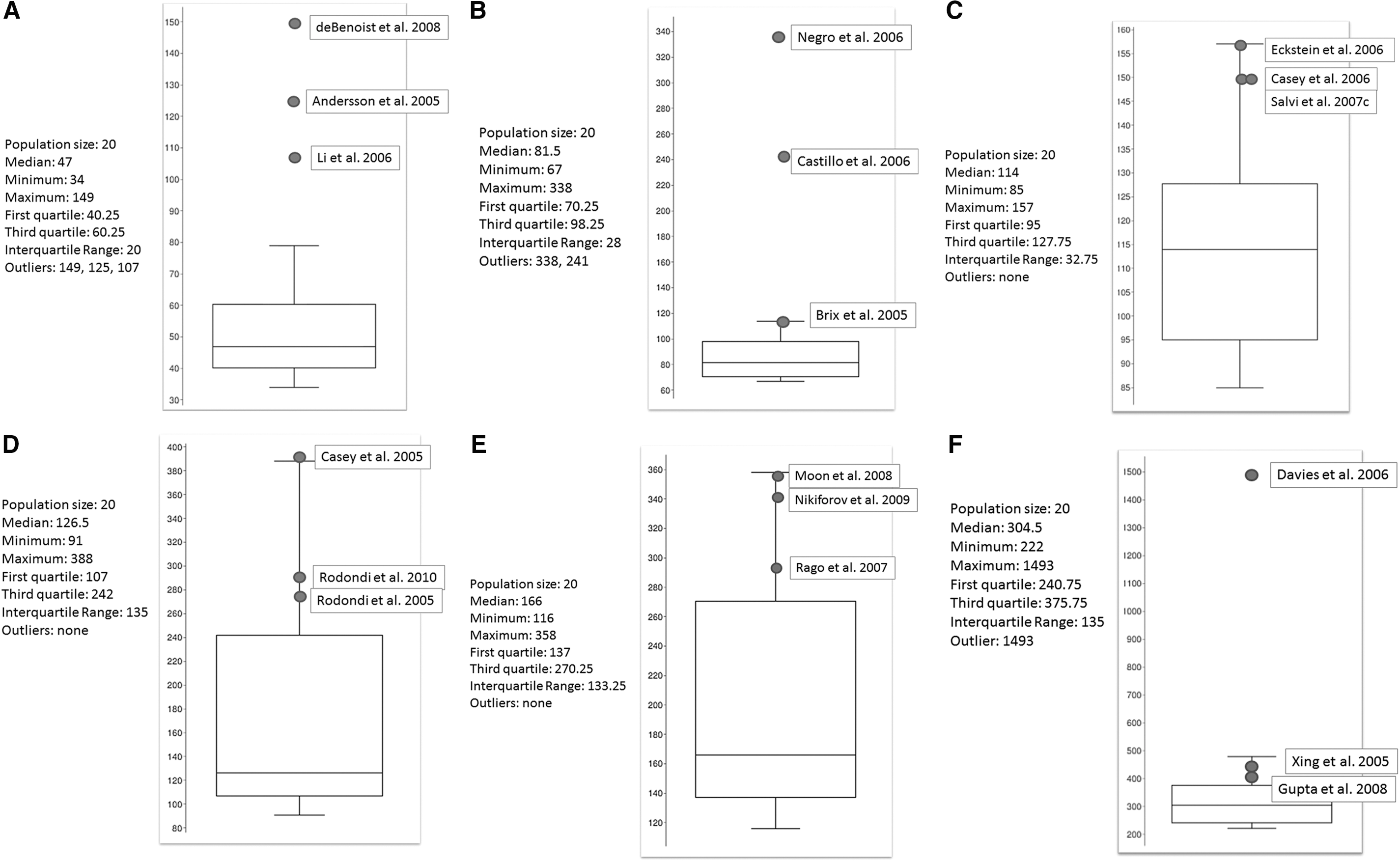
(
Table 2 presents the most highly cited papers within each clinical topic, including whether they achieved outlier status. For the topic of iodine deficiency/iodine nutrition, the two top papers focused on the epidemiology of iodine deficiency and the reassessment of iodine nutrition in Australia, respectively (3,4). For the topic of thyroiditis, the top paper described the putative effects of thyroiditis on pregnancy outcomes and the problem of Hashimoto's encephalopathy, respectively (5,6). The most-cited papers in the hyperthyroidism category contain papers on the pathogenesis of Graves' eye disease (7), the effects of mild hyperthyroidism in pregnancy (8), and the use of rituximab in patients with Graves' eye disease (9). The top paper in the hypothyroidism category related to subclinical hypothyroidism and cardiovascular disease (10), and the second and third most-cited papers were on the effects of multikinase inhibitors on thyroid function (11,12). The topic of thyroid nodules was led by papers describing sonographic features of thyroid nodules (13) and molecular diagnostics of indeterminate thyroid nodules (14). Finally, the thyroid cancer category was headed by a paper describing the recent increase in thyroid cancer incidence (15), followed by a paper reporting on the role of micro mRNA in thyroid cancer pathogenesis (16). The third most highly cited thyroid cancer paper presented data from a randomized controlled trial (RCT) on sorafenib therapy in advanced thyroid cancer (17). In comparison to the distribution of all clinical thyroid papers within journals, shown in Figure 6, the top papers in Table 2 (n = 18) had a different allocation, with six published in Journal of Clinical Endocrinology and Metabolism and three in general medical journals (JAMA, Annals of Internal Medicine, and The Medical Journal of Australia). Since, as noted above, all but one of the most highly cited papers were published before 2013, Table 3 shows the most highly cited papers and their numbers of citations in each clinical topic area for the years 2013 through March 2016.
Papers with citation numbers that were outliers in the box and whisker plots.
Discussion
The data show that the number of publications in thyroidology has increased tremendously over the last several decades, and papers published between 2006 and 2015 account for a third of all papers published since 1915. However, the increase in the numbers of papers written within the domain of clinical thyroidology was not equivalent across the six distinct topics that were defined. The greatest numbers of papers were published in the topic of thyroid cancer in 2006, and this trend continued through the end of 2015. Further, there was a sharp increase in the number of published thyroid cancer papers over the decade. The only other topic that had a major change in the number of publications was thyroid nodules, with the number of papers increasing by >200%, the greatest increase of any topic, including thyroid cancer. Not surprisingly, the two most-cited papers in the thyroid nodules topic related to thyroid sonography (13) and molecular testing of indeterminate thyroid nodules (14), respectively, both topics that relate to the potential diagnosis of thyroid cancer.
The United States led all other countries as the source of the most publications, and in five of the six individual topics. This may reflect generous research funding by the National Institutes of Health (NIH), but other funding sources are likely, given that NIH funding is traditionally directed toward basic rather than clinical research. The only exception was in research on iodine deficiency/iodine nutrition, where authors from China, the United States, and India led all others in publishing research on this topic. This observation is likely related to iodine deficiency and its elimination being ongoing public health issues in the two newly industrialized countries.
While the number of citations to a paper may be a rough indicator of the potential importance of scientific work, the citation data must be interpreted with caution. In this context, “importance” refers to areas of clinical research that are more rapidly evolving, for example thyroid cancer, compared with other clinical areas in which information is more established or is not being pursued, for example because of a lack of funding. Further, the number of citations to papers within a topic is related to the number of workers in the field, as shown by the total number of articles published in that field, for example thyroid cancer versus other topic areas (Fig. 8). Clearly, the more that is published on a particular topic, the more citations to related papers will be generated. This has been called the bandwagon effect (18). Finally, the impact factor of the journal in which a paper is published has a direct effect on the number of citations a paper receives (19). This is also consistent with our observation that the endocrinology journal with the highest impact factor (Journal of Clinical Endocrinology and Metabolism, impact factor 6.2) published a substantial number of most highly cited thyroid-related papers over the last decade (6/18). Not surprisingly, many of the top papers were published in medical journals with higher impact factors (e.g., JAMA, 35.3; Journal of Clinical Oncology, 18.4; Annals of Internal Medicine, 17.8; Proceedings of the National Academy of Sciences, 9.6; all impact factors were obtained from the journals' Web sites on April 26, 2016.)
Although none of the top-cited papers were published in the American Thyroid Association's journal Thyroid, the data also show that a sub-subspecialty journal such as Thyroid can play a major role in clinical thyroid research, having published the largest number of clinical thyroidology papers over the last decade. In fact, the paper with the highest number of citations in all of clinical thyroid disease was the revised American Thyroid Association guideline for thyroid nodule and thyroid cancer management (20), published in 2009 (2850 citations), which was excluded from the current analysis because it is a guideline. This reflects a trend for highly cited clinical practice guidelines to be published in specialty journals, rather than general medicine journals.
Citation counting inevitably will favor older papers over more recent papers. An observation, not included in the current analysis, is that papers have a survival value (21). One older analysis suggested that a paper's citation rates peak in the third year after publication, and then fall off by 50% over the next three to five years (21). On the other hand, some papers (e.g., that by Moon et al. (13)) may show a progressive increase in citation frequency, reflecting their continuing relevance (Fig. 10).
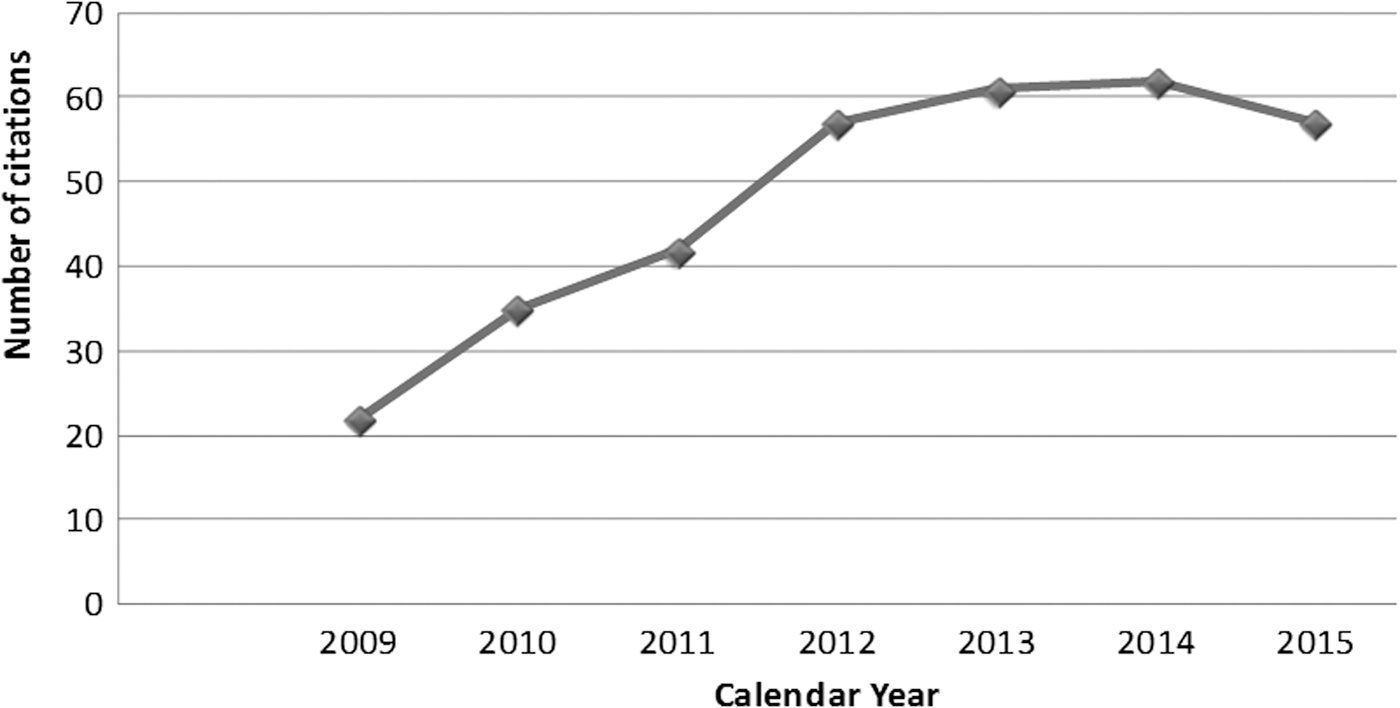
Example of a paper with increasing numbers of citations over time. Moon W-J, So LJ, Jeong HL, et al. Benign and malignant thyroid nodules: US differentiation—multicenter retrospective study. Radiology 2008;247:762–770. 358 citations.
With those caveats in mind, the number of citations was greatest for papers in the topic area of thyroid cancer. The most-cited paper was one of the earliest to report an epidemic in low-risk papillary thyroid cancer in the United States (15). This has now been documented to occur in many other developed countries throughout the world (22), leading to great concern about detection bias, possible overtreatment, and rising healthcare costs. The two other papers in the thyroid cancer topic described changes in miRNA that have now become well-accepted concepts in thyroid cancer genetics (16) and one of the first reports to describe multikinase inhibitor therapy for advanced thyroid cancer (17).
Of the top 12 papers related to topics other than thyroid nodules and thyroid cancer (i.e., thyroid dysfunction), three concerned various aspects of thyroid dysfunction in pregnancy. This should come as no surprise, since the management of thyroid disease in pregnant women, including iodine deficiency, hypothyroidism, hyperthyroidism, and subclinical hypothyroidism, has become an increasingly important and controversial topic in the recent literature. This is also reflected in Table 3, where four of the top papers published in 2013–2015 were also on the topic of pregnancy and thyroid disease.
Unfortunately, of the 18 top papers in the six areas of clinical thyroid disease, only two were RCTs (5,17). This is a clearly reflection of the paucity of RCTs in the field, not an indication that RCTs are not highly valued. Indeed, a recent paper examining the 100 most-cited articles in diabetes research found that RCTs were the most highly cited article type (18).
The current data reflect a snapshot of the current status of clinical thyroid research. While it is felt that they are robust, there are a number of important potential limitations. First, a single online citation database (Scopus) was used. Of the three options for citation counting, Scopus was chosen over Web of Science and Google Scholar. Although Google Scholar retrieves generally the highest citation counts for a given work, the sources that this resource uses to produce its counts are unknown. Citations returned may include duplicates and material from non-peer-reviewed sources. Web of Science has its strength in publication year depth, indexing articles as far back as 1900, but it only covers 8845 journal titles (
Second, only papers using the search terms in the article title, rather than in the abstract or keywords, were searched. This may have restricted the comprehensiveness of the search, but the study was examining papers with the most relevance to clinical thyroid disease, and it was reasoned that the search terms would be in the titles of the most pertinent papers. Third, the ordering of the citation data reported herein is likely transitory, as citations to papers will continue to accrue and as new papers are published every day. The most highly cited papers reported herein will move along their survival curve, likely replaced by other, newer, even more frequently cited papers. It is also possible that the proportion of papers in each of the six thyroid-related topics will change as thyroid research evolves.
Conclusions
The field of clinical thyroid disease is thriving, with a major increase in the number of publications over the last decade. The areas of thyroid nodules and thyroid cancer account for an increasing proportion of published papers in thyroid disease, due to the marked increase in the detection, diagnosis, and treatment of thyroid neoplasia over the last one to two decades. The most highly cited papers in each area of clinical thyroid disease reflect an ever-expanding knowledge base, with observational studies accounting for the bulk of the most highly cited papers. Hopefully, we now are at the dawn of a new eras where RCTs will begin to dominate the scientific clinical thyroidology landscape. Indeed, this is already beginning to happen (23 –25), to cite but a few recent examples.
Footnotes
Acknowledgments
The authors wish to thank Holly Thompson, MS, for her assistance in helping to devise the search strategies.
Author Disclosure Statement
No competing financial interests exist.