




Abstract

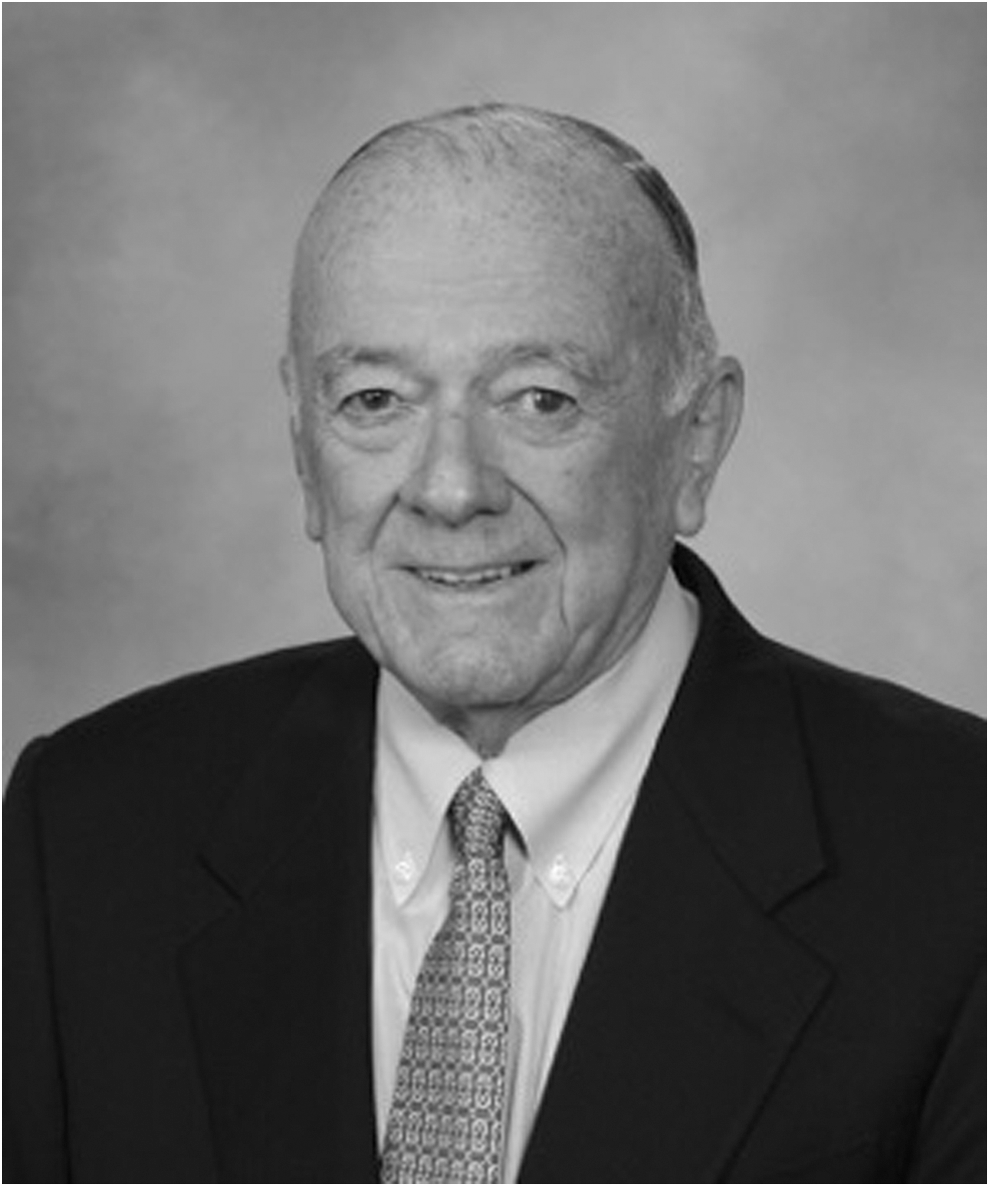
“Think where man's glory most begins and ends, and say my glory was I had such friends.”
Born in Cookeville, Tennessee, Gene received his MD degree from the University of Tennessee in 1953. He completed his internal medicine training at the Mayo Graduate School of Medicine in 1959, and earned an MS from the University of Minnesota. In 1960, he joined the Mayo Clinic Staff in the Section of Endocrinology, with one year of postgraduate work in endocrinology at Tufts, followed by two years postdoctoral fellowship at the National Institutes of Health in thyroid research under the tutelage of the late Dr. Joseph Edward Rall. He returned to Mayo in 1964, and until 1967 he served as head of the Section of Biochemical Pharmacology.
I first met Gene in 1968, when I attended the thyroid clinic in the Plummer building as a young internal medicine resident. The thyroid clinic was usually staffed by both Gene Mayberry and Bill McConahey (49th American Thyroid Association President). Gene was warm, friendly, and a great teacher. He had superb knowledge of laboratory tests, as he was the Director of Mayo Thyroid Laboratories at the time. He was developing radioimmunoassays (RIA) for thyrotropin (TSH), and he invited me to work with him. I began to work in his laboratory in the old “1914 Building” in 1969, and published our data confirming that the TSH RIA is an accurate and useful test in thyroid practice (1). We evaluated long-acting thyroid stimulator levels in Graves' ophthalmopathy (2), and successfully conjugated triiodothyronine (T3) to human serum albumin, which resulted in the development of the first RIA for accurate measurement of human T3, and did more research on thyronine analogues (3,4). Gene was an innovative and resourceful researcher.
Gene was unique in the way he maintained both of his interests in medicine and medical administration. He served as Chair of the Department of Laboratory Medicine from 1971 to 1975, and held the ranks of Professor of Laboratory Medicine and Professor of Medicine at Mayo Medical School. His leadership roles at Mayo were many, including member of the Board of Governors (1971–1987); chair of the Board of Governors and CEO of the Mayo Foundation (1976–1987); president of the Board of Trustees (1986–1987); and chair of the Board of Development (1988–1992). In 1987, President Reagan named Gene chairman of the Presidential Commission on the Human Immunodeficiency Virus (HIV) Epidemic. A loyal member of the American Thyroid Association from 1964 to 2001, he was also a long-time member of the American Medical Association, the Endocrine Society, and the American College of Physicians. He was elected to the Institute of Medicine, National Academy of Sciences.
Gene was a kind friend, a capable administrator, and an effective leader. With a warm personality and a friendly demeanor, he was a highly popular CEO at Mayo. He is known for leading the Mayo Clinic into a new era in its history. He was an integral part of planning and execution of the expansion at Mayo in Rochester, the establishment of satellites in Florida and Arizona, and the integration of Methodist and Saint Mary's Hospitals with Mayo Clinic. When he finished his 12-year term as CEO of the Mayo Foundation, the number of employees had grown by 50% and revenue five times.
I remember him with deep fondness, and feel most grateful to have known and worked with Gene during my early career at Mayo. To others, like myself, who had the privilege of working with him, he had numerous roles: an inspiration, a mentor, a role model, a leader, a colleague, and a friend.
But, above all, he was a southern gentleman and a thoughtful and caring human being. He will be greatly missed.