




Abstract
Background:
Pregnant women are particularly vulnerable to iodine deficiency. Considering the rural–urban disparities in nutritional status in Pakistan, this study aimed to assess regional influences on nutritional iodine status of pregnant women in Pakistan.
Methods:
Data were collected from 1246 pregnant women in all trimesters of pregnancy who visited antenatal clinics for routine checkups in five Khyber Pakhtunkhwa province districts. Information concerning iodized salt intake and knowledge of iodine deficiency disorders (IDD) was obtained through an interview questionnaire. Goiter and urinary iodine concentration (UIC) levels were assessed by the palpation method and Sandell–Kolthoff reaction, respectively. Logistic regression analysis was used to quantify associations between residence (rural–urban), pregnancy trimester, and previous pregnancy outcomes with knowledge about IDD, iodized salt intake, presence of goiter, and UIC <150 μg/L.
Results:
Among study participants, 87.7% had no knowledge about IDD, and only 21.0% were consuming iodized salt. Goiter was present in 25.5% of the women. The median UIC level was 131 μg/L, and 41.3% of study participants had a UIC ≥150 μg/L. There were no significant differences between pregnant women from rural and urban settings in regions with a solid socioeconomic status with respect to knowledge about IDD, iodized salt intake, iodine deficiency, and goiter prevalence. Urban–rural differences were observed only in socioeconomically disadvantaged districts. Only pregnant women living in the Lakki Marwat district had higher odds of having knowledge of IDD and iodized salt intake than those from rural regions. Trimesters of pregnancy and previous pregnancy outcomes had no significant effect on the outcome measures.
Conclusions:
Relative to a national nutrition survey conducted in Pakistan in 2011, the results from this study indicate that UIC levels remained stable with mild iodine deficiency, whereas rates of goiter and iodized salt intake remained high and low, respectively, especially in rural areas. Rural–urban disparities were observed only in socioeconomically disadvantaged districts, and these disparities limit the effectiveness of the IDD prevention program in rural areas in Pakistan. Thus, implementation of mandatory salt iodization requires improvement, and program effectiveness should be continuously monitored to prevent adverse health effects of iodine deficiency during pregnancy.
Introduction
D
Pakistan is a country with endemic iodine deficiency, resulting in high goiter prevalence (5,6). A program to reduce the rate of iodine deficiency disorders (IDD) was adopted in 1994. Furthermore, iodization of salt is mandatory in Pakistan according to the partially implemented, drafted “IDD Control Bill 2009” (7), but its implementation is not regulated, and there is no regular monitoring of program effectiveness (5). For these reasons, in certain areas of Pakistan, 20–50% of all school-age children suffer from goiter (8 –10). The Khyber Pakhtunkhwa (KPK) province in northwest Pakistan has the highest IDD rates in Pakistan, and the prevalence of goiter is not consistent with the reported household usage of iodized salt (5).
Iodine deficiency in women of reproductive age is a significant issue in Pakistan. The results of a national nutrition survey of 1460 reproductive age women (age 15–49 years) conducted in 2011 revealed that 48% of respondents had a UIC below the recommended level of 100 μg/L, whereas in the KPK province, this rate was even lower (23.9%) (11). In that survey, the median UIC of women of reproductive age was 104 μg/L, and in KPK the median UIC was 148.6 μg/L. In a recent study of pregnant women (n = 202) from the Charsadda district located in the Peshawar valley of Pakistan, the overall goiter prevalence was 20.7% (8), while the median UIC was only 89.5 μg/L, which is far below the WHO recommended minimum level of 150 μg/L (3). However, this study did not determine whether these rates differed for women living in rural areas. Remote and rural districts are often not covered in IDD surveys conducted in Pakistan, which could result in inaccurate estimates of progress to address IDD (5).
The Pakistani society has sex, regional, societal, socioeconomic, and educational disparities, which can affect health outcomes. Apart from differences in living standards, these disparities also trigger migration from rural to urban areas (12). A recent survey reported significantly higher disparities between rural and urban areas of KPK for both sexes, as well as for education, livelihood, health services, and sanitation (13). The observed sex disparity highlights social and economic dominancy of men in families living in rural regions, whereas individuals from urban regions have better quality education and educational infrastructure (particularly at grade 10 and above). Furthermore, the quality of overall infrastructure for housing, health services, drinking water supply, transportation, communication, and sanitation is also better in urban areas compared to rural regions. These disparities also translate to regional nutritional differences.
This study sought to evaluate regional differences in nutritional iodine status and associated factors for pregnant women in Pakistan. The study considered two districts located in the Peshawar valley—Peshawar and Nowshehra (14)—and three other districts—Kohat, Karak, and Lakki Marwat—outside the Peshawar valley. These five districts represent a cross-section of urbanization, topography, socioeconomic status, and potential environmental threats to natural soil iodine, including floods, drought, intense rainfall, earthquake, and cyclones (11,14 –17). The study enrolled 1246 pregnant women at all stages of pregnancy, and several parameters were evaluated in order to improve the understanding of potential causes underlying iodine deficiency.
Methods
Study area
This study was conducted in five districts of the KPK province in northwestern Pakistan (Fig. 1 and Table 1). A choropleth map of the study region was created using ArcGIS for Desktop v10.3.1.
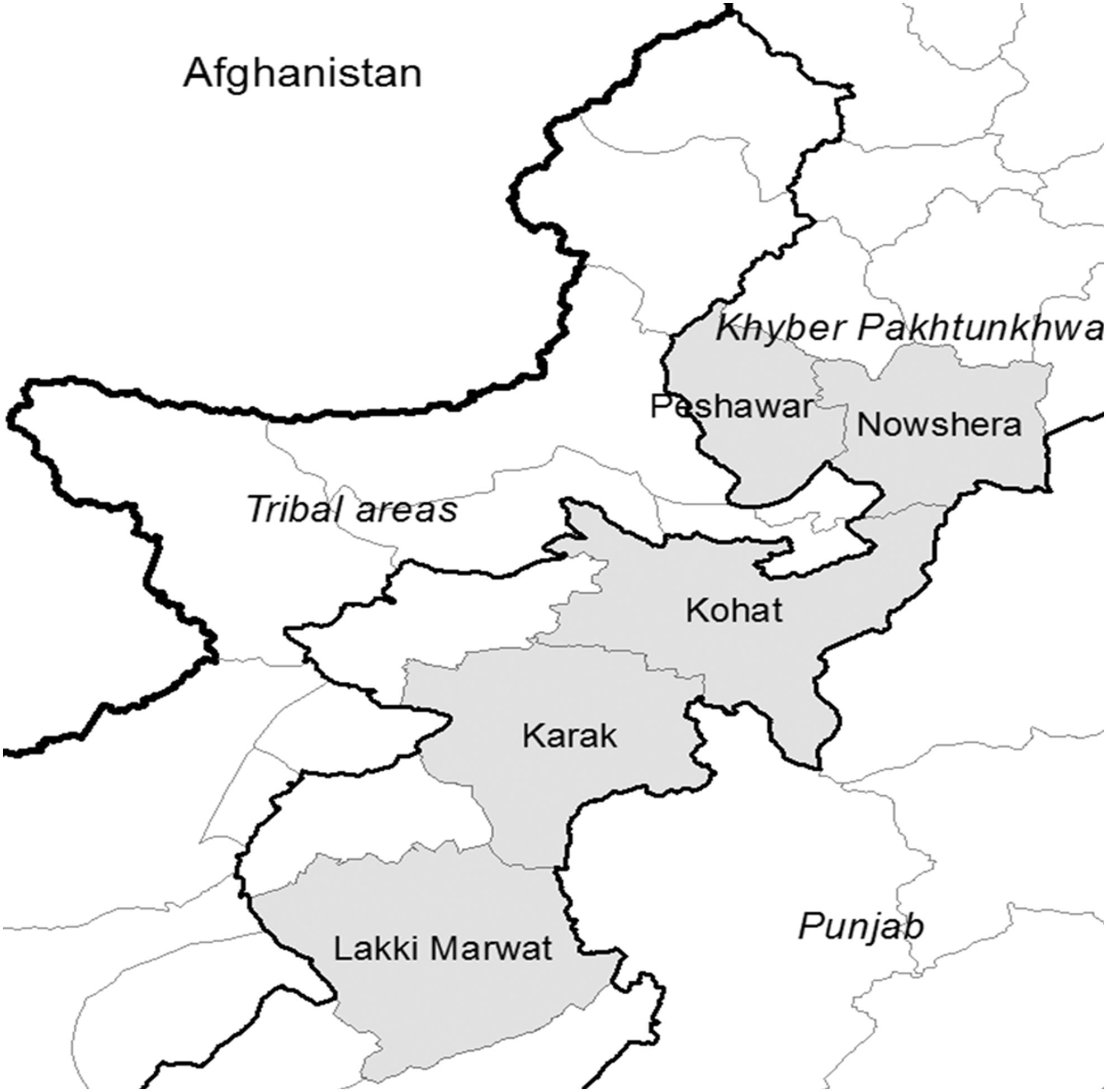
Map showing the five districts in Khyber Pakhtunkhwa Province included in the study.
Population data are based on the 1998 census.
Study design and subjects
This cross-sectional study was conducted in randomly selected (public and private) antenatal clinics in the selected districts. If private clinics declined to participate, data collection was restricted to public clinics only. The details for data collection, including the name of the clinic, its official status, and number of participants, are given in Supplementary Table S1 (Supplementary Data are available online at
Data were collected from pregnant women who visited antenatal clinics for routine checkups between March and September 2012 (Table 2). The study began with 1260 participants from all five districts, with approximately 250 women for each district. Pregnant women with self-reported chronic medical disorders such as hypertension, diabetes mellitus, tumors, or renal diseases, as well as those who reported regular use of any medication or who had a history of blood borne diseases, were excluded. The proportion of pregnant women who declined to participate was not recorded. After exclusion of 14 individuals who had an insufficient amount of urine for UIC analysis, the final study population consisted of 1246 pregnant women.
SD, standard deviation; BMI, body mass index.
Gestational age was determined by antenatal clinic gynecologists based on the last menstrual period and was calculated from the first day of the last menstrual period. Gestational ages of ≤14.9, 14.9–28.9, and ≥29 weeks comprised the first, second, and third trimesters of pregnancy, respectively. Information on the number of previous pregnancies and/or miscarriages (fetal loss due to various reasons, not including voluntary termination of pregnancy) was obtained. Written informed consent was obtained from each participant before data collection. Approval from the Kohat University of Science and Technology (KUST; Kohat, Pakistan) institutional academic research committee was obtained for this study.
Iodized salt intake and knowledge
All participants were asked to complete a short interview questionnaire containing questions related to iodized salt intake. The questionnaire comprised questions related to knowledge about iodized salt consumption and health implications associated with inadequate intake of iodized salt. It further included questions concerning IDD knowledge and sources for IDD knowledge, including media, doctors, or schools. Questions related to nutritional practices focused on intake of iodized salt, identification of iodized salt sources, and reasons for or against consumption of iodized salt.
UIC
The participants were asked to give a urine sample in the vicinity of the antenatal care unit. A total of 1246 urine samples (∼2 mL) were collected in screw-topped plastic bottles. Each bottle was labeled with a sample number, name of the district and antenatal care unit, and time and date of urine collection. The urine samples were kept in a cool, dry box and transported to the Institute of Radiotherapy and Nuclear Medicine (Peshawar, Pakistan), where the samples were chilled at 4°C until urinary iodine analysis. UIC was measured using a modified Sandell–Kolthoff reaction with spectrophotometric detection. The calculated inter-assay coefficient of variation was 5.6%. Evaluation of iodine status was based on median UIC categories defined by the WHO/IGN (3): recommended median, 150–249 μg/L, and mild iodine deficiency median, <150 μg/L.
Goiter assessment
The palpation method recommended by the WHO/UNICEF/IGN was used for goiter assessment. The presence of palpable goiter was scored for all pregnant women as: grade 0, no palpable and visible goiter; grade I, goiter was palpable but not visible; and grade II, palpable and visible goiter. Palpation examination was carried out in all districts by examiners who were trained at the central laboratory of KUST (Kohat, Pakistan). The rate of goiter prevalence across the entire study area and the relevant district was outlined based on recommended WHO/IGN criteria (3).
Statistical analysis
Descriptive categorical data are presented as absolute numbers and percentages, whereas continuous data are presented as mean or median and standard deviation. A univariate logistic regression analysis was carried out to determine differences among the pregnant women in terms of: outcome measures of iodine deficiency (iodized salt intake, UIC <150 μg/L, and goiter prevalence) in the study districts, urban–rural distribution, IDD knowledge, trimester of pregnancy, and incidence of miscarriages. Differences among these parameters were expressed according to the level of significance (p < 0.05).
Multivariable logistic regression analysis adjusted for age was used to examine how outcome measures (knowledge about IDD, iodized salt intake, UIC <150 μg/L, and goiter prevalence) are affected by regional influences (as exposure) in each specific district. These results are presented as odd ratios and confidence intervals. Pearson's correlation coefficient was determined for the association between the outcome measures with each other and to the trimester of pregnancy and number of miscarriages. A p-value of <0.05 was considered statistically significant. All analyses were carried out using Stata v11.2 (Stata Corp, College Station, TX).
Results
Study region and patient characteristics
All districts in this study are located in the northwestern region of Pakistan. Lakki Marwat and Karak are overwhelmingly rural (<10% urban areas) and are mountainous, whereas nearly half of the Peshawar district is urban largely riverine (Table 1 and Fig. 1) (11,15 –18). All areas are susceptible to loss of soil iodine by various events (Table 1). The mean age of the pregnant women was 27.1 years (range 15–50 years) (Table 2). The literacy rates were similar among the districts, while women living in urban areas had higher literacy rates compared to those in rural areas (Table 1). The baseline characteristics and numbers of studied pregnant women in all the districts are summarized in Tables 2 and 3.
p-Value calculated from logistic regression, adjusted for age. The percentages presented are row percentages.
UIC, urinary iodine concentration; IDD, iodine deficiency disorders; Ref., reference category.
Knowledge about IDD
The majority of pregnant women (88.0%) had no knowledge about IDD (Table 3). Interestingly, despite this lack of IDD knowledge, 13.5% of pregnant women were consuming iodized salt. The major sources of IDD awareness were print or electronic media (37.3%), schools (19.0%), and doctors (16.3%) (Supplementary Table S2). Among the explanations the study subjects gave for using iodized salt, 50.8% reported that they were taking it for better health, 20.6% because of its better taste, and 13.7% because of family preferences (Supplementary Table S3). When asked about how iodized salt could promote better health, 46.6% of pregnant women replied that it inhibits goiter development, and 12.0% reported it prevents IDD in general. However, 24.8% of the pregnant women taking iodized salt for better health could not define what they meant by better health. Among the 79% of the pregnant women who did not use iodized salt, 44.5% could not state any reasons for not using iodized salt, while 36.6% reported that it negatively affects reproduction, and 17.0% responded that iodized salt was too expensive (Supplementary Table S3).
The results based on logistic regression analysis show that except for the Lakki Marwat district, the odds of having knowledge about IDD were similar among pregnant women living in rural and urban areas (Fig. 2). In the Lakki Marwat district, pregnant women living in urban areas had higher odds of having knowledge about IDD relative to their rural counterparts.

Adjusted association of urban–rural distribution to various parameters of iodine deficiency.
Iodized salt intake
Around 79.0% pregnant women in this study were not taking iodized salt (Table 3). The rate of iodized salt intake by pregnant women was higher in large cities (e.g., Peshawar, Nowshehra) than in smaller cities. The highest intake was reported for the Peshawar district (45.2%), and the lowest intake of iodized salt was observed in the Karak district (3.6%). Relative to Peshawar, iodized salt intake by pregnant women living in all other districts was significantly lower.
The frequency of iodized salt intake was not significantly different between the first and other trimesters of pregnancy (Table 3). Similarly, iodized salt intake of pregnant women did not differ significantly if they had a history of a previous miscarriage.
Iodized salt intake was higher for women living in urban areas relative to those in rural areas, but this difference was not statistically significant, apart from intake by women living in the Lakki Marwat district (Fig. 2).
UIC
The UIC was ≥150 μg/L for 41.3% of the pregnant women included in this study, and the median level was 131 μg/L (Table 3). The prevalence of UIC <150 μg/L was significantly higher among pregnant women in the Nowshehra, Karak, and Kohat districts relative to those living in Peshawar. The prevalence of UIC <150 μg/L in pregnant women did not differ between women living in rural and urban areas (Table 3). Similarly, the odds of having UIC <150 μg/L were similar between rural and urban areas in all the districts, with the Nowshehra district showing a near statistically significant difference from the other regions (Fig. 2). Although the frequency of UIC <150 μg/L or history of miscarriage were not determining factors for iodine deficiency, knowledge about IDD was a contributing factor in overcoming iodine deficiency. As such, pregnant women who had knowledge about IDD had a significantly lower prevalence of UIC <150 μg/L (Table 3).
Goiter prevalence
The goiter prevalence in pregnant women was 25.5% and was lowest in the Lakki Marwat and Peshawar districts (Table 3). Meanwhile, the Karak district had a goiter prevalence of 44.1%, which was significantly higher than in the Peshawar district (19.6%). There was no significant difference in goiter prevalence among pregnant women living in rural areas compared to those in urban areas (Table 3). Consistent with these findings, the odds of having goiter were not different between women from urban and rural areas (Fig. 2).
A positive correlation was observed between IDD knowledge and iodized salt intake for UIC <150 μg/L and trimester of pregnancy, whereas a negative correlation was observed for number of previous miscarriages and goiter prevalence for both of these outcomes (Supplementary Table S4). The correlation of UIC <150 μg/L with participant locality and number of previous miscarriages was positive and negative for goiter prevalence, respectively.
Discussion
The present study was conducted to evaluate differences in nutritional iodine status among pregnant women living in rural and urban areas in the KPK province of Pakistan. Overall, there was mild iodine deficiency among the pregnant women in this study. Pakistan has a history of iodine deficiency, and this study showed that urban residence and IDD awareness were associated with iodine sufficiency among pregnant women.
Effective public-health mass-media campaigns are dependent on community literacy rates, marketing strategies, and message quality (19). In Pakistan, the campaign to promote IDD awareness and iodized salt consumption has been poorly managed in the past decade, which is evident from the results presented here showing a low level of awareness of IDD (12%) or the importance of consumption of iodized salt by pregnant women who did not have IDD knowledge (13.5%). This outcome may be partially explained by dissemination of information concerning iodine supplementation by governmental authorities to the general population and a national advertising event that occurred in the 1990s wherein a television advertisement promoting iodine intake appeared immediately after a fertility control advertisement. In this culturally conservative society, this juxtaposition may have created the misconception that iodized salt can negatively affect fertility, which is a frequent belief among many Pakistanis even today (20). The lack of knowledge or reluctance to consume iodized salt could also be explained by a lack of locally adoptive scientific or social interventions to accompany the advertising campaign (20,21) that would have involved the local community through the Jirga system or through the clerics. Jirga is an informal gathering of men that has a key governing and decision-making role in Pashtun communities in KPK. A recent study conducted in a population that was culturally and socioeconomically similar to the population of this study showed a lower prevalence of goiter and higher prevalence of iodized salt intake after intervention to prevent IDD (20). Similarly, the polio eradication campaign that also faced misconceptions and misinformation is progressing toward a probable end in Pakistan, which is among the three countries worldwide where polio virus persists, after involving the local clerics to use direct speeches and fatwas (a nonbinding but authoritative legal opinion or learned interpretation of the Islamic faith that a qualified jurist or mufti can give on issues pertaining to Islamic law) to encourage the general public to participate in vaccination campaigns (22 –24).
Despite limited access to electricity, particularly in rural areas of Pakistan, the strongest medium for promoting awareness of IDD is print or electronic media. The results highlight the importance of media in awareness campaigns, which is consistent with other studies (25,26). Learning about IDD in schools is the second most common source for knowledge among all pregnant women. However, information was not collected about when the study participants recalled first learning about the importance of iodized salt or IDD. As such, the results do not allow conclusions about whether IDD knowledge was gained from recent promotional campaigns or from previous knowledge acquired during school. Nonetheless, the results are in line with the phases of governmental efforts to raise awareness about iodized salt and IDD (5).
Urbanized settings are more suitable for public-health awareness campaigns due to the comparatively higher likelihood of high-quality education and social integration. There are large differences in urban and rural disparity indexes in Pakistan (KPK in particular) (13). Regarding iodine, iodized salt, and IDD, previous studies reported greater knowledge of residents living in urban population than in the rural areas (27 –29). However, here, no such difference between urban and rural pregnant women was observed: women living in both areas had a similar level of IDD knowledge. This outcome may be because the government had focused on polio eradication during the last decade, and thus there was less vigorous campaigning (including public awareness in the population) for the IDD control program. Furthermore, in Pakistan, there is no adaptation of the importance of iodine supplementation for pregnant women, which may also have contributed to the lack of knowledge concerning iodine and IDD. The Lakki Marwat district, in which rural pregnant women had higher odds of having knowledge about IDD, was an exception and could be attributed to differences in rural–urban healthcare providers relative to other districts (16). Thus, the literacy ratio and poverty index alone could not explain the differences seen for this district.
Iodized salt intake is indispensable in populations that are less reliant on iodine-rich foods (3). The rapid physiological changes that occur during pregnancy and the higher iodide requirements define pregnant women as a special target group for iodine supplementation (1). Nonetheless, the results show that a high proportion (79%) of pregnant Pakistani women were not taking iodized salt (30). Low intake of iodized salt was reported in 2009 for the urban metropolitan city of Lahore (34%) (31), as well as in a 2000 study of Faisalabad residents (6%) in Punjab province (32). Likewise, the national nutrition survey conducted in 2011 reported that only 40% of women of reproductive age consumed iodized salt (11). Apart from the myth that iodized salt is associated with decreased fertility, iodized salt is three times more expensive relative to non-iodized salt, and the cost of iodized salt doubled during the last decade. These factors contribute to lower rates of iodized salt consumption (5). Differences in salt intake prevalence across Pakistani studies could also be explained by various other factors, including differential adaptation of IDD control programs in different regions, geographical and natural hazards, legislative discrepancies, food preferences, and cooking practices and accessibility, which can all result in regional and temporal differences (5). As demonstrated in this study, the prevalence of iodized salt intake is significantly different, even between districts of one province. This finding clearly demonstrates the need for a consistent iodine fortification program throughout Pakistan. Overall, this study and previous studies indicate that the prevalence of pregnant women taking iodized salt is far lower than international recommendations (3).
Iodized salt intake rates are higher in large cities in Pakistan such as Peshawar and Nowshehra relative to smaller cities (e.g., Karak and Kohat). Consistent with the national nutrition survey in 2011 (11), iodized salt intake was also higher among pregnant women living in urban areas compared to those in rural areas. These differences may be due greater commercial availability of iodized salt, although there were no significant differences between urban and rural areas for the odds of iodized salt intake by pregnant women. A recent study in a rural suburb of the Peshawar district revealed that even though the household iodized salt consumption was only 2.6% and the awareness rate among the general public was 3%, 67.9% of the shopkeepers in the area regularly stocked iodized salt before intervention (20). Thus, iodized salt usage is clearly affected by its availability in urban populations rather than other reasons. Increased urbanization may also increase the prevalence of iodized salt intake. A good example of this possibility is the Karak district, where an extremely low intake of iodized salt was observed by pregnant women district-wide. Due to a higher literacy ratio in Karak compared to other districts—both among women in general and urban women in particular—the prevalence for iodized salt intake was high in urban settings, although around 93% of the population in this district live in rural conditions. The Lakki Marwat district was the only area where the opposite trend was observed, possibly because this region has higher rural health standards and higher knowledge about IDD by rural women than in other districts, which may have contributed to the high iodized salt intake by pregnant women living in rural areas of this district.
UIC is a well accepted marker of iodine sufficiency and, at a population level, is a useful measure to assess changes in the overall iodine status. Here, the median UIC was lower (131 μg/L) than that recommended by the WHO, indicating mild iodine deficiency. This finding is in concordance with that reported in the 2011 national nutrition survey that observed a median of 149 μg/L for women of reproductive age across the entire KPK province (11). The rate of UIC <150 μg/L was significantly higher among pregnant women in Nowshehra, Karak, and Kohat districts relative to that for Peshawar. This outcome is consistent with iodized salt intake and goiter prevalence, as well as with the previous history of iodine deficiency (5). A significant difference in UIC was not observed among pregnant women living in rural and urban areas, with the exception of a marginally significant result for the Nowshehra district. This finding is in contrast to the 2011 survey that showed that the prevalence of normal and median UIC was higher in rural areas than in urban areas.
The results regarding UIC levels are also in contrast to previous studies that reported either a decline in (33) or stable (34) UIC levels throughout the three trimesters of pregnancy. However, in accordance with other studies (2,35), UIC levels in this study increased with pregnancy trimester, although the differences between trimesters were not significant. All of these previous studies were conducted in regions that had low dietary iodine intake, and all reported an increase in thyroid volume (2,33 –35). Thus, the increase in UIC during pregnancy may reflect not only daily dietary iodine intake but also initial thyroid iodine content depletion in the absence of increased dietary iodine intake (2,36). There is an established association between iodine deficiency and miscarriage rate, which is twice as high for iodine-deficient women than for women with normal iodine levels (37,38). This influence of iodine deficiency is also demonstrated by the reduction in reproductive failures when iodine is administered to women before pregnancy (39,40). However, according to the present results, previous miscarriage was not associated with decreased iodine deficiency, which is possibly due to lack of awareness of IDD resources or access to iodized salt. Hence, the loss of iodine that occurs over the course of successive pregnancies, as well as iodine loss that occurs later in pregnancy (2), may further aggravate reproductive complications associated with iodine deficiency.
Pregnancy-induced goitrogenesis is evident from the association of biochemical features of thyroidal stimulation with volumetric changes in the gland, at least under conditions with a low iodine intake (34). This increase in volume is observed gradually with increasing gestation time (1). No previous study reported goiter prevalence in pregnant women in the study region, but the results are consistent with previous studies of school-age children conducted in the same regions (8 –10). Goiter formation during pregnancy can be prevented by increasing the iodine supply during pregnancy (41), which compensates for the increased renal loss of iodine that contributes to thyroid enlargement. The study region is in transition from being historically iodine deficient toward being closer to the recommended levels. Naturally, during this transition phase, goiter may still be prevalent in the population. Additionally, environmental factors affecting natural soil iodine may also contribute to iodine insufficiency at a population level (5). Indeed, thyroid volume in pregnant women was shown to increase significantly compared to nonpregnant women in regions that have low dietary iodine intake and accordingly during the trimesters of pregnancy (1,33 –35), but the present results showed a nonsignificant decrease and increase in goiter prevalence in the second and third trimesters of pregnancy, respectively (Table 3). However, the low sensitivity of goiter diagnosis via palpation rather than ultrasound, together with inter-observer variabilities, may have affected goiter rate estimates. Consistent with the lower intake of iodized salt, geography, and previous history (42), goiter prevalence was almost twice as high in the Karak district than in the other districts. The factors for the lowest goiter prevalence in the Lakki Marwat district may be due to the higher intake of iodized salt, together with the possibility that levels of natural soil-derived iodine in the drinking water are higher due to the higher iodine contents in sedimentary rock formations near Lakki Marwat (17,43). These factors may also explain why there are no previous reports of goiter prevalence and iodine deficiency for any group from this region.
The strengths of this study are that it focuses on socioeconomically deprived districts that may have been previously understudied and that it involves one of the largest study populations of pregnant women in Pakistan. The study is limited by the lack of information concerning educational levels of study subjects, but the results were interpreted based on the literacy ratio of the districts that were studied. Similarly, data concerning occupation, socioeconomic status, or the health or antenatal care the pregnant women received were not collected. Additionally, selection bias may have occurred, as this study targeted pregnant woman attending antenatal clinics. The data reporting from antenatal clinics was self-limiting based on the fact that only 50% of women receive any level of antenatal care in the KPK province of Pakistan (16). Hence, results from this study cannot be generalized to the entire population of the study region. A bias in the results may have also been introduced because data from private clinics were not available from all the districts due to non-response and cultural factors. Nevertheless, these results derived from a large sample provide a very useful reference for woman attending antenatal clinics in this province. Other possible study limitations are the lack of evaluation of iodine levels in salt due to resource limitations, and the potential confounding of goiter prevalence due to a reliance on palpation rather than ultrasound for diagnosis.
Conclusions
Urinary iodine excretion levels in pregnant women living in the districts evaluated in this study indicate a stable iodine supply, but the levels were insufficient based on the goiter prevalence and the iodized salt intake rate. The observed iodine insufficiency may be due to ineffective awareness campaigns and low literacy ratio in rural areas. The results show that rural–urban disparities affected IDD prevention program in rural districts but not in general, and thus there is an urgent need for a more uniform approach throughout Pakistan to raise awareness of IDD and to take steps to eliminate iodine deficiency, particularly in pregnant women.
Footnotes
Acknowledgments
This project received funding from the European Union's Horizon 2020 Research and Innovation program under grant agreement no. 634453. We also received partial support for the analyses from the German Research Foundation under project number DFG-VO955/10-2. We acknowledge the contribution of all hospital administration staff, physicians, provincial and district level health department administration staff, and the Department of Zoology, KUST, Kohat, Pakistan, for their support in data collection.
Author Disclosure Statement
No competing financial interests exist.