




Abstract

Dr. Lewis E. Braverman passed away at the age of 90 on June 10, 2019, leaving a tremendous legacy in the thyroid field.

Lewis E. Braverman (2015).
Dr. Braverman was born in Quincy, MA, and graduated cum laude from Milton Academy and Harvard College. He received his MD from Johns Hopkins University School of Medicine, followed by an Internal Medicine Residency on the II–IV Medical Services (Harvard) at Boston City Hospital and an Endocrinology Fellowship under the direction of Sidney H. Ingbar, MD, in the Thorndike Memorial Laboratory. He was Chief of Endocrinology at St. Elizabeth's Hospital in Boston, founding Director of Endocrinology and Chief of Nuclear Medicine at the University of Massachusetts Medical Center in Worcester, and Chief of Endocrinology, Diabetes, and Nutrition at Boston Medical Center (BMC)/Boston University. He actively saw patients in the endocrine clinic at BMC until January 2018 when he retired from clinical practice at the age of 88.
Dr. Braverman was a prolific thyroid researcher, having written more than 600 publications in many leading clinical and research medical journals. He served on many National Institutes of Health (NIH) study sections and advisory committees, and he was the Principal Investigator on several longitudinal clinical and research studies. His seminal demonstration that thyroxine (T4) was converted to triiodothyronine (T3) in humans was published in the Journal of Clinical Investigation in 1970. In 1982, he identified a new genetic disorder—familial dysalbuminemic hyperthyroxinemia—that may be confused with thyrotoxicosis. In 1987, he discovered the etiology of an outbreak of thyrotoxicosis in the Midwest was due to the inclusion of bovine thyroid gland in several meat processing plants in the manufacturing of hamburgers. This discovery led to a change in meat processing. He was an international expert in iodine metabolism, most recently publishing the results of iodine nutrition studies in Haiti in 2018 and in Armenia (currently in press). He was the longtime coeditor of the leading thyroid textbook, The Thyroid: A Fundamental and Clinical Text, and was actively working on the eleventh edition at the time of his death.
Dr. Braverman was an active and dedicated member of the major endocrine societies over his long career. His “home” society was the American Thyroid Association (ATA). He served as Secretary and President of the ATA, and he has been the recipient of all of the ATA awards, including the Van Meter Award, the Distinguished Service Award, and the Paul Starr Memorial Award. He was the first Sidney Ingbar Memorial Lecturer and the first recipient of the Thyroid Pathophysiology Medal of the ATA. He also received the Robert H. Williams Distinguished Leadership Award from the Endocrine Society and served as editor-in-chief of the society's clinical journal, Journal of Clinical Endocrinology and Metabolism. He received the Jack Baskin MD Endocrine Training Award and the Legend Award from the American Association of Clinical Endocrinologists (AACE), and he was named a Master of the AACE. He also served as editor-in-chief of the AACE's signature journal, Endocrine Practice. Finally, he was active in the American College of Physicians (ACP), elected as a Master, and, earlier this year, honored with the ACP Jane F. Desforges Distinguished Teacher Award.
While Dr. Braverman led an illustrious academic career and owns a place with the giants in the field of thyroidology, his most important legacy is the more than 70 fellows he has directly mentored, as well as the hundreds of others who have passed through his laboratory and his clinic over the years. He began at St. Elizabeth's in Boston in 1962 with his first fellow, Georgio Valenti. Five more fellows followed until 1975 when he moved to the UMass Medical School, bringing with him a former fellow, Apostolos Vagenakis. A total of 50 fellows trained with Dr. Braverman at UMass until 1998, when he moved to Brigham and Women's Hospital to work with Dr. William Chin. Despite his short time there, Dr. Braverman mentored two more fellows before leaving for BMC in 1999. A total of 22 fellows trained with him at BMC.
Dr. Braverman dedicated his life to his passion for training and supporting fellows, residents, students, and junior faculty. He encouraged them along their lifelong journey of gaining knowledge and expertise while fostering the joy and satisfaction that led all of us to pursue medicine and science as a career, not only in the field of thyroidology but in all aspects of medicine. Much of this support was obvious in his direct interactions with trainees in the laboratory, in the clinic, or on the wards. However, Dr. Braverman was a champion in the arenas that most of us do not see, pushing the department and hospital administration for more protected time to develop and nurture junior faculty, despite all of the current pressures that intrude on this precious time. The leadership and guidance he provided to his fellows over his career inspired a lifelong drive for excellence in all our endeavors.
In honor of his lifetime of mentorship, the ATA established the Lewis E. Braverman Distinguished Award Lectureship in 2011. This award “recognizes an individual who has demonstrated excellence and passion for mentoring fellows, students and junior faculty; has a long history of productive thyroid research; and is devoted to the ATA.” It was his passion for mentoring fellows, students, and junior faculty that most defined Dr. Braverman and truly places him among the giants.
Personal Thoughts
My association with Dr. Braverman began in 1980 when I was a medical student at the UMass Medical School. I entered medical school after three years as a laboratory technician in the thyroid unit of the Massachusetts General Hospital. Upon leaving, Dr. Farahe Maloof told me to look up his good friend and said, “He's a good guy!” I did look up Dr. Braverman, eventually working in his laboratory between the first and second years, following which he became my medical school advisor. I returned to UMass after residency for my fellowship from 1987 to 1990. Dr. Braverman recruited me to the faculty at UMass in 1990, and I continued to work with him until he left UMass in 1998. After almost 10 years, I rejoined Dr. Braverman at BMC in 2007. In 2012, I became interim chief of the Section of Endocrinology, Diabetes, and Nutrition and, with Dr. Braverman's encouragement, was officially named to the position permanently in 2014. While Dr. Braverman had always been my mentor, his advice and sage wisdom during my time as section chief was both invaluable and essential. We had many long talks about the challenges to endocrine sections and how best to support junior faculty. Even after he became ill, one thing that always brightened his day was hearing how well our fellows and junior faculty were doing.
Despite his prodigious research career, Dr. Braverman always maintained an active clinical practice. His clinic notes were always handwritten, and he never gave in to the electronic demands of current-day clinical documentation. However, when disaster struck a few years ago and the computer systems went down for about a week, he was the only individual who did not miss a beat in seeing his patients, since all of his notes were in his shadow charts. He also called all of his patients personally with their test results, starting as early as 6:00 a.m. on Sunday mornings.
Dr. Braverman was beloved by his patients, who were devoted and loyal to him, with many following him as he moved to various institutions during his career. After the news of his retirement from clinical practice became known, our office frequently received “fan mail” for him. The notes and letters inside were not simply expressions of well wishes and thanks from his patients, but rather were tributes to his skill, his kindness and sincerity, to the way he made them feel cared for, and to the lovely way he had of inserting himself into the lives of the people around him. They expressed appreciation that he knew the names of their children and grandchildren and that he inquired about other aspects of their lives besides their health, and, of course, they wrote of how very much they would miss him.
Not only did his patients grieve the loss of having him in their lives, but his staff did as well. Regardless of how busy the clinic was, Dr. Braverman always took the time to thank those who supported him at work. He asked about their families, told them how much he appreciated their help, and always advocated for them to managers and leaders. In return, they adored him and always made an effort to make his clinic sessions go as smoothly as possible. These relationships, not just with colleagues and trainees but also with his patients and staff, are what made him the truly special and unique man we all miss.
I would like to end on one more personal note. Over the years, my in-laws would frequently cite “Dr. Braverman” when dispensing medical advice. The Dr. Braverman in question was Dr. Harry Braverman, Lew's father, who was a general practitioner in Quincy, MA. My in-laws lived in Quincy for a short time, where Harry Braverman delivered my wife's older brother and sister. While my in-laws had Dr. Harry Braverman as their doctor for only six years, he became their gold standard for a physician throughout their lives. With this legacy as a father, it is no wonder that Dr. Lewis Braverman became the “gold standard” of a researcher, clinician, director, and mentor for all of us.
He will be deeply missed as a confidante, advisor, colleague, mentor, physician, and—most of all—as my very dear friend.
Alan P. Farwell, MD
BMC, Boston University School of Medicine
Boston, Massachusetts
E-mail:
I was immensely fortunate to become one of Lewis Braverman's fellows when I came to Boston University in 2000. Lew was an extraordinarily generous mentor, consistently creating opportunities. He taught me how to write a paper. He was always willing to provide edits and feedback on my writing, even long after my fellowship had ended. When he was invited to write a New England Journal of Medicine review, he asked me (a lowly third-year fellow at the time) to be first author. I know my first invitations to speak at national conferences were due to his advocacy. When describing his work, he never took credit, but always spoke of the contributions of his collaborators, especially his fellows.
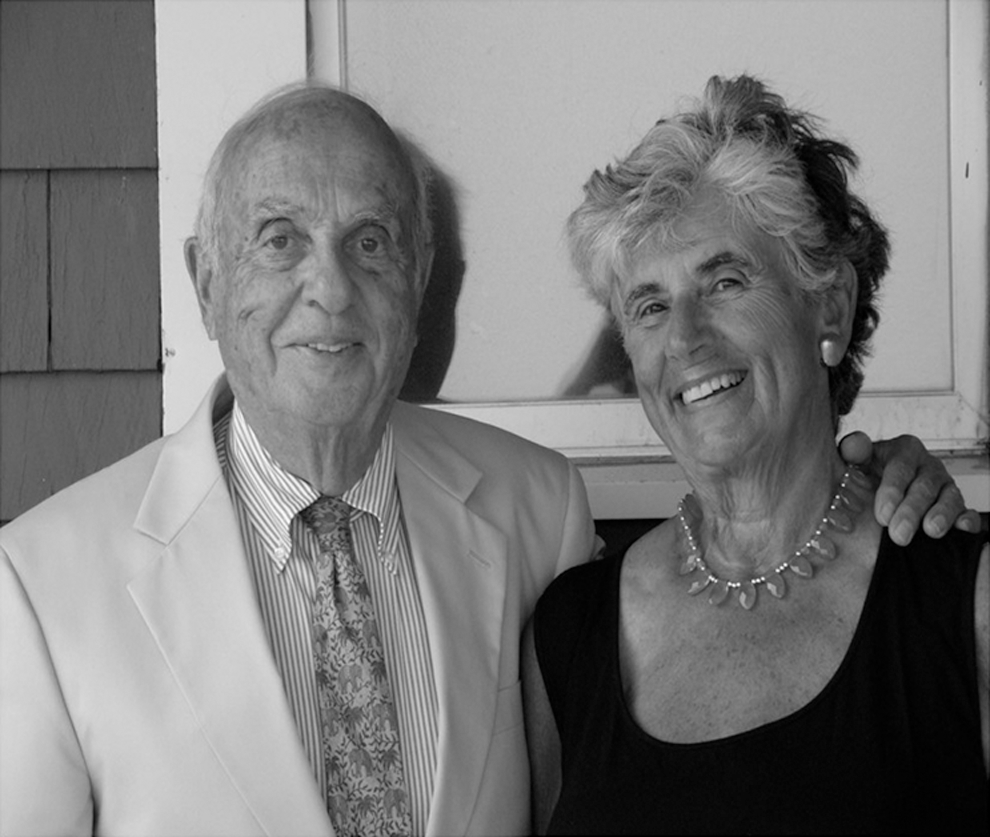
Lew and Mimi Braverman.
Lew taught me how to give a presentation. He recalled that when he presented his first oral abstract in the 1960s, he was excoriated by more senior scientists in the audience (happily, the ATA has become far more collegial and supportive of trainees since then). I must have presented my first oral abstract about 25 times for him before I ever got to the podium. By the time I knew he was satisfied, I no longer had any fear in the larger forum. It is possible to identify former Braverman fellows by their abstract presentation style: we always write out and read oral abstracts, and every abstract presentation starts with “Dr. (chair), Dr. (chair), members, and guests….”
Lew seemed to know absolutely everyone in the endocrine field. People loved him because of his genuine warmth—he would remember details about family members, and he never failed to ask about them. He was always quick to introduce his fellows to everyone in his circle. Before I even really understood the concept of networking, he had helped to create a large network for me. When I travel, even in the most far-flung regions, there is always someone who asks to be remembered to Dr. Braverman.
His warmth and caring extended to his patient care. Some of his patients followed him for decades when he moved around to different institutions in the Boston area. In some cases, he cared for thyroid disease across generations of the same family. His notes were always on paper (somehow, probably by sheer force of personality, he was the only physician in the hospital who managed to win a dispensation from the use of the electronic medical record). Having inherited some of his patients, I can attest that while his chicken-scratches provided basics regarding care plans, they always included a highly detailed social history, such as upcoming weddings and what children were doing. He routinely called his patients with laboratory results on Sunday mornings, typically starting at 7:00 a.m. Several patients have told me that the first time this happened, they bolted out of bed, convinced there must be a family emergency, but they eventually got used to this practice.
Lew proudly carried a silver pig key chain, which had been presented to him by former residents to commemorate his status as a male chauvinist pig. This gift likely related to language that could be painfully unevolved; he frequently referred to women as “chicks.” However, he was, in fact, hugely supportive of women's advancement in medicine. Unusually for someone of his generation, he understood and respected time constraints imposed by childcare arrangements. He made sure I had a private office as a second-year fellow so that I could pump breast milk for my newborn. He met my younger son before anyone else—after learning that I had had an emergency C-section overnight, he was quite worried about me and, at 6:00 a.m., managed to talk his way into the hospital recovery room (which was not, strictly speaking, open to visitors).
For years, all his fellows were invited with their families to visit his beach house in Gloucester in the summer. When he traveled to give talks, he invariably asked to meet with the endocrine fellows at every institution, so that his network of informal mentees was incredibly broad. He was fiercely protective of his fellows and of trainees in general, and he was immensely proud of his fellows' many accomplishments. He nominated me for the ATA's Van Meter award; I was the recipient in 2011, 48 years after he had been the recipient in 1963. Giving that lecture, with him and with my family in the audience, has been one of the most meaningful moments of my career. He told me last fall how much he wished he could have been present to see me installed as ATA president (also following in his footsteps; he held this office in 1984–1985).
Lew was a giant in the field of thyroidology, but he was also a spectacularly warm and caring human being. He will be profoundly missed by family, colleagues, patients, and by his large and grateful cohort of former fellows.
Elizabeth Pearce, MD, MSc
BMC, Boston University School of Medicine
Boston, Massachusetts
E-mail:
Dr. Braverman was a wonderful mentor, trusted colleague, and dear friend who will be deeply missed. This giant in thyroidology (belovedly referred to as Uncle Lew), one of the most humble and giving people I have ever known, is the primary reason that I am a thyroidologist. His influence and mentorship in the lives of so many, particularly trainees and early career faculty, will be a beautiful and lasting legacy.
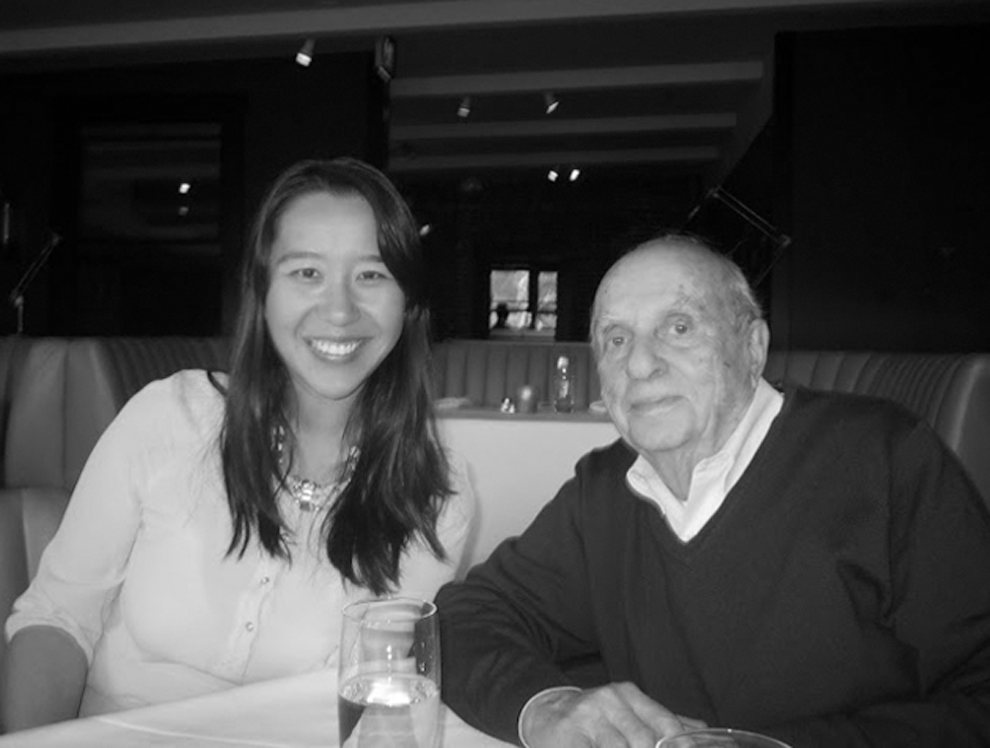
Angela Leung and Lew Braverman.
I had the good fortune of first meeting Dr. Braverman when he was the inpatient endocrine consult service attending, and I a second-year primary care–bound medicine resident on his service, at Boston Medical Center. Little did I know that the two-week elective would be so impactful—the experience turned into a decision not only eventually to change my career path, but also to develop an academic research career, in part stemming from a small dietary iodine questionnaire project that Dr. Braverman, along with co-mentor Elizabeth Pearce, encouraged me to pursue during that rotation. What wonderful adventures we have had since! The many tributes that have poured in over the past few months are a testament to his wide mark similarly on the careers and lives of countless others.
In the years that followed, throughout my endocrine fellowship and later as a junior faculty member at Boston University, my office was immediately next to Dr. Braverman's. I have innumerable memories of him drifting by just to chat, almost on a daily basis, over so many things. We also shared the same bus route to and from the hospital, and so oftentimes this wonderful friendship spilled into running to catch the #10 Copley Square bus in the morning or at the end of the day. His interest in others was genuine, and he made you feel like he had all the time in the world for you.
Dr. Braverman's ability to recall names and his memory of events were like no other, and he often delighted in telling stories of his growing up as a schoolboy in Quincy or nostalgically what life was like earlier in his career. He loved to talk not only about his patients and why their pathophysiology was so interesting, or about the paper we were writing (complete with his patiently going through each printed double-spaced page line by line, red marker in hand), or what we were going to present at the next ATA meeting, but also about our families (he knew the names of everyone in mine and often asked about them, even years later after I moved back to Los Angeles), the local news, national politics, life in Boston, and just about anything. His great love for Mimi, Billy, Danny, and his grandchildren was apparent. It is easy to recall the memories of the many summer trips when Dr. Braverman and Mimi so graciously invited everyone to Gloucester to spend a day at the beach.
Beyond the lasting effect of his mentorship and friendship, I will always remember Dr. Braverman for his special ability to extend kindness and instill warmth to whomever he met. It was such a privilege to have known him, and he will truly be missed.
Angela M. Leung, MD, MSc
Division of Endocrinology, Diabetes, and Metabolism
David Geffen School of Medicine
University of California Los Angeles
VA Greater Los Angeles Healthcare System
Los Angeles, California
E-mail:
Lew and I were friends and colleagues for more than 40 years. At the beginning of my career, he was my mentor; at the end of his life, he was my partner. He had major effects on my life and career at two pivotal moments. The first occurred in 1973 when, as a senior at Tufts Medical School, I took an endocrinology elective at St. Elizabeth's Hospital in Boston, where Lew was the Chief of Endocrinology and Nuclear Medicine. What I most vividly recollect was understanding, for the first time, how intimately the diagnosis and treatment of thyroid disease was related to nuclear medicine. Lew was so enthusiastic about teaching that it made learning from him almost contagious. I remember his excitement when he showed me a series of thyroid scans from patients with a variety of thyroid diseases: it provided a pictorial representation of the underlying disease process that still resonates with me today. It was at that point that I think I decided that thyroid disease was going to be my focus when I started my endocrinology fellowship three years hence. Subsequently, we would, of course, greet one another and speak briefly at meetings, but we did not have much contact until 2010, when Lew invited me to be his coeditor of the tenth edition of Werner and Ingbar's The Thyroid. I had contributed the chapter on the treatment of hyperthyroidism for several of the previous editions, and to be invited to be his coeditor was a great honor. Most recently, the publisher decided that an eleventh edition would be worthwhile, and it was through Lew's personal discussions with the publisher that this new edition, which hopefully will be published in 2020, got off the ground. Tragically, it was apparent to Lew that his failing health would not permit him to participate in the editing process as he would have liked, and it was Lew who recommended that we invite a third editor to partner with us. When Peter Kopp agreed to join our team, Lew was overjoyed that such a talented person would be assuming much of the work that had previously been assigned to him. I think that Peter's decision to join us in this project was a great relief to Lew, as he could now be assured that stewardship of this iconic textbook would be in good hands. I was able to speak to Lew just a week before he passed away, and as always he spoke to me about how regretful he was that he could not continue to work on this textbook.
So, Lew was an inspiration to me at the beginning of my career, and he was my friend and partner at the very end of his life and likely near the end of my own career. To be his friend as well as his close working colleague was a rare gift.
David S. Cooper, MD, MACP
Division of Endocrinology, Diabetes, and Metabolism
The Johns Hopkins University School of Medicine
Baltimore, Maryland
E-mail:
Almost 60 years have passed since I first met Lew in the hallowed halls of the Thorndike Memorial Laboratory at Boston City Hospital where we were both fellows with Dr. Sidney Ingbar. It was a great place to train, but for me it was definitely very intimidating. Even now, I can recall how Lew, with his characteristic combination of charm and wit, would lighten the atmosphere and make me feel truly part of the group. My late husband and I shared some very happy times with Lew and his wife Mimi while we were in Boston—times that we greatly missed after we moved to Dartmouth in 1961.
I do not think it is an exaggeration to say that one of Lew's scientific discoveries provided the impetus for much of my own research in the last 45 years. In 1970, he demonstrated unequivocally that T3 was formed from T4 in vivo in humans. This was a seminal discovery, and it opened a new era in thyroid research. In the early 1950s, T3 had been identified in the thyroid gland and circulation, and it was hypothesized to be the active form of the thyroid hormone. Although this was a very attractive concept, it soon lost its appeal because, despite much effort, conversion of T4 to T3 in vivo could not be satisfactorily demonstrated. However, the concept was revived after Lew and his colleagues reported their finding, and it soon became clear, on the basis of abundant evidence, that the hypothesis was correct. The deiodination of T4 was the topic that I had worked on in the 1960s but had subsequently tabled. Needless to say, my interest in it was re-ignited by Lew's report, and my work on the deiodinases has continued to this day.
Over the years, Lew and I have met regularly at meetings, and I served three years with him on the NIH endocrine study section. Meetings or sessions attended by Lew were never dull and were invariably enjoyable, especially if he was the person in charge. His keen intellect, coupled with his quick wit and tongue-in-cheek remarks that were always right on, would keep things moving along. He was always able to smooth ruffled feathers and prevent things from becoming contentious in his typically good-natured easy-going way. He was definitely one of a kind.
It is hard to believe Lew is no longer with us. I knew him as a young scientist, and I watched him become an outstanding and highly respected investigator with numerous publications to his name. He was a superb teacher and mentor, and he was both respected and loved by his patients. He has achieved and excelled in top positions both in his home institutions and in national societies due to his outstanding leadership skills. He really was a legend. But all of this aside, what stands out most to me about Lew was his unique personality and his love of and pride in his family. He will be greatly missed.
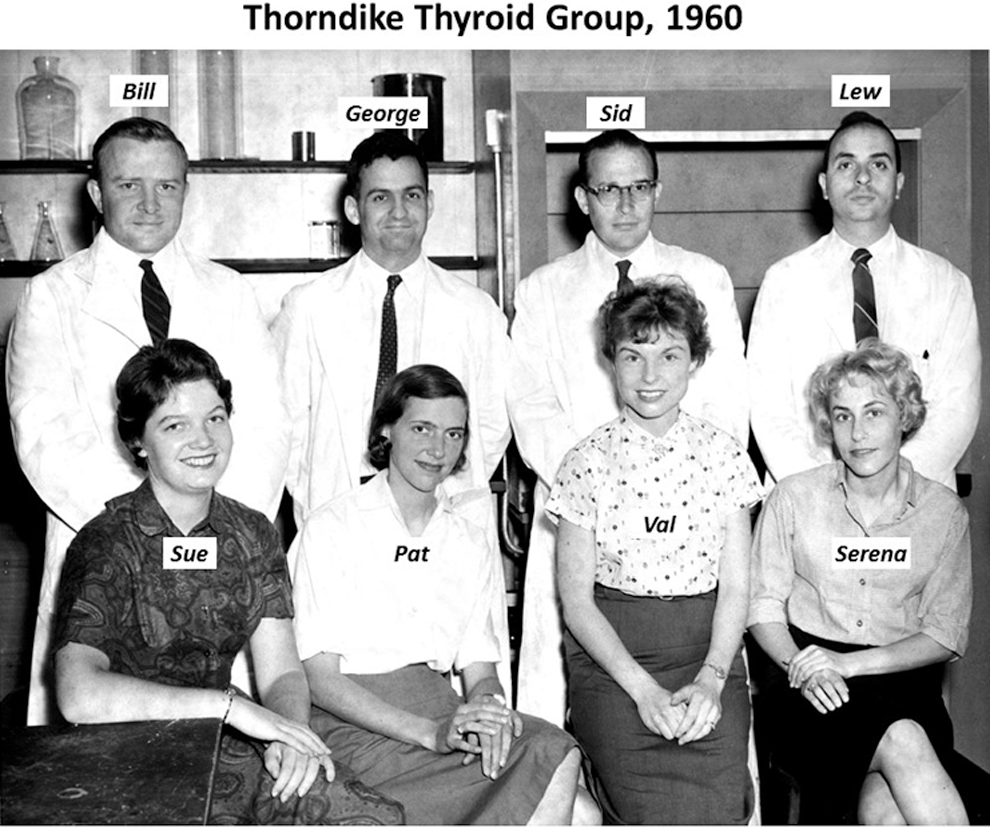
Thorndike Laboratory Group 1960. Top row: Bill Green, George Schüssler, Sidney H. (Sid) Ingbar, and Lewis E. (Lew) Braverman. Bottom row: Sue (Sid's secretary), Pat (technician), Valerie Anne (Val) Galton, and Serena (technician).
Valerie Anne Galton, PhD
Department of Physiology and Neurobiology
The Geisal School of Medicine at Dartmouth
Lebanon, New Hampshire
E-mail:
The Lew Who I Knew
All of us knew Lew as a clinician, scholar, mentor, and colleague par excellence. But I remember him most as a magnificent human being—a devoted husband and father, and a splendid friend.
From the former perspective, Lew had largely three major career phases. The first of these was at the old Boston City Hospital and Thorndike Laboratories where he worked with Sid Ingbar. Then, he went onward to his central years at St. Elizabeth's Hospital in Boston, followed by his activity at the new UMass Medical School in Worcester, where he helmed their Divisions of Endocrinology and Metabolism for many years. Finally, during his final two decades of a long career, he returned to his roots and became an active member of the Division of Endocrinology at BMC, initially as its head in 1999.
Over this career of more than six decades as a superlative clinician and scholar, his work has justifiably provided him a seat in the thyroidology pantheon, from his early work in T4 to T3 conversion and thyroid hormone activation, to his later work in iodine physiology and metabolism. Indeed, one cannot think of the thyroid field in this period without observing Lew and his overall impact on the field. From hamburger meat thyrotoxicosis to iodide sufficiency in Haiti due to the use of bouillon cubes—to cite a few of his more colorful contributions—he leaves an incredible legacy. A lasting testament to his position in the thyroid field was his long-standing co-editorship of the key textbook in the field, The Thyroid, initiated by Sidney Werner in 1955, first with Ingbar, starting with the fifth edition in 1987, and then with Bob Utiger for several editions, to the current iteration with David Cooper and Peter Kopp.
Despite these contributions, I am sure that Lew would say that his most satisfying and important achievement was helping his many patients with thyroid disease—some of them for decades. There are legions of folks and their families who are forever grateful for his expert and kind care through the years. Next would be his delight in teaching and mentorship. He has helped train and/or guide several generations of endocrinologists to delight in the thyroid and become leaders themselves. I can think of Charlie Emerson, Alan Farwell, Marjorie Safran, and Jack Leonard during his UMass years, and Elizabeth Pearce and Angela Leung during his BMC stint, to name just a few.
Colleagues were plentiful for Lew. He created and fostered partnerships with leaders in the field with ease and grace. In this regard, for instance, I think of Sam Pino and Joe Benotti who developed urinary iodide assays that laid the foundation for his lifelong work on the role of iodine in health and disease. Lew worked with them over his career. His collaborators came from all over the world, most notably Italy, Japan, and the Middle East. For instance, Aldo Pinchera, Enio Martino, and Elio Roti were key colleagues—again to name only a few. In 2003, Lew allowed us to honor him with a symposium at the 75th ATA meeting at the Breakers in Palm Beach, FL, on the occasion of his 70th birthday. A flood of students and colleagues, past and present, gathered to recount his contributions to thyroidology and to their careers/lives.
As another example, I invited him to join me in my laboratory at the Brigham and Women's Hospital in the late 1990s during his transition from UMass back to Boston. He wanted to be my “senior” fellow where he served instead as a great mentor and friend to many of my own trainees and junior faculty. “What do you want to work on, Lew?” I'd ask. He said without hesitation, “The Wolff–Chaikoff effect. I want to understand the molecular physiological basis for iodide load on thyroid hormone synthesis and secretion.” This led to our collaborative work showing that iodide downregulated the synthesis of the sodium–iodide symporter (NIS) in thyroid cells, thus helping to understand the mechanism of the iodide effect. I think he was very pleased with this study.
Now, let's get to my most important memories of Lew. One of these is Lew as a most devoted husband to Mimi—an art historian, an expert in classical art, and a Boston Museum of Fine Arts (MFA) docent among other things—and a most dedicated father to his sons, Billy and Danny. He was so proud of them; he could not stop talking about them, whether it was about where Mimi had recently traveled—Egypt, Greece, Turkey or India, for instance—or what his sons were doing and where they were in the world.
However, for me, my most cherished memory is Lew as a dear friend. For instance, I remember traveling with him to Bologna, Italy. On our way back to the United States via Milan, he insisted that we stop in Parma; he knew the place to get the finest Parmigiano Reggiano cheese. He graciously hosted my Harvard farewell dinner in the old garden courtyard at the Museum of Fine Arts in 1999. It was a grand event that I will forever remember and cherish with fondness. He was superbly caring of my wife, Denise, and my children, Sam and Danny. He was always asking how they were and if I was taking care of them adequately. Often joking but always caring. He would call home occasionally “looking” for me. Often, I'd be traveling. Denise would answer the phone and be quizzed, “Where is that no good husband of yours. Left you alone again? I'll talk to him.”
One of my last fond memories was dinner with Denise and Lew at the 15th International Thyroid Congress in Lake Buena Vista, FL, in 2015. As always, he was charming and delightful. He talked about his wonderful life with Mimi, splitting time on Beacon Street in Boston and in East Gloucester. He talked about how much he loved his work at BMC and hoped he could muster energy for more efforts ahead. No worries. He was truly tireless and productive to his final days.
In the end, Lew's lasting legacy is his humanity. His warmth, care, lovable sense of humor, boyish twinkle in his eye, and mischievous spirit are what I will miss the most. Ultimately, beyond his many achievements, he was both personal and personable. May you rest in eternal peace, Uncle Lew, my dear friend.
Bill Chin, MD
Bertarelli Professor of Translational Medical Science
Professor of Medicine Emeritus, Harvard Medical School
Boston, Massachusetts
E-mail:
I am most grateful for the privilege of contributing to an In Memoriam for Lewis E. Braverman, MD, Past President and Secretary of the ATA. Our task is challenging, not because there is so little to remember, but because there is so much.
The ATA had a special place in Dr. Braverman's heart. In 2015, he was interviewed by Dr. J. Woody Sistrunk who asked him what accounted for his interest in the thyroid gland. In addition to attributing this to his mentor Dr. Sidney Ingbar, he indicated that his father-in-law, Boston endocrinologist Dr. Samuel L. Gargill, was also interested in the thyroid gland. Dr. Sistrunk continued, “And so how would you say that the ATA enhanced your career?” Lew's answer: “In every way. The comradery that this organization has for its members, the knowledge that I learn every year when I come to the meeting, and in general, just the wonderful group of people, the leaders who are outstanding, and the young people who are coming into the organization.” Dr. Braverman, in turn, more than reciprocated the ATA's contributions, as he was the inspiration for the Lewis E. Braverman Distinguished Award. In fact, as Dr. E. Chester Ridgeway playfully noted at the start of the first Braverman award lecture, of all the ATA's six awards, the Braverman award was the only one that Dr. Braverman himself had not received.
In other organizations, Dr. Braverman's record was also stellar. He was editor-in-chief of two of the major general endocrine journals published in the United States (the Journal of Clinical Endocrinology and Metabolism and Endocrine Practice), and he received major awards from the Endocrine Society, the American Association of Clinical Endocrinologists, the American College of Physicians, and endocrine groups in Europe, the Middle East, and Asia.
Despite these accolades, Dr. Braverman is probably best remembered for his generosity and the warm relationships he developed. Moreover, Lew's personal and professional ties were not ones he jealously guarded. Although he was often the life of the party, he seamlessly fostered a spirit of inclusivity into such occasions. One of the greatest heritages I received from Lew was the opportunity to meet and work with many of the more than 70 endocrine trainees he mentored, as well as leaders in medicine, some of them also outside the thyroid field, such as Dr. Ronald Arky of Harvard Medical School. When I spoke with Ron after Lew's passing, I was not surprised to hear that he was among the many people who received frequent calls from Lew. Characteristically, Lew would use these calls to inform the person he was calling that he was their only friend, or if staff or family answered the call, he would quickly learn their names and interests, adding them to his circle of friends.
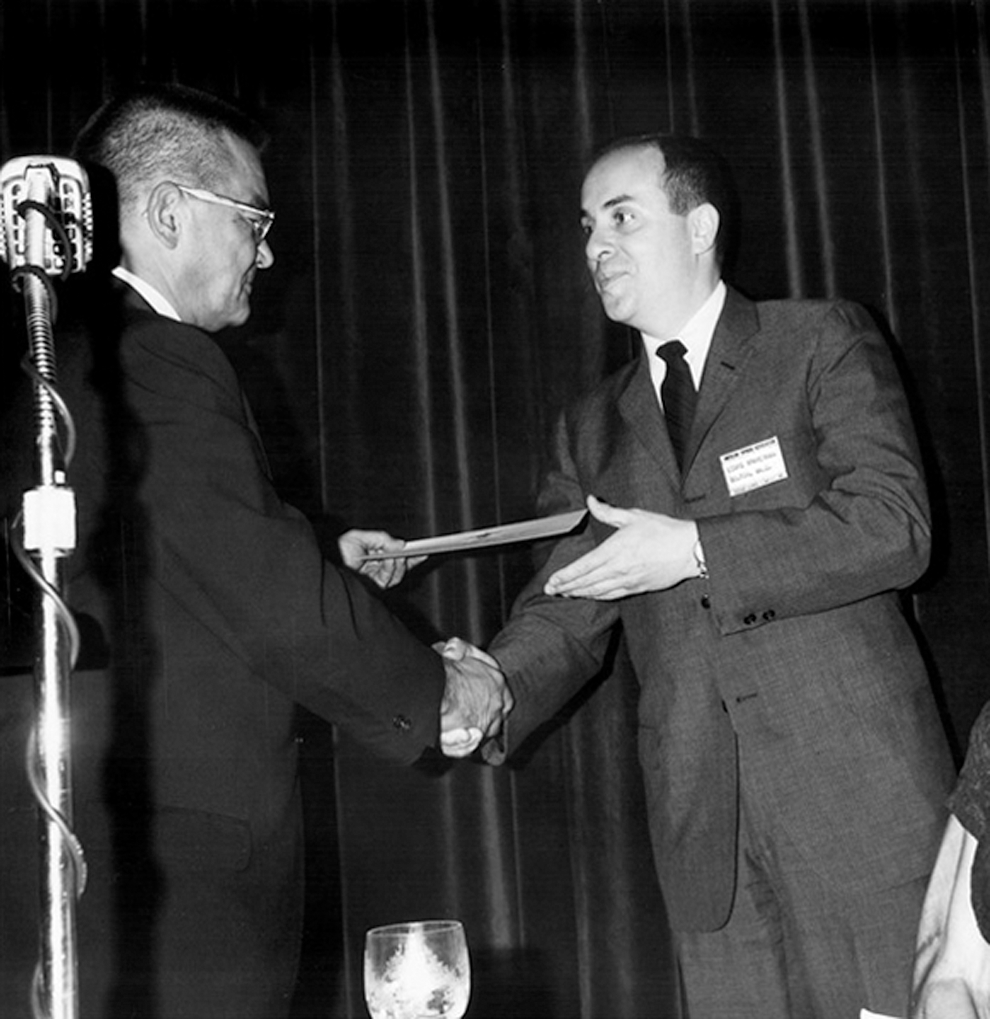
Lewis Braverman receives the 1963 Van Meter Award from Theodore Winship.
Another aspect of Lew's life that should not be forgotten was his passion for scientific research. During his early years in Worcester, he commuted on the Massachusetts turnpike from his Boston home with his close colleague Apostolos Vagenakis. This allowed ample time for intense discussions of the latest research. On one occasion, the two became so preoccupied with the problem at hand that it was not until they almost reached Springfield, many miles in the wrong direction, when they realized what had happened. Lew relished the discovery process, but he was only satisfied when a concrete goal was reached. Thus, after our first paper together was accepted, he took me aside and said, “This is what brings me joy.” Dr. Braverman's 496 publications listed in PubMed almost 30 years later attest to the substance and lasting validity of this remark.
Charles H. Emerson, MD
Professor Emeritus of Medicine
University of Massachusetts Medical School
Worcester, Massachusetts
Editor-in-Chief Emeritus, Thyroid
E-mail:
Prof. Lewis Braverman passed away in June 2019. We have lost a great thyroidologist, a passionate teacher, a tireless researcher, and an outstanding mentor of many fellows from all over the world. His textbooks have represented a fundamental tool for forming generations of thyroidologists, including ourselves.
Our friendship and scientific collaboration go back to the early 1980s, when Lew spent a sabbatical period in the laboratory of endocrinology at the University of Pisa, sharing with us a little room he called a “rat cage.” His initial project was to study some aspects of thyroid function in ob/ob rats. At that time, we had begun to study the effects of amiodarone on the thyroid. Lew was enthusiastic about this project because many patients were referred to us with amiodarone-induced thyrotoxicosis, while he saw mainly patients with amiodarone-induced hypothyroidism in his Boston clinic. After much lively discussion, we hypothesized that environmental conditions, namely iodine intake (deficient in Italy, sufficient in the United States), might be the reason for the different phenotype of amiodarone-induced thyroid dysfunction in the two countries. This proved to be true by measuring urinary iodine excretion, and it formed the basis for a pivotal study published in the Annals of Internal Medicine. However, more importantly, it was the start of a fruitful and constructive collaboration that continued for many years, exploring different aspects of the effects of amiodarone on the thyroid. During this long period of collaboration, we cherished his generosity, enthusiasm, sense of humor, and friendship. This was reciprocal, and we will miss him because we lost a part of ourselves.
We believe that the following sentence from the poem I Sepolcri—written by a great Italian poet of the 19th century, Ugo Foscolo—is the best way to remember Lew Braverman and to honor his legacy: Sol chi non lascia eredità d'affetti, poca gioia ha dell'urna [But those who leave no heritage of love, see little joy in the urn].
Enio Martino, MD
University of Pisa
Pisa, Italy
E-mail:
Luigi Bartalena, MD
University of Insubria
Varese, Italy
E-mail:
As a foreign graduate, I finished my internal residency in June 1972 at one of the teaching hospitals of Tufts University and was guaranteed a fellowship position for January 1973 by Prof. Astwood. However, on June 26, 1972, I had the honor of meeting Lew Braverman and decided to begin my fellowship with him on July 1, 1972.
How can one describe Dr. Braverman, a man who hugely tailored my views on scientific life, work, and many other things? I have never met someone equally impressive, smart, and grounded as Lew. He opened up new horizons and made me rethink and reorganize much of my scientific thinking, discipline, and collaborations, which had shaped my intellect. He spent hours sharing his knowledge, during discussions giving guidance on clinical and research issues during the day, and often spent many an evening at his home teaching me how to write scientific manuscripts.
Lew's legacy is carved in the hearts and minds of his students and of his peers as well. He has been and will remain an ever-flowing fountain and the origin of many rivers of knowledge in various parts of the world—a true giant in endocrinology.
Fereidoun Azizi, MD
Research Institute for Endocrine Sciences
Shahid Beheshti University of Medical Sciences
Tehran, Iran
E-mail:
Shortly after completing my fellowship training, my first laboratory research project was submitted to the Journal of Clinical Endocrinology and Metabolism—and was rejected. Despite the bad news, the letter signed by the Editor-in-Chief, Lew Braverman, whom I had never met before, had an encouraging tone, and he asked me to follow up with him. Through the ensuing exchange and the generous mentorship of Lew and others, the manuscript was thoroughly reshaped and got finally accepted. In hindsight, it is apparent that Lew gave me a private lesson on “how to write a paper.” We then met personally at my first ATA meeting in Chicago, and I was impressed by his warm personality and interest in not only my work but also my personal life, as emphasized by all who knew him. In the coming years, Lew became a role model and mentor, although we never worked at the same institution. In his comments about Lew during the first Lewis Braverman Award Lecture in 2011 entitled Mentors in Thyroidology, Chip Ridgway summarized the characteristics of a mentor: a trusted friend, counselor, or teacher, a more experienced person, someone who imparts wisdom and shares knowledge. That is exactly what Lew was to me. He always had time (or took the time) to listen and to provide wise and straightforward guidance, both in good moments and in difficult ones.
To be asked by Lew and David Cooper to join them as coeditors of Werner and Ingbar's The Thyroid remains one of the biggest honors in my professional life, and I regret that we could not finalize the current edition with him.
Last November, during a visit at his and Mimi's home in Boston, Lew was as sharp, lively, witty, and gracious as always, despite his physical ailments. Although the thyroid was of course also a topic of discussion, we reflected about many other facets of life. I left inspired by his humanity and his commitment to bring out the best in others and ourselves. Lew has left an impressive legacy as scientist and clinician—but most importantly, he has touched us and continues to inspire us by his generous humanity.
Peter Kopp, MD
University of Lausanne
Lausanne, Switzerland
E-mail:
and
Northwestern University
Feinberg School of Medicine
Chicago, Illinois
E-mail: