




Abstract
Deborah Doniach MD, FRCP was born in Geneva, Switzerland in 1912. She attended high school at the Lycée Molière and medical school at the Sorbonne in Paris. Deborah married Israel (Sonny) Doniach in 1933. After the births of their two children, she resumed her studies at the Royal Free Hospital Medical School in London, graduating in 1945. After additional training in Immunopathology and Endocrinology, Dr. Doniach joined the faculty in the Department of Immunology at the Middlesex Hospital and rose to become Honorary Consultant Immunopathologist and full Professor of Clinical Immunology. During her career, Deborah enjoyed a long and fruitful collaboration with the chemist and immunologist Ivan Roitt. From their partnership sprang the seminal discovery that Hashimoto's thyroiditis is an autoimmune disease in which circulating antibodies target thyroglobulin, a normal thyroid protein. In addition, they demonstrated a separate antibody cytotoxic to thyrocytes, later found to target thyroid peroxidase. These novel insights ran counter to the prevailing scientific dogma contending that antibodies target only nonself antigens. Thus, the field of research into thyroid autoimmunity, and indeed into autoimmune diseases in general, was born. This work spawned a cadre of future investigators whose studies define our current understanding of thyroid autoimmunity and the broader spectrum of autoimmune disease. In her private life, Deborah was a free thinker who defied conventional norms of the day. She was vivacious, warm, and genuinely interested in everybody and everything. Deborah Doniach died on New Year's Day, 2004 at the age of 91.
Introduction
The Clark T. Sawin Historical Vignette is a symposium held annually at the American Thyroid Association meeting in honor of the late Dr. Sawin, Professor of Medicine at Tufts University. He served as President of the American Thyroid Association and for many years energetically led the History and Archives committee. He was a distinguished physician and historian who made important contributions to the history of endocrinology, and particularly thyroidology.
The 2019 Clarke T. Sawin Historical Vignette consisted of lectures devoted to the lives and ground-breaking scientific contributions of two trailblazing thyroidologists, Drs. Deborah Doniach and Gabriella Morreale de Escobar. The current historical and scientific article evolved from the lecture regarding Dr. Doniach that was jointly presented by Drs. Rebecca Bahn and Sandra McLachlan. Much of the information contained in this article and discussed during the lecture was gleaned from the scientific literature and published obituaries of Dr. Doniach. In addition, Dr. Tabitha Doniach, Dr. Deborah Doniach's granddaughter and co-author on this manuscript, contributed invaluable personal recollections and reflections, family photographs, and content verification to both the lecture and this publication.
Childhood
Deborah Doniach (née Abileah) MD, FRCP, was born in Geneva in 1912 to Arieh Abileah, a Russian
Marriage and Career Progression
Deborah returned to Paris to attend high school at the Lycée Molière and later began medical school at the Sorbonne (Fig. 1) (2). In 1933, she married Sonny Doniach, who was completing his studies in medicine at University College, London. Deborah interrupted her medical studies and moved to London to join Sonny when their first child Sebastian was six months old. While raising Sebastian and their second child Vera, she learned English and completed her university entrance exam (Matriculation) in England.

The student Deborah Doniach (courtesy of Tabitha Doniach).
After the start of the second World War, during the bombing of London, the young family evacuated to Northwood, a northern suburb of London, where the hospital that Sonny was working in as a junior pathologist had been relocated (St Mary's Hospital, Paddington). Soon after they moved, Deborah was accepted at the Royal Free Hospital Medical School for Women, which had opened up enrollment to older students during the war. At 28 years of age, she was eager to restart her medical studies, and Sonny was supportive. The Royal Free Hospital was itself evacuated from London to Exeter for two years during the war, and the couple had to make the difficult decision to send their children to a boarding school while Deborah finished her training. She graduated in 1945 (Fig. 2).
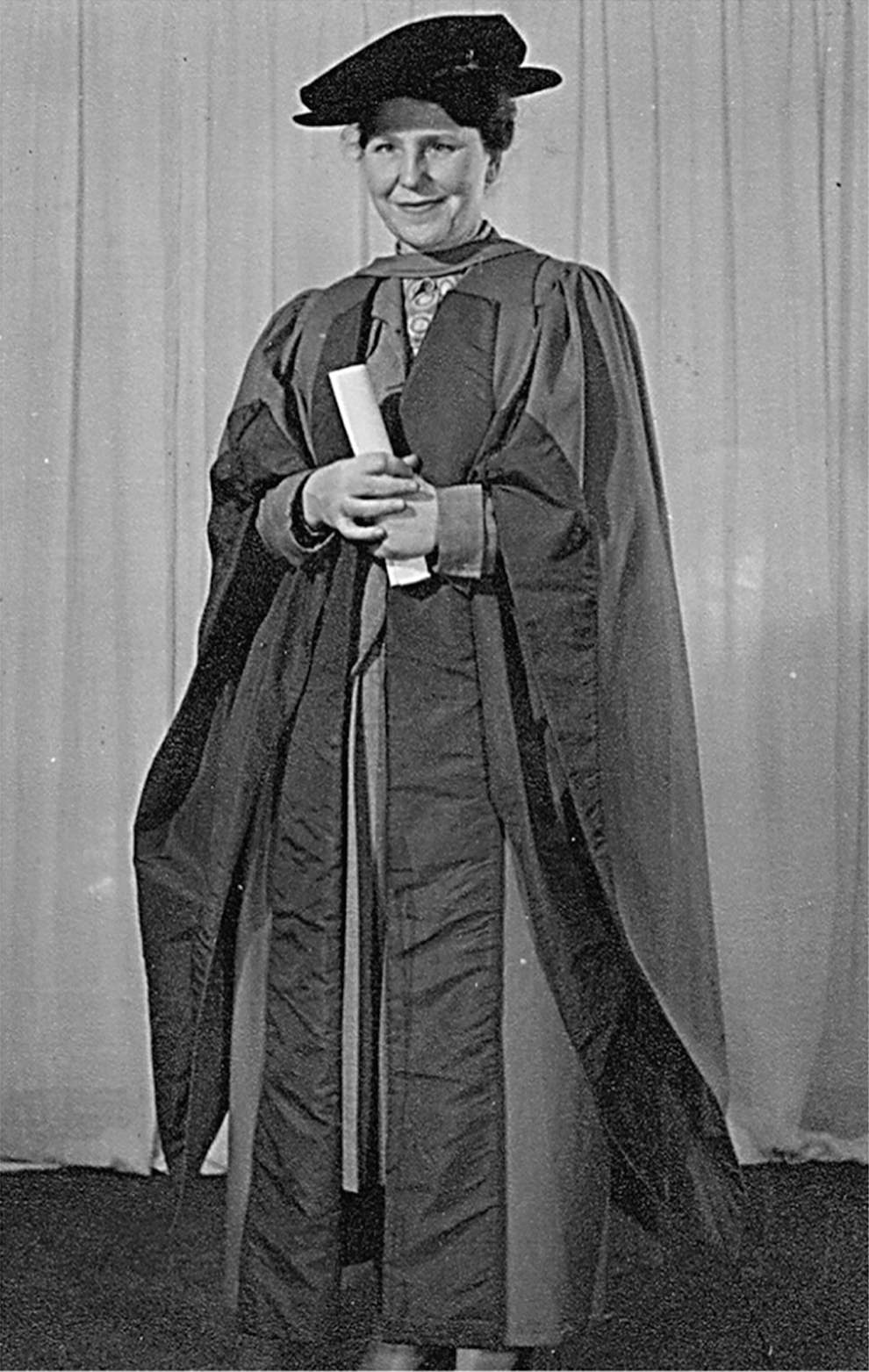
Deborah Doniach in 1945 on graduation from the Royal Free Hospital Medical School, London (courtesy of Tabitha Doniach).
Dr. Doniach subsequently served as junior medical officer, house physician, and surgeon in the London County Council service and as assistant lecturer in chemical pathology at the Middlesex Hospital (1). She was appointed to a research assistant position in the Pathology Department at the Royal Free Hospital in 1951 where she served as the director of the basal metabolic rate laboratory. She returned to the Middlesex Hospital in 1953 as a research assistant in Endocrinology under the supervision of the thyroid surgeon Rupert Vaughan-Hudson. While there she undertook a clinical trial of the use of the antithyroid drug carbimazole in preoperative patients. It was during this time that she developed a keen interest in both immunology and struma lymphomatosa or Hashimoto's thyroiditis (HT) and began a long and productive collaboration with the chemist and immunologist Ivan Roitt (3).
In the early 1960s, Dr. Doniach joined the faculty in the newly formed Department of Immunology at the Middlesex Hospital and rose during her career to become Honorary Consultant Immunopathologist and full Professor of Clinical Immunology (4). While she formally retired from that Institution at 65 years of age per British regulations, she maintained her participation in the laboratory for 10 more years, and continued publishing throughout the next decade (5,6). Sonny Doniach, Professor of Pathology at the London Hospital, was a renowned expert in cell growth, thyroid cancer, and the carcinogenic potential of radioiodine on the thyroid (7 –9). He and Deborah were happily married for almost 70 years until his death in 2001 (Fig. 3). They enjoyed discussing medical science and their research together, and they read The Lancet, Nature, and other journals to each other until the end of their lives. Deborah Doniach died on New Year's Day, 2004 at the age of 91. She is survived by her son Sebastian and five grandchildren and was predeceased by her daughter Vera.

Deborah Doniach and Israel (Sonny) Doniach in London circa 1955 (courtesy of Tabitha Doniach).
Interests, Family, and Friends
Deborah was a great lover of the arts. While her granddaughter Tabitha Doniach was attending graduate school in Cambridge, she and Deborah frequently attended art galleries and the theater together. She befriended young artists, and her London home and weekend cottage were ad hoc galleries of their works. Deborah was a free-thinker who defied conventional norms of the day. She and Sonny welcomed into their home a colleague who had been dismissed from a laboratory at University College, London for having a child out of wedlock. Their social circle included several gay and lesbian friends together with friends and acquaintances drawn from diverse cultures and social strata.
Deborah loved to travel, and she lectured frequently at meetings across Europe, India, Asia, and the United States. Her mentoring of junior colleagues was a particularly satisfying feature of her career. She maintained close and long-lasting personal and professional relationships and collaborations, among them being Ivan Roitt and Franco Bottazzo, as well as with medical school classmate Bridget Balfour (Fig. 4), who studied the role of “veiled cells” (or dendritic cells) in initiating immune reactions, and who with Deborah pursued fluorescent antibody studies in human thyroiditis (10).
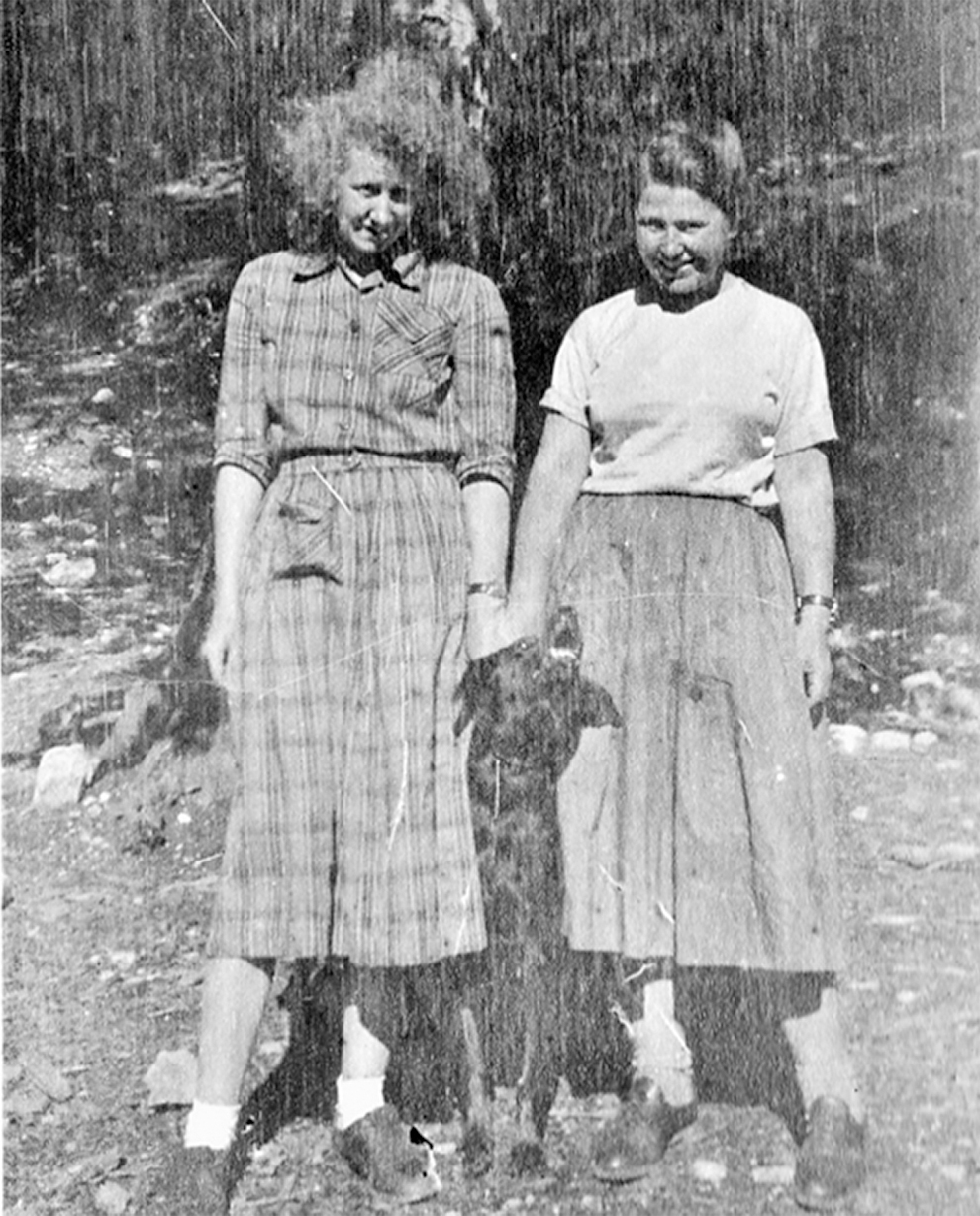
Deborah Doniach with her colleague and friend Brigid Balfour (courtesy of Tabitha Doniach).
Clearly enjoying a healthy work/life balance, Deborah's talents and interests extended beyond medicine. She was an excellent cook, an avid gardener, and had a fine soprano voice, singing in the Monteverdi Choir in London, and enjoying German leider when a pianist was available. She was a linguist, speaking no fewer than six languages, including Russian and Hebrew. In her 80s, she fed her passion for languages by studying Latin at University College. She was energetic, vivacious, warm, and genuinely interested in everybody and everything (Fig. 5). Her Sunday lunches for colleagues, friends, and neighbors at their country cottage in Hertfordshire were legendary. Deborah was widely read, including the works of Shakespeare, Freud, Byron, Molière, and the Dutch philosopher Spinoza. She was not known to be a shrinking violet and had strongly held opinions that she shared without fear; during lectures, she could be overheard giving her seat mates a critical running commentary (1).
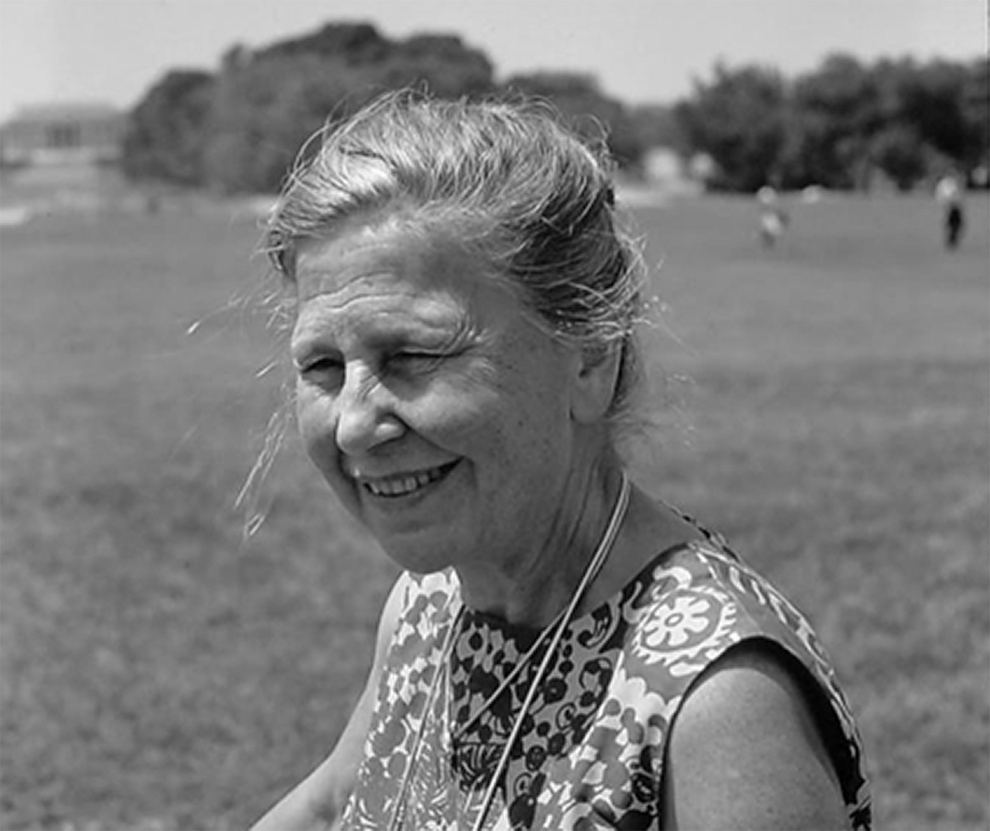
Deborah Doniach enjoying the sunshine in New York, circa 1967 (courtesy of Tabitha Doniach).
Scientific Precedent
In the scientific environment, Dr. Doniach entered as a young physician scientist, received wisdom, and stated that circulating antibodies recognize nonself, exclusively. This concept was heavily influenced by the German physician scientist Paul Ehrlich. In 1901, Ehrlich wrote that “The body possesses certain contrivances, by means of which the immunity reaction, so easily produced by all kinds of cells, is prevented from acting against the organism's own elements and so giving rise to autotoxins…so that one might be justified in speaking of a horror autotoxicus” (11). Indeed, Ehrlich would later be cited as saying that, “It would be dysteleologic in the highest degree, if under these circumstances self-poisons of the parenchyma—autotoxins—were formed” (12).
While early in the century scientists suspected that diseases of immunity might in fact exist, and certainly isoantibodies (formed by immunization with blood from another animal of the same species) were described, it was not until mid-century that autoantibodies were experimentally produced. In 1956, Noel Rose and Ernst Witebsky, both immunologists at the University of Buffalo, published a series of papers describing immunization of rabbits with homologous or autologous thyroid extract emulsified in Freund's adjuvant (an immunopotentiator) that enhances cell-mediated and antibody reactions. They showed that active immunization of rabbits with adjuvant plus extract of their own (or another rabbit's) thyroid results in the production of both anti-thyroid autoantibodies and intra-thyroidal lymphoid changes (13,14). Notably, animals developing the highest antibody titers demonstrated the most extensive lymphoid changes. Using a complement-fixation assay, they additionally showed that thyroids from previously immunized animals contained less thyroid antigen than found in normal glands, suggesting that the autoantibodies were specific to this antigen. Although Rose and Witebsky concluded that the results represented loss of self-tolerance to thyroid antigen, ironically they did not at the time appreciate this to be a model of HT. Indeed, Witebsky, the senior scientist, continued to hold the Erlich dogma that autoimmune disease was impossible and initially refused to believe the implications of their studies. He insisted on withholding the report for more than three years to repeat and extend the experiments in the futile search for an explanation not contradictory to Ehrlich's dictum (11).
The Seminal Scientific Discovery
Deborah Doniach was meanwhile working as a research assistant in Endocrinology at the Middlesex Hospital. While examining surgical thyroid specimens from her patients with HT, she noted that they contained numerous antibody-producing plasma cells (15). To study the systemic effects of thyroidectomy for HT, she performed pre- and post-operative serum protein electrophoreses. She found that the gamma-globulin protein fraction in the preoperative sera was elevated and that it fell to normal by three to four months after thyroidectomy, suggesting that some agent within the gland was the stimulus for the initial rise (16). In June of 1956, Deborah discussed her findings with Ivan Roitt, who with Peter Campbell was studying the possibility that autoimmune reactions to milk proteins might restrain the growth of certain breast cancers. Together they studied a photomicrograph from the Rose and Witebsky publication (13) of a thyroid gland from a rabbit immunized with thyroid extract. Because Deborah was in the habit of examining the HT glands of her clinic patients and discussing them with her pathologist husband Sonny, she was immediately struck by the abundance of plasma cells in the rabbit thyroid tissue with its histopathologic resemblance to human HT. Doniach, Roitt, and Campbell considered Rose and Witebsky's experiments and what they could mean with respect to Deborah's findings (16). Together they hypothesized that the elevated preoperative gamma-globulin fractions in her HT patient's sera might contain antibodies. If so, these circulating antibodies might have been produced by the intra-thyroidal plasma cells and may be directed against the thyroid itself.
Doniach and Roitt devised precipitin experiments by using extract of a thyroid gland freshly obtained from a Middlesex hospital operating room and sera of patients with HT that Deborah had collected in the clinic. They found that sera from preoperative HT patients formed precipitates with extracts of HT glands, while sera from patients four months after thyroidectomy did so only weakly. Sera from normal individuals and those with other conditions were negative. From this, they concluded that patients with HT are immunized against thyroglobulin (Tg), the most abundant protein in thyroid extract. They hypothesized that the destruction of the HT gland might be caused by an interaction between autoantibodies and Tg within the gland. They soon submitted a brief Preliminary Communication to The Lancet that was accepted within a week of its receipt (Fig. 6) (17). These novel insights gained Doniach and Roitt the 1957 Van Meter Prize from the American Goiter Association (now the American Thyroid Association). The publication accompanying that award lecture included an Ouchterlony agar gel plate experiment and additional precipitin reactions providing more direct evidence that HT sera recognize the thyroid antigen Tg (18).

Table from 1956 Lancet publication by Doniach and Roitt (17) demonstrating autoimmune etiology of HT. Sera from preoperative HT patients formed precipitants with extracts of HT glands, while sera from patients four months after thyroidectomy did so only weakly. Sera from normal individuals and those with other conditions were negative. Reproduced with permission from The Lancet. HT, Hashimoto's thyroiditis.
The year 1956 was marked not only by the discoveries of Doniach and Roitt (17) and Rose and Witebsky (13,14) discussed earlier but also by the equally notable publication by Adams and Purves in New Zealand demonstrating the presence of an “abnormal thyroid stimulator” in the sera of some patients with thyrotoxicosis (19). This factor, later termed “long-acting thyroid simulator” or LATS, was shown to be the thyroid-stimulating immunoglobulin responsible for the hyperthyroidism of Graves' disease (20,21). Thus, in the course of a single year, was the field of thyroid autoimmunity born.
In subsequent years, Doniach and Roitt demonstrated that cytotoxic antibodies, differing from anti-Tg antibodies, are also present in HT sera. They found that the cytotoxic effect of HT sera against cultured thyrocytes correlates with both its cytoplasmic fluorescent staining and its ability to fix complement (22). They further demonstrated specificity of the antibodies, as the cytotoxicity was unaffected by prior absorption of the sera with Tg, but it was abolished by preincubation with thyroid microsomal fractions (23). These HT-associated autoantibodies were later found to target thyroid microsomal antigen (24). The subsequent cloning of both thyroid microsomal antigen and thyroid peroxidase (TPO) demonstrated that they are the same molecule (25 –27) and permitted expression of recombinant TPO (28). This protein has proven invaluable as a source of specific antigen for clinical immunologic testing in patients with autoimmune thyroid disease as well as scientific investigation in the field.
Scientific Progeny
Deborah Doniach continued her extremely successful partnership at the Middlesex Hospital with Ivan Roitt for many years' time. They collaborated with other talented scientists and clinicians, including Keith Taylor, Dame Sheila Sherlock, Peter Campbell, Gianfranco Bottazzo (UK and Italy), Hemmo Drexhage (The Netherlands), and Ricardo Pujol-Borrell (Spain). These collaborations further advanced the field of thyroid autoimmunity and additionally revealed the autoimmune basis for numerous organ-specific diseases, including pernicious anemia (29), type I diabetes (30), and primary biliary cirrhosis (31). Other studies defined the role of growth-promoting and -inhibitory antibodies in thyroid conditions (32,33). Doniach and colleagues described aggregation of thyroid autoimmunity in families of thyroiditis patients (34) and her studies of the clinical and serological overlaps between various organ-specific and connective tissue autoimmune diseases greatly increased our understanding of the genetics and development of the broad spectrum of immune disease (35,36). Doniach's autoantibody assays, developed initially for use in her own patients and research studies (17,37), have been in later iterations adopted worldwide as routine clinical diagnostic tests.
Doniach received numerous awards, prizes, and honorary degrees during her career, including the aforementioned 1957 Van Meter prize of the American Goitre Association, the 1964 Canadian Gairdner award for advances in medical sciences (both jointly with Roitt), the 1967 British Postgraduate Medical Federation prize, and the 1984 “Woman Scientist of the Year” from the Association of American Women Scientists.
In conclusion, it is worth considering reasons for the half-century hiatus between the time scientific dogma that dictated the impossibility of self-antigen recognition to the eventual discovery of an organ-specific autoimmune disease by Doniach and Roitt. This might be, in part, explained by the early absence of chemical and technical tools, including Freund's adjuvant and chromatographic techniques, which eventually made possible the fundamental experiments by Rose and Witebsky. Also crucial for this leap in understanding was the combination of Doniach's keen clinical observation skills, inquisitive mind, and willingness to challenge dogma and the basic science expertise and insight of Roitt. This collaboration brought forth the paradigm-changing recognition that HT is an autoimmune disease (17,18) and spawned a cadre of future investigators whose studies define our current understanding of thyroid autoimmunity and the broader spectrum of autoimmune disease.
Footnotes
Acknowledgments
The authors are indebted to Drs. Ricardo Pujol-Borrell and Hemmo Drexhage for their personal recollections and reflections.
Author Disclosure Statement
No competing financial interests exist.
Funding Information
No funding was received for this article.