




Abstract

D
We report the therapeutic sequence of a 73-year-old female patient diagnosed at the age of 15 with papillary thyroid cancer. A late recurrence 44 years after the initial thyroidectomy required cervical lymph node dissection, followed by five RAI treatments (cumulative dose of 18.5 GBq [500 mCi]) due to miliary lung metastases. Five years after the last 131I therapy, pulmonary metastasectomy and ribs resection were performed due to limited disease progression. A year later, progression of bone and thoracic metastases required systemic treatment. Molecular screening identified only a fusion gene (NCOA4-RET), and treatment with the new selective RET inhibitor selpercatinib was initiated (4). Diagnostic scintigraphy performed before selpercatinib confirmed RAI refractory disease (Fig. 1). A new diagnostic RAI scintigraphy performed 3 weeks after the initiation of selpercatinib (160 mg twice daily) showed restoration of RAI uptake. A therapeutic RAI dose was administered 2 weeks later and redifferentiation was confirmed on post-therapy scan with RAI uptake in all fluorine 18 fluorodeoxyglucose (18F-FDG) avid lesions. Given the high volume of the disease, selpercatinib was continued after RAI therapy. The evaluation 6 months after RAI therapy showed partial metabolic response on positron emission tomography 18F-FDG (there was no target lesion according to response evaluation criteria in solid tumors [RECIST] on computed tomography). Suppressed thyroglobulin at 6 months was 441 μg/mL versus 253 at baseline, which could be explained by a redifferentiation effect of the treatment.
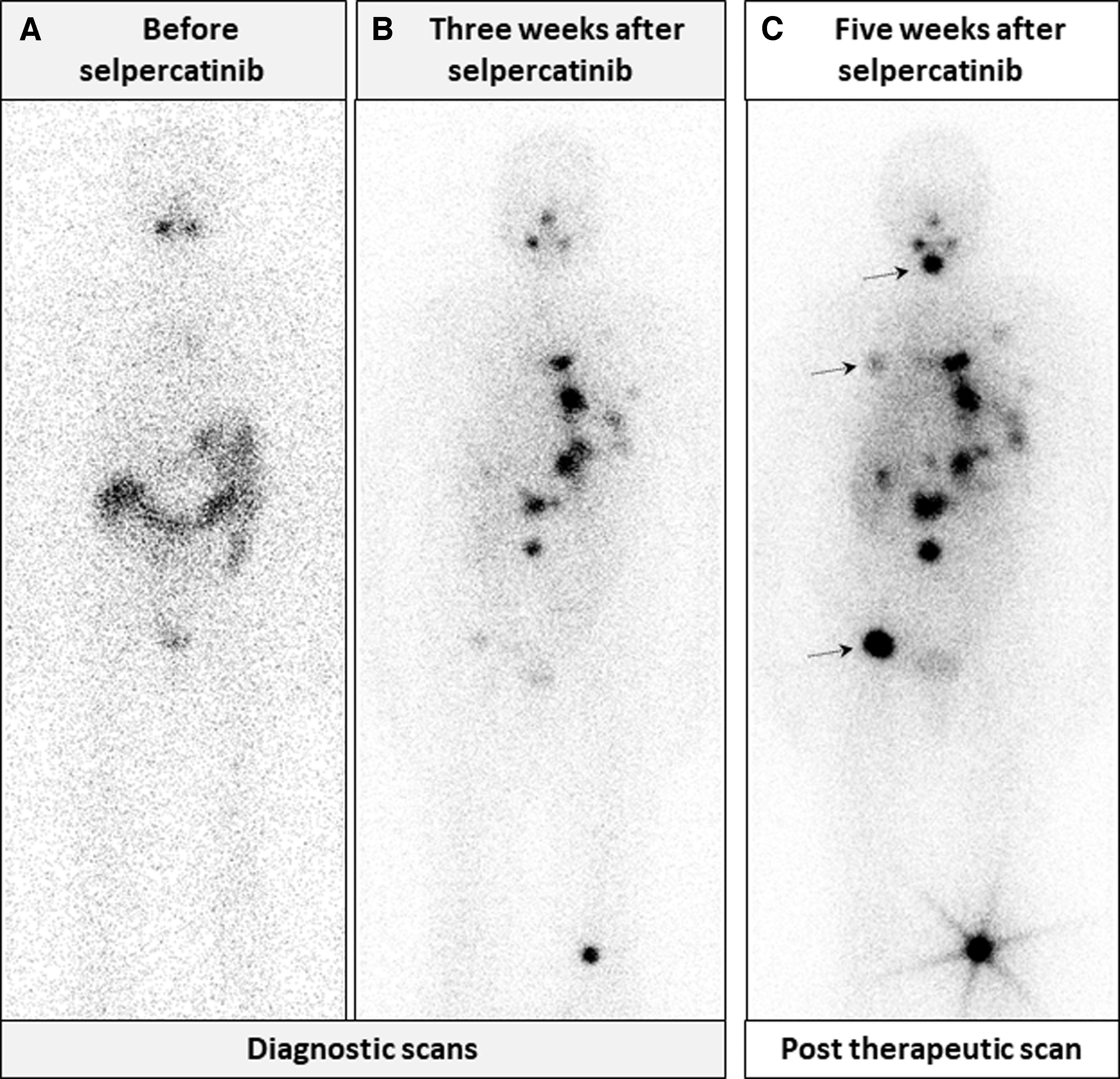
Post-iodine 131 scans obtained before and after selpercatinib treatment.
This finding of a redifferentiation effect with selpercatinib targeting a RET fusion gene reinforces the proof of concept of this new therapeutic opportunity. Therefore, future clinical trials and treatment strategies should evaluate the redifferentiating effect of drugs targeting gene rearrangements. Furthermore, the combined approach with a targeted therapy and RAI may increase antitumor efficacy and minimize acquired resistance to RET inhibitors (5).
Footnotes
Authors' Contributions
All authors have taken part in writing the article, reviewing it, and revising its intellectual and technical content.
Author Disclosure Statement
No competing financial interests exist.
Funding Information
No funding was received for this article.