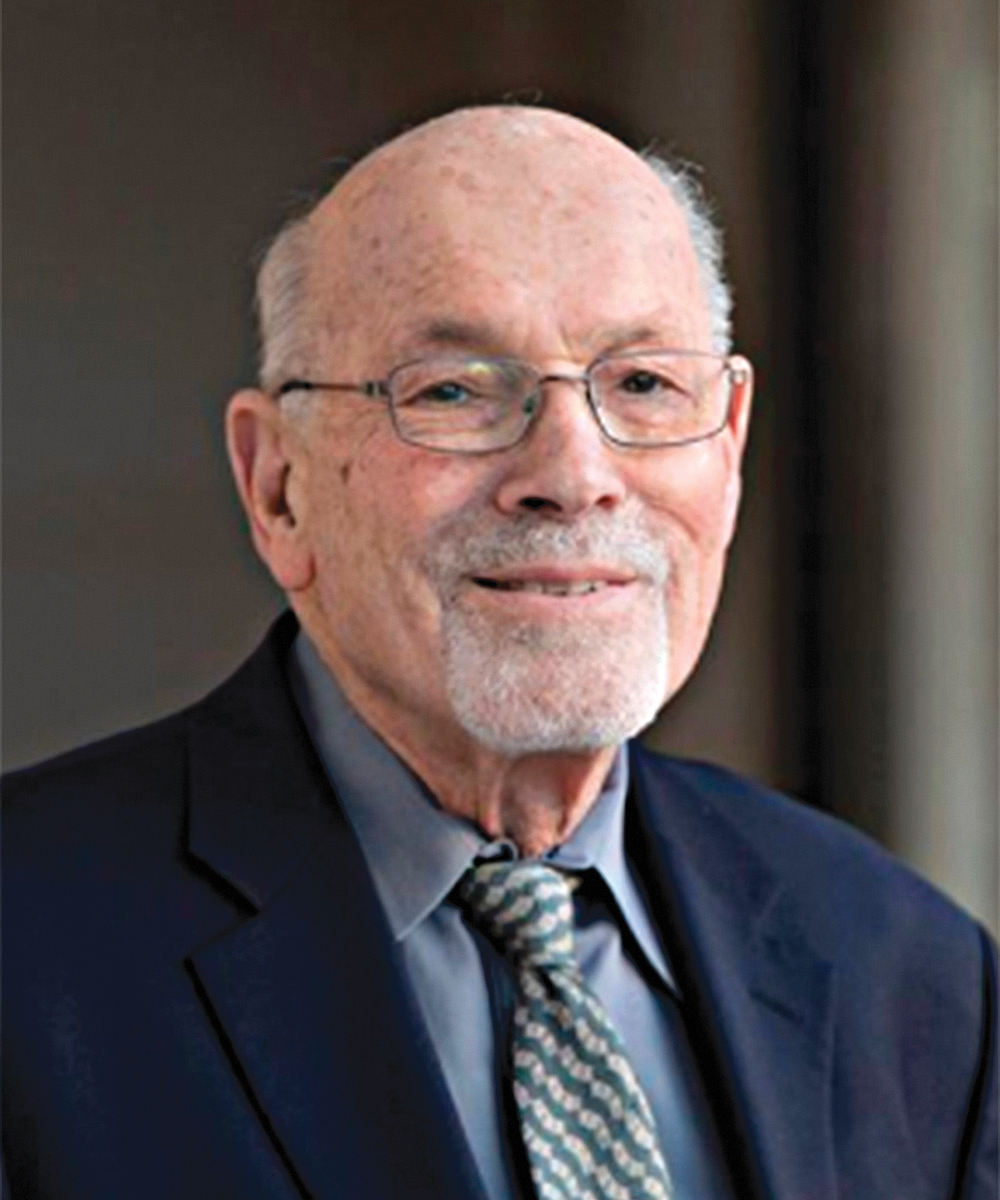
The Interview
Dr. Terry F. Davies: Thank you Marty for agreeing to talk about yourself and your career. Let us start with where you come from…
Dr. Martin Surks: Thanks for persisting in getting me to talk. My paternal grandfather came from Hungary to New York City in the 1890s, this may or may not have been related to Pogroms against Jews at that time. He worked as a waiter all of his life and had three sons—the eldest was my father born in 1906, one brother with IDDM, and a third—my uncle Sy who became an MD and who I much admired as a child. Father dropped the “e” in Surkes since it sounded to him like “circus.” He worked in a trucking business at the New York City docks.
Dr. Davies: So you had a middle class upbringing?
Dr. Surks: My sister Barbara and I had a very modest upbringing, first in Bensonhurst in Brooklyn and later in Queens. There I eventually had a Bar Mitzvah and went to Stuyvesant High School in the City. This was a 70-minute commute to a great school, but which I found isolating at home since the other kids went locally. But I learned music and twice played the French Horn in the All City Orchestra at Carnegie Hall—no recordings available I am afraid!
Dr. Davies: So college was next?
Dr. Surks: Yes, I went to Columbia University as an undergraduate. I commuted home to save expenses but still had a wonderful experience. In 1956 I then chose to go to New York University (NYU) for medicine. NYU felt very comfortable to me and I had a great education although I recall no mention of the thyroid at all! But there were great lectures from famous Nobelists including Severo Ochoa and Otto Loewi, and also Homer Smith was there.
*
Dr. Davies: Did this entice you into research?
Dr. Surks: No. I still had no notion of what academia was all about. Saul Farber was chair of medicine at NYU and was always pushing students to work in the laboratories over the summer but my friends and I wanted to have the summer off!
Dr. Davies: So now it was time for residency?
Dr. Surks: Yes and I wanted a general medicine training—a mixed internship including surgery.
Dr. Davies: That is what we had in the United Kingdom as the first internship year. I was good at holding the retractors at thyroid surgeries!
Dr. Surks: Exactly. These are great experiences. In 1960, I interviewed at Montefiore and was impressed by a lot of activity—they had a clinical research center even then and just the sort of mixed rotation that I wanted at the time.
Dr. Davies: So you were still not interested in endocrinology?
Dr. Surks: Let me tell you how I did become interested in endocrinology. We worked every other night and one morning I had to deal with a 50-year-old male patient with worsening mental deterioration and a left foot Babinski sign. I ordered a skull X-ray and as I was looking at it, a voice behind me pronounced “I see you have a case of hypoparathyroidism.” It was Jack Oppenheimer
†
—he showed me the basal ganglia calcification and helped us work up the patient. We were able to measure his calcium that was found to be < 6.0 mg/dL.
Albright had published cases of pseudohypoparathyroidism (6,7) and so we performed the Ellsworth–Howard Test
‡
using a crude parathyroid extract. We first had to check that the PTH was bioactive so we self injected it and showed that our calcium levels increased. We then went to the patient's house to give the injections and his calcium did not go up. And so was born my first publication (8). This of course also drew me to work for the next few years with Jack Oppenheimer whenever I could escape clinical duties. So while in the second year of residency, I soon became busy measuring serum thyroid binding proteins that we found to be influenced by penicillin, and this was my second article (9).
Dr. Davies: You were also at the then famous Bronx VA around this time were you not?
Dr. Surks: I was anxious to see more general medicine and went to the VA for my third year of residency. Julius Wolf was the chair of medicine who enticed me there and Ken Sterling was the section chief. I already knew Rosalyn Yalow
§
because of my recent work with radioisotopes and also got to know Solomon Berson,
**
who I came to admire a great deal although we never worked together. I also met Jesse Roth and Sy Glick who had just developed the growth hormone immunoassay. So after the residency, I wanted to return to my earlier studies with Jack Oppenheimer and more endocrinology research.
Dr. Davies: So you did a clinical fellowship in endocrinology?
Dr. Surks: There were no fellowships in those days. As you know I have spent a lot of time working with APDEM
††
and the formal fellowships now are a necessary upgrade in training because of the expansion in our knowledge and the expectations placed on physicians. But I had to learn by apprenticeship—no doubt like you also—I needed experience and exposure to clinical cases.
Dr. Davies: I know that in 1964 you started 2 years in the US Army…that must have interrupted your plans.
Dr. Surks: Not really because I had already signed up as an intern and went in as a captain, but instead of going to Walter Reed as I had expected, I was sent to Denver, Colorado. It turned out that I had a great time and since I wanted to continue my research with radioisotopes, they pushed me into researching stress and high altitude. The Chinese army was stationed in Tibet and acclimatized at 14,000 ft and the Indian army was not trained for such conditions and ran into trouble. So they wanted me to look at the physiology of great heights. I ended up using the top of the Pikes Peak mountain as a laboratory, and this resulted in new insights into thyroid physiology
‡‡
, and the importance of high-altitude training (10,11).
Dr. Davies: So your army duty ended and you had to decide what to do with your life—right?
Dr. Surks: Right. Not so easy then. Not so easy now either. I had an offer to go into practice with two MDs who admitted patients to Montefiore and treated patients in the office with radioactive iodine! But I obtained a small grant
§§
to continue my work on hypoxia (12), so I was torn between practice and academia. I finally decided to go fulltime at Montefiore and set up my own laboratory and I was still able to collaborate with Jack Oppenheimer. This went on very productively
***
until 1976 when Jack moved to Minnesota.
Dr. Davies: So after Jack moved, you then began a long stint as division chief at Montefiore.
Dr. Surks: Yes—thanks to the chair of medicine—David Hamerman—a rheumatologist—who recruited me. He was a wonderfully kind and intelligent chair.
Dr. Davies: And during these years you still had a productive research laboratory as well as a heavy clinical and teaching load. I know you like to divide your contributions into two phases, the primarily laboratory-based studies and then later the more clinical studies.
Dr. Surks: Yes, the laboratory studies are now quite distant in my long life and while I worked very hard on them, my memory of their details is more hazy than I would like. They started of course with my work with Jack Oppenheimer who was a brilliant scientist. We were particularly interested in the transport and metabolism of thyroid hormones, looking at their distribution and binding to nuclear sites in the liver (13,14). Remember that thyroid hormone receptors were not defined at that time, in the early 1970s, and we were still evaluating thyroxine (T4) to triiodothyronine (T3) conversion (15) and showing that T3 was the primary hormone (16,17).
We also found low T3 levels in nonthyroidal illness (18). There were many articles in those years concerning the nuclear thyroid hormone receptors. After Jack left Montefiore, I became much busier in the clinical realm but we continued to make some significant laboratory contributions on thyrotropin (TSH) regulation by TRH (19
–21) in addition to T3 receptor studies and its stimulation of DNA synthesis (22,23) and early studies with now defined T3 receptors (24).
Dr. Davies: Yes, this is a veritable history of the discovery of thyroid hormone action and thyroid hormone receptors. From your resume it looks as though your clinical phase started to dominate around 1991 with notes on the management of hypothyroidism and then concern over the normal range for TSH (25).
Dr. Surks: Well, my laboratory research wound down and ended around 1995; I was not so competitive with the advancing techniques by then. Clinically, we looked at many drugs that affected thyroid function and testing, which resulted in a review in the NEJM on the influence of drugs on thyroid function (26). Then I became interested in what is often called subclinical hypothyroidism and first noted by the late Joe Hollowell in the NHANES survey (27), and this led to the 2004 guidelines (28), the first set to deal with this “disorder.” Our review with colleagues in Israel supported my contention that this abnormality was overtreated and poorly treated (29,30).
I became friends with Joe Hollowell after meeting at the annual sessions of the American Thyroid Association, and in 2007 we published what I think is the definitive article on the changing normal range for TSH with age (31) and confirmed in other studies that extreme longevity is associated with elevated TSH levels (32) and also influenced by race (33). I suspect, in particular, that these are genetic traits including those tied to a long life (34).
Dr. Davies: So you must have saved many patients from being overtreated?
Dr. Surks: Exactly right.
Dr. Davies: You have been heavily involved in the American Thyroid Association throughout your career. Which year were you president?
Dr. Surks: It was in the year 2000—you were busy interviewing Bob Volpe! 1 Like many, I played multiple roles in the ATA over many years and am pleased to see it continue to flourish.
Dr. Davies: Does the ATA have a future? There seem to be multiple societies and groups going off to do their own thing such as with thyroid cancer and autoimmunity!
Dr. Surks: Before being president, I was also secretary of the ATA, and Manfred Blum was the treasurer and we kept the cost of membership low so that our numbers grew. By the way we were also concerned about the closeness of the ATA to industry and we put some distance between them and us. The ATA does seem to have returned to its origins with a greater emphasis on cancer and surgeons rather than thyroid physiology, but this may just be part of a cycle.
Dr. Davies: And you had also changed direction again to some degree around the time you were busy with the ATA?
Dr. Surks: Well, in 1998, the endocrine divisions at Montefiore and Einstein had become fused. Norman Fleischer, who was at Einstein, and the most wonderful colleague you could have, became the division chief for endocrinology and metabolism, and I became the combined fellowship director with eight fellows. I had long been interested in the training of fellows including their examinations and also took part in studies of workforce needs, which in hindsight underestimated the growing needs caused by mostly the need for better diabetic care (35), and we also published a report on their curriculum needs with APDEM.
Dr. Davies: And you managed the fellows for 20 years!
Dr. Surks: Right and enjoyed all of it. Now I am only part time and go into Montefiore 2 days a week. And still enjoy it.
Dr. Davies: And what are you up to now?
Dr. Surks: Well I live with my wife, June, to whom I have been married for >30 years, and we have a small farm in south Salem. June is a very active artist, designer, and landscaper. You know that we keep red kangaroos because we have often talked about them. Right now we have a 15-year-old Ruby who is a female, we have Fenwick who is a neutered 7-year-old male who we actually call Fenny and who only turns red in warm weather and young Lily who is a 2-year female. We adore them. We also have a pond outside full of goldfish and koi that seem to continue to get larger and larger!
Our 4 children have been very successful and wonderful (Howard—an MD in Biotech, daughter Ravyn a civil engineer, Philip a high school science curriculum supervisor, and David who is in IT) and there are 4 grandchildren with 1 in particular (William) who wants to be a physician and who would be a 4th generation physician in our family. I also have many local activities especially with the South Salem Volunteer Fire Department, but I no longer go out on emergency calls!
Dr. Davies: Looking back Marty over a long and very productive career with >200 publications, there must be certain findings that you think were most important.
Dr. Surks: I think the TSH article with Joe Hollowell that reconceptualized the reference range for normal TSH levels was a really important contribution (31). It avoids misclassification and overtreatment with T4 for many, many patients. I am proud it was a major finding made in my 70s with no grants and with no help! It shows you that experience remains really valuable as you well know! I want to also mention that I was just part of a long chain of investigators at Montefiore and I published an article on the history of thyroid research at Montefiore from 1920 that (36) may well interest you and your readers.
Dr. Davies: Thank you so much for this story Marty. I have really enjoyed it and learned a great deal from you—just as I expected. In my view you are one of our great teachers and you have been able to show your important findings to the world by your eloquence and modesty. You underestimate your scientific contributions that have been seminal. The observation of low T3 in critical illness and the effects of drugs on thyroid function tests are also major contributions to clinical care. I am so glad I pushed you into this conversation. Time for some tea! Or is it time to feed the roos?