




Abstract
This article presents the design and applications of a rescue terminal with positioning, vital signs sensing, and communicating function for special environment. The terminal provides three-dimensional positioning functionality via China's Beidou 1 Navigation Satellite (BD1) System and can collect users' vital signs with a set of wireless sensors. A controller of the terminal is in charge of processing data collected from the wireless sensors and communicating with the monitoring platform. With features such as small sizing, low power consumption, and accurate positioning, this terminal is very helpful in special circumstances such as disaster relief, dangerous outdoor sports and adventure monitoring, and antiterrorism activities.
Introduction
The location and vital signs monitoring of rescuers, the rescued, and the staff working under the special environment are very important. However, the conventional means of communication is often nonexistent or easily damaged while working in the area of mountains, deserts, jungles, islands, and other special circumstances. Natural disasters such as earthquakes, floods, debris flow, typhoon, and hailstone can also cause wired or mobile communication network outage, which makes disaster relief very difficult to conduct. People interested in outdoor adventure usually go to wilderness areas lacking regular mobile network coverage; consequently they can hardly get help in case of an accident. People working on oceangoing vessels have to face the threat of disease and poor medical resources, and so they hope the sick people can be remotely monitored by medical institutions for their health. In these cases, one of the most reliable communication means is a satellite system. All these situations call for a portable satellite terminal, which can provide accurate positioning functionality and vital signs monitoring.
Modern medical and rescue facilities are developing very quickly because of the rapid change of information and communication technologies. Medical equipment for assisting rescue efforts in disaster relief 1,2 and monitoring dangerous outdoor sports and adventure 3 are developing in the direction of “accurate positioning,” 4 “telemonitoring,” 5 and “fast rescue.” However, there are few mature products with fast positioning and remote monitoring in the market; consequently, the market has an unmet demand for this kind of product. 6 This article presents a low-power and portable terminal, as an application of China's Beidou 1 Navigation Satellite (BD1) system, integrating the functions of positioning, vital signs collecting, and short message sending/receiving.
Design of the System
This terminal consists of a terminal controller with positioning and communicating functionalities and a set of wearable wireless vital sign sensors. Vital signs are collected by sensors and sent to the terminal controller, which will then communicate with the monitoring platform and send positions and users' vital signs information to the monitoring platform via BD1 system. In the monitoring platform, a server processes signals from the terminals, monitors the positions of terminals, analyzes, and displays the vital signs for causalities.
The terminal controller consists of a user interface module, a control module, a Beidou satellite communication module, and a power supply module. The terminal controller is designed as a small box, which is very close to an iPhone. The positioning chip provides a 10 m precision positioning capability with power consumption of 10 W while transmitting. The power supply module, which takes the largest space of the whole box, can provide 24-h battery life after fully charged. Figure 1 shows the modules of the terminal controller.
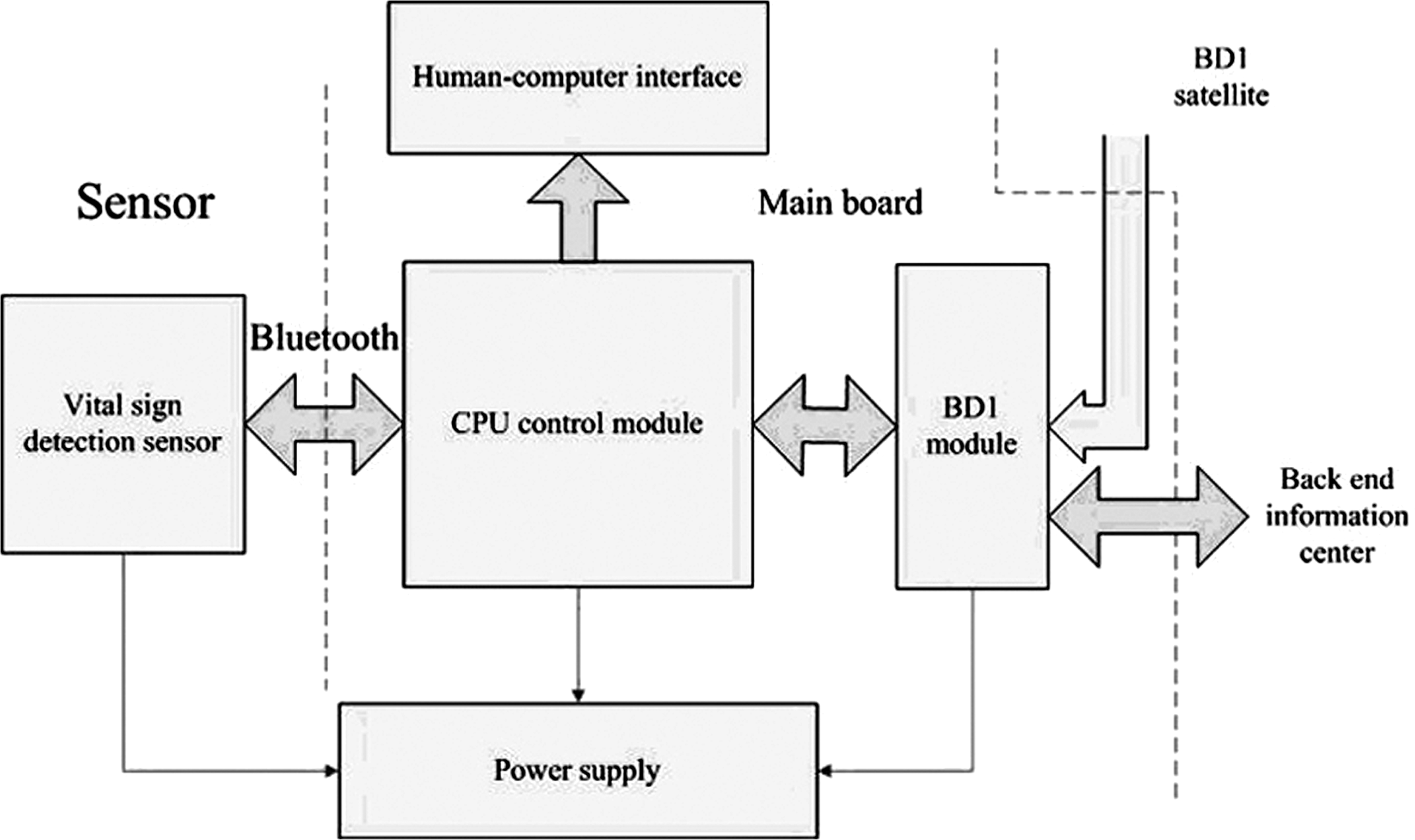
Components of the terminal.
The BD1 module is in charge of communicating with the BD1 satellite system for positioning and short message sending/receiving. The BD1 system is like the global positioning system of the United States. It can quickly locate the people who are wearing the terminals with high precision and strong reliability, regardless of weather and environmental conditions. 7,8 One difference between BD1 system and global positioning system is that BD1 has short message communication functionality in addition to positioning functionality. Its navigation and communication integrated together is the greatest innovation. In other words, BD1 system can not only know “Where am I?” but also know “Where are you?” “Where am I?” can achieve self-positioning; “Where are you?” can facilitate the command of commanders. The BD1 system is compatible with the standard of the International Committee of the Global Navigation Satellite System and the International Telecommunication Union. The BD1 system is not private for China. On the contrary, it was designed to be open and to provide free and high-quality service and is planned to build global coverage around 2020. Figure 2 illustrates current coverage of the BD1 system.
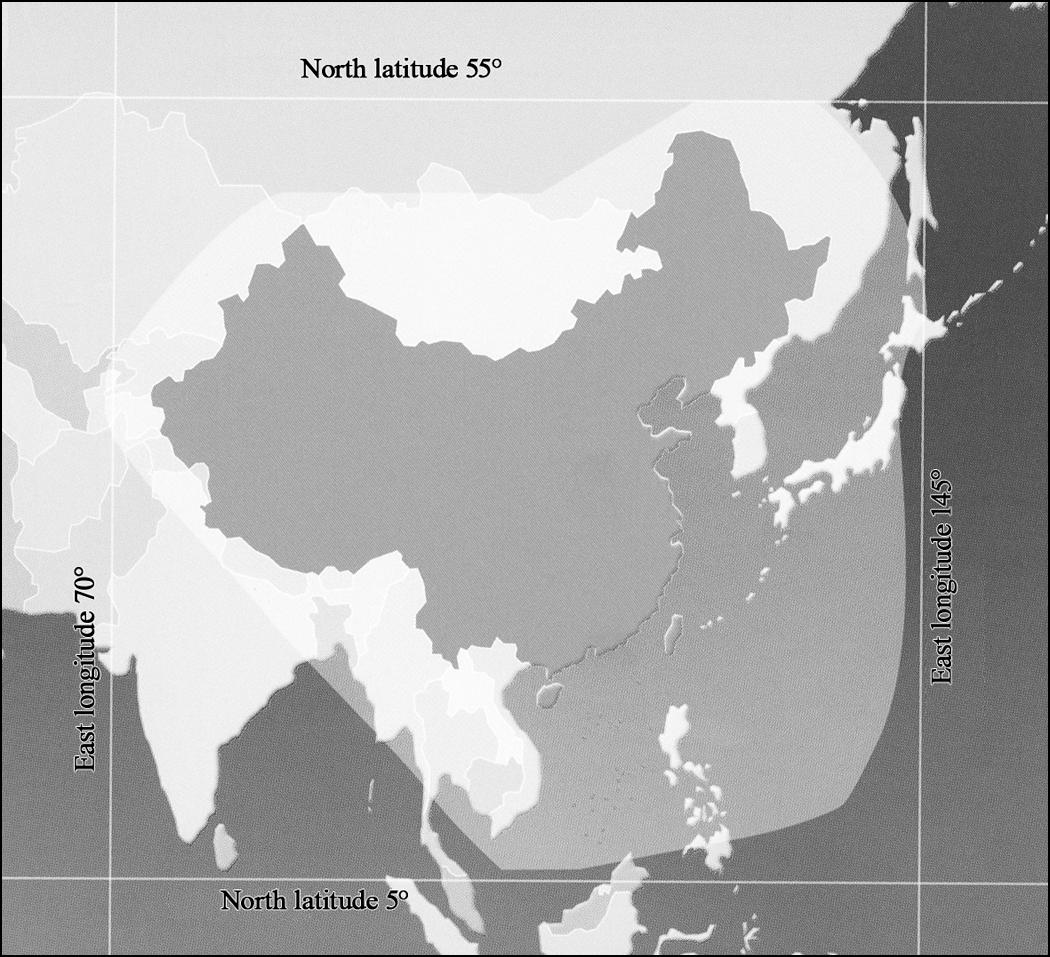
The current coverage of the BD1 system: east longitude 70° to 145°, north latitude 5° to 55°.
The wireless sensors are all placed in a belt, so that these sensors can be worn directly by users and not affect users' regular activities. The sensor belt is small and durable, so that a number of belts can be easily carried and will not take up too much space. The sensors communicate with the terminal controller via a Bluetooth connection, which is provided by the SMD Bluetooth module using Bluecore GC-02CLASS2. 9 Figure 3 shows a sample of the sensor belt.
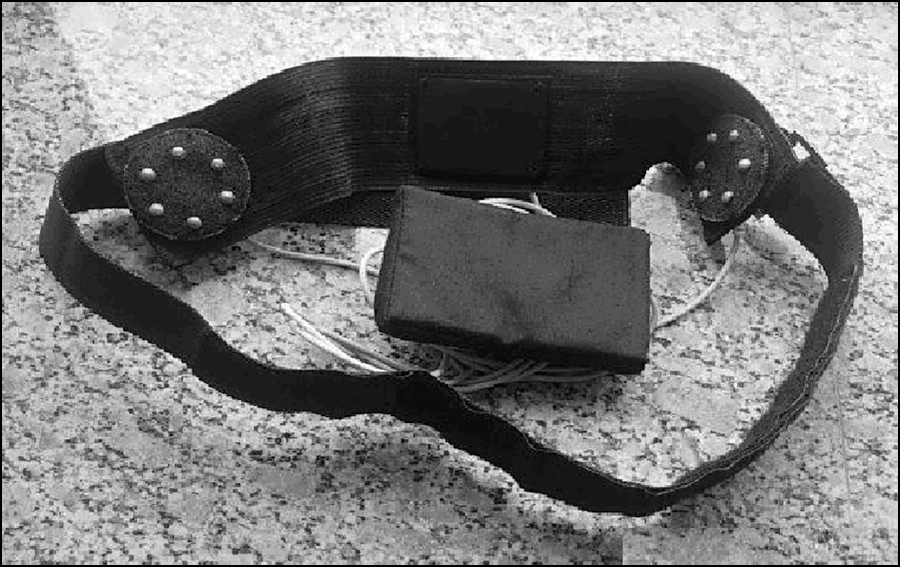
Sensor belt.
These sensors collect the most important vital signs information, such as electrocardiogram, respiration, and body movement.
The approach of measuring electrocardiogram is to utilize silver chloride electrode in the sensor belt to obtain voltage signals without the need for special electrode paste.
The approach of measuring respiration is to convert the human body's slight pressure into voltage signals through a pressure sensor.
The approach of measuring body movement is to use a three-dimensional acceleration sensor to sense the displacement and movement of the waist.
The software system provides 2 different running modes: initiative reporting mode and passive query mode. In initiative reporting mode, the terminal sends the position data and vital signs data to the monitoring platform regularly, whereas, in passive query mode, the terminal sends the data only when the monitoring platform requests the data. The monitoring platform can adjust the running mode according to actual situations. The user can also press an alarm button to let the terminal controller to report a prioritized message, so that the monitoring platform may respond immediately. Figure 4 shows the control flow of the terminal controller in the terminal.
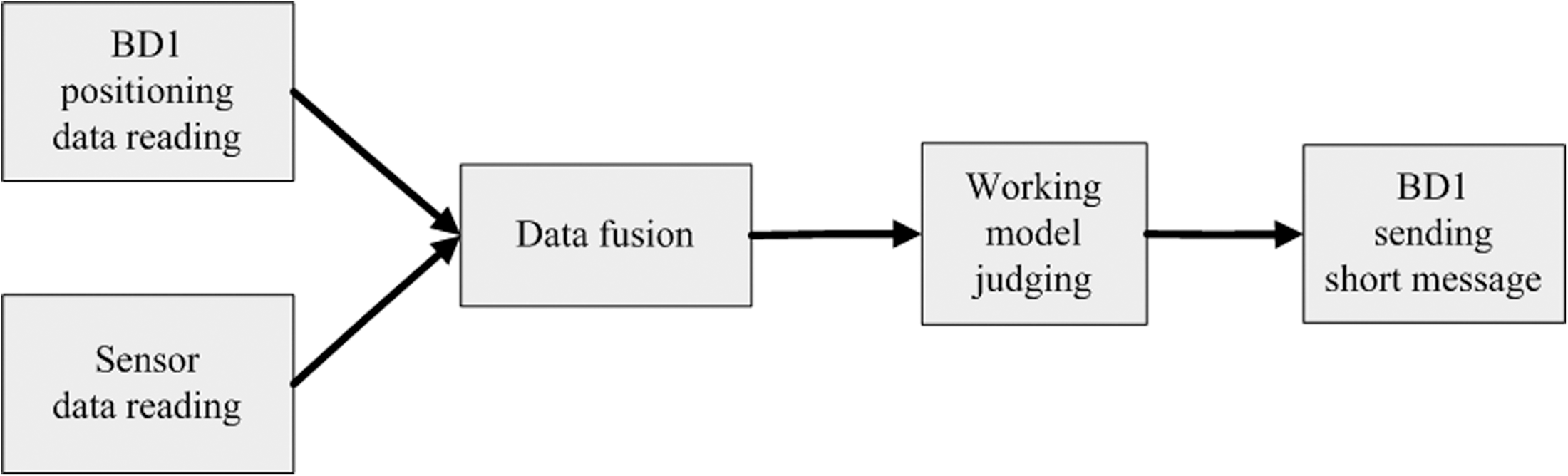
Control flow of the terminal controller in the terminal.
Application Descriptions
This system can be used in special mission units under special circumstances. Some examples are given below and Figure 5 shows the application descriptions.
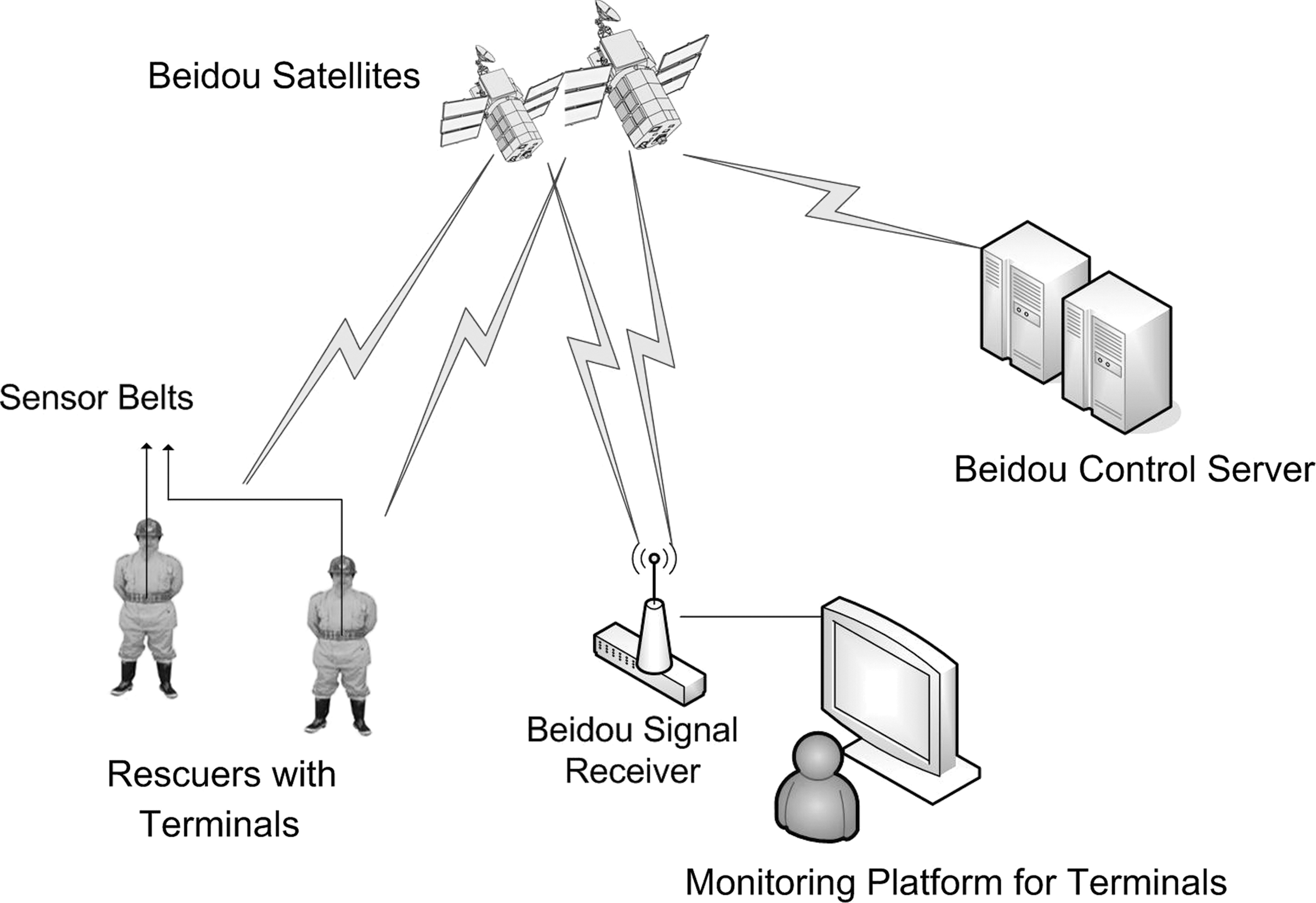
Application descriptions.
Disaster Relief
In a disaster relief activity, rescuers can take the terminals to the relief site. They can wear the sensor belts for themselves or let the wounded they found wear the sensor belts to monitor their vital signs status. With the vital signs information and position of the wounded and rescuers clearly monitored, the command center can have better control of wounded people searching, rescuing, sorting, and transferring. An application case is disaster relief for Wenchuan earthquake, which took place in Sichuan, China, in May 12, 2008.
Field Trip, Dangerous Outdoor Sports, and Adventure
Outdoor sports such as mountaineering, rock climbing, skydiving, and skiing are dangerous because of the changing field environment. Wearing this terminal can protect the sportsmen because it can timely report their vital signs status to the relief center and can give the accident location for fast relief. People participating in adventure activities also need this kind of service because they usually enter wilderness without regular mobile signals. Further, people taking field trips can also get protection by this terminal. In case of accident while camping (poisoning, wild animal attack, sickness, and injury), this terminal can tell that the person wearing it needs help and can help the rescuers to locate him/her.
Antiterrorism
Antiterrorism activities in a complex environment are dangerous for antiterrorist fighters. To monitor their status every second, and to conduct first aid when they are shot, a soldier can wear this terminal when in battle. With the terminals worn by each soldier, the positions and health status of them can be timely delivered to the control center, and then the commander can analyze the combat situation and can give better control of the whole activity.
Remote Health Monitoring
As this terminal can provide vital signs and position information for the monitoring platform, this system is also very suitable for conducting remote health monitoring. Patients with cardiovascular disease or other illness in remote area, where mobile network does not cover, can be remotely monitored. People working or living in islands, mountain areas, and oceangoing vessels, where mobile network is not available, can all benefit from this kind of remote health monitoring service.
Conclusions
We present a rescue terminal with positioning and vital signs sensing in a casualty monitoring system for special circumstances. It utilizes the function of BD1 system to support positioning and monitoring for casualty relief, dangerous sports monitoring, and other similar applications. The system architecture, the communication system, and the monitoring platform of the terminal are briefly introduced. Some applications are also given to show its significant value.
Footnotes
Acknowledgments
The work described in this article has been funded by Military Medical Research Fund (08G119), National Natural Science Foundation of China (60873067), and Electronic Information Industry Development Fund ([2006]634).
Disclosure Statement
No competing financial interests exist.