




Abstract
Teledermatology via a free public social networking Web site is a practical tool to provide attention to patients who do not have access to dermatologic care. In this pilot study, a general practitioner sent consults to a dermatology department at a general hospital via Facebook®. Forty-four patients were seen and treatment was installed. We identified both simple-to-treat, common skin diseases and rare congenital diseases that require genetic counseling and more complex treatment. The majority of patients (75%) benefited with the diagnoses and treatments offered, thus avoiding unnecessary expenses or transportation to urban areas.
Introduction
Telemedicine is the practice of healthcare delivery and is especially useful in those specialties in which image interpretation is key for the diagnosis, such as dermatology. Teledermatology has impressively grown over the last several years. It is a very useful tool in countries where the majority of the population does not have access to specialist care because of distance, costs, or lack of specialists in rural areas. 1 It allows patients to be accurately diagnosed and adequately treated, thus diminishing costs, referral waiting times, and morbidity/mortality of the disease. 2
Two different approaches are widely used: the store-and-forward and the live interactive consulting. Both have been shown to be equally effective in dermatology, 2,3 but store-and-forward is much easier to perform, has more flexibility, and does not require costly equipment. Studies have shown that between 18.5% and 31% of specialist visits can be avoided when store-and-forward teledermatology consultation is available. 2,4 Previous studies have found good agreement rates (from 86.6% to 91%) between personal consultation telemedical diagnosis by dermatologists, 5 except for pigmented lesions. 6
One of the main difficulties for successful teledermatology are complex platforms or Web sites, which decrease the number of consultations sent by the primary care physicians and also decrease participation of dermatologists. Interactive Web-based social networking services such as Facebook® allow free and easy sharing of data between people, they are very user-friendly and widely used, and thus could make access and use easier for both parts involved in a teledermatology consult. One of the main concerns with using these social networks is the security of the uploaded information, but current settings allow for the pictures and information being sent to be viewed only by selected users. We present in this work the results of a pilot teledermatology study via Facebook between a general practitioner at a rural clinic and a group of dermatologists at a reference hospital. To our knowledge, this is the first report of a social networking Web site being used for teledermatology.
We wanted to see the viability of a store-and-forward teledermatology project between a rural clinic and a tertiary hospital where the images and clinical data were transmitted via an available free networking Web site (Facebook). We wanted to evaluate the following points:
1. The quality of the digital images in the Web site and the feasibility of making a diagnosis through them.
2. The efficacy of the treatments indicated.
3. Impact of the project on patients' benefit.
4. Identifying areas of opportunity and needs to improve the project and expand it in the future.
Materials and Methods
Dermatologic patients at a rural clinic in a small island were seen by a general practitioner, who took digital pictures and uploaded these and relevant clinical information to the Web site. There were several pictures of each patient and the history and important clinical information of the disease was written as a comment below. The pictures and data were analyzed by dermatologists, who could ask additional questions and, once the information was complete, suggested diagnoses and treatments (Fig. 1). The identity of each patient was unrevealed and only the physicians who were part of the teledermatology consult could see the pictures. This was performed for 3 months.
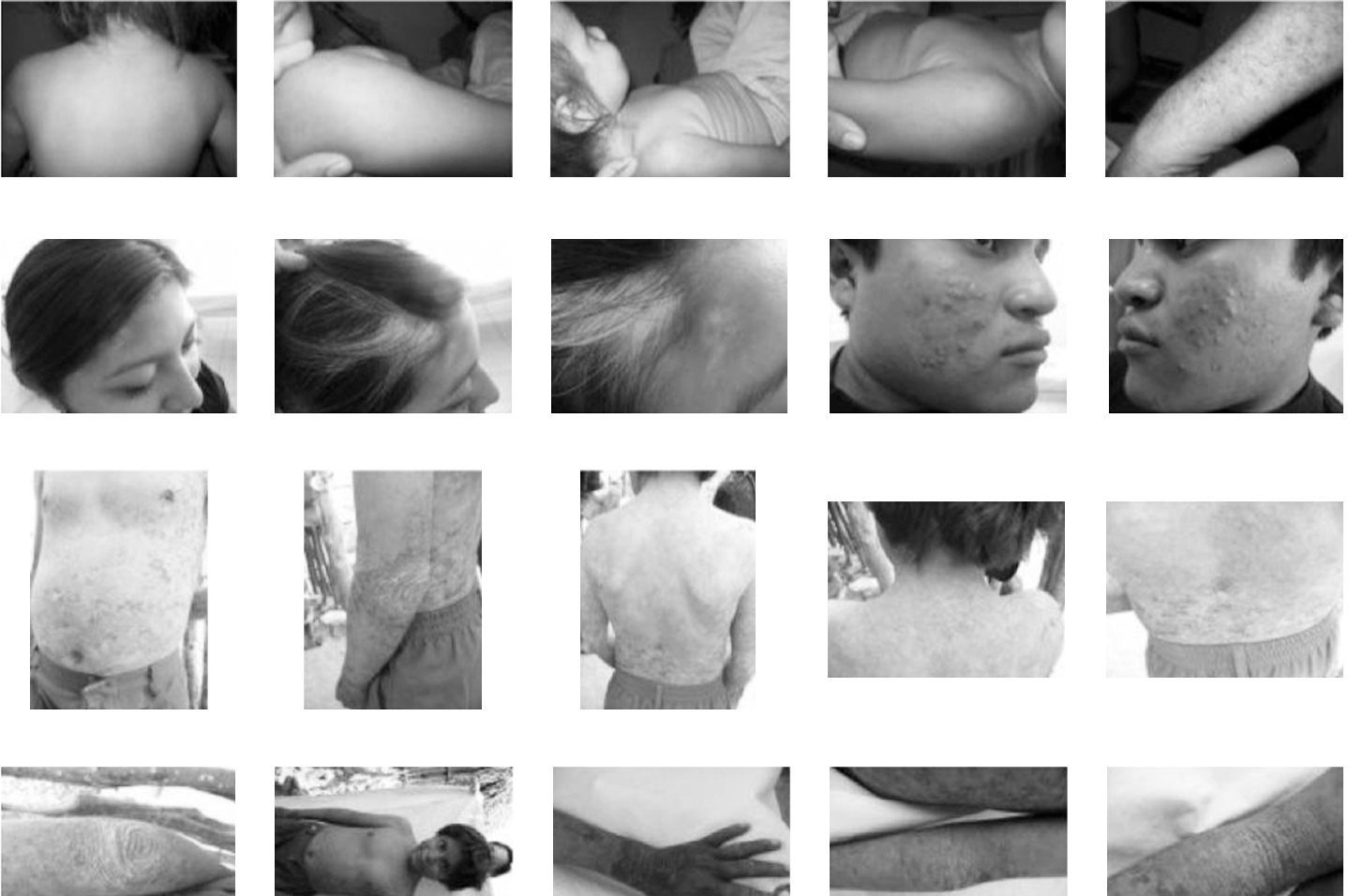
Multiple pictures of patients uploaded on the social network Web site for physicians to diagnose.
Results
Of these 44 patients, 47% were women. Mean age was 23 (8 months to 72 years). The diseases were grouped into infectious (22%), neoplasms (16%), solar dermatoses (16%), congenital (6%), autoimmune (6%), and inflammatory/irritative (31%) (Fig. 2). The diagnoses, in order of frequency, were insect bites, pityriasis alba, atopic dermatitis, warts, vitiligo, intradermal nevi, contact dermatitis, ichthyosis, mycoses, psoriasis, prurigo nodularis, larva migrans, molluscum contagiosum, mucocele, kerathoacanthoma, impetigo, herpes zoster, dermatofibroma, scabies, phytophotodermatitis, acne, and pyogenic granuloma (Figs. 1 and 3).
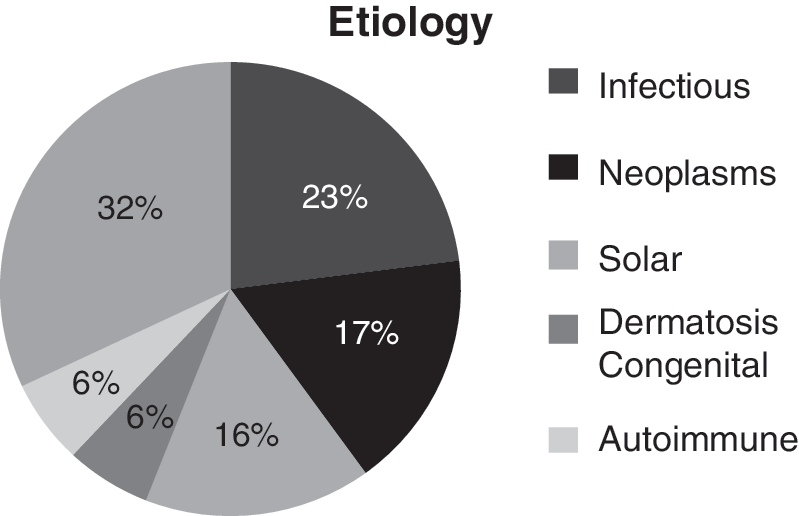
Etiology of the skin conditions that were teleconsulted.
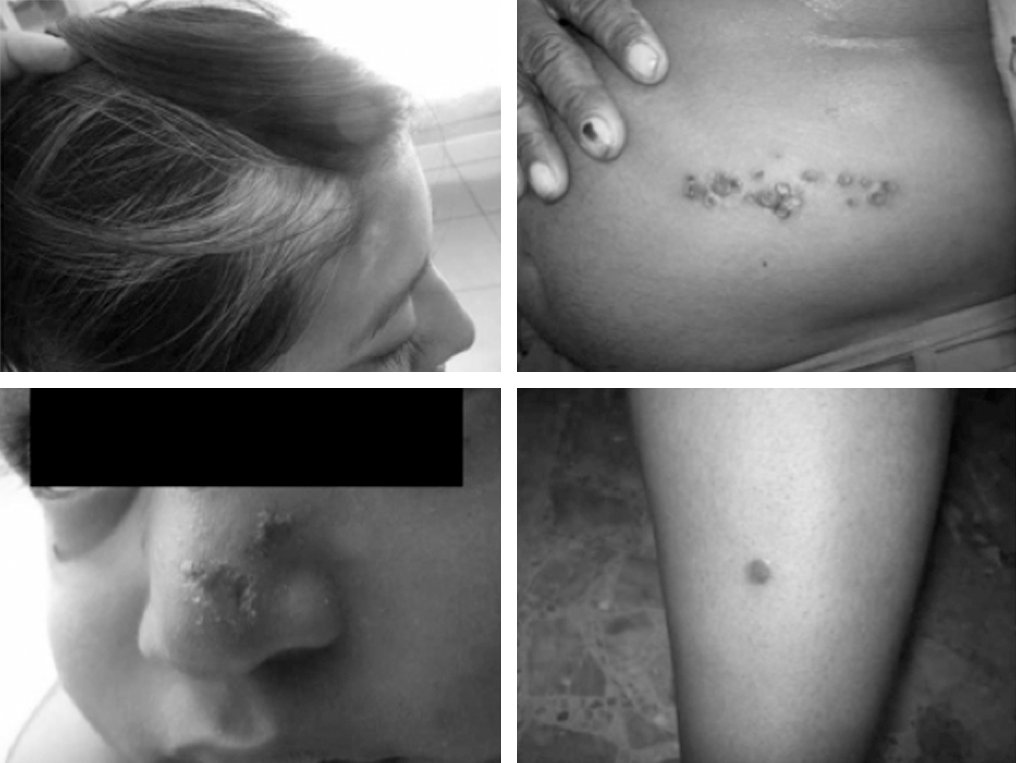
Some of the common dermatoses diagnosed.
Seventy-five percent of the patients showed clinical improvement with the indicated treatment (Figs. 4 and 5).
Contact dermatitis to lemon and response to treatment.
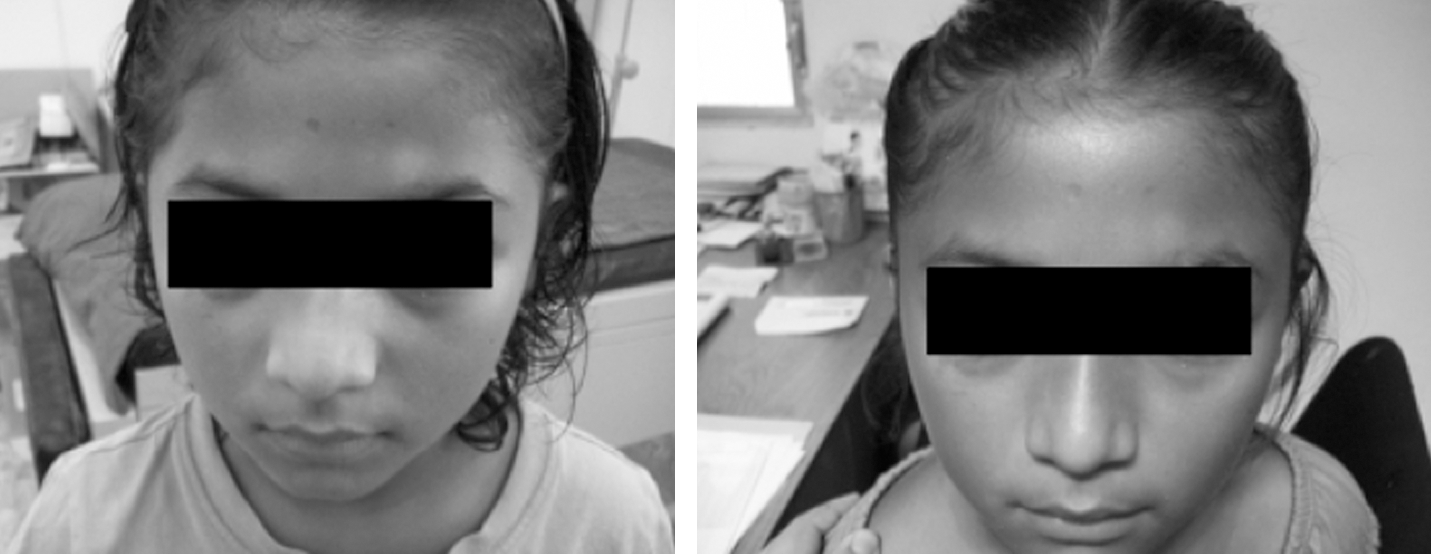
Clinical improvement of pityriasis alba with the indicated treatment.
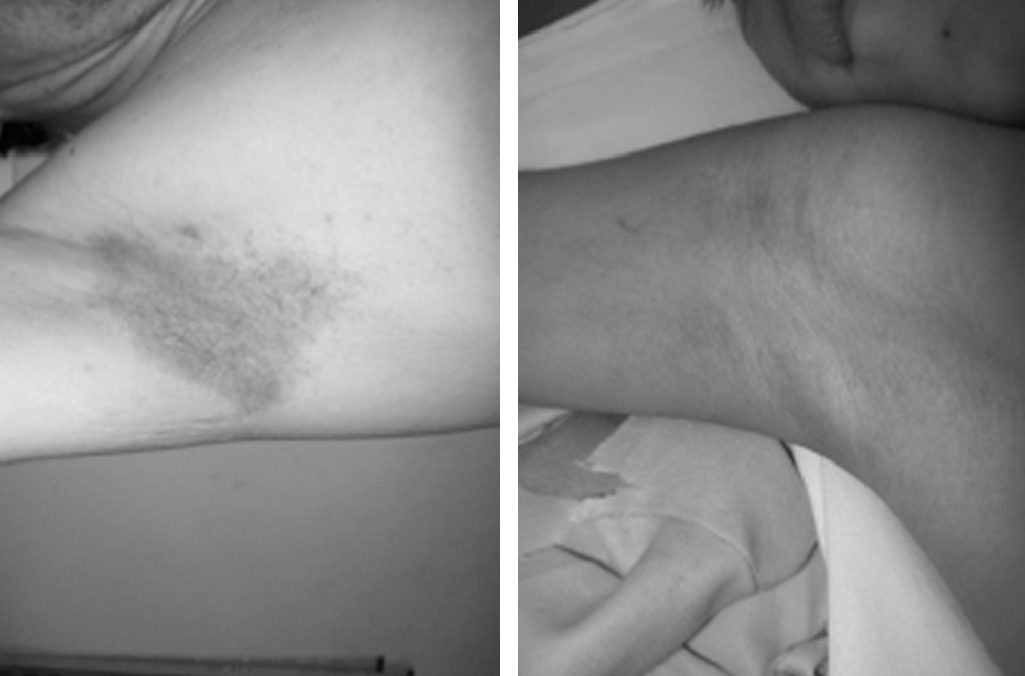
There were three cases of congenital diseases, which were uncommon ichthyosis: two brothers had epidermolytic hyperkeratosis (clinical diagnosis) (Fig. 6), and a woman had erythrokeratodermia variabilis, which was confirmed by a biopsy sent by certified mail to our dermatopathology department (Fig. 7).
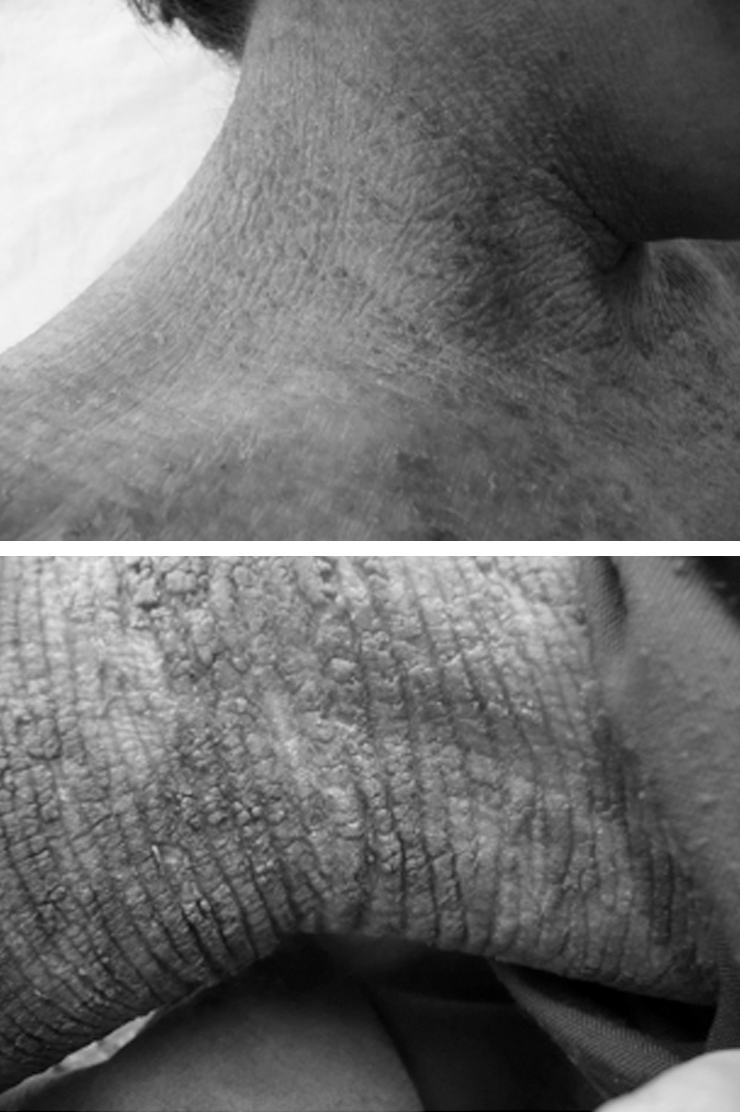
Characteristic features of epidermolytic hyperkeratosis.
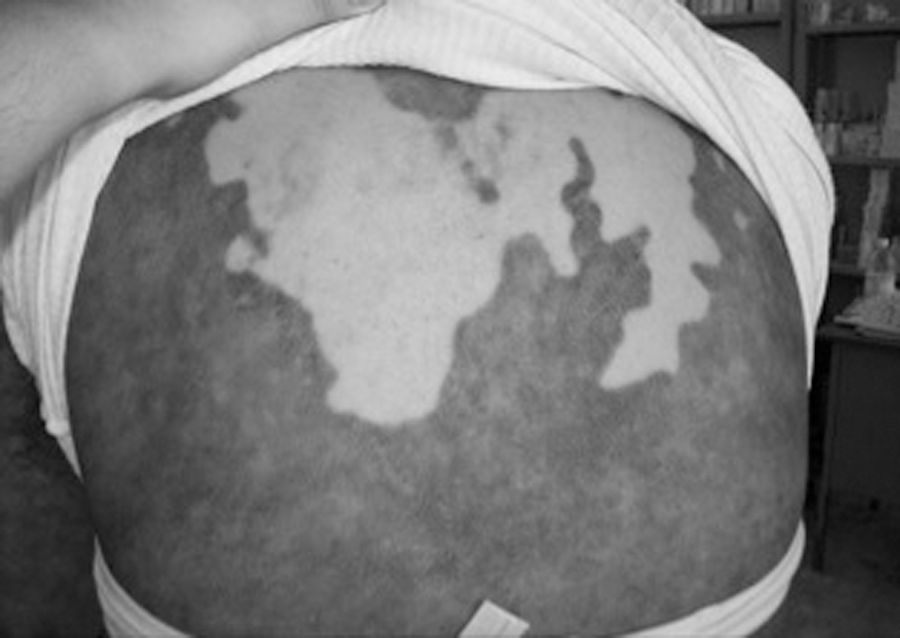
Characteristic features of erythrokeratodermia variabilis.
Discussion
We teleconsulted 44 patients over the course of 3 months, 75% of which showed clinical improvement with the treatments we indicated, which were simple and low-cost systemic or topical drugs widely available and, in most cases, given to patients at the clinic. This improvement was measured by the patients' own satisfaction and the follow-up pictures that were available.
Most of the dermatoses we were consulted for were infectious, including impetigo, warts, mycoses, larva migrans, molluscum contagiosum, herpes zoster, and scabies. Next in frequency were both neoplasms, such as intradermal nevus, keratoacanthoma, dermatofibroma, and pyogenic granulomas, and solar dermatosis, such as pityriasis alba and phytophotodermatitis, which was expected as the patients live in a tropical climate.
The three patients with congenital diseases were two cases of epidermolytic hyperkeratosis in brothers and one case of erythrokeratodermia variabilis. The two former were advised about hygienic measures and how to avoid infections in the skin; the latter was treated with isotretinoin 20 mg daily with marked improvement.
Previous studies refer that teledermatology is an ideal option for common skin diseases, which can be easily treated by a general practitioner, nurses, or social workers in addition to a dermatologist, who provides the teleconsult. 7 In this study, we confirmed these facts. 1,2 An improvement rate of 75% is in concordance with previous rates reported. 3
It was not possible for us to make a correlation between telediagnoses and presential diagnoses, because the patients were very remote from our tertiary hospital and costs of transportation and lodging in our city would have been impossible, but good concordance rates between teleconsults and present consults are reported. 4,5,8 The only case we confirmed by a biopsy was the erythrokeratodermia variabilis.
Teledermatology via a public social networking Web site was easy to perform; the fact that different specialists can access the images and clinical data and write their own additional questions and suggestions is very useful and makes this a very practical option. Nowadays, most of the cybernetic population has an account in one of these Web sites, making this a widely available form of teleconsulting.
Conclusions
Teledermatology via a free public social networking Web site is an easy-to-use, effective option in terms of the benefit we can offer to patients who do not have access to dermatology care. The image quality is sufficient for diagnosing common diseases, and the Web site's design allows interaction of other people besides the sender and receiver. In this project, we identified both simple-to-treat, common skin diseases and rare congenital diseases that require genetic counseling and more complex treatment. Most patients benefited from the treatments offered, thus avoiding unnecessary expenses or transportation to urban areas.
Footnotes
Disclosure Statement
No competing financial interests exist.