




Abstract
Paroxysmal atrial fibrillation (PAF) carries an equally high annual stroke rate as chronic atrial fibrillation (AF). Furthermore, the frequency and duration of PAF are thought to be associated with stroke risk. In this pilot study, a trans-telephonic electrocardiograph (TTE) monitoring system was used to detect asymptomatic PAF and to study the relationship between ischemic stroke and the frequency of PAF. Between December 2004 and April 2006, 70 patients enrolled in the TTE monitoring program. Patients either transmitted electrocardiograms (ECGs) daily or upon experiencing cardiac symptoms. Of the 70 patients included, 25 were diagnosed with PAF. In total, 11% (855/7,768) of the recordings were diagnosed as PAF, yet less than 2% of total calls collected and less than 17% of all the calls with PAF were associated with obvious symptoms. Four patients developed five ischemic strokes resulting in a calculated annual stroke rate of 0.56%. Patients with stroke had more episodes of AF (56.5±106.3 versus 6.7±85.9, p=0.685) and symptomatic AF episodes (9.8±17.5 versus 4.9±8.1, p=0.381) than the patients who did not have a stroke, but the differences were not statistically significant because of the low numbers of patients and episodes. Most PAF episodes were asymptomatic, and the TTE system could easily detect these episodes. Furthermore, these four patients tended to have more episodes of PAF and more symptomatic attacks of PAF than patients who did not have a stroke.
Introduction
Atrial fibrillation (AF) is one of the major risk factors for ischemic stroke. It has been reported that every year, more than 5% of patients with AF will suffer an ischemic stroke. 1 Like chronic AF, paroxysmal AF (PAF) is associated with a high stroke rate. 2 –4 However, the recognition of PAF remains clinically problematic because of the fact that most PAF episodes are asymptomatic 5,6 and because the AF-related stroke rate is closely related to the frequency and duration of AF episodes. 7 Holter monitoring for 24–48-h periods will frequently detect these asymptomatic attacks but will still miss a significant number of episodes. To prevent stroke, it is essential to detect asymptomatic AF as promptly as possible. The purpose of this study was to perform a pilot project to determine if a trans-telephonic electrocardiograph (TTE) monitoring system was able to detect either symptomatic or asymptomatic PAF episodes.
Patients and Methods
Patient Enrollment
From December 2003 to April 2006, 70 patients were enrolled in the TTE System project implemented in Far East Memorial Hospital. None of them proved to have had AF previously. Eligible patients included those with underlying cardiovascular disease or unexplained cardiac palpitations.
TTE Recording System
All patients used either a 12-lead electrocardiogram (ECG) recording device (CG-7100, Card Guard Scientific Survival Ltd., Rishon Le Zion, Israel) (Fig. 1A) or a single-lead device (CG-2100, Card Guard Scientific Survival Ltd.) (Fig. 1B). The ECG data obtained from the patients were stored as analog signals and subsequently transmitted via a microphone on a fixed telephone system or cellular phone to the project's central 24-h call-in station. The transmitted ECG recordings were processed with analog digital conversion in the central server, analyzed, and stored in the master data bank.
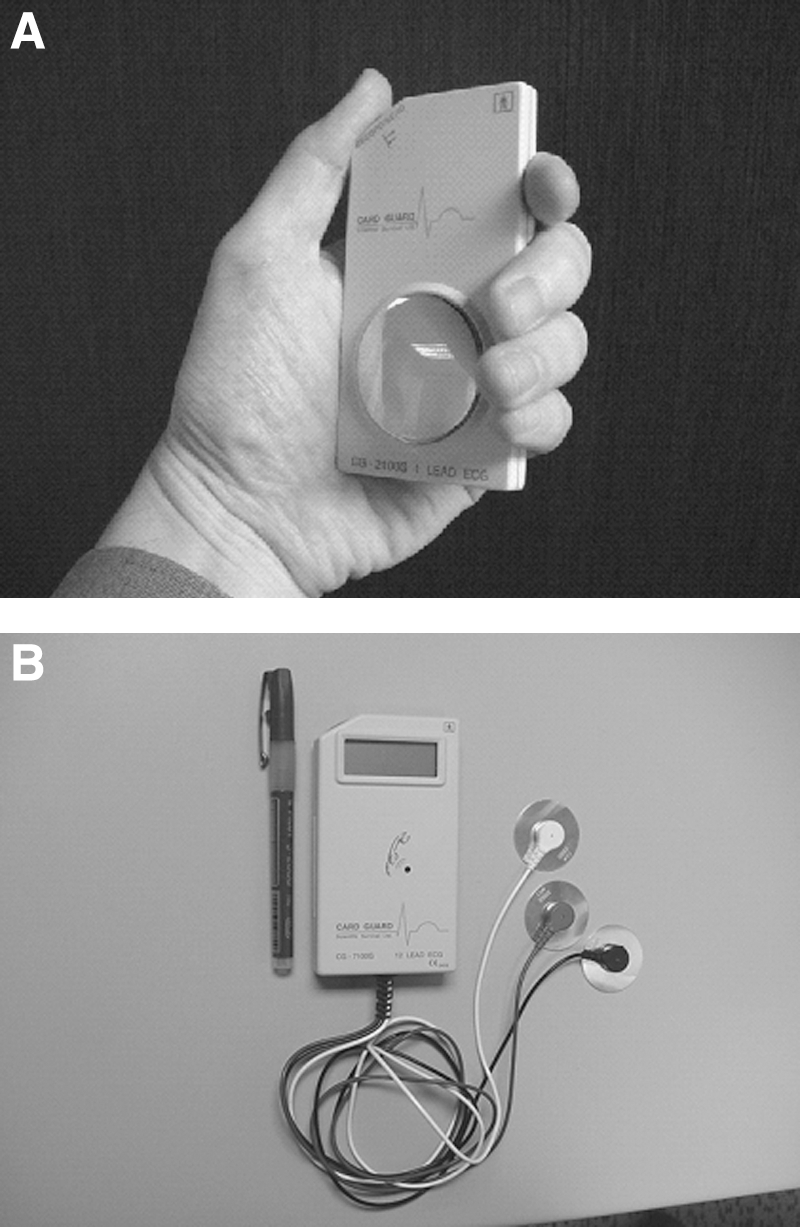
Pictures of
All participants were encouraged to record daily ECGs and transfer the information to the center each day, even in the absence of any symptoms. Patients were required to transmit their ECG recordings immediately following any symptomatic episodes (e.g., chest discomfort, palpitations, or dyspnea).
All ECG recordings received by the system were reviewed by the on-duty cardiologist, and the patients were immediately informed if abnormal and dangerous ECG findings were noted, such as frequent ventricular premature complex or short-run ventricular tachycardia.
Data Analysis
The total number of calls by each patient was defined as the total number of follow-up days, which was the sum of each patient's follow-up days. The total calls collected were defined as the sum of each patient's call-back calls. The calls for PAF were defined as the sum of each patient's calls showing AF, and the symptomatic AF calls were defined as the sum of AF calls associated with symptoms (e.g., palpitations, dyspnea, chest discomfort).
The annual stroke rate was calculated using the following formula:
The statistical software SPSS (SPSS Inc., Chicago, IL) (copyright 1999) was used to compare the calls for PAF and symptomatic PAF between the patients with and without ischemic stroke. Any p value<0.05 was considered statistically significant.
Results
Detection of AF
From December 2003 to February 2006, 70 participants were included in this study, and 25 participants had episodes of PAF as detected by the TTE recording system. Of these 25 participants, 6 (24%) had previously been diagnosed with PAF via 24-h Holter ECG prior to their enrollment in the current study (Fig. 2A). The remaining 19 (76%) were diagnosed with PAF by the TTE system described herein.
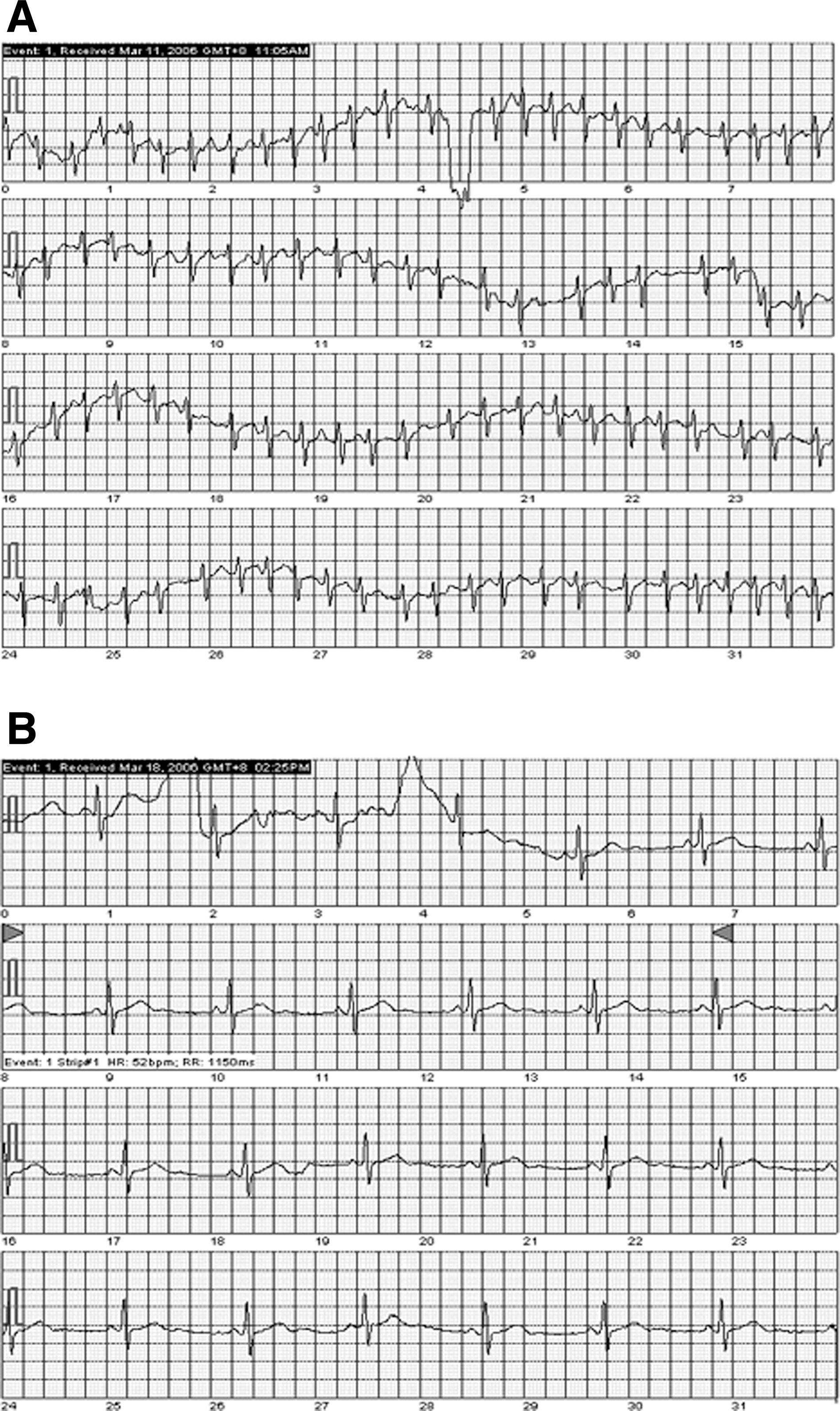
In total, 7,768 calls were collected from the 25 patients with PAF during the 3,220 person-days of our follow-up. Of these 7,768 calls, 855 (11.0%) revealed episodes of AF. Only 143 calls (16.7%) of the 855 PAF recordings were associated with patient-reported symptoms, which means the majority of AF episodes (83.4%) were asymptomatic (Table 1).
Patients, Reason for Enrollment, Days of Follow-Up, Total Calls, Calls for Paroxysmal Atrial Fibrillation, Finding of Symptomatic Paroxysmal Atrial Fibrillation, and Episodes of Ischemic Stroke Observed During the Study Period
11.0% of total calls.
1.8% of total calls and 16.73% of calls with atrial fibrillation.
CAD, coronary artery disease; CHF, congestive heart failure; HCVD, hypertensive cardiovascular disease; MVP, mitral valve prolapse; PAF, paroxysmal atrial fibrillation; SSS, sick sinus syndrome; VT, ventricular tachycardia.
Relationship between Stroke and AF
In total, five ischemic strokes occurred in four patients during the follow-up period, resulting in an annual stroke rate of 0.56%. Data analysis revealed that patients who had ischemic strokes had more episodes of AF (56.5±106.3 versus 6.7±85.9, p=0.685) and more symptomatic AF attacks (9.8±17.5 versus 4.9±8.1, p=0.381) than the patients without stroke, although these results were not statistically significant.
Discussion
AF and Ischemic Stroke
AF is one of the major risk factors of ischemic stroke. Indeed, one out of every six strokes occurs in patients with AF. 8 –10 The rate of ischemic stroke among patients with non-rheumatic AF averages 5% per year, which is two to seven times higher than the rate of ischemic stroke in people with no evidence of AF. 2,11 –15 If ischemic stroke is associated with rheumatic heart disease, then the rate of stroke risk is higher as reported in the Framingham Heart Study. This report concluded that patients with rheumatic heart disease and AF had a 17-fold increased risk of stroke compared with age-matched controls 16 and that the risk was five times greater than in those patients with non-rheumatic AF. 12
PAF still carries a high risk of ischemic stroke like chronic AF. 2 –4 The Framingham Study reported an annual stroke rate of 1.3% in patients with PAF. 17 Furthermore, Petersen and Godtfredsen 18 reported an annual stroke rate in patients with PAF of 2.0%; this rate increased to 5.6% in patients with persistent AF. In contrast, two large-scale studies, the Stroke Prevention in Atrial Fibrillation Study 2 and the Boston Area Anticoagulation Trial for Atrial Fibrillation, 3 both reported that no difference in stroke rate between patient with PAF and chronic AF existed. Thus, these investigators concluded that patients with AF and chronic AF have a similar annual stroke rate.
It has also been proposed that the stroke rate of the patients with PAF is related to the duration and frequency of the PAF. 7 Considering the fact that most AF episodes are asymptomatic, 5,6 methods to effectively and expeditiously detect and prevent PAF should be one of the crucial issues to PAF.
TTE Recording System and Detection of AF
Since its introduction in the 1970s, the TTE transmission and recording system has been widely used in the monitoring of pacemakers or implantable cardiodefibrillators and for the detection of arrhythmias. 19 –24 This system also proved to work well in the follow-up period of survivors of sudden cardiac death, 25 the supervision of a home rehabilitation program, 26 and even for pre-hospital monitoring of the patents with acute coronary syndrome. 27 Furthermore, there have been several reports focusing on the detection and follow-up of atrial arrhythmias.
Using a system similar to the one describe in this report, Pritchett et al. 28 evaluated the recurrence of atrial tachycardia after drug withdrawal, and Irwin et al. 29 reported their successful experience in the determination of the circadian occurrence of paroxysmal supraventricular tachycardia. Using the TTE system, Roark et al. 30 demonstrated the presence of PAF in patients with paroxysmal supraventricular tachycardia.
In this inaugural study evaluating the detection of the asymptomatic episodes of PAF via the TTE system, we confirmed that most PAF episodes are indeed asymptomatic and that the TTE system may be an effective tool to markedly improve the rate of diagnosis of PAF and to enhance the ability to detect the recurrence of PAF during follow-up. Despite the lack of significant statistical differences (which is likely due to the small sample size used in this pilot study), participating patients who developed ischemic stroke tended to have more AF episodes and more symptomatic attacks of PAF than the patients who did not have an ischemic stroke. IT is surprising that the annual stroke rate of our patients was relatively low compared with previous studies. 2 –7 One interesting explanation for this finding might be due to the enhanced detection rate of PAF with the TTE system compared with the detection methods used by the investigators citing the higher annual stroke rates. The results of this pilot study clearly demonstrate the need and benefit of further studies using a TTE transmission device in this field.
Footnotes
Disclosure Statement
No competing financial interests exist.