




Abstract
Research on the use of social networks for health-related purposes is limited. This study aims to characterize the purpose and use of Facebook and Twitter groups concerning colorectal cancer, breast cancer, and diabetes. We searched in Facebook (
Introduction
Social networking Web sites are an appropriate way for exchanging information and for supporting people who are in similar situations, and they are also used for health reasons by both survivors and those who suffer from important illnesses. Facebook and Twitter are the most used social Web sites. There are Facebook groups created for health reasons, but little is known about how these resources affect people using them. 1
The communities are the “virtual sites” where people meet for getting and providing information or support. 2 More recently, online communities have been created around blogs, Wikis, and social networks, which are known as Web 2.0 social media applications. 3 Social Web sites are different from the other support communities as they allow the users to be made visible to their social networks. 4
Research undertaken on the online communities focused in health issues is mainly centered in the use and effects of e-mail lists and forum messages from diabetes, colorectal, and breast cancer survivors and ill people. 5 These online communities provide to members a virtual place where they can talk about sensitive issues, 6 in a way that the feeling of isolation, the uncertainty about the prognosis, and the painful symptoms are reduced; at the same time people can be more informed and better prepared to interact with the health system. 7 Recent studies have shown that these communities reduce depression and stress symptoms, lessen the psychological trauma related to cancer, and raise the level of social support. 8 –10
Relatively little is known about the use of social network sites for health purposes. Keelan et al. 10 examined the use of YouTube videos and MySpace blogs as resources for finding information about immunization, and they found a subcommunity focused on this topic where users were critical of or they had differing points of view about vaccines. Scanfeld et al. 11 showed that Twitter has been used to share information about the effects of the use of antibiotics and their secondary effects. About the use of Facebook for health purposes there is only one study: Farmer et al. 12 examined the groups about noncommunicable diseases, and they found a considerable number of support groups for patients and caretakers related to malignant neoplasms. Studies of the use that people affected by colorectal cancer, breast cancer, or diabetes made of these social network sites are scarce. The present study sought more information.
This article describes the purpose and the usage made of Facebook and Twitter groups related to colorectal cancer, breast cancer, and diabetes. The remainder of this article is structured as follows: first, we describe the method used, then we show the results obtained, and finally we extract the main conclusions of this study.
Materials and Methods
On July 2011, we conducted an extensive search in Facebook and Twitter Web sites using the search engine provided by these platforms. Search key words used were "colorectal cancer," "breast cancer," and "diabetes." Our searching incorporated all kinds of groups on Facebook and Twitter. A list of groups for each of the term was obtained, both in Facebook and in Twitter, and a selection was made of moderated social groups. Also, pages of individual members, organizations, events, and applications were included.
Figure 1 shows an example of the results obtained in one of the searches performed.
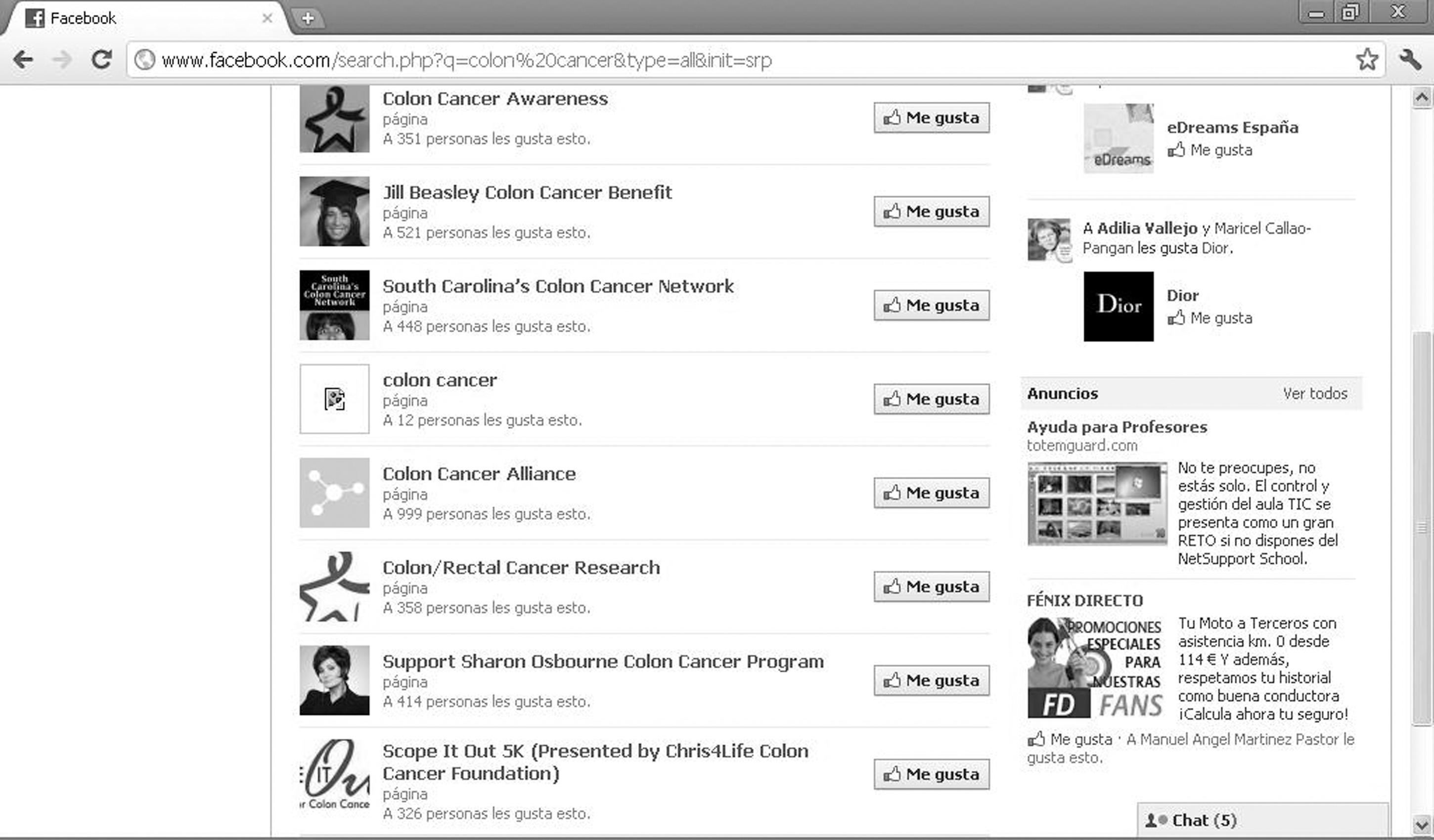
Searching results in Facebook.
Extraction Of Data
Each important group has been analyzed, extracting the following data: name of the network, number of members, interests (reading the wall and the provided information), and Web site URL.
Analysis Of Data
We started analyzing the information of the groups with the greatest number of users. This step led to the identification of the five main types of groups for the three diseases: • Fund collecting groups. These are created for raising funds through events, products, or services. • Awareness groups. These are created to attract attention about the importance of these diseases and to promote events for getting money, or to analyze any investigation. • Support groups. These are created to satisfy the informative and emotional necessities of survivors or those affected by the disease, both patients and their family or friends. • Prevention groups. These are created to raise the prominence of an external Web site to achieve money or awareness of these diseases through selling products or services. • Disease-fighting groups. Their aim is to fight against the disease.
Results
Colorectal Cancer
Colorectal cancer is an important disease because of its severity and also since it affects much of the population. 13 We found 171 groups and identified a total of 36,335 Facebook and Twitter users who were members of one or more of the groups. Some social groups in relation with colorectal cancer are aimed at increasing the awareness of people suffering from this disease, providing them links to news about the disease, diagnosis, etc. Others deal with the development of applications for the early detection of colorectal cancer. Others give advice on how avoid colon cancer by cleansing the colon. Others offer a complete program providing diagnosis tests and multidisciplinary services for colorectal diagnosed patients. Many people suffering the disease offer their positive opinion about these groups. Figure 2 shows the main objectives of the groups found on Facebook and Twitter. The aim of some groups is disease awareness, that is, to make people realize that these illnesses do not distinguish among races or social position. Other groups report about events with the purpose of getting money for investigation of colorectal cancer, trying to find a cure. Others give advice for disease prevention. Many groups are focused on fighting against the disease, other groups on supporting patients with colorectal cancer and their relatives, and others on providing information (e.g., reporting about treatments and describing the disease). There are also groups with the aim to develop applications for early detection of colorectal cancer.

Main issues of Facebook and Twitter groups for colorectal cancer.
The goal of 12.79% of the studied groups is disease awareness, while 3.48% of these groups are aimed to get money. Another 25.58% of the users forming part of these groups have disease prevention as their objective, and 19.18% are dedicated to supporting patients and their relatives fighting against the disease. Also, 6.39% provide information about the disease, while 23.38% fight against it. The remaining groups are aimed at other uses.
Figure 3 shows the usage rates of the different social networks analyzed for colorectal cancer. As can be seen in Figure 3, Facebook is more used (62.23%) than Twitter (31.76%), mainly for supporting ill people and their relatives.

Use of Facebook and Twitter for colorectal cancer.
Breast Cancer
Breast cancer is the most common type of cancer in women and the second leading cause of death by cancer. 14 In total, 216 groups were found. We identified a total of 7,765,483 Facebook and Twitter users belonging to one or more of the groups. Some social groups about breast cancer try to collect funds for proving free mammography to those women who need them (some of them selling clothes with the pink ribbon). Opinions of female users in analyzed cases were all positive. The aim of many groups is increasing the research on breast cancer, improving the access to quality healthcare and clinical tests for all women. Figure 4 shows the main uses of the breast cancer groups. The main use of social networks concerning breast cancer is to prevent the disease: 33.95% of the users of these groups are involved in the social networks to encourage people to be periodically examined for preventing breast cancer. The goal of 9.70% of the groups is fund-raising to allow females who otherwise have insufficient resources to get mammography done, as well as to try to find a definitive cure for this kind of cancer. Another 17.91% of people show their support to fight against the disease. Only 1.49% of the groups pursue research on the disease, while 7.46% have the aim of providing information about the disease. The aim of 6.71% of the groups is to make people aware about the danger of the disease, while another 6.71% show their support to patients and their relatives through the stories told by affected individuals. The rest of the uses represent 16.04%, which includes the firms in charge of eliminating the environmental factors that provoke this disease, organizations in charge of helping with decisions during the disease, etc.
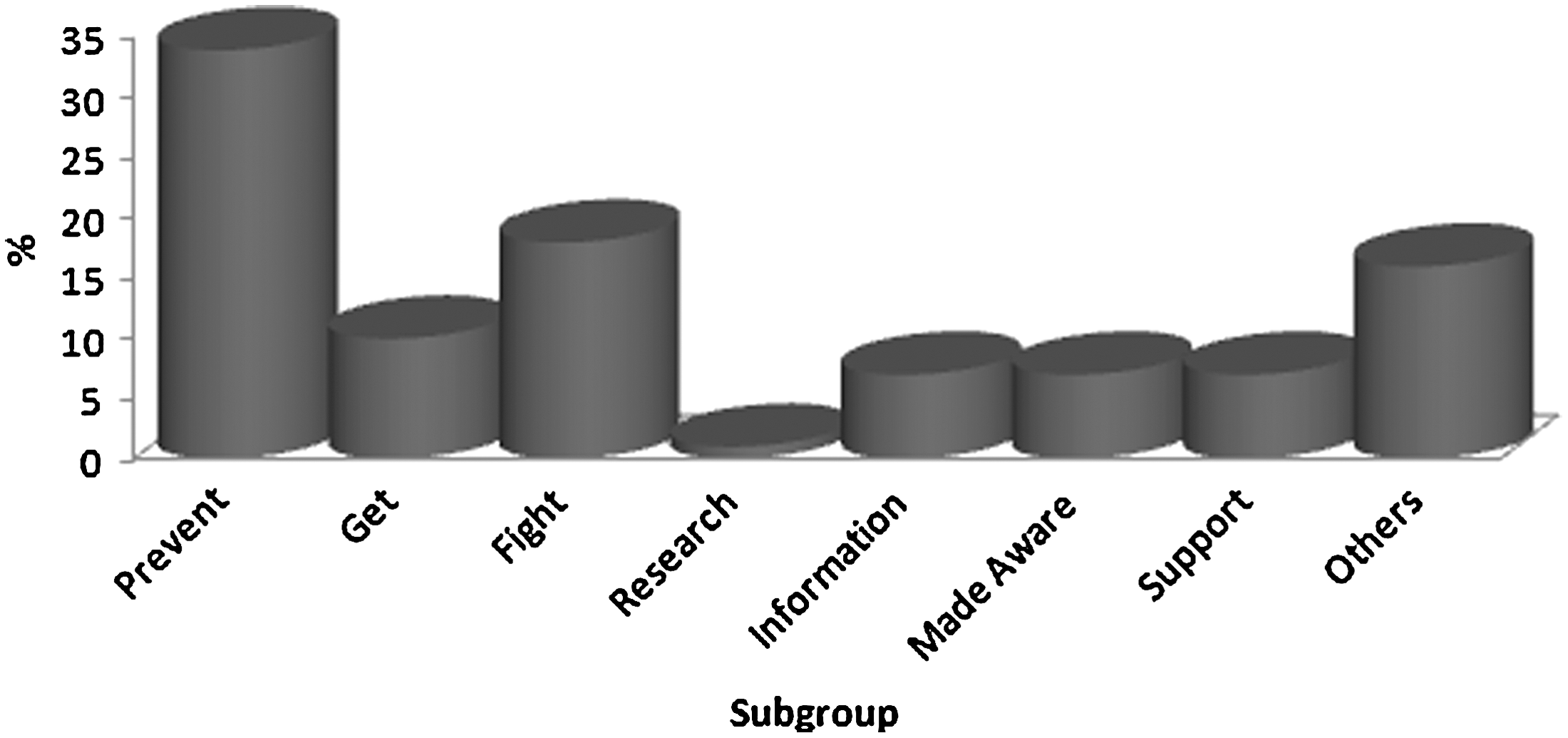
Main issues of Facebook and Twitter groups for breast cancer.
Figure 5 shows the usage rate of both social networks analyzed for breast cancer. It can be seen how Facebook is the most used social network for helping ill people who suffer from breast cancer and their relatives, since its usage percentage is 82.39% versus 17.60% for Twitter.
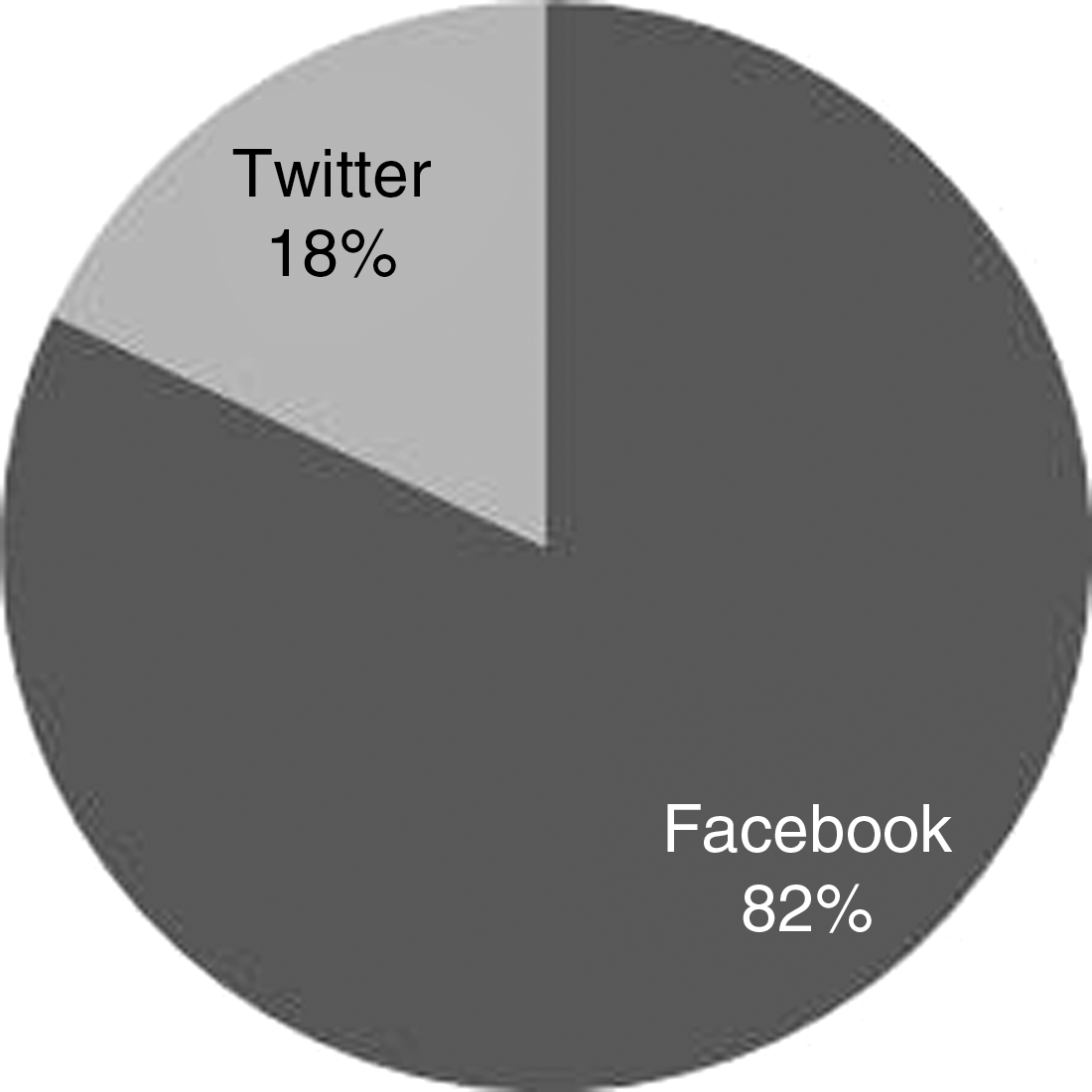
Use of Facebook and Twitter for breast cancer.
Diabetes
Diabetes is one of the most common diseases in our society. In the search performed, 527 groups were found. We identified a total of 564,023 Facebook and Twitter users who were members of one or more of the groups. Most of the social groups concerning diabetes work with patients, care staff, family, and friends. The aim of many of them is to press the government for raising the attention level and improving diabetics' lives. The posted users' opinions were mostly positive. The goal of some organizations is to organize a diabetes community for achieving faster treatment. Figure 6 shows the different purposes of the groups dedicated to diabetes. The main use of social networks for diabetes is the investigation of the illness since 25.09% of the users are involved in the social networks for supporting the investigation to find a cure for the disease. Another 23.06% have the aim of supporting patients and their relatives, to show them that they can live an ordinary life with the disease. The rate of groups dedicated to report about the disease is 11.62%, while that of those dedicated to making people aware of the disease is 6.27%. Another 5.35% are dedicated to fund-raising with the aim of paying for people's treatments and investigating the disease, and 7.74% of the groups have the goal of preventing the disease. Only 2.39% of the groups support the fight against the disease, while 18.45% is oriented to other uses like encouraging people to use boluses of insulin or promoting the use of new technologies for the care of the disease.
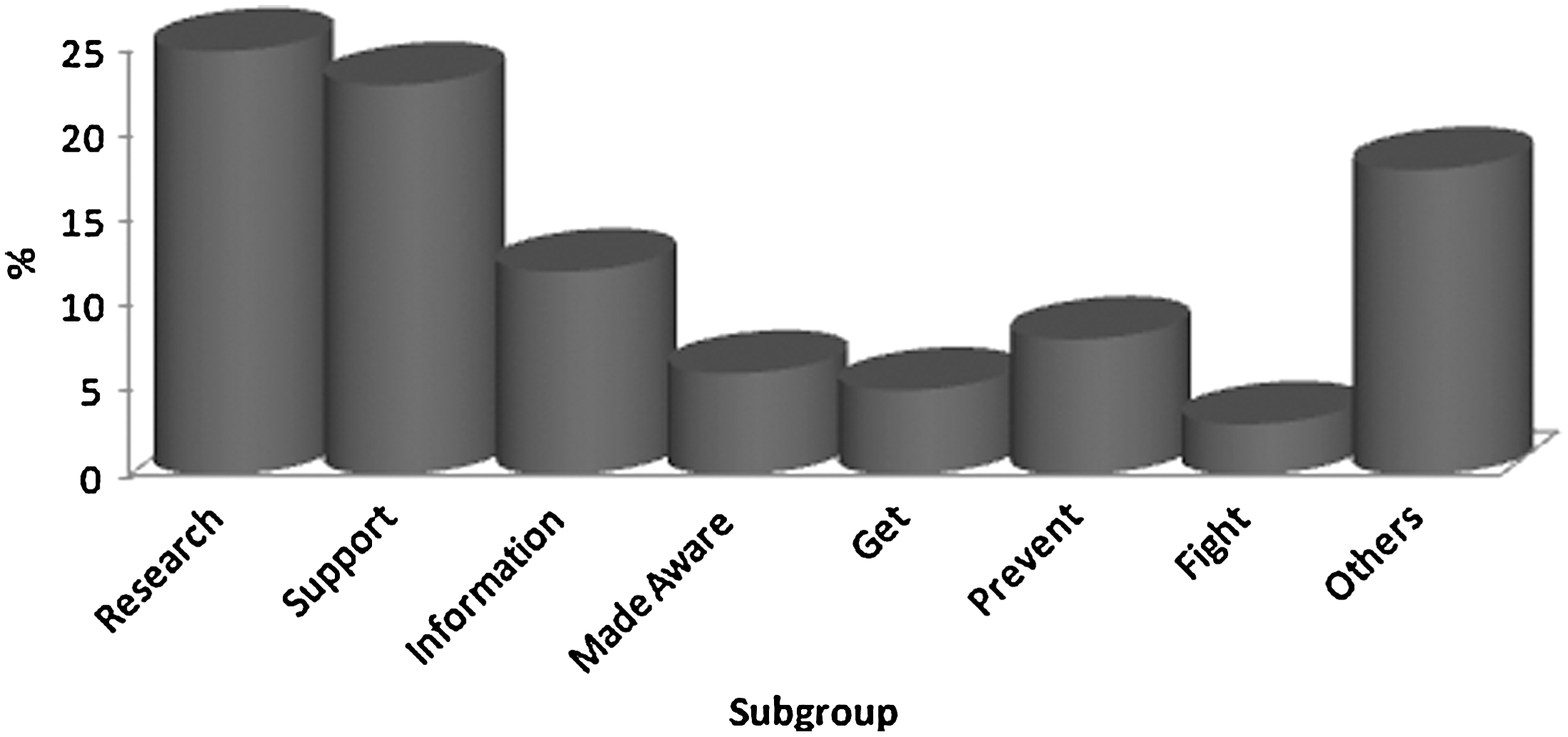
Main issues of Facebook and Twitter groups for diabetes.
Figure 7 shows how Facebook and Twitter are used concerning diabetes. The social network most used for helping and supporting patients and their relatives is Facebook (81.66%). Twitter is used by 18.33%.
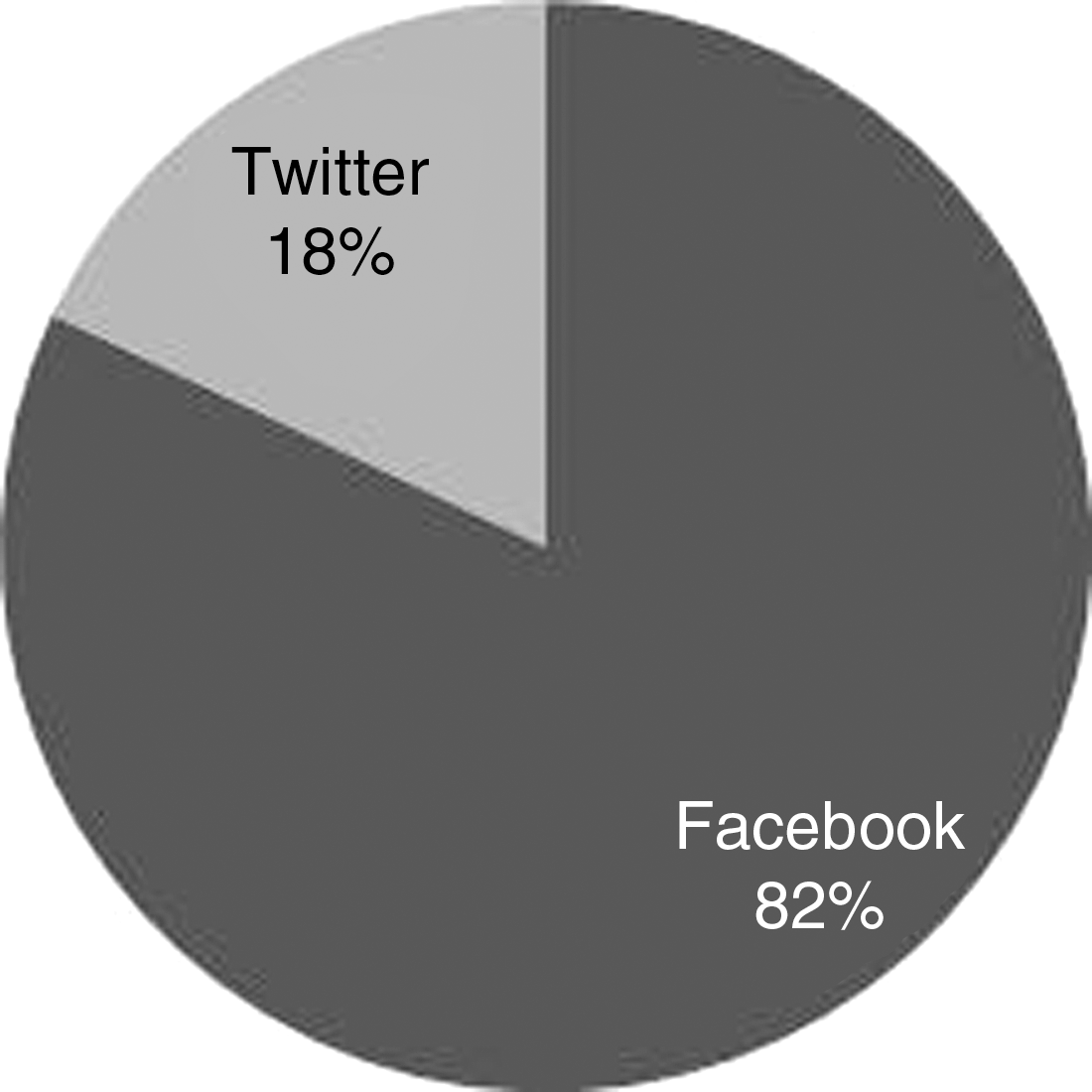
Use of Facebook and Twitter for diabetes.
All Three Diseases
Figure 8 shows the percentages of groups used for the different purposes. As can be seen in Figure 8, the highest usage rate is for preventing these diseases (18.02%), followed by support groups (17.92%). In third place there are other uses (16.08%), followed by investigation initiatives (14.25%), while in the fifth place is fighting against the diseases (10.38%). Another 9.57% of the groups are in charge of providing information about each of the diseases. The groups dedicated to make people aware of the disease constitute 7.53%, while the smallest usage rate purpose corresponds to the collection of funds, at 6.21%. The general use performed of social networks for these diseases can be seen in Figure 9. In general, the social network most used for the support of ill people and their relatives is Facebook, as can be seen in Figure 9, while Twitter is used to a lesser degree, possibly because this social network is newer than Facebook, and its use is not as common as that of Facebook.
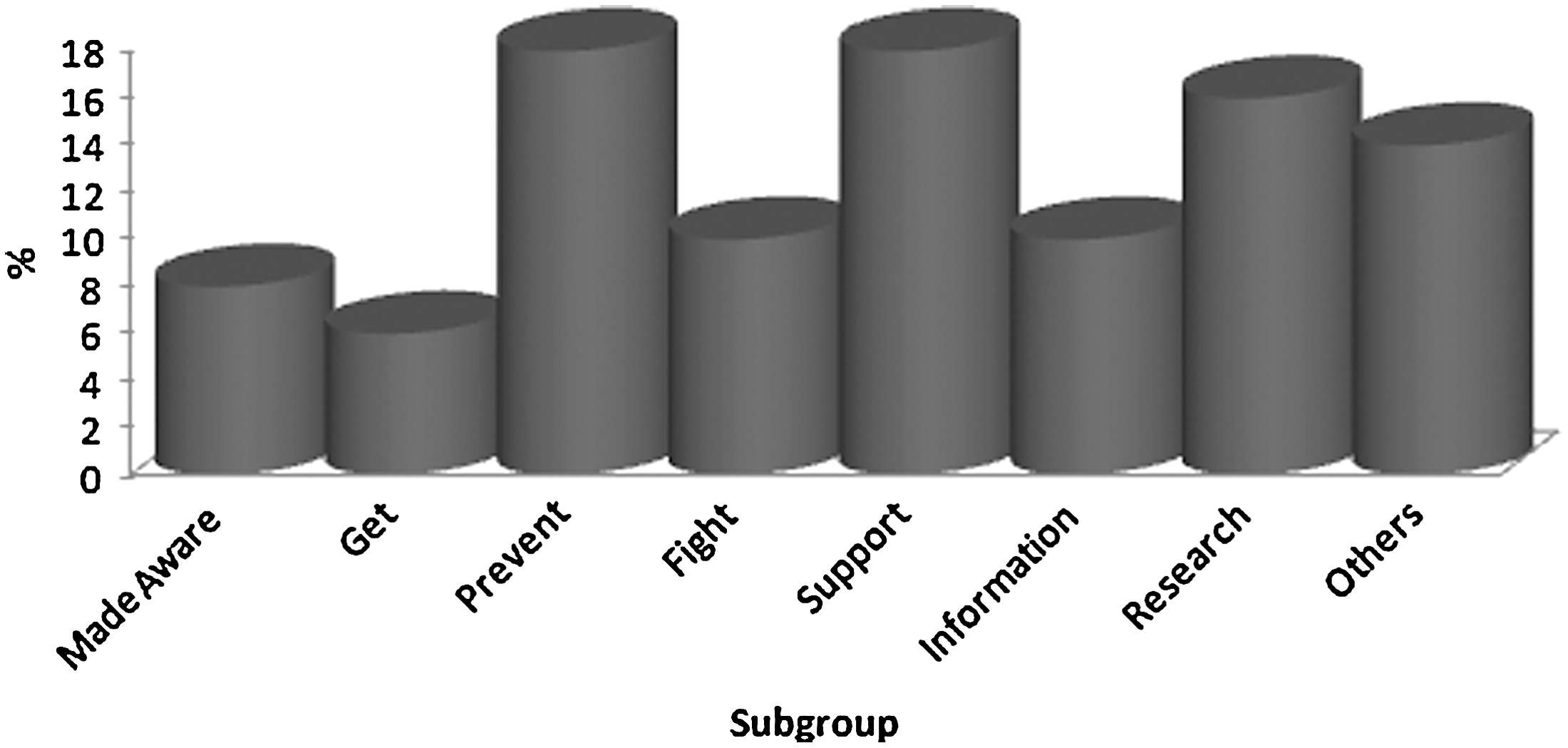
Main issues of the Facebook and Twitter groups for colorectal cancer, breast cancer, and diabetes.

Use of Facebook and Twitter for breast cancer, colorectal cancer, and diabetes.
Discussion and Conclusions
Social networks are useful tools for different scenes, for example, the support of ill people and patients with these three diseases; through these groups, ill people are encouraged to continue. People who have suffered from the disease convince others that the disease has a cure; they support the investigation of the disease to find a cure, collecting funds for paying the treatments of people who suffer from the disease and who have not enough means for it or for paying for investigations with the aim to find a cure for the disease, or they wish to make the population aware of the danger of the disease, and to report about the disease to make patients and their relatives aware of the importance of the disease in these cases and about the prevention of the disease. The groups working on the prevention of the disease issue advice about the diet we must follow and other habits for a healthy life in order to avoid the disease and not suffer from it in the future. For fighting against the disease, the aim is to create support groups.
For colorectal cancer the greatest percentage of groups dealt with the prevention, in the same way for as breast cancer, while those for diabetes are more focused on research.
There are many groups regarding diabetes. This is due to diabetes being a chronic disease that affects all ages, while breast cancer and colorectal cancer are diseases usually suffered only by adults. Concerning colorectal and breast cancer, there is a higher number of groups for breast cancer than for colorectal cancer, perhaps because breast cancer is a disease that can be cured if it is detected in time, like colorectal cancer, but it is easier to detect than colorectal cancer.
Concerning the use of social networks, Facebook shows a higher use for these purposes than Twitter, since Twitter is newer than Facebook, and its use is not so generalized.
Future works will be investigating the understanding of the implications of participating in health-related groups on different social networks such as Facebook and Twitter. Another important aspect is the privacy implications of sharing personal health information on social networks.
Footnotes
Disclosure Statement
No competing financial interests exist.