




Abstract

ATA 2011 is held in cooperation with: Four Corners Telehealth Consortium iCons in Medicine
Journal of Telemedicine and Telecare
National Center for Telehealth and Technology (T2) Northwest Regional Telehealth Resource Center Office for the Advancement of Telehealth (OAT) United States Army Medical Research & Materiel Command (USAMRMC) Telemedicine & Advanced Technology Research Center (TATRC) Universal Services Administrative Corporation (USAC)
Telemedicine & e-Health
Concurrent Oral Presentations Abstract Index
American Telemedicine Association 2011 Concurrent Oral Presentations Abstract Index
8:45 am–9:45 am Monday, May 2
276 RISK STRATIFICATION AND TELECARDIOLOGY IMPROVING CARDIAC CARE IN A RURAL HOSPITAL ED
Stephanie Laws, RN, Project Associate
Richard G Lugar Center for Rural Health, Terre Haute, IN, USA
113 TELE-ORTHOPAEDICS; UNITED STATES ARMY EUROPEAN REGIONAL MEDICAL COMMAND (ABSTRACT WITHDRAWN)
Jeffrey S. Morgan, MD1, Orthopaedic Surgeon, Shaka Walker, MD2, David Melaas, PA-C3, Ben Boedeker, MD. DVM, PhD, MBA4, Maria Crane, PsyD5, Jacob Bacahui6
1United States Army, Fort Bragg, NC, USA, 2United States Air Force, Landstuhl Regional Medical Center, AE, USA, 3Landstuhl Regional Medical Center, Landstuhl, AE, USA, 4University of Nebraska, Omaha, NE, USA, 5United States Army; ERMC, Heidelberg, AE, USA, 6United States Army, ERMC, Heidelberg, AE, USA
307 OBESITY IN CANADA: IMPROVING ACCESS TO COMPREHENSIVE BARIATRIC CARE SERVICES UTILIZING TELEMEDICINE
Caterina Masino, MA, Analyst, Frances Hoy, MScPT, MHSc, Peter G. Rossos, MD, MBA, FRCP(C), FACP
University Health Network, Toronto, ON, Canada
52 CROSS LINGUISTIC ASYNCHRONOUS TELEPSYCHIATRY - A FEASIBILITY AND RELIABILITY STUDY
Peter M. Yellowlees, MD, Professor, Don Hilty, MD, Alberto Odor, MD, Ana-Maria Iosif, PhD, Michelle Burke Parish, BA, Najia Nafiz, BA, Kesha Patrice, BA
UC Davis, Sacramento, CA, USA
263 BEST PRACTICES IN MANAGING 24/7 TELEPSYCHIATRY
Robert Cuyler, PhD, Director of Development
JSA Health, Houston, TX, USA
80 ABNORMAL INVOLUNTARY MOVEMENT SCALE TRAINING FOR TELEPSYCHIATRY
Sara F. Gibson, MD, Medical Director of Telemedicine
NARBHA, Flagstaff, AZ, USA
278 mHEALTH REMOTE PATIENT MONITORING IMPROVES HEART FAILURE MANAGEMENT AND OUTCOMES: A RANDOMIZED CONTROLLED TRIAL
Emily Seto, PEng, MSc1,2, Biomedical Engineer, Heather J. Ross, FRCPC, MD, MHSc3,4, Joseph A. Cafazzo, PEng, PhD1,2,5, Caterina Masino, MA1, Jan Barnsley, PhD2, Kevin J. Leonard, MBA, PhD1,2
1Centre for Global eHealth Innovation, University Health Network, Toronto, ON, Canada, 2Department of Health Policy, Management and Evaluation, University of Toronto, Toronto, ON, Canada, 3Divisions of Cardiology and Transplant, University Health Network, Toronto, ON, Canada, 4Department of Medicine, University of Toronto, Toronto, ON, Canada, 5Institute of Biomaterials and Biomedical Engineering, University of Toronto, Toronto, ON, Canada
320 SCALABLE MHEALTH FOR CHRONIC DISEASE MANAGEMENT: COLLABORATIONS BETWEEN HEALTH PLANS, MEDICAL GROUPS, AND HOSPITALS
Jason Goldberg, Hons. BA, President, IDEAL LIFE INC., Toronto, ON, Canada
308 MOBILE PHONES AS TELEHEALTH TOOLS FOR OLDER ADULTS
Stuti Dang, MD, MPH, Clinical Director, Enrique Aguilar, Bernard Roos, Adam Golden, Teresita Manahan, Julia Harris, Lakeya Cooper, Margarita Mejias
Miami Veterans Affairs Medical Center, Miami, FL, USA
95 An Innovative Telemonitoring Program for Individuals with Serious Mental Illness
Emily Brigell, MS, RN, Director, Integrated Health Care, Judith Storfjell, RN, PhD, Judith McDevitt, PhD, APN, CNP, Kathryn Christiansen, MS, PhD, FAAN
University of Illinois Chicago, Chicago, IL, USA
245 BIRTH OF A TELEMONITOR PROGRAM FOR CHILDREN WITH CYSTIC FIBROSIS: HOW TO GO FROM INSPIRATION TO IMPLEMENTATION!
Mitzi S. Scotten, MD, Director
Pediatric Cystic Fibrosis Center, University of Kansas Medical Center, Kansas City, KS, USA
295 SELECTION OF PATIENTS WITH COPD FOR HOME TELEMONITORING
James A. Mathers, MD, FCCP, Past President
American College of Chest Physicians, Richmond, VA, USA
424 AVERA EEMERGENCY: A MODEL FOR TELE-EMERGENCY CARE
Donald Kosiak, MD, MBA
Avera eCARE Medical Director, Avera Health, Sioux Falls, SD, USA
287 THE EMERGENCY SPECIALIST PROGRAM: DELIVERING EMERGENT CARE TO RURAL COMMUNITIES: YEAR 1 RESULTS AND LESSONS LEARNED
Po Huang, MD1, ESP Medical Director, Tiffany Whitmore, MPA1, Pennie S. Seibert, PhD1,2, Julie Schommer, BS/BA1, Samantha Gagnon1,2, Tatiana Reddy, RN MSN CNOR1
1Saint Alphonsus Regional Medical Center, Boise, ID, USA, 2Boise State University, Boise, ID, USA
584 SCALABLE EXPANSION OF TELESTROKE: A PROVINCIAL SOLUTION
Angela M. Nickoloff, RN, BNSc, MHST1, Jennifer Mills Beaton, BSc (Honors), MPA, MSc2, Emergency Services Program Manager, Frank L. Silver, MD, FRCP(C)1
1Ontario Telemedicine Network, Toronto, ON, Canada, 2Ontario Telemedicine Network, London, ON, Canada
Karen Rheuban, MD1, Medical Director, Office of Telemedicine, Professor of Pediatrics, Senior Associate Dean for CME and External Affairs, Alice Borrelli, MPA2, Director of Global Health & Workforce Policy, Mario Gutierrez3, Policy Associate
1University of Virginia, Charlottesville, VA, USA, 2Intel, Washington, DC, USA, 3Center for Connected Health Policy, Sacramento, CA, USA
Debbie Landau Corlin, MHA, Director, Clinical and Business Services, Nina Antoniotti, RN, MBA, PhD2, Telehealth Director, David Shinnebarger, MBA3, Chief Marketing Officer, Peter Blanchard, MHL4, Corporate Strategist
1Mattel Children's Hospital UCLA, UCLA Department of Family Medicine, Los Angeles, CA, USA, 2SystemsOne, LLC, Stuart, FL, USA, 3Intel Corp., Santa Clara, CA, USA, 4Innovative Capital Management, Okmulgee, OK, USA
300 COST - BENEFIT ANALYSIS OF THE TELEMEDICINE PROGRAM OF KOSOVA - A SUSTAINABLE AND EFFICIENT MODEL
Kalterina Latifi, MS1, Director, Advancement and Outreach Operations, Ismet Lecaj, MD1,2, Flamur Bekteshi1,2, Charles R. Doarn, MBA1,3, Ronald C. Merrell, MD1,4, Rifat Latifi, MD1,2,5
1International Virtual e-Hospital, Anchorage, AK, USA, 2Telemedicine Program of Kosova, Prishtina, Albania, 3Public Health Sciences, University of Cincinnati, Cincinnati, OH, USA, 4Virginia Commonwealth University, Richmond, VA, USA, 5Department of Surgery, University of Arizona, Tucson, AZ, USA
241 EHEALTH ECONOMICS: AN AFRICAN PERSPECTIVE
Maurice Mars, MBChB, MD
University of KwaZulu-Natal, Nelson R Mandela School of Medicine, Durban, South Africa
657 IMPACT OF PAK-US COLLABORATION ON TELEMEDICINE IMPLEMENTATION IN PAKISTAN
Qasim Ali, MCPS, FCPS, MRCS1, Senior Registrar, Muhammad F. Murad, MBBS,MCPS, FCPS1, Farhat Jehan, MBBS1, Mussarat HA Khan, MBBS2, Zafar I. Gondal3, Asif Zafar, FCPS, FRCS1
1Rawalpindi Medical College, Rawalpindi, Pakistan, 2Ministry of Health, Attock, Pakistan, 3Ministry of Health, Rawalpindi, Pakistan
571 CLABSI PREVENTION: IMPLEMENTING STRATEGIES TO MOVE OFF THE MARK
Cindy M. Welsh, BSN, MBA, Vice President
Adult Critical Care, Advocate Health Care, Oak Brook, IL, USA
545 ASSESSMENT OF CLINICAL EFFICACY UTILIZING TELECYTOLOGY FOR PAP SMEARS
Ana Maria Lopez1,2, University of Arizona, Lynne Richter, MT(ASCP)SH2, Evelia Kory, MPH1,2, Dennis McMillan2, Thomas Myers2
1Arizona Telemedicine Program, Tucson, AZ, USA, 2University of Arizona, Tucson, AZ, USA
Matt Mishkind, PhD1, Acting Chief, Clinical Telehealth Division, Jay Shore, MD, MPH2, Associate Professor, Linda Godleski, MD3, Associate Professor of Psychiatry, Lisa Roberts, PhD4, Global Clinical & Innovations Manager
1National Center for Telehealth and Technology, Fort Lewis, Tacoma, WA, USA, 2University of Colorado, Aurora, CO, USA, 3Yale University, West Haven, CT, USA, 4Viterion TeleHealthcare, A Business of Bayer Healthcare, Bellevue, WA, USA
451 THE USE OF MOBILE PHONES FOR DIABETES MANAGEMENT: A SYSTEMATIC REVIEW OF THE LITERATURE
Bree Holtz, MSc, PhD1, Post-Doctorate Researcher, Carolyn LaPlante, BA2
1Ann Arbor VA HSR&D Center of Excellence, Ann Arbor, MI, USA, 2College of Communication Arts & Sciences, Michigan State University, East Lansing, MI, USA
243 mHEALTH REMOTE PATIENT MONITORING IMPROVES HYPERTENSION IN DIABETES: A 1-YEAR RANDOMIZED CONTROLLED TRIAL
Joseph A. Cafazzo, PhD, PEng1,2, Senior Director, eHealth Innovation, Warren McIsaac, MD FRCP(C)2,3, Andras Tisler3, M J. Irvine, PhD4, Denice S. Feig, MD FRCP(C)2,3, Alexander G. Logan, MD, FRCP(C)2,3
1University Health Network, Toronto, ON, Canada, 2University of Toronto, Toronto, ON, Canada, 3Mount Sinai Hospital, Department of Medicine, Toronto, ON, Canada, 4York University, Department of Psychology, Toronto, ON, Canada
634 A FRAMEWORK FOR COLLABORATIVE DISEASE MANAGEMENT USING MOBILE TECHNOLOGIES
Salys S. Sultan, PhD Student, Permanand Mohan
The University of The West Indies, St. Augustine, Trinidad and Tobago
Deborah Randall, JD1, Attorney, George Demiris, PhD2, Associate Professor, Debra Parker Oliver, MSW, PhD3, Associate Professor
1Law Office of Deborah Randall, Chevy Chase, MD, USA, 2University of Washington, Seattle, WA, USA, 3University of Missouri, Columbia, MO, USA
Asif Zafar, MD, FCPS, FRCS1, Professor of Surgery, Ronald C. Merrell, MD, FACS2, Professor of Surgery, Dale Alverson, MD3, Professor of Pediatrics
1Rawalpindi Medical College, Rawalpindi, Pakistan, 2Virginia Commonwealth University, Richmond, VA, USA, 3University of New Mexico, Albuquerque, NM, USA
Elizabeth Krupinski, PhD1, Professor and Vice-Chair, Department of Radiology, David Brennan, MBE2, Senior Research Engineer
1University of Arizona, Tucson, AZ, USA, 2National Rehabilitation Hospital, Washington, DC, USA
Sunil Hazaray1, Nina Antoniotti, RN, MBA, PhD2, Director of Telehealth, Christine Martin, MBA, PMP,3 Executive Director
1Viterion Telehealthcare, a Business of Bayer Healthcare, Chicago, IL, USA, 2Marshfield Clinic, Marshfield, WI, USA, 3California Telemedicine & eHealth Center, Sacramento, CA, USA
Yulun Wang, PhD1, Chairman and CEO, Roger Swinfen2, Co-Founder and Co-Director, Molly Reyna3, Executive Director, Telehealth Services & Videoconferencing
1InTouch Health, Santa Barbara, CA, USA, 2The Swinfen Charitable Trust, Canterbury, United Kingdom, 3Children's National Medical Center, Washington, DC, USA
Helen K. Li, MD1, Adjunct Associate Professor, School of Biomedical Informatics, Peter H. Scanlon, MD, FRCP, MRCOphth2, Program Director, Gloucestershire Eye Unit, Ingrid E. Zimmer-Galler, MD3, Associate Professor, Mark Horton, OD, MD4, Chief, Eye Department
1University of Texas Health Science Center, Houston, TX, USA, 2Gloucestershire Eye Unit, Cheltenham, United Kingdom, 3Johns Hopkins Wilmer Eye Institution, Baltimore, MD, USA, 4Indian Health Service, Phoenix, AZ, USA
Jenna Ermold, PhD1, Online Content Coordinator, Peter Stuart, MD2, National IHS Psychiatry Consultant, Phil Hirsch, PhD3, Director, William Brim, PsyD4, Deputy Director, Kenneth Jay Hoffman, MD, MPH5, Office of Medical Services
1Center for Deployment Psychology, Olympia, WA, USA, 2Mental Health Services, Indian Health Services, Santa Rosa, CA, USA, 3Access Psychiatry LLC, Seattle, WA, USA, 4Center for Deployment Psychology, Bethesda, MD, USA, 5US Department of State, Washington, DC, USA
Richard C. Strobridge, BS1, Chief Executive, Brian Dolan2, Editor & Co-Founder, Lisa McKnight3, Senior Manager, Services and Solutions, Arthur W. Lane, III4, Associate Director, Healthcare Strategy & New Market Development
1Entra Health Systems, San Diego, CA, USA, 2
684 OUTCOMES FOR THE REMOTE PATIENT MONITORING OF 1,000 PATIENTS IN THE UK
Peter E. Range, CEO
Home Telehealth Limited, Chipping Sodbury, United Kingdom
358 HTM ENABLES INTELLIGENT INTERVENTION, IMPROVES LIVES AND REDUCES COSTS
Dave T. Peters, MEPE, BSEE, MCE, Senior Program Manager
Alaska Federal Health Care Partnership, Anchorage, AK, USA
255 NIH-sponsored Randomized Trial of Remote Patient Monitoring to Improve Outcomes in Heart Failure Populations
Randall E. Williams, MD, FACC, CEO
Pharos Innovations, Chicago, IL, USA
Pamela Whitten, PhD1, Dean, Bree Holtz, PhD2, Post-doctorate Researcher, David Brennan, MBE3, Senior Research Engineer, Zia Agha, MD, MS4, Director of Health Services Research
1College of Communication Arts & Sciences, East Lansing, MI, USA, 2Ann Arbor VA HSR&D Center of Excellence, Ann Arbor, MI, USA, 3MedStar Health Research Institute, Washington, DC, USA, 4VA San Diego Healthcare System and University of California San Diego, San Diego, CA, USA
Neul Neuberger, CISSP1, President, Yael Harris, PhD, MHS2, Director, Office of Health IT & Quality, Christina Thielst, FACHE3, Consultant
1Health Tech Strategies, LLC, McLean, VA, USA, 2Health Resources & Services Administration, Rockville, MD, USA, 3Santa Barbara, CA, USA
Julie Hall-Barrow, EdD1, Assistant Professor and Education Director, Curtis Lowery, MD1, Department Chairperson, Eugene Gessow, JD2, Director for the Division of Medical Services, William Hogan, MD, MS1, Director of Division of Biomedical Informatics
1University of Arkansas for Medical Sciences, Little Rock, AR, USA, 2Arkansas Department of Human Services, Little Rock, AR, USA
Lisa J. Roberts, PhD1, Global and Clinical Innovations Manager, Hazel Price2, Whole System Demonstrator Program Manager, Sharon Lee3, Clinical Development Community Matron, Kim Lee, BSc3, Specialist Community Matron
1 Viterion TeleHealthcare, A Business of Bayer HealthCare, Bellevue, WA, USA, 2Kent County Council, Kent, United Kingdom, 3Eastern/Coastal Kent Community Health NHS Trust, Kent, United Kingdom
560 LOW COST TECHNOLOGY WITH VIDEO RECORDING FOR THE TELEMEDICINE-BASED SCREENING OF DIABETIC RETINOPATHY
Yogesan Kanagasingam1, National Research Director, Daniel Ting, MBBS1,2, Ian Constable, MBBS3, Liam Lim, MBBS, FRAZCO4, David Preen, PhD5, Mei-Ling Tay-Kearney, MBBS, FRANZCO2
1Australian e-Health Research Centre, Perth, Australia, 2Royal Perth Hospital/ University of Western Australia, Perth, Australia, 3Lions Eye Institute, Perth, Australia, 4Royal Perth Hospital, Perth, Australia, 5University of Western Australia, Perth, Australia
566 LACK OF DIABETIC RETINOPATHY AWARENESS AND TIMELY FOLLOW-UP AMONG PATIENTS WITH DIABETES
Paolo S. Silva, MD1,2, Assistant Chief of Telemedicine, Jerry D. Cavallerano, OD, PhD1,2, Ann M. Toson, BS1, Dorothy Tolls, OD1, Bina Patel, OD1, Mina Sehizadeh, OD1, Komal Thakore, OD1, Yoanna Torres1, Jessica Rodriguez1, Jennifer K. Sun, MD, MPH1,2, Lloyd M. Aiello, MD1,2, Lloyd Paul Aiello, MD, PhD1,2
1Joslin Diabetes Center, Boston, MA, USA, 2Harvard Medical School, Boston, MA, USA
703 COMPARISON OF DELIVERY MODELS WITH AN ESTABLISHED TELEMEDICINE DIABETIC RETINOPATHY ASSESSMENT PROGRAM
Ingrid E. Zimmer-Galler, MD, Associate Professor of Ophthalmology
Johns Hopkins University Medical Institutions, Baltimore, MD, USA
Brian Joseph Grady, MD1, Director of TeleMental Health, Jean Nora Honey, MBA2, Telepsychiatry Project Coordinator, Cherry Moaney, BS3, Lead Office Assistant, Nancy Pinn, BS1, Project Manager for TeleMental Health Services, Tracey Stammer3, Client
1University of Maryland, Department of Psychiatry, Baltimore, MD, USA, 2Mid Shore Mental Health Systems, Inc, Easton, MD, USA, 3Caroline County Mental Health Clinic, Denton, MD, USA
Jean-Louis Belard, MD, PhD1, Senior Clinical Advisor for Integrative Medicine, Cynthia Barrigan, RN, MPH1, Portfolio Manager, International Health Programs, Eugene F. Augusterfer, LCSW2, President, James Katzenstein, MBA, PhD3, Executive Director
1Telemedicine and Advanced Technology Research Center, Fort Detrick, MD, USA, 2Creative Strategies International, LLC, McLean, VA, USA, 3Healthspan International, Mission Viejo, CA, USA
239 TELEMONITORING SUPPORTS SAFE TRANSITION FROM HOSPITAL TO HOME FOR PATIENTS WITH HEART FAILURE
Mary T. Allegra, RN, MSN, Vice President
Masonicare Home Health & Hospice, Wallingford, CT, USA
342 PLANNING FOR AN EXPANDED TELEHOMECARE PROGRAM IN ONTARIO, CANADA
Laurie Poole, RN, BScN, MHSA, Vice President
Telemedicine Solutions, Ontario Telemedicine Network, Toronto, ON, Canada
444 MANAGING CHRONIC ILLNESSES WITH TELEHEALTH IN A BEST PRACTICE FRAMEWORK
Bridget Gallagher, GNP, MSN, Senior Vice President
Community Services, Jewish Home Lifecare, New York, NY, USA
Ronald Marchessault, Jr.1, Program Manager, Technology Transfer & Transition, John Hu, PhD2, President & CEO, Yulun Wang, PhD3, Chairman & CEO, Judith Tabolt Matthews, PhD, MPH, RN4, Assistant Professor of Nursing
1TATRC, Fort Detrick, MD, USA, 2Hstar Technologies Corp, Cambridge, MA, USA, 3InTouch Health, Santa Barbara, CA, USA, 4University of Pittsburgh, Pittsburgh, PA, USA
Christine Martin, MBA1, Executive Director, Dena Saltzman Puskin, ScD2, Senior Advisor, Lisa Robin3, Senior Vice President, Betsy Ranslow, MS, OT/L4, Director, Division of Stakeholder Engagement/Policy
1California Telemedicine and e-Health Center, Sacramento, CA, USA, 2Health Resources and Services Administration, Rockville, MD, USA, 3Federation of State Medical Boards, Washington, DC, USA, 4Office of the National Coordinator for Health Information Technology, Department of Health and Human Services, Washington, DC, USA
Dale Alverson, MD1, Medical Director, Center for Telehealth, Chuck Parker2, Executive Director, Nathan Hogge3, Product Manager
1University of New Mexico Health Sciences, Albuquerque, NM, USA, 2Continua Health Alliance, Beaverton, OR, USA, 3Alaska Native Tribal Health Consortium, Anchorage, AK, USA
512 RURAL STATE-ROBUST TELEMEDICINE: STRATEGIES FOR STATEWIDE TELEMEDICAL SATURATION
Curtis Lowery, MD1, Department Chairperson, Tina Benton, RN, BSN1, Michael Abbiatti, EdS2, Ed Franklin, EdD2, Michael Manley, RNP1
1University of Arkansas for Medical Sciences, Little Rock, AR, USA, 2ARE-ON, Fayetteville, AR, USA
251 REGIONAL TELEHEALTH STRATEGY, PLANNING, AND IMPLEMENTATION AT KAISER PERMANENTE
Sarah Sossong, MPH, Center for Healthcare Delivery, Eileen Crowley, MD
Kaiser Permanente, Oakland, CA, USA
573 OUTCOME METRICS AND EFFECTIVENESS OF THE ARMY-WIDE TELE-HEALTH NETWORK ACROSS 19 TIME ZONES
Francis L. McVeigh, OD, FAAO, MS, Senior Clinical Consultant, IPA
TATRC, Fort Detrick, MD, USA
Helen K. Li, MD1, Adjunct Associate Professor, School of Biomedical Informatics, Jerry Cavallerano, OD, PhD2, Co-Director, Center of Ocular Telehealth, Beetham Eye Institute, Sven E. Bursell, PhD3, Director, Telehealth Programs, Mark B. Horton, OD, MD4, Chief, Eye&ENT; Director, IHS-JVN Teleophthalmology Program
1University of Texas Health Science Center, Houston, TX, USA, 2Joslin Diabetes Center, Boston, MA, USA, 3University of Hawaii, John A. Burns School of Medicine, Honolulu, HI, USA, 4Phoenix Indian Medical Center, Phoenix, AZ, USA
Paula Guy1, Executive Director, Joel Kirson, MD2, Medical Director, Felissa Goldstein, MD3, Mona Hanna, MD4, Medical Director
1Georgia Partnership for TeleHealth, Waycross, GA, USA, 2Anchor Hospital, Atlanta, GA, USA, 3Child & Adolescent Psychiatrist, Marcus Autism Center, Atlanta, GA, USA, 4Ogeechee Behavioral Health Services, Swainsboro, GA, USA
Raj Tumuluri1, President, Deborah Dahl2, Principal, Thomas A. Wacinski3, Chief Technology Officer and Director
1Openstream Inc., Somerset, NJ, USA, 2Conversational Technologies, Somerset, NJ, USA, 3EasyMed Services Inc, Toronto, ON, Canada
Nancy Green1, Healthcare Managing Principal, Ravi Krishnan2, Industry Partner, Gerard Grundler, CPHIMS, PMP3, Managing Principal, Healthcare Practice
1Verizon Business, Ashburn, VA, USA, 2Verizon Business, San Francisco, CA, USA, 3Verizon Business – Global Services, Washington, DC, USA
1USAMRMC/TATRC, Fort Detrick, MD, USA, 2US Joint Forces Command J02M, Norfolk, VA, USA, 3USAMRMC/TATRC & Georgetown University ISIS Center, Frederick, MD, USA
William England, PhD, JD1, Vice President, Rural Healthcare Division, Kerry McDermott, MPH2, Director, Healthcare, Office of Strategic Planning and Policy Analysis, Expert Advisor, National Broadband Task force, Eric Brown, MBA3, President and CEO
1Universal Service Administrative Company, Washington, DC, USA, 2Federal Communications Commission, Washington, DC, USA, 3California Telehealth Network, Sacramento, CA, USA
229 COMPUTATIONAL SPEECH BEHAVIOR ANALYSIS FOR PREDICTING ENGAGEMENT IN TELEPHONE-BASED HEALTHCARE
Ali Azarbayejani, PhD1, Chief Scientist, Joshua Feast, MBA1, Chuan Zhang, SM1, Anthony Massey, MD, MBA2
1Cogito Health, Inc., Charlestown, MA, USA, 2CIGNA, Medical Services, Eden Prairie, MN, USA
365 DEVELOPING A STANDARDIZED DATA SET FOR MONITORING TELEHEALTH PROGRAM PERFORMANCE
Christine L. Martin, MT, MBA, PMP, Executive Director
California Telemedicine & eHealth Center, Sacramento, CA, USA
400 RETHINKING THE ROLE OF CLINICAL WORKFLOW IN THE DESIGN OF VIDEOCONFERENCING SYSTEMS FOR TELEHEALTH
Kenton T. Unruh, Program Administrator
University of Washington, Seattle, WA, USA
334 COMPARISON OF IN-PERSON AND TELEHEALTH CE DELIVERY METHODS FOR RURAL KANSAS HEALTH PROFESSIONALS
Ryan Spaulding, PhD, Director, Center for Telemedicine and Telehealth, Mary Beth Warren, RN, MS
University of Kansas Medical Center, Kansas City, KS, USA
679 TELEHEALTH: A CASE OF ENTREPRENEURIALISM IN HIGHER EDUCATION?
Deborah E. Seale, PhD (ABD), Student
Illinois State University, Normal, IL, USA
356 IMPROVING THE EFFICIENCY OF TELEREHABILITATION SERVICE DELIVERY WITH INTEGRATED SYSTEM
Andi Saptono, Health Information Management Department, Bambang Parmanto, PhD, David Brienza, PhD, Michael McCue, PhD, Rich Schein, PhD, Gede Pramana, MS, Wayan Pulantara
University of Pittsburgh, Pittsburgh, PA, USA
87 IMPLEMENTATION OF A REMOTE PROTON RADIATION TREATMENT PLANNING SOLUTION FOR DEPARTMENT OF DEFENSE CANCER PATIENTS
Arnaud Belard, MBA1, Derek Dolney, PhD2, Zelig Tochner, MD2, James McDonough, PhD2, LTC John Joseph O'Connell, MD3, Program Director, National Capital Consortium, Principal Investigator, Proton Beam Program
1Henry M. Jackson Foundation for the Advancement of Military Medicine, Rockville, MD, USA, 2University of Pennsylvania, Philadelphia, PA, USA, 3Walter Reed Army Medical Center, Washington, DC, USA
605 MIDWEST CANCER ALLIANCE CLINICAL TRIALS, EDUCATION AND RESEARCH ACROSS THE KANSAS TELEMEDICINE NETWORK
Gary Doolittle, MD, Medical Director, Midwest Cancer Alliance, Ryan Spaulding, PhD, Krissy Martin, BA, Hope Krebill, RN, MSW, David Cook, PhD
University of Kansas Medical Center, Kansas City, KS, USA
483 TELEONCOLOGY TO SUPPORT CANCER SERVICES IN A TEACHING HOSPITAL
Muhammad F. Murad, MBBS, MCPS, FCPS1, Senior Registrar, Farhat Jehan, MBBS1, Qasim Ali, MBBS, MCPS, FCPS1, Mussarat HA Khan, MBBS2, Asif Zafar, FCPS, FRCS1
1Rawalpindi Medical College, Rawalpindi, Pakistan, 2Ministry of Health, Punjab, Attock, Pakistan
Lisa Roberts, PhD1, Global Clinical & Innovations Manager, Thomas Sheeran, PhD, ME2, Assistant Professor & Research Psychologist, Carolyn Turvey, PhD3, Associate Professor, Terry Rabinowitz, MD, DDS, MS4, Professor of Psychiatry and Family Medicine
1Viterion TeleHealthcare, A Business of Bayer Healthcare, Bellevue, WA, USA, 2Brown Medical School & Rhode Island Hospital, Providence, RI, USA, 3University of Iowa, Iowa City, IA, USA, 4University of Vermont & Fletcher Allen Health Care, Burlington, VT, USA
1USAMRMC/TATRC, Fort Detrick, MD, USA, 2TATRC - South, Fort Gordon, GA, USA
428 TELEHEALTH IN SUPPORT OF HAITIAN EARTHQUAKE RELIEF - THE UNIVERSITY OF MIAMI/PROJECT MEDISHARE EXPERIENCE
Scott C. Simmons, MS1, Director of TeleHealth, Antonio Marttos, Jr., MD1, Daniel A. Cruz1, Samuel Perales2
1University of Miami Miller School of Medicine, Miami, FL, USA, 2University of Miami Field Hospital, Port Au Prince, Haiti
557 TECHNOLOGY: A CATALYST FOR LEVERAGING CRITICAL CARE EXPERTISE DURING A MASS CASUALTY INCIDENT
Theresa M. Davis, RN, MSN, Operations Director
Inova Health System, Falls Church, VA, USA
254 REAL-TIME TELE-ENT SERVICES FOR RURAL PAKISTAN
Asif Zafar, MD, FCPS, FRCS1,2, Surgical Unit II, Nausheen Qureshi, MD, FCPS1,2, Qasim Ali, MD, FCPS, MRCS2, Faisal Murad, MD, FCPS2
1Rawalpindi Medical College, Rawalpindi, Pakistan, 2Holy Family Hospital, Rawalpindi, Pakistan
606 TECHNICAL CHALLENGES IN PROVIDING OPHTHALMIC TELEMEDICINE FOR OCULAR MONITORING DURING LONG DURATION SPACEFLIGHT
Michael Caputo, MS1, Chief Information Officer, Robert Gibson, OD2, Anastas Pass, OD, MS, JD3, Thomas Mader, MD4
1Washington University in St. Louis, St. Louis, MO, USA, 2NASA Johnson Space Center/Coastal Eye Associates, Houston, TX, USA, 3University of Houston University Eye Institute, Houston, TX, USA, 4Alaska Native Medical Center, Anchorage, AK, USA
407 A FOLLOW UP INVESTIGATION ON USE OF 3G MOBILE COMMUNICATIONS FOR TELEHEALTH SERVICES IN RURAL KWAZULU-NATAL
Malcolm Clarke, PhD1, Reader, Maurice Mars2
1Brunel University, Uxbridge, United Kingdom, 2Nelson Mandela School of Medicine, Durban, South Africa
James Mathers,1 Speaker TBD, MD, FCCP, Past President, Gary Capistrant,1 Senior Director of Public Policy, Wil Yu,2 Special Assistant of Innovations and Research, Office of the National Coordinator for Health IT
1American College of Chest Physicians, Richmond, VA, USA, 2Department of Health and Human Services, Washington, DC, USA
Daniel Davis, MD1, CEO, Alan Dappen, MD2, Founder, Marc Goldyne, MD, PhD3, Clinical Professor of Dermatology
1Interactive Care Technologies, LLC, Honolulu, HI, USA, 2DocTalker Family Medicine, Vienna, VA, USA, 3University of California, San Francisco, San Francisco, CA, USA
Stewart Ferguson, PhD1, Chief Information Officer, John Kokesh, MD2, Medical Director, Department of Otolaryngology, Chris Patricoski, MD1, Telehealth Clinical Director, Jeff Syrydiuk, BSc, MBA3, Vice President, Adoption & Marketing
1Alaska Native Tribal Health Consortium, Anchorage, AK, USA, 2Alaska Native Medical Center, Anchorage, AK, USA, 3Ontario Telemedicine Network, Toronto, ON, Canada
429 TELEVIDEO SUPPORT SERVICES FOR RURAL CANCER PATIENTS AND THEIR FAMILIES
Eve-Lynn Nelson, PhD1, Assistant Director, Telemedicine and Telehealth, Moira Mulhern, PhD2, Cathy Pendleton, LSCSW2, Brooke Groneman, PhD3, Carol Bush, RN3
1University of Kansas Medical Center, Kansas City, KS, USA, 2Turning Point, Shawnee Mission, KS, USA, 3Midwest Cancer Alliance, Kansas City, KS, USA
495 TELECOLPOSCOPY: IMPROVING INTERVENTIONS FOR THE MOST PREVENTABLE FORM OF CANCER
Gordon Low, APN, Program Coordinator, W.C. Hitt, MD, Tesa Ivey, MSN, APN, Lisa Hammom, MSN, APN, Delia James, APN
University of Arkansas for Medical Sciences, Little Rock, AR, USA
410 EFFECTIVENESS OF MOBILE TELE-ONCOLOGY UNIT IN EARLY CANCER DETECTION, TREATMENT AND FOLLOW-UP
Sudhamony S, BTech, Additional Director, Ravindrakumar R, MTech, Mohanachandra Kartha GD, MSc
CDAC, Trivandrum, India
Gregory Gahm, PhD, Director, Nigel Bush, PhD, Research Psychologist, Robert Ciulla, PhD, Acting Chief, Population and Prevention Programs, Kevin Holloway, PhD, Psychologist
National Center for Telehealth and Technology, Tacoma, WA, USA
145 USING MOBILE TECHNOLOGY TO SUPPORT PEOPLE WITH EPILEPSY
Tobias Alpsten, MSc, CEO
iPLATO Healthcare, London, United Kingdom
141 M-HEALTH APPLICATIONS IN: EPIDEMIOLOGY, HEALTH RISK ASSESSMENT & CHRONIC CARE MANAGEMENT
Rajendra Pratap Gupta, BA, BSc, MA1,2,3,4, Member - Executive Council
1Telemedicine Society of India, Navi Mumbai, India, 2DMAA- The Care Continuum Alliance, Washington DC., Washington DC, USA, 3HIMSS Asia Pacific India chapter, Bangalore, India, 4Disease Management Association of India, Bangalore, India
486 DOOR-TO-NEEDLE TIMES: IMPROVING A SUCCESSFUL TELE-STROKE INTERVENTION
Julie Hall-Barrow, EdD, Assistant Professor and Education Director, Terri Imus, BSN, Loretta Williams, BSN, Tammy Northcutt, BSN, Debra Johnson, BSN
University of Arkansas for Medical Sciences, Little Rock, AR, USA
748 AN EMPIRICAL ANALYSIS OF THE CURRENT NEED FOR TELENEUROMEDICAL CARE IN GERMAN HOSPITALS
Guntram W. Ickenstein, MD, PhD, Chairman Neuromedicine HELIOS Hospital Group, Director Department of Neurology & Stroke Unit Dysphagia Center, HELIOS General Hospital Aue - Technical University Dresden, Gartenstr, Germany
290 THE UNIVERSITY OF UTAH, STROKE CENTER TELESTROKE PROGRAM & MULTIPLE USE TELEMEDICINE MODEL
Patricia Carroll, RN, MS, Outreach Coordinator
Utah Telehealth Network, Salt Lake City, UT, USA
482 WEB-BASED MEDICAL RECORD IN TELEMEDICINE IN MONGOLIA
Mungun-Ulzii Khurelbaatar, Cardiologist, Mungunchimeg Dagva
Cardiovascular Center Project, Ulaanbaatar, Mongolia
555 CONNECTING TELEHEALTH AND THE NEW HIE IN TOWN
Nathan Hogge, Product Manager, Stewart Ferguson, PhD, Ron Macedo
Alaska Native Tribal Health Consortium, Anchorage, AK, USA
756 THE OBAMA ADMINISTRATION CHARTS A NEW COURSE FOR EHRS: A SEMANTIC WEB
S. Ward Casscells, MD1, Vice President for External Affairs and Public Policy, Parsa Mirhaji, MD, PhD2, Assistant Professor of Informatics
1University of Texas Health Science Center, Houston, TX, USA, 2University of Texas, Houston, TX, USA
1Center for Connected Health, Partners Healthcare System, Boston, MA, USA,2 TeleMental Health Institute, Inc., Carson City, NV, USA, 3Health Resources and Services Administration, Rockville, MD, USA, 4McGuireWoods, Richmond, VA, USA, 5University Psychological Associates Inc., Dayton, OH, USA
Sylvia Au, MS1, State Genetics Coordinator, Hans Andersson, MD2, Director, Shobana Kubendran, MS3, Genetic Counselor, Assistant Professor
1Hawai'i Department of Health, Honolulu, HI, USA, 2Hayward Genetics Center, Tulane University Medical Center, New Orleans, LA, USA, 3KUSM Wichita, Wichita, KS, USA
677 "MOVING INTO THE MEDICAL HOME: TELEHEALTH SUPPORT FOR PRIMARY CARE"
Nina M. Antoniotti, RN, MBA, PhD, Director of Telehealth
Marshfield Clinic, Marshfield, WI, USA
146 TELEHEALTH AS A KEY COMPONENT OF TECHNOLOGY-BASED CARE COORDINATION PROGRAMS IN RURAL COMMUNITIES
Nancy L. Vorhees, MSN, Chief Operating Officer
Northwest Health Partners, Inland Northwest Health Services, Spokane, WA, USA
284 DRIVING ADOPTION THROUGH PERSONAL TELEMEDICINE
Ron Riesenbach, BSc, MSc, MBA, PEng, CPHIMS-CA, Vice President of Emerging Business, Ed Brown, MD, Laurie Poole, BScN, MHSA
Ontario Telemedicine Network, Toronto, ON, Canada
392 INTERDISCIPLINARY PAIN REHABILITATION VIA TELEMEDICINE
Philip A. Spiegel, Clinical Informatics Researcher, Julie Carey, Justin Kromelow, William G. Brose, MD
Health Education for Living with Pain, San Mateo, CA, USA
367 THE ONLINE TREATMENT OF PHONOLOGICAL AWARENESS FOR LITERACY: A PHASE I TRIAL
Monique Waite, B Sp Path (Hons), Lecturer, Deborah Theodoros, B Sp Thy (Hons), PhD, Trevor Russell
The University of Queensland, Brisbane, Australia
480 USABILITY, RELIABILITY, AND VALIDITY OF REMOTE AUTISM DIAGNOSTIC OBSERVATION SCHEDULE MODULE 4 ADMINISTRATION
Jamie L. Schutte, MS, Instructor, Michael McCue, PhD, Bambang Parmanto, PhD, Wayan I. Pulantara
University of Pittsburgh, Pittsburgh, PA, USA
161 INCREASING ACCESSIBILITY OF BEHAVIORAL TREATMENT FOR AUTISM THROUGH TELEHEALTH
John Lee, BA, Behavioral Consultant, Yaniz Padilla, BA, Todd Kopelman, PhD, David Wacker, PhD, Scott Lindgren, PhD
University of Iowa Hospitals and Clinics, Iowa City, IA, USA
301 BENEFIT-COST METHODOLOGICAL FRAMEWORK FOR EVALUATING TELEHEALTH MODELS FOR AUTISM SPECTRUM DISORDERS
Fjorentina Angjellari-Dajci, PhD, MA1, Assistant Professor of Economics, Max E. Stachura, MD2, Elena Astapova, MD, PhD2, Felissa Goldstein, MD3, William F. Lawless, PhD1
1Paine College, Augusta, GA, USA, 2Medical College of Georgia, Augusta, GA, USA, 3Marcus Autism Center, Atlanta, GA, USA
521 STORE-AND-FORWARD TELEHEALTH FOR REMOTE SUPERVISION OF BEHAVIOR THERAPY FOR MILITARY DEPENDENTS WITH AUTISM
Uwe Reischl, PhD, MD1, Professor, Ronald Oberleitner, BS2, Timothy Lacy, MD2
1Boise State University, Boise, ID, USA, 2Behavior Imaging Solutions, Boise, ID, USA
Caroline Bonham, MBBS, MSc1, Assistant Professor Psychiatry/Associate Training Director, Steven Adelsheim, MD2, Director/Professor of Psychiatry, Leslie G. Kelly, MA2, Statewide Telebehavioral Health Coordinator, Celeste Bonds, MAOM3, School Health Services Director Region IX, Chris Fore, PhD4, Behavioral Health Consultant, Lorerky Rameriz-Moya, MD5, Child & Adolescent Psychiatry, Second Year Fellow
1University of New Mexico Center for Rural and Community Behavioral Health, Albuquerque, NM, USA, 2University of New Mexico, Albuquerque, NM, USA, 3Ruidoso High School Health Center/Region IX, Ruidoso, NM, USA, 4Indian Health Services, Albuquerque, NM, USA, 5University of New Mexico Department of Psychiatry, Albuquerque, NM, USA
Shawn Farrell, MBA1, Director, Neurology Telemedicine Program, Karin Nystrom, APRN2, Associate Clinical Director, Pamela Forducey, PhD3, Director of Applications, Anand Viswanathan, MD1, Director of the MGH Neurology Telemedicine Program, Tammy Cress, RN, MSN, FAHA4, Director of Telehealth, Nina Solenski, MD5, Associate Professor, UVA Primary Stroke Center
1Massachusetts General Hospital, Boston, MA, USA, 2Yale-New Haven Hospital, New Haven, CT, USA, 3Integris Health, Oklahoma City, OK, USA, 4Swedish Medical Center, Seattle, WA, USA, 5University of Virginia, Charlottesville, VA, USA
325 HEALTH SENSOR INFORMATICS OFFERS IMPROVED UNDERSTANDING OF TBI AND PTSD IN RETURNING SOLDIERS
Daniel J. Cleary, MBA, MS1, Computer Scientist, Sahika Genc, PhD1, Elena V. Astapova, MD, PhD2, Max E. Stachura, MD2, Joseph C. Wood, PhD, MD3
1GE Global Research, Niskayuna, NY, USA, 2Center for Telehealth, Medical College of Georgia, Augusta, GA, USA, 3Dwight D Eisenhower Army Medical Center, Fort Gordon, GA, USA
432 ‘GAME CHANGERS' - UNMANNED SYSTEMS (UMS) FOR MEDICAL RESUPPLY AND PERSONNEL EVACUATION RESEARCH AND DEVELOPMENT
Michael K. Beebe, BGS, MA, R&D Project Manager, Gary R. Gilbert, BS, MS, PhD
USAMRMC/TATRC, Fort Detrick, MD, USA
49 DEPARTMENT OF DEFENSE: IMAGING TECHNOLOGY AND THE ELECTRONIC HEALTH RECORD
Brenda L. Stevens, PMP, Product Line Manager
DHIMS, Falls Church, VA, USA
Jay H. Shore, MD, MPH1, Associate Professor, COL Ronald Poropatich, MD2, Deputy Director, Gregory Gahm, PhD3, Director, Matt Mishkind, PhD3, Acting Chief, Clinical Telehealth Division, Peter Yellowlees, MD4, Professor
1University of Colorado Denver, Aurora, CO, USA, 2TATRC, Fort Detrick, MD, USA, 3National Center for Telehealth and Technology, Tacoma, WA, USA, 4University of California Davis, Sacramento, CA, USA
Richard B. Sanders, MPH1, Director, Telemedicine Services, Herb Rogove, DO, FCCM, FACP2, CEO and President, Mac MacCormick, MD1, Chief Operating Officer, Dana Giarrizzi, DO, FHM1, Medical Director, Chad Miller, MD2, Neuro-Intensivist
1Eagle Hospital Physicians, Atlanta, GA, USA, 2C3O Medical Group, Ojai, CA, USA
Rob Sprang, MBA1, Director, Michelle Chula2, Clinical Nurse, Dianna Vice-Pasch, BSN3, Clinical Coordinator
1Kentucky TeleCare, University of Kentucky, Lexington, KY, USA, 2Federal Medical Center, Lexington, KY, USA, 3 University of Kentucky, Lexington, KY, USA
491 CONNECTING FACES WITH NAMES: TELEMEDICINE-BASED NURSE-TO-NURSE REPORT
Stacy Pitsch, BSN, RNC-NIC, Program Manager, Donna Williams, RN, RN IV and Call Center Director, Julie Hall-Barrow, EdD
University of Arkansas for Medical Sciences, Little Rock, AR, USA
85 HOME TO CLINIC TELEHEALTH: TRANSFORMING TRIAGE FOR COMPLEX PEDIATRIC PATIENTS
Stanley M. Finkelstein, PhD1, Professor, Rhonda G. Cady, RN, MS1, Anne Kelly, MD1, Ann Garwick, PhD1, Wendy Looman, PhD1, James McCord, MD2, Catherine Erickson1, Doctoral Candidate
1University of Minnesota, Minneapolis, MN, USA, 2Children's Hospitals and Clinics of Minnesota, St. Paul, MN, USA
478 TELEHEALTH SUCCESSFULLY DELIVERS AN OPERATING ROOM ORIENTATION PROGRAM
Tiffany Whitmore, MPA1, Telemedicine Coordinator, Tatiana Reddy, RN, MSN, CNOR1, Pennie Seibert, PhD1,2, Julie Schommer, BS, BA1, Samantha Gagnon1,2
1Saint Alphonsus Regional Medical Center, Boise, ID, USA, 2Boise State University, Boise, ID, USA
506 COST ANALYSIS OF DELIVERING PTSD PSYCHOTHERAPY VIA TELEMEDICINE
Zia Agha, MD, MS1, Director Health Services Research, Andrea L. Repp, MA2, Bridgett Ross, PsyD2, Lucy Moreno, MPH1, Janel Fidler, MA2, Danielle K. Zuest, MA1, Elizabeth Floto, MA2, Ryan Barsotti, MA2, Tania Zamora, BS1, Lin Liu, PhD1, Nilesh Shah, MD1, Steven Thorp, PhD1
1VA San Diego Healthcare System and University of California San Diego, San Diego, CA, USA, 2Veterans Medical Research Foundation, San Diego, CA, USA.
319 IN-HOME MONITORING MODIFICATIONS FOR PERSONALIZING CARE: ADAPTING TO AN AMERICAN INDIAN VETERAN POPULATION
Elizabeth Brooks, PhD, Instructor, Jay Shore, MD, MPH
University of Colorado Denver, Aurora, CO, USA
396 TRICARE ASSISTANCE PROGRAM: A DEPARTMENT OF DEFENSE INITIATIVE TO EXPAND WEB-BASED COUNSELING
Matt Mishkind, PhD, Acting Chief, Clinical Telehealth Division
National Center for Telehealth and Technology, Joint Base Lewis-McChord, Tacoma, WA, USA
Karen Tozzi, MEd1, Senior Vice President of Development, Gary Powers, RN1, President and Chief Executive Officer, Nancy Hamilton, MPA2, President and CEO, Erakal Shuler, PhD1, Senior Vice President of Clinical Services, Wendy Danicourt, BS, CAP2, Access, Managed Care & eServices Director, Candace Hodgkins, PhD,1 Senior Vice President of Research
1Gateway Community Services, Inc., Jacksonville, FL, USA, 2Operation PAR, Pinellas Park, FL, USA
327 PRE-HOSPITAL HYPOXEMIA AND TACHYCARDIA TRENDS BETTER PREDICT PATIENT MORTALITY THAN TRAUMA REGISTRY VALUES
Peter Hu1, Assistant Professor of Program in Trauma and Department of Anesthesia, Matthew Woodford, MD1, Colin Mackenzie, MD1,2, Richard Dutton, MD1,2, Steeve Seebode1, Kenghao Liu, MS1, Thomas Scalea, MD1,2
1University of Maryland School of Medicine, Baltimore, MD, USA, 2R. Adams Cowley Shock Trauma Center, Baltimore, MD, USA
256 THE USE OF TELEMEDICINE IN BURN PATIENT TRIAGE
Daniel D. Lozano, MD, MBA, Director Burn Center, Joseph Tracy, Patrick Pagella, MSN, RN, FNP-BC, Brian Joho, RN
Lehigh Valley Health Network, Allentown, PA, USA
603 CONNECTING FROM THE SCENE: EQUIPPING FIRST RESPONDERS WITH EMERGING TELEMEDICINE APPLICATIONS IN THE FIELD
Antonio Marttos, MD, Assistant Professor of Surgery-Director Trauma Telemedicine, Fernanda M. Kuchkarian, MPH, Daniel Rojas, Gabriel Alonso, Jeffrey Augenstein, MD, PhD
University of Miami Miller School of Medicine, Miami, FL, USA
352 MAKING REMOTE ALERTING SYSTEMS TRUSTWORTHY FOR MEANINGFUL USE: A DECISION SCIENCE PERSPECTIVE
Thomas H. Whalen, PhD, Director of Research
Frontline Foundation, Atlanta, GA, USA
422 VOIP FOR TELEREHABILITATION: A RISK ASSESSMENT FOR HIPAA COMPLIANCE
Valerie Watzlaf, School of Health and Rehabilitation Sciences, Ellen Cohn, Sohrab Moeini, Patti Firouzan
University of Pittsburgh, Pittsburgh, PA, USA
390 TRADEOFFS AND UNINTENDED CONSEQUENCES INHERENT IN WIDESPREAD DESKTOP VIDEOCONFERENCING DEPLOYMENTS
Kenton T. Unruh, PhD, Operation Specialist for Telemedicine, John D. Scott, MSc, MD
University of Washington, Seattle, WA, USA
Molly Coye, MD, MPH1, Chief Innovation Officer, Jean Bisio2, President, Lisa Manigante, MPP, MPH3, Marketing and Reimbursement
1UCLA Health System, Los Angeles, CA, USA, 2Humana Cares, St. Petersburg, FL, USA, 3Robert Bosch Health Care, Inc., Palo Alto, CA, USA
Carl Keldie, MD, CCHP, Chief Medical Officer, Joseph Pastor, MD, Associate Chief Mental Health Officer, Rebekah Haggard, MD, CCHP, Patient Safety Officer
PHS Correctional Healthcare, Inc., Brentwood, TN, USA
Concurrent Oral Presentations Abstracts
8:45 am–9:45 am Monday, May 2
Individual Oral PanelSession Number 1
Project Associate
Risk Stratification and Telecardiology Improving Cardiac Care in a Rural Hospital ED
Introduce participants to key programmatic processes that are essential for model replication. 2 Enhance participant understanding of the methods utilized to evaluate clinical and financial program effectiveness.
Orthopaedic Surgeon
United States Army, Fort Bragg, NC, USA
Abstract Withdrawn
Analyst
Obesity in Canada: Improving Access to Comprehensive Bariatric Care Services Utilizing Telemedicine
Increased access to bariatric program expertise. Improved multidisciplinary team clinical decision making. More effective and smooth transition along the continuity of care including ongoing disease management and surveillance. Improved protocol adherence and data collection for outcomes analysis, reporting, and research.
Outline the current status of bariatric surgery and the patient care pathway in Canada. Demonstrate the benefits of integrating telemedicine in a multi-disciplinary bariatric care program to address accessibility and patient mobility issues.
Individual Oral PanelSession Number 2
Professor
Cross Linguistic Asynchronous Telepsychiatry - A Feasibility and Reliability Study
We have developed an asynchronous telepsychiatry project modeled on store and forward techniques used in teledermatology using videos of patients instead of still pictures. We have successfully completed 127 consultations with 102 English speaking patients and 25 Spanish speaking patients. We will present examples of the consultations and the results of the 127 patients, demonstrating the feasibility of the approach. We have assessed diagnostic inter-rater reliability of a sub-sample of 30 patients with using four independent psychiatrist raters. The 25 Spanish speaking patients have had their interviews translated which have also been assessed by English speaking psychiatrists. This has allowed us to evaluate the feasibility and diagnostic reliability of language translation in asynchronous psychiatric consultations. The results of this first ever asynchronous trans-linguistic diagnostic reliability study will be presented and confirm the reliability of this methodology. Asynchronous telepsychiatry has enormous potential as an innovative approach to providing psychiatric consultations.
Understand the methodology of the UC Davis asynchronous trans-linguistic diagnostic reliability study in telepsychiatry. Understand the potential of asynchronous telepsychiatry as an innovative approach to providing psychiatric consultations.
Director of Development
Best Practices in Managing 24/7 Telepsychiatry
JSA Health is a Texas-based provider of behavioral health telemedicine with a three year history of delivering psychiatric services on a round-the-clock basis to hospitals, emergency rooms, mental health centers, and other organizations. JSA has board-certified psychiatrists available on-demand to provide psychiatric consultations and follow-up visits. Staff psychiatrists practice from the central company location as well as from individual physician locations, including home offices. Consultations may be scheduled in block visits with an organization or coordinated on a case-by-case basis to provide access for urgent patient care. This presentation will describe the organizational and logistical approaches to coordinating care on a 24/7 basis with practitioners and patients in multiple locations. The model has been refined through many implementation adjustments as well as informed by more than 1000 consumer satisfaction surveys. Addressing the challenges of 24/7 physician staffing has been a critical step in JSA's growth. Best practices in physician recruitment, retention, and coordination will be described.
Understand the logistical and recruiting demands for provision of round-the-clock availability of telepsychiatric services. Obtain lessons learned from multi-year patient/customer satisfaction data related to patient care in multiple, unrelated settings.
Medical Director of Telemedicine
Abnormal Involuntary Movement Scale Training for Telepsychiatry
Medical practitioners prescribing neuroleptic medications must be able to comfortably and accurately evaluate patients physically for neurological side effects via the Abnormal Involuntary Movement Scale (AIMS). We hypothesized that the AIMS test could be performed accurately and efficiently via telemedicine. Over 12 years, the AIMS was performed via telemedicine on all patients being prescribed neuroleptics in the LCBHC clinics, over thousands of encounters and hundreds of individual patients. Since September of 2008, NARBHA has presented a video, training medical practitioners in the telemedicine AIMS test in NARBHA “Telepsychiatry Basics” seminars, both in person and online. This video training clip is shown, presented as a best practice in the performance of the AIMS test via telemedicine. Cultural competence and peer support are also utilized.
Attendees will learn a best practice performance of the Abnormal Involuntary Movement Scale via telemedicine as used in hundreds of patients. Attendees will learn how NARBHA has trained its practitioners to perform the AIMS scale in clinical telepsychiatry practice.
Individual Oral PanelSession Number 3
Biomedical Engineer
Centre for Global eHealth Innovation, University Health Network, Toronto, ON, Canada
Mobile phone-based remote monitoring improves heart function (i.e. Brain Natriuretic Peptid blood values), quality of life, and self-care for heart failure patients. Use of remote monitoring could initially increase necessary admissions to hospital for some patients (savings might be realized in the future).
President, IDEAL LIFE INC., Toronto, ON, Canada
Scalable mHealth for Chronic Disease Management: Collaborations Between Health Plans, Medical Groups, and Hospitals
Health plans, medical groups and hospitals are now engaged in collaborations using scalable mHealth systems to manage patients with chronic illness. This presentation outlines a successful model with (Anthem/CareMore) health plan and its healthcare provider partners. The model features: Wireless, Bluetooth-enabled devices that are affordable for managing large populations; easy-to-use, resulting in compliance rates as high as 99%; and adaptable to multiple mobile platforms. Seamless integration with provider data systems and electronic medical records. Two-way communication with the patient to send timely feedback and information that enhances their awareness of their own health and communication with the healthcare team. Clinical algorithms of care that can be tailored to individual members' specific needs.
Results from these collaborations include: Savings from one patient's care alone of $30,000 over four months, by detecting heart rhythm abnormalities that were corrected, avoiding the need for re-hospitalization and emergency room visits. Reduction of hospital readmissions among congestive heart failure patients of 50%. Reductions in hypertension, averaging a 9 mmHg decrease in systolic blood pressure, improving health and resulting in medication adjustments for 50 percent of participating patients.
Despite the lack of reimbursement for telehealth today, collaborations between plans and providers are expanding rapidly now that telehealth options exist that are affordable and scalable for large populations because of the benefits of improved quality of care, and lower costs for patients with chronic illnesses.
To inform audiences of results of pioneering collaborations in telehealth between health plans, hospitals, and medical groups. To demonstrate the importance of ease of use, affordability and seamless data integration, including EMRs for mHealth.
Clinical Director
Mobile Phones as Telehealth Tools for Older Adults
245 could not be reached. 151 did not keep their scheduled appointment. 95 were not interested. 206 patients had a mobile phone, but no landline.
Recognize the emerging trend among the elderly to adopt the sole use of mobile-phones. Mobile-phones may offer the most powerful, economical, and anytime-anywhere tool to monitor and educate patients regarding health and healthcare.
Individual Oral PanelSession Number 4
Director, Integrated Health Care
An Innovative Telemonitoring Program for Individuals with Serious Mental Illness
Describe an innovative telemonitoring program for hard-to-reach individuals with serious mental illness (SMI). Describe the clinical and operational outcomes of the first phase of the telemonitoring project.
Director
Birth of a Telemonitor Program for Children with Cystic Fibrosis: How to Go from Inspiration to Implementation!
The participant will gain knowledge on how to implement a home telemonitor program. The participant will gain understanding on why telemonitor projects are important in management of chronic pediatric diseases.
Past President, American College of Chest Physicians, Richmond, VA, USA
Selection of Patients with COPD for Home Telemonitoring
The utilization of healthcare resources by patients with COPD is primarily due to acute exacerbations requiring care in the emergency department and hospital. There is sufficient heterogeneity in the patient population with COPD that criteria must be developed to define the subpopulation of patients who would benefit from telemedicine assisted home care in a cost sensitive environment. In order to further characterize those patients most likely to benefit from telemonitoring, a COPD patient registry was established in our community based practice. 131 patients with GOLD stage II to GOLD stage IV COPD were entered into the registry. In each patient several years of retrospective data was available and prospective data was collected for at least one year. Patients were grouped by GOLD criteria and their phenotype characterized by chronic obstructive bronchitis (CB), emphysema (E) or indeterminate (COPD). Co-morbidities of tobacco addiction, hypertension, coronary artery disease, congestive heart failure and diabetes were recorded. Physiologic data included oxygen saturation at rest, during a six minute walk test and during sleep, heart rate at rest and on exercise, and body mass index. Each patient's exercise tolerance was evaluated by the Modified Medical Research Council Scale. 70 of 131 patients (53%) had no exacerbation in a three year period. Thirty four patients (26%) had exacerbations that required advanced medical care. 22 of the 34 (65%) had more than one hospital encounter. Increasing severity of airflow obstruction was associated with an increased risk of repeat severe exacerbations; however, 12/25 (50%) of GOLD IV patients had no exacerbations. To determine those factors associated with an increased risk of exacerbation requiring hospital care we compared the 70 patients with no exacerbations to the 22 patients with frequent severe exacerbations. Based on the observed differences we propose a scoring system to prioritize patents for telemonitoring in the home setting. Patients at highest risk of exacerbation in each GOLD class were those with the Chronic Bronchitis phenotype, reduced functional capacity on the MMRC scale, a history of congestive heart failure or coronary artery disease, a previous exacerbation and wheezing on physical exam despite comprehensive therapy.
To discuss COPD, a heterogenious disease. To examine the definable subpopulation at risk of frequent exacerbation.
Individual Oral PanelSession Number 5
Avera eEmergency: A Model for Tele-Emergency Care
After this presentation, attendees will be able to demonstrate how eEmergency impacts rural patients, clinicians, and facilities. After this presentation, attendees will be able to describe key factors in eEmergency's design that address the unique needs of rural and frontier hospitals.
ESP Medical Director
Saint Alphonsus Regional Medical Center, Boise, ID, USA
Examine year 1 outcomes and lessons learned of an emergency based program that provides emergency telemedicine consults to patients presenting in rural emergency department. Identify strategies for implementing a regional, emergency bases telemedicine program to support rural providers.
Emergency Services Program Manager
Ontario Telemedicine Network, Toronto, ON, Canada
Since 2002 Telestroke in Ontario has provided over 1,500 stroke patients emergent access to neurologists with stroke expertise. This has enabled more than 400 patients in more remote areas of the province to receive tissue plasminogen activator (t-PA), the only effective treatment for ischemic stroke. Telestroke services were initiated through four regionally based pilot projects, each taking a different approach to the development and delivery of the service. Although the pilots were successful, the multiple models for service delivery resulted in fragmented technical solutions and an inefficient use of a limited number of neurologists. A provincial approach to the delivery of Telestroke was instituted to ensure an effective and efficient use of the technical and human resources that would meet the growing demand for the service. The Ontario Telemedicine Network (OTN) provided standardized technology solutions for the network infrastructure, videoconferencing, teleradiology solution for CT image access and 24/7 technical support. The provincial Telestroke program provided the opportunity to revisit the associated regional clinical and operational supports with a view to provincial harmonization and standardization. A consistent clinical model, supporting governance, and operational components to support a provincial model including a single neurologist on-call rotation were established. Arrangements for remuneration associated with on-call activities were secured. This provincial standardized technical and operational solution has allowed the program to expand from an initial 9 referral sites to 19. The number of Telestroke consults increased 55% in the second year of the provincial program with t-PA being administered 29% of the time. The establishment of a provincial telemedicine infrastructure can support a sustainable and scalable Telestroke program that promotes more effective use of scarce stroke resources, eliminates geographic barriers to specialized emergency services and service providers, and ultimately increase the capacity to treat acute stroke patients.
To review change management techniques to create sustainable telemedicine services. To discuss challenges with implementing a scalable program.
Presentation PanelSession Number 6
Medical Director, Office of Telemedicine, Professor of Pediatrics, Senior Associate Dean for CME and External Affairs
Director of Global Health & Workforce Policy
Policy Associate
University of Virginia, Charlottesville, VA, USA
Some states are models for telemedicine. Every state can improve. This session will provide new information on needs and opportunities to improve each state's telemedicine regulations and reimbursement for Medicaid and other regulated payors.
Presentation PanelSession Number 7
Director, Clinical and Business Services
Telehealth Director
Chief Marketing Officer
Corporate Strategist
Justifying a TeleHealth initiative with ROI financials is sometimes a difficult proposition. The panel will present ROI business concepts, focusing on the generation of cash dollars with revenue or cost savings. Content includes CEO/CFO objectives when determining the financial merit of a new venture, the revenue models preferred, and presents case studies from several large telemedicine programs with successful financial models that generate revenue and reduce internal costs. Highlighted are cost categories and methods for making financial projections 3–5 years out.To assist the learner in understanding what CEO/CFOs look for as return on investing in TeleHealth.
To assist the learner in understanding what CEO/CFOs look for as return on investing in TeleHealth. Understanding how to project start-up, operational, and facilities costs to project three to five year capital requirements.
Individual Oral PanelSession Number 8
Director, Advancement and Outreach Operations
Learn about the application of telemedicine in the Balkans. Understand the importance and utility of telemedicine in a developing country.
eHealth Economics: An African Perspective
The developing world is striving to improve access to and quality of care. eHealth is a possible solution but requires significant communication infrastructure and is costly. On average, the WHO Africa Region nations spend 6.2% of GDP on health; $34 per capita, per annum. Based on international norms, African Governments would be expected to spend $0.70 to $1 per capita, per annum on ICT for health. Their dilemma is finding the most effective use of their limited budgets. Advice is difficult to give, as there is a paucity of solid economic data on eHealth, especially in the developing world. Review of 2,174 papers from health databases, reports and the grey literature reveals no literature on the comparison of the economic benefits of different eHealth solutions such as telemedicine, electronic district health information systems, electronic medical records, etc. Indeed, there is little strong economic data for any eHealth solution. Sound economic analyses of eHealth programmes are uncommon as they are complex and not merely a simple accounting exercise. Costs and benefits need to be examined from the perspectives of the patient, provider, tax-payer, employer, and funder or insurer. Effective analysis requires advance planning, choice of appropriate metrics and ascribing monetary values to social and health benefits. Analysis should, ideally, also be undertaken during each of the three phases of the life cycle of a programme, planning, implementation and routine use. For a variety of eHealth programmes, the time to net cumulative benefit has been shown to range from 3 to 13 years. Frameworks for the economic analysis of the different aspects of eHealth are required together with standardized metrics. Only once this has occurred is it likely that developing nations will be able to make informed decisions on the implementation and choice of eHealth solutions.
Understand the disparities in budgets for eHealth. Be aware of the need for comparative economic analyses.
Senior Registrar
Rawalpindi Medical College, Rawalpindi, Pakistan
To examine the impact of International collaboration on telemedicine programs of developing countries. To discuss the telemedicine implementation roadmap.
Individual Oral PanelSession Number 9
Vice President
CLABSI Prevention: Implementing Strategies to Move off the Mark
Advocate Health Care, a nine hospital integrated delivery network, has monitored adult ICU Central Line Associated Blood Stream Infections (CLABSI) for several years with good patient outcomes (0.8 CLABSIs/1000 line days) at the system level. In 2010, the CDC published new benchmarks citing a central line infection rate of 0.39 as the 75th percentile. Advocate determined a renewed focus needed to be placed on this complication that has significant impact on patient outcomes and length of stay. Several initiatives were undertaken to affect the overall rate including remote observation by the electronic ICU (eICU) for compliance to the central line insertion checklist, standardization across the system of the central line insertion tray and standardization of the line insertion, line maintenance and central line blood draw policy and procedure. This initiative involved several key stakeholder groups including, among others, the ICU management team, the eICU (monitoring 260 adult ICU beds from a remote location), the infection control practioner group and the supply chain critical care council. Data will be shared that demonstrate the discrepancies between perceived and actual checklist compliance as well as year to date impact on CLABSI.
The participant will verbalize the value of collecting data on compliance with the central line insertion checklist. The participant will understand intervention options that impact CLABSI rates in the ICU.
University of Arizona
Arizona Telemedicine Program, Tucson, AZ, USA
Our purpose was to assess the diagnostic efficacy of telecytology in pap smear evaluation via digitized pap smear images. Data generated from this study will serve as a foundation for a multi-disciplinary study that would assess the feasibility of digitized images of the pap smear glass slide in underserved, rural and remote populations. This effort may improve the accessibility and reliability of pap smear interpretation and may significantly impact the health of women and the healthcare costs associated with cervical dysplasia and cervical cancer worldwide. Three cytologists reviewed and diagnosed a sample of 100 pre-screened pap smears using the store-and-forward, D-Metrix technology. The D-Metrix diagnosis, confidence in diagnosis, image quality and color, and time required to diagnose each slide, was recorded. Slides were selected from an archive, thus slides were all marked with points of interest prior to their review. The time required to diagnose one slide, averaged 3.69 minutes. Most reviewers reported feeling “mildly confident” in their assessment, with the exception of the pathologist, who leaned towards feeling “very confident”. Image quality was reported as “fair”, with one reviewer often rating them as “excellent”. Image color was commonly rated “fair” and “good”. Diagnostic categories of the slides included: normal = 1, mild dysplasia = 2, moderate dysplasia = 3, severe dysplasia/CIS = 4, and invasive malignancy = 5. Diagnostic concordance was measured using the kappa statistic, with the conventional glass slide diagnosis as the reference. Individually, reviewers had the highest concordance within the “invasive malignancy” category (K = 0.718, 0.759, 0.969). Reviewers also had the highest concordance within the “normal” category (K = 0.819, 0.940, 1.00). We hope to expand this study, by including an assessment of real-time digitizing technology (Apollo), by including unmarked slides, and by applying one or both (D-Metrix/Apollo) digitizing technologies in a real-world setting.
To learn about a telecytology assessment using D-Metrix technology. To learn about the feasibility of distance diagnosis.
Discussion PanelSession Number 10
Clinical Telehealth Division
Associate Professor
Associate Professor of Psychiatry
Global Clinical & Innovations Manager
National Center for Telehealth and Technology, Fort Lewis, Tacoma, WA, USA
The Federal Government and Private Industry have invested heavily in the development of telemental health programs and initiatives. Organizational leaders are justifiably interested in the impact of these investments as they determine how to focus future healthcare spending. Several models exist to measure telehealth outcomes ranging from basic outcome analysis to cost-benefit analysis. Unfortunately, the ever advancing nature of technology and healthcare delivery has made it difficult to develop a wide-spread and standard approach to evaluate program achievement. While many efforts do exist, the majority focus on evaluating metrics for one or a limited number of outcome variables rather than an entire program. In addition, few, if any, standard approaches exist to demonstrate cross-program success. This discussion panel will be comprised of telemedicine experts with experience defining and delivering on program effectiveness data. Each panelist will briefly present a model for demonstrating effectiveness with specific emphasis placed on applicability to other programs. This will be followed by a broad spectrum discussion on the development of a generalized model for telemental health effectiveness focused on, but not limited to, the following: 1) Is a generalized model possible? If so, does it help or hurt the field? 2) What criteria best demonstrate success for telehealth? 3) What metrics are organizational leaders most interested in assessing? 4) Are the criteria and metrics that we need to assess in 5 or 10 years the same as today? 5) What steps must we undertake to better illustrate overall success? 6) Is success the same for Federal Government and Private Industry? The panel will conclude by opening up questions to the audience and a final summary of the considered questions. To understand current and emerging best practices for demonstrating telemental health program effectiveness.
To understand current and emerging best practices for demonstrating telemental health program effectiveness. Identify areas of consensus and divergence in the evaluation of telemental health programs.
Individual Oral PanelSession Number 11
Diabetes, a complex chronic disease, was the seventh leading cause of death in the United States in 2006 and is associated with many health complications. It is important that diabetics take steps to manage their disease in order to have a high quality of life. One technology that may assist people in effectively managing diabetes is mobile phones. Numerous interventions have utilized mobile phones for this purpose, testing if they provide health benefits or induce positive behavior change among diabetic patients. This systematic review sought to determine the current knowledge base of research using mobile phones for diabetes and to identify any gaps. The following research questions were posed: RQ1: What types of interventions were used (medication reminders, diary, awareness, etc.)?. RQ2: How were the mobile phones used?. RQ3: What outcomes were reported?
After developing inclusion and exclusion criteria and searching relevant databases, more than 20 research articles were selected for review. A coding scheme for the articles was developed using a Grounded Theory approach. The results of this research indicate that 58% of the studies focused on Type 1 diabetes, the majority provided mobile phones to subjects and the participant ages ranged from 13 to 65 years. The number of subjects in the studies ranged from six to 100 (M = 32) and the duration of the studies spanned from two weeks to one year (M = six months). Utilizing the phone as a diary was the most common intervention of mobile phones. Additionally, over 60% reported clinical outcomes as measures, with most measuring HbA1c levels. While the majority of studies reported overall improvement, statistically significant results were reported in only two studies. Findings will help to determine the effectiveness of mobile phones in managing diabetes, demonstrate areas for additional research, and guide future mobile phone interventions.
Understand the current state of mobile phones in diabetes management. Recognize the gaps in the research.
Senior Director, eHealth Innovation
University Health Network, Toronto, ON, Canada
To present the results of an RCT of an mHealth RPM intervention for diabetic hypertension. To discuss the implications of using mobile-phone based remote monitoring on large populations of those that are chronically ill.
Student
A Framework for Collaborative Disease Management Using Mobile Technologies
Diabetes is a chronic non-communicable disease that affects many people throughout the world. Diabetics usually have to take medication and adopt better self-management behaviours to control their blood glucose level. Diabetes Self-Management Support (DSMS) emphasizes that without sustained support, diabetics will not succeed in their disease management process. In some countries, however, existing DSMS initiatives are not easily accessible to the larger diabetic population and are not as effective in the long term because they lack regular follow up and feedback. This paper introduces a framework for Collaborative Disease Management (CDM) using mobile technologies. The objective of the framework is to demonstrate how CDM using mobile technologies allow users with similar disease management interests to virtually gather and share experiences, ask questions and provide support and problem-solve remotely through the use of mobile devices. The research describes the design of a mobile application called Mobile DSMS, or simply mDSMS that is based on the framework. MDSMS is a social-networking tool that allows diabetics to better record their self-management behaviours and learn from each others' experience. The hypothesis is - CDM will improve the self-management practices of people living with the disease. A focus group consisting of ten diabetics was selected from the target population to review the system. All participants found the use of the mobile phone to be a convenient platform for DSMS as they used the device on a daily basis but some concern was shown as to the security of the data shared and the familiarity with the other members of the group. The next stage in the deployment of the mDSMS application is a large scale user trial expected to begin in November 2010. This will involve a double-blind experiment with a patient sample of 50 Type 2 diabetics between the ages of 45–65 years.
To demonstrate how Collaborative Disease Management using mobile technologies allow users with similar disease management interests to virtually gather and share experiences, ask questions and provide support and problem-solve remotely. To identify and demonstrate which features of the mobile phone are effective in the delivery of healthcare services.
Discussion PanelSession Number 12
Associate Professor
Associate Professor
Law Office of Deborah Randall, Chevy Chase, MD, USA
Hospice care is delivered to more than one million terminally ill patients and families each year in the United States. The National Hospice and Palliative Care Organization (NHPCO) estimates that more than 38% of all deaths in the US now receive hospice services. While 49% of hospices in the US remain as not-for-profit providers, another 47% are now declared for-profit. Despite the tax status, management of a per diem fixed federal reimbursement payment requires all providers to carefully manage costs while delivering care to a geographically disperse, often isolated, and always clinically fragile population. Hospice care in the US is primarily delivered in the home setting. This home environment creates many similarities to home healthcare, including large geographic distribution of the patient population. The cost considerations and geographic challenges make telehealth technology an interesting solution for both home health and hospice populations. While both the technology and research for telehealth technology has grown dramatically over the last decade in home healthcare, there has been less focus on the use of such technology in hospice care. The use of telehealth technologies to overcome the geographic distances in the delivery of hospice care has been termed telehospice. The Telehospice Project Team has conducted three intervention studies using different types of telehealth technology to bridge geographic distances between staff and caregivers of terminally ill hospice patients. These studies have been funded by the National Cancer Institute and the National Institute of Nursing Research and have laid the foundation for a recently initiated Randomized Controlled Trial. This discussion will center around the experiences and results of these three studies and the lessons learned by the research team in an effort to inform additional research. The intervention studies occurred over the past six years in six unique hospice settings, five rural and one urban. These projects have totaled more than 200 participants. Specific measurement instruments have been used to evaluate clinical outcomes such as anxiety, quality of life, reaction to caregiving, perceptions of pain management, pain, and problem solving. The results of all studies have shown these instruments to be appropriate measures and, while not individually statistically significant, they do indicate that interventions using telehospice have the potential to impact clinical outcomes for hospice patients. These researchers will share their experiences in implementing and evaluating telehospice interventions. In addition to sharing the results of clinical outcomes, discussion will reveal the strategies used to improve recruitment in telehospice intervention studies and the challenges faced in the management of telehospice research. Finally, panelists will identify how they have obtained funding and advocate for additional research findings related to the effectiveness of telehospice. Participants will be able to articulate the unique challenges for telehospice intervention research.
Participants will be able to articulate the unique challenges for telehospice intervention research. Participants will be able to discuss solutions to telehospice research challenges.
Presentation PanelSession Number 13
Professor of Surgery
Professor of Surgery
Professor of Pediatrics
In the last decade the world has seen major disasters of unprecedented nature. There are numerous examples of natural disasters: Earthquake in Pakistan, Chile & Haiti, tsunami, Katrina, and most recently the floods in Pakistan and China. Emergency preparedness and disaster response to these natural disasters have varied from country to country. International agencies like UN, WHO & ITU play a major role in Rescue, Relief and Rehabilitation. Coordination amongst National organizations and NGOs is often lacking. Role of ICT & Telemedicine in particular in disaster situations with examples and case studies in such events is well known. We must learn from experiences of such disasters, and put mechanisms in place to deal with them much more efficiently.
To discuss major International disasters & response lessons learned. To review the role of telemedicine during these International disasters.
Presentation PanelSession Number 14
Professor and Vice-Chair, Department of Radiology
Senior Research Engineer
Standards and guidelines have supported clinical practice in all specialty areas for years and typically are drafted, published, and adopted by professional practice organizations. The American Telemedicine Association has taken the lead on developing and publishing standards and guidelines for clinical practice via TeleHealth. Over the last five years, ATA's Standards and Guidelines Committee has worked on and published several set of practice standards and guidelines for seven areas of clinical practice via TeleHealth. The issue with the development of any standards or guideline is the amount of published research that can be used as ‘evidence’ to support a particular method of practice via TeleHealth. When little or no evidence exists, yet a certain manner of practicing via TeleHealth is widespread, the burden of proof is on the experts in the field. From white papers, to expert consensus documents, to clinical practice guidelines and recommendations, all the way to clinical standards, the development of standards and guidelines is based on a combination of expert opinion, research, and published articles. This presentation will cover the existing standards and guidelines in TeleHealth, the role of clinical research in driving the publication of standards, and the role of adoption of standards and guidelines in the development of public policy. Standards and guidelines in TeleMental Health, TeleDermatology, TeleOphthalmology for Diabetic Retinopathy, Core Standards for TeleHealth, TelePresenting, Remote Data Management, and the use of consumer-based networks for healthcare delivery will be covered. The panel will review current standards, current research needs to support the development of new standards, and an implementation plan to enhance the adoption of published standards and guidelines by professional organizations, government agencies, and payers. The legal and regulatory impact of standards and guidelines will also be covered. Participants will understand the minimum standards for clinical practice in specialties using TeleHealth.
Participants will understand the minimum standards for clinical practice in specialties using TeleHealth. The participant will be able to identify practice standards and guidelines and outline an adoption strategy for their practice.
Presentation PanelSession Number 15
Director of Telehealth
Executive Director
This “how” to session will cover practical tips for reimbursement of telehealth services answer questions regarding specific requirements for billing and coding. Panelists will cover topics including Medicare, Medicaid, private pay, online services, contracts, remote monitoring and home telehealth. Actual case examples will be discussed.
Presentation PanelSession Number 16
Chairman and CEO
Co-Founder and Co-Director
Executive Director, Telehealth Services & Videoconferencing
Leading medical centers, non-governmental organizations and individual physicians are using telemedicine to reach out and provide services to residents in other nations. Such cross-border initiatives are used for charitable services to underdeveloped nations and as part of business plans to expand services to wealthier areas. This “How To” session will cover the unique challenges and opportunities for using telemedicine to deliver healthcare in other countries.
1:00 pm–2:00 pm Monday, May 2
Presentation PanelSession Number 17
Adjunct Associate Professor, School of Biomedical Informatics
Program Director, Gloucestershire Eye Unit
Associate Professor
Chief, Eye Department
Numerous diabetic retinopathy assessment programs have been established worldwide. The American Telemedicine Association was instrumental in developing what are now well-accepted recommendations for designing and implementing such telemedicine programs. Key to successful implementation and sustainability of telehealth diabetic retinopathy programs is monitoring their performance against a set of standards or guidelines for outcomes. Defining outcome measures and quality assurance standards, however, has been limited. The United Kingdom National Health Service has delineated key performance indicators, service objectives, and quality assurance standards for their National Diabetic Retinopathy Screening Programme. Their comprehensive program and its defined outcomes are specifically tailored for the English healthcare system. Given the unique complexity of the United States healthcare system, the United Kingdom program metrics cannot be directly applied to diabetic retinopathy assessment programs in the United States. This presentation panel will introduce the United Kingdom National Diabetic Retinopathy Screening Programme as a framework to begin developing the essential elements of outcome measures and performance guidelines specifically for programs in the United States. Audience participation will be encouraged and we will plan for future meetings to complete guidelines for ocular telehealth programs in the United States.
To review the United Kingdom National Diabetic Retinopathy Screening Programme's outcome measures. To develop a framework of essential elements for measuring outcomes of diabetic retinopathy assessment programs in the United States.
Discussion PanelSession Number 18
Online Content Coordinator
National IHS Psychiatry Consultant
Director
Deputy Director
Office of Medical Services
Over the past decade, our nation has faced numerous stressors and potentially traumatic events here and abroad such as terrorist attacks, wars in Iraq and Afghanistan, natural disasters, and a serious economic recession. The impact has been that healthcare providers have experienced an increased demand for competent, timely, and often specialized mental healthcare for those impacted individuals. This increased demand can put providers at risk for negative outcomes resulting from compassion fatigue, burnout, and practicing beyond one's competency level. While these outcomes can be mitigated through training and support networks, increasingly mental health providers are being asked to deliver services to geographically remote or isolated areas with little or no peer connections. It is imperative that the field develop innovative strategies that 1. Support continuing education in evidence-based practice, 2. Provide opportunities for provider-to-provider consultation and supervision, 3. Promote treatment fidelity. This discussion panel will be comprised of Federal and civilian sector mental health experts with experience utilizing telehealth technologies to support geographically remote mental health providers. Each panelist will briefly present how technology has been used to improve training and support programs for their provider populations to include remote DoD, State Department, Indian Health Service, and civilian locations. This will be followed by a broad discussion on the use of technology to support isolated mental health providers. This discussion will also focus on the following: 1) Does technology bridge the isolation gap? Is it necessary? 2) What are best practices for delivering provider-to-provider support to remote locations? What criteria best demonstrate program success? 3) What are the main concerns for supporting isolated providers? 4) Is the use of technology sustainable for these purposes? 5) Are there policy or operational constraints to consider? The panel will conclude by opening up questions to the audience and a final summary of the considered questions.
To understand innovative approaches to providing peer and training support to remote and isolated mental health providers. To identify areas of consensus and divergence for delivering peer support to geographically distant mental health providers.
Discussion PanelSession Number 19
Chief Executive
Editor & Co-Founder
Senior Manager, Services and Solutions
Associate Director, Healthcare Strategy & New Market Development
The rapid adoption of smartphones, data-rich phones and graphically enhanced personal and professional health applications have created a significant opportunity for the use of mHealth to connect patients to family, caregivers and clinicians to monitor day to day status. In most cases, better connected care can and will result in improved clinical outcomes and in turn, reduce the overall cost of care. Stumbling blocks to implementation of mHealth aren't significant, but present an obstacle to widespread acceptance. The population that can benefit from better connected care and closer monitoring is generally senior citizens. However, acceptance of mobile phones and computers, as well as the ability to adapt to change and technology is limited. Simplified, automated background solutions may be the best hope for increasing adoption. mHealth applications, related monitoring technology and services have received only limited acknowledgement from insurance payors, Medicare and clinicians due to its inability to be reimbursed. The current system of reimbursement codes restricts new technologies and makes adoption of them a personal expense, even though ultimately better monitoring and connected care will save the payer networks and Medicare billions. Looking at diabetes management, there is no question that a diabetic patient who tests regularly can better manage their diabetes. A patient in control of their diabetes cost a little as 1/10 as much to care for as a patient who is not adequately monitoring their blood sugar. This can be a difference of spending $6,000 a year for a patient in control versus $60,000 a year for one not in control. Using an mHealth application and smartphone connects a patient with family and caregivers, as well as clinicians. It provides text messages and alerts, reminders to test plus a visual log of their hourly status to their phone. Reimbursement for these added services and cost saving capabilities is not currently available in the US.
Discuss clinically-accepted, FDA cleared applications that have the ability to reduce the overall cost of care employing a connected care practice using mobile phones. Look at upcoming applications that have the potential to reduce cost while improving outcomes. Disc.
Individual Oral PanelSession Number 20
CEO
Over a period of three years HTL Telehealth nurses have delivered a full ‘end to end’ clinical managed Telehealth service and monitored over 1,000 people from two NHS Trusts in Northern Ireland with one or more long-term conditions, the patients main health conditions were COPD, CHF and Diabetes. During this period the nurses developed an activity database and Telehealth management system software in order to gather additional data from and about the patients in order to determine more accurate data, patient utilisation, ROI and outcomes not usually derived from most Telehealth systems. (In the process the HTL nursing team won two National Awards for Innovation and Partnering with the NHS). A number of outcomes and goals have been achieved during the service delivery model and clear evidence suggests that Telehealth home patient monitoring can be used as a method of reducing hospital admissions, it appears to promote patients to become better managers of their long term condition and ultimately enjoy a better quality of life, whilst delivering cost efficiencies to the healthcare provider. During the Telehealth Project it was found the use of the home monitoring systems improved patient knowledge about their COPD, CHF and Diabetes conditions. This directly resulted in fewer unnecessary appointments with their GP. In essence patients themselves had become ultimately better self managers. Some of the interesting findings and outcome data and information analysed surprised NHS clinicians; High cost Telehealth monitors that measured vital signs as well as asking the patient a series of questions sets via a screen were being used for 49% of their time providing the Telehealth nurses with ‘vitals only’ data. 29% of patients required a re-test. unplanned hospital admissions were reduced by 56%. 16% of patients escalated to community nurses resulted in planned hospital admissions
To share outcomes data. To review 4 plus years of patient monitoring experiences.
Senior Program Manager
HTM Enables Intelligent Intervention, Improves lives and Reduces Costs
The Alaska Federal Health Care Partnership (AFHCP) Home Telehealth Monitoring (HTM) program will present health and cost outcomes, and progress toward self-sustainment. The data we have accumulated on actual outcomes is phenomenal and will be of great interest to nationwide telehealth managers and funding activities. The AFHCP HTM Program is currently serving 58 communities and growing. Our preliminary analyses of actual costs avoided shows 1,500% ROI. Health outcomes are just as astounding. One community with 29 participants has reduced its average Glucose 45 mg/dl in just 30 months. The HTM Program is increasing access to care, reducing patient and specialist travel, decreasing lost work times, avoiding clinical referrals and acute episodes, and is widely accepted by patient populations. We will present progress metrics such as, telehealth encounters; specific quantitative health outcomes; and cost avoidance. We will also present our progress towards self-sustainment and lessons learned. The AFHCP Executive Committee members are the senior leader from every federally funded health agency in Alaska including; IHS, Alaska Native and Tribal Health Consortium, Alaska Native Medical Center, VA, DOD, and DHS. The HTM program includes all Alaska's Federal healthcare beneficiaries representing 40% of the state's population. Providers need only identify patients and work with our staff to enroll them, and then use the data provided for intelligent interventions (pre-emptive education, feedback, and medication modifications) to preclude acute episodes and improve patient quality of life. The 39 independent regional Native Health Agencies and their 6 Hospitals and 203 community health clinics participate in the AFHCP through the ANTHC. The anticipated beneficiary population with chronic health conditions targeted by the HTM Program is estimated at 27,000. As we continue to grow by adding health agencies, communities and beneficiaries who are convinced of the benefits they will realize, we are creating the basis for self-sustainment.
How HTM enables Intelligent Interventions that improve health and reduce costs. Lessons learned from on-going path to self-sustainment.
CEO
NIH-sponsored Randomized Trial of Remote Patient Monitoring to Improve Outcomes in Heart Failure Populations
Be one of the first to hear the results of the first and only NIH sponsored randomized prospective study of remote monitoring. Discover lessons learned from the study.
Presentation PanelSession Number 21
Dean
Post-doctorate Researcher
Senior Research Engineer
Director of Health Services Research
College of Communication Arts & Sciences, East Lansing, MI, USA
Patient-centered care is an approach of providing high-quality, cost-effective healthcare that empowers patients. It acknowledges that each patient has unique needs, values, goals, preferences and cultures and involves the patients and their family caregivers in a shared plan of care. The shift towards patient-centered care has gained significant momentum in recent years, as a result of healthcare reform efforts and the rapid growth of telehealth and other health information technologies. Remote monitoring devices, online patient portals, electronic medical records, and decision support systems can be used by members of a patient's care team to exchange information, improve access, facilitate interaction, lower costs and increase satisfaction. This panel will overview and discuss several different types of technologies and how they can be used to support and promote patient-centered care in a variety of settings. Three topics will be presented. Bree Holtz will review research findings based on the development and implementation of a navigational tool for nurses used to recommend technology-based self-management programs within a VA Health System. Aspects of nurse perceptions including utilization, usefulness and adoption will be examined. David Brennan will discuss telenavigation for persons with chronic disabling conditions, an approach that automates the monitoring of health status, provides education on self-management, secondary prevention behaviors and facilitates communication between patients and healthcare providers. Claudia Tessier will address how mHealth supports patient-centered care, particularly how the use of mHealth can be a catalyst for participatory care and enhance patient-provider communication. An emphasis on how mHealth applications support patient-centered care will be highlighted. This forum will also include an opportunity for the audience to create a dialogue with the speakers on possible future directions of technology-enabled patient-centered care, and to develop new networks, partnerships, and information exchanges.
Learn about patient centered medical care. Learn about technologies being used in patient centered medical care.
Presentation PanelSession Number 22
President
Director, Office of Health IT & Quality
Consultant
Billions of federal dollars are flowing to providers to make meaningful use of patient's electronic health records, for health information exchanges and Beacon Communities. This session will assess roles and opportunities to use electronic records for telemedicine as part of meaningful use.
Presentation PanelSession Number 23
Assistant Professor and Education Director
Department Chairperson
Director for the Division of Medical Services
Director of Division of Biomedical Informatics
As healthcare reform continues to take a front seat in the political arena, healthcare practitioners are busily determining their role in the potentially chaotic system. More covered lives and less money will only lead to larger gaps in care and lack of regionalization of care. The expert panel will discuss the vision for telemedicine and what role it will play in healthcare reform. The panel discussions will be: “A Vision for Telemedicine and Health Care Reform”, “Can physicians and Hospitals be Accountable Together” and “Achieving the Vision – Payment and Data Reform”. Attendees will learn the role telemedicine will potentially play in healthcare reform.
Attendees will learn the role telemedicine will potentially play in healthcare reform. Attendees will learn how telemedicine can play an integral role in healthcare reform.
Presentation PanelSession Number 24
Global and Clinical Innovations Manager
Whole System Demonstrator Program Manager
Clinical Development Community Matron
Specialist Community Matron
Kent County Council in Partnership with NHS West Kent and NHS Eastern and Coastal Kent undertook this telehealth pilot study. This presentation will address four key topics: 1) The overall model and design of the telehealth programme, as well as systemic changes that had to be made due to changes within the NHS and structures of the Primary Care Trusts; 2) Clinical Telehealth competency measures; 3) Process and outcome data, satisfaction, quality of life as measured by the SF-12, and 4) Steps toward mainstreaming for both participation in the largest randomized controlled trial (Whole System Demonstrator with a total sample size of N = 6,000) and ways to engage successful Pilot participants in volunteer roles to serve as champions for Telehealth adoption within their communities. This study included 250 participants with long term conditions including CHF, COPD, and Diabetes. There was even recruitment Region West Kent N = 93, (46%), East Kent N = 109, (54%). There was a larger number of male participants Male N = 113, (55.9%), Female N = 89 (44.1%). Services were organized in three models of care: Specialist Matron N = 53 (26.2%), GP/DN N = 35, (17.3%), Community Matron N = 114, (56.4%) and two types of monitoring: Regular N = 143 (70.8%) and Sporadic N = 59 (29.2%). Results indicated an overall reduction in A&E visits (-88 to − 536). Regular monitoring superior to sporadic as measured by A&E visits (Regular range from − 77 to − 849, sporadic − 11 to + 313). QOL measured by the SF-12v2 (N = 97) with baseline, 6 week and 6 month follow up demonstrated statistically significant reductions in physical component summary scores with improvement most pronounced in East Kent and a decline in mental component scores of less than 1 point (ns). Satisfaction ratings were high and 98% would recommend to others. Cost savings estimated that over the 6 month intervention saved £1,878/ patient in 2006/7 (CI £2,718 to £1,038). Extrapolation across 3 LTC's using HESEA data for 2006/7 results in savings in the order between £10,942.00 and £4,180,000 (stat sig p < 0.05). As a result of the groundwork laid for this pilot, Kent was selected to participate in the largest RCT of telehealth in the UK, referred to as Whole System Demonstrator. Results from WSD will not be released until March 2011, but will also be included in this presentation.
Describe the overall model and design of the telehealth programme, as well as systemic changes made due to changes within the NHS and structures of the Primary Care Trusts. Present process and outcome data, in particular with regard to satisfaction, quality of life as measured by the SF-12, and utilization.
3:00 pm–4:00 pm Monday, May 2
Individual Oral PanelSession Number 25
National Research Director
In this study we have validated a new low cost imaging device with retinal video recording as a new way to perform telemedicine based diabetic retinopathy screening. The new system is validated against gold standard face to face diagnosis by an ophthalmologist. We have imaged a total of 100 patients (200 eyes) attending the diabetic eye clinic. Each patient was imaged using standard retinal still photography (Zeiss FF 450 plus) and retinal video (OIS EyeScan), followed by a ‘gold-standard’ slit lamp biomicroscopy examination by an ophthalmologist. All videos and still images were de-identified, randomized and interpreted by an ophthalmologist according to the International Clinical Diabetic Retinopathy Severity Scales for diabetic retinopathy grading. Kappa statistics, sensitivity and specificity for all the diabetic retinopathy signs and grades were calculated with reference to slit lamp examination. For detection of any grade of diabetic retinopathy, the sensitivity and specificity of the retinal video imaging technique were 93.9% and 98.5% respectively, while retinal photography had a sensitivity of 92.4% and specificity of 98.5%. Both imaging modes had 100% sensitivity and specificity in detecting sight threatening diabetic retinopathy. For overall diabetic retinopathy, the Kappa statistic for retinal video and retinal photography versus the slit lamp were 0.97 and 0.90 respectively. The results indicate that the retinal video recording is a new and effective diabetic retinopathy screening technique which possesses high sensitivity and specificity. Given that it is quick and easy to perform, both medical and non-medical personnel would be able to utilize it with minimal training. The video recording give us the option to obtain wide angle imaging of the retina similar to the 7 field fundus imaging. By making it easier to screen and monitor diabetic retinopathy in the community, particularly in remote areas, this potentially sight-threatening condition may be diagnosed earlier and treated appropriately.
To discuss a new way to screen for diabetic retinopathy. To review low cost and easy-to-operate technologies.
Assistant Chief of Telemedicine
Joslin Diabetes Center, Boston, MA, USA
Patient unawareness of diabetic retinopathy despite documented presence. Importance of diabetes telemedicine eye care program focus on education and access to specialized retinal care.
Associate Professor of Ophthalmology
Comparison of Delivery Models with an Established Telemedicine Diabetic Retinopathy Assessment Program
To review outcome measures and delivery models for telemedicine diabetic retinopathy assessment. To review differences in outcomes with two different delivery models within an established diabetic retinopathy assessment program.
Discussion PanelSession Number 26
Director of TeleMental Health
Telepsychiatry Project Coordinator
Lead Office Assistant
Project Manager for TeleMental Health Services
Client
University of Maryland, Department of Psychiatry, Baltimore, MD, USA
During 2008 the Maryland Rural Health Care Network Development Grant Program, an integrated urban-rural partnership, launched telemental health services in seven of Maryland's most rural counties. By seamlessly connecting urban providers at the University of Maryland, Department of Psychiatry to a network of rural clinics, 203 public mental health consumers were served and 623 sessions were delivered via telepsychiatry. The treatment modality proved successful in overcoming historical client access barriers in these isolated, underserved communities. Similarly, by expanding service capacity of the clinics, the model gained recognition for its effectiveness in delivering mental health services in rural counties across the state of Maryland. The discussion highlights challenges encountered in developing a multi partnership network operating structure while identifying best practice solutions as building blocks of a comprehensive, integrated rural healthcare network. The panel features a consumer, clinician, program provider and lead urban / rural entities who will share insights from their participation over the three year project lifecycle. Promising practices to maximize client utilization and operational efficiency include: (1) using SharePoint, a common records system shared by remote entities; (2) co-locating staffing structures to promote alignment across referral and service delivery continuums; (3) using a “clearinghouse” approach to identify specialty needs within clinics and contracting appropriate service providers; (4) enhancing clinical utilization through time sharing arrangements between clinical partners; (5) developing an originating site fee mechanism to reimburse clinics for administrative costs while incentivizing higher utilization and appointment ratios; and(6) expanding the scope of services by leveraging the existing network site structure.
The panel will share insights on lessons learned from their participation in Maryland's Rural Health Care Network Development Grant Program. Partners will discuss the building blocks of a blue print Rural Health Care Network Development Grant Program emphasizing integrated systems and operating architecture to promote alignment across referral and service delivery continuums.
Discussion PanelSession Number 27
Senior Clinical Advisor for Integrative Medicine
Portfolio Manager, International Health Programs
President
Executive Director
The panel will focus on development and implementation of telemedicine, telemental health and technology as capacity building in the developing world with a focus on how mobile health, m-health, promises to play a significant role in the delivery of sustainable healthcare in rural areas of the developing world, specifically Sub-Saharan Africa. Following an overview and needs assessment as defined by the U.N. Development Programme and the World Health Organization, there will be an in-depth discussion of best practices using the case study method of each panelist's area of expertise, including the roles of humanitarian, military and academic institutions. Case studies will include both peer reviewed published material as well as data based on each panelist's experience.
Gain valuable information regarding the health needs in Sub-Saharan Africa, including primary care, women and children's health and mental health. Gain an understanding of the role of telemedicine in meeting the gaps of sustainable healthcare that exist in the developing world and the challenges of implementing telemedicine and telemental health.
Individual Oral PanelSession Number 28
Vice President
Describe a best practice intervention that can assist with transitioning patients safely from hospital to home. Identify how telehealth can help to decrease hospital 30-day readmission rates.
Vice President
Planning for an Expanded Telehomecare Program in Ontario, Canada
In 2007, the Ontario Telemedicine Network launched a Phase One Telehomecare Program (OTN) to support patients with Congestive Heart Failure (CHF) and Chronic Obstructive Pulmonary Disease (COPD). Under the project leadership of OTN, eight Primary Care Teams in Ontario enrolled 813 patients in the Program, making it the largest telehomecare program in Canada. The project provided remote monitoring and patient self-management support to patients with CHF and COPD. Patients were equipped in their homes with a touch screen monitor and peripheral devices that captured vital sign data, provided education content and health status questionnaires. A nurse in each primary care team was responsible for patient recruitment, enrollment, monitoring and education. Following a four month monitoring period, the patients were formally discharged from the program but continued to receive support from the multidisciplinary team at the primary care team. The program was evaluated by an independent third party organization. Enrolled patients were almost universally satisfied with the program. They found the remote monitoring technology very easy to use and reported high levels of satisfaction with the information they received from telehomecare nurses and other providers. A key finding of the program was the reduction in health system utilization. Hospitalization was reduced by 66% for CHF patients and 64% for COPD patients. CHF and COPD patients reported significant reductions in emergency department by 72% and 74% respectively. Patients had fewer unplanned visits to their primary care physician, demonstrating that telehomecare patients are better at managing their chronic disease. OTN is currently working on an expansion plan to support the enrollment of 40,000 patients with complex chronic diseases over a three year period. OTN will develop a telehomecare utility to give providers a single point of access to telehomecare services and support. OTN will build the telehomecare architecture so that it aligns with the province's overall e-health blueprint and conforms to provincial standards and specifications. To support healthcare providers, OTN will also develop telehomecare best practices and change management and adoption strategies to support an expanded program.
Outline the business and technical requirements to support an expanded telehomecare program. Outline the change management and adoption strategies to support an expanded telehomecare program.
Senior Vice President
Managing Chronic Illnesses with Telehealth in a Best Practice Framework
Jewish Home Lifecare's use of telehealth technologies, such as remote monitoring units, medication dispensers and telehealth kiosks, are enhanced by performance measurement and management, and a robust program of evidence-based best practices. JHL's telehealth program has achieved and sustained positive outcomes in a number of areas; including a decrease in overall long-term home healthcare patient hospitalizations by more than 15%. Clinical best practices allow our telehealth program to become much more than the sum of its technological parts. Our organization uses the FADES model (Focus, Analyze, Develop, Execute and Study) to improve clinical outcomes. While
To understand how to effectively use telehealth in a best practice framework. To demonstrate the impact of using telehealth to improve clinical outcomes.
Presentation PanelSession Number 29
Program Manager, Technology Transfer & Transition
President & CEO
Chairman & CEO
Assistant Professor of Nursing
TATRC, Fort Detrick, MD, USA
Robotics and telecommunications technologies are converging to deliver significant advancements in healthcare delivery, not to replace human abilities but to extend them. We will explore this evolving technology sector from three vantage points: technology that is available today, delivering remote presence telemedicine across a wide range of clinical applications; future applications for humanoid robotic systems; and the clinician's perspective on opportunities and critical constraints. Dr. Yulun Wang, Chairman and CEO of InTouch Health, will discuss current telemedicine solutions utilizing InTouch's remote presence endpoints, including the RP-7 mobile robotic platform, and how this is changing the way hospitals utilize scarce specialist resources to deliver essential care anywhere. Application areas include telestroke networks, critical care coverage, and multi-specialty outreach to underserved or remote hospitals that lack critical expertise. Dr. Wang will explore challenges hospitals need to overcome to implement remote presence solutions, and offer his view of future opportunities. Dr. John Hu, President and CEO of Hstar Technologies, will discuss the opportunity for humanoid robotics systems to serve as clinical assistants, integrating teleoperation and telecommunications with direct, physical assistance to complement the abilities of local and remote staff. Dr. Hu will present the Remote Nursing Assistant (‘RoNA’), a bi-manual system capable of lifting 300 pounds or more, to assist nurses with patient lifting and maneuvering, while offering additional manipulation and sensing capabilities to enhance telemedicine applications. Dr. Judith Matthews, Assistant Prof. of Nursing at the University of Pittsburgh, will outline key areas where robotics can enhance the physical abilities of nurses to care for patients, and discuss challenges from a safety and care delivery perspective. She will discuss critical enablers from the service delivery side, above all patient and worker safety, as well as the softer side of robotics – the human interface, its look and feel, and how to gain the confidence and support of caregivers.
Learn how robotics and telecommunications capabilities are combining to deliver significant advances in medical care. Consider the long-term opportunity to improve care and reduce costs by extending human capabilities through the combination of robotics and telehealth services, and begin to factor these into hospital 5 and 10-year plans.
Presentation PanelSession Number 30
Executive Director
Senior Advisor
Senior Vice President
Director, Division of Stakeholder Engagement/Policy
Promoting greater licensure portability is frequently cited as one of many strategies to overcome cross-state licensure barriers to more effective and efficient Telehealth practice. Streamlined and more uniform licensure application processes, including uniform licensure applications and other administrative simplifications, are key first steps in improving licensure portability. This session will review Federal and State efforts to streamline the physician licensure process, emphasizing the implications of these efforts for advancing Telehealth practice. The discussion will focus on activities of the Federation of State Medical Boards (FSMB), the National Governors Association's State Alliance for e-Health, as well as lessons learned from grant/contractual activities funded by the Federal government. Currently, 25 state medical boards are implementing the FSMB's uniform application to simplify the licensure application process. The FSMB is redesigning its Federation Credentials Verification Service (FCVS) to facilitate state medical boards efficiently obtaining verified, primary source record of a physician's core medical credentials, thereby expediting the licensure application process. All states, except Arkansas and Nebraska, accept the FCVS and 12 states require it. Finally, with a grant from the Health Resources and Services Administration, the FSMB is advancing adoption of expedited licensure policies under which application processing is expedited for applicants with active licenses in good standing from other states in which the applicants practice. Idaho, Iowa, Michigan, Nevada, New Mexico, North Carolina, Oregon, and Rhode Island currently have adopted the expedited endorsement process. The State Alliance has challenged state medical boards to work together to streamline the licensure process and has been working on developing practical implementation strategies to assist in this effort. Despite these efforts, licensure portability initiatives face strong political, cultural, and economic challenges. Panel members will review these challenges and suggest possible next steps for overcoming them in light of their implications for effective Telehealth practice.
To understand the implications for Telehealth of ongoing Federal and State efforts to streamline the physician licensure process. To understand the challenges to overcoming barriers to licensure portability initiatives and next steps for overcoming them in light of their implications for effective Telehealth practice.
Presentation PanelSession Number 31
Medical Director, Center for Telehealth
Executive Director
Product Manager
Deciding how to move healthcare data leads one into a swarm of information on standards, frameworks, programs, policies and discussions on interoperability. This ever evolving target of ubiquitous health information exchange is riddled with acronyms, rulings and shifts in direction. This “how to” session will take a high level overview of the current state of interoperability of healthcare data leaving no acronym behind. Panelists will cover the basics on current key topics surrounding healthcare information exchange how they apply to you.
Individual Oral PanelSession Number 32
Department Chairperson, Tina Benton, RN, BSN1
Barriers to care, health disparities, limited transportation, high poverty, professional isolation, distrust of other physicians, and programmatic silos as far as the eye can see. When Arkansas began its telemedical efforts, the economic and political climate was far from perfect, and the steps to move from isolation to saturation were staged over seven years. As lessons were learned and successes achieved, a strategy to telemedical saturation formed: Send outreach workers to travel into rural areas to educate providers about telemedicine, while assuring them telemedicine would support their consumers and practice, not “steal” them. Make champions of the physicians who adopted the technology. Welcome partnering agencies into your network; other healthcare and educational agencies make a difference in offering comprehensive telemedicine services. Find a variety of programs and services to share and exchange with partners, so all consumers benefit from the greatest number of services. Fortify and (re)build relationships with agencies who may perceive these efforts as unfriendly competition. Search and apply for grants that build your broadband to a comprehensive status. Designate a leader, form advisory boards to steer the project, and make certain all partners and their interests are well represented. Fold in non-traditional partners to expand your reach, such as community colleges, public libraries, and public schools. Offer training and education on telemedicine, enabling those interested to visit your facilities to learn about the technology. Continue outreach and education to rural areas.
Using these strategies, Arkansas's only academic medical center and its partners have built a network of 474 partners in 135 communities, including Arkansas's hospitals, all four-year and two-year colleges, all state human development centers, the state's trauma network, community health centers, mental health clinics, home health agencies, and many more.
Attendees will learn how one rural state went from healthcare isolation to saturation through telemedicine. Attendees will learn lessons that successfully transform a rural area into a telemedicine network that improves patients' access to healthcare.
Center for Healthcare Delivery
Regional Telehealth Strategy, Planning, and Implementation at Kaiser Permanente
Kaiser Permanente (KP) is breaking new ground in telemedicine as it uses its integrated organizational structure to move into the telehealth space. Although a relatively new player in the telehealth space, KP used Teledermatology as it's first foray into telehealth, and KP's Teledermatology program now boasts full implementation in over 13 major medical centers and 25 satellite facilities providing a volume of over 3 K monthly teledermatology consultations and over 30 K consultations since the programs inception in January 2009. As an integrated healthcare delivery system, KP possesses many of the crucial elements needed for successful telehealth design and delivery. However, these advantages also presented significant challenges to effective telehealth system design, piloting, implementation, and ongoing monitoring for success as seen through the use case of Teledermatology. This presentation will provide an overview of the approach used for designing Northern California's telespecialty infrastructure through KP's first telespecialty program - Teledermatology. The presentation will provide an overview of KP telehealth strategy, use cases, and future directions. Specific to Teledermatology, the discussion will address the major challenges faced in KP's design and implemention. Focus will be in the solutions and best practices identified to address these challenges, including utilization of KP's National Garfield Innovation Center, building new tele-worklist functionality into the EMR, rapid cycle workflow improvement tactics with physicians and staff, and development of meaningful metrics and dashboards for continual quality & service improvement. Finally, the presentation will address future challenges to the Telederm program and telehealth generally, including the rapidly expanding use of KP's member web portal by patients to diagnose and treat medical conditions without an in-person doctor's visit.
Share the innovative approaches taken to designing a large scale telehealth program at Kaiser Permanente. Discuss the benefits and drawbacks of telehealth system design in a large scale integrated healthcare system.
Senior Clinical Consultant, IPA, TATRC, Fort Detrick, MD, USA
Outcome Metrics and Effectiveness of the Army-wide Tele-Health Network Across 19 Time Zones
An Army-wide U.S. telemedicine network has been developed to meet the evolving clinical needs of a geographically dispersed military population. The network spans across five regional medical commands, 19 time zones and 50 countries - including the U.S., American Samoa, Germany, Iraq and Afghanistan. Outcome metrics and evidence, best practices, and clinical and administrative assessments were documented. Over ninety sites were actively engaged in telehealth encounters and involved 29 different specialty areas of emphasis. Greater than 40,000 telehealth encounters were conducted in the years 2009 and 2010 with a 70% increase in 2010. A greater than $2.1 million ROI in tele-neurosurgery in 2009 and greater than $2 Million in telehealth cost avoidance were realized in 2010. Tele-consultation clinical models such as behavioral health, neurosurgery, headache evaluation, neuropsychology, and speech and language pathology were established. Telemedicine increased access to care up to 28 days in some areas, reduced patient and specialist travel, decreased lost work times, returned money to the medical command by avoiding clinical referrals to the civilian sector, and was widely accepted among the patient population. Challenges such as physician and leadership buy-in, identifying outcome metrics, managing from afar, and measuring the return on the investment were addressed. Various tele-behavioral health initiatives were established to connect Soldiers far forward in the battlefield with providers. This presentation will highlight the metrics collected that were used to evaluate the tele-TBI and tele-behavioral health networks, highlight the diverse clinical applications in the network, and discuss emerging future initiatives into patients' homes.
1 Participants will be able to describe the quantitative and qualitative benefits of using telemedicine for TBI patients. 2 Participants will be able to reference and build upon successful tele-TBI clinical models that were implemented such as: neurosurgery, behavioral health, headache clinics, speech and language pathology, and others.
4:15 pm–5:15 pm Monday, May 2
Presentation PanelSession Number 33
Adjunct Associate Professor, School of Biomedical Informatics
Co-Director, Center of Ocular Telehealth, Beetham Eye Institute
Director, Telehealth Programs
Chief, Eye&ENT; Director, IHS-JVN Teleophthalmology Program
University of Texas Health Science Center, Houston, TX, USA
ATA Practice Guidelines for Ocular Telehealth for Diabetic Retinopathy (DR) were originally published in 2004. The purpose of these guidelines is to (a) promote informed and reasonable expectations by the patient, provider, healthcare facility, and third party payer, (b) address clinical, technical and administrative components of such programs, and (c) form the basis for evaluating and selecting diabetic retinopathy telehealth techniques and technologies for specific programmatic implementation. ATA sponsored writing committees reviewed and updated the original version of Telehealth Practice Recommendations for Diabetic Retinopathy. Revisions maintain the clinical, technical, and operational structure of the original document, and reflect changing trends in telehealth occurring since the first version of the guidelines. ATA Guideline Committee editorial input and public comment guided final changes to the document. This panel will provide an overview of the 2010 revision of the guidelines with an emphasis upon new content and public comment.
The audience will understand the purpose and application of the ATA Practice Guidelines for Diabetic Retinopathy, and recognize important areas of update from the original version published in 2005. The audience will understand the distinction between the four validation categories defined in the ATA Practice Guidelines for Diabetic Retinopathy.
Presentation PanelSession Number 34
Executive Director
Medical Director
Medical Director
The Georgia Partnership for TeleHealth (GPT) was recently awarded funding to operate the Southeast Telehealth Resource Center, as well as stimulus funding to expand an already robust network consisting of 172 sites to date. GPT's network offers over 40 medical specialties, and has seen much success in its telemental health programs, in particular, with approximately 3,700 telepsychiatry encounters conducted in 2009. Numerous psychiatrists throughout the state provide care to diverse populations in a variety of settings. This proposed panel presentation will highlight four such applications, including telepsychiatry for: Emergency Departments • Nursing Homes. Autistic Children and Adolescents. Community Mental Health.
Attendees of this presentation will learn best practices for telepsychiatry in these areas, including: Processes and protocols. Patient outcomes/success stories. Guidelines for handling emergencies that may arise during telepsychiatry consultations.
The panelists will include Dr. Joel Kirson, Medical Director of Anchor Hospital in Atlanta, who provides telepsychiatry to emergency departments and nursing homes in rural Georgia; Dr. Felissa Goldstein, a psychiatrist at Marcus Autism Center in Atlanta, whose telemedicine clinics increase access to care for rural Georgians with autism; and Dr. Mona Hanna of Ogeechee Behavioral Health Services, a community service board in rural Georgia that provides substance abuse and mental health services to residents of the counties it serves. The panel will be moderated by Paula Guy, Executive Director of the Georgia Partnership for TeleHealth.
How to use telemedicine in a variety of mental health settings. How to deal with emergencies during telemental health encounters.
Presentation PanelSession Number 35
President
Principal
Chief Technology Officer and Director
Recent advances in mobile technologies are heralding new ways to provide quality patient-care, reducing time-to-bring life-saving drugs to the market and increasing the efficacy of Clinical Trials. Current mobile application trends are geared to reduce wastage and loss of life due to poor compliance. However, the lack of convenient and accessible user interfaces has been limiting the success and wide-scale adoption of these mobile applications. Several standards bodies have taken notice of this fact and the new W3C standards work on multimodal interaction will address the interactivity and accessibility needs of the young and old alike. Recent developments in context-aware user-interfaces and standards that combine touch-tap and speech have made the consumer-class of mobile devices interfaced with other measuring instruments, a viable option for high-quality medical services and are now available for remote patients and urgent cases. The Internet, World Wide Web (WWW), Mobile Devices as a global information infrastructure now offer a low cost environment for telemedicine applications. The new multimodal interfaces improve interaction with these healthcare applications make them ideal for effective collaboration in a natural way through mobile devices. In this session we will present the current standardization effort in this area, discuss the inter-operability of the multimodal healthcare applications and the new trends in healthcare and monitoring applications. We will also review the best practices for ensuring that these applications meet the usability and accessibility needs of patients and care-givers.
To inform, educate and critique the relevant international standards. To review the best practices for ensuring that applications meet the needs of patients and care-givers.
Presentation PanelSession Number 36
Healthcare Managing Principal
Industry Partner
Managing Principal, Healthcare Practice
The assimilation of information technology, telecommunications and the clinical domain is shifting the traditional definition of Telehealth and Home Health. Today, Telehealth is seen not just as remote video communication, but much more as a full-fledged virtual care continuum platform; one, where the entire provider ecosystem — physicians, care givers, patients, payers, and administrators — has an integral role. In the new era of Telehealth, the key thrust is not just on care delivery, but on wellness management. And, most importantly, the imperative in the modern paradigm of Telehealth is not as much on data transmission, as it is on information convergence. But how healthcare providers should deal with information convergence? This presentation will: Highlight trends on how clinicians can consult with patients and other specialists virtually on any device. Clinicians can access all relevant information concurrently, and, most importantly, they can move from one device/platform to another during the session without breaking the session up. At the backend, the ‘transacted’ session is saved and seamlessly communicated to data repositories and can be viewed, annotated, and edited as required. Educate the audience on how the synergy of IT and Telecommunications is making tangible a much more powerful concept — information convergence, or, ‘Always On’ Healthcare. In this new world, pertinent health information is available at the fingertips of all concerned parties in a healthcare process-chain seamlessly. We will share some best practices on how to maximize and guarantee access to clinical services regardless of platform, device and/or systems –while keeping secure identity, access, and authentication protocols. Provide best practices on how to enable and manage the entire platform from the cloud. Trends on how every day more, the technology infrastructure is far less likely to be physically housed at the provider's data center, and is more likely to be managed in a cloud by the solution provider, thus allowing for a substantially reduced capital investment.
Define information convergence in a healthcare context and to delineate its relevance in Telehealth. Reproduce a telehealth, home health and mobile health strategy within your organization.
Presentation PanelSession Number 37
Deputy Director
Chief, Medical Concept Development
Joint Combat Casualty Care System Project Manager
Research Portfolio Manager
The United States Joint Forces Command (USJFCOM) is conducting a Joint Capability Technology Demonstration (JCTD) called the Joint Medical Distance Support and Evacuation (JMDSE). The objective is to demonstrate on demand just-in-time delivery of comprehensive combat casualty care capabilities to medics or corpsmen in isolated environments via the Joint Precision Air Delivery System - Medical (JPADS-Med) in order to enhance battlefield medicine, support medical forces and act as a force multiplier for high-demand low-density assets. Dubbed, the Joint Combat Casualty Care System (JCCCS), these enhanced capabilities will augment and extend in-place combat casualty care within forward Army, Marine Corps and Special Operations ground forces, Air Force Para-rescue teams, and Navy ships that have limited organic medical support. Medics or corpsmen will have the capability to capture and transmit digital physiological monitoring data and other elements common to the Tactical Combat Casualty Care (TCCC) Card. Over the past two years, the JMDSE JCTD has funded upgrades and integration among commercial medical devices, like the Tempus-IC, a physiological monitoring and telemedicine system with the capability to transmit medical data via WiFi or Ethernet connection. A professional version has been developed for the military with the capability to enter patient medical data on an electronic TCCC card, a screen dimmer for night operations, a polarized screen to reduce sun glare, optional ultrasound and laryngoscope capabilities, and the capability to transmit medical data using military tactical radios. During 2010-11 the JMDSE JCTD completed three operational demonstrations and combat medic user assessments. We discuss the operational concept, the user generated requirements, the technologies employed, evaluation methodologies, and results.
Provide overview of Joint Medical Distance Support and Evacuation (JMDSE) Joint Capabilities Technology Demonstration (JCTD) Joint Combat Casualty Care System (JCCCS). Discuss results and lessons learned during development and user assessment of JMDSE JCTD technologies.
Presentation PanelSession Number 38
Vice President, Rural Healthcare Division
Director, Healthcare, Office of Strategic Planning and Policy Analysis, Expert Advisor, National Broadband Task force
President and CEO
The prospect of a revamped FCC rural health program to actually spend most of the $400 million allocated annually and of the federal government's new initiative to expand broadband services are potentially powerful tools for the future of telehealth. This session will provide at early peek at that future.
Individual Oral PanelSession Number 39
Chief Scientist
Automated speech behavior analysis in telehealth settings can predict engagement outcomes. Predicting engagement outcomes facilitates varying outreach efforts according to.
Executive Director
Developing a Standardized Data Set for Monitoring Telehealth Program Performance
Routine monitoring of program performance is a fundamental success factor for telehealth programs. Well run programs identify program performance indicators, collect and analyze data and make program adjustments based on performance data. In 2010 the California Telemedicine & eHealth Center, CTEC, brought together a national panel of experts to identify a set of recommended performance indicators and the minimum data set that supports the indicators. Over 80 indicators were identified in areas that include program operations, provider measures, home monitoring, teleICU, Emergency Department, patient measures and economic measures. This presentation will present the process used to identify the performance indicators and data elements and will present the indicators and data set recommended by the national panel of experts.
Provide findings of national experts panel on data set for program performance monitoring. Discuss need for standardized data collection for managing program performance.
Program Administrator
Rethinking the Role of Clinical Workflow in the Design of Videoconferencing Systems for Telehealth
Diffusion of scientific knowledge into best practices takes decades. The delay in disseminating evidence-based practice from academic medical centers to community-based clinicians threatens the quality of care available to most of the U.S. population who receive healthcare in local communities. To address this problem, the University of Washington deployed lightweight videoconferencing to community clinicians' existing desktop computers, providing them with videoconferencing access to psychiatry, addictions, hepatology, and infectious disease specialists. From 2009 to 2010 over 30 different clinicians, in 18 community and tribal clinics presented over 200 patient cases to clinical specialists at the University of Washington. Core to the success of this program was the deployment of lightweight PC-based telecommunication technologies directly to clinicians' desktop, bypassing traditional high-end endpoints that usually reside in conference rooms or dedicated offices. An internal clinical workflow evaluation within the clinics revealed that from the perspective of clinicians operating in community-based clinics, accessing videoconferencing services directly to their regular PC: maximized clinicians' clinical workflow and fit smoothly into their flow of tasks; provided a familiar, focused physical environment within which to engage in consultations with specialists at the academic medical center; facilitated rich, detailed discussions of complex patient cases because supplemental data was often available in the office during the consultation to answer relevant, but unexpected information needs that emerged during the course of the consultation; reduced technical difficulties, “I know how to run my PC but I can never remember all the steps to getting the big videoconferencing machine connected;” and empowered users “I can just go into my office, shut the door, and login to my computer⋯I don't need to call IT or anybody else!” Findings provide guidance for deployment of telemedicine systems that align, rather than disrupt, existing clinical workflows. Findings also inform how to conduct workflow assessment prior to implementation.
To elucidate the importance of clinical workflow to the design of telehealth systems. To provide guidance for deployment of telehealth systems that align, rather than disrupt, existing clinical workflows by conducting workflow assessment prior to implementation.
Individual Oral PanelSession Number 40
Director, Center for Telemedicine and Telehealth
Comparison of In-person and Telehealth CE Delivery Methods for Rural Kansas Health Professionals
The University of Kansas Center for Telemedicine and Telehealth (KUCTT) maintains a robust interactive televideo (ITV) network in Kansas for both telemedicine and distance learning activities in rural, underserved areas of the state. The KUCTT collaborated with the University of Kansas Area Health Education Centers (AHECs) to gather evaluation data from continuing education (CE) programs delivered either in-person or by ITV in 2008 and 2009. A total of 1,852 physicians, nurses and other health professionals attended the in-person sessions, and 532 attended the ITV sessions. A standardized CE evaluation was used across both delivery conditions to gather participant perceptions of the events. Independent samples t-tests and descriptive statistics were used for the analysis. Overall, attendee perceptions of the speaker, quality of the presentation and audio/visual materials were higher when continuing education was delivered in-person. However, the perceived value of the session content was rated higher by participants when delivered by ITV. In addition, there was no difference between the two types of delivery on perceived achievement of the CE objectives, with objectives being met approximately 98% of the time in both settings. The results of this study indicate that while distance learning via ITV may not be as desirable as in-person events for speaker and presentation characteristics, it is equally effective as the in-person modality for achieving the learning objectives of the CE offerings. It also provided perceived value to the CE recipients, though the reasons for this finding are unclear. One explanation may be that attendees in rural areas viewed the convenience and reduced travel of ITV to be valuable components of the experience in addition to the informational value. In short, the telemedicine infrastructure can be an effective tool for providing CE and providing value to rural participants and organizations. This study will be presented and discussed in more detail.
Understand distance learning methods and research. Understand how distance learning compares to in-person education.
Student
Telehealth: A Case of Entrepreneurialism in Higher Education?
Universities have created telehealth administrative units to develop and support the practice of telehealth. The study examined how experienced, university-based telehealth leaders perceived the nature of work (i.e., structure and content) undertaken in telehealth units and the core competencies (i.e., knowledge, skills, abilities, and dispositions) needed by staff to ensure effective organizational performance. Telephone interviews were conducted using semi-structured interview questions. In August and September, 20 leaders were interviewed from 16 programs across the US constituting 31 interview hours. Interviews ranged from 48 to 127 minutes in length with a mean interview length of 90 minutes. Data were analyzed using Atlas.ti qualitative data analysis software to identify patterns. Findings revealed that the telehealth units studied were characterized by five features including working on the periphery, boundary spanning, project teams, matrix structures, and new competencies. Specifically, the work of telehealth units is peripheral to the core work of the university – teaching, research and service. Telehealth units facilitate and support the use of telehealth by others that do the core work to address healthcare disparities in the community. Second, telehealth units cross boundaries inside and outside of the university to bring together needed expertise and perspectives. Third, project teams are formed as multiple organizations, disciplines, and perspectives come together around a problem. In managing telehealth projects, telehealth professionals function as equals alongside project members from the university and community. Fourth, matrix structures are used to handle the dual accountabilities that arise from being responsible to the project and each member's home department. Fifth, the telehealth units become the repository of new competencies as new modes of thinking and problem-solving evolve.
Describe the work undertaken in university-based telehealth units. Identify 5-7 competencies shared by university-based telehealth units.
Health Information Management Department
Improving the Efficiency of Telerehabilitation Service Delivery with Integrated System
The process of prescribing assistive technology (AT) in rehabilitation requires clinicians to assess their clients' conditions, needs, and life settings. This information needs to be matched with the proper AT to provide the best solution that enables the client to achieve their goals. In rural clinics with limited expertise in AT, telerehabilitation becomes an attractive solution which facilitates clinicians to tap into the knowledge of AT experts from AT centers and metropolitan clinics. Most telerehabilitation solutions currently depend on dedicated information technology (IT) system. With dedicated system, clinicians may need to use more than one system at a time to assist their service. These systems may range from a health record system to manage their client's information, a videoconferencing or communication system to talk with the expert, as well as tools used to present test protocol stimuli and capture client responses, etc. The efficiency of telerehabilitation service delivery may potentially be enhanced through the use of an integrated IT system, combining all of the tools used in the delivery of the service into one platform. This resulted in the development of VISYTER, a unique telerehabilitation platform that is both versatile (can be deployed anywhere with Internet connection) and flexible (can be customized easily to match with the telerehabilitation effort's needs). This presentation reports on a study that was conducted to evaluate changes in efficiency between the use of dedicated and integrated system. Twenty-six occupational and physical therapists participated in a counterbalanced experimental study to measure the difference in time for completing client assessment tasks using the dedicated and integrated system. The study revealed that the integrated system allows clinicians to deliver service more efficiently due to the reduction of ‘switching’ between systems. Clinicians also felt that integration of systems allowed them to work more efficiently by allowing them to maintain communication with remote clients while working with additional information resources, such as electronic health records. This improvement in efficiency increases the overall system's usability, which may lead to wider acceptance of telerehabilitation in everyday practice.
Attendees will learn about the system currently used to deliver rehabilitation service remotely. Attendees will be able to learn methods to improve the usability of system to deliver telerehabilitation by improving its efficiency.
11:00 am–12:00 pm Tuesday, May 3
Individual Oral PanelSession Number 41
LTC
Program Director, National Capital Consortium, Principal Investigator, Proton Beam Program
Henry M. Jackson Foundation for the Advancement of Military Medicine, Rockville, MD, USA
To discuss conducting remote treatment planning for radiotherapy. Review how to provide greater access to a scarce treatment modality.
Medical Director, Midwest Cancer Alliance, Ryan Spaulding, PhD, Krissy Martin, BA, Hope Krebill, RN, MSW, David Cook, PhD
Midwest Cancer Alliance Clinical Trials, Education and Research Across the Kansas Telemedicine Network
In 2008, the University of Kansas Medical Center launched the Midwest Cancer Alliance (MCA), a membership based organization that includes 14 hospitals, cancer care providers, researchers and support professionals throughout Kansas and Western Missouri. The MCA works to: 1) keep patients close to their homes during treatment, 2) promote access to clinical trials, leading edge diagnostics, and prevention strategies, and 3) enhance cancer care across the region. A centerpiece of the Alliance is the development of a clinical trials network, with a centralized Internal Review Board (IRB), and an online clinical trials data management system. To achieve the goal of providing more options close to home, and to facilitate education and research across the Alliance, the MCA partners with the University of Kansas Center for Telemedicine and Telehealth. The MCA members are equipped with high definition (HD) interactive tele-video (ITV) and dedicated, high bandwidth connections that provides a very high quality experience. Activities broadcast over the network range from oncology-specific Continuing Education courses and weekly tumor board meetings, to second opinion consults and clinical research nurse collaboration meetings. ITV will also be utilized to remotely consent and enroll patients in cancer clinical trials. To date, over 3,096 CE credits have been awarded for ITV participants at community cancer centers, 17 members' patients have received second opinion services, and rural partners have presented 7 cases at tumor board. Using telemedicine as a medium for communication and capacity building has also resulted in 15 patients placed on trial over the past year, and one patient has been consented via the technology. As the MCA continues to expand, the number of patients benefiting from telehealth services in clinical research is expected to increase substantially. This collaborative has elevated the sharing of professional expertise and resources for cancer care across the region and has demonstrated the tremendous value that telemedicine technology can offer. It also highlights the importance of institutional commitment and organization to the success of ITV services and may be the most comprehensive array of telemedicine services for cancer in the United States. Details of the partnership will be presented.
Understand role of telemedicine in Midwest Cancer Alliance. Understand role of telemedicine in cancer clinical trials.
Senior Registrar
Rawalpindi Medical College, Rawalpindi, Pakistan
To describe the infrastructure and technical aspects of Teleoncology. To evaluate the consultative process in multidisciplinary meetings through videoconferencing for Teleoncology.
Presentation PanelSession Number 42
Global Clinical & Innovations Manager
Assistant Professor & Research Psychologist
Associate Professor
Professor of Psychiatry and Family Medicine
Viterion TeleHealthcare, A Business of Bayer Healthcare, Bellevue, WA, USA
The objective of this panel presentation is to describe methods and outcomes related to different technological and methodological approaches in providing mental health services to community-dwelling older adults in their homes. Results of three different studies will be presented, each using different technologies and care delivery approaches, along with implications for future directions. Dr. Sheeran will present the results of a study evaluating the feasibility and effectiveness of a home telemonitor-supported depression care management protocol. This study was conducted in collaboration with three home care agencies in Vermont, New York, and Florida. Completed with 50 patients with research-verified need for depression care, results of this study suggest that this model of service delivery is feasible, accepted by telehealth nurses and patients, and improves depressive symptoms. Dr. Turvey will present results from a study of 130 patients in an illness management program for depression and chronic illness delivered by telephone that included home monitoring of both depressive and chronic illness symptoms. The relation between depressive symptoms on phone-based home monitoring to self report and research diagnosis will be presented. Results indicate that this approach is a valid and reliable method to assess change in depressive symptoms during an intervention. Results on the effectiveness of two interventions in reducing depressive symptoms, one with an enhanced mental health component, the other without, will also be presented. Dr. Rabinowitz will discuss the development and implementation of a pilot project to test the feasibility of a low-cost, Web-based approach to delivering telepsychiatry consultations for depressed homebound elders. Key topics covered will include: 1) making contact with the collaborating home care agency to obtain their support and buy-in for the project, 2) training of research assistants and others in use of the telemedicine equipment and in patient recruitment, and 3) findings of this study including costs, advantages, disadvantages, lessons learned, and ideas for improvement regarding this modality.
Describe key components of depression identification and care using telehealth technology. Identify facilitators and barriers to service delivery and program success.
Presentation PanelSession Number 43
Deputy Director
mCare Project Manager
mCare Technical Director
mCare Project Officer
The purpose of this panel presentation is to detail the progress to date of mCare, a cell phone based bi-directional messaging system that securely utilizes patients' personal cell phones and connects them to a Web–based dashboard where providers manage messages. The panel presentation will highlight the impact of the mCare program on mobile health in the areas of patient care, technological advancements and research initiatives. The goal of the initial pilot mCare program was to enroll 100 volunteers, but the actual enrollment has been four times that rate. From May 2009, over 32,000 secure messages have been sent to more than 425 voluntary patients, residing in 28 states within the eastern half of the United States. From 5 sites, more than 150 military care team providers are accessing the system via a secure web-based portal to manage patient message traffic and monitor responses via a graphical user interface that is dynamic and flexible. Additionally, the success thus far in implementing a nine month, prospective, randomized controlled study with recruitment of an additional 400 subjects in a two arm study will be presented. Specifically, the study evaluates how mobile applications can improve patient and provider communication, promote goal awareness, increase patient and provider satisfaction with case management services, and increase patient compliance with administrative, clinical, and goal-oriented responsibilities.
Participants will have a full understanding of a mobile health application at multiple sites. Participants will be able to identify implementation strategies for deployment and implementation of mobile health applications.
Individual Oral PanelSession Number 44
Director of TeleHealth
Within 24 hours of the January 2010 Haiti earthquake the University of Miami (UM)/Project Medishare team set up a field medical facility within the UN-secured zone on the grounds of the Port Au Prince airport. Ten days later, a 220-bed, tent based field hospital was established within the airport's grounds. In June 2010, the field hospital was disassembled and its resources were relocated to an existing facility, Bernard Mevs Hospital. The facility is still supported by the University of Miami and Project Medishare and continues to be the primary trauma and critical care hospital in Port Au Prince, including neonatal and pediatric critical care. Patients are received from medical facilities throughout the region, and medical staff routinely travel to these other facilities to provide assistance. Telehealth has played a critical role in the University of Miami/Project Medishare response to the Haitian earthquake since the first few days after the earthquake. A combination of donated high-bandwidth satellite links and leased Haitian wireless Internet services provided the telecommunications backbone for telehealth. Specific telehealth capabilities include teleradiology, videonferencing-based interactive telehealth sessions, and store-and-forward (asynchronous) teleconsultation. Daily interactive sessions have been conducted with University of Miami trauma and critical care specialists for bedside rounds for adult and pediatric patients. Interactive telehealth consultations have also been conducted with UM pediatric cardiologists and oncologists. These telehealth capabilities continue to perform since their initial deployment and have transitioned into the new cooperative clinical facility at Bernard Mevs in Port Au Prince. This presentation will provide an overview of the set-up and long-term operation of the UM/Medishare telehealth capacity, lessons learned, and propose suggestions for organizations that want to use telehealth approaches in disaster and humanitarian response.
Learn about implementation strategies for disaster telehealth. Learn best practices for disaster telehealth operations.
Operations Director
Technology: A Catalyst for Leveraging Critical Care Expertise During a Mass Casualty Incident
The Crisis Critical Care Capacity and Trauma (C4T) project focuses on the management of a surge of critically injured patients in the event of a mass casualty incident. The project is funded through Homeland Security. In the event of a large scale incident, the number of critically injured patients are predicted to surpass the capacity of area emergency rooms. The care received in the first twenty-four hours after an injury can mean the difference between life and death. The three most urgent priorities are: ethical healthcare delivery during an altered standards of care situation, allocation of scarce resources and the provision of training that will sustain skilled clinical teams. A regional disaster center and a health system partnered to develop a disaster response model that includes mobile tele-ICU. The tele-ICU portion of the project provides voice and video mobile technology to leverage skilled physicians and nurses to multiple hospital emergency rooms during a mass casualty incident. The IRB approved study explores the difference between evaluation scores pre and post mobile tele-ICU training. The intervention is the training program that included didactic education, trauma scenario practice and a full scale drill. The tool contained 39 questions in 5 categories. The categories consisted of perceived ease of use, perceived usefulness, intention to use, attitude toward using and understanding of the process of using mobile tele-ICU. The mean scores in the pre-evaluation were: 3.98 (usefulness); 3.62 (ease); 3.59 (process); 4.27 (attitude); 4.20 (intention to use). The mean scores in the post-evaluation scores were: 4.45 (usefulness); 4.34 (ease); 4.03 (process); 4.78 (attitude); 4.77 (intention). There were 43 subjects in the pre-group and 44 subjects in the post-group. The hypothesis is that the scores will be significantly different between the pre intervention scores and the post intervention scores. This was a pilot study done in 3 hospitals using 1-way video and voice technology. It will be duplicated in 8 additional hospitals using 2-way video and voice technology. The success of this project can change the way we manage disasters by providing the critical resource of remote clinical expertise during a mass casualty incident in community hospitals that may not have a dedicated trauma center.
Describe the use of technology in surge capacity during a mass casualty incident. Name three priority focuses during a mass casualty incident.
Individual Oral PanelSession Number 45
Surgical Unit II
Rawalpindi Medical College, Rawalpindi, Pakistan
Extending specialist care to rural areas utilizing telemedicine. How best to utilize existing resources.
Chief Information Officer
Washington University in St. Louis, St. Louis, MO, USA
The use of telemedicine to support ocular health on the International Space Station was put into operational service in 2009. Since that time 12 ocular telemedicine sessions have been completed which linked astronauts on the International Space Station with ophthalmic experts on the ground for medical examinations and remote guidance. The challenging environment onboard a spacecraft imposes restrictions on all facets of hardware design and implementation. Existing commercial systems were reviewed as well as NASA's prior art for ocular telemedicine. An emerging commercial device was selected for use. The current capabilities of the ocular imaging system will be discussed as well as the technical challenges that remain barriers to providing optimal image quality for monitoring, detecting and diagnosing changes in ocular health during long duration space missions.
Learn about state of the art of ocular telemedicine during spaceflight operations. Understand the technical challenges of providing telemedicine during spaceflight operations.
Reader
Brunel University, Uxbridge, United Kingdom
Discuss the use of mobile communications for rural telehealth services. To review findings of 3G research.
Presentation PanelSession Number 46
Past President
Senior Director of Public Policy
Special Assistant of Innovations and Research, Office of the National Coordinator for Health IT
American College of Chest Physicians, Richmond, VA, USA
The new Center for Medicare and Medicaid Innovation is targeted for funding at $10 billion over 10 years. The Center holds great promise as a tool to innovate Medicare and Medicaid payment mechanisms and services. This session will focus on specific ways that telehealth and other health technology can be used in the Center's initiatives to better serve patients and taxpayers.
Presentation PanelSession Number 47
CEO
Founder
Clinical Professor of Dermatology
This “How To” session will cover integrating telemedicine into individual private practices and beyond the use in hospitals and clinics presents unique challenges and opportunities. Primary care physicians can take advantage of the cost savings, improved outcome quality and expanded revenue base that can be achieved through the use of telemedicine.
Presentation PanelSession Number 48
Chief Information Officer
Medical Director, Department of Otolaryngology
Telehealth Clinical Director
Vice President, Adoption & Marketing
One hallmark of a successful telehealth program is consistent and growing usage by providers. Usage ultimately depends on a provider's decision to try telehealth, continue using it after the initial experience, and to expand its use by applying it to more situations. Many successful programs with a history of a large volume of cases have “heavy users” - providers who use telehealth much more frequently than their colleagues. These “heavy users” are critical to a telehealth program, as they become advocates for telehealth and often innovate new uses and improvements. To determine the factors that are important to heavy users, two large volume telehealth programs- one specializing in store and forward telehealth and the other in videoconferencing – identified providers who had created or consulted upon more than 1000 cases over the history of their respective programs. The AFHCAN Telehealth System in Alaska provides services to 250 sites throughout Alaska and will conduct an estimated 17,000 store-and-forward cases in 2010. AFHCAN currently has 15 providers that have each created more than 1,000 cases, and 29 physicians that have consulted on more than 1,000 cases each. The Ontario Telemedicine Network provides services to more than 1,000 sites throughout Ontario Canada and will conduct more than 100,000 videoconference-based telehealth consultations in 2010. OTN currently has more than 80 sites that have presented more than 1,000 patients, and more than 30 physicians that have consulted on more than 1,000 cases over the past two years. Indepth interviews using quantitative and qualitative measures were conducted with these users using a standardized set of questions focused on what aspects of a telehealth program or service where most important to them and most critical for their continued usage. The interviews covered a wide range of perspectives from technology, operations, performance, training and business relations. The goal of the panel is to look for areas of commonality between two distinct high volume programs and to educate the audience on which factors are characteristic of a program that develops heavy users and high usage.
Learn about the critical issues that matter to clinicians involved in store-and-foward telehealth. Learn about the critical issues that matter to clinicians involved in live-video based telehealth.
1:15 pm–2:15 pm Tuesday, May 3
Individual Oral PanelSession Number 49
Assistant Director, Telemedicine and Telehealth
Cancer impacts individuals and families across psychological, emotional, economic and social levels, yet access to holistic support services remains a significant gap from diagnosis to survivorship. To address these rural community-identified needs, the Midwest Cancer Alliance (MCA) piloted support services over real-time televideo. The presenters will describe leveraging the extensive telemedicine infrastructure and the long-standing relationships with the MCA teleoncology service (Doolittle, 2010) as well as building new partnerships. There is very little published information about professionally-lead support groups using videoconferencing and the project sought to approximate best practices from onsite support services. The MCA leaders sought out a leading metropolitan community organization, Turning Point, to adapt their programming for the rural telemedicine setting. Turning Point offers comprehensive educational and support services to help individuals and families better manage the illness process, reduce symptoms, and increase coping skills. The rural sites worked with Turning Point leaders to select from a menu of over 65 support programs for the initial televideo groups. The presenters will address key feasibility elements including: training rural coordinators about support group expectations, confidentiality, and process; preparing rural coordinators to handle participant emotional discomfort; and dialoguing between facilitators and rural coordinators about how to build rapport and promote participation over televideo. The presenters will give an overview of qualitative feedback concerning advantages and challenges and will summarize ongoing feasibility evaluation including satisfaction and program costs. Turning Point strives to be a community gathering space; the presenters will summarize future directions to continue to build a “virtual gathering place” over televideo to meet these same holistic care needs across rural settings. The initial success of the rural telemedicine support services at individual rural sites has lead to future plans to pilot multipoint technologies as well as broader community programming over televideo.
To describe implementation steps for holistic cancer support services using videoconferencing. To list advantages and challenges related to televideo support groups from patient, family, rural coordinator, and facilitator perspectives.
Program Coordinator, W.C. Hitt, MD, Tesa Ivey, MSN, APN, Lisa Hammom, MSN, APN, Delia James, APN
Telecolposcopy: Improving Interventions for the Most Preventable Form of Cancer
Somewhere in a rural area without needed specialty healthcare services, a woman is dying from cervical cancer, the single most preventable form of cancer. When miles and money separate a rural woman from her nearest provider equipped to perform cervical cancer biopsy, that woman may never seek care. One HRSA OAT grant-funded initiative is implementing telemedical interventions that measure how telemedicine-aided colposcopy is affecting rural patients and the healthcare system. In its first year of funding, Arkansas START (System to Access Rural Telecolposcopy) has implemented and sustained three “telecolposcopy” sites that use telemedicine to connect county health unit nurses with specialists at the state's only academic medical center. Rural women with abnormal Pap smears receive specialty advice, assessment, and biopsy directed through telemedicine at the virtual clinics, which once lacked regional access to sliding scale colposcopy prior to program implementation. Interactive video units with cervical scopes allow distant specialists to see the cervix, dysplasia, and the patient in real-time. Further support and referral to treatment programs are provided to women in need. In its 8 months, this program has seen 499 rural women at three virtual clinics. Of these, 415 biopsies have been collected, 261 resulting in benign or mild dysplasia and 155 resulting in moderate or severe dysplasia, which could indicate or lead to invasive cervical cancer. Moreover, women with moderate or severe dysplasia overwhelmingly reported that had the rural telecolposcopy program not been available in their region, they would have likely never sought diagnosis. Had this program never been implemented, the cost to Medicaid to treat advanced stages of cervical cancer among the program participants with dysplasia could total over $5 Million in three years; whereas this telemedicine-based cancer detection program will be implemented for less than $1 M over the same timeline.
ttendees will learn the strategies and outcomes of telemedicine-facilitated colposcopy. Attendees will learn about one telecolposcopy program, START (System to Access Rural Telecolposcopy).
Additional Director
Effectiveness of Mobile Tele-Oncology Unit in Early Cancer Detection, Treatment and Follow-up
Early detection of cancer is one of the highest priorities of National Cancer Control Program undertaken by Government of India. In line with this objective, Mobile Tele Oncology project was undertaken in the State of Kerala in southwest India by Centre for Development of Advanced Computing Thiruvananthapuram (C-DAC), a scientific society under Department of Information Technology, Govt. of India. C-DAC designed and developed the Mobile Tele-Oncology System, Sanjeevani, and deployed it for Cancer Control Program with the support of Malabar Cancer Care Society, Kannur, an NGO and peripheral centre of Regional Cancer Centre, Thiruvananthapuram (RCC). Sanjeevani is equipped with Telemedicine and medical equipments like Digital XRay Unit, Ultrasound Scanner, VideoColposcope, CryoSurgery Unit. Electronic Medical Record of patients is generated and maintained using eDhanwanthari Telemedicine Software developed by C-DAC. Sanjeevani is aimed at detection of cancer among the rural population right at their doorstep; provide treatment for Cervical Intraepithelial Neoplasia (CIN) and build cancer awareness. Sanjeevani is operational from April 2010 and covers three districts of Kerala with total population of about 5 Million. Twenty medical camps were organized in selected rural areas. 1,897 persons were screened and 72 pre cancerous cases were detected. 16 ladies in whom cervical precancerous lesions were detected were given cryotherapy treatment. Patients were referred to specialist hospitals on detection of other suspected cancers like breast and oral cancers. Follow-up consultation for registered patients of RCC was provided through Telemedicine facility in Sanjeevani. For Tele- consultation, it uses satellite connectivity provided by ISRO, Govt. of India. The project has shown promising results in early detection to bring down morbidity and mortality in rural areas of India where incidence of Cervical Cancer is high and facilities are limited. Further steps for replication are under contemplation.
Detection of cancer among the rural population right at their doorstep and provide treatment for pre cancerous cases of cervical cancer. Provide follow up consultation and cancer screening using mobile telemedicine van.
Presentation PanelSession Number 50
Director
Research Psychologist
Acting Chief, Population and Prevention Programs
Psychologist
Combat deployments to Iraq and Afghanistan are resulting in increased rates of behavioral health problems and an increased need for resources to support Service Members, Veterans and their families. However, many who need assistance are hesitant to access help due to concerns about peer or supervisor reactions or because they fear a negative impact on their career. Others are located in geographically remote locations that may be far from military or VA treatment facilities. Innovative technologies offer a potential solution to these challenges. This panel includes three presentations related to the use of innovative technologies to support America's military community. First, in order to deliver relevant solutions information is required about what technologies are likely to be the most ubiquitous or popular among those we aim to help. Preliminary results from surveys of active duty Soldiers' will be presented to describe self-reported access to and usage of a range of technologies in deployed and homefront contexts. This information helps present the context in which behavioral health technology solutions can be developed. A second presentation will discuss the potential of smart phone applications to deliver constant, hip pocket access to behavioral health resources. The presentation will include a description of recent efforts to develop military-relevant behavioral health smart phone apps. The third presentation will review efforts to leverage 3D shared virtual worlds to deliver psychological education and resources. These environments offer the capability to deliver interactive learning experiences to anyone with an Internet connection in a manner that is consistent with the gaming interests of many. The Psychological Health Island in Second Life will be reviewed as one example. Discussions will include technologies on the horizon that may have the potential to improve support to those in need.
Attendees will be able to describe Soldier usage rates of a range of personal technologies. Attendees will be able to describe the potential of smart phone applications and VW to provide psychological support to Service Members.
Individual Oral PanelSession Number 51
CEO
Healthcare systems around the world are increasingly required to do more with less. This best practice presentation describes a range of mHealth services provided by the National Hospital of Neurology and Neurosurgery in London to help patients with severe epilepsy adhere to recommended treatment, record seizures and empower them to effectively manage their condition. Following a long period of preparation, this service was launched in early January 2010. Evidence of cost effectiveness and clinical outcomes will become available in early 2011. In a short case study we exemplify how mobile health services can increase efficiencies and improve the health of people with long term conditions. Based on this real experience from the UK, this case study highlights the benefits but also discusses the challenges such as patient acceptance, data security, information governance and innovating with clinicians, hospitals and payers.
To discuss patient centric mHealth service design. 2 To review the outcomes of low cost remote interventions.
Member - Executive Council
Telemedicine Society of India, Navi Mumbai, India
India is a land of a billion people with an Urban and Rural divide. Healthcare remains the priority for both the rural and urban populations. People have to travel over 10 kilometres to reach a primary healthcare centre. In such a setting, reaching out to the masses is a challenge that has to be cost effective and accurate. The challenge lies in reaching out to people both in urban and rural setting. In 2009, Disease Management Association of India (DMAI) embarked on a project to conduct the first ever Health Risk Assessment Index (HRAI) using the m-health network. HRAI was conducted in a small town amongst 2,043 people as a pilot project using remote monitoring devices networked with a cell phone to transmit the data. The devices used were glucose monitor, blood pressure monitor, spirometry, pulse oxymetry, and ECG. All the tests were conducted onsite and the health data form was filled in a mobile phone. It was a paperless screening for health risk assessment. The presentation covers the experience of deploying mHealth in conducting the Health Risk Assessment survey using mobile devices and running chronic disease management programs using blue tooth enabled cell phones. The presentation could be helpful to policy makers & industry alike to showcase the importance of using m-health to reach out to people and impact the positive outcomes in chronic disease management using blue tooth enabled devices along with a smart phone.
How mHealth can be leveraged for epidemiology, health risk assessment & population health improvement. How mHealth impacts the management of chronic diseases & population health improvement.
Individual Oral PanelSession Number 52
Assistant Professor and Education Director, Terri Imus, BSN, Loretta Williams, BSN, Tammy Northcutt, BSN, Debra Johnson, BSN
Door-to-Needle Times: Improving a Successful Tele-stroke Intervention
Established in 2008, AR SAVES (Stroke Assistance through Virtual Emergency Support) helps rural emergency rooms diagnose stroke patients and improve their outcomes through real-time, interactive video that unites remote neurologists with rural stroke patients on an around-the-clock basis, thus creating a virtual environment where rural patients can seek the level of care afforded to patients at urban medical centers. Through funding from the Arkansas Department of Human Services, Medical Division, AR SAVES has provided over 300 consults, increasing t-PA administration from less than 1% to 30% for eligible patients. AR SAVES currently operates with 3 hubs and 20 spokes and will grow to 4 hubs and 27 spokes by June 2011. To improve door-to-needle times, the AR SAVES team has instituted several quality initiatives both clinically and interactively. These newly developed strategies aim to increase the success of the AR SAVES program through enhanced facilitation of emergency-based telemedicine care: Increasing mock telemedicine drills with staff of each participating site utilizing a competency based check-list. Instituted an interactive video case conference review in the monthly all-sites meeting. Additional training for participants including a more robust initial training program and a statewide stroke conference, inviting distant providers who could not attend through interactive video.
As a way of systematically coordinating these quality initiatives, the AR SAVES program oversees all data related to each tele-stroke consult and works collaboratively with each ER nursing facilitator to implement the stated strategies. When comparing door-to-needle times between Years 1 and 2, quality and performance reviews have led to a 10-minute reduction in the time necessary for patients to enter a rural ER to the time of t-PA administration. Lessening the time needed for treatment only improves a patient's likelihood of decreased stroke morbidity and mortality.
Attendees will learn about the AR SAVES (Stroke Assistance through Virtual Emergency Support) program and its outcomes thus far. Attendees will learn the telemedical strategies developed to make AR SAVES a successful telemedicine program.
Chairman Neuromedicine HELIOS Hospital Group, Director Department of Neurology & Stroke Unit Dysphagia Center, HELIOS General Hospital Aue - Technical University Dresden, Gartenstr, Germany
An Empirical Analysis of the Current Need for Teleneuromedical Care in German Hospitals
To discuss the current need for teleneuromedical care in German Hospitals without Neurology Departments. To show acceptance rate of teleneuromedicine in hospitals in Germany.
Outreach Coordinator
The University of Utah, Stroke Center Telestroke Program & Multiple Use Telemedicine Model
The University of Utah Health Care, Clinical Neurosciences and Spine Center, Stroke Center Telestroke Program, established in May 2004 in partnership with Utah Telehealth Network (UTN), provides stroke consultation to both rural and urban Utah. Certified as a primary stroke center by Joint Commissions on Accreditation of Healthcare Organizations (JCAHO), the Stroke Center provides comprehensive high-quality care to patients with cerebrovascular disease. Using real-time videoconferencing and teleradiology, the Telestroke Program provides 24-hour on-call board certified neurologists to community hospitals to aid in prompt diagnosis and treatment of stroke patients. Once the connection is established, the neurologist conducts a one-on-one evaluation with the stroke patient and reviews the patient's CT scans, which are uploaded to the University PACS system. Following the evaluation, the neurologist discusses the findings with the community ED physician to determine the best treatment plan and appropriate triage. In six years, five University of Utah Hospital vascular neurologists have conducted over 200 telestroke consultations with seven spoke hospitals (six rural and one urban), spanning 84,900 square miles. The most remote hospital is 289 miles away. The objective of this presentation is to discuss the U of U Telestroke Program within the context of a multi-use telemedicine model. The Telestroke Program & model will be discussed including membership, contracts, key implementation recommendations, interoperability, IT support and sustainability. The Physician Telestroke Connectivity Survey data for 2009-2010 will be summarized.
To discuss the U of U Telestroke Program within the context of a multi-use telemedicine model. Outline the multi-use telemedicine model, including: membership, contracts, key implementation recommendations, interoperability, IT support and sustainability.
Individual Oral PanelSession Number 53
Cardiologist
Web-based Medical Record in Telemedicine in Mongolia
The Cardiovascular Center, the Grand Duchy of Luxembourg Government funded project, is a telemedicine project that covers rural hospitals and central hospitals in the capital city in Mongolia. As a telemedicine project, one of its major objectives is to make central expertise available to rural doctors thus decreasing unnecessary referrals. However, patient information sharing among doctors in different regions of the country was one of the major challenges of the project because doctors in the rural regions had limited knowledge on basic IT skills. The project initially used software to maintain an emailing system for tele-consultation among doctors. However, the software eventually failed due to its requirement of frequent re-installation and upgrading. Besides as the software only allowed second opinion, that is, information sharing between two doctors at a time, there was no strong incentive for all the doctors in project-involved provinces to use the system until they needed advice. To overcome these difficulties, the project has developed a web-based medical record which allows continues improvement and doesn't require individual installation. The major achievement in the system is a discussion forum which allows not only second opinion but many more. After its launch in May 2009, a total of 394 patient files have been created. 212 questions were asked, which generated 881 responses with an average of 4 responses per question. The web-based EMR also facilitates patient care management by making it possible to set appointments with central level doctors from rural regions so that patients will be transferred on scheduled date for surgical and/or interventional procedures. From this preliminary result we can see that the program is effectively used and its discussion forum motivates doctors to participate in order to share their experiences and learn from such an interaction. The web-based medical record is suitable for the emerging country like Mongolia.
To share our experience on development of medical record for teleconsultation. To share our experience on how EMR is assisting rural doctors practice.
Product Manager
Connecting Telehealth and the New HIE in Town
“Meaningful Use” and associated incentives are driving not only EHR adoption and upgrades through the US, but also pushing many organizations to participate in Health Information Exchanges (HIE) and to offer Personal Health Records (PHRs) for their patients. HIE technology - by its very nature - provides much of the functionality of a basic telehealth system as it provides organizations with the ability to move healthcare data across large distances and across organizational boundaries. PHR systems similarly blur the boundary with telehealth as multiple PHR solutions are now available that integrate with more than 100 different home health monitoring devices. However, it is not a clear how or when a Telehealth System should connect with these solutions - and where this technology will drive the telehealth market. Many telehealth systems still remain disconnected from existing EHR systems. The AFHCAN Telehealth Program, connecting more than 40 different organizations with more than 250 sites in Alaska, has faced this challenge by developing a standards-based approach in partnership with the Indian Health Service (IHS). The current solution offers the ability to pull both patient demographics and patient health summaries from multiple EHRs, and to transport and render this information at other organizations similar to a mini-HIE. Ongoing development efforts include the development of a bi-directional model to track all telehealth activity within the EHR. These efforts, and the challenges they present, will be explained in the context of the larger picture of HIE technology and emerging NHIN Exchange solutions and HIE adoption.
To discuss telehealth interaction with NHIN Exchange and HIEs. To review the connection of EHR using standards-based approach.
Vice President for External Affairs and Public Policy, Parsa Mirhaji, MD, PhD2, Assistant Professor of Informatics
University of Texas Health Science Center, Houston, TX, USA
The President's Advisory Council on Science and Technology has recommended - and ONC is poised to adopt - a new exchange language for electronic records which will tag all data elements with metadata (eg, who took the blood pressure, when, where, on what medicines, and who is allowed to see it) into the Internet (or a private cloud). This novel approach has the potential to improve data security and analysis, EHR interoperability, and costs. But metadata-tagging, and subsequent semantic technologies such as natural language processing, will require a major overhaul of EHR architectures and business strategies.
To review new exchange language for electronic health records. To discuss how metadata-tagging will change EHR architectures and business strategies.
Discussion PanelSession Number 54
Associate Director
Executive Director
Senior Advisor
Partner
Psychologist
Center for Connected Health, Partners Healthcare System, Boston, MA, USA
This discussion will review the current legal and regulatory environment in telemental health, and outline options for “next steps” to establish best practices leading to a framework for future legal and regulatory oversight. With over 200,000 monthly Google searches for on-line clinical mental health services, consumer demand is quickly outstripping the pace of our scientific reports of risks and benefits. Correspondingly, the number of on-line practitioners, products and services is growing exponentially. Between February and July 2010, the number of related search results grew from roughly 400,000 to 1.7 million. Appearances can be deceiving in mental health when on-line consumers seek solutions. What at first glance may seem to be an everyday problem might belie a far more serious condition that is inappropriate for an on-line intervention without in-office intake or assessment. Regulations and practice definitions are expanding rapidly, but haven't kept pace with potential malpractice related to email, messaging, social networking, video conferencing and expanding mobile applications. Our often vague legal and ethical standards have led to a “Wild West” environment, where practitioners deliver services on-line but sometimes without the training to comply with existing legal, regulatory, or ethical requirements related to informed consent, tested clinical research, emergency backup, authentication or patient training. Strong potential for defensive regulatory response exists if significant problems and abuses become apparent, particularly when instantaneous communication through the media can easily magnify problems that emerge. Unfortunately, although affording greater protections for the public, defensive regulatory action may also deny long-overdue services to people who need them and make well-meaning practitioners vulnerable to unwitting infractions of law. This presentation will thus focus on potential legal and regulatory "“next steps.”.
Participants will be able to describe the current legal and regulatory environment in telemental health. Participants will be able to discuss the “next steps” in legal, regulatory and ethical requirements in Internet-based telemental health.
Presentation PanelSession Number 55
Session Title:
State Genetics Coordinator
Director
Genetic Counselor, Assistant Professor
Before the age of 25, 5.3% of the population has a disease with a significant genetic component. In the US, there is one genetic specialist per 100,000 population. In addition, there are approximately 4 million births each year in the US and even if only 1% of these births receive positive newborn screens, there are an additional 40,000 newborns per year requiring evaluation and treatment if they are confirmed to have a disease. This makes clinical services and education provided by genetic specialists a very scarce resource for the individuals, families, healthcare providers and public health programs that need their services. Funded through the Health Resources and Services Administration (HRSA), the seven Genetics and Newborn Screening Service Collaboratives (RCs) across the nation are in various stages of using telegenetics to increase access to genetic evaluation, counseling, treatment, and management; and to improve provider and family education opportunities, particularly in rural and underserved communities. This session will include in-depth discussions of the programs in the Heartland, Southeast, and Western States RCs. The Heartland holds regularly scheduled telegenetics clinics located in AR, KS, and MO that provide services within these states and across state lines. The Southeast provides clinical telegenetics services from the genetic specialists directly to an in-patient hospital floor and also to a community pediatric clinic. The Southeast also hosts monthly telegenetics regional grand rounds for continuing genetic specialist education. The Western States has telegenetics activities within states (OR and WA), between states (OR to ID), and across the waters of the Pacific (Honolulu and Hawai'i neighbor islands). The discussion will illustrate the successes and challenges faced by a small medical specialty in adapting to telehealth and possible partnerships with more established telehealth efforts to sustain and improve current activities.
Increased knowledge about the telegenetics activities to improve public health and access to genetic services within the seven HRSA-funded Regional Collaboratives. Increased linkages between ATA members and the regional collaborative, genetics subspecialists and public health with potential telemedicine sites and programs.
Individual Oral PanelSession Number 56
Director of Telehealth
“Moving into the Medical Home: TeleHealth Support for Primary Care”
The medical home, also known as patient-centered medical home, is a concept wherein a partnership exists between patients, caregivers, and primary care providers, where primary care facilitates and coordinates the care needed by patients. The medical home model is anticipated to improve access, reduce unnecessary care, improve outcomes, and lead to higher patient satisfaction. Healthcare reform is driving the move to the medical home model, which is also the foundation for an accountable care organization (ACO). Although there is much scientific evidence to support medical home, and payers have begun as early as last year, to structure payment under ACO models, no one has yet to identify how the increased burden on primary care will be handled. With requirements to support transition of care through all environments (hospital, office, skilled nursing facility, and the home), primary care providers are looking for innovative ways to meet the needs of a growing population of patients who will need primary care support in the hospital, the office, and the home. Telehealth is critical to the success of the medical home model. This presentation outlines a case study of a large multispecialty clinic that has structured primary care services into the medical home model. By using interactive video, remote monitoring, coordination of care processes, and actual home visits, three primary care centers have transitioned into the medical home model of care. Approximately 15 physicians and 750 patients are partnering in three rural areas to work within a primary care driven model. Organizational requirements, financial commitments, staffing, policies and procedures, and reimbursement and payment strategies for negotiating with payers will be covered. Clinical outcomes are reduced hospitalization, readmissions, costs, and increases in satisfaction and patient compliance. Participants will leave the course with a template for considering the partnerships that can exist between the medical home model and telehealth. As a key component of the medical home strategy, telehealth has truly been brought into the mainstream with the medical home concept. Primary care now can experience the benefits of early access, continued care, open communication, and happier patients, that specialty services have known for years.
To understand the requirements for medical home. To identify value and needs for use of TeleHealth in a primary care medical home model.
Chief Operating Officer
Telehealth as a Key Component of Technology-Based Care Coordination Programs in Rural Communities
In coming years health reform, whether driven by federal legislation or private payer policy changes, will significantly affect the healthcare system in the US. The goal is seamless delivery and coordination of care for patients across multiple healthcare organizations, moving away from fee-for-service systems to outcomes-focused/team-based healthcare. Health reform efforts seek to accomplish this goal through payment reform to change fundamental incentives around the delivery of care and health information technology and information exchange to provide a stronger foundation for clinical decision-making. Health information technology and information exchange by itself is not enough to transform the healthcare system as envisioned by policy makers. Telehealth programs will be a critical to health reform's success. Team-based care requires greatly improved communication as well as better access to health information. Telehealth facilitates communication, especially in rural communities where patients and members of their care teams may be spread over a large geography. Care coordination and planning will be most effective when patients, family members, and members of the care team can interact in real-time with each other and with critical health information available from wherever that patient has received health services. Are healthcare organizations ready for this change? Northwest Telehealth conducted a survey of rural healthcare organizations to assess their level of preparedness for care coordination and their understanding of the technology tools that are necessary for this new healthcare paradigm to succeed. The survey analyzed their willingness and ability to participate in care coordination teams, the technology tools they currently have available, the role of telehealth in care coordination, and the factors they believe are necessary for effective, efficient care coordination. The results of the survey provide guidance for telehealth programs on how to position their services to support care coordination in rural regions.
To analyze the preparedness of rural healthcare providers for care coordination. To discuss the role of telehealth in care coordination.
Vice President of Emerging Business
Driving Adoption Through Personal Telemedicine
The Ontario Telemedicine Network (OTN) is one of the largest telemedicine networks in the world. With 2,000 videoconference endpoints in 1,100 sites across the province, OTN facilitated more than 100,000 clinical consults last year. Despite these accomplishments, telemedicine encounters account for less than 1% of all the encounters between patients and their care providers in Ontario. As such, OTN is working to find new ways to drive Telemedicine adoption. Among the strategies being pursued, OTN is adding to its real-time videoconference service new modalities such as store-forward and telehomecare. A major challenge with these new modalities will be ensuring that services are intuitive enough for busy healthcare practitioners to use and efficient enough as the service grows. OTN is developing an integrated portal which will bring telemedicine from an institution-to-institution system to a ‘personal telemedicine’ solution. With personal telemedicine, healthcare providers will be able to use their own computers and smart phones to get the information and applications they need to serve their patients at a distance. Telemedicine is a highly collaborative health service involving specialist consultants, primary care providers, service administrators and patients. Drawing from lessons from social networking, OTN is deploying tools in the portal to enable users to find, negotiate, schedule and connect with one another. As well, OTN is adapting its services so that they are available “in the cloud” which make applications accessible from wherever the provider may be. The solutions being developed by OTN draw heavily from recent advances in web-applications, consumer electronics, and public Internet networks. We are expecting these innovations to reduce expensive videoconference hardware and complex workflows bringing new efficiencies to the service. This presentation will outline OTN's recent innovations and show comparative end-user adoption and utilization results.
Personal telemedicine holds great promise as an effective and scalable service delivery model. Increasingly Web-savvy Providers and Patients are pressuring telemedicine networks to change their cumbersome and manual processes. Telemedicine service providers must change or be replaced by more nimble organizations.
3:00 pm–4:00 pm Tuesday, May 3
Individual Oral PanelSession Number 57
Clinical Informatics Researcher
Interdisciplinary Pain Rehabilitation via Telemedicine
To develop evidence and methods to support best practices for telemedicine applications in chronic pain. To develop evidence and methods for interdisciplinary treatment utilizing telemedicine in chronic pain.
Lecturer
The Online Treatment of Phonological Awareness for Literacy: A Phase I Trial
Phonological awareness treatment programs aiming to develop a child's sensitivity to sound in words, have been found to promote positive outcomes in children with literacy difficulties. Although a number of computerized phonological awareness programs are available, to date there have been no studies investigating interactive videoconferencing as a mode for delivering such intervention. Therefore the current Phase I trial aimed to provide a proof of concept of the telehealth treatment of literacy using the Phonological Awareness for Literacy (PAL) program. A portable PC multimedia videoconferencing system, the eHAB(TM), was operated between two rooms via a 128 Kbps university network or a Wi-Fi network. Eight children, aged 8 to 10 years with literacy difficulties participated. The system enabled the display of stimulus images and text onto the participant's computer, and incorporated several interactive tools to facilitate aspects of the PAL program. Each participant underwent treatment via the system twice weekly for a period of 10 weeks. The participant was evaluated on various phonological awareness, reading, and spelling measures, and the online treatment was evaluated in terms of participant and parent satisfaction. Clinical outcomes were measured using descriptive statistics and Wilcoxon paired signed ranks tests. Significant group effects were found for two outcomes: nonword spelling (p = < 0.01), and text reading accuracy (p = 0.01). However, there was also a trend towards improvements for most other outcome measures, with a high degree of inter-participant variability in response to intervention. A high level of participant and parent satisfaction was also found, with the mean rating for all questions falling above the mid-point on a negative-to-positive satisfaction scale. Collectively, these results support ongoing research into the use of the online PAL program.
To understand the potential of an Internet-based videoconferencing system for treating children with literacy difficulties. To understand the factors that may have contributed to the study's results.
Instructor
Usability, Reliability, and Validity of Remote Autism Diagnostic Observation Schedule Module 4 Administration
Autism Spectrum Disorders are usually diagnosed in early childhood through a combination of observing behaviors, investigating developmental history, and conducting standardized diagnostic assessments. Few assessments are designed for use with adults, and it is difficult to diagnose individuals who were undiagnosed or misdiagnosed in childhood. The Autism Diagnostic Observation Schedule (ADOS) module 4 has recently become part of the gold standard in ASD diagnosis in adults. Unfortunately, few clinicians are trained in administering and scoring the ADOS module 4. Specialists are typically located in large cities, and can be inaccessible to individuals residing in rural areas. Teleassessment, the remote administration of assessment tools through use of interactive videoconferencing between a client and a remotely located assessment expert, has potential to improve access to services for underserved and rural clients. Specifically, an ADOS module 4 remote assessment system that integrates videoconferencing, presentation of stimuli, scoring, data storage, and report generation and sharing into an integrated and intuitive web portal environment has been developed. Clinical usability studies are underway (and will be completed by December, 2010) that use participatory development and cognitive walkthroughs to evaluate the functionality of the remote administration system. A reliability study will use a within-subjects (adults with ASD diagnoses) cross-over design to examine the correlation between face-to-face and remote administration ADOS scores, (preliminary results will be available by May, 2010). Finally, a validity study will estimate the diagnostic accuracy of a remotely administered ADOS module 4 with adult participants who are diagnostically representative of those who might seek services from an adult autism outpatient clinic. Researchers believe that results will demonstrate that an integrated Internet-based teleassessment system is as reliable and valid as face-to-face assessment, and has the added benefit for reducing service delivery costs associated with travel and time.
Define teleassessment and understand the potential benefits of remote assessment services for individuals with ASD. View and evaluate the strengths and drawbacks of the integrated Internet-based teleassessment system designed for administrating the gold standard adult autism assessment tool.
Individual Oral PanelSession Number 58
Behavioral Consultant
Increasing Accessibility of Behavioral Treatment for Autism Through Telehealth
Autism is a neurodevelopmental disorder defined by impairments in the areas of social interaction, communication, and atypical behaviors that affects approximately 1 in 110 persons. Research has demonstrated that the delivery of early intervention services is critical for young children with an autism diagnosis. Providing evidence-based behavioral services for young children with autism can be challenging in rural areas due to limited accessibility of trained professionals. This presentation will describe a project aimed at evaluating the hypothesis of whether telehealth technology can be used to effectively and efficiently deliver Applied Behavior Analytic (ABA) services to young children with autism spectrum disorders who reside in rural locations in Iowa. At least 30 children with autism spectrum disorders will be included over the course of this two-year NIMH project. All children are between 1 and 6 years of age and display significant problem behaviors (e.g., tantrums, noncompliance, aggression, or self-injurious behaviors). Each child is comprehensively evaluated to confirm that they meet diagnostic criteria for an autism spectrum disorder. Following diagnostic confirmation, a behavioral evaluation is conducted using telehealth at a regional Child Health Specialty Clinic (CHSC) near the child's home. The child's parents are then trained to conduct an evidence-based behavioral treatment, functional communication training (FCT). Parents, assisted by CHSC staff, receive weekly consultation on assessment and treatment procedures via telehealth delivered by behavior specialists at the University of Iowa Children's Hospital. All sessions are recorded and data is collected and graphed to determine changes in the child's disruptive and appropriate communicative behaviors. In this presentation, a brief overview of autism and ABA will be provided. Following this overview, we will describe the procedures used in this study, including a description of the telehealth equipment. We will then review up-to-date outcome data on changes in disruptive behavior, parent ratings of treatment acceptability, and cost efficiency data for use of telehealth to deliver behavioral services.
Increased understanding of how telehealth can be used to deliver behavioral interventions to children in rural areas. Increased awareness of outcome data on reduction in problem behaviors and parent acceptability of treatment for children participating in the project.
Assistant Professor of Economics
Paine College, Augusta, GA, USA
Create a comprehensive methodological framework for measuring both realizable economic benefits and current costs faced by major stakeholder groups involved in ASD diagnosis, treatment and management. Employ a societal comparative approach to two telehealth models (consultative telemedicine and home monitoring) and the in-person care model.
Professor, Ronald Oberleitner, BS
Boise State University, Boise, ID, USA
The U.S. Air Force funded an assessment of a novel telemedicine technology that has the potential to improve Applied Behavior Analysis (ABA) therapy for military dependents with autism. ABA is often conducted in the home between 10–40 hours per week over extended periods of time. Because of a shortage of behavior therapists, ABA is often conducted by non-certified “tutors” or increasingly, family members (caregivers). In this pilot study, remote supervision of caregivers providing home-based ABA was facilitated using Behavior Imaging®, a select store-and-forward telemedicine technology developed for behavior health applications. This system consists of a software video capture system (“Behavior Capture”) and remote controlled camera connected to a Health Information Portability and Accountability Act (HIPAA) compliant server that acts as a web-based tele-consultation portal (“Behavior Connect”) between supervisor and caregiver. Four ABA therapy service provider agencies were selected to treat 30 military beneficiaries. Supervision was provided to at least 9 tutors and 21 family members for up to 3 months in the delivery of therapy. Behavior Imaging technology was adopted to suit the workflow of each service agency. Questionnaires were administered to all participants before and after an evaluation period to assess the following: System utility, perceived system effectiveness, actual system usage, and user's perceived system strengths and limitations. Both provider and caregiver perspectives were noted before and after assessment. The findings revealed the following: Providers and caregivers perceived the technology to be used easily, the technology improves effectiveness for select aspects of therapy, and system applications varied during the assessment period. Both Supervisors and caregivers universally agreed that, while the technology cannot replace in-person behavior therapy, it can provide useful distance supervision for families or tutors when a behavior therapist is not available in person.
Discuss the application of behavior imaging to the management of autism. Examine the use of telehealth in Applied Behavior Assessment supervision.
Discussion PanelSession Number 59
Assistant Professor Psychiatry/Associate Training Director
Director/Professor of Psychiatry
Statewide Telebehavioral Health Coordinator
School Health Services Director Region IX
Behavioral Health Consultant
Child & Adolescent Psychiatry, Second Year Fellow
University of New Mexico Center for Rural and Community Behavioral Health, Albuquerque, NM, USA
To provide an understanding of model development and collaboration and their importance when delivering telemental health services. To understand the vital component of training and workforce development using telemedicine as a service delivery model.
Discussion PanelSession Number 60
Director, Neurology Telemedicine Program
Associate Clinical Director
Director of Applications
Director of the MGH Neurology Telemedicine Program
Director of Telehealth
Associate Professor, UVA Primary Stroke Center
The Massachusetts General Hospital (MGH) Telestroke Program is the oldest continuously operating “hub and spoke” acute stroke telemedicine network in the United States, and provides remote care to patients in 26 community hospitals throughout New England. Through its Telestroke Alliance Program, MGH has provided mentoring services and its complete program architecture (i.e. its clinical and business processes, protocols, procedures, tools, technology architecture and software) to several new telestroke programs in development across the country. This panel will explore how four other hospital networks (Swedish Medical Center in Washington, Integris Health in Oklahoma, Yale-New Haven Hospital in Connecticut, and University of Virginia Health System in Virginia) have taken these basic structural elements and modified them to meet their specific clinical needs. Panelists will discuss how their successful programs - each a variant of the MGH program - have evolved in order to achieve success in their regional marketplace. They will also discuss what improvements in clinical outcomes have been achieved through the implementation of their programs, what challenges they have faced, and what their future plans are. The panel members will share important lessons learned throughout the implementation process, what key elements are essential for success, and what benefits were gained from utilizing the mentored approach. The panelists and moderator will engage in an interactive discussion regarding the future of telestroke, teleneurology, and specialty telemedicine using the "hub and spoke" approach. The vital role academic medical centers and other “hub” hospitals will play in the global dissemination of telemedicine best practices will be discussed.
To discuss the importance of seeking guidance, and in learning from the cumulative experiences of others, in adapting a telemedicine program to meet the needs and available resources of a regional market. To review the importance of using clinical outcomes data along with financial and other business metrics to evaluate and demonstrate telemedicine program success.
Individual Oral PanelSession Number 61
Computer Scientist
Health informatics technology advances offer the potential to measure and observe disease with greater pervasiveness, objectivity and accuracy. The rich body of data offered by sensor informatics may identify currently unknown and unexplored disease relationships. Our research focuses on developing unobtrusive sensors and related health informatics to provide high-quality, objective information about activity and sleep quality in soldiers with TBI/PTSD. This innovative project seeks to establish direct correlations between physiological measurements and clinical assessment - self-reported and clinically observed. No comparable studies of sensor technologies in TBI/PTSD exist. Technical approach: (a) Identifying key PTSD/TBI symptoms and clinical pathways; (b) Mapping disease symptoms to standard clinical models; (c) Developing sensor-based health informatics system(s); (d) Deploying health informatics system in a Warrior Transition Battalion (WTB) barracks; and (e) Providing analytical and statistical outcomes that potentially establish correlation between observed measurements and assessments. Our health informatics sensor system includes unobtrusive vital signs measurement, room environment sensors and daily activity. The analytical model combines a finite state automaton (FSA) with elements of traditional control systems. Estimates of activity and sleep transitions (events) are combined producing a state model for direct measurement and comparison with regular clinical assessment. System development and testing is at GE Global Research laboratories, Niskayuna, NY with deployed testing at the WTB barracks, Fort Gordon, GA. Specific efforts are aimed at improving the wounded warrior transition process and the monitoring and treatment of PTSD/TBI illness. We present year 1 of our 2-year TBI/PTSD research, including the technical and human-subject challenges facing the research team: including sensor selection, deployment method, clinical assessment instrument selection, and testing/validating sensor-based health informatics systems. Emerging health sensor informatics technologies potentially offer advances in identifying, monitoring and objectively measuring physiological symptoms of illness and disease in many areas including homecare, eldercare, and hospice.
To discuss emerging capabilities in health sensor informatics. To review health informatics advances and their potential to improve Military and Civilian Telehealth.
R&D Project Manager
‘Game Changers' - Unmanned Systems (UMS) for Medical Resupply and Personnel Evacuation Research and Development
These R&D projects investigate, develop and demonstrate enabling technologies designed to autonomously deliver medical supplies, from medical treatment facilities in the rear to medical personnel on the ground for combat casualty care, stabilization, and subsequent evacuation. Platforms considered are unmanned air (UAV) and ground vehicle (UGV) technologies for: 1) Autonomous unmanned aerial vehicle UAV take-off, landing and navigation in urban and wooded terrain; 2) Collaboration and coordination between point of injury responders, platform controllers and receiving medical personnel. 3) UAV/UGV system integration for collaborative operations, including teleoperations and telerobotics; and (4) Telemedicine capability between the UMS system and the next higher echelon of medical care for enroute patient monitoring and the application of enroute teleoperated treatment protocols. The system is designed for Class VIII medical supply delivery, but the potential for casualty evacuation using a portable casualty sustainment module aboard the platforms is also discussed. This system is being developed to support military operations, but its applicability to disaster relief scenarios where normal lines of supply and evacuation have been disrupted and relief personnel are stretched thin is also discussed. These projects include the recently completed and very successful Combat Medic UAS project; the CBRN Contaminated Human Remains Recovery project; and the new ‘Black Knight’ Integrated UAS/UGV project.
Understand what is technically feasible today regarding the employment of unmanned systems for various medical missions, both civilian and military. Understand the technical, operational and policy issues associated with the employment of unmanned systems for medical missions.
Product Line Manager
Department of Defense: Imaging Technology and the Electronic Health Record
The Defense Health Information Management System, a program office under the Office of the Chief Information Officer, is charged with managing the development of the military's electronic health record. Deployed worldwide, the EHR is one of the most comprehensive electronic records in use at more than 60 military treatment facilities, 15 battlefield hospitals and on board 28 U.S. Navy ships that support 9.6 million service member and beneficiary records. The global nature of the military's EHR allows providers to view healthcare that was documented in a service member's record whether at the point of injury, on the battlefield, in a home-based treatment facility or at the Department of Veterans Affairs. One of the latest enhancements to the military's EHR is the ability to integrate medical digital artifacts and images including radiographs, photographs, audio files, video and scanned documents into the patient's existing record. The Healthcare Artifact and Image Management Solution will give the military's transient healthcare providers global awareness and access to the images at military treatment facilities anywhere, worldwide. HAIMS was created to address existing bandwidth problems associated with medical image sharing. For example, HAIMS will have a distributed database for regional documentation and image storage. From the database, HAIMS will identify each image and connect it to the appropriate patient allowing a consultant at National Naval Medical Center in Bethesda to view the x-ray of a service member in Iraq and provide a diagnosis due to a shortage of providers. The application will convert the images into a Web-based format, decreasing the file sizes often associated with x-rays and digital images. The HAIMS application is scheduled for deployment by the end of 2011. For the first time, attendees will see the military's solution to the challenges of information sharing for a 9.6 million transient patient population.
Understand the complexity of the military's global electronic health record. Examine one of the latest enhancements to the military's EHR that allows medical artifacts and images to be integrated into an electronic record.
Discussion PanelSession Number 62
Associate Professor, COL
Deputy Director
Director
Acting Chief, Clinical Telehealth Division
Professor
University of Colorado Denver, Aurora, CO, USA
Clinical telemental health continues to grow beyond live interactive videoconferencing to include Internet/Web-based videoconferencing, mobile technologies, and asynchronous platforms (eg. video, email). These expanding platforms have increased the deployment of telemental health into unsupervised clinical settings and remote and austere environments. A critical area in this expansion is the use of these technologies in the management of psychiatric emergencies. This discussion panel will be comprised of four esteemed telemedicine experts with clinical and administrative experiences in delivery of remote telemental health treatments across a range of platforms (eg. video, mobile), and settings (military, civilian). Each panelist will briefly present a case or program description illustrating administrative procedures and clinical processes used to address psychiatric emergencies. This will be followed by a panel wide discussion with audience participation focusing on the following seven questions: 1) Are there conditions that should not be managed via telemental health? Is this determined by patient circumstances or specific inclusion/exclusion criteria? 2) What is the minimal level of patient site resources and clinical supervision required for remote emergency management? Does this vary by technology? 3) How should medical issues impacting patient safety (eg. alcohol, medication, medical illness) be assessed, triaged and addressed thru various telemental health modalities? 4) What are criteria for involving outside organizations (eg. community crisis teams, police) for emergency interventions? 5) What processes can be employed to assess and protect the safety of those in the patient's environment (eg. family, community, local staff)? 6) How does telemental health impact the patient-provider relationship during emergency management? 7) What is the optimal pairing of technology with patient, diagnosis and environment for emergency mental health management? The panel will conclude with a summary of consensus and divergence for the considered questions.
To understand current and emerging best practices for management of mental health emergencies in a variety of telemental health settings and technologies. Identify areas of consensus and divergence in the clinical and administrative aspects of telemental health emergency care.
Discussion PanelSession Number 63
Director, Telemedicine Services
CEO and President
Chief Operating Officer
Medical Director
Neuro-Intensivist
As healthcare continues to move forward and faces a changing landscape of national health policy, increasing patient needs and physician shortages in healthcare delivery, telemedicine will become mainstream. The design, integration and evaluation of quality metrics that support physician compliance have received little attention in the literature to date. In the future compliance with these metrics at the local and national level as well as their integration into the practice of inpatient telemedicine will be required nationally. Patients, care givers, family members and health professionals alike want to be assured that telemedicine medical evaluations are safe, effective, patient-centered, timely, efficient and equitable. To guarantee that inpatient telemedicine meets these requirements, inpatient telemedicine solutions must incorporate known best practices as well as develop their own critical processes and solutions to support quality care and physician compliance. High levels of compliance will also be important in ensuring continued acceptance and adoption of inpatient telemedicine services. During this panel discussion, industry experts will discuss their experience in creating telemedicine quality metrics and evaluation of compliance among physicians in practice as well as discuss what the future of telemedicine physician compliance will be. Participants will learn from the experts' experience and engage in a discussion of how best practices in quality and physician compliance may be translated into the process and practice of inpatient telemedicine.
Understand the importance of creating and developing operational processes in telemedicine programs that support physician compliance with known quality metrics and encourage physician buy in. Describe physician compliance methodologies and discuss how future developments may impact compliance and physician buy in to telemedicine programs.
Presentation PanelSession Number 64
Director
Clinical Nurse
Clinical Coordinator
Telehealth programs are challenged to develop financial models that offer long term sustainability. Medical centers try to keep inmates segregated from other patients and inmates in local, state and Federal correctional facilities have constitutionally protected rights to similar levels of care as citizens that are not imprisoned. The financial cost of transporting inmates is a growing burden to correctional facilities and the public safety risk of moving inmates is an ever-present concern. These converging problems, and the resulting solution provided by telehealth creates a replicable model to be considered by all telehealth programs. The Federal Medical Center (FMC) in Lexington, Kentucky is one of ten medical prisons in the federal system. With a census of nearly 2,000 patients, approximately 1,000 are housed in the facility due to their medical condition. The presentation will outline transportation and security cost savings and how telehealth helps FMC meet the federal guidelines of providing appropriate inmate care. Over 15 specialty clinics are delivered via the interactive videoconference technology. Benefits for FMC include: reduced costs for transportation/security, quick access to care, enhanced continuity of care and learning opportunities for the FMC providers who manage the care of the inmates with consultation notes written by the UK Medical Center (UKMC) faculty. UKMC receives the clinical revenue, while reducing the cost and public safety problems of transporting inmates outside the walls of the prison. This presentation will include: Prison nurse, UKMC Telehealth Director and the Telehealth Clinical Coordinator. Attendees will understand the challenges of healthcare delivery in a correctional institution, and the problems caused by transporting inmates. Attendees will learn how telehealth benefits both the medical center and prison and how such revenue-generating activities cross subsidize the rural mission outreach. Time will be devoted for practical guidance so attendees may develop their own correctional telehealth application.
Understand healthcare challenges in correctional facilities and how to position telehealth. How revenue from correctional telehealth can cross-subsidize the rural outreach mission of telehealth programs.
4:15 pm–5:15 pm Tuesday, May 3
Individual Oral PanelSession Number 65
Track: Clinical Services Room Number: 19
Program Manager
The traditional patient transfer leaves much to be desired in the way nurses report to the receiving facility. Often rushed, impersonal, and in shorthand, these reports can deconstruct rather than foster relationships between transferring sites. In a novel approach to eradicate these concerns and improve nurse relationships, Arkansas's Center for Distance Health is using telemedicine to facilitate reporting through interactive video, offering a face-to-face discussion between nurses caring for the transferred patient. Now instituted at seven of Arkansas's rural healthcare facilities' Labor and Delivery Units and the state's academic medical center, which handles the state's high-risk deliveries, this new report system allows nurses to ask questions and give instructions regarding patient care, while also allowing the transferred patient the unique opportunity to “meet” the nurse at UAMS before leaving her rural hometown hospital. A few measures ensured the success and smooth operation of the interactive video-infused patient transfers. First, specialized telemedicine equipment and a secure, high speed Internet connection at participating sites establish the link necessary to exchange sensitive patient information through an interactive, face-to-face encounter. Next, rural sites received extensive training and support prior to implementation of the program to ensure maximum operability when conducting this new methodology in nurse communication during patient transfers. Also, a 24/7 nurse-staffed Call Center establishes the interactive video connection, troubleshoots any technical issues, and documents the interactive nurse report. While changes in pre- and post-program satisfaction are being calculated, there has been a witnessed increase in familiarity and respect between the participating sites, which reflects feelings that were once undetectable or non-existent in the past. It has also likely improved the circumstances for patients facing high-risk deliveries.
Attendees will learn the benefits of using telemedicine-facilitated patient transfers. Attendees will learn steps to ensure successful telemedicine-facilitated patient transfers.
Professor
Doctoral Candidate
University of Minnesota, Minneapolis, MN, USA
Communication between provider and patient has expanded from the traditional in-clinic visit to encompass interactions between home and clinic using telehealth technologies. While home to clinic communication via telephone is common clinical practice, communication via home to clinic interactive video is an untested and emerging application. Such application of interactive video may improve triage and the resulting care coordination for children with complex healthcare needs (CCHCN), who have disproportionately higher rates of healthcare services utilization than the general pediatric population. Whether this technology can transform the home to clinic communication and triage process requires evidence-based research to determine this application's effectiveness. A new study compares the impact of increasing levels of telehealth technology and provider training on the home to clinic communication and triage process. A three-armed randomized controlled trial utilizes standard clinic telephone triage delivered by a registered nurse, telephone triage delivered by an advanced practice nurse (APN), and telephone plus interactive video triage delivered by an APN. Outcome measures of effectiveness include levels of healthcare service utilization, child and family quality of life, and consumer and triage nurse satisfaction. Initial results indicate that interactive video can provide important visual information not otherwise available to the triage process, and the resulting care coordination has the potential to reduce the need for some clinic or emergency department visits and the cost savings that result. Families and triage nurses find this process satisfactory and useful. Despite potential benefits, multiple barriers to translation from research to clinical practice exist. These include alignment of reimbursement payments, HIPAA-compliance issues, broadband availability, institutional firewall protection, and EMR documentation of the video session. Finally, policy changes are needed that will ensure the sustainability of such new telehealth nursing models for CCHCN and other populations with high healthcare service needs.
Review how to improve care coordination for CCHCN. Discuss how pediatric nurse practitioners use telehealth technology for triage.
Telemedicine Coordinator
Saint Alphonsus Regional Medical Center, Boise, ID, USA
Evaluate whether a telehealth preceptorship can be equally effective as in-person for perioperative nursing. Analyze whether a telehealth preceptor program assists nurses in outlying hospitals understand and utilize best practices.
Individual Oral PanelSession Number 66
Director Health Services Research
VA San Diego Healthcare System and University of California San Diego, San Diego, CA, USA
Veterans with Post Traumatic Stress Disorder (PTSD), and institutions treating them, often incur geographic and financial obstacles pertaining to access to care. Telemedicine (TM) provides a means to provide quality PTSD care without traveling to major cities or hospitals. Preliminary data from two ongoing randomized clinical trials (RCTs) at VA San Diego will be presented. These large RCTs (N = 508 patients, 26 therapists) are designed to confirm the effectiveness of telemedicine versus in-person delivery of manualized therapies (Cognitive Processing Therapy and Prolonged Exposure Therapy).
Discuss the use of telemedicine for PTSD therapy. Review factors associated with cost effectiveness.
Instructor
In-Home Monitoring Modifications for Personalizing Care: Adapting to an American Indian Veteran Population
Understand process modifications needed to adapt in-home monitoring to an American Indian population. Understand content modifications needed to adapt in-home monitoring to an American.
Acting Chief, Clinical Telehealth Division
TRICARE Assistance Program: A Department of Defense Initiative to Expand Web-based Counseling
TRICARE Management Activity (TMA) and The National Center for Telehealth and Technology (T2), a component center of the Defense Centers of Excellence (DCoE) for Psychological Health and Traumatic Brain Injury (PH/TBI), are leading Department of Defense (DoD) initiatives to develop telehealth and technology solutions for PH/TBI. Stigma and other barriers such as geography and mobility have long been considered deterrents to Service Members seeking in-person mental healthcare. Yet, current technologies (e.g., video IM; email; online chat) can improve mental healthcare access specifically in the form of outreach to rural and underserved locations. This presentation will focus on the web-based TRICARE Assistance Program (TRIAP), which was part of a response to the House Report 2638 DoD Appropriations Act for Fiscal Year (FY) 2009 Joint Explanatory Statement (p.405), directing the DoD to establish and use a web-based Clinical Mental Health Services Program as a way to deliver critical clinical mental health services to Service Members and their Families in rural areas. TRIAP was recognized as a way to augment the basic TRICARE mental health benefit to provide information resources and short-term non-medical counseling options to beneficiaries. As of August 2010, 1825 calls have been placed to TRIAP with the largest percentage coming from the Army (41%) followed by Navy (23%), Air Force (18%), Marine Corps (13%), Coast Guard (4%), and USPHS (.2%). Twenty-nine percent were from Junior Enlisted ranks, 48% were Non-Commissioned Officers, and 23% were Officers. The most common reasons for the calls include stress management, stress related to a deployment, and partner/other relational problems. During the presentation we will address development of the process, updated data, and highlight next steps including the possibility of integrating with other programs designed to provide support to Service Members and their Families.
To understand current and emerging best practices for management of remote counseling for military beneficiaries. Identify areas of consensus and divergence in best steps forward for possible policy modifications.
Discussion PanelSession Number 67
Track: Telemental Health Room Number: Ballroom A
Senior Vice President of Development
President and Chief Executive Officer
President and CEO
Senior Vice President of Clinical Services
Access, Managed Care & eServices Director
Senior Vice President of Research
Gateway Community Services, Inc., Jacksonville, FL, USA
Behavioral Health systems of care are resistant to the roles emerging technologies can play in providing substance abuse treatment. Barriers are created by a system that clings to old models of care. In 2006/2007, Gateway Community Services launched project of a toll free number and e-therapy approach to addressing accessibility problems for substance abuse assessment and treatment in Northeast Florida. Gateway Community Services in Jacksonville, Florida began developing phone and Internet-based services called Gateway Connect which is accessible by toll-free telephone at (877) 389-9966 and on the Internet at
Participants will gain understanding of methods of integrating varied technologies into behavioral health treatment. Participants will increase understanding of how to address barriers by traditional modes of thinking in creative, win/win manners.
Individual Oral PanelSession Number 68
Assistant Professor of Program in Trauma and Department of Anesthesia
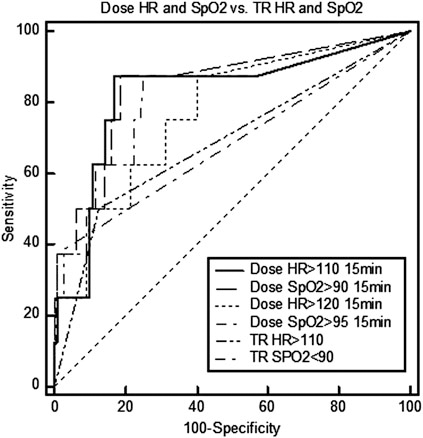
ACU curves from ROC analysis of Dose HR and SpO2 vs. TR HR and SpO2.
Compare the methods for predicting patient outcome by using field (in flight) real-time patient vital signs. Discuss the real-time telemedical application based on the prediction method.
Director Burn Center
Learn the appropriate triage of burn patients. Learn how telemedicine can be used to provide cost effective burn treatment.
Assistant Professor of Surgery, Director of Trauma Telemedicine
Connecting from the Scene: Equipping First Responders with Emerging Telemedicine Applications in the Field
First responders and emergency personnel know that lifesaving decisions are time sensitive and require access to effective communication tools for the exchange of critical patient information. Telemedicine is transforming the delivery of trauma care through the use of rapidly deployable, lightweight mobile devices that allows first responders to connect immediately from the accident scene. In a pilot project between the Ryder Trauma Center in Miami, Florida and Key West Rescue, wireless, high-speed powerful tablet PCs and high definition cameras have been deployed to emergency responders. Key West is the southernmost city in the country and in a rural county with large travel distances and only one major road to enter and exit the Florida Keys. When patients need aerial transport, the travel time is one hour. Key West is one of the nation's first communities to use this technology inside ambulances and medical helicopters. Through the use of interactive, real-time videoconferencing equipment and mobile devices, pertinent patient information can be transmitted to a trauma specialist while the patient is being treated in the field, in ambulances or medical helicopters. Access to patient information through live video transmission facilitates triage decisions regarding the transfer of patients, thus avoiding unnecessary costly transfers as well improving patient management when transfers are needed. This is especially significant for specialized services otherwise unavailable in rural areas such as with stroke, burns and cardiac care. By seeing the patient, trauma surgeons can guide emergency personnel on potentially life-saving interventions during the “golden hour”. In return, emergency personnel feel supported and guided, thereby potentially increasing their skills. Telemedicine mobile systems in acute trauma environments have the potential to reduce the gap in care between rural and urban areas. This presentation will focus on implementation goals and outcomes, challenges, lessons learned, reproducibility and plans for the future.
To describe the use of mobile devices to link emergency personnel in the field with trauma center, transmitting images and patient information. To discuss implementation goals and challenges, reproducibility and sustainability.
Individual Oral PanelSession Number 69
Director of Research
Making Remote Alerting Systems Trustworthy for Meaningful Use: A Decision Science Perspective
Beyond the technical aspects, an alerting system will not achieve meaningful use unless (a) caregivers actively respond to alerts, possibly transferring the patient to a more intensive level of care, and (b) patients normally are not transferred to a more intensive level of care while the system is not generating an alert. Detection of true positives, false positives, true negatives, and false negatives is presented, as false positives and false negatives are inevitable in any real system. Excessive false positives cause alarm fatigue, while excessive false negatives require caregivers to expend resources double-checking on patients, thus depleting resources that the alerting system should have freed. The rates of true positives and false positives depend on the critical level of deviation at which an alert is generated. The main body of the presentation will discuss the application of the "Receiver Operator Characteristic" (ROC) curve, which shows the likelihood of these events for all possible critical levels. The area under a ROC curve is often used to assess the overall power of an alerting system; the use of a budget line is sometimes more appropriate in medical applications. The main part of the presentation will cover the merits of these measures and a nontechnical exposition of how they work, in the context of various telehealth areas of application. The purpose is to increase awareness of an important tool for building telehealth systems that avoid two of the biggest reasons for abandonment of technically-promising systems: alarm fatigue from excessive false positives, and reliance on traditional methods to the exclusion of the alerting system due to excessive false negatives. A system that fails for one of these reasons might have succeeded if it had been tuned to a better balance of sensitivity versus precision.
Avoid abandonment of alerting system due to alarm fatigue from excessive false positives. Avoid abandonment of alerting system due to returning to traditional methods to the exclusion of the alerting system due to excessive false negatives.
School of Health and Rehabilitation Sciences
VoIP for Telerehabilitation: A Risk Assessment for HIPAA Compliance
Establish privacy and security policies related to HIPAA that are important when using Voice over the Internet Protocol (VoIP) software for telemedicine and telrehabilitation services with patients. Conduct a risk assessment on Voice over the Internet Protocol (VoIP) software to determine if it is HIPAA compliant when used for telerehabilitation or telemedicine video conferencing with patients.
Operation Specialist for Telemedicine
Tradeoffs and Unintended Consequences Inherent in Widespread Desktop Videoconferencing Deployments
From 2009 to 2010, the University of Washington deployed desktop videoconferencing systems (DVC) to over 30 clinicians in 18 community and tribal clinics across five states: Alaska, Washington, Montana, Idaho, and Oregon. These clinicians presented over 300 patient cases to psychiatry, addictions, infectious disease, and hepatology specialists at the University of Washington. The end-to-end infrastructure was monitored during 300 case presentations and clinicians, IT staff, and clinic administrators were questioned on performance. Findings from this internal study identified key tradeoffs present in desktop videoconferencing deployments. These tradeoffs embodied both concrete benefits and unintended consequences of utilizing DVC for telehealth. The benefits overwhelmingly aided community-based clinicians who benefited from the availability, convenience, and ‘workflow fit,’ of desktop videoconferencing for specialty consultations. Despite the presence of these benefits, clinic sites experienced unintended consequences associated with desktop videoconferencing deployments. The first unintended consequence was a shift in service scheduling and telehealth management. For example, DVC disrupted existing organizational protocols for telehealth within the clinic. Once installed, clinicians used DVC at will. They scheduled and managed their own videoconferencing connections to suit their clinical needs independent of previously established protocols for telehealth services within the clinic. The second unintended consequence was unpredictable impact on network services and clinic applications with which desktop videoconferencing shares bandwidth. The third unintended consequence was communication breakdowns between clinical staff, IT staff, and clinic administrators. DVC gave clinical staff the capacity to control their videoconferencing at will, with or without communicating their activities to IT staff or clinic administrators. These findings extend informatics research on the sociotechnical impact of IT in clinical settings by identifying key tradeoffs inherent in DVC deployments. These findings suggest actionable strategies to capitalize on the benefits and minimize the unintended consequences of desktop videoconferencing deployments.
To elucidate key tradeoffs and unintended consequences experienced in desktop videoconferencing deployments. To disseminate actionable strategies to capitalize on the benefits and minimize the unintended consequences of videoconferencing deployments.
Presentation PanelSession Number 70
Chief Innovation Officer
President
Marketing and Reimbursement
UCLA Health System, Los Angeles, CA
Over 50 million Americans are enrolled in federal health insurance programs that have the full authority and funding to immediately provide health services via telemedicine - 33 million people in Medicaid Managed Care, 11 million in Medicare Advantage and 8 million veterans in the VHA's health system. Additional opportunities will arise in the next 12 months with Accountable Care Organizations and Independence at Home initiatives. Hear what you need to know about providing telehealth services and products for them.
Presentation PanelSession Number 71
Chief Medical Officer
Associate Chief Mental Health Officer
Patient Safety Officer
PHS Correctional Healthcare has been utilizing telemedicine to deliver quality care in corrections for a number of years in several states. PHS recognizes that disease management for 2010 and beyond requires ingenuity and novel approaches, with an ongoing focus on safety, efficacy and cost combined with recognized principles of standardization, risk management and decision support. A number of disease management tools utilized with telemedicine, enhance the services provided. Tools that will be described include disease registries, pharmacy services reports, lab data and the use of EHR's. PHS has been able to demonstrate that telemedicine can be applied to deliver quality primary care in corrections; including management of chronic diseases and psychiatry. PHS has identified the utilization of telemedicine as a way to leverage "best practices" and make significant improvements in standardizing patient care. Telepsychiatry has long been an application of telemedicine and is increasingly utilized in corrections as well as the private sector. This technology provides rapid access to care, especially when coupled with an EHR and CPOE. This presentation will demonstrate that combining telepsychiatry with an EHR enhances clinical care, patient satisfaction and mitigates diagnostic errors. Learning objectives will focus on methods to collaborate with primary care, real time patient care and CPOE, and the doctor-patient relationship via telepsychiatry. Chronic care is another application that has proven useful for disease management, change management and promotion of safety, efficacy and cost. Chart reviews of over 600 chronic care telemedicine encounters were reviewed. Outcome data will be described showing that 70% of patient encounters had significant disease management actions taken. 120 ineffective or unnecessary medications were discontinued and 160 medication doses were adjusted. 96% of patients were managed effectively via telemedicine.
Recognize that the delivery of chronic care telemedicine is an effective means of disease management as evidenced by outcome metrics for over 60 patients. Define how disease management tools when applied to telemedicine improve the quality of primary care and mental healthcare via telepsychiatry.
Poster Presentations Abstract Index
American Telemedicine Association 2011 Poster Presentations Abstract Index
5:15 pm–6:30 pm Monday, May 2
P1 A SYSTEMATIC REVIEW OF TELEHOSPICE RESEARCH
1University of Missouri, Columbia, MO, USA, 2University of Washington, Seattle, WA, USA, 3University of North Texas, Denton, TX, USA, 4University of Louisville, Louisville, KY, USA
P2 USABILITY TESTING OF SMARTPHONE APPS FOR SPINA BIFIDA: CLINICAL PERSPECTIVE
University of Pittsburgh, Pittsburgh, PA, USA
P3 SMARTPHONES IN OPHTHALMOLOGY PRACTICE: SCREENING FOR BLINDING DISEASES
University of Pittsburgh, Pittsburgh, PA, USA
P4 TELENURSING: AN EFFECTIVE HOME HEALTH PROVISION
University of Kansas Medical Center-School of Nursing, Kansas City, KS, USA
P5 USING TELEHEALTH TO DELIVER SPECIALIZED SPEECH THERAPY TO CHILDREN WITH COCHLEAR IMPLANTS
1University of Wyoming, Laramie, WY, USA, 2University of New Mexico, Albuquerque, NM, USA, 3Healthbridge Systems, Boulder, CO, USA, 4University of Colorado Boulder, Boulder, CO, USA, 5The Keystone Project, Boulder, CO, USA, 6Listening for Life LLC, Denver, CO, USA
P6 REACHING OUT TO TELEPSYCHIATRY PROVIDERS WITH ONLINE ORIENTATION AND TRAINING
NARBHA, Flagstaff, AZ, USA
P7 TELEHEALTH: CREATING OFFICE EFFICIENCIES - MYTH OR REALITY
1Marquette General Health System, Marquette, MI, USA, 2Wayne State University - College of Nursing, Detroit, MI, USA
P8 ENHANCEMENT VS. DISRUPTION: TELEHEALTH TECHNOLOGY CHANGES NURSING WORK PROCESSES
University of Minnesota, Minneapolis, MN, USA
P9 IN-PERSON, VIDEO, AND TELEPHONIC MEDICAL INTERPRETATION
1National Library of Medicine, Bethesda, MD, USA, 2Medical University of South Carolina, Charleston, SC, USA
P10 THE USE OF MOBILE (CELLULAR) ORAL TELEMEDICINE IN BOTSWANA
1Medical College of Wisconsin / Botswana-UPenn Partnership, Milwaukee, WI, USA / Gaborone, Botswana, 2Botswana-UPenn Partnership, Gaborone, Botswana, 3Princess Marina Hospital, Department of Oral Medicine, Gaborone, Botswana, 4University of Pennsylvania Medical Center, Department of Dermatology, Philadelphia, PA, USA
P11 AN EXAMINATION OF THE PERCEPTIONS OF NURSES DURING AN EMR IMPLEMENTATION
Veterans Affairs Ann Arbor Health System (HSR&D), Ann Arbor, MI, USA
P12 DEVELOP REGIONAL COLLABORATIVE MEDICAL SERVICE AND TELEMEDICINE TO IMPROVE NATIONAL HEALTH CARE IN CHINA
Chinese PLA General Hospital, Beijing, China
P13 EMR-HIE TELEMEDICINE SERVICES FOR MEDICALLY COMPLEX CHILDREN ON THE NAVAJO NATION
1United Healthcare, Phoenix, AZ, USA, 2Arizona Department of Health Services, Phoenix, AZ, USA
P14 TELEMEDICINE AND DISTANCE EDUCATION APPLICATIONS FOR AT-RISK SUBSTANCE USE BEHAVIORS IN THE MILITARY
Saint Francis University CERMUSA, Loretto, PA, USA
P15 USE OF A COMMUNITY-BASED TELEHEALTH PLATFORM FOR COGNITIVE ASSESSMENT OF OLDER ADULTS
University of Washington, Seattle, WA, USA
P16 BARRIERS AND FACILITATORS TO THE USE OF TELEHEALTH FOR HEART FAILURE BY HOME HEALTHCARE NURSES AND PATIENTS WITH HF
1University of Massachusetts, Amherst, MA, USA, 2Baystate Health, Springfield, MA, USA
P17 REMOTE DELIVERY OF A PHASE 2 CARDIAC REHABILITATION PROGRAM
Iowa City VA Medical Center, Iowa City, IA, USA
P18 FALL REDUCTION: AN UNEXPECTED BENEFIT OF TELEMONITORING IN THE HOME HEALTHCARE SETTING
Heritage Home Healthcare, Albuquerque, NM, USA
P19 PEDIATRIC AMBULANCE PROOF OF CONCEPT FOR DISASTERS: MOBILE VIDEO AND RADIO FREQUENCY (RFID) TRACKING
1University of Utah, Salt Lake City, UT, USA, 2Center for Health and Technology, UC Davis, Sacramento, CA, USA, 3UC Davis, Department of Pediatrics, Sacramento, CA, USA, 4UC Davis, Center for Health and Technology, Sacramento, CA, USA
P20 BRIEF EPISODES OF ABNORMAL SHOCK INDEX PREDICTS MORTALITY IN SEVERE TRAUMATIC BRAIN INJURY
1University of Maryland School of Medicine, Baltimore, MD, USA, 2R Adams Cowley Shock Trauma Center, Baltimore, MD, USA
P21 ASSESSMENT OF SWALLOWING DISORDERS VIA TELEREHABILITATION
1Division of Speech Pathology, The University of Queensland, Brisbane, Australia, 2Telerehabilitation Unit, The University of Queensland, Brisbane, Australia, 3Center for Functioning and Health Research (CFAHR), Queensland Health, Brisbane, Australia, 4Speech Pathology Department, The Royal Brisbane & Women's Hospital, Brisbane, Australia, 5Division of Physiotherapy, The University of Queensland, Brisbane, Australia
P22 DESIGN AND EVALUATION OF MOBILE PORTABLE TELEMEDICINE SYSTEM DEVELOPED FOR THE EMS AND TRANSPORT ENVIRONMENT
InTouch Health, Santa Barbara, CA, USA
P23 PSYCHOMETRIC COMPARISON OF REMOTE-TELEVIDEO AND FACE-TO-FACE ADMINISTRATION OF A COGNITIVE ASSESSMENT BATTERY
1University of California, Irvine School of Medicine, Irvine, CA, USA, 2NeuroComp Systems, Inc., Irvine, CA, USA, 3Veterans Administration Healthcare System, Long Beach, CA, USA, 4University of California, San Diego, CA, USA, 5Veterans Medical Research Foundation, San Diego, CA, USA
P24 ACHIEVING MEANINGFUL USE THROUGH IMPROVED DOCUMENTATION OF TOBACCO STATUS
1Sutter Health, Roseville, CA, USA, 2Sutter Institute for Medical Research, Sacramento, CA, USA, 3California Diabetes Program, University of California San Francisco, California Department of Public Health, Sacramento, CA, USA, 4California Smokers' Helpline, University of California San Diego, San Diego, CA, USA
P25 TELEHEALTH STROKE PREVENTION EDUCATION IN ELDERLY APPALACHIAN VIRGINIANS
1University of Virginia, Charlottesville, VA, USA, 2Old Dominion University, Norfolk, VA, USA, 3MEOC PACE, Big Stone Gap, VA, USA
P26 DEVELOPING THE CAPACITY TO DEVELOP CAPACITY: A NEW MODEL FOR AFRICA
Nelson R Mandela School of Medicine, Durban, South Africa
P27 TELE-AUDIOLOGY PRACTICE IN A VARIETY OF SETTINGS
1East Carolina University, Greenville, NC, USA, 2Eastern Carolina ENT Head & Neck Surgery, Greenville, NC, USA
P28 NORTHERN CALIFORNIA KAISER PERMANENTE'S TELEDERMATOLOGY PROGRAM IMPROVES TIME TO BIOPSY FOR SKIN CANCER
1Center for Healthcare Delivery, Kaiser Permanente, Oakland, CA, USA, 2Emory University, Atlanta, GA, USA
P29 M-HEALTH PLATFORM ARCHITECTURE OPTIMIZATION FOR DEPLOYED AND DISASTER RELIEF OPERATIONS
1Arlington Innovation Center, Virginia Tech, Alexandria, VA, USA, 2Seoul National University, Seoul, Republic of Korea
P30 EXPANDING PEDIATRIC CARE TO RURAL WEST TEXAS
TTUHSC, Lubbock, TX, USA
P31 INVESTIGATING AN UNIFORM DATA SYSTEM FOR TELEREHABILITATION
University of Pittsburgh, Pittsburgh, PA, USA
P32 HESITATION OF RURAL AMERICANS TO PARTICIPATE IN RESEARCH AND DISEASE MANAGEMENT PROGRAMS AND WHAT WE CAN DO ABOUT IT
Mountain States Health Alliance, Johnson City, TN, USA
P33 YEAR 1 EXPERIENCE OF A NEW TELEHEALTH RESOURCE CENTER
University of Arizona, Tucson, AZ, USA
P34 A ROLE FOR TELEMEDICINE IN THE REDUCTION OF CONTROLLED SUBSTANCE MISUSE AND DIVERSION
University of Louisville, Louisville, KY, USA
P35 IMPROVING TELECONSULTATION USE: A SUCCESSFUL EXPERIENCE
Universidade Federal de Minas Gerais, Belo Horizonte, Brazil
P36 CHALLENGES OF A COMPREHENSIVE PERSONAL HEALTH RECORD
TATRC, Fort Detrick, MD, USA
P37 THE TELE-ICU DURING A “DISASTER”: SEAMLESS TRANSITION FROM ROUTINE OPERATIONS TO DISASTER MODE
1University of Maryland Shock Trauma Center, Baltimore, MD, USA, 2University of Maryland Medical Center, Baltimore, MD, USA
P38 EMERGENCY TELE-MEDICINE RESPONSE: PAKISTAN FLOODS 2010
1Rawalpindi Medical College, Rawalpindi, Pakistan, 2Surgical Unit II, Holy Family Hospital, Rawalpindi, Pakistan, 3Mayo Hospital, Lahore, Pakistan, 4Telemedicine & e-Health Training Center, Holy Family Hospital, Rawalpindi, Pakistan
P39 VISUALIZING THE TELEREHABILITATION LITERATURE
University of Pittsburgh, Pittsburgh, PA, USA
P40 ANALYSIS OF USER GENERATED IMAGES AS DIAGNOSTIC AID IN ACUTE CARE
George Washington University, Washington, DC, USA
P41 REGIONAL CARDIAC TELECARE PROGRAM: INNOVATIVE ACCESS TO SPECIALIZED CARE!
University of Ottawa Heart Institute, Ottawa, ON, Canada
P42 TELEMEDICINE TO ENHANCE COMMUNICATION BETWEEN AT-HOME ATTENDINGS AND BEDSIDE PERSONNEL IN A PICU
Massachusetts General Hospital, Boston, MA, USA
P43 SCHOOL NURSE PERCEPTIONS OF EVOLVING SCHOOL-BASED TELEMEDICINE IN KANSAS
University of Kansas Medical Center, Kansas City, KS, USA
P44 GAMBLING WITH CARE COORDINATION: THE CHALLENGE OF FREQUENT ALERTS (Abstract Withdrawn)
NF/SG VA Medical Center, Gainesville, FL, USA
P45 QUALITY OF LIFE IN DECOMPENSATED HEART FAILURE HOME TELEHEALTH PATIENTS (Abstract Withdrawn)
NF/SG VA Medical Center, Gainesville, FL, USA
P46 SYSTEM REDESIGN OF TELEHEALTH TO REDUCE READMISSIONS FOR DECOMPENSATED HEART FAILURE (TDHF): A BEST PRACTICE MODEL (Abstract Withdrawn)
NF/SG VA Medical Center, Gainesville, FL, USA
P47 IMPROVING HEALTH SERVICES IN GILGIT-BALTISTAN THROUGH TELEHEALTH
Aga Khan University, Karachi, Pakistan
P48 ECUADORIAN SOCIAL SECURITY'S TELEPHONE APPOINTMENTS AND MEDICAL TRIAGE 24 X 7 PROGRAM
Cronix, Quito, Ecuador
P49 GENERAL PEDIATRICIANS AS ECHOCARDIOGRAPHERS: TELE-ECHOCARDIOGRAPHY IMPROVES ACCESS AT REMOTE LOCATIONS
1Madigan Army Medical Center, Tacoma, WA, USA, 2St Joseph Hospital & Medical Center, Phoenix, AZ, USA
P50 CRAFTING FLORIDA'S HEALTH INFORMATION EXCHANGE AND TELEMEDICINE POLICIES BASED ON HEALTH IT SURVEY DATA
Telehealth Florida, Tallahassee, FL, USA
P51 INTERNATIONAL TRAUMA TELECONFERENCE: EVALUATING TRAUMA CARE AND FACILITATING QUALITY IMPROVEMENT
1Broward General Medical Center, Fort Lauderdale, FL, USA, 2Nova Southeastern University - College of Osteopathic Medicine, Fort Lauderdale, FL, USA, 3Clinica Los Rosales, Pereira, Colombia, 4Hospital San Felix, La Dorada, Colombia, 5Instituto Ecuatoriano del Seguro Social, Manta, Ecuador
P52 TELEHEALTH FOR ADULT FAMILY HOMES: AN UNEXPLORED TERRITORY
University of Washington, Seattle, WA, USA
P53 WHAT IS THE FINANCIAL IMPACT OF NOT HAVING A TELESTROKE PROGRAM?
REACH Call, Augusta, GA, USA
P54 INTERDISCIPLINARY TELEMEDICINE AND ANALGESIC COMPLIANCE
1Health Education for Living with Pain, San Mateo, CA, USA, 2Department of Anesthesia - Division of Pain Medicine, University of Texas Southwestern Medical Center, Dallas, TX, USA
P55 MOBILE NURSE - TELENURSE BASED ON WIMAX
1Mingjong Hospital, Pingtung, Taiwan, 2National Pingtung Hospital, Pingtung, Taiwan, 3Hengchun Tourism Hospital, Pingtung, Taiwan, 4Chyun Huei Health Technologies Inc., Taipei, Taiwan
P56 THE USE OF MOBILE TELEDERMATOLOGY TO IMPROVE ACCESS TO CARE IN PHILADELPHIA
1University of Toronto, Toronto, ON, Canada, 2University of Pennsylvania, Philadelphia, PA, USA
P57 HEALTH INFORMATICS RESEARCH ACTIVITIES IN ASIAN COUNTRIES: PRELIMINARY EVIDENCE FROM SYSTEMATIC REVIEW
The Aga Khan University, Karachi, Pakistan
P58 THE HYDRA PROJECT - PERFORMING TELEHEALTH OVER THE SMART METER INFRASTRUCTURE
Brunel University, Uxbridge, United Kingdom
P59 IMPLEMENTATION OF TELEHEALTH IN AN URBAN PUBLIC SCHOOL SYSTEM -- LESSONS LEARNED FROM THE FIRST YEAR OF OPERATION
University of Miami Miller School of Medicine, Miami, FL, USA
P60 WALK WITH VETERANS PILOT STUDY: USING AN AUTOMATED ONLINE PEDOMETER-BASED WALKING PROGRAM FOR VETERANS WITH COPD
Ann Arbor VA HSR&D Center of Excellence, Ann Arbor, MI, USA
P61 THE USE OF SOCIAL MEDIA IN TELEMEDICINE: WHERE WE HAVE BEEN, AND WHERE WE CAN GO
Michigan State University, East Lansing, MI, USA
P62 THE APPLICATION OF TELEDERMATOLOGY TO DETERMINE TREATMENT DECISION FOR RECEIVING CHEMOTHERAPY
Memorial Sloan-Kettering Cancer Center, New York, NY, USA
P63 TELEHEALTH IS BETTER THAN TRADITIONAL FACE-TO-FACE ENCOUNTERS
University of Kentucky, Lexington, KY, USA
P64 TELEHEALTH AND TELECOMMUNICATIONS AS SOCIAL SUPPORT INTERVENTIONS FOR CHILDREN WITH SPECIAL HEALTH CARE NEEDS
Medical University of South Carolina, Charleston, SC, USA
P65 GUIDELINES FOR DEVELOPMENT AND REIMBURSEMENT OF ORIGINATING SITE FEES FOR MARYLAND'S TELEPSYCHIATRY PROGRAM
Mid Shore Mental Health Systems, Inc, Easton, MD, USA
P66 MISSOURI TELEHEALTH NETWORK - A SUSTAINABLE TELEHEALTH PROGRAM: STRATEGY TO E-HEALTH
University of Missouri, Columbia, MO, USA
P67 MOBILE (CELLULAR) TELEMENTORING IN BOTSWANA
1University of Pennsylvania Medical Center, Philadelphia, PA, USA, 2Botswana-UPenn Partnership, Gaborone, Botswana, 3Medical College of Wisconsin, Milwaukee, WI, USA, 4University of Pennsylvania Biomedical Library, Philadelphia, PA, USA, 5University of Botswana, Gaborone, Botswana, 6University of Pennsylvania Medical Center, Department of Dermatology, Philadelphia, PA, USA
P68 TELESPIRITUAL CARE: INTEGRATING TECHNOLOGY IN THE APPLICATION OF SPIRITUAL CARE
Spiritual Care Services, LLC, Mooresboro, NC, USA
P69 TELEHEALTH TRENDS EMERGING FROM TELE-EDUCATION
AMBiT Consulting Inc, Vancouver, BC, Canada
P70 TELE-REHABILITATION SUPPORTING COMMUNITY-BASED REHABILITATION PROGRAM FOR INDIGENOUS COMMUNITIES IN AMAZONAS
1Colombian Telemedicine Centre, Cali, Colombia, 2Ottawa Hospital, University, The Ottawa Hospital Rehabilitation Centre, Institute for Rehabilitation Research and Development, Ottawa, ON, Canada, 3Centre Hospitalier Universitaire de Québec-CHUQ, Quebec, QC, Canada, 4IDEAL Foundation for the Integral Rehabilitation, Cali, Colombia, 5Disability Assistance Program, Secretary of Health, Amazonas, Leticia, Colombia
P71 NO LONGER AN ISLAND: RURAL NURSE PRACTITIONERS GAIN SUPPORT THROUGH TELEHEALTH
University of Arkansas for Medical Sciences, Little Rock, AR, USA
P72 FINDING THE RIGHT KEYS TO SUCCESS (Abstract Withdrawn)
NF/SG VHS, Lake City, FL, USA
P73 HEALTH CARE REFORM AND EVOLUTION OF A TELEMEDICINE SYSTEM
1Grande Ronde Hospital, La Grande, OR, USA, 2Saint Alphonsus Regional Medical Center, Boise, ID, USA, 3Boise State University, Boise, ID, USA
P74 SEEING IS BELIEVING: TELEMEDICINE IMPROVES ACCESS TO GENETICS CONSULTS IN A RURAL STATE
University of Arkansas for Medical Sciences, Little Rock, AR, USA
P75 USING TELEMEDICINE TO FACILITATE RESPONSIBLE NEONATAL TRANSPORTS SAVES MONEY AND TIME
University of Arkansas for Medical Sciences, Little Rock, AR, USA
P76 PATIENT ACCEPTANCE OF A HOME-BASED CANCER SYMPTOM REPORT AND TRACKING SYSTEM
1BrightOutcome, Buffalo Grove, IL, USA, 2University of Arizona, Tucson, AZ, USA
P77 DISCERNING SUCCESSFUL TELEMEDICINE APPLICATIONS FOR OBSTETRICS AND NEONATOLOGY
University of Arkansas for Medical Sciences, Little Rock, AR, USA
P78 REMOTE PRESENCE GENERAL SURGERY PROGRAM: BUILDING SURGERY CAPACITY IN RURAL COMMUNITIES
1Saint Alphonsus Regional Medical Center, Boise, ID, USA, 2Boise State University, Boise, ID, USA
P79 STOPPING TOBACCO, STARTING CHANGES IN PREGNANCY CARE: TELEMEDICINE-BASED PROVIDER EDUCATION
University of Arkansas for Medical Sciences, Little Rock, AR, USA
P80 ECHOES OF INNOVATION: PRELIMINARY OUTCOMES OF PERINATAL TELEMEDICINE ECHO PROGRAMS
University of Arkansas for Medical Sciences, Little Rock, AR, USA
P81 TATRC WEST FACILITATES PARTNERSHIPS IN SUPPORT OF NOVEL MEDICAL SIMULATION TECHNOLOGIES (Abstract Withdrawn)
1TATRC, Marina del Rey, CA, USA, 2University of California Los Angeles, Los Angeles, CA, USA
P82 ELECTRONIC PATIENT PORTAL DEVELOPMENT FOR OVARIAN CANCER SURVIVORS
1Arizona Telemedicine Program, Tucson, AZ, USA, 2University of Arizona, Tucson, AZ, USA, 3Caracal, Inc, Buffalo Grove, IL, USA
P83 MUJER A MUJER: STORIES OF BREAST CANCER SURVIVORS
1Arizona Telemedicine Program, Tucson, AZ, USA, 2Arizona Cancer Center, Tucson, AZ, USA
P84 ¡VIDA! BREAST CANCER TELE-EDUCATION FOR BREAST CANCER SURVIVORS AND HEALTH CARE PROVIDERS
Arizona Telemedicine Program, Tucson, AZ, USA
P85 DEVELOPMENT OF AN ELECTRONIC COLORECTAL CANCER SCREENING AND DIAGNOSIS DECISION MAKING TOOL
1Arizona Telemedicine Program, Tucson, AZ, USA, 2University of Arizona, Tucson, AZ, USA, 3Caracal Inc, Buffalo Grove, IL, USA
P86 TREATMENT AVOIDANCE IN PTSD PATIENTS: FACE-TO-FACE VERSUS TELEMEDICINE
1VA San Diego, San Diego, CA, USA, 2Veterans Medical Research Foundation, San Diego, CA, USA
P87 DEVELOPMENT OF SUSTAINABLE AND REPLICABLE MODEL OF TELEMEDICINE, EXPERIENCE SHARING
Cardiovascular Center Project, Ulaanbaatar, Mongolia
P88 E-HEALTH AND EDUCATIONAL SOCIAL NETWORK - DRAMATURGY AS A MOTIVATING RESOURCE TO APPROACH DIFFICULT THEMES
University of Sao Paulo - Medical School, Sao Paulo, Brazil
P89 A ONE-YEAR OUTCOMES ASSESSMENT OF REMOTE DIABETIC RETINOPATHY MANAGEMENT USING THE TRIAD OCULAR TELEHEALTH NETWORK
1University of Tennessee Health Science Center, Hamilton Eye Institute, Memphis, TN, USA, 2Oak Ridge National Laboratory, Oak Ridge, TN, USA, 3Church Health Center, Memphis, TN, USA
P90 LEGAL AND POLICY ISSUES FOR HOME TELEHEALTH EVOLVING IN 2011 (Abstract Withdrawn)
Law Office of Deborah Randall, Chevy Chase, MD, USA
P91 TELEHEALTH PRACTICE GUIDELINES FOR DIABETIC RETINOPATHY
1Beetham Eye Institute, Joslin Diabetes Center, Boston, MA, USA, 2Harvard Medical School, Boston, MA, USA
P92 TELEMEDICINE IN THE ICU: REAL-TIME FEEDBACK IMPROVES VENTILATOR ASSOCIATED PNEUMONIA BUNDLE PROGRAM
St. John's Mercy, St. Louis, MO, USA
P93 EMERGING ROBOTICS APPLICATIONS FOR TELEMEDICINE AND PATIENT CARE: THE ROBOTIC NURSING ASSISTANT
Hstar Technologies Corp., Cambridge, MA, USA
P94 MEASURABLY REDUCING BLOOD PRESSURE: REMOTE HEALTH MONITORING WITH MHEALTH
Healthanywhere, MIssissauga, ON, Canada
P95 FEASIBILITY OF IN-HOME TELEHEALTH LACTATION CONSULTATION
1University of Kansas Medical Center, Kansas City, KS, USA, 2Graceland University, Independence, MO, USA
P96 PROVIDING A SUSTAINABLE MODEL OF PATIENT EDUCATION THROUGH INFORMATION TECHNOLOGY
1Saint Francis University, Loretto, PA, USA, 2Broad Top Area Medical Center, Broad Top City, PA, USA
P97 DISTANCE LEARNING AND HIGH-FIDELITY MEDICAL SIMULATION IN A BACCALAUREATE NURSING PROGRAM
Saint Francis University, Loretto, PA, USA
P98 USER-CENTERED DESIGN FOR EVALUATING TELEREHABILITATION USER NEEDS AND CLINICIAN-PATIENT INTERACTION
National Rehabilitation Hospital, Washington, DC, USA
P99 AN MHEALTH BASED PERSONALIZED DRUG TAKING ADVISOR SYSTEM FOR A LARGE POPULATION
1Tsinghua University, Beijing, China, 2IVT, Beijing, China
P100 REUSING GENOME WIDE ASSOCIATION DATA IN EMR FOR CLINICAL DECISION SUPPORT IMPROVEMENT
University of South Florida, Tampa, FL, USA
P101 OPHTHALMOLOGY CLINICAL GRAND ROUNDS ACROSS THE BORDERS
1Federal University of Goias, Goiania, GO, Brazil, 2Federal University of Sao Paulo, Sao Paulo, SP, Brazil, 3Instituto Zaldivar, Mendoza, Argentina
P102 BEHAVIORAL ASSESSMENTS FOR CHILDREN WITH AUTISM THROUGH TELEHEALTH
University of Iowa, Iowa City, IA, USA
P103 REMOTE ASSESSMENT OF MEMORY IN RURAL AMERICAN INDIANS VIA VIDEOCONFERENCE
1University of Texas Southwestern Medical Center at Dallas, Dallas, TX, USA, 2University of Colorado Denver, Denver, CO, USA
P104 TELESSAUDE GOIAS (GO TELEHEALTH)
Federal University of Goias, Goiania, GO, Brazil
P105 EFFECTIVENESS OF TELEMEDICINE SYSTEM TO MEDICAL EXPENDITURES OF HEART DISEASE PATIENTS
University of Hyogo, Kobe, Hyogo, Japan
P106 EMPIRICAL STUDY OF EMERGENCY MEDICAL SERVICES FOR ACS PATIENTS AND IMPLICATIONS FOR TELEMEDICINE
University of Hyogo, Kobe, Japan
P107 AN ASSESSMENT OF VIDEOCONFERENCING UNITS’ ENERGY CONSUMPTION AND RESTART PROPERTIES
University Health Network, Toronto, ON, Canada
P108 PERSONALIZED HOLISTIC MOBILE DIABETES MANAGEMENT SYSTEM
University of the West Indies, St. Augustine Campus, St. Augustine, Trinidad and Tobago
P109 THE APPLICATION OF TELEMEDICINE IN GERIATRIC EMERGENCY MEDICAL SERVICES
Wonju College of Medicine, Yonsei University, Wonju, Republic of Korea
P110 PEDIATRIC MEDICAL SIMULATION TRAINING FOR COMMUNITY HOSPITALS VIA TELEMEDICINE
Massachusetts General Hospital, Boston, MA, USA
P111 THE DEVELOPMENT OF A RURAL TELECRISIS PROGRAM
1Ontario Telemedicine Network, London, ON, Canada, 2Grey Bruce Health Services, Owen Sound, ON, Canada
P112 ON DEVELOPING SUCCESSFUL BUSINESS MODELS TO DEPLOY TELEMEDICINE SOLUTIONS FOR DIVERSE DEMOGRAPHICS
University of Texas at Dallas, Dallas, TX, USA
P113 CONTRACTUAL VERSUS FEE FOR SERVICE TELEPSYCHIATRY REIMBURSEMENT IN MARYLAND
University of Maryland, Baltimore, MD, USA
P114 TELEMEDICINE IN THE MEDIA: ATTRIBUTE AGENDA SETTING IN CALIFORNIA'S PRINT NEWS
UC Davis Health System, Sacramento, CA, USA
P115 THE NEW CENTERS FOR MEDICARE & MEDICAID INNOVATION: HOW IT WILL CHANGE TELEHEALTH (Abstract Withdrawn)
Center for Telehealth and E-Law (CTel) and Drinker Biddle & Reath, L.L.P., Washington, DC, USA
P116 REVIEW OF ROBOTIC TELEMEDICINE IN INTENSIVE CARE UNITS (ICU)
1University of Maryland, College Park, College Park, MD, USA, 2InTouch Health, Santa Barbara, CA, USA
P117 DEVELOPING TELEHEALTH IMPLEMENTATION STRATEGIES BASED ON ECONOMIC ASPECTS
Universidade Federal de Minas Gerais, Belo Horizonte - MG, Brazil
Poster Presentations Abstracts
5:15 pm–6:30 pm Monday, May 2
Associate Professor
Participants will identify the publish research related to telehospice. Participants will understand the methodological rigor and pertinence of the evidence in telehospice research.
Usability Testing of Smartphone Apps for Spina Bifida: Clinical Perspective
Smartphones can conveniently and inexpensively serve as vehicles to promote completion and monitoring of self-management tasks to maintain health and wellness of persons with chronic conditions. However, even with the rapid growth of smartphone hardware and software technologies, there are still significant limitations in the accessibility of these small, mobile devices. Their high degree of portability results in a trade off including limited size of the visual display, keyboard or touch screen capabilities. For many persons with disabilities, these limitations can become barriers to effectively and efficiently utilizing smartphone devices. Likewise, cognitive accessibility of current commercially available devices can be a challenge for some potential users with disabilities who may best benefit from in-vivo supports. Smartphone applications (“apps”) can be uniquely tailored to the needs of a population or specific user. The clinical considerations (i.e. cognitive, sensory and physical needs) that must be taken into account when designing apps for complex conditions, such as spina bifida, are discussed and generalized to other disability populations. Usability testing methods which follow design principles of human-computer interaction, with an emphasis on involving real users in the design process are described. Outcomes are reported with regard to the following aspects of accessibility: - Visual, auditory and tactile interfaces and application structure for enhancing ease of operation, effective and motivating interaction. - Automatic tailoring, context awareness and self-configuration of the user interface as determined by cognitive and physical motor abilities and preferences.
The Verizon Foundation, National Institute on Disability and Rehabilitation Research, Rehabilitation Engineering and Research Center on Telerehabilitation, Grant #: H133E090002.
Identify clinical considerations for smart phone application design as exemplified by the sensory, physical and cognitive needs of persons with spina bifida. Learn about usability testing methods of smart phone apps to support performance of self-management tasks to maintain health and wellness for persons with chronic conditions.
Assistant Professor
Smartphones in Ophthalmology Practice: Screening for Blinding Diseases
Clinical feasibility of teleconsultation using smartphones. Use of mobile phone in diabetic retinopathy related ocular lesions.
Professor
Telenursing: An Effective Home Health Provision
Telehealth is defined as the use of audio visual to deliver healthcare services and information, in real time, over distance. Telenursing, utilizes current telecommunication technology, that allows nurses to work with tools which support and advance current nursing practices. Nurses, in their office or at home, using the existing two way audio/visual technologies over regular phone lines can see patients in their own homes, regardless if the patient lives in a different city, county, state or country. Likewise, patients can see and hear ‘their’ nurse live while having direct communications. Telenursing allowed our nurses to employ a variety of technologies to support long-distance clinical health and home care assessments, required self administer daily Home Parental Nutrition 12 hour infusions. These patients' range in age from 25 to 64 (M = 50.6), were 50% female and were on HPN for life-long malignant therapy. With telehealth, these patients with complex treatment regimes were confidentially monitored and the families' questions answered. Data from 42-telehealth visits has resulted in positive evaluation from patients and caregivers. Patients are able to see and hear their nurse for immediate intervention, as nurses rated they could clearly observe the patients self aseptic and intravenous infusion techniques. Also nurses addressed their current health issues or questions. This delivery system of care to increased numbers of patients, has allowed a more consistent contact, at reduced costs. Positive patient outcomes and satisfaction are noted at a time when human and material resources are diminishing. Telehealth combined with Telenursing are effective strategies in the vision of global healthcare for the world population.
Will see how telehealth can be used to deliver healthcare services and information, in real time, over distance. Understand how telehealth can enable nurses to work with tools which support and advance current nursing practices.
Director, CRHRE
University of Wyoming, Laramie, WY, USA
We have developed a partnership in these three states to study the use of telehealth to improve access to speech/language therapy for children with cochlear implants. Our objective is to evaluate delivery of high-quality therapy to children who might otherwise not have access to it, with the long-term goal of carrying out clinical trials comparing the effectiveness of telehealth therapy in distance with face-to-face environments.
How telehealth can be used to deliver speech and hearing therapy in rural areas. What obstacles exist in delivering telehealth services to children.
Telemedicine Manager
Reaching Out to Telepsychiatry Providers with Online Orientation and Training
How does a rapidly growing telemedicine network, with providers joining from all over the country, ensure that quality of patient care remains consistent? NARBHA established a telepsychiatry program in 1996 with only Sara Gibson, MD, providing patient services. Since then, Dr. Gibson, now NARBHA's telemedicine medical director, has oriented each new telepsychiatry practitioner before they were allowed to see patients via video. The orientation aims to ensure that practitioners competently and appropriately use their video equipment; understand clinical telemedicine policies and procedures; and can orient new patients to telemedicine. Topics include camera angle, room setup, informed consent, confidentiality and privacy, record-keeping, prescribing, coding, and connection quality and security. As the network grew, Dr. Gibson could no longer individually orient practitioners in person or via video. Mailing an orientation recording solved the time problem but the DVD was not interactive and could not verify that practitioners watched the orientation. In May 2010, Dr. Gibson audio-recorded her slide presentation; this was posted online with all related documents. This provides easy, instant access for any practitioner, anywhere in the country; allows quick updates to any part of the orientation and accompanying policies, procedures, and forms; includes an online quiz to ensure that users view and understand the orientation; and lets users email Dr. Gibson with questions. To date, five new practitioners have completed the orientation. NARBHA also offers several online, interactive Telepsychiatry Basics presentations, which cover clinical and administrative/technical aspects of telepsychiatry. In addition, NARBHA's telemedicine website contains procedures and guidelines, tips and techniques, policies, resource links, and contact information so that telepsychiatry practitioners can access information and resources and stay up to date on network policies and changes.
Effective ways to reach remote practitioners with a telemedicine orientation. Items to cover in a telemedicine orientation for telemental health practitioners.
Director Upper Peninsula Telehealth Network/Educational Services
Marquette General Health System, Marquette, MI, USA
Healthcare delivered via telemedicine (TM) is comparable to face-to-face (FTF) encounters on quality and satisfaction, but little is known about how TM encounters differ from FTF in patient wait times. This study seeks to document the effect of TM on patient wait times, and to understand patient perceptions of efficiencies created by TM. We are collecting patient wait time data during clinical encounters for TM and FTF visits for practitioners in the Upper Peninsula Telehealth Network, a large clinical TM network of 46 sites in Michigan's northernmost region. Wait times for clinical encounter milestones (time taken to exam room and provider entry) are being documented for providers who see patients via TM and FTF during May, Aug., Nov. 2010, and Feb. 2011. Included in this sample are all TM encounters and all FTF visits during two consecutive, randomly selected days, during the identified months. Additionally, TM patients are being surveyed on perceptions of efficiencies created by TM. Preliminary data analyses indicate TM patients (n = 47) wait on average 7.76 minutes less than FTF patients (n = 245) to enter an exam room (M = 7.53 and M = 15.29 minutes, respectively, Welch t-test = −3.12, p < .01) and there are no significant differences between groups in the time spent waiting for providers in the exam room. Survey data indicate the majority of TM patients are white (85%) females (73%), with a mean age 46+/−16.97 years. TM saves patients time as FTF encounters would necessitate 4+ hours of travel time for 46% of respondents. Respondents agree TM saves time (87%), the care received via TM is as good as FTF (76%), and without TM, they would have to wait longer between visits (29%) or would have not have seen their provider (45%). Reasons why TM patients wait less than FTF patients are unclear. Future research should seek to understand these reasons as they may streamline FTF processes. Furthermore, preliminary data from this study may help to build the business case for TM.
Understand the impact of telemedicine on patient wait times and clinical encounters. Understand patient perceptions of efficiencies created by telemedicine.
Student
Enhancement Vs. Disruption: Telehealth Technology Changes Nursing Work Processes
Ambulatory care clinics rely on triage nurses to provide safe and effective nursing advice using the telephone. This low-tech telehealth modality is an integral component of triage nurse work processes. The purpose of this qualitative research is to understand the transformation of these processes when the delivery mode of triage changes from telephone to interactive video. Assessment of work processes before and after interactive video implementation provides a basis for evaluating this technologies impact on productivity. Cognitive ethnography uses short observations of representative activities to identify interactions and artifacts of task performance. Artifacts are physical components added to work processes to maintain, display or operate upon information. This research conducted a cognitive ethnography of telephone and interactive video triage episodes, collected during 32 hours of direct observation of triage nurses at a large, urban pediatric clinic. Semi-structured interviews and field notes supplemented data collection. Directed content analysis identified the tasks, interactions and artifacts used by the triage nurses. The final categories that emerged from the data were coordination of care, information hand-off, problem solving, workarounds and interruptions. Coordination of care is the central theme of triage nurse workflow. Interactive video triage changes nursing work processes. All triage is initiated by telephone. Interactive video triage adds additional tasks and artifacts; the nurse must open the software and initiate an interactive video call. Telephone triage supports verbal-only communication between nurse and parent. Interactive video triage supports verbal and visual communication between nurse, parent and child, supplementing triage interactions. The additional tasks, interactions and artifacts of interactive video triage change nurse work processes while providing additional information that could reduce the overall time needed to coordinate an episode of care. The next step is a time-motion study of telephone and interactive video triage to quantify nurse productivity using the different delivery modes.
Discuss the role of human factors research in evaluating the work impact of telehealth technology. Describe the disruption and enhancement of ambulatory care nursing triage when interactive video replaces telephone interactions.
Project Officer
National Library of Medicine, Bethesda, MD, USA
Using trained interpreters to provide medical interpretation services is superior to services provided on an ad hoc basis, but little is known about the effectiveness of providing their services remotely, especially using video. Remote medical interpretation services by trained interpreters via telephone and videoconference were compared to those provided in-person. Two hundred and forty one encounters with Spanish speaking patient volunteers involving twenty four health providers and seven interpreters were assessed. Patients, providers and interpreters each independently completed scales evaluating the quality of clinical encounters and, optionally, made free text comments. Interviews were conducted with twenty three of the providers, the seven interpreters, and a subset of thirty patients. Time data were collected. Encounters with in-person interpretation were rated significantly higher by providers and interpreters, while patients rated all methods the same. There were no significant differences in provider and interpreter ratings of remote methods. Provider and interpreter comments on scales and interview data support the higher in-person ratings, but they also showed a distinct preference for video over the phone. Phone interviews were significantly shorter than in-person. Patients rated interpretation services highly no matter how they were provided but experienced only the method employed at the time of the encounter. Providers and interpreters were exposed to all three methods, were more critical of remote methods, and preferred videoconferencing to the telephone as a remote method. The significantly shorter phone interviews raise questions about the prospects of miscommunication in telephonic interpretation, given the absence of a visual channel, but other factors might have affected time results. Since the patient population studied was Hispanic and predominantly female care must be taken in generalizing these results to other populations.
How three methods of medical interpretation compare. User preferences for in-person and remote methods.
Medical Student
Medical College of Wisconsin / Botswana-UPenn Partnership, Milwaukee, WI, USA / Gaborone, Botswana
Discuss the use of mHealth software/technology. Demonstrate the practice of mHealth in international settings.
Post-Doctoral Researcher
An Examination of the Perceptions of Nurses During an EMR Implementation
Electronic medical records (EMR), the computerized storage and retrieval of patients' health data, have the potential to improve the quality of healthcare services, reduce medical errors and lower medical costs. Despite these benefits, healthcare providers have traditionally been slow in the adoption of these systems. Past research of EMRs tends to focus on physician perceptions and their adoption tendencies, even though nurses are the front-line of patient care and have a great deal of patient charting responsibilities. This study sought to better understand the intended adoption behaviors of nurses during an EMR implementation. A mixed methods approach was used to better document the adoption perceptions of nurses during an EMR implementation. The first phase was conducted via an online survey with nurses (n = 113) from a regional hospital in Michigan at their last EMR training session. The second phase used an interview guide with nurses (n = 31) from the hospital's intensive care unit/critical care unit (ICU/CCU) to further explore the findings from the survey. The results indicated that social influence was the strongest predictor of intended adoption behaviors (β = 0.32, p = 0.01), however, performance expectancy was still a significant indicator of adoption behavior (β = 0.17, p = 0.05). Additionally, a social network was sketched to display the interactions of the ICU/CCU nurses in regards to the EMR, in order to provide a more in-depth view of social influence during the EMR deployment. The implications of this study indicate the need to better understand the role of social influence and organizational parameters such as shift and unit in order to advance theory and prescribe solutions to enhance diffusion and adoption of EMRs. Practical implications derived from this study include strategies for management and department communications, resource allocation, and training recommendations.
Review practical implications of EMR. Discuss adoption theory of EMR.
Director
Develop Regional Collaborative Medical Service and Telemedicine to Improve National Healthcare in China
Since reform and opening up to the outside world, Chinese health and social security level has been steadily improved due to the rapid development of economy and social affairs. However, there still exists a big difference between “to see doctor is difficult and expensive,” with the people increasingly demand. It's not been well dealt with yet. In order to solve the problem, CPC Central Committee and State Council announced a new healthcare reform plan in 2009, It's the first time describe the information system in such plan in China. Based on our experience concerning the regional collaborative medical service demonstration projects in Beijing, Dalian, Xiamen, the paper analyzed the conditions of our country's health and social security status, and got the conclusion that the priority development of regional collaborative medical service and telemedicine is an effective way to improve our health and social security service level.
Discuss telemedicine projects in China. Review regional collaboration projects.
Director Telemedicine
United Healthcare, Phoenix, AZ, USA
▪ Creating HIE-EMR system on an expanding telemedicine program involves coordinating relationships between Hub/Spoke sites on and off the Navajo Nation, specialty physicians, Medicaid regulators, technical service providers, program administration and regional hospitals.
▪ Funding (startup capital, coordination, connectivity, maintenance) ▪ Contracting (PHI, Tribal protocols, Medicaid/CMS rules, Grant constraints) ▪ Credentialing providers Inter and intra State (Tribal considerations) ▪ Sustain administrative, regulatory and medical management support
▪ Supports adaptive assistance directed to medically complex children ▪ Cultural considerations for ethnically diverse and underserved population
▪ Credentials on the line ▪ Must support diagnosis and treatment process ▪ Complex Electronic Infrastructure ▪ Web-based HIE/EMR system ▪ Transactional and Interface standards for information exchanged between telemedicine, HIE-EMR systems using HL7 and CCR transactions ▪ Business associate, data sharing and equipment use agreements
Linking Web-based HIE-EMR to Telemedicine Program. Improve care coordination for complex pediatric neurology patients living on the Navajo Nation.
DL Manager
Telemedicine and Distance Education Applications for At-Risk Substance use Behaviors in the Military
Substance use disorders are an immediate concern in all branches of the military. Almost 2 million veterans, or 6% of veterans in the United States, reported using illicit drugs in the past year according to the NSHDA report (2002). An annual average of 7% of veterans experienced serious psychological distress (SAMHSA, 2007) and approximately, 21% of service members admit drinking heavily, a statistic that has remained steady for the past twenty years. The Screening, Brief Intervention, and Referral to Treatment (SBIRT) program is a Substance Abuse and Mental Health Services Administration (SAMHSA) sponsored behavioral intervention for at-risk drinkers and drug users; it has been found to be successful in encouraging people to alter or modify their risky behaviors. Currently, the program is offered as in-person training to serve the needs of civilians. The innovative approach of this research is to implement telemedicine and distance education applications to evaluate and serve the needs of the military. This method of interaction is cost effective and overcomes barriers often encountered with remote areas (large rural areas, lack of heath access, and inadequate services) that military may be located. The research concluded a quantitative study during in the winter of 2010–2011 with active members of the military (n = 100). The presentation will share the data outcomes, with special attention to the critical findings in the field of providing preventive medicine. The results include actual data with results of statistical tests presented. The benefit of the research is that it provided insight into the knowledge, experiences, and understanding of substance abuse among active military. The outcomes are valuable whilst designing a telemedicine application that benefits their peers. The goal of the program is to have intermediate leaders of the military use the SBIRT technique to help reduce excessive levels of alcohol consumption among service members.
Recognize the reported at-risk substance use behaviors prevalent in military populations. Identification of the problem and services with nondependent substance use disorders in the military that can be addressed by implementing a SBIRT online program.
Associate Professor
Use of a Community-Based Telehealth Platform for Cognitive Assessment of Older Adults
Older adults vary in the development and progression of chronic disease and decline at differing rates in areas of well-being. The cognitive faculties that prompt and guide human activities are essential in preserving independence. As cognitive impairment increases over time, as in dementia, dependence in activities of daily living and inability to be left alone safely may lead to institutionalization. The aim of this study is to demonstrate the feasibility of an innovative community based telehealth application that integrates physiological monitoring and cognitive assessment of older adults with the goal to monitor overall well-being and potentially prevent or predict adverse events. Our approach utilized multi-user hardware in a community room within an independent retirement community. Physiological monitoring was introduced with a health management platform that provided users secure access to their patient profile with the ability to capture relevant vital sign data into their personal health record. The cognitive assessment software included interactive steps that enable the assessment and over improvement of cognitive abilities including divided attention, planning, speed of processing and working memory. Participants were invited to assess vital signs weekly and conduct cognitive training three times a week. Data were made accessible to participants and the community health nurse. We recruited 27 subjects (average age of 88.2 years). The mean number of chronic health conditions was 4.2. An increased number of chronic diseases negatively correlated with planning (r = −0.52, p = 0.016). Increased age was negatively correlated with cognitive tasks associated with divided attention (r = −0.48, p = 0.029), planning (r = −0.53, p = 0.013), and spatial perception (r = −0.718, p < 0.0005). The amount of assistance needed for subjects to operate the technology decreased over time. During exit focus groups, subjects were very accepting of the telehealth technology pointing out its ease of use and the opportunity to engage meaningfully in cognitive performance activities and monitoring of vital signs.
To showcase innovative use of telehealth for cognitive assessment and improvement of older adults. To demonstrate the integration of diverse technologies into one system that promotes personal health record keeping for multiple stakeholders.
Research Assistant
University of Massachusetts, Amherst, MA, USA
Home care nurses' and their clients' perceptions of telehealth for HF will be presented. Facilitators and barriers to successful long-term application of telehealth for managing heart failure by home health nurses and their clients.
Investigator, Veterans Administration (VA) Rural Health Resource Center – Central Region
Remote Delivery of a Phase 2 Cardiac Rehabilitation Program
The purpose of this project, funded by the Veterans Administration (VA) Rural Health Resource Center - Central Region, is to: 1) test feasibility and safety of a Phase 2 cardiac rehabilitation (CR) program delivered to the patient's home using telehealth; and 2) compare outcomes of patients enrolled in the remote program to patients who attend a local face-to-face Phase 2 program. Baseline and 12-week outcome data will be collected including: tobacco use; blood pressure; lipid control; weight ; depression; medication adherence; hospital admissions; quality of life; heart disease knowledge; satisfaction; adverse events; mortality; and costs. We will also assess program uptake (i.e., number of eligible patients referred; percent of eligible patients enrolled; percent of patients who complete the program; and reasons patients do not complete the program). Approximately 100 subjects will be recruited for the remote program. Each subject enrolled in the remote program will receive an American Heart Association workbook, blood pressure cuff, heart rate monitor, pedometer, and exercise pedal. Participants will receive an individualized exercise prescription at baseline and be contacted weekly for 12 weeks for education and assessment. Patients who attend a local face-to-face program will only be assessed at baseline and 12-weeks for outcome measures. Results will be presented comparing patients in the remote and face-to-face delivery programs. There are only a few reports in the literature describing home-based CR programs. This will be the first to test a remote CR program in a large population of older medically complex patients. It has significant implications since few VA medical centers provide comprehensive CR services on-site. If feasible and effective, this service will not only fill an important gap in VA services, but will bring services closer to the patient and their home, a fundamental principal in the improvement of care for rural veterans.
Describe the design of a remote cardiac rehabilitation program. Describe outcomes evaluation in a remote cardiac rehabilitation program.
Director of Sales and Marketing
Fall Reduction: An Unexpected Benefit of Telemonitoring in the Home Healthcare Setting
Falls in the population served by home healthcare companies is a serious issue both in terms of clinical prognosis and costs. This population is vulnerable for falls due to their diagnosis and symptoms, as well as increased fall risks associated with medications used to treat these problems. Falls are so significant so that the Center for Medicare and Medicaid Services (CMS) has included questions about a multi-factor fall risk assessment and fall prevention interventions in the mandated assessment tool used by CMS (the OASIS). Additionally, home health agencies are compared to competitors on several different outcome and processes measures, including emergent care for injury caused by fall or accident at home. Heritage Home Healthcare of AZ officially launched the telehealth program in 2008, with a primary emphasis on CHF and COPD. Consistent with previously published literature, Heritage also found reductions of re-hospitalizations, exacerbations of CHF and COPD and the actual number of days spent in the hospital for those who were re-admitted for CHF and COPD. Due to these positive findings, the program was expanded to increase diabetes and other coronary disease processes in 2009. While reviewing two year follow up data, we observed an unexpected finding. The fall rate for patients on telehealth was 2%. In an informational document, Falls Among Older Adults: An Overview, the Centers for Disease Control and Prevention (CDC) reported that more than one third of adults 65 and older fall each year in the United States (Hornbrook et al. 1994; Hausdorff et al. 2001). This finding has a tremendous clinical and cost impact. Knowing that these patients are at a high-risk for falls and that remote monitoring significantly improved this outcome, provided added return on investment for using telehealth monitoring within home healthcare service provision.
Cardiovascular patients in home care setting are at a high risk for falls. Remote monitoring reduces the fall risk in this population.
Medical Student
University of Utah, Salt Lake City, UT, USA
Participants will gain an understanding of Mobile RFID and telehealth applications. Participants will learn about a mobile RFID and video system tested during a disaster drill.
Assistant Professor
University of Maryland School of Medicine, Baltimore, MD, USA
Describe the methods for predicting patient outcome by using real-time patient vital signs in ICU. Discuss the real-time deployed telemedical application based on the prediction method.
Lecturer
Division of Speech Pathology, The University of Queensland, Brisbane, Australia
Clinical safety of telerehabilitation for dysphagia assessment. Non-inferiority of online assessments.
Director
Design and Evaluation of Mobile Portable Telemedicine System Developed for the Ems and Transport Environment
To present a new mobile portable telemedicine system designed and developed for the EMS and transport environment. To present key clinical applications and findings from system evaluation in targeted environments.
Neurocognitive Research Coordinator
University of California, Irvine School of Medicine, Irvine, CA, USA
Neurocognitive assessment is an essential component in clinical trials of candidate “cognitive-enhancing” treatments for a range of disorders. However, manual administration of large, paper-based, neurocognitive batteries is often inefficient, error-prone, and inconsistent across multiple sites. Existing computerized testing systems are also limited in both the assessment instruments available and the range of impairments that can be accommodated with the subject sitting alone at a single display. Therefore, a unique, dual-display, computerized testing system was developed, with funding from the National Institutes of Health (NIH), that integrates (rather than replaces) the examiner for computerized administration of standard neurocognitive assessment batteries. This dual-display configuration has now been extended to support two-way, wireless televideo communications for remote administration by an examiner at a distal location. The purpose of the current study was to evaluate the psychometric feasibility of this novel configuration by comparing the concurrent validity and test-retest reliability of computerized, remote-televideo (RT) administration of a representative battery of common neurocognitive assessment instruments with traditional, face-to-face (FF) administration of the same battery on paper. This battery was administered to 25 subjects with no history of psychiatric diagnoses, 5 patients with schizophrenia, and 10 patients with Mild Cognitive Impairment (MCI) via both methods ∼14 days apart with the order of administration counterbalanced across participants. Intraclass Correlation Coefficient (ICC) comparisons between RT and FF yielded highly significant measures of agreement for all tests and only one significant mean difference was found between the methods using paired-samples t-test comparisons. The ICCs for test-retest reliability were also highly significant for all tests compared. While further validation within the specific patient populations for which application is intended is still on-going, the current, preliminary results support the psychometric feasibility of administering a computerized battery of commonly applied neurocognitive assessment instruments via remote, televideo interactions with an expert examiner at a distal location.
To appreciate the importance of remote-televideo administration of neurocognitive assessments. To learn that remote-televideo administration of neurocognitive assessments is both feasible and psychometrically valid.
Program Coordinator, Diabetes Clinical Nurse Specialist
Sutter Health, Roseville, CA, USA
Describe meaningful use requirements for tobacco use documentation. Identify one method to improve tobacco documentation rates in the EMR.
Nurse Practitioner Neuroradiology
University of Virginia, Charlottesville, VA, USA
Provide evidence that there is equal effectiveness of telehealth and face to face delivery of stroke prevention education, allowing opportunity for further research and implementation of stroke education via telehealth. Provide evidence on the feasibility of study design and acceptance of telehealth education by rural elderly adults.
University of KwaZulu-Natal
Developing the Capacity to Develop Capacity: A New Model for Africa
Sub-Saharan Africa (SSA) faces a disproportionate burden of disease, a shortage of healthcare professionals and limited funds for healthcare provision. eHealth can address aspects of the problem but integration of ICT in healthcare in SSA has been slow because of poor infrastructure, high connectivity costs, and lack of human capacity in eHealth. There is limited training in Telemedicine or Medical Informatics available in Africa. Sending people from Africa to the developed world for training is expensive and leads to a brain drain. We describe a new approach to building eHealth capacity in Africa.
Describe eLearning models. Understand cooperative capacity development.
Professor and Chair, Department of Communication Sciences and Disorders
East Carolina University, Greenville, NC, USA
This presentation details the application of a distributed web-based system with wireless audiometers and videoconferencing software to administer remote audiological assessments in a variety of settings including an active medical (otology) practice. This tele-audiology system consists of a central server, patient stations, and personal computers used by audiologists. These devices all interconnect through the Internet. The patient stations use off-the-shelf wireless audiometers that can exchange information between the patients and audiologists with the flexibility of using standard PCs or wireless network gateways. The system uses browser-server architecture and provides secure logon for users (patients, audiologists, nurses, financial workers, etc) and supports real time interaction using established diagnostic protocols. The telehearing system supports simultaneous multi-user encounters and diagnosis and requires only a reliable low bandwidth Internet connection at both ends. Due to the distributed nature of the system, the software residing at the server site, the management and support of the system is isolated from the users (both the audiologists and patients). Utilizing this system, participants were tested with a double-blind procedural design with IRB approval. Each participant received a traditional face-to-face assessment of pure tone hearing thresholds by an audiologist through both traditional and remote methods. Remote assessment results were compared to those collected from a traditional face-to-face assessment. Data demonstrate that assessment results from the two sources were comparable. Test administration completion time for the telepractice portion as well as patient satisfaction will also be reported. The presentation will also focus on issues in the system regarding, video communication, Internet infrastructure, Bluetooth technology and remote site facilitators. This presentation will describe the clinical protocols, and system evaluation. Data will be presented describing outcomes of remote audiological testing using this system in a variety of settings.
Attendees will learn the basics of remote audiology procedures. Attendees will become familiar with a web-based distributed model of hearing assessment.
Center for Healthcare Delivery, Kaiser Permanente, Oakland, CA, USA
Remote areas, such as California's Central Valley, are at an increased need for improved access to dermatological care. To address this problem, Kaiser Permanente has created a teledermatology program that attempts to provide primary care physicians (PCP) same day dermatologic consultations using “store and forward” (S/F) technology. S/F teledermatology is a tool that allows a PCP to consult a remote dermatologist by transmitting digital images and a short description of a patient's skin lesion through Kaiser Permanente's electronic medical record system, Health-Connect. The virtual roving dermatologist is then able to download these images and provide the PCP with a timely consult reply, usually the same day. The access and efficiency benefits were readily apparent with dramatic improvements in patients' access to dermatology services. However, quality outcomes have not been studied and this was perceived as a gap. Specifically, we chose to look at the efficacy of teledermatology in reducing the time to biopsy in skin cancer in remote areas as this has not been extensively studied outside of KP. The objective was to measure the time intervals between the initial PCP visit dates of a patient presenting with a suspicious skin lesion to the time of initial evaluation by a dermatologist to the time to biopsy of this lesion. Our methods included a retrospective chart review of KP patients seen in the Central Valley whose dermatology consults yielded a positive skin cancer biopsy. Our results showed that 293 patient cases met our study criteria (58% conventional referrals and 42% teledermatology referrals). The mean time to biopsy of skin cancer was 13.9 days for conventional referrals vs 9.7 days for teledermatology referrals (p < 0.0001). Although, the study was limited by the fact that it was a retrospective analysis of Kaiser Permanente patients within a particular geographical area, the results clearly indicate that the use of of teledermatology in remote areas to expedite the biopsy of skin cancer is promising. In summary, the Teledermatology (Virtual Roving Dermatology) Program at Central Valley Kaiser Permanente centers reduces the time to biopsy of a suspicious lesion that is later diagnosed as skin cancer (SCC, BCC, MM) as compared to traditional e-consults.
Fill gaps in existing literature about teledermatology's effectiveness in potentially improving clinical quality outcomes. Share study results on improved time to biopsy of skin cancer patients in remote areas as compared to traditional referral consults.
Director
Arlington Innovation Center, Virginia Tech, Alexandria, VA, USA
Mobile health (m-Health) technologies in one form or another have been essential element in deployed situations and disaster assistance operations. But lack of an integrated common platform that can connect to multiple communication networks and multimedia medical data and decision support made the work of medic and field healthcare professionals difficult. We report the progress in designing such an integrated platform. For the medical informatics side, this mobile platform is designed to support wireless interfaces with (a) physiological data monitors for blood pressure, blood oxygen saturation, pulse rate, end tidal CO2, tympanic temperature, and blood sugar; (b) real-time four and twelve lead electrocardiogram (ECG) wave form data; (c) digital stethoscope, (d) diagnostic video images; (e) still color photo images; (f) recorded audio; (g) real-time voice-over-IP exchange for tele-mentoring & tele-consulting. Users will be able to install/download new software applications with the convenience comparable to commercial smart phone application environments, and also, connect new medical sensors and peripherals in ‘plug-and-play’ mode. For the communication side, the platform is designed to allow communication with commercial wireless services and military and police channels following pre-authorized secure protocol. The level of ruggedness; water, sand, mud, and heat beyond normal commercial grade has not been determined. Once such devices are deployed we expect the new operational scenario would be different from the traditional one and efforts are underway to make the design flexible enough to support various concepts of operations with potential users.
New Platform in m-Health. Modular Systems Integration.
Director of Telemedicine
Expanding Pediatric Care to Rural West Texas
The Texas Health and Human Services Commission (HHSC) recently highlighted a series of barriers to obtaining healthcare services for all children living in rural and underserved areas of Texas. One of those barriers is a shortage of healthcare providers, particularly pediatric subspecialists serving children living in rural and underserved areas. From the Texas Tech University Health Sciences Center (TTUSHC) institutional view point, the causes of the shortage of care in West Texas are not the important issue to our project. Acknowledgement of, and response to the shortage however are critically important, from which we have developed a program to increase access to pediatric care for children living in rural West Texas. Although there are many telemedicine programs in the US, Project Children's Healthcare Access for Rural Texas (CHART) is a newly created, unique community-based telemedicine program providing pediatric healthcare services to Medicaid-enrolled children in 20 West Texas rural and frontier communities where access to pediatric care is severely limited. Project CHART is a two year program funded by HHSC. The project, which started in 2009 and runs through August 2011, is in its second year of operation. The program has been designed to achieve the goal of increasing access to specialty care, including general pediatric care, to children in rural and underserved communities resulting in improved quality care and quality of life and decreasing health disparities.
TTUHSC's program will: Expand current telemedicine services to children enrolled in Medicaid in West Texas to include up to 20 new patient site locations. Increase Access to general pediatrics and pediatric subspecialty healthcare. Assist each patient site to become independently sustainable once HHSC financial grants for the project end. Operate within the rules for Telemedicine and Medicaid reimbursement. Attendees will learn about strategies used and lessons learned, in the creation and evaluation of the service and research platform. In addition, results from the first year operations will be discussed.
Driving factors in the success and failure of a community based telemedicine site. Dynamics of working with specialty physicians for patient coverage.
Assistant Professor
Investigating an Uniform Data System for Telerehabilitation
Need of a Uniform Data System in telerehabilitation. Process towards Development of an UDS.
Vice President, Mountain States HomeCare & Hospice
Hesitation of Rural Americans to Participate in Research and Disease Management Programs and What we can do about it
Attendees will learn effective approaches to overcoming resistance from potential participation. Participants will share with the group their personal experience and effective methods for encouraging research participation.
Professor
Year 1 Experience of a New Telehealth Resource Center
Understand potential impact of telehealth resource centers. Appreciate long-term need to assess impact of telemedicine education & training.
School of Medicine
A Role for Telemedicine in the Reduction of Controlled Substance Misuse and Diversion
Misuse and diversion of controlled substances are significant problems for individuals and society. Rural communities face distinct challenges in addressing this problem. Community Mental Health Centers in such sites must address both the isolation and scarcity of medical staff. Problems with recruitment and retention of medical personnel add to the difficulty of addressing staff members involved in questionable practices regarding the prescribing of these agents. Telemedicine has been a partial solution for staffing shortages at some rural CMHC's. RiverValley Behavioral Health, located in the western coal fields area of Kentucky, took an aggressive position toward addressing the problem of controlled substance misuse and diversion. Through implementation of policy changes, the agency removed all controlled substances other than clonazepam and long acting psychostimulants from their approved formulary. Protocols were established for cross-titration and discontinuation of these agents. RiverValley was an early adopter of telepsychiatry offerings from the University of Louisville. Psychiatrists from the University Telemedicine program took part in the successful execution of this policy. This report looks at the results after one year of implementation. A random sampling of patients is to be selected for retrospective review. Medication regimens will be compared before and after the new guidelines took effect. Comparisons will also be made between patients seen via telemedicine and those seen by locally based clinicians with regard to successful application of the new guidelines. Final data collection is to be completed over the closing months of 2010. We expect to demonstrate that the telemedicine prescribers played an important supporting role in bringing about this change in prescribing practice. A discussion will look at which aspects specific to the telemedicine practice may have enhanced or hindered the achievement of this goal.
The outcomes from a community mental health center utilizing a significant amount of psychiatric services delivered via videoteleconferencing implementation of a restrictive policy to reduce the amount of controlled substances misused and diverted. The challenges faced and addressed by both on-site and off-site (via telemedicine) prescribers during the implementation of such a policy.
Telehealth Center
Improving Teleconsultation use: A Successful Experience
The Telehealth Center at the University Hospital of Federal University of Minas Gerais (THC/UFMG) coordinates the Teleassistance Network of Minas Gerais, a partnership between six public university hospitals, providing telehealth services to the primary care of 609 municipalities in the state of Minas Gerais, Brazil. Until August 2010, 12,000 offline teleconsultations (for 557 sites) and 412,000 electrocardiograms (for 709 sites) have been done. Teleconsultations were done until Feb.2009 directly between local doctors and specialists at the hospital. Although this service was in operation since April 2007, the number of solicitations was low: average of 0.4 per site per month. One of the causes was the high response time (average of 6 days). To improve the use of the service several modifications were done on the structure of the process. The most important one was the introduction of gatekeepers, defining which specialties each gatekeeper would be responsible. As consequence the teleconsultations were all addressed to a few numbers of teleconsultants. If the gatekeeper is not able to answer the solicitation he addresses it to the specialist. This modification reduced drastically the average response time to less than 24 hours since the gatekeeper answer about 85% of the solicitations. Another two modifications were the reduction on the number of specialists, since now they answer only 15% of the solicitations, and the possibility for the solicitant to identify the urgencies in the system. The final result was a gradual increase on the utilization of teleconsultations. In March/2009 it was 0.6 teleconsultation/site/month with 19% of site utilization, increasing to 2.0 and 51% in August/2010. Consequently it can be concluded that teleconsultation system has to answer properly the demands of its clients and response time is one of the most important.
Review best practices in teleconsultation. Discuss how to improve the use of teleconsultations.
Senior Program Analyst
Challenges of a Comprehensive Personal Health Record
Patient centric care and management of a Personal Health Record has been a key national focus for over 10 years. With the advancements of mobile electronics and increased communications this dream is fast becoming a reality. The Telemedicine and Advanced Technology Research Center manages several initiatives for the U.S. Army to address the challenges of a comprehensive PHR. This presentation will describe some of the challenges faced by the DoD during the research and development of a true longitudinal PHR as well as the supporting patient record device. We will discuss the benefits of a patient centric paradigm and how patient centric care promotes comprehensive medical documentation for all levels of care.
Describe challenges in development of R&D comprehensive PHR. Discuss benefits of patient centric approach to healthcare management.
Associate Professor of Medicine, University of Maryland School of Medicine
University of Maryland Shock Trauma Center, Baltimore, MD, USA
Review perspectives on alternative care models in an environment of severe shortage of Intensivists. Discuss the success of the application of a technology during a disaster when the technology is in daily usage.
Head of Department of Surgery
Rawalpindi Medical College, Rawalpindi, Pakistan
Discuss emergency telemedicine response. Review emergency telemedicine response in a special situation: floods.
Reference Librarian
Visualizing the Telerehabilitation Literature
Evaluate telerehabilitation research and literature using an expanded approach. Recognize trends in telerehabilitation research and literature using data visualization tools.
Department of Emergency Medicine
Analysis of user Generated Images as Diagnostic AID in Acute Care
To define minimally acceptable quality standards for user generated medical images taken on mobile phone cameras. To correlate a clinician's ability to make management decisions based solely on an image and objective image characteristics.
Cardiac Telehealth
Regional Cardiac Telecare Program: Innovative Access to Specialized Care!
Cardiac TLC started in 2008 as an expansion of the existing Telehome Monitoring (THM) program to create a regional hub and spoke model of care serviced by a cardiac quaternary center. The purpose was to improve care delivery to patients with chronic diseases such as heart failure (HF) to improve symptoms, quality of life and decrease emergency room visits and readmissions. THM and Interactive Voice Response (IVR) technologies were used to transmit clinical information from the patient's home to a central station at the hospital. HF patients transmitted daily weights and vital signs to an expert nurse who applied best practice guidelines to their care. Patients received automated calls every 2 weeks for 3 month to detect potential issues requiring intervention and to offer information on self-care management as well as common HF medications. Communication was maintained with local primary care physicians and specialists. Implementation strategies to ensure collaboration will be discussed along with inclusion & exclusion criteria. Timely interventions related to medication regimen, maintaining a dry target weight and self-care education will be described. To date 13 community hospitals and 2 family health teams are operational. Each site is responsible for patient identification, training and deployment of equipment. A total of 103 referrals were received and 66 patients completed their 6 month follow-up consisting of 3 months of THM followed by 3 months of IVR. Patient outcomes such as HF self-care improved after follow-up. Preliminary results on readmission and ER visits are promising to date. Lessons learned as they relate to program implementation, technology and patient care will be shared. Using home telehealth technologies deployed to community hospitals has improved patient outcomes and contributed to a decrease in healthcare resource utilization by improving access to specialized care.
To describe the development of a regional home telehealth program. To describe the outcomes related to the program.
Director, PICU Telemedicine Program; Associate Program Director, PCCM Fellowship
Telemedicine to Enhance Communication between At-Home Attendings and Bedside Personnel in a PICU
To introduce an innovative use of telemedicine to enhance care of critically ill children by linking a remote attending to the bedside staff in a tertiary center pediatric ICU covered by in-house fellows during nights and weekends. To report the early experience of a tertiary center pediatric ICU using telemedicine to enhance overnight and weekend communication between a remote attending and family members present at their child's bedside.
Director, Center for Telemedicine and Telehealth
School Nurse Perceptions of Evolving School-Based Telemedicine in Kansas
In 1998, the nation's first known school-based telemedicine project began in urban Kansas City, Kansas. Later known as TeleKidcare, the initiative was developed by the University of Kansas Center for Telemedicine and Telehealth (KUCTT) and the local school district. TeleKidcare began with four schools that utilized school nurses' offices as telemedicine referrals centers to the pediatric department at the University of Kansas Medical Center (KUMC). At its peak, TeleKidcare consisted of 12 inner city schools and provided nearly 1,000 consultations per year for underserved elementary students with ambulatory, psychiatric or mental health needs. In recent years, however, referrals to the program have declined, and ambulatory and most child psychiatry services have ended. Though the reasons for the gradual reduction in services are complex, the school nurses provided valuable insight into the TeleKidcare life cycle. School nurses were interviewed about the program, several of whom were involved at the outset of TeleKidcare and for its entire 12-year span. A standardized interview guide that consisted of 12, open-ended questions was used for the study. The interviewer also asked numerous probing questions to follow-up on important or unclear responses. The interviews were transcribed and qualitatively analyzed. In general, the findings suggested that operational, financial and cultural issues all affected the long-term sustainability of the program. Nurses reported that TeleKidcare had many benefits during the peak of its success, but the transition from a heavily subsidized project to a fee-for-service program was a major factor in its contraction. Results of this study have important implications for the sustainability of other telehealth services, particularly those that are for underserved populations in economically challenged areas. Details of the study and findings will be presented.
Understand school-based telemedicine model. Understand nurse perceptions of program changes.
Telehealthcare Coordinator
Gambling with Care Coordination: The Challenge of Frequent Alerts
Abstract Withdrawn
Telehealthcare Coordinator
Quality of Life in Decompensated Heart Failure Home Telehealth Patients
Abstract Withdrawn
Program Specialist
System Redesign of Telehealth to Reduce Readmissions for Decompensated Heart Failure (TDHF): A Best Practice Model
Abstract Withdrawn
Assistant Professor
Improving Health Services in Gilgit-Baltistan through Telehealth
To develop a Telehealth link between different levels of health centers for patient management using eHealth. To decrease the number of referrals and avoid travel from primary health centers.
CEO
Ecuadorian Social Security's Telephone Appointments and Medical Triage 24 X 7 Program
This paper tries to establish the impact of implementing a Ecuadorian Social Security's Telephone Medical Appointment and Medical Triage Program available 24 hours. In the short time, the main objective were: Allow better access to medical specialty; reduce unmet demand, increase prescription drug and decrease costs and through this way to improve the quality of attention and increase standards of living and health status of the affiliate population. In the middle and large term, the main objectives are universal access to health for every Ecuadorians living outsie of Ecuador. The results show: The data show and important increase in assignments of medical appointments, then, for the 2008 year was 1'427.701 and the end of 2009, 2'811.064, percentage increment of 97%. The coverage increase and the extension of the services relates to the number of telephone calls from users (since 251,753 in April 2009 until 631,797 in June 2010) and the physicians (from 159 in April 2009 to 358 in June 2010) was progressively increased during 2009 to July 2010. Likewise has received 631,603 telephone calls from September 2009 to June 2010, to the Medical Triage Services. These data show clearly an expansion of service coverage. Concomitantly, the number of prescriptions issued was proportional to the increase in demand. It was observe than the most consultations requested are in the beneficiaries between 31 and 65 years old. The results allowed us to identify the specialties of higher demand, which is related to the epidemiological profile of the population served; It also allowed us to identify the type and number of medical specialists needed to attend fully the consulting services and coverage needs of the affiliate population. A survey of criteria of the community in front of the service offer has been demonstrated the acceptability on positive of this application system.
This study confirms our working hypothesis raised by the criteria that the introduce of this innovative information systems to apply in health benefit in several ways, improving services, reducing unmet coverage, reducing costs and serving to proper organization and planning of health systems. This novel program system could be applied in other countries with similar conditions in health systems.
Improve quality of Service in Social Security. Show Telehealth (Medical Triage) as a way to improve health access.
Health System Specialist - Telehealth Advisor
Madigan Army Medical Center, Tacoma, WA, USA
Published rates of congenital heart disease (CHD) range from 3 to 7 cases per 1,000 live births, and the average DOD birth rate is over 90,000 live births per year. Military pediatricians provide care in unique and often isolated locations, and while the military health system has consultants, their expertise is geographically limited to major military medical centers. Fortunately, advances in telemedicine technology make real-time echocardiography evaluation and expert consultation a reality for general pediatricians in remote locations. Thirty seven providers from six community hospitals underwent two days of intensive TeleEcho training at Madigan Army Medical Center (MAMC); including basic orientation to the equipment, human use review, cardiac anatomy, and extensive two-dimensional echocardiography practice. Afterwards, pediatric cardiologists at MAMC could guide general pediatricians through real-time TeleEcho exams using video conferencing equipment and ultrasound machines at their remote sites. Pediatricians identified 38 infants at remote hospitals for evaluation of possible CHD. Fifty-two anatomic cardiac diagnoses were made using TeleEcho; the majority of these diagnoses were hemodynamically insignificant lesions such as small PFOs, VSDs and PDAs. Five infants were found to have significant cardiac lesions including: Tetralogy of Fallot (TOF), critical coarctation of the aorta, double outlet right ventricle, TOF with pulmonary atresia, and significant pulmonary valve stenosis. Follow-up echos by pediatric cardiologists have demonstrated 100% accuracy in the TeleEcho diagnoses. TeleEcho is an accurate and reliable method of assessing potential CHD in neonates at remote locations: it prevents unnecessary medical evacuations from these facilities and expedites the evacuation of affected neonates to a higher level of care. This method widens the reach of medical subspecialists to provide the best care and gives our soldiers and family's confidence in our ability to deliver care - even at the most isolated facilities.
The accuracy and reliability of TeleEcho performed by pediatricians can provide isolated general pediatricians with a definitive tool for neonatal assessment while enabling pediatric cardiologists to extend their referral network. TeleEcho can also save DOD funds lost to network referrals and spare limited evacuation resources.
Executive Director
Crafting Florida's Health Information Exchange and Telemedicine Policies Based on Health it Survey Data
The proposed presentation, “Crafting Florida's Health Information Exchange and Telemedicine Policies Based on Health IT Survey Data,” will report on the results of health information technology surveys that assess the technical readiness of healthcare providers in Florida to engage in health information exchange (HIE) and telemedicine initiatives. It will then present the policy and legal issues that both inform and form strategic planning for their successful implementation. The presentation will present the data from health information technology surveys conducted among hospitals, federally qualified health centers, rural health clinics and Medicaid providers as part of the State Medicaid Health IT Plan. The health information technology surveys evaluated the state of technical capability for each healthcare provider surveyed, asking about the provider's use of electronic health records systems, the integration of health IT systems within the facility and the type of broadband connection available to each provider. The information from these surveys was fed directly into the strategic planning for the Medicaid Electronic Health Record (EHR) Incentive Program funded by CMS and into the Health Information Exchange Cooperative Agreement Program funded by the Office of the National Coordinator for Health Information Technology. This presentation will discuss the impact the results of the surveys had on plans for developing statewide HIE and for the Medicaid EHR Incentive Program.
The development of HIE and telemedicine networks among providers requires strategic planning that weaves together federal and state level policies and regulations, technical capacity and organizational readiness that impacts the ability of healthcare providers to exchange health information electronically. The presentation will address the findings of the health information technology surveys from a policy perspective, looking at how the current technical infrastructure of healthcare providers enables or hinders the strategic planning for implementing a statewide health information network in which all providers can be connected.
The readiness of Florida's healthcare providers to engage in health information exchange. How technology surveys can impact state policy-making for strategic planning of health information exchange and telemedicine initiatives.
Student
Broward General Medical Center, Fort Lauderdale, FL, USA
The use of international videoconferencing in the field of trauma and critical care to evaluate care differences between the United States and Latin America based on local resources. The use of international videoconferencing for quality improvement in the field of trauma and critical care.
Research Scientist
Telehealth for Adult Family Homes: An Unexplored Territory
Adult family homes (AFH) are community residences that are meeting long-term care needs of frail older adults. AFHs are actual residences in the community licensed to provide congregate housing and domiciliary care for older adults. These homes offer personal care services and some even deliver varying levels of delegated nursing care for up to six older adults. Direct caregivers not only help with activities of daily living and protective supervision, they may also engage residents in physical and mental activities. The goal of AFH is to provide residents with holistic support for their well-being and promote their ability to function independently despite any physical or cognitive limitations from their medical conditions. Optimal operations of AFH enable older adults to remain “at home” when they experience functional or cognitive decline rather than being placed in a nursing home. In many cases, AFHs especially in rural areas struggle with limited resources and large geographic distances to available specialized healthcare resources. Telehealth introduces new opportunities for delivery of educational interventions to direct caregivers as well as tools to clinically assess and monitor residents, engage remote family members and improve overall quality of care within the AFH setting. This paper provides a theoretical framework of AFH as a mediator for healthy aging and introduces ways that telehealth can address the needs of residents, direct caregivers and family members. More specifically, we present an example of the use of videophones as a platform to deliver pain assessment training to AFH direct caregivers and discuss practical, ethical and technical challenges and implications.
To introduce the potential of telehealth in the adult family homes, an emerging alternative to promote healthy aging. To showcase a pilot demonstration of telehealth within an adult family home.
VP - Marketing and Product Strategy
What is the Financial Impact of Not Having a Telestroke Program?
This presentation makes a financial case that can motivate facilities to establish telestroke programs sooner than later. Using real customer data, the case projects the potential financial impact of a telestroke solution on a healthcare facility that has stroke experts (hub), and that can leverage their expertise to serve rural or underserved facilities that don't have neurological expertise (spokes). The analysis methodology is technology-agnostic and can be used by any facility to evaluate the volumes, case mix, revenues, and expenses associated with a telestroke initiative. Furthermore, the methodology shows attendees how to work through the different business models in a telestroke solution (e.g. hub pays for everything, with or without paying for physician call coverage, etc.).
Ultimately, attendees will: Understand the elements of a practical economic analysis for a telestroke program Understand how to develop a pro-forma and ROI (Return on Investment) analysis to justify the program Learn how to customize the economic analysis to their facility's particular situation (preferred business models, physician call pay, etc.) Identify the key success drivers for their telestroke program Understand, by example, how much profit they could be losing for each day they delay their telestroke program
Understand the elements of a practical economic analysis for a telestroke program. Understand how to develop a pro-forma and Return on Investment (ROI) analysis to justify the program.
Clinical Informatics Researcher, Shannon Fish, PA-C
Health Education for Living with Pain, San Mateo, CA, USA
To develop evidence and methods for interdisciplinary treatment utilizing telemedicine in chronic pain. To develop evidence and methods for monitoring medication adherence via telemedicine.
Medical Director
Mingjong Hospital, Pingtung, Taiwan
Discuss the use of mobile telemedicine. Review the role of the telenurse in mobile telemedicine.
Senior Medical Student
University of Toronto, Toronto, ON, Canada
Mobile teledermatology allows a practitioner to request dermatology consults without Internet access and has become a viable method of S&F teledermatology, as cellular networks have expanded and cellular phones have become equipped with high-quality cameras. Teledermatology provides outcomes similar to face-to-face consultation, is deemed acceptable by patients and primary care providers, and reduces patient wait times. With input from our group, the telehealth organization ClickDiagnostics developed a teledermatology application called ClickDoc, designed for ease of use and privacy in primary care settings where charitable care is provided. In 2009, five primary care clinics in underserved areas of Philadelphia were each provided with a Samsung cellular phone equipped with a 5.0 megapixel camera and a ClickDoc software platform application over which teledermatology consults could be transmitted to the
To inform users of a growing application of m-health in dermatology. To encourage other subspecialties to reach out to under-privileged communities using m-health.
Assistant Professor-CHS and Coordinator eHealth Program
Health Informatics Research Activities in Asian Countries: Preliminary Evidence from Systematic Review
To gives a broader understanding on the level of activity in Asia in the field of Health Informatics. Show advancement of Health Informatics in Asia.
Reader
The Hydra Project - Performing Telehealth Over the Smart Meter Infrastructure
Discuss home monitoring in the UK. Review emerging technologies in home monitoring, including the Hydra project.
Clinical TeleHealth Coordinator
Implementation of Telehealth in an Urban Public School System -- Lessons Learned from the First Year of Operation
The University of Miami (UM) Family Medicine and TeleHealth Departments have undertaken an initiative to use telehealth to improve the access and quality of health services available to school children in Miami-Dade County public schools in the underserved communities in North Miami Beach. The telehealth initiative builds on an existing school-based health program that has been in operation for nearly a decade. In an effort to minimize physician, parent, and student travel; increase time spent in the classroom; and enable onsite provision of pediatric subspecialty care, a telehealth initiative was begun in late 2009. Telehealth equipment was installed in six North Miami Beach schools (two high schools, one middle school, and three elementary schools). The family medicine physician and program's medical director is located at the middle school and provides pediatric primary care via telehealth for the other five schools, which are staffed by nurses and social workers. In addition to primary care evaluations, the specialties that are available to this patient population are: Endocrinology, Dermatology, Psychiatry, and Nutrition Counseling. Delivery of clinical telehealth services was started on June 1, 2010. Since then, children with various skin conditions have been able to receive the services of a dermatologist. In most cases, the appointment is made within one week of the date of referral by the primary care physician. Surveys conducted with the parents of the children seen so far have indicated 100% satisfaction with the technology; parents have also indicated that, without this technology, the child would likely not have received the care needed in a timely manner. This presentation will review the outcomes and lessons learned from the first year of the initiative's operation.
Learn about implementation of a school telehealth program. Learn best practices for school-based telehealth.
Post-Doctorate Researcher
Walk with Veterans Pilot Study: Using an Automated Online Pedometer-Based Walking Program for Veterans with COPD
Approximately five percent of American adults have Chronic Obstructive Pulmonary Disease (COPD), a complex chronic condition. The prevalence of COPD is higher in Veterans than the general population, with Veterans in rural locations reporting higher rates than their urban counterparts (22.5% vs. 17% respectively). Physical activity incorporated into pulmonary rehabilitation programs is effective for improving COPD-related health outcomes. However, many Veterans with COPD do not have access to hospital-based pulmonary rehabilitation programs. The primary objective of this feasibility study was to test remote recruitment and intervention delivery using an automated online pedometer-based walking program for Veterans with COPD. However, this presentation focuses on subjects' perceptions of using the walking intervention website. Sixteen Veterans (94% male) with COPD responded to a mailed invitation letter, enrolled in the walking program and completed a 3-month online follow-up survey (35% response rate). Preliminary results indicate that a majority of the subjects reported being more active (69%), feeling healthier (58%), and losing weight (56%) since enrolling in the program. Three-quarters of the participants stated that viewing their steps online motivated them, especially by setting and having personal goals. The Activity Tracker, a web feature that allowed users to see how many steps they were taking, was the rated as being either an important or very important section of the website by 81% of the participants, followed by the Home/Portal page (69%) and the Profile Page (56%). Almost 70% of the participants felt that using a pedometer and walking has become a permanent lifestyle change. This study demonstrates that it is possible to positively impact the walking activities of individuals with COPD through a web-based interactive program. The results of this study can inform future projects that aim to improve health outcomes in a larger sample of persons with COPD using remote recruitment strategies.
Understand the impact of a website walking program. Provide data foundation for future studies.
PhD student
The use of Social Media in Telemedicine: Where we have been, and Where we can go
In recent years, the use of social media has become increasingly widespread, with entities such as The World Health Organization (WHO) recognizing its potential because it allows for instant, dialogic information and “elevates communication to near face-to-face” (McNab, 2009). Social media is a form of interactive mediated communication that is developed, edited, and utilized by individuals on the Internet and represents an emerging platform for use in telemedicine. Currently, the interest in using social media to disseminate and find health information is growing; recent research has demonstrated that 37% of all American adults have used social media for a health purpose (Fox & Jones, 2009), a number which will surely grow over time and as more applications are developed. Example applications of social media use in telemedicine include dietitians using Twitter to provide nutrition advice using 140 characters or less, individuals watching YouTube videos to learn how to check their skin for signs of cancer, and patients with similar illnesses sharing experiences on Facebook. Additionally, social media has potential to form the backbone of telemedicine interventions or be integrated into physicians' practices as a communication aid. This presentation will discuss the current state of the research that addresses the use of social media in health. This is a rapidly growing area of literature but is still in its beginning stages; the majority of studies discuss ongoing activities of social media in health, with few focused on developing telemedicine interventions. The authors will also discuss future applications of social media, highlighting current projects and discussing its usefulness for the telemedicine field.
Review of research on social media & health. Implications for use of social media in telemedicine.
Project Coordinator
The Application of Teledermatology to Determine Treatment Decision for Receiving Chemotherapy
The objective of this study was to evaluate the impact of teledermatology on provider satisfaction and treatment decision for patients receiving chemotherapy as part of their cancer care at Memorial Sloan-Kettering Cancer Center (MSKCC) Brooklyn Infusion Center. The project design was a pragmatic evaluation of the technology in a real-world setting at an operational scale rather than a controlled clinical trial. Patients presenting at MSKCC Brooklyn Infusion Center with a dermatological condition resulting from chemotherapy, were evaluated via teledermatology before a decision was made to proceed with treatment for the day. The MSKCC Brooklyn Infusion Center provides chemotherapy treatment to existing patients in a convenient location in Brooklyn. The new location allows Memorial Hospital to explore a new model for cancer treatment, in which patients receive their chemotherapy at the Brooklyn site and the remainder of their cancer care at locations in Manhattan. Services at the Brooklyn Infusion Center are focused primarily on the delivery of chemotherapy infusion. There is no pharmacy or laboratory located on-site, however laboratory drawing is available for delivery and processing at the Manhattan location. The staffing model is nurse practitioner/registered nurse driven, with an Urgent Care physician on-site. The delivery model allows for the use of technology to streamline the chemotherapy administration process by reducing wait times. Qualitative data suggest that the provider was satisfied with the teledermatology consultation and was able to make a clinical decision whether to proceed or not with the chemotherapy treatment. This ongoing preliminary study in the application of teledermatology for chemotherapy treatment decision making provides evidence as to the value of telemedicine in increasing access to sub-specialized providers during cancer care.
To evaluate the impact of teledermatology on provider satisfaction and treatment decision for patients receiving chemotherapy as part of their cancer care. To provide evidence as to the value of telemedicine in increasing access to sub-specialized providers during cancer care.
Director
Developmental-Behavioral Pediatrician
Telehealth is Better than Traditional Face-to-Face Encounters
Most telehealth research concentrates on the value of telehealth, how the technology is accepted by provider and patient, can extend clinical resources to the medically underserved, reduce the cost of delivery and how telehealth approaches the diagnostic value of a traditional in-person clinical encounter. The assumption is that traditional face-to-face encounters are the gold standard for provision of care. Recent experience in the Kentucky TeleCare Network has uncovered a new consideration regarding the provision of certain medical specialties and unique clinical situations that could prove telehealth to be a more effective diagnostic tool than traditional in-person encounters. Anecdotal evidence will be presented that will lead to a more rigorous, quantitative study to prove the hypothesis that, under certain circumstances, a telehealth encounter can result in a more accurate diagnosis than a traditional in-person encounter. The following are some early responses to this hypothesis: “When interviewing violent offenders, psychotic and unpredictable offenders or simply a large menacing inmate⋯don't have to focus on your own safety⋯give full attention to where it is warranted - the patient” “some of the more sociopathic/psychopathic inmates I see cannot exert pressure on me using their usual maladaptive skill set because I am not in the room. What can the predator do when he cannot pounce?” “paranoid individuals do not like to be around people and the slightly disembodied aspect of the consultation suits them”. “Male clinicians who saw female patients with abuse histories generally felt the women were more able to open up due to the emotional safety provided by the telemedicine system” “children are more open and honest during an interview when connected via the technology”. If a rigorous quantitative study affirms this early qualitative data, healthcare providers, regulatory agencies and other skeptics may be forced to reconsider the value of telehealth.
Understand how telehealth may be more effective than traditional face-to-face encounters. Use these "gold standard" telehealth applications to convince skeptics to use the technology and to support telehealth.
Nursing Student
Telehealth and Telecommunications as Social Support Interventions for Children with Special Healthcare Needs
Children with Special Healthcare Needs (CSHCN) are those with chronic conditions who require health services beyond that which is usually required by children. According to recent estimates, 13.9% of children in the US have special needs. CSHCN and their families are at risk for increased financial burden, social exclusion, social withdrawal, marginalization, depression, and anxiety; increased levels of perceived social support have been found to predict psychological adjustment in CSHCN. Telehealth interventions have been implemented in this population to enhance clinical care, home care, education, and discharge planning. The purpose of this work was to review the current empirical literature for an understanding of the impact of telehealth and telecommunications interventions on social support in CSHCN and their families. The modified framework for integrative review developed by Whittemore and Knafl (2005) provided the structure for the current review and social ecological theory provided the theoretical underpinning for the review. A computer database search was conducted using OVID/Medline, CINAHL, and PsychINFO; ancestry searching and journal hand searching were also employed. The final sample for analysis included 11 studies. The majority of studies investigated telehealth or telecommunications interventions directed at support for the caregivers of CSCHN; the focus of fewer studies was the child with special needs or siblings of CSHCN. Most interventions were telecommunication or Internet-based support groups. Almost all studies were exploratory in nature, identifying the types of support received or exchanged by participants. Emotional, informational and affective support were the most commonly identified types of support. Further research is necessary to link telehealth or telecommunications interventions, social support exchanged, and health outcomes.
Participants will be able to describe the methods used to conduct an integrative review of the literature. Participants will be able to discuss the status of the current empirical literature on telehealth and telecommunications as social support interventions for children with special healthcare needs and their families.
Telepsychiatry Project Coordinator
Guidelines for Development and Reimbursement of Originating Site Fees for Maryland's Telepsychiatry Program
An originating site fee is an effective approach to building a comprehensive telepsychiatry infrastructure, recognizing contributions of all parties and aligning networks to common goals. Partners to Maryland's Telepsychiatry Network conducted a study to determine: 1. A reasonable rate of reimbursement for rural clinical sites participating in the initiative, and 2. A reimbursement mechanism to align clinical sites to overarching goals. The study used an Activities Based Costing approach to quantify incremental administrative costs borne by remote clinics, and based on those findings, determine a rate for reimbursement across sites. Reimbursement was applied on a per client seen basis. The methodology used in this study is recommended for similar networks in states where reimbursement regulations are not in effect, or in cases where the network or project is not covered by a fees for service payor source. The study examined and recommended the following: Proposed reimbursement rate: The study examined the extent to which proposed CMS rate ($24 billable under code Q3014) is reflective of underlying site costs/ activities; and recommended a formula based on findings. Proposed reimbursement mechanism: Once a viable rate was established, careful consideration was given to a reimbursement mechanism to incentivize desired project outcomes.
The reimbursement mechanism embraced the following key goals: Incentivize clinics toward increased utilization and appointment ratios; Promote sustainability of telepsychiatry recognizing the instrumental role of rural clinics in championing the growth and presence of telepsychiatry in their region; Promote alignment across multiple sites, integrating client referral and healthcare delivery systems, and linking all partners to shared goals and outcomes; Prepare clinics for the passage of regulations, with a rate and reimbursement similar to a third party payer system within the Public Mental Health System.
Describe the methodology for developing an originating site fee rate. Describe the method of reimbursement for originating sites based on alignment to network goals.
Director, Missouri Telehealth Network
Missouri Telehealth Network - A Sustainable Telehealth Program: Strategy to E-Health
Understand MTNs subcontractor role for the Missouri Health Information Technology Assistance Center in the adoption and expansion of EHRs with the goal of achieving Meaningful Use. Understand MTNs role in the state's effort to implement HIE and the strategies and collaborations MTN established to become the state's backbone for HIE.
Medical Student
University of Pennsylvania Medical Center, Philadelphia, PA, USA
Telemedicine is playing an increasingly greater role in the delivery of health information and services in resource-limited settings. Telementoring, which is a subset of telemedicine, allows for remote mentoring of students and residents. In partnership with the University of Botswana (UB) School of Medicine (SOM), we explored the role of mobile telementoring in resident (physicians in specialty training) education. The SOM, which admitted its first class of medical students and residents in 2009, is committed to providing high-level on-site educational resources for trainees, even when practicing in remote locations. The concept of mobile telementoring was introduced as a tool to help achieve this goal. During their training, students/residents rotate in district clinics in resource-poor and remote locations, where Internet-based educational resources may be inaccessible and specialty mentors may not be readily available. We felt that a point-of-care tool would be of great value in helping students/residents train and care for patients. We also believed that these tools would encourage them to continue practicing in Botswana and in remotely located clinics. We present preliminary results of a pilot study evaluating the use of mobile telementoring by UB residents. Seven residents (Medicine, Pediatrics) were trained to use a Google myTouch phone, equipped with Android-based applications, built-in camera, and data-enabled SIM cards. Point-of-care applications loaded locally on the phones included Dynamed, Archimedes, ePocrates, and 5-Minute Clinical Consult, in addition to email, web access, and a telemedicine application that allows for the submission of cases to local mentors. Residents were encouraged to use these phones as much as possible, in and out of the medical setting, over several months. Surveys were administered before, during, and after the study. Results that will be presented demonstrate that mobile telementoring is an effective tool for training students/residents, both at the bedside and at home. Mobile telementoring enables trainees access to point-of-care tools that facilitate patient care and education.
To understand the role of mobile telementoring in resident and medical student education in resource-limited settings. To understand how mobile telementoring facilitates patient care in resource-limited settings.
Executive Director
Telespiritual Care: Integrating Technology in the Application of Spiritual Care
Telespiritual care includes chaplaincy services delivered through interactive video, phone (VoIP - Voice over Internet Protocol), IM/chat or email. Typically, a patient does not have access to a chaplain after being discharged from a hospital or other healthcare facility. This study investigates developing an Internet based tele-communications portal (website) that is used to connect the chaplain with the patient in a remote environment. Minimum requirements: high speed Internet access, computer with microphone and speaker (webcam optional); no advanced technical skills; free or low cost Internet based website development tools; VoIP provider; email; e-commerce. The results identified quality, affordable, user friendly Internet based tools that require no advanced technical skills from end-users. Tools include: domain registrar/host, website creator-editor, free VoIP provider, and free e-commerce partner. Total annual cost of tele-communications portal is $65.00. Besides being low cost and requiring no advanced technical skills, additional advantages of Telespiritual care include: website provides a visual showcase of chaplain services and is used to inform/educate; patients have access to a chaplain while they are recovering at home. Potential advantages (after additional study) may indicate that because of the online method of delivery, the stigma associated with seeking spiritual care is removed. Because of its convenience, cost, accessibility, confidentiality and the ability to remotely express/explore deep emotional/spiritual issues, more people may seek care. Using the Internet to provide remote spiritual care can cost-effectively connect a chaplain and patient with no advanced technical skills required of either. (Chaplains are not licensed through state boards or any other governing body which means that providing care within or across state lines is not regulated or monitored.)
Define TeleSpiritual Care. List Advantages of Online Spiritual Care.
Project Manager
Telehealth Trends Emerging from Tele-Education
Medical education institutions are a staging ground for healthcare innovations, initiating trends that often propagate throughout the healthcare community. Using case studies from distributed medical education programs at three Canadian universities (UBC, Memorial, and Dalhousie), this presentation examines innovative uses of technology in medical education as emerging trends for telehealth practice: As medical trainees experience these trends in tele-education and simulation, they become stewards for these same trends to emerge in telehealth.
Using technology effectively for education. New medical education trends applicable to healthcare.
Director
Colombian Telemedicine Centre, Cali, Colombia
Discuss telerehabilitation experiences in indigenous communities. To demonstrate the community-based approach to telerehabilitation.
Assistant Professor
No Longer an Island: Rural Nurse Practitioners Gain Support through Telehealth
Rural nurse practitioners (NP) fill a desperate need for obstetrical and gynecologic healthcare in remote areas of Arkansas, often providing care for many counties and traveling from clinic-to-clinic daily. Further, the rural nurse practitioner is often professionally isolated, without the option to call a colleague into a patient's room for mutual insight and consultation. In 2009, the Arkansas Department of Health and the University of Arkansas for Medical Sciences collaborated to improve resources and support for the rural nurse practitioner, implementing a multi-component, telemedicine-driven program to help dissolve these issues. The first program component supports both the rural patent and NP through interactive video consultations. Through interactive video telemedicine connecting rural facilities with the state's only academic medical center, rural NPs, their patients, and tertiary center physicians and NPs use telemedicine as the means to provide co-management and consultation for at-risk pregnancies. The second component focuses on the educational enrichment of NPs through a monthly teleconference, which provides a venue for continuing education, a dialogue of various clinical topics, and the opportunity to earn continuing education units. The final program component offers a toll-free consultation hotline for rural NPs, through which a tertiary care NP provides coverage for the phone consultation. In essence, the rural NP is now supported through a variety of telemedicine-based technology, connecting them to a continual stream of specialty support that was once unavailable in their rural settings. As the demand for high risk services increases, it is essential for healthcare providers in women's health and obstetrics to partner in new and innovative ways, and telemedicine is the tool by which these collaborations should be based for any rural-to-urban settings.
Attendees will learn about one program's three support mechanisms that enable rural nurse practitioners to provide better care for rural patients. Attendees will learn how rural nurse practitioners can provide specialty services through telemedicine.
Lead Care Coordinator
Finding the Right Keys to Success
Abstract Withdrawn
Executive Director Patient Care Services
Grande Ronde Hospital, La Grande, OR, USA
Advance healthcare reform measures by capitalizing on telemedicine efficiencies to streamline resources and increase partnership. Describe the value of utilizing telemedicine to develop a hospital network into one cohesive health system.
Center for Distance Health: ANGELS/TOUCH
Seeing is Believing: Telemedicine Improves Access to Genetics Consults in a Rural State
Only one Level IV nursery serves Arkansas, and the majority of the state's rural hospitals are separated from the specialty resources fragile infants require. Using a statewide telemedicine network, healthcare leaders developed a Community-Based Research and Education Core Facility establishing telemedicine interactivity with several of the state's outlying nurseries, the majority of which serve a rural Medicaid population. Funding was also provided by the National Center for Research Resources and the Centers for Medicare and Medicaid Services. T1 lines and codec-and-camera carts allow videoconferencing using a high-definition resolution camera. A novel concept in how to obtain specialty genetics consults for neonates matched outlying hospitals with the state's only academic medical center. Families at participating sites are now able to connect to one of only three pediatric geneticists in the state at Arkansas Children's Hospital or the University of Arkansas for Medical Sciences to obtain information on their infant's diagnosis, prognosis, and treatment. Parents are able to ask questions, and physicians are able to see physical features clearly through telemedicine video, rather than trying to decipher verbal descriptions of malformations. A similar but unassociated telemedicine clinic is offered in Wichita, Kansas. Use of the Arkansas and Kansas clinics indicate the effectiveness and increasing popularity of this groundbreaking strategy. In 2008 when the service was in its infancy in Arkansas, one consult was obtained. The following year, two consults were facilitated, and in 2010, five consults took place during the first eight months of the year. In the Wichita clinic, 48 patients have been seen to date. The success of this new program can also be attributed to the hiring of a geneticist with previous experience in telemedicine-based patient care programs.
Attendees will learn how telemedicine with a genetics application can be used to improve case management of fragile neonates. Attendees will learn how to decrease appointment waiting time for patients in need of a genetics consult.
Center for Distance Health: ANGELS/TOUCH
Using Telemedicine to Facilitate Responsible Neonatal Transports Saves Money and Time
Community hospitals in rural states such as Arkansas rely on academic medical centers for advice on preterm deliveries. If a neonatologist at an academic center uses interactive video (IAV) to examine an infant, the infant's condition can be assessed more accurately than over the telephone, as several parameters can be visually assessed in the neonate. From July 2009 through March 2010, nine hospitals primarily serving a Medicaid population partnered with the University of Arkansas for Medical Sciences (UAMS), and Arkansas Children's Hospital (ACH) to participate in virtual census rounds via a previously implemented telemedicine network. The network was created by healthcare leaders who developed a Community-Based Research and Education Core Facility, establishing telemedicine interactivity with several of the state's outlying hospitals. Funding was also provided by the National Center for Research Resources and the Centers for Medicare and Medicaid Services via a Transformation Grant. T1 lines and codec-and-camera carts allowed videoconferencing using a high-definition resolution camera, producing a 720p (progressive scan) image. During virtual census rounds at UAMS, ten consults on neonates possibly in need of transport were facilitated using IAV. Upon evaluation, eight of the ten were deemed able to remain in their community hospital, and unnecessary, costly transports were avoided. With an average cost of $10,000 - $12,000 for each air transport, this resulted in savings of almost $100,000. Angel One, a transport system for ACH, facilitated the use of IAV in almost a third of transport calls. Chi-square analysis revealed a significant difference in the number of transports avoided when telemedicine was used versus when it was not used (p = < 0.001). We conclude that using interactive video to evaluate neonates for transport prevents unnecessary expenditures and saves a great deal of time and inconvenience for healthcare providers and families.
Attendees will learn which how to use telemedicine to make more responsible transport decisions. Attendees will learn how to save money by avoiding costly and unnecessary patient transports.
Research Specialist Senior
BrightOutcome, Buffalo Grove, IL, USA
Home-based cancer symptom reporting/tracking via Web/phone is feasible. Patient acceptance of home-based symptom reporting/tracking via Web/phone increases when they experience more frequent and more severe symptoms.
Assistant Professor and Assistant Residency Program Director
Discerning Successful Telemedicine Applications for Obstetrics and Neonatology
With a goal of facilitating high-risk obstetric referrals to tertiary care centers, a new concept in obstetrics and neonatology collaboration partnered nine hospitals primarily serving a Medicaid population with the state's only academic medical center to participate in virtual census rounds via a previously implemented telemedicine network. The network was created by healthcare leaders who developed a Community-Based Research and Education Core Facility establishing telemedicine interactivity with several of the state's outlying hospitals. Funding was also provided by the National Center for Research Resources and the Centers for Medicare and Medicaid Services via a transformation grant. T1 lines and codec-and-camera carts allowed videoconferencing using a high-definition camera. During the nine months of the project, outside sites attended virtual census rounds a total of 121 times for obstetrics and 543 times for neonatology. Virtual census rounds were routinely used by neonatologists and pediatricians as a forum for follow-up (122), questions (43), and transport coordination (22), while obstetrician utilization of these services remained low (follow-up, 5; questions, 4; transport coordination, 5). Medical staff at participating hospitals evaluated this telemedicine initiative by completing surveys on a Likert five-point agreement scale. Despite high levels of satisfaction with telemedicine in general (average agreement 68%, N = 18), in a “comments” section of the survey, professionals expressed concerns over connection time and found little perceived value in using telemedicine in obstetrics, particularly in emergent scenarios. Attendance patterns during virtual census rounds, 17% for obstetrics and 57% for neonatology, also reflected this trend. While this application was not well-suited to obstetrics, “lessons learned” lead to the development of other innovative programs such as interactive nurse to nurse report.
Attendees will learn which telemedicine applications are most successful in obstetrics and neonatology. Attendees will learn how to tailor their program(s) to result in the highest possible level of participation.
Medical Director for Telemedicine
Saint Alphonsus Regional Medical Center, Boise, ID, USA
Describe methods developed and lessons learned from implementing the surgical network via Remote Presence. Identify general surgery case types that may be able to remain in CAH's with the proper telemedicine proctoring, equipment, and/or staff support.
Program Assistant Director
Stopping Tobacco, Starting Changes in Pregnancy Care: Telemedicine-Based Provider Education
In Arkansas, the prevalence of childbearing age smokers exceeds the national average, with 22.3% of women affected compared to the national rate of 21.2% (March of Dimes). Arkansas's only academic medical center took a proactive, technologically-forward approach to educating providers on the dangers of maternal smoking. Utilizing interactive video teleconferencing, providers were educated on March of Dimes-approved smoking cessation strategies specifically designed to encourage increased pregnant smoking cessation interventions in Arkansas. Leveraging an existing distance learning network populated by rural and urban providers, FAAST accommodated the busy, distant provider serving Arkansas's pregnant patients by offering interactive video sessions focusing on prenatal smoking intervention. According to the U.S. Department of Health and Human Services, this brief (2-4 minute) interaction can increase quit rates for pregnant women by 2-3 times of those who receive no intervention. FAAST instructed providers about the “5 A's” approach by promoting open discussion between rural and urban providers, each discussing the unique barriers and health disparities patients face in quitting smoking. Over 400 physicians and advanced practice nurses provide obstetric care in Arkansas, and123 providers attended these educational interactive video sessions, even extending outside the U.S. to India, Ecuador, and Russia. Attendees rated an average of 4.69 out of 5.00 on how well the program met their needs. Pre-session survey data reported an average score of 2.03 out of 5.00 on how well versed providers and nurses felt on the 5 A's approach, with 1.96 reporting they routinely employed the strategy to counsel pregnant patients who smoke. Interactive video enabled this March of Dimes-sponsored educational session to reach 25% of the state's providers in two educational sessions, a feat impossible without telemedicine in a rural state.
Attendees will learn how teleconference training can improve pregnant women's chance of quitting smoking. Attendees will learn how FAAST teaches providers techniques to approach pregnant, smoking patients.
Department Chairperson
Echoes of Innovation: Preliminary Outcomes of Perinatal Telemedicine ECHO Programs
In January 2009, Arkansas's only academic medical center began developing a telemedicine-based fetal echocardiography clinic, while dually planning for statewide training and education of sonographers in fetal echocardiography and congenital heart disease. The goal of the program is to utilize telemedicine in the provision of Fetal Echocardiograms to patients in rural areas of Arkansas, thereby reaching more high-risk maternity patients, diagnosing congenital heart disease earlier, decreasing medical costs, reducing patients' travel, and providing education to obstetricians and sonographers throughout the state. In planning the initiative, technical evaluations and testing of fetal patients were performed with potential sites, and telemedicine equipment was installed in the echocardiographic lab at the state's only children's hospital. A nurse coordinator and pediatric cardiologist offer patient education and consultation over telemedicine to further aid understanding of high-risk conditions. This system has the capacity to view images in real time or store to an ultrasound digital imaging system, and fetal echo reports and consults will be documented and provided to referring obstetricians. Telemedicine-aided education and training supplement face-to-face training. Since training has been initiated over the past 9 months, sonographers in the rural communities have improved their identification of congenital heart defects thus offering their patients new skills and technology in the identification of cardiologic conditions. Sonographers trained by the telemedicine sonography specialist scored a mean of 83% compared to the 78% mean score of those not trained by the specialist. The first fetal echocardiographic clinic was successfully performed in August 2009. Since then, approximately 50 patients have been evaluated for congenital heart defects via telemedicine. Three Telemedicine Fetal Echocardiographic Clinics have been established since the beginning of the year.
Attendees will learn the steps necessary to plan and implement a pilot fetal echo program that unites pediatric cardiologists at a children's hospital with outlying and rural hospitals. Attendees will learn the preliminary results of a fetal echo program and what milestones to expect in the first year of planning and implementation.
Scientific Advisor
TATRC, Marina del Rey, CA, USA
Abstract Withdrawn
Medical Director
Arizona Telemedicine Program, Tucson, AZ, USA
Internet-based communication between patients, their clinic and physician, also known as patient portals, have advanced beyond traditional physician-patient email, as they have included electronic medical record integration, health system navigation tools, forum discussions, and recorded patient experiences. Their recent introduction requires constant evaluation for improvement and effectiveness. Our purpose is to promote patient-centered communication by creating a patient portal that serves as a virtual medical home, by giving the patient the ability to connect to their social network, manage their medical records, learn about the latest in research, and actively handle their health maintenance. Our first prototype focused on serving ovarian cancer survivors, since there are limited resources for this population. The prototype was also designed for this specific group of women, since ovarian cancer cases are often not detected until the patient has reached an advanced stage, a time when information availability is most critical. The pre-development and development stages of the website required input of patients and non-patients – those in direct contact with patients, including clinicians, caregivers, community health workers, and support group leaders. Focus group discussions and structured interviews were conducted to determine the preferred content and design for the prototype. A patient portal prototype was developed and evaluated in terms of its usability by patients and non-patients. An interdisciplinary expert panel reviewed and assessed prototype development. The pilot was evaluated highly by patients and non-patients, though clinicians voiced concerns about foreseeing an administrative burden with its implementation. The following phase of this project, aims to test the pilot in a real clinical setting in order to explore and refine the integration of electronic medical records. Barriers and facilitators revealed by further testing will be more indicative of our patient portal's feasibility and usability.
To learn about the development of an ovarian cancer, patient-centered portal that serves as a virtual medical home. To learn about the outcomes of our Phase I evaluation of an ovarian cancer patient portal.
Medical Director
Arizona Telemedicine Program, Tucson, AZ, USA
Assess video decision aid tools for breast cancer survivors. Improve access to culturally and linguistically appropriate breast cancer information.
Medical Director
¡VIDA! Breast Cancer Tele-Education for Breast Cancer Survivors and Healthcare Providers
Methods for improving the quality of culturally and linguistically competent breast cancer education. Implementation of cost-effective education in underserved communities through telemedicine.
Medical Director
Arizona Telemedicine Program, Tucson, AZ, USA
Colorectal cancer (CRC) is the third most frequently diagnosed cancer in men and women in the United States. CRC screening can significantly reduce mortality, however adherence remains low. Patient demand and physician delivery are factors that affect low adherence. Our electronic solution to promote adherence to CRC screening guidelines was to develop and test a decision support tool. Our decision support tool is a guideline-based system that assesses patient data to produce tailored screening and diagnostic recommendations. The prototype development was guided by a comprehensive literature review (organizational and communication-based barriers to screening), retrospective medical chart review, patient key informant interviews. Provider interviews indicated that a computerized system could help alleviate CRC screening barriers by tracking results, providing alerts and reminders, and providing a means for standardized reports. The prototype was created by following an object-oriented, software development methodology. A total of 27 participants (18 patients and 9 providers) evaluated this prototype to assess the system usability and usefulness. The response was overwhelmingly positive. We intend to expand the prototype to include: (1) screening guidelines for breast, cervical, and prostate cancer; (2) EMR integration; (3) and a matched case-control evaluation. Recommendations, generated by our algorithm, include the procedure, due date, frequency, and referenced justification or guideline and would be available for review on the patient and provider interface. The patient interface summarizes recommendations in a low health literacy level. The provider interface allows clinicians to track patients' screening status with alerts and reminders for procedures which are past due, and to modify the recommendations based on clinical judgment.
To learn about the development of our decision support tool for CRC screening recommendations. To learn about the evaluation of our decision support tool.
Research Project Coordinator
VA San Diego, San Diego, CA, USA
Missed appointments are a common phenomenon and may be an indication of treatment avoidance. Post-traumatic stress disorder (PTSD) patients, as well as substance abuse patients, are more likely to miss psychiatric appointments than patients of other diagnoses. Telemedicine (TM) is being studied as a possible method of delivering treatment for PTSD. TM offers access to care for patients who do not live close to healthcare facilities that provide PTSD therapy. An ongoing PTSD study is providing 12 sessions of manualized prolonged exposure (PE) psychotherapy to San Diego Veterans via TM or in-person (IP) modality. Half of the participants are randomly assigned to see a therapist IP at the La Jolla VA Medical Center and the other half may choose one of three community-based outpatient clinics in which to receive therapy. The number of cancellations (patient called to cancel prior to start of session) and no shows from preliminary data (N = 62) of this study were analyzed to see if there is a difference between the number of cancellations and/or no shows for patients who received therapy through TM versus IP. Patients who received PE therapy via TM had fewer cancellations (24% vs. 34%) and no shows (5% vs. 19%) than patients who received PE therapy IP. These results include several cases where patients missed a session multiple times. The number of patients that dropped out of treatment was higher for IP (29%) than TM (6%). A qualitative comparison of reasons for PE therapy appointment cancellations/no shows for TM and IP treatment modalities will be discussed. Knowledge on the reasons why PTSD patients miss PE therapy appointments will help in understanding treatment success. The best predictor of PTSD treatment success is consistent therapy attendance. TM may not only be physically convenient, but may be emotionally convenient for avoidant patients. Tele-mediated communication between the patient and provider allows for self-expression and disclosure of emotionally difficult information since the patient may perceive the TM modality as an anonymity mask, removing the fear of social rejection. TM seems to empower the patient to seek more information from the provider since they feel less intimidated than during IP interactions. The physical and emotional convenience factors of TM may decrease the number of missed appointments.
Exhibit the use of telemedicine for PTSD therapy. Review telemedicine treatment adherence for PTSD.
Cardiologist
Development of Sustainable and Replicable Model of Telemedicine, Experience Sharing
Mongolia is a landlocked country located between Russia and China. It has harsh climate, weak infrastructure and big land with scattered population (1.5 person per sq.km). In terms of availability and accessibility to quality care, lack of equipment and isolated practice in the rural areas had created big gap between rural and central hospitals, which cause high number of undue referrals from rural regions. Cardiovascular disease is the primary cause of mortality in the country. Cardiovascular Center, the Grand Duchy of Luxembourg Government supported project, was launched in 2001 with the purpose of lowering the cardiovascular disease burden in the country. Objectives were to make specialized expertise available to rural physicians, to improve local case management and prevention capability and to build sustainable model in the field. The project has established telemedicine network that consists of following activities: Tele-consultation - Network covers cardiovascular center (urban hospital) and 8 rural hospitals equipped with simple means of equipments including echocardiography, digital ECG and computer. Doctors seek advice by sharing patient information through specially designed web-based medical record that is simple to use. Distance learning - A specially designed website that is mostly restricted to professional access and partly for public education is developed. The web site is constantly updated with distant-learning materials and algorithms based on end-users needs. It is used for self-education and CME credit earning. Teamwork spirit building - The project organizes regular trainings, local seminars, annual conferences to bring doctors together and to help build the spirit of teamwork among doctors. Equal development of above-mentioned activities is key to the successful establishment of the telemedicine in Mongolia. This presentation discusses the development of such a sustainable, replicable and cost-effective model of telemedicine.
To share development of sustainable and replicable model of telemedicine. To share the lessons learned from the project.
Interactive Media Coordinator
E-Health and Educational Social Network - Dramaturgy as a Motivating Resource to Approach Difficult Themes
Discuss dramaturgy as a motivating resource to learn health themes. Review E-health and the use of educational social networks.
Student Intern
University of Tennessee Health Science Center, Hamilton Eye Institute, Memphis, TN, USA
In this study we evaluated the efficacy of a remote, ocular telehealth network (TRIAD), which assists in the diagnosis and referral management of patients at risk for diabetic retinopathy (DR) at the Church Health Center (CHC), a primary care practice for the working uninsured in Memphis, Tennessee. A cohort of 526 patients receiving care for diabetes participated in the study. Retinal images were obtained at the CHC, but evaluated remotely at the Hamilton Eye Institute. We present the one-year outcomes assessment of the management and treatment of patients identified with retinal findings warranting further evaluation or referral. Of the 526 patients screened, 409 patients (77.8%) were diagnosed with minimal or no DR and continue to be followed remotely at the CHC. 117 patients (22.2%) were recommended for referral based upon retinal findings including macular edema and proliferative DR; however, more than half of patients (62) had non-diabetic retinal findings. Of 117 patients recommended for further evaluation, 26.5% were referred to a retina specialist, 38.5% were followed by an optometrist at the CHC, and 35% were initially lost to follow up. 27 of 31 patients scheduled to see a retina specialist, were examined. 13 patients (48.2%) had a procedure performed, 9 (33.3%) had their diagnosis confirmed (or lessened in severity) with no procedure, 2 (7.4%) had a confirmed diagnosis requiring treatment but no procedure documented, and 3 patients (11.1%) did not present for their appointment.
This study showed that most diabetic patients can be managed for DR remotely, within a primary care practice using telemedical reporting methods. However, even with “real time” assessment, patient compliance and referral efficacy are highly dependent upon the timeliness of the referral after imaging. To improve referral outcomes, we have implemented an automated reminder method at the clinic to track and confirm recommended patient referrals.
Compare efficiency of remote DR management vs. “real time” management. Discuss outcomes assessment of telemedical management.
Health Attorney and Telehealth Consultant
Legal and Policy Issues for Home Telehealth Evolving in 2011
Abstract Withdrawn
Staff Optometrist
Beetham Eye Institute, Joslin Diabetes Center, Boston, MA, USA
Present revised ATA guidelines for the clinical, technical and administrative components of telemedicine program form diabetic retinopathy. Present the role of telemedicine in caring for diabetic retinopathy.
Critical Care Physician
Telemedicine in the ICU: Real-Time Feedback Improves Ventilator Associated Pneumonia Bundle Program
Discuss establishment of a telemedicine quality improvement program. Exhibit that VAP Bundle compliance improves outcome.
President, CEO and Co-founder
Emerging Robotics Applications for Telemedicine and Patient Care: The Robotic Nursing Assistant
The day-to-day work of moving and lifting patients with impaired mobility strains the abilities of hospital and extended care staff. It is generally acknowledged that there is no safe method for manually lifting patients - and unsafe lifting accounts for widespread musculoskeletal injury among nurses and patient attendants. A robotic nursing assistant that can assume the burden of heavy lifting and patient manipulation, combined with the ability to enable telehealth service delivery anywhere in the hospital, would substantially improve the quality of care, patient safety, and reduce costs. Hstar Technologies, with SBIR grant support from TATRC, is developing a revolutionary robotic nursing assistant (RoNA) system that provides physical assistance to nurses in a hospital ward. The design of RoNA is a safe and robust system that works effectively in a hospital environment under direct and telepresence control by a nurse or physician. RoNA has a humanoid design featuring bimanual dexterous manipulators that employ a series-elastic-actuation (SEA) system. These electric actuators provide manipulator compliance, safety, flexibility and the strength to lift patients weighing up to 300lbs. RoNA also features an innovative humanoid upper torso, a unique mobile platform with holonomic drive and posture stability enhancement, intelligent navigation control with 3D sensing and perception capability, an intuitive and innovative human-robot interaction control interface, and a highly integrated plan for healthcare system assembly. A mobile telemedicine system, RoNA provides real-time audio and video communications with providers anywhere, combined with the ability to gently manipulate and interact with the patient. We anticipate that robotic nursing assistants will increase job satisfaction, reduce lifting-related injuries, and dramatically extend the ability of remote medical specialists to effectively examine and treat patients.
Learn how emerging robotics technologies are being applied to practical nursing and telehealth challenges. Learn how intelligent robotic functions - teleoperation, patient lifting and maneuvering, and mobile telecommunications - can extend the reach and impact of clinical experts to improve patient care.
Senior Telehealth Business Analyst
Measurably Reducing Blood Pressure: Remote Health Monitoring with Mhealth
This oral presentation will focus on how Remote Health Monitoring technology measurably reduced the employee blood pressure. Remote Health Monitoring concentrates on self-monitoring and remote review of a single, or set of, health related indicators, such as blood pressure readings, insulin levels, weight, medication adherence and diet and exercise plans of individuals that want to maintain their independence regardless if they are at home, at work or on-the-go. An innovative employer aware of the effect of unhealthy lifestyle on employee health and productivity and ultimately, their business's bottom line, decided to pilot a research project focused on corporate wellness. This program has been shown to improve employee health, increase productivity, and decrease overall absenteeism. This ongoing research project of 50 participants used a Remote Health Monitoring technology to monitor their hypertension. The goals of this project were to show the positive effects of disease self-management on employee health and productivity resulting in lower employee healthcare costs, reduced absenteeism and reduced turn-over of employees. The participants regularly took their own blood pressure (2-4 times daily) with a device using Bluetooth technology and the results were sent to a web portal where the participants could self-manage their health. Through the web portal the participants were able to create alerts that were triggered when their blood pressure was out of a set range sending a message back to their smartphone and suggesting follow up care and advice. The proven benefits of self-management of their blood pressure were reduced absenteeism, lower healthcare costs and of course improved employee health. Remote Health Monitoring technology measurably reduced the employee blood pressure and increased their awareness of their disease resulting in greater accountability of their overall health. The primary goal of this corporate wellness program was improved employee health and productivity (not just to save money).
Review the use of Remote Health Monitoring in Corporate Wellness. Demonstrate how mHealth technology measurably reduced employee blood pressure.
Associate Director
University of Kansas Medical Center, Kansas City, KS, USA
To describe feasibility and implementation steps for in-home telehealth lactation consultation. To describe mother and lactation consultant satisfaction with breastfeeding support using in-home videoconferencing technology.
Telehealth Research Specialist
Saint Francis University, Loretto, PA, USA
The delivery of quality, specialty healthcare services to rural populations can be a challenging process. Rural health clinics lack the financial resources to provide commercially available patient education materials. These clinics rely on pamphlets from pharmaceutical companies to give their patients health information. The information contained in these handouts may be biased or become outdated before the last pamphlet is used. A wealth of current, evidence-based information is available through Internet sources but this is often difficult for individuals to locate. Using the latest technologies, information availability can be improved for healthcare providers and the general public, thus assisting them to lead a healthier lifestyle. CERMUSA designed a telehealth wellness education model for the residents of Central Pennsylvania to address the ongoing challenge of providing all patients with access to high quality, current, evidence-based health education. Telehealth and telemedicine applications, when used to improve access to health education and healthcare providers in rural and medically underserved areas, can promote improved patient health and wellness. Two rural health clinics recruited 100 patients and used an Internet portal to deliver health information to their patients. The intervention group, who also received face-to-face wellness education, was utilized to determine the impact of telehealth wellness education interventions compared to conventional patient education methods. The research focused on patients with Type II Diabetes and Congestive Heart Failure and measured perceived quality of life indicators, health literacy, disease knowledge, behavior modification and satisfaction scores. The researchers also recorded clinical markers such as Blood Pressure, Body Mass Index and Hemoglobin A1C. Data analysis will determine whether there are statistically significant changes from baseline scores as a result of the education model as well as between the intervention and control groups.
Identify changes in clinical outcomes based on educational activities. Identify changes in patient self-management behavior as a result of educational activities.
Telehealth Research Specialist
Distance Learning and High-Fidelity Medical Simulation in a Baccalaureate Nursing Program
Discuss the feasibility of combining distance learning with high-fidelity medical simulation at-a-distance. How to integrate medical simulation into populations who have limited or no access to this form of instruction.
Senior Research Engineer
User-Centered Design for Evaluating Telerehabilitation user Needs and Clinician-Patient Interaction
Telehealth refers to the utilization of information and communication technologies for providing and facilitating medical diagnosis, treatment, and patient care. A key indicator of success of a telehealth application is user acceptance of the underlying technologies that support it. If patients and/or clinicians are not comfortable with a technology or it does not meet their needs, satisfaction and rates of utilization will fall. In the area of medical rehabilitation, where treatment interventions are typically delivered at a high frequency and over a long duration, telehealth has potential to greatly improve access to care, address a shortage of clinicians, and address decreases in the length of stay for patients with disabling conditions. However, in order for interactive systems such as those used in telerehabilitation to be successful, it is imperative that designers have a keen understanding of telerehabilitation users, the activities they perform, and the environment in which they work. This poster will present results from a study designed to gain insight into the needs and preferences of rehabilitation clinicians and the ways in which they interact with patients. A series of working group discussion sessions were held with a cross-section of inpatient and outpatient staff from Occupational Therapy, Physical Therapy, Speech Language Pathology, Neuropsychology, Social Work, and Vocational Rehab services at the National Rehabilitation Hospital (Washington, DC). Participants received an introductory presentation on telerehabilitation followed by an open question-and -answer forum, to orient them to the topic and describe basic concepts. A questionnaire was administered to collect information on patient caseload, clinician-patient interaction, prior telerehab or videoconferencing experience, and reactions to examples of the use of different technologies during remote telerehabilitation patient encounters. Results from this study provide a valuable snapshot of clinicians' perspective on telerehabilitation and offer recommendations for future telerehabilitation research and design projects.
Learn how user-centered design techniques can be applied to gain greater insight into the eventual end-users of a telehealth system. Learn how clinicians viewed different aspects videoconferencing and remote patient interaction in terms of their perceived usefulness and viability as methods of delivering remote rehabilitation interventions.
Research Institute of Information Technology
Tsinghua University, Beijing, China
With advance of mobile health (mhealth) technology, we now can collect ECG, blood pressure, blood glucose for a large population. We developed a system based on IVT's mHealth system which can track the historical data of each person's blood pressure and blood glucose, analyze the pharmacological property of the drugs each person is taking, then give each person an advice when it is the best time to take the drugs, and send the reminder via short messages.
Discuss a personalized drug taking advisor system. Review how telemedicine can help on drug usages.
Assistant Professor
Reusing Genome Wide Association Data in EMR For Clinical Decision Support Improvement
The development of Electronic Medical Record (EMR) system has made a dramatic change in data entry and office workflow for clinical practice. It also keeps on aggregating new patient related data that benefits clinical research and healthcare improvement. With the availability of the rapid and cheap genetic testing techniques, the massive genomic information as well as their extensive usage by researchers, patients, and clinical doctors is opening up a wide variety of medical applications. Over six hundred genome wide association studies have been reported in the literature. These data provided a comprehensive collection for analyzing different individuals' genetic variations and associations. Public available “de-identified” individual genetic data from genome wide association study can be reused and aggregated into an EMR system. Utilization and integration of these data in EMR eventually could trigger various electronic clinical applications on the fly. Genome wide association study data including type 2 diabetes and coronary heart disease were collected for this study. Hundreds of clinical measures related to diagnoses, lab values, and medications were identified via extracting or mapping the imported genome wide association data within the EMR system. The analysis of statistical associations between these clinical measures and disease genotypes prioritize the best clinical practice protocols for helping patients. Recent findings from genome wide association study indicated that different diseases might share with a consensus list of genetic markers or loci referring to multiple interactive molecular pathways for certain diseases. Twenty drug related biomarkers, interfering with the disease molecular pathways in several diseases, provide clinical decision support in clinical response and differentiation, risk identification, as well as dose selection guidance. These drug-related markers could link EMR medication with individual's genotypes. These are computationally important tasks in EMR that identify clinical reclassified risk, possible drug-drug interactions, and dosage recommendations.
Describe the benefits of GWA data in clinical decision support. Demonstrate the utility of GWA capabilities in EMR.
Medical School
Federal University of Goias, Goiania, GO, Brazil
This presentation reports the experience of the Ophthalmology Special Interest Group (SIG) from RUTE (Rede Universitária de Telemedicina - Brazilian Telemedicine Universities Network). RUTE is a countrywide network that connects 54 University Hospitals and Regional Hospitals in all 27 States of Brazil to provide through videoconference. There are 36 SIGs on RUTE network, two of them are internationals (ophthalmology and dermatology). The RUTE's Ophthalmology SIG connects 13 Hospitals, 12 in Brazil, comprising all geographical regions and 1 hospital in Argentina. A central multicast unit that can hold up to 64 participants at once hosts all meetings. There are monthly meetings, each month sponsored by one of the participating institutions, which is responsible for presenting 2 or 3 clinical cases that are broadly discussed on line. The Ophthalmology SIG started in January 2009 with 5 University Hospitals, growing constantly ever since. A pre-programmed schedule comprises all subspecialties in ophthalmology (cornea, cataract, retina and vitreous, uveitis, neurophthalmology, strabismus, pediatrics, glaucoma, orbit, ocular plastic surgery). This tool allowed for the sharing of information and multimedia presentations, facilitating knowledge transfer, building consensus and enhancing mutual collaboration between institutions in a confidential and secure manner. There are ongoing talks to create a Latin American Ocular SIG on RUTE's network, comprising at least one Institution from each Latin American Country.
Understand how tele-education can improve knowledge to medical residents. Get to know an international multisite teleducation project for University Hospitals.
Research Assistant
Behavioral Assessments for Children with Autism through Telehealth
We compared outcomes of functional analyses (FA) conducted in home settings and through telehealth to evaluate the effectiveness of telehealth practices in delivering functional analyses, a type of Applied Behavior Analytic (ABA) procedure, to young children with autism spectrum disorders (ASD). Participants included 7 children with ASD receiving in-home behavioral assessment and 9 children with ASD receiving behavioral assessment via telehealth. Participants were between 2 and 6 years old and displayed problem behavior (e.g., aggression, property destruction, screaming). The functional analyses were completed within a multielement design to evaluate the environmental variables that maintained problem behavior. Each functional analysis included demand, attention, and tangible test conditions and free play as a control condition. Problem behavior resulted in 20-30 seconds of reinforcement during test conditions. In the in-home project, the functional analysis was conducted in the child's home by the child's parent with coaching from a behavioral specialist. In the telehealth project, the functional analysis was conducted at a regional Child Health Specialty Clinic (CHSC) by the child's parent with support from an onsite trained parent coach and coaching from a behavioral specialist via telehealth. Inter-rater agreement was assessed across 30% of the sessions and averaged over 90%. Mean number of FA sessions necessary to complete the FA was 14 for the in-home group and 20 for the telehealth group. Mean number of in-home visits from a behavioral specialist before completing the FA was 4 and mean number of visits to the CHSC from the participants was 5. A behavioral function was identified for 71% of the in-home participants and 89% of the telehealth participants. Preliminary data suggest that telehealth practices are effective in conducting behavioral assessments with children with autism spectrum disorders.
Telehealth is an effective and efficient way to conduct behavioral assessments with young children who have an autism spectrum disorder. The outcomes of functional analyses, an Applied Behavior Analytic procedure, conducted via telehealth are comparable to those conducted in-home.
Professor of Psychiatry and Neurology
University of Texas Southwestern Medical Center at Dallas, Dallas, TX, USA
Videoconference (VC)-based assessment of cognitive functioning has shown evidence of feasibility and reliability, although little is known about the psychometric properties of standardized memory tests administered using this medium across long distances.
Discuss the use of clinical memory assessment in telemedicine environment. Demonstrate application of videoconference-based memory assessment in American Indians.
Medical School
Telessaude GOIAS (Go Telehealth)
GO Telehealth is part of Brazilian Telehealth Program, designed to improve quality of care by Primary Care Teams from all over Brazil. It started January 2007 and serves cities that hold 4,6 million inhabitants (80,45% of the State). Eighty nine cities in the State of Goias (CenterWest region of Brazil) are served by GO Telehealth. There are 154 Primary Care Centers (Family Health Units) that comprise 542 Family Healthcare Teams (FHCTs) (General Practitioner, Nurse, Dentist, Community Care Agents). There are, overall, 2476 health workers connected to GO Telehealth. GO Telehealth offers tele-education (webconferences on selected themes demanded by FHCTs both live (with interaction) and on demand (lectures library). Teleassistance is also offered (second opinion, tele-EKG, visual threatening diseases screening). Data collected on August, 2010, shows that over 780 medical second opinions were performed, as well as 4,734 teleEKGs and 218 lectures were provided. There are more than 31,000 online library searches per month and the overall satisfaction of user is considered excellent. The model of implementation and the services offered are discussed as well as the limitations and difficulties faced so far. Strategies and lessons learned are presented.
Understand Telessaude Goias Project and its goals. Get to know how GO Telehealth is changing Small Communities' Primary Care in the State of Goias, Brazil.
Research Fellow
Effectiveness of Telemedicine System to Medical Expenditures of Heart Disease Patients
Review the empirical analysis of a telemedicine system in Nishi-aizu. Evaluate telemedicine and its effect medical expenditures.
Professor
Empirical Study of Emergency Medical Services for ACS Patients and Implications for Telemedicine
Review the empirical analysis of emergency medical services for ACS patients and telemedicine. Evaluate ACS treatments.
Telehealth Coordinator
An Assessment of Videoconferencing Units’ Energy Consumption and Restart Properties
Awareness of videoconferencing units' power consumption in three operational modes. Understand changes required to reduce “Standby” energy consumption in Telemedicine and across healthcare.
Research Student
Personalized Holistic Mobile Diabetes Management System
Diabetes is a highly prevalent lifestyle disease that requires continuing medical care and education to prevent longer-term complications and imposes a high burden for individuals and society. The goal of the system is to create a holistic personalized approach to diabetes self management via the medium of mobile telephony. The system would incorporate the various forms of Diabetes as defined by the National Diabetes Data Group: Diabetes Mellitus, Gestational Diabetes and Impaired Glucose Tolerance (Prediabetes). This comprehensive Diabetes management system would encompass the management of the patient's blood pressure, blood glucose, nutrition, physical activity, medication and feet. The system would personalize information presented to patients based on the patient's profile and goals of their medical treatment process. The user interface consists of a Diabetes Dashboard which is presented to each patient on their mobile phone. The Dashboard would present to the patient the patient's current medical condition, ongoing prognosis and tailored information based on the patient's unique characteristics. The Dashboard presents a set of indicators to the patient which relate timely information of the patient's current medical status. Rule based inferences would be utilized in creating the recommendations based on the current attributes of the patients and the same mechanism would be used in the personalization of the display and layout of the Dashboard. This system would serve to reduce the risk of diabetes complications and improving the quality of life by allowing for intensive monitoring of blood glucose levels, treatment optimization and continuous medical care. The Patient should be allowed to have the same level (or even improved) of healthcare while continuing a normal active life instead of being stranded at the hospital. This system adds to existing mobile Diabetes management systems by incorporating a holistic management approach and the ideology of personalization. Personalization is an important aspect since the threshold levels and treatment goals vary for each patient and would serve to promote trust and compliance to health advice, enhance the effectiveness of the system and provide greater potential to engage and encourage individuals toward behavior change rather than general information.
Demonstrate holistic management of patients with diabetes via the use of mobile devices. Examine personalization within the realm of mobile health.
Director
The Application of Telemedicine in Geriatric Emergency Medical Services
To review the application of using the telemetry system in geriatric emergency medical services. To evaluate a telemetry system in geriatric emergency medical services.
Director, PICU Telemedicine Program; Associate Program Director, PCCM Fellowship
Pediatric Medical Simulation Training for Community Hospitals VIA Telemedicine
To describe a novel use of telemedicine to provide in-situ, simulation-based team training to providers in community hospitals. Medical simulation training facilitated by experts via telemedicine has the potential to improve quality of care in management of pediatric emergencies world-wide.
Regional Manager
Ontario Telemedicine Network, London, ON, Canada
Rural healthcare providers face a variety of challenges in providing health services to their communities, the most immediate being transportation and the shortage of human resources. In the current Ontario healthcare environment, fiscal constraint has served to reinforce the urgency to consider innovative alternatives to service delivery. Telemedicine technology provides an opportunity to deliver quality healthcare to patients both efficiently and effectively. It has further afforded the opportunity to broaden access to emergency care for those living with mental health issues without leaving their home communities and support systems. The Telecrisis Program of Grey Bruce Health Services, has enabled clients to access the regional mental health crisis team for crisis consultations from their local hospital's emergency room, rather than traveling to a designated psychiatric facility for assessment. ER physicians can use telemedicine to access the Crisis Team for assistance in determining whether a client meets legislated criteria for involuntary admission to hospital. If admission is not required, follow-up is arranged at the time of the initial telemedicine consultation in their community. In partnership with the Ontario Telemedicine Network (OTN), the crisis team developed a pilot project that utilized a multi-pronged approach to crisis mental health assessment and treatment. It included a needs assessment of 10 rural community hospitals affiliated with the designated psychiatric facility in the catchment area, a written invitation to those hospitals to join the project, face-to-face meetings with potential partners and complimentary provision of telemedicine equipment assessment and training from OTN. A key component was the development of the clinical telemedicine protocol and patient handouts. The Telecrisis Program has successfully expanded from four to eight community hospitals as well as primary health practices. Lessons learned from this regional crisis team are being shared with others across the province.
Steps to consider for implementing a rural telemedicine mental health crisis program. Lessons learned from implementing a rural telemedicine mental health crisis program.
Doctorate Student
On Developing Successful Business Models to Deploy Telemedicine Solutions for Diverse Demographics
The opportunities and challenges in establishing Telehealth enabled medical services that span across multiple industries such as medical services, secure and reliable broadband access, high definition video communications, appropriate medical devices and applications. This presentation addresses each of these verticals so that small to medium medical service providers can easily adopt a model that best suit their current needs and is flexible enough to be enhanced to meet their future needs. Examples of the models built for different customers by the University of Texas, Quality of Life laboratory is presented to highlight each critical component required to implement a successful and compliant service model that will be embraced by providers, payers and patients. The presentation is substantiated with detailed financial analysis to demonstrate viable and sustainable service models that can be implemented quickly with the least amount of interruptions to the providers' existing schedule. The presentation also discusses Telehealth enabled medical service models best practices and the associated components required for compliance of the HITECH Act. Telemedicine industry is poised to take off in a big way in transforming the way healthcare will be delivered, akin to the transformation to online banking in the 90's with understandably significant challenges. Understanding what these challenges are, is critical to overcome them, and for the successful implementation of an effective and efficient solution. Results of studies of various demographics such as provider and patient ages in rural central Texas and urban Dallas metropolis provide ample data to analyze and discuss the trends for widespread deployment of telemedicine services. A summary assessment of the ecosystem comprising of patients, providers, networks, applications, devices and the regulations associated with the telemedicine solutions shall facilitate in faster adoption of telemedicine services to enhance people's life style.
Provide a Financial analysis that demonstrates viable and sustainable service models that can be implemented quickly. Answer real questions about efficacy, costs, security, privacy, ethics, risk management and return on investment for diverse demographics.
Director TeleMental Health
Contractual Versus Fee for Service Telepsychiatry Reimbursement in Maryland
Outpatient Mental Health Fee for Service reimbursement in Maryland has had limited support by psychiatrists. Fee for service arrangements require mental health providers or their organizations to assume the majority of financial risks, mainly missed opportunity costs. Following the initial introduction and success of the State and Federally funded pilot telepsychiatry projects beginning in 2005, some rural counties in Maryland have been engaging in contractual telepsychiatry contracts. The University of Maryland department of psychiatry has entered in several telepsychiatry contracts. One contract is the result of a federal grant where the State pays University psychiatrists a flat hourly rate whether or not patients appear for appointments; the originating site is not fiscally responsible for any part of the professional fee. Two other hourly rate telepsychiatry contracts are with originating sites directly; the originating site pays the entire professional fee. This presentation will provide appointment data and compare the show rate for originating sites responsible for telepsychiatry payments to those that are paid for as part of a grant. Secondly based on data from these contracts, a fee for service rate, adequate to meet the local salaries is estimated. How the estimated rate compares to the current Maryland Public Mental Health System Telepsychiatry rates, authorized September 6, 2010 will be offered.
How the nature of reimbursement may affect patient show rates? Can a fee for service based telepsychiatry reimbursement work in Maryland?
Telemedicine in the Media: Attribute Agenda Setting in California's Print News
Despite the increasing use of telemedicine as a means to administer treatment to patients, many individuals remain unfamiliar with the term and rely on media coverage as their first exposure to the concept of telemedicine. In order to better understand how telemedicine is depicted in the media, this study investigates California newspaper articles from a two year time period to identify the substantive and affective attributes that comprise print media coverage of telemedicine. Attribute agenda setting is an extension of classical media agenda setting theory that focuses on how aspects of a particular topic are covered. Articles were identified by searching California NewsBank using the search terms ‘telemedicine’, ‘telehealth’, ‘e-health’, and ‘ehealth’. Eleven articles-published between November 7, 2004 and November 7, 2006-were selected for analysis. From these, a total of 206 descriptions were identified and a qualitative content analysis was conducted in order to determine the major attribute categories for descriptions of telemedicine. Seven categories were revealed, including descriptions of: the technologies used for telemedicine, the ability to provide access to medical services, details of implementation, the quality of medical care, financial aspects, the convenience of using telemedicine, and other descriptions. Of these, over half of the descriptions focused on the technology or access attributes of telemedicine. All descriptions were also quantitatively coded for the level of affect. A Chi square analysis revealed that while descriptions were predominantly positive across all of the articles, urban-based news sources tended to discuss telemedicine in a more positive tone than rural-based sources. Through the emphasis of the access and technology attributes, there is support for the premise that these attributes may become the most salient attributes to the audience. As the tone is predominantly positive, additional research is necessary to determine if this may serve to prime the audience to accept telemedicine.
Discuss media perception of telehealth. Identify the substantive and affective attributes that comprise print media coverage of telemedicine.
Associate
The New Centers for Medicare & Medicaid Innovation: How it will Change Telehealth
Abstract Withdrawn
Student
University of Maryland, College Park, MD, USA
Gain an appreciation for the deployment of medical robots in the Intensive Care unit. Learn about the daily ebb and flow or work in the ICU.
Professor
Developing Telehealth Implementation Strategies Based on Economic Aspects
Since July/2006 the Telehealth Center at the University Hospital of Federal University of Minas Gerais (CT/HC-UFMG) provides telehealth services for public primary care in 609 municipalities in the state of Minas Gerais, Brazil. Until August/2010 about 412,000 electrocardiograms (ECG) and 12,000 offline teleconsultations have been done. During this time, it was possible to identify the most important factors affecting the economical sustainability of the service. Since one of the objectives of the services is to reduce the referral cost of patients to secondary level, the break-even-point (BEP) for the system was calculated supposing two situations (i) considering the offer of ECG analysis and teleconsultations (present situation) and (ii) considering only teleconsultations. BEP is given by:
Discuss the breakeven point with telemedicine spending. Review telehealth costs.
Abstract Author Index
Abbiatti, Michael, S32
Abreu, Monica Pena, P35
Ackerman, Michael, P9
Adán, Consuelo B D, P101
Adelsheim, Steven, S59
Adler, Jamie, S4
Agha, Zia, P86, S21, S66
Aguilar, Enrique, S3
Aiello, Lloyd M., S25
Aiello, Lloyd Paul, S25
Akematsu, Yuji, P105, P106
Ali, Qasim, P38, S8, S41, S45
Alkmim, Maria Beatriz M., P35, P117
Allegra, Mary T., S28
Alonso, Gabriel, S68
Alpsten, Tobias, S51
Alverson, Dale, P5, S13, S31
Anderson, Kristine, P14
Andersson, Hans, S55
Angjellari-Dajci, Fjorentina, S58
Anolik, Rachel B., P67
Antoniotti, Nina, S7, S15, S56
Armstrong, Katie A., P56
Armstrong, Thelma McClosky, S45
Astapova, Elena, S58, S61
Au, Sylvia, S55
Augenstein, Jeffrey, S68
Augusterfer, Eugene F., S27
Avila, Marcos P., P104
Azarbayejani, Ali, S39
Bacahui, Jacob, S1
Bani, Erdeta, P62
Bapat, Ashok, P96
Barnsley, Jan, S3
Barrigan, Cynthia, S27
Barsotti, Ryan, P86, S66
Bashshur, Rashid, S39
Batista, Sonia M., P59
Beaton, Jennifer Mills, S5
Beebe, Michael K., S61
Bekteshi, Flamur, S8
Belard, Arnaud, S41
Belard, Jean-Louis, S27
Benton, Tina, P80, S32
Bisio, Jean, S70
Blanchard, Peter, S7
Boedeker, Ben, S1
Bondi, Mark, P23
Bonds, Celeste, S59
Bonham, Caroline, S59
Borgdstadt, Debbie, P95
Bornemeier, Renee, P80
Borrelli, Alice, S6
Branson, Sheila, P25
Brechtelsbauer, Bradley, P27
Brennan, David, P98, S14, S21
Brenner, Megan, P20
Brienza, David, S40
Brigell, Emily, S4
Brim, William, S18
Britton, Bonnie, S20
Brooks, Elizabeth, S66
Brose, William G., P54, S57
Brown, Arlene Stredler, P5
Brown, Ed, S32, S56
Brown, Eric, S38
Buis, Lorraine, P7
Bun, Sitha, P23
Burdick, Anne E., P59
Burns, Clare, P21
Bursell, Sven E., S33
Busch, Terry, P95
Bush, Carol, S49
Bush, Nigel, S50
Buss, Kimberly, P24
Cady, Rhonda G., P8, S65
Cafazzo, Joseph A., S3, S11
Camacho, Ruben, P51
Campbell, Michael, S58
Capistrant, Gary, S46
Caputo, Michael, S45
Carey, Julie, P54, S57
Carrera, Anibal, P48
Carroll, Patricia, S52
Casscells, S. Ward, S53, S61
Castillo, Roberto C., P51
Cattell-Gordon, David C., P25
Caudill, Robert L., P34
Cavallerano, Jerry, P91, S25, S33
Chang, Aileen Y., P67
Chang, James, P37
Chao, Wen L., P88
Chaum, Edward, P89
Chen, Edward, P55
Christiansen, Kathryn, S4
Chula, Michelle, S64
Ciulla, Robert, S50
Clarke, Malcolm, P58, S45
Cleary, Daniel J., S61
Cober, Karen, P32
Cohen, Glen, P18
Cohn, Ellen, S57, S69
Cole, Stacey L., P19
Constable, Ian, S25
Cook, David, S41
Cook, Greg W., S37
Cooper, Lakeya, S3
Corlin, Debbie Landau, S7
Cornacchione, Jennifer, P61
Cowboy, Elizabeth, S9
Coye, Molly, S70
Crane, Maria, S1
Cress, Tammy, S60
Crowell, Ellen, P27
Crowley, Eileen, S32
Cruz, Daniel A., S44
Cullum, Munro, P103
Cummings, Brian, P42, P110
Cuyler, Robert, S2
Dagva, Mungunchimeg, P87, S53
Dahl, Deborah, S35
Dalmau, Yaniz C. Padilla, P102
Dang, Stuti, S3
Danicourt, Wendy, S67
Dappen, Alan, S47
Davis, Daniel, S47
Davis, Theresa M., S44
Day, Tamara, P1
de Folter, Joost, P58
Deibert, Wendy, P92
Demiris, George, P1, P15, P52, S12
Demuth, Barbara R., P96
Denardo, Shirley, P44, P45, P46
Desai, Nirav, P53
Devasigamani, Raj, P112
Dharmar, Madan, P19
Dicianno, Brad E., P2
Diffenderfer, Brian, P92
Dixon, Mandi, P80
Doarn, Charles R., S8
Dolan, Brian, S19
Dolney, Derek, S41
Donaldson, Nick, P93
Doolittle, Gary, S41
Dowiatt, Peter, P40
Drude, Kenneth, S54
Durrani, Hammad, P47, P57
Dutton, Richard, S68
Eastwood, Kathryn, P41
Ecahavarría, Alejandro, P70
Edsinger, Aaron, P93
England, William, S38
Erickson, Catherine, S65
Ermold, Jenna, S18
Erps, Kristine A., P33
Fairman, Andrea D., P2
Farbstein, Aron, P19
Farrell, Shawn, S60
Feast, Joshua, S39
Feig, Denice S., S11
Ferguson, Stewart, S48, S53
Fidler, Janel, P86, S66
Figueira, Renato Minelli, P35, P117
Finkelstein, Stanley, P8, S65
Firouzan, Patti, S69
Fish Shannon, P54
Flanagan, Ryan, P49
Floto, Elizabeth, P86, S66
Forducey, Pamela, S60
Fore, Chris, S59
Foster, Michael, P116
Frank, Allegra K., P49
Franklin, Ed, S32
Gagnon, Marie-Pierre, P70
Gagnon, Samantha, P78, S5, S65
Gahm, Gregory, S50, S62
Gallagher, Bridget, S28
Gantenbein, Rex E., P5
Gao, Q., P99
Garwick, Ann, S65
Gaughen, John R., P25
Gaur, Pramod, S51
Genc, Sahika, S61
Gessow, Eugene, S23
Ghose, Sankalpo, P10, P67
Giarrizzi, Dana, S63
Gibson, Robert, S45
Gibson, Sara F., S2
Gilbert, Gary R., S37, S61
Gilbreath, Allison, P73, P78
Givens, Gregg D., P27
Godleski, Linda, S10
Goldberg, Jason, S3
Goldberg, Joisabel L., P23
Golden, Adam, S3
Goldstein, Felissa, S34, S58
Goldyne, Marc, S47
Gondal, Zafar I., S8
Gooch, Kirstan N., P23
Goodrich, David, P60
Grady, Brian, P113, S26
Graf, Donald A., P13
Graham, Lara L., P103
Green, Nancy, S36
Greenfield, William, P77
Greenwood, Deborah, P24
Groneman, Brooke, S49
Grosch, Maria C., P103
Grujovski, Andre, P116
Grundfest, Warren S., P81
Grundler, Gerard, S36
Guo, Huayuan, P12
Gupta, Rajendra Pratap, S51
Gutierrez, Mario, S6
Guy, Paula, S34
Guzic, Brenda L., P96, P97
Haas, Nina M., P76
Haggard, Rebekah, S71
Hall, Whit, P74, P75, P77
Hall-Barrow, Julie, P77, S23, S52, S65
Hamian, Araz, P69
Hamilton, Nancy, S67
Hammom, Lisa, S49
Hankins, Andrea I., P24
Hanna, Mona, S34
Harms, Kristin, P24
Harris, Bernard, S5
Harris, Julia, S3
Harris, Yael, S22
Hartman, Linda, P31
Hartman, Linda M., P39
Hayden, James, P96
Hazaray, Sunil, S15
Heil, Lori, P80
Hilty, Don, S2
Hirsch, Phil, S18
Hitt, W.C., S49
Hodgkins, Candace, S67
Hofacre, Bettina, P83
Hoffman, Kenneth Jay, S18
Hogan, William, S23
Hogge, Nathan, S31, S53
Holcomb, Michael, P33, S69
Holloway, Kevin, S50
Holtz, Bree, P11, P60, S11, S21
Honey, Jean N., P65, S26
Hood, Leah, P111
Horton, Mark, S17, S33
Howe, John, S8
Hoy, Frances, S1
Hsu, Shuling, P55
Hu, John, P93, S29
Hu, Peter, P20, S68
Huang, Hong, P100
Huang, Po, S5
Hudson, Shannon M., P64
Hwang, Sung Oh, P109
Hynan, Linda S., P103
Ickenstein, Guntram W., S52
Imus, Terri, S52
Introcaso, Camille E., P56
Iosif, Ana-Maria, S2
Irvine, M J., S11
Ivey, Tesa, P71, S49
Jacelon, Cynthia, P16
James, Delia, P71, S49
James, William D., P56
Jeffrey, Mark, P36
Jehan, Farhat, S8, S41
Jennings, Cynthia, P41
Jensen, Mary E., P25
Jerry, Joann, P72
Jiao, Xiaoli, P20
Jijon, Milton, P48
Johnson, Debra, S52
Joho, Brian, S68
Jones, Donald, S11
Jones, Gloria, P27
Kaboli, Peter, P17
Kahn, Estelle, P28
Kahn, Gary, P5
Kanagasingam, Yogesan, S25
Karnowski, Thomas P., P89
Kartha, Mohanachandra, S49
Katzenstein, James, S27
Kearns, Sharon Ann, P41
Keldie, Carl, S71
Kelly, Anne, S65
Kelly, Leslie G., S59
Kemp, Aaron S., P23
Kenyon, Jessica, P81
Khan, Mussarat HA, S8, S41
Khoja, Shariq, P47, P57
Khurelbaatar, Mungun-Ulzii, P87, S53
Khurram, Muhammad, P38
Kim, Elizabeth, P77
Kim, Hyun, P109
Kim, Thomas, S2
Kim, Yun Kwon, P109
King-Smillie, Melody, P111
Kinney, James B., P49
Kirson, Joel, S34
Klobucar, Thomas, P17
Knee, Dawna R., P96
Kokesh, John, S48
Kopelman, Todd, P102, S58
Kory, Evelia, P82, P83, P85, S9
Kosiak, Donald, S5
Kostic, Marko N., P81
Kovarik, Carrie, P10, P56, P67
Krebill, Hope, S41
Kreuder, Kent, P78
Kreykes, Lindsay N., P76
Krishnan, Ravi, S36
Kromelow, Justin, P54, S57
Krupinski, Elizabeth, P33, S14
Kubendran, Shobana, S55
Kuchkarian, Fernanda M., S68
Kuhle, Jennifer L., P102
Kumar, Sajeesh, P3, P31, P39
Kung, Tzu-Yu, P95
Kyer, Andrea, P67
Lacy, Timothy, S58
Lai, Fuji, P22
Lane, Arthur W., S19
LaPlante, Carolyn, P61, S11
Lappe, Laura, P30
Largo, María Inés, P70
Larkey, Linda, P85
Latifi, Kalterina, S8
Latifi, Rifat, S8
Lawless, William F., S58
Lawrence, Joycelyn, P59
Laws, Stephanie, S1
Lecaj, Ismet, S8
Lee, Chienting, P55
Lee, John, P102, S58
Lee, Kang Hyun, P109
Lee, Kim, S24
Lee, Sang-Goo, P29
Lee, Sharon, S24
Lefforge, David, P30
Lemaire, Edward, P70
Lenkin, Manja, P81
Leonard, Kevin J., S3
Lewis, Shannon, P74, P77
Li, Helen K., S17, S33
Li, Yaqin, P89
Lim, Liam, S25
Lim, Yi-Je, P93
Lindgren, Scott, P102, S58
Littman-Quinn, Ryan, P10, P67
Liu, Kenghao, S68
Liu, Lin, S66
Locatis, Craig, P9
Logan, Alexander G., S11
Looman, Wendy, S65
Lopez, Ana Maria, P33, P76, P82, P83, P84, P85, S9
Low, Gordon, P71, S49
Lowery, Curtis, P80, S23, S32
Lozano, Daniel D., S68
MacAller, Tami, P24
MacCormick, Mac, S63
Macedo, Ron, S53
Mackenzie, Colin, S68
Mader, Thomas, S45
Maheu, Marlene M., S54
Maia, Junia Xavier, P35
Makela, Susan, P7
Manahan, Teresita, S3
Manemeit, Carl, S37
Manigante, Lisa, S70
Manley, Michael, S32
Manty, Joann, P7
Marchessault, Ronald, S29
Marcin, James P., P19
Marin, Dylan R., P108
Mars, Maurice, P26, S8, S45
Marshall, Eric, P44, P45, P46
Martin, Christine, S15, S30, S39
Martin, Krissy, S41
Marttos, Antonio, S44, S68
Masino, Caterina, S1, S3
Massey, Anthony, S39
Mathers, James, S4, S28, S46
Matthews, Judith Tabolt, S29
Maudlin, James, P72
Mazhani, Loeto, P67
McCord, James, S65
McCue, Michael, P2, P31, P39, S40, S57
McDermott, Kerry, S38
McDevitt, Judith, S4
McDonald, Ryan J., P49
McDonough, James, S41
McIlhenny, Carol V., P96
McIsaac, Warren, S11
McKnight, Lisa, S19
McMenamin, Joseph P., S54
McMillan, Dennis, S9
McVeigh, Francis L., S32
Mejias, Margarita, S3
Melaas, David, S1
Merrell, Ronald C., S8, S13, S44
Mielniczuk, Lisa, P41
Millán, Rodolfo, P70
Miller, Chad, S63
Minetaki, Kazunori, P105, P106
Miranda, Diogo J., P88
Mirhaji, Parsa, S53
Mirza, Abdul Qadir, P38
Mishkind, Matt, S10, S62, S66
Moaney, Cherry, S26
Moeini, Sohrab, S69
Mohan, Permanand, P108, S11
Mohutsiwa-Dibe, Neo, P10
Molefi, Tsholo, P10
Montecalvo, Leigh, P96
Moreno, Lucy, P86, S66
Morgan, Jeffrey S., S1
Morris, Scott, P81, P89
Morse, Anne Marie, P75
Mulhern, Moira, S49
Mullikin, Amy, P46
Mun, Seong K., P29, S56
Muqeet, Abdul, P47
Murad, Faisal, P38, S45
Murad, Muhammad F., S8, S41
Mutrux, Rachel, P66
Myers, Thomas, S9
Nafiz, Najia, S2
Neely, Melanie, P95
Nelson, Eve-Lynn, P95, S49
Nelson, Shannon, P17
Neuberger, Neal, S53
Neuberger, Neul, S22
Nickoloff, Angela M., S5
Nieto, Lorena, P70
Noe, Carl, P54
Noecker, Robert J., P3
Northcutt, Tammy, S52
Novak, Hannah, P1
Noviski, Natan, P42, P110
Nystrom, Karin, S60
O'Connell, John Joseph, S41
O'Halloran, James P., P23
Oberleitner, Ronald, S58
Odor, Alberto, S2
Oliver, Debra Parker, P1, S12
Olveda, Joan, P24
Ortiz, Vladimir, P44, P46
Padilla, Yaniz, S58
Pagella, Patrick, S68
Palmer, Barton W., P23
Paredes, Mario, P48
Parikh, Mili R., P103
Parise, Carol A., P24
Parish, Michelle Burke, S2
Parker, Chuck, S31
Parmanto, Bambang, P2, P31, P39, S40, S57
Parra, Michael W., P51
Pass Anastas, S45
Pastor, Joseph, S71
Patel, Bina, S25
Patrice, Kesha, S2
Patricoski, Chris, S48
Pavliscsak, Holly, S43
Pendleton, Cathy, S49
Perales, Samuel, S44
Perdomo, Milton, P70
Perkins, Rosalyn, P80
Pestano, Karen, P43
Peters, Dave T., S20
Phuthego, Motsholathebe, P10
Pinn, Nancy, S26
Pitsch, Stacy, P77, S65
Poole, Laurie, S1, S28, S56
Poppe, Anne P., P52
Poropatich, COL Ronald, S37, S43, S62
Powers, Gary, S67
Pramana, Gede, S40
Pramana, I Gede Wira Yudha Eka, P2
Pratt, Leslie, P24
Preen, David, S25
Price, Hazel, S24
Puentes, Fabian, P51
Pulantara, Wayan, S40, S57
Purdy, Brendan P., P107
Puskin, Dena S., S30, S54
Qaddoumi, Ibrahim, S49
Quashie, Rene, P115
Queiroz, Gustavo, P104
Qureshi, Nausheen, S45
Rabinowitz, Terry, S42
Radhakrishnan, Kavita, P16
Rameriz-Moya, Lorerky, S59
Randall, Deborah, P90, S12
Range, Peter E., S20
Ranslow, Betsy, S30
Rasche, Jeanette, S43
Ravindrakumar, R., S49
Reddy, Tatiana, P73, S5, S65
Reischl, Uwe, S58
Reist, Christopher, P23
Repp, Andrea, P86, S66
Reyna, Molly, S16
Reynolds, Eliza, P116
Reynolds, Howard N., P37
Rheuban, Karen, S6
Rhoads, Sarah, P71, P79
Ribeiro, Antonio Luiz, P35
Richardson, Caroline, P60
Richter, Lynne, S9
Ricur, Giselle, P101, S25
Riesenbach, Ron, S56
Roberts, Jay B., P96
Roberts, Lisa, S10, S24, S42
Robin, Lisa, S30
Robinson, Barbara, P5
Roche, Joan, P16
Rodas, Edgar B., P51
Rodriguez, Jessica, S25
Roehrich, Rikki, P19, P114
Rogove, Herb, S63
Rojas, Daniel, S68
Rojjanasrirat, Wilaiporn, P95
Romer, Doug, P73
Roos, Bernard, S3
Ross, Bridgett, P86, S66
Ross, Heather J., S3
Rossos, Peter G., S1
Roth, Rudolf R., P56
Rowe, Nancy, P6
Ruby, Michelle, P44, P45, P46
Russell, Trevor, P21, S57
Rutledge, Carolyn M., P25
Sanders, Richard B., S63
Saptono, Andi, P31, P39, S40
Sarmiento, Luz Marina, P70
Scalea, Thomas, P20, S68
Scanlon, Peter H., S17
Schaefer, G. Bradley, P74
Schein, Richard, P31, P39, S40
Scherubel, Melody, P17
Schmalfuss, Carsten, P45
Schofield, Richard, P45, P46
Schommer, Julie, P78, S5, S65
Schutte, Jamie L., S57
Schweickert, Patty A., P25
Scott, John D., S69
Scotten, Mitzi S., S4
Seale, Deborah E., S40
Seebode, Steeve, S68
Sehizadeh, Mina, S25
Seibert, Pennie, P73, P78, S5, S65
Seto, Emily, S3
Seymour, Anne K., P67
Shah, Nilesh, P86, S66
Sharma, Anu, P5
Sharma, Shobha, P21
Sheeran, Thomas, S42
Sheinfeld, Geoffrey, P37
Sherrard, Heather, P41
Shin, Dong-Hoon, P29
Shinnebarger, David, S7
Shipsey, Emily, P85
Shore, Jay, P103, S10, S62, S66
Shuler, Erakal, S67
Sikka, Neal, P40
Silva, Paolo S., S25
Silver, Frank L., S5
Simmons, Scott, P59, S44, S68
Smith, Adam, P107
Smith, Carol E., P4
Soares, Neelkamal, P63
Solenski, Nina, P25, S60
Solochek, Aaron, P93
Sossong, Sarah, P28, S32
Sparrow, Elizabeth, P89
Spaulding, Ashley, P43
Spaulding, Ryan, P43, S40, S41
Spiegel, Joshua D., P89
Spiegel, Philip A., P54, S57
Sprang, Rob, P63, S64
Stachura, Max E., S58, S61
Stammer, Tracey, S26
Stansbury, Lynn, P20
Stein, Deborah M., P20
Stevens, Brenda L., S61
Stith, Joanna, P5
Storfjell, Judith, S4
Strobridge, Richard C., S19
Struthers, Christine, P41
Stuart, Peter, S18
Su, Cheneng, P55
Suarez, Jose Mauricio, P51
Sudhamony, S., S49
Sullivan, Christopher B., P50
Sultan, Salys S., S11
Sun, Jennifer K., S25
Swinfen, Roger, S16
Syrydiuk, Jeff, S48
Taleb, Alexandre C., P101, P104
Tamil, Lakshman S., P112
Tang, Tepei, P55
Tay-Kearney, Mei-Ling, S25
Teague-Ross, Terri, P74, P75, P77, P80
Ternullo, Joseph, S54
Thakore, Komal, S25
Theodoros, Deborah, P21, S57
Thielst, Christina, S22
Thomas, Mary, P16
Thompson, Hilaire J., P15
Thorp, Steven, P86, S66
Ting, Daniel, S25
Tisler, Andras, S11
Tochner, Zelig, S41
Tolls, Dorothy, S25
Tong, James, S43
Torres, Yoanna, S25
Toson, Ann M., S25
Tozzi, Karen, S67
Tracy, Joseph, S52, S68
Trottier, Steven, P92
Tsai, Wenpei, P55
Tsuji, Masatsugu, P105, P106
Tumuluri, Raj, S35
Turvey, Carolyn, S42
Unruh, Kenton T., S39, S69
Untel, Robert A., P49
Valencia, Angela, P83
VanderWerf, Mark, S3
Velez, Jorge A., P70
Veremakis, Christopher, P92
Verma, Vivek, P58
Vice-Pasch, Dianna, S64
Violette, Michelle, P94
Viswanathan, Anand, S60
Vo, Alexander, S40
Vorhees, Nancy L., S56
Voyles, Debbie, P30
Wacinski, Thomas A., S35
Wacker, David, P102, S58
Waite, Monique, P21, S57
Wakefield, Bonnie J., P17
Walker, Judith, P13
Walker, Shaka, S1
Wambach, Karen, P95
Wang, Mingyu, P99
Wang, Yulun, S16, S29
Ward, Elizabeth C., P21
Warren, Mary Beth, S40
Washington, Karla, P1
Watzlaf, Valerie, S69
Webb, Janet, P68
Weiner, Myron F., P103
Weinstein, Ronald S., P33
Welsh, Cindy M., S9
Whalen, Michael, P42, P110
Whalen, Thomas H., S69
Whitmore, Tiffany, P73, P78, S5, S65
Whitten, Pamela, P61, S21
Widmeyer, Connie, P111
Williams, Donna, S65
Williams, Loretta, S52
Williams, Randall E., S20
Williamson, Deborah, P9
Wilson, Elias, P81
Wilson, Katya, P69
Winters, Jill, S65
Wittenberg-Lyles, Elaine, P1
Wood, Joseph C., S61
Woodford, Matthew, S68
Wright, Tim, P116
Wu, George, P19
Wu, Pinan, P55
Wyatt, Stephanie, P79
Xiong, Wei, P20
Yager, Phoebe H., P42, P110
Yang, DerShung, P76, P82, P85
Yang, Jijiang, P99
Yao, Jianchu, P27
Yellowlees, Peter, S2, S62, S66
Yu, Daihua Xie, P2
Yu, Wil, S46
Zafar, Asif, P38, S8, S13, S41, S45
Zamora, Tania, P86, S66
Zhang, Chuan, S39
Zhang, Zhenjiang, P12
Zhao, Junping, P12
Zimmer-Galler, Ingrid E., S17, S25
Zuest, Danielle, P86, S66
Footnotes
Boldface indicates presenting author(s).
P indicates Poster abstracts with associated Poster numbers; S indicates Oral abstracts with associated Session numbers.