




Abstract
A healthy lifestyle has the ability not only to give you more energy and help you look and feel better, but it also has the ability to help you live longer and prevent disease, such as obesity and pressure ulcers. This is particularly important for the elderly population, as a healthier lifestyle would enable independent living to occur for a longer period of time. However, providing a direct link between increasing physical activity and positive health outcomes is a problem. The effect of leading an increasing sedentary lifestyle is also not evident straightaway. Effects of this behavior often occur over years and decades, as opposed to days or months. Therefore, there is very little willingness to change, if instant results are not seen. There is a need to provide a mechanism that is able to monitor an individual and provide a visual indication of his or her behavior. It is envisioned that the area of human digital memories is capable of providing such a system. This article explores how sedentary behavior and journey information can be collected, from different environments, so that an illustration of a user's habits can be seen and changes can occur. A successful prototype has also been developed that evaluates the applicability of the approach.
Introduction
Sedentary behavior is identified as a class of behaviors characterized primarily by sitting, with associated low levels of metabolic energy expenditure. 1 In other words, it relates to the amount of time we spend doing non-physical activities, such as sitting, lying down, and watching TV. Alhough this behavior doesn't seem particularly dangerous in our younger years, over a significant period time, it can contribute to excess weight gain and other diseases, such as metabolic disorders and memory loss. 2 As we get older and more accustomed to our routines, the evidence of this behavior can be seen, albeit not straightaway. These changes occur over decades, as opposed to being evident over a number of days, weeks, or months. As the life expectancy of adults in the United Kingdom and the United States is increasing, so is the occurrence of illness and disability. 3,4 As a result, research into sedentary behavior is growing rapidly. Early results have indicated an important correlation between various markers of sedentary behavior and negative health outcomes. 5
As we reach our later years, a lifetime of bad habits is hard to change. As a result, the elderly are particularly at risk for developing such afflictions that are associated with this behavior. In particular, one side effect of being sedentary for too long is the development of pressure ulcers. Pressure ulcers are formed when sustained pressure is placed on a particular part of the body and the blood supply is interrupted, eventually leading to infection. 6 As well as being extremely painful, pressure ulcers can cause severe social and financial consequences for individuals, health services, and the community. 7 Extended hospital stays, extra nursing care, or both are often needed, resulting in severely increasing the healing time and cost of care. Dealing with pressure ulcers is estimated to cost 4% of the total National Health Service expenditure (between £1.4 and £2.1 billion annually). 8 In the United States, this figure is even higher, with the annual cost reaching $11 billion. 9 However, in most cases they are preventable, with the correct amount of patient assessment and monitoring. Nevertheless, given that the workload placed on nurses in the United Kingdom has increased, 10 dedicating a set amount of one-on-one time is not feasible. In a recent survey, it was revealed that 98% of United Kingdom nurses stated time constraints prevented them from spending as much time with individuals as they thought necessary, 10 with 97% thinking that more time with patients would have a significant impact on their health. In order to reduce the risk of patients developing pressure ulcers, or any other disease attributed to an increase in sedentary behavior, remotely monitoring and measuring their behavior is essential. It is important to reduce this type of behavior, so that the onset of these diseases can be prevented.
The area of human digital memories places a considerable focus of documenting our entire lives ranging from the things we do, to the places we visit, and even the thoughts we think. 11 This process allows us to capture a variety of data, not only about ourselves but also about our surrounding environment. 12 This provides an ideal platform to monitor a patient's health and well-being, over a significant amount of time. Monitoring and measuring sedentary behavior, with the aid of human digital memories, allow a visual illustration of a user's habits and state of his or her health to be observed, at any time. It also allows a continuous flow of information about the patient to be collected. This information can be used to help determine the impact that his or her lifestyle choices are having on their health. Therefore, by providing this instant gratification of how positive changes can affect their health, patients would be more inclined to change their behavior. Ouellette and Wood 13 supported this argument and stated, “It is through lack of uncertainty and immediate evidence that people fail to adopt a healthier lifestyle. To maintain intentions to adopt a healthier lifestyle, change strategies should ensure that some immediate, positive consequences emerge from the new healthy behaviour.” It is envisioned that digital memories would provide the “positive consequences” that are needed to change behavior. Presenting an individual with a visual depiction of his or her health and how positive changes would impact him or her is an incentive to change behavior, in turn resulting in the prevention of sedentary-related diseases, particularly pressure ulcers, and would be a great benefit to caring staff.
Because of the increasing sophistication of mobile devices and their prevalence within our environment, it is reasonable to assume that they would play a key role in creating human digital memories. A multitude of data, such as photos, location, and biometric data, can be captured on these devices and reasoned over accordingly. These machines now fit seamlessly into the human environment, instead of forcing us to enter their world, a concept first envisioned by Weiser. 14 However, processing the data and classifying behavior, from this disjointed set of information, is challenging. Therefore, a new and novel platform is needed that addresses this problem and provides a way to bring together and extract relevant information from information accumulated over a lifetime. In this sense, the memories that are created are composed of a much smaller amount of more meaningful information, which can be used to reason over behavior. This article considers the difficulties and possible solutions for achieving this. As a result, the DigMem system, developed by the authors at Liverpool John Moores University (Liverpool, United Kingdom), is presented, which aims to address the challenges identified so that rich human digital memories can be created and used to monitor sedentary behavior.
Capturing Human Digital Memories
When we think of creating memories, the first thing that usually comes to mind is purposely taking photos or videos. However, in recent years there has been a shift in the data that we can capture and the fashion in which it is being done. Nowadays, content about ourselves is increasingly being obtained from mobile devices and sensor equipment. These devices offer a new, and less obtrusive, method into capturing content ubiquitously and can be used to capture our entire lives.
One such initiative that has revolutionized this area has been the SenseCam from Microsoft® (Redmond, WA). 15 This wearable device triggers, automatically, to capture photos and is capable of storing up to 30,000 images. It contains a digital camera and multiple sensors, including sensors to detect changes in light levels, an accelerometer to detect motion, a thermometer to detect ambient temperature, and a passive infrared sensor to detect the presence of people. 16 Although this device was originally developed as a retrospective memory aid, 15 it has also been used in various studies to monitor behavior and capture memories. 16 –24 Even though this device is paving the way for life logging technologies, its application within the healthcare industry, particularly focusing on sedentary behavior, has been relatively unexplored. Nevertheless, a few studies have been undertaken and are opening up a whole new way in which memories can impact our health. One such approach has been the study of Lindley et al. 20 on creating “small stories” based around the SenseCam images. Reflecting upon the images and discussing and recreating memories, associated with the photos helped the users to reflect upon daily life and to identify periods of sedentary behavior. This study was supported by Doherty et al., 19 who stated that “after participants looked at their images, they were prompted to change their lifestyle by, for example, cycling instead of driving, taking up exercise, and spending more time interacting with their children.” This study also emphasizes the importance that visual illustrations of behavior play on changing our habits. Taking an opposing view, Kelly et al. 22 have used the SenseCam within the area of travel research. Their study used the device to investigate its effectiveness in tracking journeys. Initial results indicated that when users recollected their journey times, in self-reported diaries, they tended to over-report them. They found that in order to accurately track sedentary behavior the SenseCam was a useful tool, as it provided the visual “back-up” data that was needed to identify errors in the self-reported diaries.
Although the technologies and methods discussed are a useful starting point in monitoring behavior, novel solutions are needed that include much richer data-capturing capabilities and require a less obtrusive approach. Although the methods discussed have produced exciting results, in terms of how memories can be used to influence behavior, they are quite user dependent. Users have to remember to wear a special device each day and go through the effort of downloading the SenseCam images each night and in the work of Kelly et al. 22 also to keep a diary of all of their journeys. Although these methods are acceptable for short-term studies, in terms of a long-term solution they are quite cumbersome. A new approach is needed that can use technologies with which people are familiar that can capture this information and reason over it, with as little human interaction as possible. This would be particularly beneficial in the case of monitoring users with limited mobility, such as the elderly, as they wouldn't need to learn a new system, and their behavior can be remotely monitored by nurses. In terms of the data that is required, simply reviewing images that were taken the week before can easily bring back memories of those times; however, extending this period to years and decades is not such an easy task. More data sources are needed, which can add a finer degree of context to our memories and can support the quantitative requirements that are needed to monitor sedentary behavior, as we shall see in the following section.
Measuring Behavior
Sensor-based systems are quickly emerging as a new way to capture our every move and to monitor our health and well-being. The development of smaller sensing devices and wireless communications is revolutionizing the way in which a subject can be monitored, ubiquitously. 25 As well as monitoring our well-being, this information can also be used to enhance our digital memories, by providing another source of information, which can be reasoned upon. These devices can also be used to quantify different aspects of human behavior and reduce the limitations of self-reporting.
One such device, which can be used to measure movement, is the activPAL system (PAL Technologies Ltd., Glasgow, Scotland, United Kingdom). 26 This single-axis accelerometer, placed on the thigh and the upper body, has been used by Taraldsen et al. 26 to measure various transitions, such as sitting, lying, or standing and walking, in healthy and community-dwelling older people without impairment. This system has also been used to determine the routine behavior of users, while also determining the relationship between sedentary behavior and periods of physical activity. 27 However, the results from both studies 26,27 indicated that accommodating slow gait was difficult, because of the small amount of amplitudes that were generated. Therefore, its use with older age groups can be more difficult. Nevertheless, it can still be adapted to monitor sedentary behavior. Prolonged periods of a particular position could be measured to establish how long the user has been in the same state. For example, the system could determine that for 10 h, the patient was constantly lying down, as no other transitions were recorded. This information could then be used to determine a user's routines and, for example, identify that he or she could be at risk of developing pressure sores.
Similarly, pedometers have also been used to measure physical activity. 28,29 For example, as demonstrated by Quon et al., 29 the physical activity of patients with cystic fibrosis was monitored using these devices. In this study, adherence to exercise was monitored, as cystic fibrosis patients are encouraged to participate regularly in exercise sessions, as part of their treatments. The study identified several limitations. Pedometers are primarily designed to detect vertical movement, 30 such as walking. Therefore they are insensitive to sedentary behavior, isometric activity, and arm movements, including slow or fast walking velocities. 31 Furthermore, because pdeometers do not have any internal clock or data storage, the analysis of activity patterns is difficult to achieve. 32
The armband is another device that has also been developed that can be used to collect physiological data. The SenseWear® Armband (SWA) system (BodyMedia, Pittsburgh, PA) is one such example. The SWA collects data from a bi-axial accelerometer, galvanic skin resistance (sweat rates), heat flux (heat dissipated from the body), and skin and near-body temperature, to estimate energy expenditure and step count. 33 The device has been used within the work of Dwyer et al. 33 to determine its accuracy for estimating energy expenditure and step count during treadmill walking in cystic fibrosis patients, compared with healthy adults. In this instance, the SWA provided a reasonably accurate measure of step count compared with manual counting during treadmill walking, and diagnosis of cystic fibrosis did not affect its accuracy. 33 The SWA has also been used to monitor adherence in women with rheumatoid arthritis in a similar way to measuring decreases in sedentary behavior. 34 The results from this study concluded with an 89% adherence rate and that the SWA is a viable method of quantifying physical activity and may be useful to monitor effectiveness of interventions to increase activity in people with rheumatoid arthritis. 34
The literature shows that the use of technology to measure sedentary behavior is mostly positive, yet it is reasonable to say that advanced solutions are needed. However, there are still several shortcomings in current approaches. Simply recording one piece of information is not enough. These technologies need to work together in order to create more dynamic memories, which can be used to reason over human behavior, as we shall see in the following section.
Sedentary Behavior Management System
As it can be seen, many systems exist that are capable of capturing and measuring different aspects of human behavior. However, the limitation is that they are very separate. One system is needed to record visual data, another is needed to record physiological data, and many others are needed to record other pieces of information. In order to form a better-rounded snapshot of our lives, these technologies need to work together, so that we can visually recap our experiences and the feelings and changes our bodies were going through when these events were occurring. Another drawback is that physiological data can be ambiguous and can require extensive data analysis. Combining this data with visual items would enhance the level of context associated with a memory. Another issue is that memories are not isolated static events, but rather a continuous sequence of experiences that are contextually linked and created within and across different geographical areas. Therefore, their digital counterparts should be the same. A limitation to current systems is that, as we move through different environments, we have to adjust our devices. For instance, recording global positioning system (GPS) data is not feasible indoors. Any system that used GPS is rendered useless in this environment. As we move between outside and inside settings, the devices and services to which we have access would need to adapt and change. In this sense, the memories that are being created will never be the same. As we move through different environments, the data to which we have access to changes, and this is reflected in the memories that are created.
This article expands on the technologies and ideas, described above, to measure sedentary behavior, with the aid of human digital memories, with the aim of reducing sedentary behavior within the elderly population. The new platform aims to address the limitations, identified above, by automatically gathering a variety of data, from distributed sources, to form a “memory box.” In this context, a memory box could contain visual items (i.e., photos), as well as various sensor readings, ranging from the temperature of the room to changes in physiological data. As the data sources to which we have access change, so will the memories that are being created. Therefore, no two memories will be same. The ability to create memories that are reflective of our current environment is one novel aspect of the system. These “boxes” are of particular use for monitoring sedentary behavior in elderly users, who might not be aware of how much time they spend in one position. Granting their doctor remote access to their memories allows patients to be reassured that someone is always watching over them. Because the system is also capable of being used within indoor and outdoor environments, this is advantageous to users because they can use the same system without switching to a different one. The following section outlines the current system that is being developed to create these “boxes” and how it can be used for monitoring and preventing sedentary behavior.
THE PROPOSED DIGMEM SCHEME
As it can be seen, several schemes exist that can be used to measure sedentary behavior. Sensors, like activPAL and SWA, can be used to measure physiological data, whereas SenseCam can be used to reflect upon our daily routines. Body sensors are an important mechanisms to use for gaining access to patients' physiological data, so that their general health and well-being can be understood better. However, it is important to be able to include additional contextual information to these readings. Incorporating digital memory technologies, together with a suitable sensing platform, has the ability to create dynamic memories that can be used to assess behavior and warrant change.
Using wireless sensor networks, custom-built sensors, and life logging applications, a user's day-to-day activities, both inside and outside his or her home, can be captured. This approach is also flexible enough to be applied to a variety of environments, such as residential nursing homes, hospitals, or the workplace. The proposed DigMem scheme has three distinct components (Fig. 1).
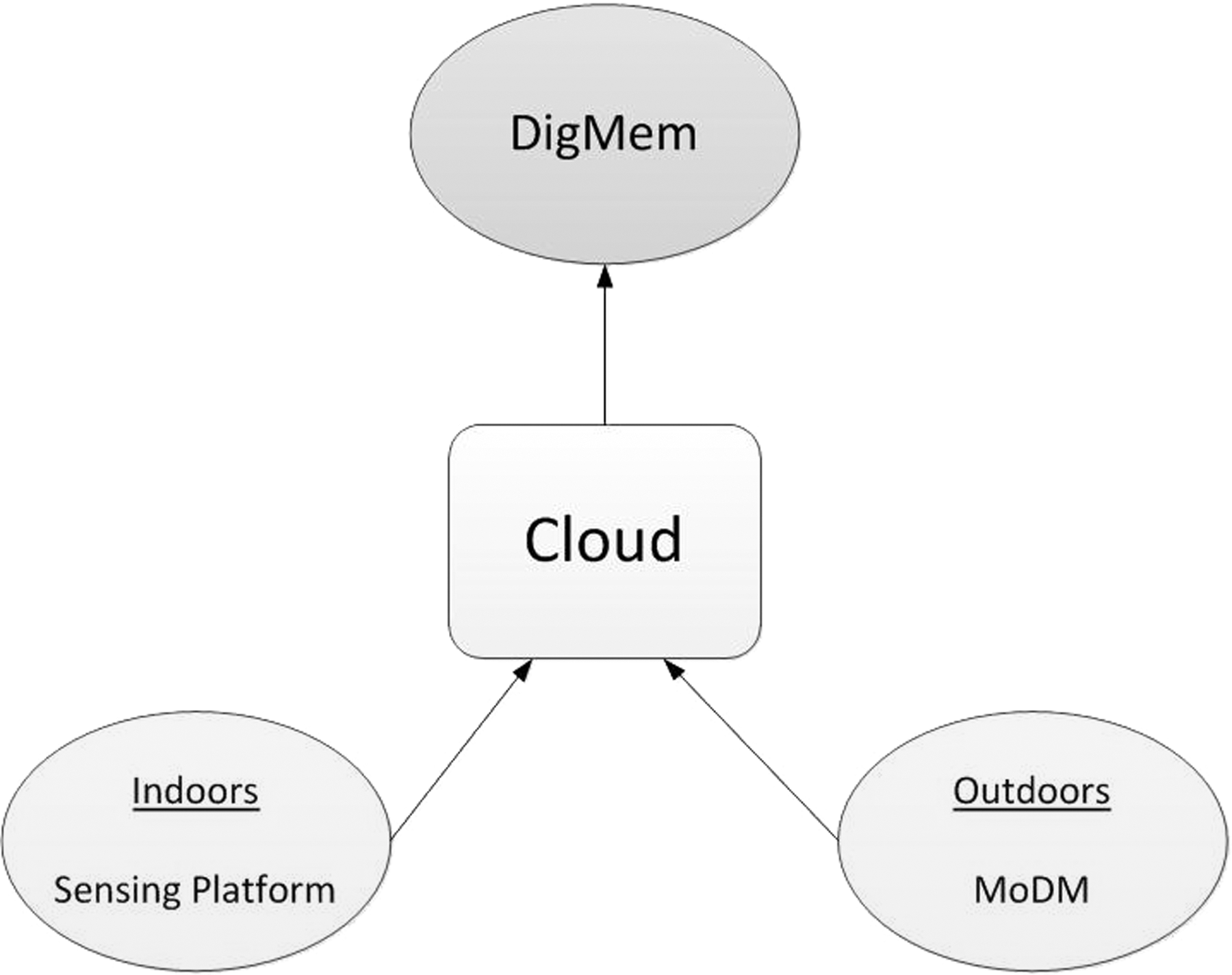
System design. MoDM, mobile DigMem application.
Life logging information (e.g., photos and GPS data) will be collected from a variety of mobile devices, such as smartphones. These devices will be running the mobile DigMem application (MoDM). 35 This application provides services to access the hardware of ubiquitous devices and to process the data streams that they provide. Information abstracted from these data sources enhances the development of human digital memories. This aspect of the system is used to gather information in an outside environment. The physiological data will be gathered using our custom-built sensor system. 36 This system works indoors and, using sensor networks, is able to track the location of people inside of their homes and to determine specific body positions. Once the data is collected it is then transferred, using the Internet and cloud computing services, to the DigMem system. 37 DigMem is able to retrieve the information from the cloud and store it within several data stores. From here the data can be queried using “smart” queries. This idea takes the data and links them together so that a memory box can be created (Fig. 2).
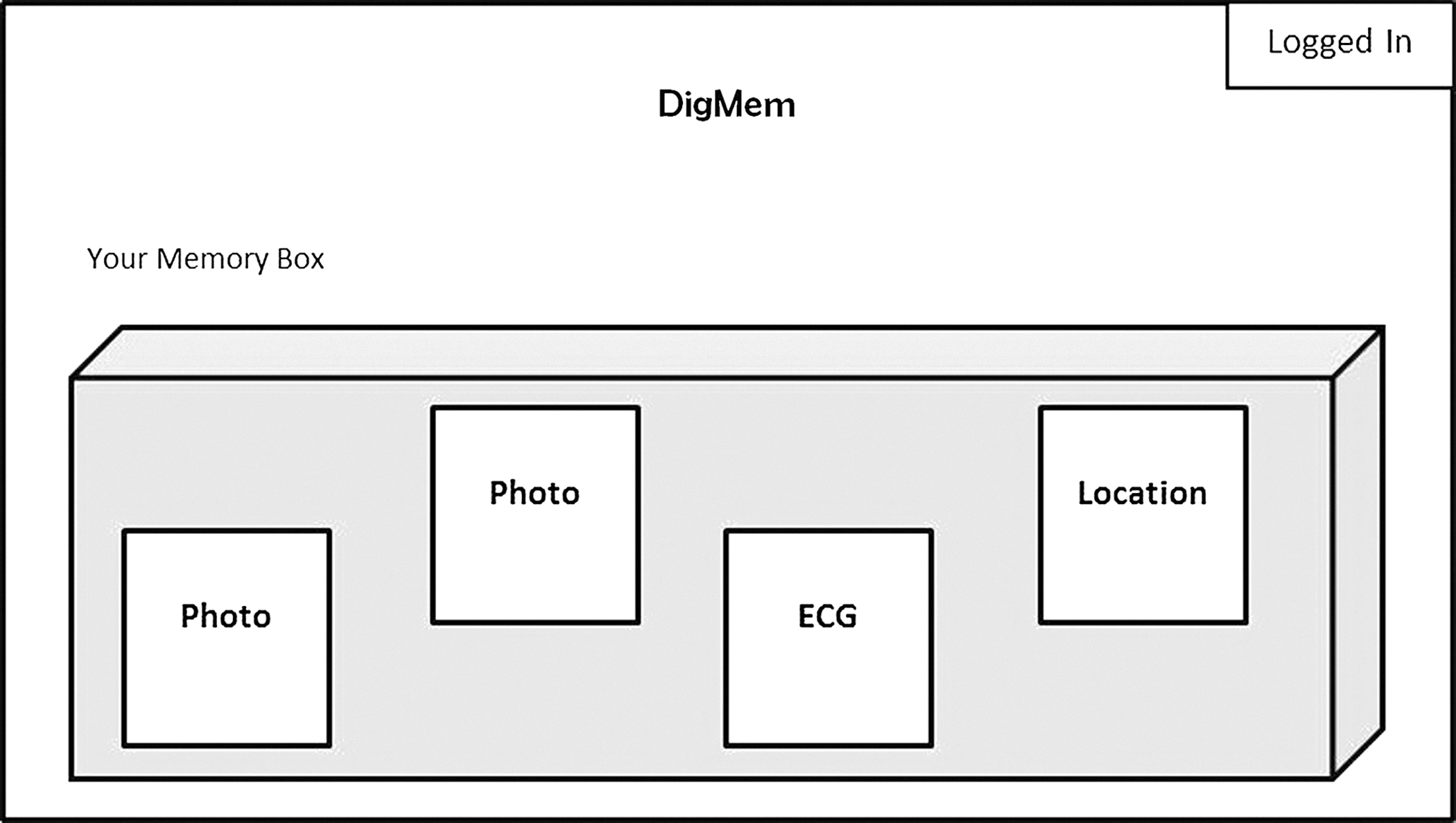
DigMem memory box design schematic. ECG, electrocardiogram.
In this sense, the events of any time can be brought back, and prolonged periods of sedentary behavior can be identified. The goal is to incorporate multiple data sources so that the context under which a certain type of behavior occurred can be determined. For example, an increase in heart rate due to someone breaking into your home, or you being attacked, while producing the same or similar results, would produce a different classification than, say, a person who is playing a boxing game on a game console. This information, used in conjunction with other information (obtained from other data streams), may provide contextual information about why this is happening. 38 –40
Approach overview
The idea of integrating human digital memories and sensing platforms together has the potential to revolutionize how behavior can be measured and understood. Current work aims to create memory boxes that are composed of a variety of data, from distributed sources. These boxes contain vivid structures and varied information sources that emerge through the semantic clustering of content and other memories. 35 By combining and linking various data sources together, to create a “mash-up” memory, a greater level of detail can be attained. Smart queries, which have the ability to search data in a multidimensional fashion, can also be executed. Therefore, users are able to see exactly where they were, what they were doing, and how they felt, at the time. Memory boxes are distinctively useful within the healthcare field because they provide a way for carers to monitor patients remotely. They are particularly beneficial to patients with conditions, like pressure ulcers, where the problem does not present itself until it is too late. Monitoring patients 24 h a day to establish how often they move is unrealistic, and an alternative method is required. Memory boxes offer a way of providing this information remotely.
These are the reasons that are propelling the research forward so that an open, extensible, and fully configurable solution can be achieved. The design goals provide the system requirements for a suitable scheme. The principal goals are as follows: • To use an open, cheap, and extensible sensor platform, capable of sensing a rich set of sedentary behavior data. • Provide a set of open source software tools to support existing sensing functionality and the addition of custom-developed sensors and functionality. • Develop a framework for sedentary behavior practitioners to access and process data, using a rich set of commercially and open source tools. • Enable the incorporation of memory boxes into the framework to allow a greater level of detail to be recorded and reasoned upon. • Build additional middleware services, to achieve the memory structures required. Thus, enabling a plug-and-play platform for memory data sources that can be exploited by any digital life memory middleware service.
So far, several ways to extract relevant information about sedentary behavior have been highlighted. However, these systems are proprietary and do not allow their functionality to be changed or extended. Nonetheless, it is appropriate to build on these existing technologies to address this limitation. In the next section, a scheme is provided that moves toward a fully extensible platform for measuring sedentary behavior. It explains how the principal goals have been incorporated, within the framework, and highlights the novelty of the approach.
TECHNICAL DESCRIPTION
The platform, posited in this article, incorporates sensors, sensor networks, photos, and GPS data to collect life logging and physical activity information about an individual. The MoDM application is capable of tracking a user's outside movements by using the GPS and camera services, while the sensor network works indoors and provides location tracking to room precision and allows human behaviors to be determined. The following section describes each component of the system in more detail.
Sensor network description
Sensor networks, installed in the home environment, are used to track the location of people by calculating the frequency of received signal strength indicator (RSSI) values between a mobile node, fitted to a person, and static nodes, installed in specific locations in the home. In the study, several static TelosB sensors (Crossbow Technology, San Jose, CA) were fitted, at fixed points, in a home environment. They were used to transmit information between each other and to calculate the signal strength between the static sensor nodes and the mobile node, which was fitted to the resident of the home. A base station (TelosB) sensor is plugged into a TrimSlice™ (CompuLab, Yokneam, Israel) Linux box, which acts as a server, or data collection point, for all packets of data sent within the sensor network. These packets include the signal strength indicator and the values of the tilt switches used to measure sitting, standing, and lying down positions. Finally, a mobile TelosB, with two tilt switch sensors, is used for location tracking and to determine specific body positions. Figure 3 illustrates all of the TelosB sensors that make up the complete system, including the TrimSlice, with the server node already plugged in.
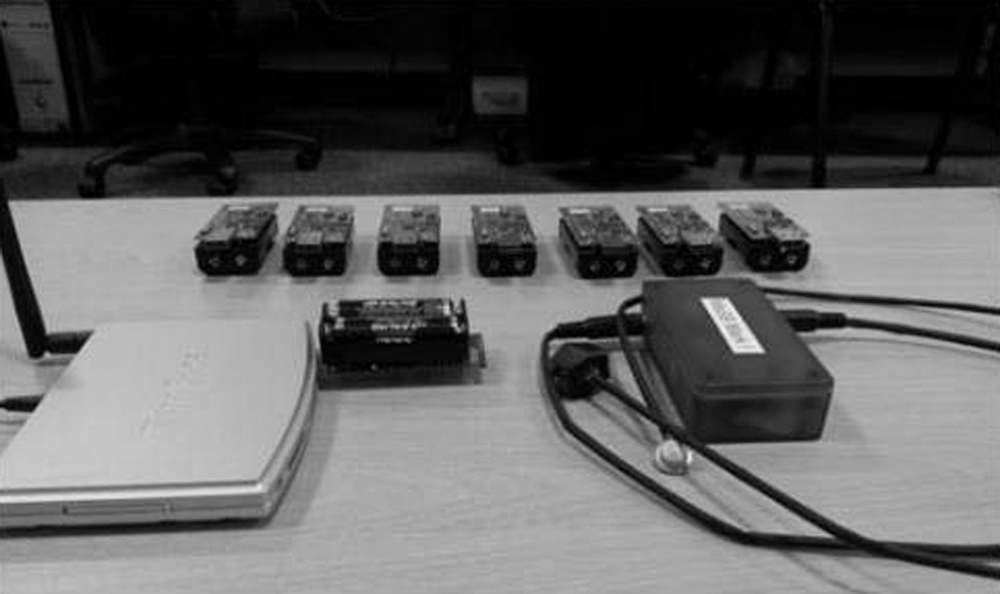
Complete sedentary behavior system.
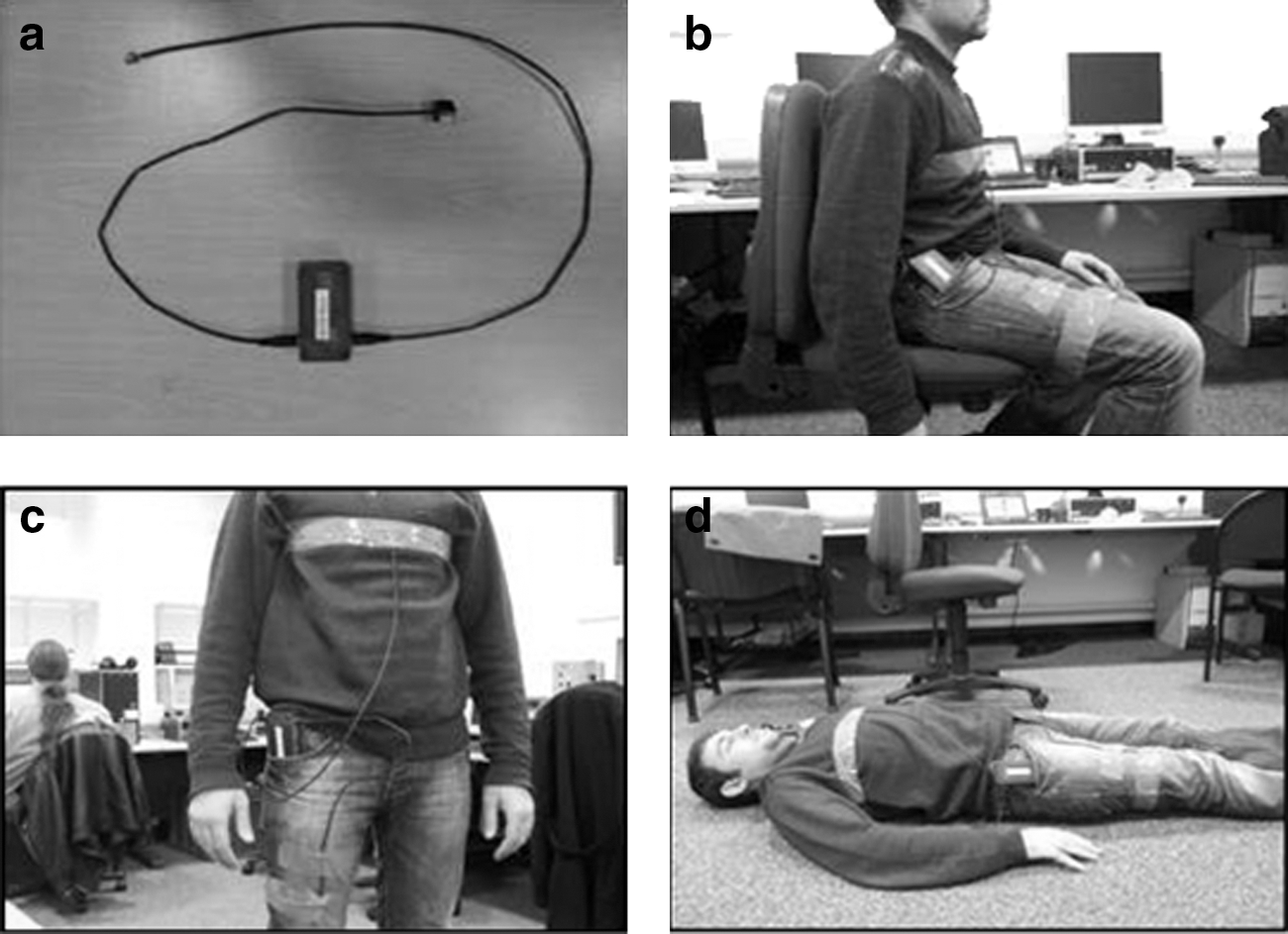
The mobile node is illustrated, in more detail, in Figure 4. In Figure 4a, the TelosB mobile node is housed in a box with two mono-jack interfaces. This setup allows the tilt switches to be easily plugged in and unplugged. Internally, both mono-jacks are directly wired to the TelosB general IO. The mobile node is designed to be fitted to a person's hip, either via a mobile phone case, attached to a person's belt, or by simply placing the device in the trouser pocket, as illustrated in Figure 4b. The tilt switches are designed to be attached to a person's chest, to detect upper body inclinations, and the right thigh, to detect lower body inclinations. Using a combination of the tilt switch values, it is possible to detect standing, sitting, and lying down positions as illustrated in Figure 4b–d, respectively.
The system was installed in an apartment, and the elderly resident of that apartment was monitored. Various static nodes were located throughout the apartment (Fig. 5), and the server node was located in a central location in the living room.
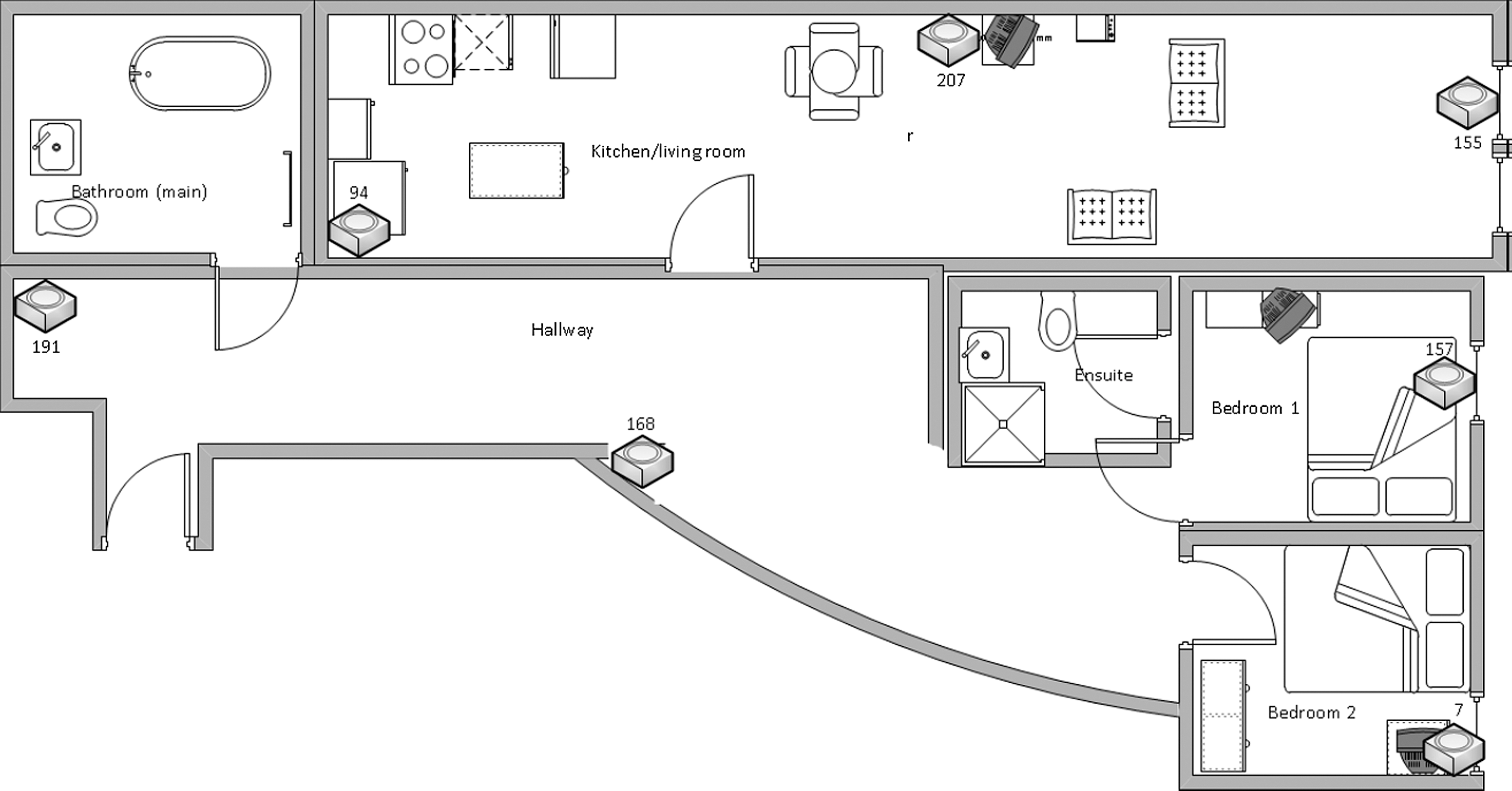
Layout of the apartment with various sensors fitted.
As the user moves around the apartment, the mobile node, which is attached to them, periodically broadcasts data to the static nodes within the sensor network. When a static node receives a message, it extracts the RSSI value from the packet (message), along with the values for both tilt switches, and creates a new packet. This packet is then routed to the server node (base station), via the sensor network. Each packet, received by the server node, is processed using a Python script. This script reads the data directly from the USB port and inserts the data into a MySQL™ (Oracle Corp., Redwood City, CA) database on the TrimSlice device. A second Python script is run as a CRON job, within Linux, to extract data from the database every n minutes. For this evaluation n was set to 15 min. The data is then serialized, as a comma delimited file, and stored in a Dropbox folder. 41 Using the Dropbox cloud software enables data to be distributed across many stores and accessed from anywhere in the world. In our study, a server within Liverpool John Moores University is used to collect the data and store them in a secondary MySQL database. This is a very simple and effective way of using cloud computing technology to send data, via the Internet, to different locations.
Using this configuration, it is possible to calculate where in the home the person is and what he or she is doing (i.e., standing, sitting, or lying down). (For additional information regarding the system see Fergus et al. 36 ) However, it is not possible to see what the user is doing. The context of the behavior is unknown. In order to fully understand the situation, the MoDM and DigMem aspects of the system are needed. The next section discusses the features of these components, in more detail.
DigMem description
The MoDM middleware platform has been developed in order to connect and access the hardware and services that distributed devices have to offer. The purpose of this is so that data can start to be collected, for the memory boxes. This aspect of the system creates a mobile ad hoc network, using JXTA and Android® (Google, Mountain View, CA) technology. It is then used to seek out devices and the services that they have to offer. The prototype consists of a mobile device, the Samsung (Taegu, Korea) Galaxy tablet, which is used to collect the data required. For initial purposes GPS and photo data were collected, at specific time intervals. The user carried around the device for a week, and every time he or she made a journey (i.e., they were outside), the application was activated. Photos were taken every 5 min (Fig. 6a), and GPS data were collected every time a new location was reached (Fig. 6b).
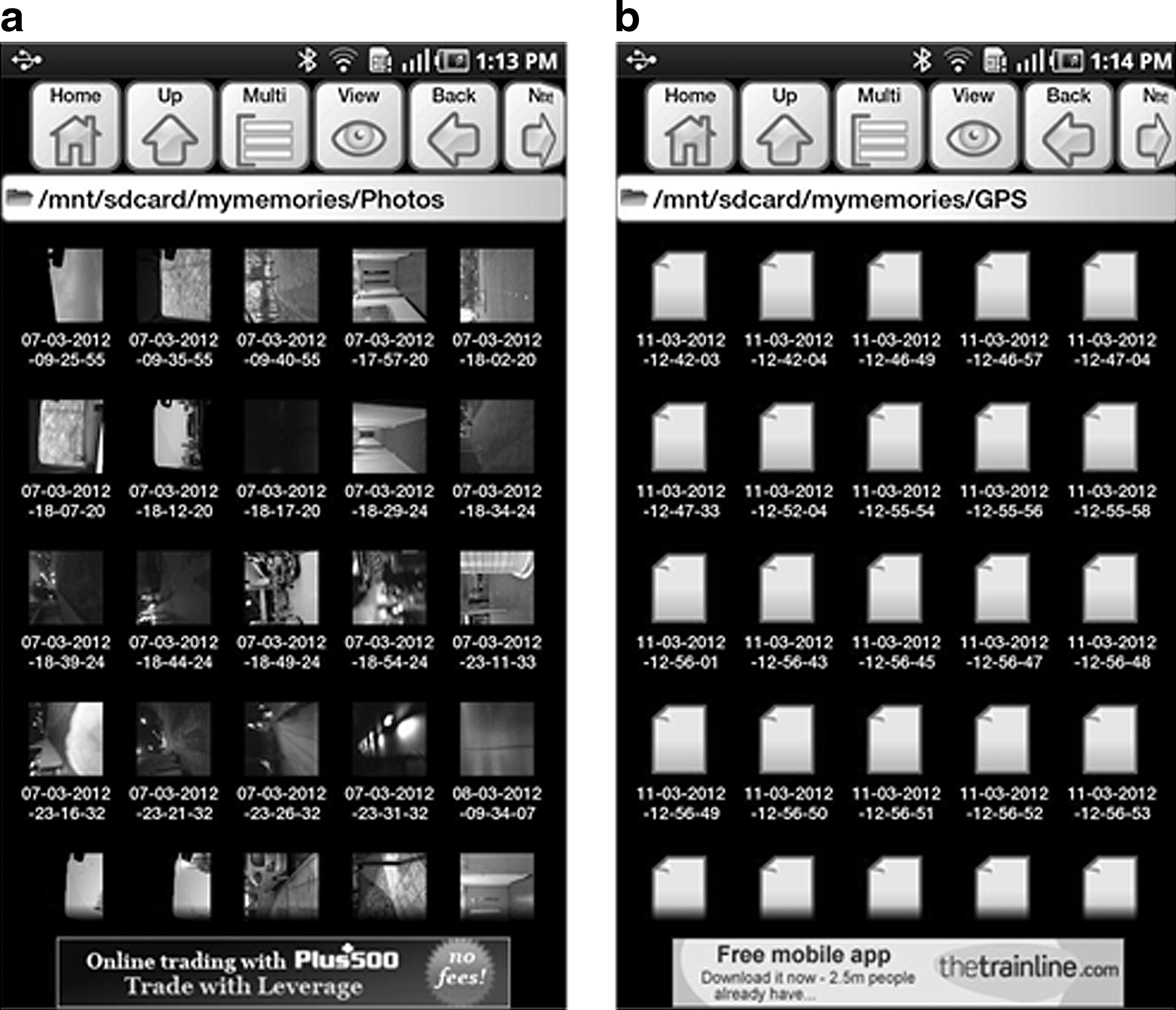
Data obtained on the mobile device.
After the user had completed his or her journey and the device was connected to Wi-Fi (for example, when they had gotten home or to work), the data was then automatically transferred to the user's Dropbox folder. 41 Again, like the sensor network, Dropbox was chosen as a means to extract the information from the device to the cloud, so that more complex processing of the information could be done. Once the data was in the cloud several Python scripts were developed and executed, which process the data and periodically transfer them to a MySQL database, located on a server within Liverpool John Moores University.
Once the data was transferred to the database, the DigMem aspect the system was used to transform the data into a memory. Since the information is saved in a MySQL database, it is relatively easy to extract and import them into Excel (Microsoft), SPSS (SPSS, Inc., Chicago, IL), or MatLab (The MathWorks, Natick, MA) or even transform them into Resource Description Framework (RDF). For this evaluation the data was transformed into RDF so that linked data concepts can be applied. Saving the information as RDF allows links to be set between data items, from different data sources, and also permits the execution of “smart queries.” The memories being created, in this way, will be a “mash-up” of all the relevant data of an event. Therefore, for initial purposes a sample of the generated data has been converted into RDF tuples. A simple Web interface was also constructed, to demonstrate the applicability of the design. Once logged in, the user is able to choose what type of query he or she wants to perform on the data (Fig. 7).
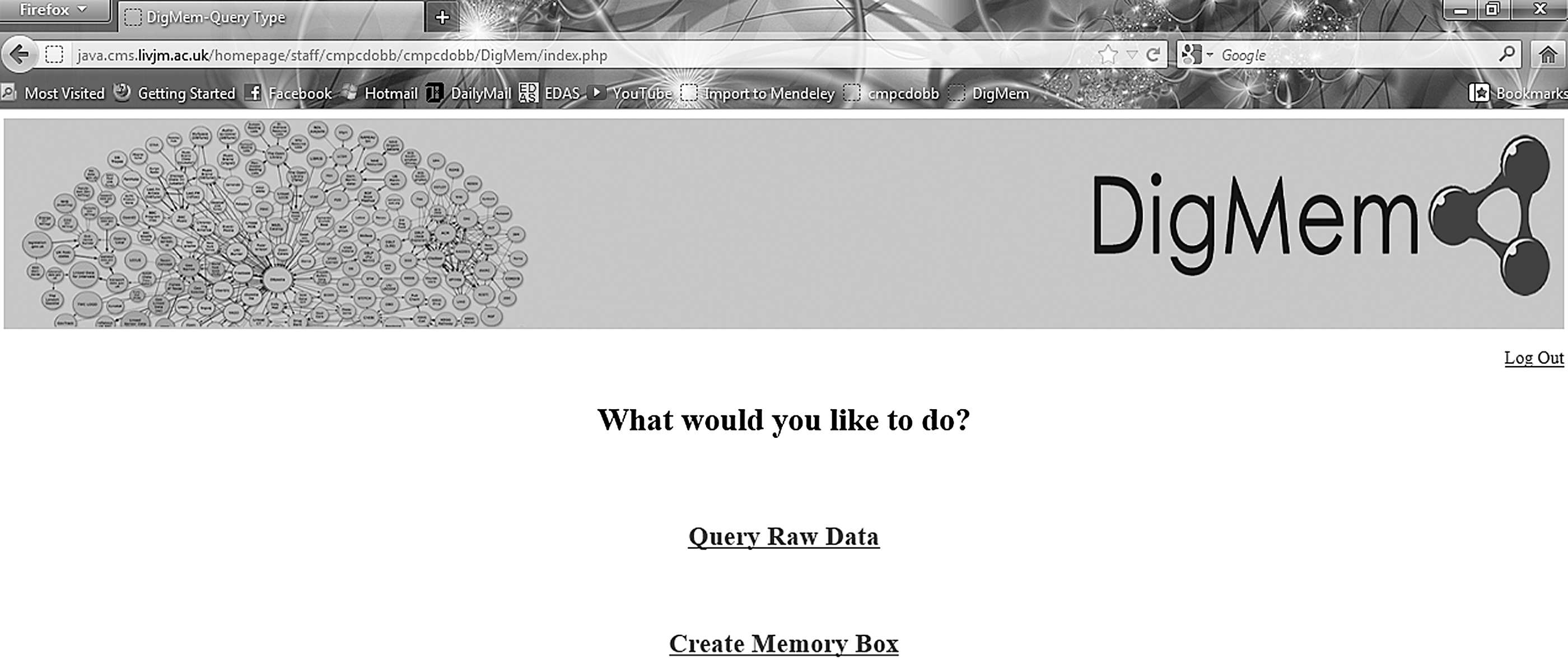
DigMem Web interface.
For the purposes of this evaluation, the SPARQL (the query language for RDF 42 ) query is the only one that will be applicable for these purposes. Once the “Create Memory Box” link has been clicked, the user is then taken to the SPARQL end point (Fig. 8). This end point has been implemented using ARC2. 43 ARC2 was chosen as a means to query the RDF data because it is open source and runs in most Web server environments, and it is able to parse and serialize RDF/XML files. 43
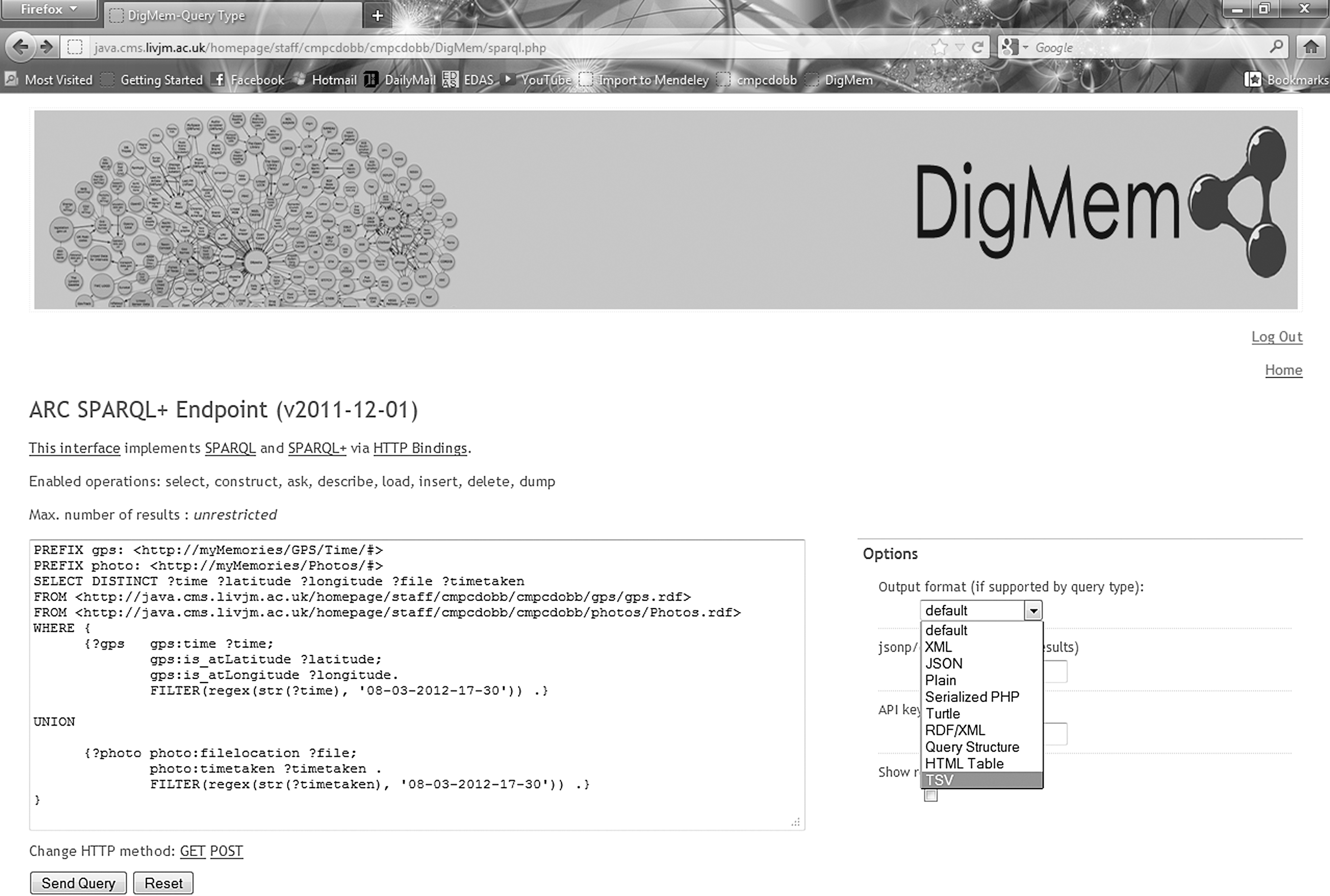
SPARQL end point.
At this point the SPARQL query can be inputted and the output format chosen (Fig. 8). The query, “Where was I on March 8, 2012 at 5:30 p.m.?” has been inputted, into the end point, and all of the related data from that time has been brought back (Fig. 9).
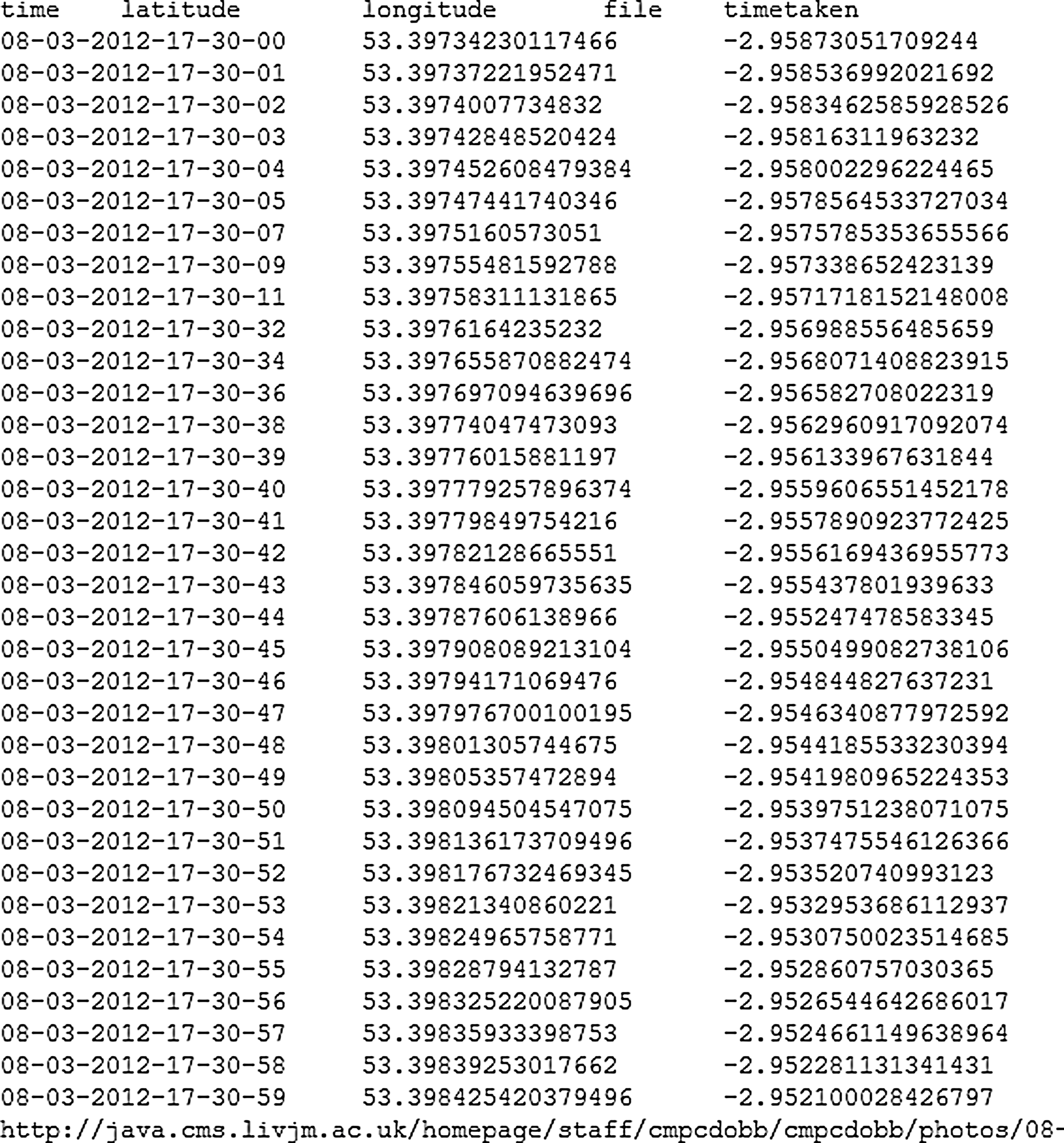
Results from the SPARQL query.
However, these results don't really mean that much. They are simply a collection of coordinates and a file name. In order for these results to “mean” something to the user, they need to be visually depicted. Figure 10 illustrates how the results from Figure 9 have been taken and visualized into a memory box of the query. As it can be seen, the GPS data is visualized, and all the photos taken at that time are displayed. The results indicate that on March 9, 2012, at 5:30 p.m., the user was in a car, traveling along the A562, in Liverpool. In order to demonstrate the design, only GPS and photo information is incorporated. Once the data have been visualized, they are easier to comprehend. The system has taken a complex set of results and transformed it into a smaller amount of more meaningful information. It is much easier to look and understand a map and photos than it is to understand a set of coordinates.

Visualization of SPARQL results.
Using this configuration it is possible to accurately track journeys and add additional contextual information to those occurrences. Nonetheless, this system only works outside and does not provide any additional information about the user when he or she is indoors. However, if there are significantly fewer data items about journeys, it is reasonable to assume that the user spends a lot of time indoors. However, the details of what happens during these times is unknown. By combing the sensor network, which tracks users inside, and the MoDM application, which tracks users outside, a greater representation of a user's complete day can be tracked and transformed into a memory.
Evaluation
This section details the results from both the sensor network and the DigMem studies. The results from both studies have produced an extravagant amount of data. Over a period of 5 days DigMem produced 4,348 samples, whereas over 4 days the sensor network produced 216,654 samples of data. Although the sensor network was run between fixed periods of the day (between 10 a.m. and 5 p.m.), the DigMem system was only run when the user made a journey, therefore producing a significantly smaller amount of data. Nonetheless, a significant image of the user's week was captured.
As it can be seen, in the case of discerning the events of a particular time, the query “Where was I and what was I doing on March 8, 2012?” has been successfully executed (Fig. 11). The query searches the RDF documents to establish that, on the day in question, the user was traveling around Liverpool. As it can be seen, the photo and GPS data support this conclusion. The photos give a visual illustration of the surroundings; at the same time, the GPS data add more detail to the memory about the specific locations.
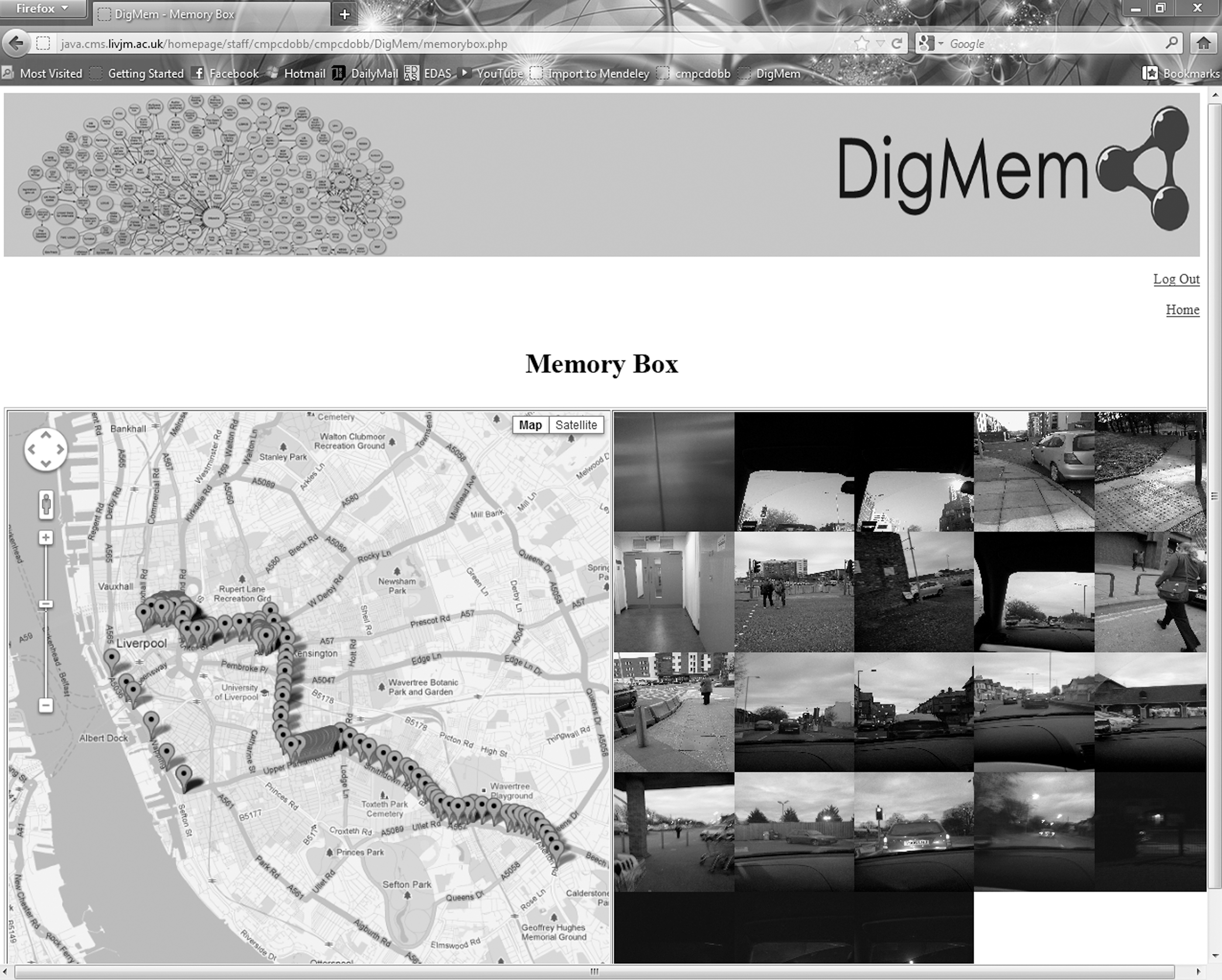
Memory box of the case study query.
In terms of monitoring and preventing sedentary behavior, in the elderly, the results of the memory boxes could be used to interpret for how long the user was out of the house and how many journeys he or she made. For example, a doctor could view the data, accumulated over a week, and see that the user did not make that many trips out. Presenting this information to the user could be enough incentive to try harder. As the next week's data is analyzed it could be seen if the user has improved and gone out more. However, there is still the problem of not knowing what was happening when he or she was indoors. This is where the sensors network would be useful, as we shall see in the next section.
In regard to monitoring the user indoors, the complete dataset for the 4-day study has been evaluated. Figure 12 shows the analysis using the filtered data (RSSI values are between ±15 dB), extracted from the complete 216,654 samples produced over the duration of the study. Figure 12a shows filtered normalized RSSI values over time, whereas Figure 12b allows the determination of the specific sensors that generated the RSSI values at time t. Again, it is more interesting that the data shows the sensor transitions, among the dominant sensors, over the 4-day study. The key locations that the resident visits within the apartment are also illustrated and, more importantly, the duration that he or she spent at each location. From this information, it is possible to determine the resident's behavioral patterns, in terms of how the home environment is used. Although this information is from only fixed times, within a particular day, it demonstrates that remotely monitoring the behavior of residents, in real time, is technically possible.
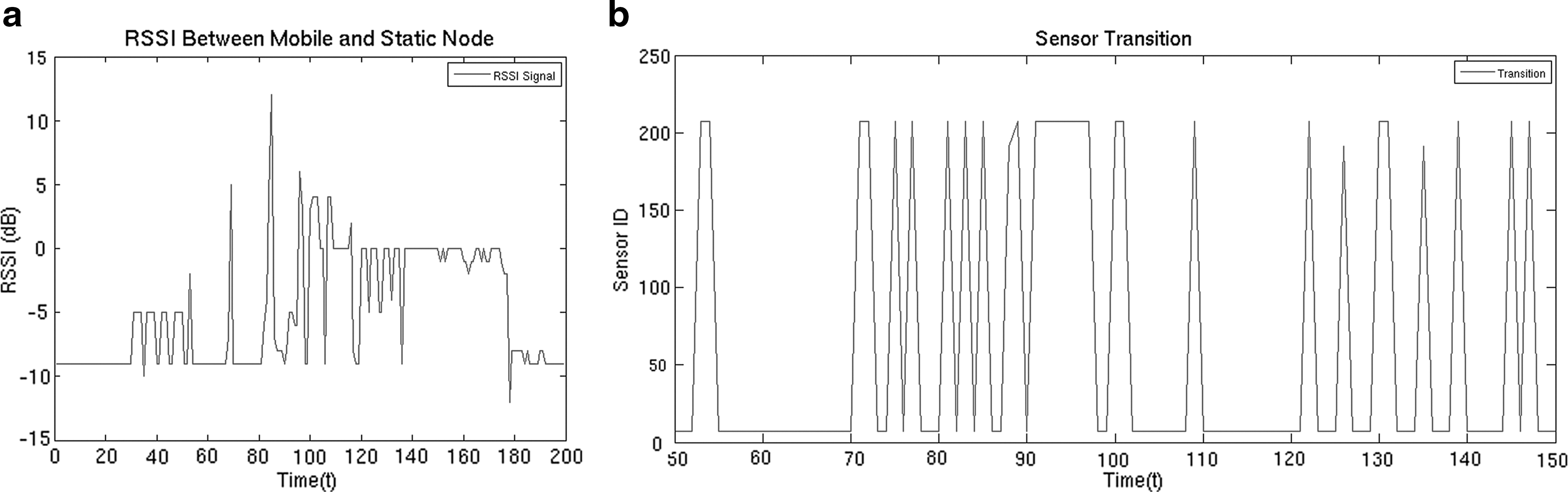
Combined signal strength and transitions for study:
Now that we have established how the resident's environment is used, it is also important to understand the occurrence of specific sedentary behaviors that occur in those spaces. Two tilt switch sensors, fitted to the resident's right leg and chest, were linked to a TelosB sensor. They were used to measure three distinct body positions: standing, sitting, and lying down. Note that a single individual tilt switch value is not considered in isolation. Combining both values allows the position of the user to be determined. In the sensing system, the values produced by both tilt switches when the resident is standing, is (0,0). When they are sitting the values are (0,1), and when they are lying down the values are (1,1). For all nonidentifiable positions, the values are (1,0).
Using the complete dataset, Figure 13 shows the analysis of the data extracted from the entire 216,654 samples. Figure 13a shows the frequency of the position transitions. Figure 13b illustrates what position the resident is in at time t. More interestingly, the data shows the transitions between different positions over the entire study. It illustrates the key behaviors associated with the resident being monitored, and this allows different kinds of sedentary behavior to be quantified. Nonetheless, the problem with identifying lying down positions is evident in the data observations. Although interviews with the resident suggest that minimal lying down was done, the nature of the transitions, particularly the nonidentifiable positions, would suggest that at least small amounts of lying down would be identified in the observational data. It is possible that because the study recordings relate to daytime activities, this kind of behavior could not be seen. On reflection, nighttime data collection should have been included in the study. This will be the focus of future research.
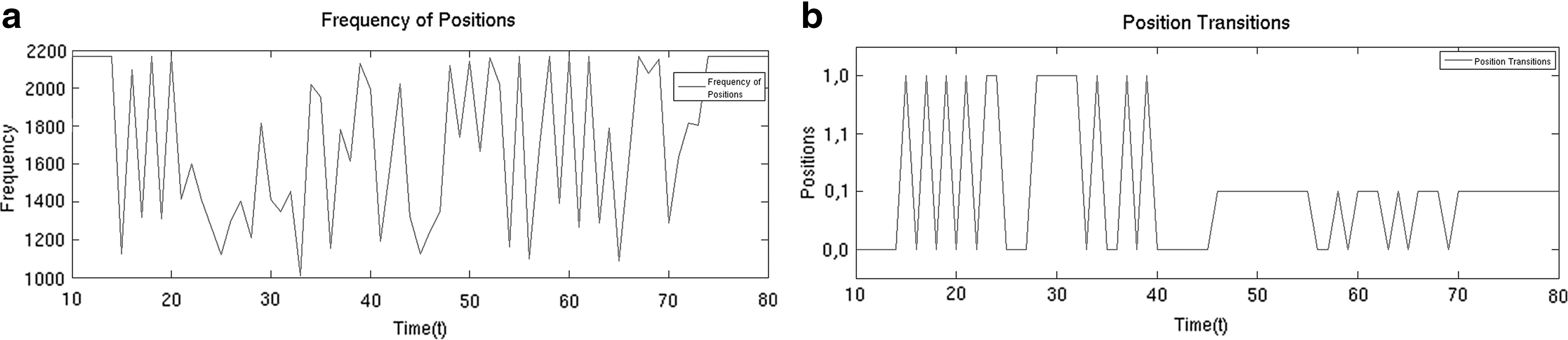
Combined
As it can be seen, the results from both studies are encouraging. Not only are journeys, with added context, able to be tracked, but tracking and identifying periods of sedentary positions, indoors, are also possible. However, in order to build up a complete picture of a user's day and life, combing these two systems is essential. It is through these promising results that the research is progressing into the amalgamation of both systems.
Discussion
In this article various platforms are used to demonstrate how behavior and human digital memories can be tracked and created, for the purpose of measuring sedentary behavior. Creating memory boxes allows for any time in an individual's life to be visually displayed, while the sensor network allows for any changes and behaviors that his or her body was experiencing to be captured.
In terms of measuring behavior, there are several notable features that make this system a viable alternative. The custom interface to the TelosB sensor enables additional functions, such as an inclinometer or accelerometer, to be used. Second, the sensing platform is built on the open source Contiki operating system. This allows the software to be freely accessed, changed, and extended to meet the unique requirements of individual applications. With regard to the DigMem side of the system, this has also been developed using open source tools. The use of Android enables the hardware features of the device to be accessed, while the data that is obtained is not encoded in a proprietary format. The use of ARC2 also enables the RDF data to be manipulated and serialized in several different ways. This is a very important and useful feature as the same results can easily be transformed into a variety of formats, without too much hassle.
The purpose of this research was to investigate the effectiveness of using human digital memories to monitor and prevent sedentary behavior. Arguably, the studies and the amount of data collected were limited. However, the results do support the use of sensors and human digital memories, in more complex studies, designed to understand sedentary behavior. The approach was not designed to replace human observations, but to support and complement existing data collection solutions, particularly in residential homes and clinical settings.
The development of this framework allows human digital memories to be created, in any environment. The incorporation of the sensing platform and the ability to extract information, from distributed resources, enables a better-rounded representation of our lives to be constructed. The development of this system allows users to keep track of their entire lives and to reflect on how experiences made them, and others, feel. This work is of particular benefit to the healthcare field, as we shall see in the next section.
CASE STUDY
One way it is envisaged that the system could be used is for monitoring the health of patients. This section discusses a possible scenario to illustrate how the utilization of human digital memories can aid in the prevention of developing pressure ulcers. In this sense, memories can be extracted and used to monitor the patient, for any period of time and from any location.
The case study focuses on how prolonged periods of sedentary behavior, which can lead to the development of these ulcers, can be identified. As it can be seen in earlier research, monitoring and preventing sedentary behavior are considered essential to improve a patient's quality of life, particularly as he or she grows older. 12
Previous research has indicated that using life logs, or digital memories, presents an accurate representation of sedentary behavior. These logs provide evidence of periods of inactivity that would otherwise get overlooked or over-reported by an individual. 22
In the following scenario an elderly patient has just suffered a stroke and is recovering in the hospital. He or she is unable to move around freely, and the ward is particularly busy and understaffed. Sensors attached to the patient's body are monitoring any movements and physiological data, while static sensors, attached to the bed, monitor the pressure being exerted in particular pressure point hotspots. A camera is hanging around the patient's neck that is capturing photos every x minutes, and there are sensors in the room that are monitoring the state of the room (i.e., temperature, humidity, etc.). Next to the patient's bed is a laptop that is broadcasting messages for the retrieval of services from these devices prevalent within the patient's environment. The data collected, from the services and the sensors, are serialized as RDF triples and inserted into the MySQL database. From this location, the information is extracted every x minutes and stored within the DigMem application. It is now available worldwide to anyone who is affiliated with the patient's account. The execution of SPARQL queries can now be performed on this data, and memory boxes can be created.
Turning back to the current scenario, it's the weekend, and the patient's doctor is out of the country on a short break. However, with the use of this system, the patient's doctor can log onto DigMem and perform a query on the patient's memory data. The doctor can see how the patient was feeling and what happened while he or she is away. For example, the doctor can ask, “How was Joe feeling on Saturday (today), how much has he moved around, and how often was he checked on by staff?” The use of SPARQL, RDF, and linked data allows this query to be successfully executed. It can be established that on Saturday, Joe wasn't feeling too good, his heart rate was high, and a lot of pressure was exerted on a particular area of his body, for a long time. It can also be determined, through photos taken on the same day, that he was only checked on twice. The doctor can now see exactly what Joe is feeling, what he's doing, and what is happening around him, even from another country. The doctor can then phone the ward and alert the staff to the fact that Joe has been in a sedentary position for too long and that he should be moved around to stimulate blood flow, in order to prevent the development of pressure sores.
As it can be seen, obtaining and linking data from a variety of sources provide a greater level of detail in the creation of human digital memories. Adding as much detail as possible enables the execution of smart queries, which have the ability to search data in a multidimensional fashion. Human memories are infinite, and their digital counterparts shouldn't be any different. The system can track our entire lives and monitor a patient for any amount of time, something that current systems are unable to do.
Conclusions and Future Work
Sedentary behavior is a growing problem, among all age groups. The focus of this article has been preventing the onset of certain diseases and generally improving our life, by monitoring and measuring sedentary behavior, using human digital memories. The system that has been proposed offers a new way to monitor an individual, as unobtrusively as possible, for potentially their entire lives. The benefit of this approach is that the components that have been used are relatively cheap (sensing network) and also use items that most people have (smartphone). There is no need to go out and buy expensive, specialist, equipment. By providing visual evidence that a user has been spending too much time in sedentary positions, it is hoped that this is all that he or she will need to change behavior. Human digital memories provide information to medical practitioners and individuals about themselves and their behavior patterns. This information can then be used to implement compensatory changes and view the impact this has on specific medical outcomes. The prototype system and the results from observational data provide a strong argument for the use of this technology.
However, as promising as these results are, further research is still required. Integrating the components discussed, so that a fully deployable system is able to be used, is the main aim of future work. Once this has been achieved, making the memory boxes “interactive” will need to be considered. Presenting a user with a lot of information is not a very good way to present the data. For the purpose of this evaluation it was enough to demonstrate the idea. However, future work aims to build on this so that the user can “drill-down” into his or her memory. The unique aspect of this system is that a lifetime of data is able to be captured and linked together. Therefore, when it comes to querying this information, a lifetime of information is not feasible to display. The system should be able to reason over these data and present an overview of the memory, while enabling the user to drill-down and see other various pieces of information. In this sense, the user would be able to go “inside” of his or her memory and see how lifestyle choices have affected them. Using human digital memories in this way offers a greater insight into the health and well-being of individuals.
Footnotes
Disclosure Statement
No competing financial interests exist.