




Abstract
Introduction
Telehealth and home telemedicine-delivered care is fundamentally changing the way of healthcare delivery. Nursing services are affected by telehealth as well. Telenursing is defined in various ways. 1,2 Telenursing is considered as a subset of telehealth that focuses on the delivery, management, and coordination of care and services using telecommunications technology within the domain of nursing. 3 The telenursing process and scope of practice are the same as in the traditional way whenever a large physical distance exists between the patient and the nurse. This new field of nurses' activities has expanded in many countries. 4 Telehealth and telenursing has become the new reality in studying nursing. 5 Education of students has a significant impact on their knowledge, opinions, and awareness of future work. Little is known whether undergraduate nursing students receive adequate education on telenursing for patient care. There is lack in the literature on this topic.
The aim of the study was to evaluate the knowledge of nursing faculty's students on telenursing and their attitudes toward it, to assess whether nursing faculty students want to use telenursing services in their future practice, and to evaluate whether students of nursing see a need for telenursing services in the national healthcare system. The survey was expected to find out the students' opinion on whether telenursing should be added to the curriculum.
Subjects and Methods
Students of nursing faculties from medical universities in Poland were invited to complete a Web-based questionnaire about telehealth and telenursing perception. The survey was conducted between June and July 2012.
The authors' questionnaire was used for this study. In particular, the questionnaire was aimed to evaluate the overall attitude, willingness, Internet/computer education status, PC computer access, Internet access, and general attitude toward telemedicine/telenursing and knowledge about it. It consisted of 32 multiple-choice closed questions and four open questions.
A Web-based surveying platform dedicated for clinical telemedicine and ehealth studies was used throughout this study (
Statistics
A Web-based surveying system (
Results
Internal Consistency and Reliability of The Survey
The internal consistency assessed for several items that propose to measure the same general construct may produce similar scores. Questions concerning demographic data were excluded from reliability analysis. The summary Cronbach's alpha coefficient for 16 questions was 0.789 for raw variables and 0.778 after standardization. Factor analysis was calculated for questions concerning students' attitudes toward telenursing. A plot of eigenvalues gave three main factors (Table 1). Those factors explain 54% variability of issues. The overall Kaiser's measure of sampling adequacy was 0.77.
Rotated Factor Pattern
Values of variance that are explained by each factor: Factor 1 (telenursing use in various medical specialities), 3.1; Factor 2 (advantages of telenursing), 2.2; and Factor 3 (modern technologies), 2.2.
ECG, electrocardiogram.
The first factor represents branches that may use telenursing. The second factor addresses advantages of telenursing. The third factor turned to modern technologies use in telenursing. Reliability of tested survey with Cronbach's alpha coefficient was considered to be adequate if the α value was >0.7. The values of Cronbach's alpha coefficients for Factors 1, 2, and 3 were 0.83, 0.71, and 0.69, respectively. The constructed factors meet the assumptions about the reliability and validity.
Survey Findings
Overall, 308 undergraduate students of nursing faculty I, II, and III courses (first, second, and third year, respectively) from nine medical universities in Poland were surveyed (Table 2). Among the 308 respondents, 291 were females (94%), and 17 were males (6%). There were 116 students of the first year (course) (38%) and 96 students each in the second and third years (31%). Most of the students (220 [71%]) in the study group were in the age range between 20 and 23 years; 58 students (18.9%) were younger than 20 years. A minority of the students were 24–26 years old or older: 22 (7.1%) and 8 (2.6%), respectively.
Survey Demographics Among Polish Nursing Students
All students rated their own personal achievements by declaring their average score achieved at the most recent series of exams (using the scale from 1 [lowest] to 5 [highest]). Achievements are ranked in national higher education system within the range from 2 (fail) to 5 (very good). The lowest mark to pass the exam is 3. Students were assigned to five groups dependently on average marks as follows: Group 1, less than 3.67, 38 students (12.34%); Group 2, from 3.67 to 3.99, 131 students (42.53%); Group 3, from 4.00 to 4.33, 102 students (33.11%); Group 4, from 4.34 to 4.50, 20 students (6.49%); and Group 5, average marks higher than 4.50, 17 students (5.53%).
Only one person in the whole group declared their access to a computer was only in the library. Internet access at home was declared by 305 (99%) surveyed students; only three students of the group said they had Internet access only in the campus library. That observation may also indicate the general need for Internet use by the surveyed group. One hundred three (40%) respondents used the Internet more than 3 h/day. Nine students declared no use of the Internet (3%), and 39 students (13%) used the Internet up to 1 h daily. The remaining 137 (44%) students used the Internet 2–3 h/day.
The accurate definition of telemedicine was identified by 251 (82%) respondents; 57 (18%) students did not recognize the correct answer. The definition of telenursing was recognized properly by 230 (75%) respondents, whereas 77 students (25%) indicated an incomplete and incorrect telenursing definition. Of the students, 207 (67%) would anticipate telenursing services implementation into the national healthcare system, 40 (13%) declared telenursing services unnecessary, and 62 (20%) did not know how to answer this question. Of the students, 123 students (39.94%) would like to have telenursing classes in the curriculum, 91 students (29.55%) would rather like to have them, the answer to this question was difficult for 78 respondents (25.32%), 11 (3.57%) were rather against it, and only 5 (1.62%) would not accept telenursing classes. Two hundred students out of the whole study group (71%) students would like to use telenursing services in their future work as an additional form of patient care, 16 respondents (5%) were against using telenursing in the future, and 72 (24%) did not answer this question. Over 90% of respondents presented the opinion that telenursing is able to reduce the cost of patient care, facilitate the patient's contact with medical personnel, and improve the efficacy of medical personnel work.
Students were asked to input what they recognized as the advantages of telenursing. They described most frequently an improved accessibility to healthcare, faster services, development, an increase in the prestige of the profession, data security, better information flow, convenience, and facilitated communication between nursing staff and hospitals. Of the respondents, 221 (72%) highlighted the problem of shrinkage of medical personnel in direct contact with patients.
A majority (267 respondents [87%]) expected that technical problems may influence the telenursing practice. Students presented also their awareness about other drawbacks of telenursing implementation. They indicated that telenursing is exposed to personal mistakes. They also indicated that implementation of modern technologies may meet doubts and passive resistance among elderly population.
Telenursing over the Internet was considered as the most useful way for providing services (306 respondents [99%]). The numbers of respondents who selected the use of mobile phones and of audio- and videoconferencing as the most useful for telenursing were 294 (95%) and 290 (94%), respectively.
We observed no significant differences in computer and Internet access/use among students (Table 3) from different universities. The significant differences were observed between students from different universities (in analysis of variance) in a willingness to introduce telenursing classes into nursing curriculum (F=2.945; p=0.002) (Fig. 1) and the intention to use telenursing services in future nursing practice (F=2.468; p=0.01) (Fig. 2).
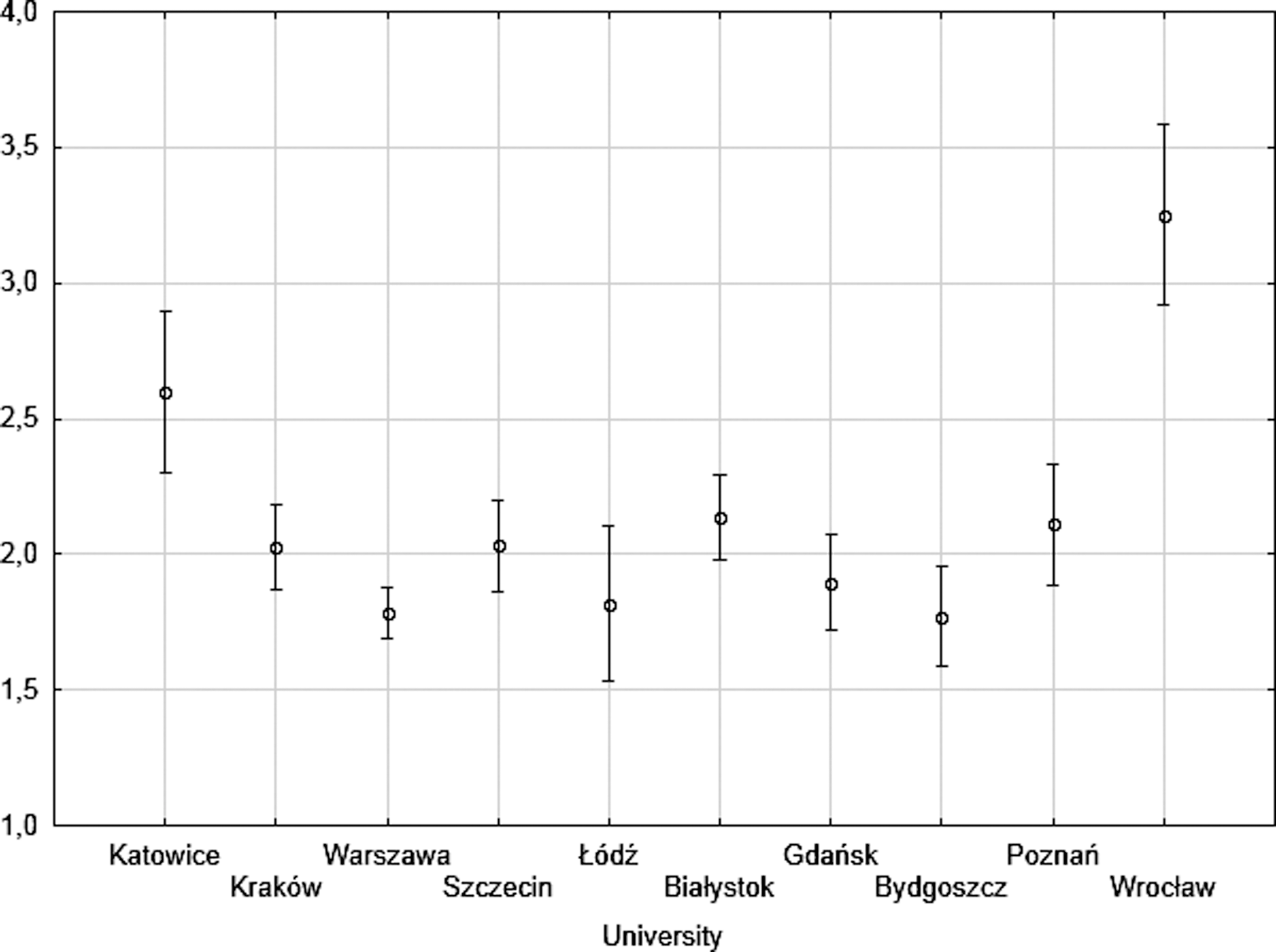
One-way analysis of variance graph representing how students from different medical universities anticipated an idea for telenursing education introduction into a curriculum (F 9,298; p<0.005). Vertical bars denote±standard errors.
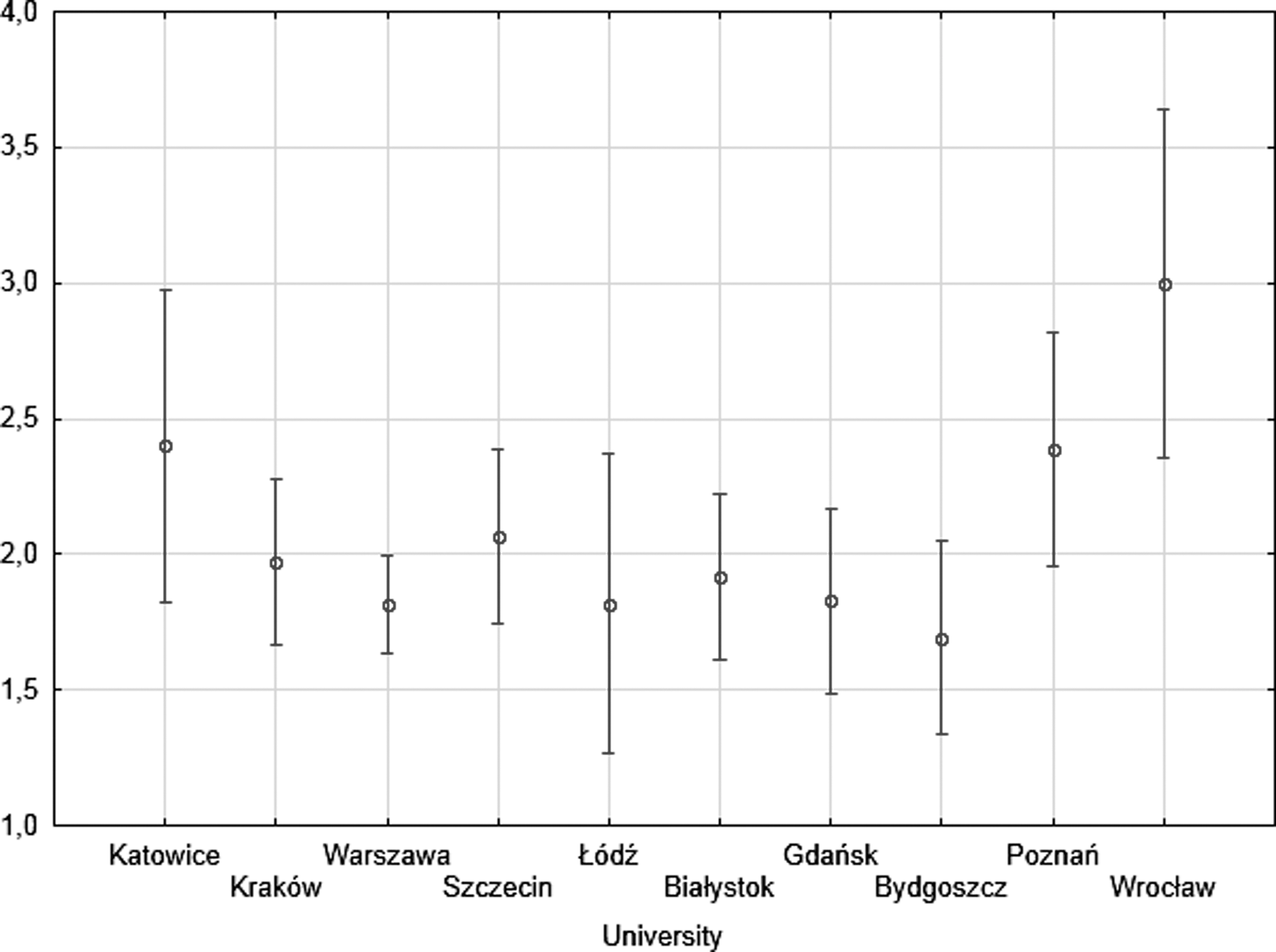
One-way analysis of variance graph showing how the students representing different medical universities anticipated the use of telenursing in their future work (F 9,298; p<0.01). Vertical bars denote 0.95 confidence intervals.
Results for Nursing Students from Various Medical Universities
No significant differences were found for answers to the questions presented in the table.
An interesting result was found for the students declaring lowest average study achievements in their opinion of the need for telenursing services implementation in the national healthcare system. That was the group presenting the least positive attitude toward telenursing, in contrast to all other students with better achievements (Fig. 3), with the difference being statistically significant.

One-way analysis of variance graph showing the need for telenursing declared by students assigned to groups according to their educational achievements (F 4,303; p<0.001). Vertical bars denote 0.95 confidence intervals.
Surveyed students perceived advantages and disadvantages of telenursing along with the educational advancement. Third-course (year) students more often claimed that telenursing may enhance nursing practice (F=3.929; p=0.021) (Fig. 4). A lower percentage of third-year students also indicated technical problems as a technology drawback (F=4.662; p=0.01) (Fig. 5). For the other questions no significant differences were noticed (Table 4).
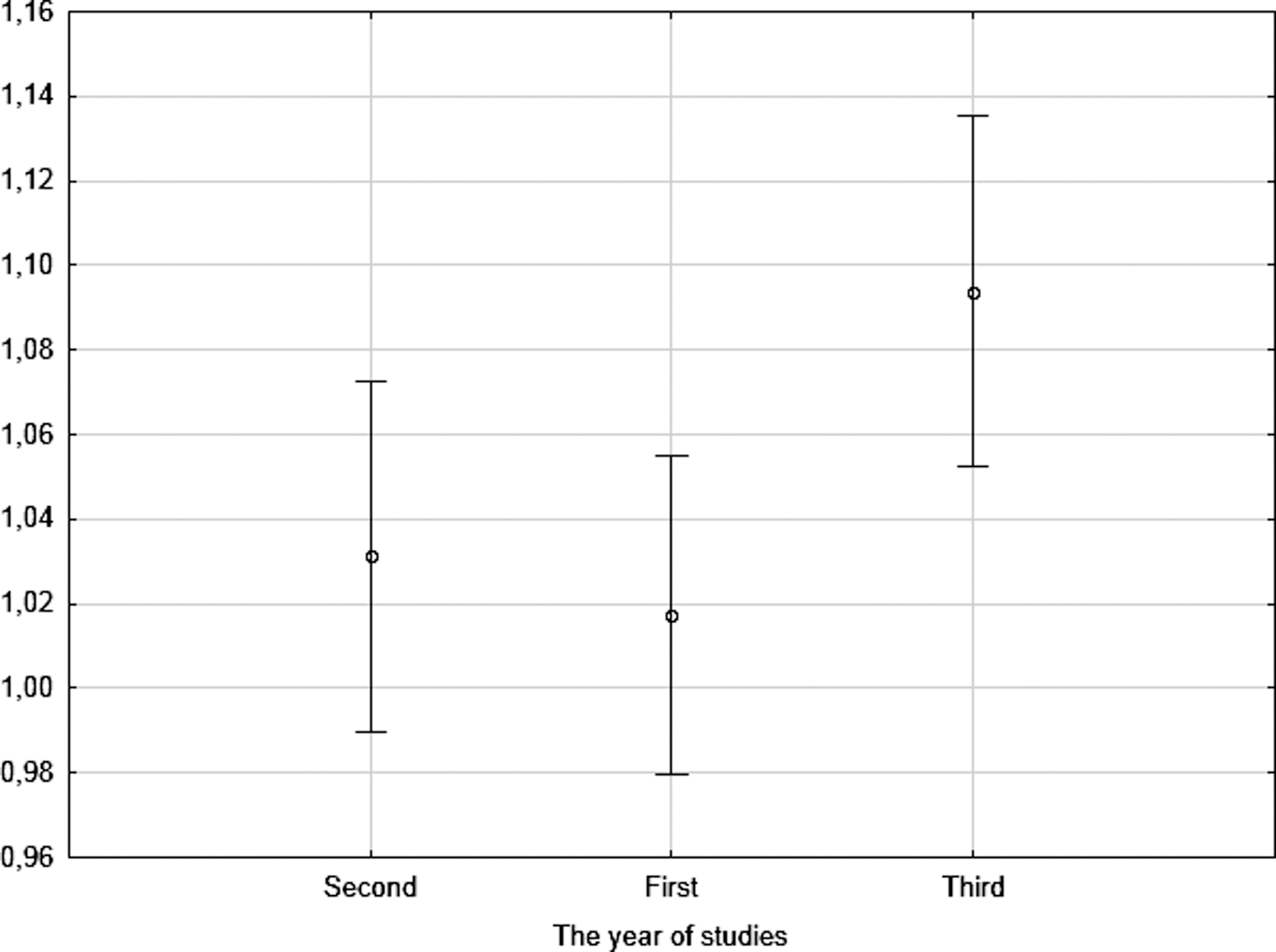
One-way analysis of variance results presenting students' opinion that telenursing may improve nursing practice by students from different education levels (the year of studies) (F 2,305; p<0.05). Vertical bars denote 0.95 confidence intervals.
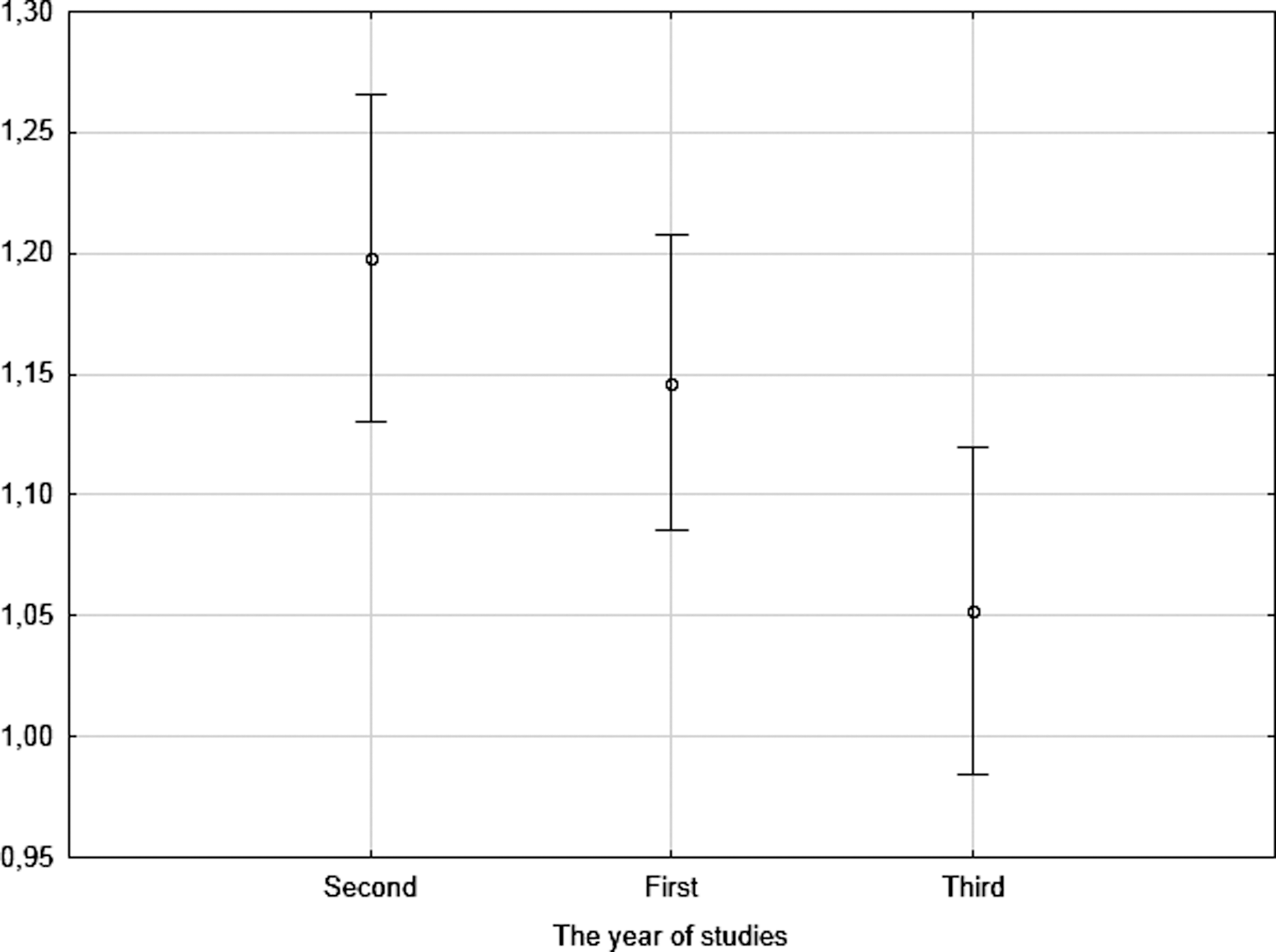
One-way analysis of variance results for technical problems expected by students of different education levels (the year of studies) (F 2,305; p<0.2). Vertical bars denote 0.95 confidence intervals.
Results for Students from the First, Second, and Third Year of Nursing Studies
No significant differences were found for answers to the questions presented in the table.
The question on the need for telenursing introduction into curriculum was answered positively or rather positively by 214 students (70%), ambivalently by 78 students (25%), and negatively by only 16 students (5%). Comparing those answers with the previously mentioned three factors, one can observe the following: • Factor 1 (telenursing use in various medical specialties)—142 students (66%) who stated telenursing teaching should be in the curriculum considered it in all medical specialties (p=0.01). • Factor 2 (advantages of telenursing)—112 students (52%) who stated they were for telenursing teaching being in the curriculum foresaw only advantages and had a present positive attitude to use it in their future nursing practice (p<0.0001). • Factor 3 (modern technologies)—students who stated they were either for or against telenursing foresaw a similar need for use all available modern technologies (42% and 31%, respectively) (p=0.08).
Discussion
Currently access to telehealth has the potential to extend care, improve medical educational opportunities for professionals, and increase public health awareness. 2,3 It is also helpful in remote areas. It may reduce the feeling of isolation and help in the recruitment and retention of healthcare professionals. 2 It has the potential to prevent uncomfortable delays, travel expenses, and family separation. 3 Telenursing may support general nursing, which is facing a shortage of nurses nowadays, and the demand for telenurses is worldwide. 4 To meet the patients' needs and with the current nursing shortage, many homecare agencies have to look at innovative ways to care for the increasing numbers of patients. Telehealth technology offers productivity improvement for nurses by reducing travel time to remote areas, through increasing the average daily caseload. 5 Telenursing offers an access to care and the ability to export nursing care using technology. It is a powerful tool for overall improvement in healthcare. 2 Several measures should be taken for telenursing implementation into practice for all nurses. The new approach in nursing study is to teach and introduce telehealth and telenursing very early in the medical university nursing curriculum. The challenge in medical education currently is to design curricula that will address the telehealth needs of the future. 7 Telenursing knowledge and attitudes were not assessed among nursing students previously. Our study confirmed that 70% of students agreed that telenursing should be introduced to the university curriculum. That may show the increasing tendency for wide use of information technologies by the new generation of nursing students. Telenursing is considered useful in all medical specialties by 66% of respondents. Significant numbers of students foresee advantages and present a positive attitude toward using it in their future nursing practice. Students rather understand the need for use all available modern technologies regardless of whether they stated they were for or against telenursing.
Medical educators must examine the dominant trends in healthcare and education and analyze whether the processes used to prepare students for practice will result in the desired outcome. The results of our study convince us that overall educational progress can lead to wider acceptance of telemedicine and telenursing among nursing students. Students' educations have a significant impact on their knowledge, opinions, and awareness of future work. 8 Little is known on whether undergraduate nursing students receive an adequate education on telenursing for patient care. In general, the telenursing care increases benefits for distant, rural, small, or sparsely populated regions. In 1998 Wootton et al. 9 assessed the proportion of home nursing visits that could be replaced by home telenursing in the United Kingdom. They found that from 14% to 16% of home nursing visits could be done via telemedicine. The current information technology development and awareness could probably double those numbers. Patients are benefited with saving time and money by avoiding clinic visits 10 and the reduction in the need for follow-up outpatient appointments. 11 Their assessment, reassurance, and advising after discharge can be provided by telenursing. 12 –14 Students with telenursing classes should gain the information about benefits of its implementation. 15 It can be implemented to reduce distances and save travel time and to allow patients to stay in their own environment instead of crowding in outpatient waiting rooms. 16 Additionally, a greater degree of job satisfaction has been reported among telenurses. 17 Among those benefits, telenursing may help to solve the increasing problem of shortages of nurses. 18 All over the world the shortage of young people who choose the nursing profession is seen as a relevant problem. The International Council of Nurses specialists predict that in the next 10–15 years, many currently practicing nurses will retire. Such retirement is a factor that is expected to have an influence on the shortage of nurses. 19 The number of nurses in Poland is lower than in other European countries: currently in Poland the ratio is 6.42 nurses per 1,000 inhabitants, 20 whereas the average European indicator in 2006 was 7.6. 21 Telenursing could be an opportunity to provide a higher quality of care and to extend access to the nursing care. 22
Through telenursing, nurses can provide monitoring, education, follow-up, remote data collection and interventions, pain management, family support, and multidisciplinary care in an innovative way. 23 It is a good tool to deliver care in remote regions and to facilitate practice, but alone telehealth may not be considered as a solution to the problem of medical workforce distribution. 24 An appropriate telenursing education is required to provide the dynamic development of nursing. It is necessary to implement telehealth curriculum at the beginning of the educational process. Students of nursing should have contact with telenursing in their curriculum to extend their awareness and to show advantages of service using modern telehealth technologies. The current usage of telenursing in daily practice is not sufficient. 25 Almost all of respondents have access to a computer. This means that a majority of the nursing students in Poland should not have problems with using a computer in daily nursing practice. It should be emphasized that no significant differences in access to computer and Internet among universities were found in this survey. A study conducted previously 26 among students at the medicine and dentistry faculty of the Medical University of Warsaw showed that the majority of students had Internet and computer access. More than 10% of students (13%) had to use the Internet in the library, as they had no Internet access at home. Three percent of respondents did not own a computer. The significant progress and equalization of the information technologies access can be noted. However, Internet and PC access among students is not equalized in other countries. Bello et al. 27 conducted their study in Nigeria and showed that not many respondents owned a computer: 46.3% of physicians owned a computer, but only 28.3% medical students had a computer. In 2002 Richards et al. 28 in the United Kingdom found that 37% of respondents (doctors and nurses) assessed themselves as “experienced” in the usage of computers—compared with general practitioners (44%) and nurses (20%). Ninety-five percent of respondents said they have used either the Internet or e-mail, of whom 71% said they have used both. There were no differences between professions. The most commonly used Internet application in professional practice was obtaining laboratory results (47%), and the least common was transmission of X-rays (7%). 28 Using the Internet among the nursing students currently surveyed is obvious: 40% of respondents said that they use Internet from 2 to 3 h/day.
Sixty-nine percent of nursing students who responded to this survey said that telenursing classes would be anticipated in the nursing curriculum. In this survey significant differences between introduction of telenursing classes during nursing university study and the will to use telenursing in the future daily practice were noticed. Respondents from Wroclaw Medical University indicated more often the interest in telenursing classes; however, students from Wroclaw Medical University made up only 3% of the sample. The reason for their positive attitude toward telenursing could be affected by an e-health project, “Dolnośląskie E-zdrowie,” conducted in their region. A little less prominent result was observed for students from Poznan University of Medical Sciences and Medical University of Silesia in Katowice. In a study by Edirippulige et al., 29 who conducted a survey for nurses, none of the respondents had received any form of education in e-health during their nursing curriculum or professional development. Eighty-nine percent of the respondents of a study carried out among telenurses 23 believed that telenursing should be a part of basic nursing education, and the authors concluded that telehealth education should include clinical experiences.
Three-fourths of the nursing students in this study knew correctly the definition of telenursing. The majority of nursing students in Poland (67%) agreed with the necessity of implementing telenursing in the national healthcare system. Statistical analysis showed that education level (year of studying and yearly achievements) influences the positive attitude toward telehealth among nursing students.
The need for implementation of telehealth in the medical care sector is not equally perceived in other countries. 30 Many investigations have shown that healthcare professionals expect a lot of barriers to telemedicine. Richards et al. 28 in a United Kingdom study among nurses and doctors found important organizational barriers for implementation of e-health such as increased cost and workload.
Respondents in our study highlighted that telenursing service could be the cause of technical problems, the loss of direct contact between nurses and patients, an increased possibility of nurses' mistakes, and inconvenience for the direct care of elderly, who are not familiar with modern technologies. This study has shown the rise of trust in technology along with the year of nursing study. Additionally, third-year students more frequently stated that telenursing services could improve nurses' work. The above observation may result from more knowledge and awareness of advanced students, as well as numerous experiences gained during practical hours.
The majority of telenurses surveyed by Grady and Schlachta-Fairchild 23 were not certified in telenursing, telemedicine, or nursing informatics. That can be changed with the introduction of telenursing into a university curriculum. Three-fourths of nurses stated that certification in telenursing is important and that they would be interested in achieving this type of certification.
Conclusions
The Polish Telemedicine Society is aware of the need for national telenursing implementation. This survey was developed to find out the current telenursing perception status among the nursing students to deliver some predictive data for near future nursing practice in the country. The current generation of nursing students seems to be well skilled for medical informatics and technology use (personal computer, personal e-mail, etc.). They are better prepared for information society membership, including the practice of telehealth. Most of the surveyed students have a positive attitude toward the use of telenursing. That significant numbers of students know the terms telemedicine and telenursing may be a prognostic factor for future telenursing development. The predictions about the future progress of the telenursing continue to be cautious among the young generation of nurses as well as for nurses in general. Currently in Poland the nursing postgraduate educational system is changing. Maybe it is a proper time to introduce a telenursing education. It could be a milestone in the development of e-health in Poland.
Footnotes
Disclosure Statement
No competing financial interests exist.