




Abstract

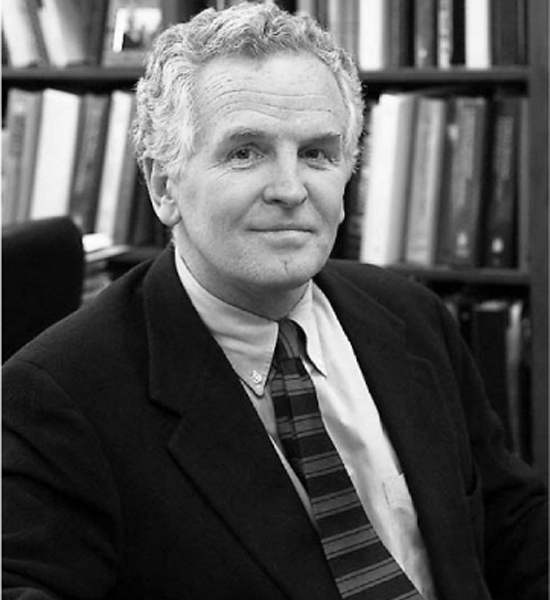
March 1952–October 2012
The telemedicine community lost a strong advocate for our discipline in October. Dr. Ward Casscells, 60, a cardiologist who served with the U.S. Army in Iraq and later was Assistant Secretary of Defense for Health Affairs, died October 14, 2012, in Washington, DC. He was the John E. Tyson Distinguished Professor of Medicine and Public Health at the University of Texas Health Science Center–Houston and simultaneously was its vice president for External Affairs and Public Policy. He was also a senior scholar at the Texas Heart Institute in Houston.
Dr. Casscells graduated from Yale College in 1974 and from Harvard Medical School (magna cum laude) in 1979. He trained in medicine and cardiology at Beth Israel, Brigham and Women's, and Massachusetts General Hospitals, the Harvard School of Public Health, the National Institutes of Health, and the Scripps Research Institute. While at the University of Texas, Dr. Casscells and a colleague, Dr. James (Red) Duke, initiated a series of disaster-preparedness programs focused on the Houston area. As a result of this project, Dr. Casscells developed a close attachment with the U.S. Army. In 2006, at the age of 54, he received an age waiver to be commissioned a colonel in the U.S. Army Reserve. He then deployed to Iraq, where he was medical liaison to then-Commanding General George Casey and U.S. Ambassador Zalmay Khalilzad. This service earned him the Joint Commendation Medal and honorary membership in the Iraqi Medical Regiment.
In 2007, President George W. Bush appointed Dr. Casscells to be Assistant Secretary of Defense for Health Affairs, as which he served through the beginning of the Obama Administration in 2009. As Assistant Secretary, Dr. Casscells led a $45 billion health and education system with 137,000 employees and 10 million patients in 900 clinics and hospitals in 100 countries. When he was told “Health care is not the tip of the spear. If you insist on this budget, you may have to resign,” Dr. Casscells' reply carried the day: “Sir, we are not the tip. Health is the muscle, brain, and heart behind the spear.”
Dr. Cascells was one of the strongest advocates for telemedicine in the world, insisting upon the use of the infrastructure in the care of our warriors. He was at the forefront of the strong collaboration between the U.S. Army's Telemedicine and Advanced Technology Research Center (TATRC) and the American Telemedicine Association (ATA). He served vigorously on the ATA Board of Directors and was a pervasive presence at the joint meetings of TATRC and the ATA, always challenging new research and bringing forward the problems of warrior health and calling for telemedicine solutions. In recognition of his leadership in telemedicine, he received the Max Thurman Award. In recognition of his work at the Pentagon, Dr. Casscells received the Department of Defense's highest civilian award, the Distinguished Public Service Medal, as well as the Army's decoration for Distinguished Civilian Service, the Army's Order of Military Medical Merit. In addition, he received the Department of Veterans' Affairs Commendation, the Surgeon General's Medallion from the Department of Health and Human Services, the HHS Best Public Health Practice Award, the Memorial Hermann Health System's Hero Award, the 2010 Pike Humanitarian Prize, and the 2012 Lifetime Achievement Award in the Life Sciences from the Houston Technology Center.
In addition to his academic and governmental work, Dr. Casscells was the inventor of medical devices and the founder of several companies to market them. In particular, he and his colleague James Willerson, M.D., developed new ways to detect vulnerable plaques as a warning of possible heart attacks and strokes, which led to their founding the Volcano Corporation. Dr. Casscells, with colleagues Mohammad Madjid, M.D., and Morteza Naghavi, M.D., also discovered that the influenza vaccine reduces the risk of heart attack and stroke and that, in patients with heart failure, a falling body temperature is often a sign that death is imminent unless the therapy is adjusted.
A former associate editor of Circulation and guest editor of The Lancet, Dr. Casscells was widely published in the areas of prevention of heart attack and stroke, information technology, medical ethics, influenza, disaster preparedness, health diplomacy, nanotechnology, and healthcare management. He spoke publicly about living with cancer. His book, When It Mattered Most, a tribute to medics killed in Iraq and Afghanistan, was published in 2009.
Telemedicine, medicine, and our nation have lost a great and brave man who will be sorely missed.