




Abstract
Introduction
The U.S. Army Surgeon General's Performance Triad is represented by physical activity, nutrition, and sleep—three key areas that affect the cognitive and physical performance, personal well-being, readiness and resilience, and the health of the military members, retirees, and their families. 1 The Performance Triad serves as a foundational component in the transformation of Army medicine from a healthcare system into a system for health. 1 The availability of affordable, personalized, health-related technology is rapidly growing; such technology can potentially be used to minimize and/or mitigate barriers (e.g., lack of time, insufficient knowledge, lack of goal setting and tracking, inadequate social support, few incentives to change behavior) to achieving optimal health, performance, and readiness. Emerging evidence indicates that utilization of technology (e.g., Web-based programs, text messaging) can enhance behavior change intervention effectiveness. 2 –4
Physical Activity Monitoring Technologies
Physical activity monitoring technologies have proliferated in the last three decades. Technological advances have allowed accelerometer-based, motion-sensing technologies to be miniaturized to the micrometer scale and integrated with wireless capabilities. 5 These advances have enabled direct-to-consumer commercialization of motion-sensing technology for gaming, mobile devices, and physical activity monitoring. The linkage between Web- and mobile-based dashboards and physical activity monitoring may enable valuable behavior change interventions.
Evidence supporting the effectiveness of activity monitoring technology for promotion of physical activity behavior is emerging. 6 Self-monitoring through the use of pedometer-based interventions has increased awareness and physical activity during 1–6-month trials. 7 A recent systematic review in the Journal of the American Medical Association 8 demonstrated that devices used to track activity resulted in a significant increase in physical activity (2,491 steps per day more versus control participants). Individuals who used tracking devices increased their physical activity by 26.9% over the baseline. A significant predictor of increased physical activity was having in place a step goal, such as 10,000 steps per day. The authors determined that use of devices that automatically track physical activity resulted in a significant decrease in body mass index (of 0.38 kg/m2) and a significant decrease in systolic blood pressure (of 3.8 mm Hg). However, the long-term effects of physical activity monitoring on the maintenance of behavior change remains unknown.
Nutrition and Food Intake Monitoring Technologies
Researchers have demonstrated four strategies for successful long-term weight maintenance: (1) eating a diet low in fat, (2) frequent self-monitoring of body weight (daily or weekly), (3) tracking food (calorie) intake, and (4) high levels of regular physical activity. 9,10 Although these strategies are well documented, they require user knowledge, tracking, and time. Use of nutrition and food intake monitoring technologies that address these barriers has been correlated with dietary intake improvements 11,12 and successful weight loss. 13 –15 One of the proposed benefits of nutritional monitoring devices is that they provide an extensive and automated food library, which decreases the user's burden to manually track nutrient and calorie intake. A systematic literature review found a significant association between the use of self-monitoring and self-weighing (to include use of Internet and mobile devices and applications) and weight loss. 16 However, techniques to improve compliance with these tools are required.
Nutrition and food intake monitoring devices can provide automated and tailored feedback and education. Investigators have determined that tailored feedback and prompting are important components of successful behavioral interventions for improving nutrition and food intake habits. 17,18 A recent randomized controlled trial found that education supplemented by self-monitoring and feedback resulted in twice as much weight loss (3.5±3.8 kg) compared with education alone (1.4±2.7 kg). 19 The percentage of individuals who achieved at least a 5% weight loss was 40.5% in the education/self-monitoring/feedback group compared with 13.2% in the education-only group. Further investigation is warranted to determine optimal prompting parameters (e.g., extent, frequency) to effectively maintain weight loss over time. 20
Sleep Monitoring Technologies
Most sleep medicine clinicians and researchers agree that patients should prospectively record their sleep nightly with a sleep diary to assess and track treatment effects. 21,22 In fact, the sleep diary is considered the “gold standard” for subjective sleep assessment. 23 Prestwich et al. 24 found that healthy participants who received sleep education and logged sleep hours increased their nightly sleep by 50 min. A recent study of medical students that focused on changing health behaviors found the requirement to monitor, chart, graph, and journal about their behavior change for 6 weeks was important for goal achievement—and the process made them feel healthier—but the time required to manually log progress was a barrier. 25
Although self-reported sleep parameters can be helpful to track sleep over time, they differ substantially from objective measurement of sleep (notably, latency to sleep and wake after sleep onset). 26 Therefore, sleep monitoring technologies that provide objective, accurate measures of sleep are important. Polysomnography (PSG) has been the traditional gold standard for objective sleep measurement 27 and diagnosis of sleep disorders. 28 However, PSG is costly and impractical for long-term and home utilization. Wrist-worn, accelerometer-based actigraphy is a mature technological alternative to PSG. 29 –31 In fact, actigraphy is widely used within the sleep research community to track daily total sleep time over days or weeks. Initial evidence suggests that technologies for tracking sleep behaviors can increase awareness of sleep patterns and lead to healthier sleep habits. 32 However, the reliability and validity of new devices (as compared with PSG) have yet to be determined. 33,34
Creating and Sustaining Behavior Change
Technology approaches can be tailored to address specific components of behavior change, such as reward types, user autonomy, and habit. Researchers have examined the extent to which different reward types (i.e., extrinsic versus intrinsic) drive behavior change in multiple settings, including educational gaming. 35 Extrinsic motivations (e.g., derived from rewards, prizes, or payments) have been effective in the short term, 36,37 whereas intrinsic motivations (e.g., motivation from the purpose or outcome itself) have been found to be more effective for long-term maintenance of behavior changes. 38 Interventions with substantial self-guided components and autonomy building, 39 which can be enabled by technology approaches, have been found to be effective while also being more scalable (e.g., can be distributed to large groups of people with reasonable methods and cost) because they do not rely heavily on healthcare practitioner participation.
Habits guide about 45% of human behavior. 40 Thus, behavior change technologies will inevitably need to address habit, either by disrupting existing unhealthful habits and/or by forming new healthful ones. Because of the unique way that habits are triggered, interventions that are effective at changing people's intentions (thoughtful, planned, and novel actions) are ineffective at changing habits. 41 –43 Rather than addressing intentions alone, interventions targeting habits must first remove or change the contextual triggers (e.g., environmental triggers or preceding actions in a sequence) that prompt people to mindlessly repeat familiar routines (e.g., mindless eating). 44,45 Experiments on mindless eating have shown, for example, that eating “out of habit” can be disrupted simply by moving to a new context not associated with eating a specific food or by simply using one's nondominant hand to eat. 46
Usability and Interoperability
Usability (ease of use) and interoperability are critical characteristics of technology-based behavior change interventions to maximize user compliance and effectiveness. Instructional design—the process of making acquisition of knowledge more efficient, effective, and appealing—has been found to be a critical factor in ensuring that technological approaches are user-friendly. 47 For example, wearability (e.g., size, location, appropriateness for dress), frequency, and time required to change batteries and upload data can negatively impact users' experience with technology, potentially reducing the use of the technology and exposure to the intervention. These factors impact marketability and the extent to which users will continue using such technologies over time.
Mobile Health and Open Data
The proliferation of technology for health monitoring and behavior change is generating vast amounts of data and is creating a greater demand for analytical capabilities. It has been estimated that by 2015, 2 billion smartphones will be in use, 48 and 500 million people will be using mobile healthcare applications. 49 The ubiquitous nature of global positioning system capabilities in smartphones is driving an emphasis on geospatial data collection and analysis for healthcare. “Big Data” can be used to identify trends, improve access, increase efficiency, and reduce costs. Realization of these improvements would be beneficial given that the United States pays 1.5 times more per capita for healthcare than any other developed county yet ranks below average on healthcare outcomes such as infant mortality and life expectancy. 50 Health monitoring devices and analytical tools from “Big Data” could also be applied to efforts aimed at creating and sustaining behavior change interventions.
Objectives
Although existing evidence is encouraging, research has not kept pace with the recent growth in personal health devices. As a result, there is a lack of consensus on the leading practices in this industry. To address this shortcoming, the Telemedicine and Advanced Technology Research Center of the U.S. Army Medical Research and Materiel Command convened a workshop titled “Leveraging Technology: Creating & Sustaining Changes for Health” (May 29–30, 2013, Fort Detrick, MD). Participants explored technology-based strategies for promoting healthy habits related to physical activity, nutrition, and sleep. This article prioritizes and summarizes identified best practices and research gaps in leveraging technology to create and sustain behavior changes to positively impact health.
Materials and Methods
A modified Delphi method 51 –54 was used to identify and prioritize leading practices (including features and constructs) for strategic development of technology-based behavior change interventions related to physical activity, nutrition, and sleep. The Delphi method is an anonymous, iterative process for gathering information and building consensus among experts about a specified topic. 51 The Delphi method typically involves administering multiple rounds of a structured survey to a panel of experts who evaluate and/or provide commentary on specific information elements of interest. 52,53 The results of each round are shared with the panel experts before the survey is subsequently reevaluated in the next round. Through multiple iterations of this survey process, the Delphi method enables feedback and discussion among experts to drive and document resulting consensus. 54
Our application of a modified Delphi method consisted of three rounds. The first round identified leading clinical practices that could be enabled by technology during an April 2013 Telemedicine and Advanced Technology Research Center workshop titled “Incentives to Create and Sustain Changes for Health” (April 24–25, 2013, Fort Detrick). 55,56 Moderated workshop discussion was informed by a review of over 500 publications in the areas of (1) public health and messaging, (2) influence of environment and habit, (3) goal setting and tracking, (4) incentives for change, and (5) influence of peers and social networks on change. Although the focus of the review was on technology solutions to promote optimal activity, nutrition, and sleep, other public health literature was reviewed to help ensure that relevant technology requirements and capabilities were identified. Workshop participants identified 122 technology requirements and capabilities across six topic areas: (1) physical activity, (2) nutrition, (3) sleep, (4) incentives for behavior change, (5) usability/interoperability, and (6) mobile health/open platform.
The second and third Delphi rounds were conducted during the May 2013 workshop, “Leveraging Technology: Creating & Sustaining Changes for Health.” During the second round, government (n=33) and academic (n=3) participants rated leading practices for each of the six topic areas on a scale of 0 to 10 (0=not important, 5=nice to have, 10=very important or must have). The second round was followed by industry presentations and a moderated panel discussion among all workshop participants. Industry participants (n=16) were asked to address the identified best practices as they applied to commercial products and implementations. Industry experts participated in the group discussions but were excused from the room during voting to allow academic and government participants to discuss the technology features and constructs privately prior to the third round. To guide discussion, mean scores and standard deviations from the second round were provided to workshop participants. Additional leading practices identified during the discussion period were added to the survey for the third round of evaluation. Participants were asked to provide qualitative comments during the final round of voting. This process was conducted for each of the six topic areas.
Results
Academic and government workshop attendees participated in the overall Delphi voting process (see Appendix). Voter participation per round for each topic area is summarized in Table 1.
Summary of Survey Responses Received
Results from the Delphi review are summarized in Tables 2 –7. For all of these tables, the list of leading practices is provided based on the final rankings (third Delphi round, postdiscussion) for all six topic areas. Initial rankings (n=122) (second Delphi round, prediscussion) are listed in the third column. Based on the group discussion, additional leading practices (n=40) were added for the third round of voting after the moderated discussion; hence, they do not include a prediscussion (second Delphi round) score.
Physical Activity Monitoring Technologies
Data are mean (standard deviation) values.
API, application programming interface; GPS, global positioning system; N/A indicates a variable added during discussion period by the subject matter expert panel, and initial ranking is not applicable for those features.
Nutrition Monitoring Technologies
Data are mean (standard deviation) values.
GPS, global positioning system; N/A indicates a variable added during the discussion period by the subject matter expert panel, and initial ranking is not applicable for those features; USDA, U.S. Department of Agriculture.
Sleep Monitoring Technologies
Data are mean (standard deviation) values.
N/A indicates a variable added during discussion period by the subject matter expert panel. Initial ranking is not applicable for those features.
Incentives to Create and Sustain Behavior Changes for Health
Data are mean (standard deviation) values.
N/A indicates a variable added during discussion period by the subject matter expert panel. Initial ranking is not applicable for those features.
Usability and Interoperability of Technologies
Data are mean (standard deviation) values.
iOS, Apple operating system; N/A indicates a variable added during discussion period by the subject matter expert panel, and initial ranking is not applicable for those features; PC, personal computer (non-Mac).
Mobile Health and Open Data
N/A indicates a variable added during discussion period by the subject matter expert panel, and initial ranking is not applicable for those features.
Discussion
The objective of this workshop was to gain consensus and to prioritize technology-based interventions to promote physical activity, nutrition, and sleep. During this workshop, experts from academia, industry, and government reviewed 162 technology features, constructs, and leading practices. The review panel assessed features associated with physical activity monitors (n=29), nutrition monitors (n=35), sleep monitors (n=24), incentives for change (n=36), usability and interoperability (n=25), and open data (n=13). Leading practices, gaps, and research needs for technology-based interventions were identified by the review panel. Overall, an integrated solution was recommended (Fig. 1) in which biosensors and digital tools are integrated to provide automated and quantifiable information to assist technology users in meeting their health goals. Personalized messages, training plans, incentives, and tools to foster healthy habits should be incorporated into this integrated solution, and users should be able to share this information with family, friends, wellness coaches, and healthcare providers to facilitate behavior change.
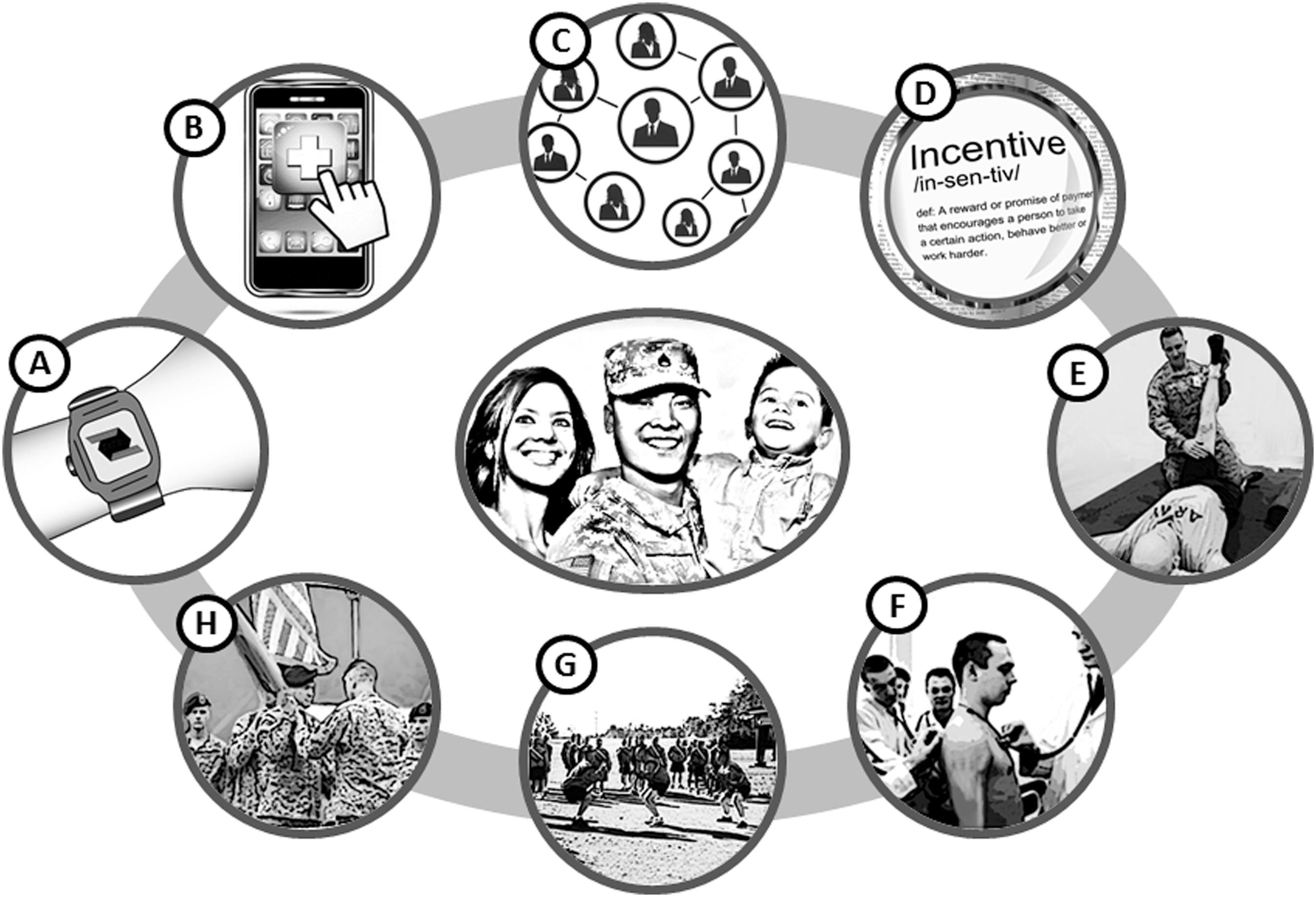
Technology has the potential to provide an integrated solution to promote health, optimize physical and cognitive performance, and enhance personal readiness in Service Members and military families. The following components are fundamental to an integrated technology solution:
Physical Activity Monitoring Technologies
Three of the top five features for physical activity monitoring techniques focused on fundamental activity-measuring capabilities: counting steps, measuring the distance traveled, and determining the time/intensity of activity. There was agreement among the review panel experts that steps walked and distance traveled are meaningful metrics to the typical user; they also serve as appropriate metrics for goal setting and tracking. General agreement was also evident that device algorithms should be robust with a capability to automatically track multiple types of aerobic (e.g., walking, running, aerobics, biking) and lifestyle activities (e.g., housework, yardwork) and to provide online tools to track activities not easily monitored with the existing technology (e.g., strength training, weight lifting).
Identification of major classes of activities (e.g., sitting, walking, sport participation, household chores) has been the focus of recent research efforts using pattern recognition and signal detection. 57 However, differentiation of less structured physical and lifestyle activities (e.g., occupational activity versus yard work versus household chores) presents a significant technical challenge. Tracking stairs (altimeter), periods of inactivity, and other activities (e.g., balance and stretching) scored lower in relevance. It is interesting that the ability to calculate calories burned was in the bottom 50% of features that experts deemed relevant. Although it is critical to balance caloric intake with energy expenditure, it was noted that direct and accurate measurement of energy expenditure from accelerometer-based monitoring technology remains an unsolved technical challenge.
For accuracy, devices should be worn continuously. Because the military operational environment can be harsh, ruggedness and waterproofing were rated high. A waterproof device helps to ensure that the device does not need to be removed for daily activities involving being submerged in water (e.g., showering, bathing, swimming), which obviates the concern that users might forget to put the device on after such activities.
Accuracy (e.g., reliability and validity) and precision were rated as fundamental requirements of physical activity monitoring devices. A major concern was that construct validity remains unknown as the majority of direct-to-consumer technologies use proprietary methods for quantifying device outputs (e.g., steps, energy expenditure, activity type). In general, the proposal-to-publication cycle times endemic to the research community are not keeping pace with the rapid commercial development of personal monitoring technology. One solution may be to develop and use standard research paradigms for rapidly evaluating multiple technologies simultaneously. This solution also would circumvent any apparent conflict of interest issues and would provide an independent, objective determination of device suitability.
In the future, machine-learning or self-learning capabilities could be developed to improve the accuracy and precision of device algorithms at the user level. For example, after the user runs a set distance (e.g., 2 miles), the system could calibrate the existing algorithms for that individual to facilitate more accurate predictions of distance, intensity, and energy expenditure based on accelerometer input. Different user experience levels (e.g., athletes versus novices) may require different levels of accuracy to track improvements over time. Little is known about the stability of these devices for accurately measuring device outputs over time. Although the majority of the review panel considered that accurate and reliable data were a fundamental requirement, others felt that if the primary goal of the technology is behavior change, a “good enough” accuracy threshold may exist.
Nutrition Monitoring Technologies
Based on evidence indicating the importance of tracking weight for successful weight loss and maintenance, 8 this feature was ranked as the highest-priority requirement for nutrition and food intake monitoring technologies. Tracking can be accomplished through manual entry or the integration of digital weight scales that upload data to the Web or to mobile applications.
Digital food libraries ranked as the next highest priority, with 7 out of the top 10 features related to digital food libraries. One important feature is credible and easy-to-use food databases that decrease the burden of data entry include the ability to add entries into the food library and allow customization of the library based on frequency of entry of personal meals and/or food choices. It was recognized that all currently available nutrition and food intake monitoring technologies require some form of manual input on the part of the user to track food intake. Perhaps because of this required effort, ease of use was viewed as critical. Potential solutions included barcode scanning and digital pictures to estimate portion size and caloric intake. Developers are currently investigating algorithms for automated analysis of food photographs to calculate portion size and calorie intake. However, this capability remains a significant technical challenge as data processing in these applications is currently largely reliant on human processing. It may be several years before such a solution can be implemented.
A third priority was the capability to integrate an individual's weight, caloric intake, physical activity levels, and personal goals to provide tailored information and caloric prescription. Easy-to-use meal planning tools are critical to facilitating behavior change. Additionally, technology solutions that integrate access to nutrition expertise, guidance, and information were viewed as important. Furthermore, most of the existing nutrition and food intake monitoring technologies do not flag unhealthy behaviors (e.g., eating only 500 calories per day). Thus, incorporation of safeguards against such misuses of nutrition applications should be ensured.
Sleep Monitoring Technologies
Sleep/wake algorithms used in existing actigraphs overestimate sleep and inconsistently identify daytime sleep episodes (e.g., naps). 58 Five of the top 10 features for sleep technology focused on accuracy (e.g., sleep/wake algorithm accuracy) and validation (e.g., against the gold standard, PSG). Review panel results indicate that sleep monitoring technologies should use PSG-validated algorithms to automatically track sleep without requiring user input (e.g., to indicate “lights out” or “lights on”). These algorithms should also accurately identify both nighttime sleep and naps throughout the day to obtain an accurate measurement of total sleep per 24-h interval. The latter requires that the device (1) automatically detects nonuse or “off-wrist” periods (e.g., time periods when the device is not being worn) and (2) differentiates sleep from waking sedentary behavior. Incorporation of other physiological monitors (e.g., heart rate) or ambient light sensors may help differentiate sleep from wake. Studies documenting the validity of the sleep detection and analysis algorithms should be openly available for review.
Outputs provided by sleep monitoring technologies should be intuitive and provide evidence-based recommendations for improving sleep. In addition to meeting these technological challenges, it was pointed out that, ideally, a defined sleep/wake history should be translated into a meaningful readiness or performance metric. This metric could include translating sleep information into a measure of mental effectiveness, the potential risk for accidents, or an equivalent blood alcohol level. These translations would assist users' understanding of the potential negative impacts of poor sleep.
Incentives to Create and Sustain Changes in Health
Three of the top five features in this area focused on the need for automated reports and information for the end-user. The panels deemed the information should be meaningful, be tailored to the individual, and incorporate health recommendations derived from evidence-based interventions to create and sustain behavior change. Users should be able to select their preferred mode of communication (Web-based, mobile application, text message, e-mail, video, etc.). The information provided should be periodically updated based on data collected from the biosensors and personalized health goals. The panel specified that information shared with the end-user should adjust frequency, timing, and message tone to match individual preferences. For example, one study found that a “prescription” from a physician to use an Internet-based intervention resulted in 65% of patients visiting the site, but adding an e-mail reminder to use the program increased the probability that patients used the site by 45%. 59 Generally speaking, however, there is limited research guidance about the best timing and types of messaging. Specifically, some individuals may respond positively to more frequent messaging, whereas others may “tune-out” messages if they are provided too frequently. A comprehensive understanding of optimal frequency, timing, and tone of messages was identified as a current research gap.
Online coaching with an expert should be evaluated as an adjunct to the automated and algorithm-based coaching tools. Not all individuals will require the same type and intensity of interventions: some may benefit from less intensive interventions, whereas others may require more intensive interventions. 60,61 For technology-delivered interventions, some users may benefit from automated technologies, but others may need a coach's support to be successful. Scalable solutions such as stepped care may be beneficial when resources are limited by ensuring only the necessary amount of time, expertise, and attention are provided to address an individual's needs. 60
Although information sharing was ranked higher, 7 of the top 10 features focused on goal setting and tracking. The review panel results indicated that technology should provide both strategies and incentives to help individuals reach personal health goals. Messages should be personalized and adaptable based on an individual's preferences, readiness to change, and pace of goal achievement. Messaging should also integrate leading evidence from behavior change interventions to facilitate goal achievement. Smart logic and algorithms can be an effective means to achieve this integration.
A third theme identified was the importance of incorporating fun (enjoyment) as a fundamental component for behavior change technologies (e.g., gamification, competition, incentives, social support). Leader boards can be used to create competition on shared goals among family, friends, and groups. Tools to create social groups can enhance shared experiences, provide group accountability, and facilitate progress toward a common goal. In the military setting, these social features could facilitate family engagement in positive, healthy behaviors when a member of that family is geographically separated (e.g., deployments, training). Incentive systems that incorporate appropriate extrinsic (e.g., badges, points, awards) and intrinsic (e.g., personal goal achievement, self-efficacy) incentives were considered to be important for both short- and long-term adoption of new, healthier habits.
Usability and Interoperability
The fundamental construct discussed for this area was the importance of decreasing the user burden to implement and maintain interaction with the technology. Conceptually, any technology that is designed to minimize barriers to creating healthy habits should not itself be or create a barrier. For example, entering data into the device must be simple, intuitive, and as automated as possible to decrease time requirements. Also, devices must possess adequate battery life so that users do not have to frequently remove the device to recharge it. Technologies should also be (1) easy to set up, (2) able to be personalized, and (3) intuitive. Data should be automatically uploaded from biosensors to Web- and mobile-based applications or require only a minimum of user input (e.g., Bluetooth® [Bluetooth SIG, Kirkland, WA], wireless). Compliance issues result when users must remove devices to upload the data, recharge the device battery, or frequently change sensors. For these devices to be incorporated into wellness programs for large organizations, there must be seamless communication across both Web-based and multiple mobile-based platforms to allow the users to access the information using one's own device. Additionally, a device should be produced in a cosmetic form that is comfortable, fashionable, and delivered at a reasonable cost for the target audience.
Mobile Health and Open Data
With regard to mobile health and open data, there was strong agreement on the review panel that most of these features were essential to any future technology solution. Six of the 13 features for mobile health and open data scored 9.0 or greater, and all were above 7.7 points. The highest scoring features related to the ease of moving data between the biosensor/device and software applications and the ease with which data could be used by a variety of third-party applications. Biosensor data should be easily uploadable to different third-party software applications, and software applications should have the capability to upload data from multiple biosensors from different manufacturers. The latter falls under the category of compatibility issues—perhaps best solved by developing industry standards to ensure that software programs allow users to “bring your own device.” Industry standards should also be developed to ensure that data can be loaded into electronic health records.
Ensuring security, privacy, and confidentiality of personal data was identified as important. A multitiered data management system may be required that enables users to grant access and permissions for sharing specific data with designated others, such as family, friends, healthcare providers, and wellness coaches, and with electronic health records. Additionally, users should be able to determine what type of data (e.g., activity, nutrition, weight, sleep) to be shared with each group.
In addition to sharing health data with wellness coaches, healthcare providers, and the electronic health records, tools should enable interactions (automated or otherwise) with users to help them change targeted behaviors (e.g., achieve daily step goal, avoid using the phone or computer in bed) and reach health goals. These interactions could include notifying providers via automated alerts (e.g., red, yellow, green) to facilitate just-in-time communication for those users who are struggling to meet their personalized health goals, as well as alerting users when it may be time to access additional help through a coach or other healthcare provider.
Limitations and Future Directions
The features, constructs, and leading practices reviewed in this workshop focused on elements considered essential for providing a technology solution to the military to enhance health, optimize cognitive and physical performance, and increase individual and military unit readiness. The guiding objective (using the Delphi method) was to identify key features for a technology solution. As outlined in the discussion, identified features tended to be relatively mainstream. Although the review also included features that were more innovative and forward thinking, these features typically scored in the bottom 50% of those reviewed. A spiral development process was assumed, meaning that features that scored lower may be integrated into future device refinement iterations after more research has validated their utility.
As technology solutions mature and are introduced to the market, it becomes increasingly important to address how patient health data is integrated into the clinical workflow and the broader healthcare system. Health technology developers need to determine how data sharing will enable a comprehensive, 360° view of a patient's health. Healthcare providers, navigators, and health coaches need to determine how to use this unprecedented, data-driven perspective to encourage patients to better manage their own health and health goals. A potential framework for healthcare data integration is described in Figure 1. Development of complementary frameworks, as well as in-depth technical, regulatory, policy-related aspects of health data integration, is a priority focus of future work.
Conclusions
Analysis and prioritization of leading practices, features, and constructs can be used to provide a research and development road map for (1) leveraging technology to minimize barriers to enhancing health and (2) facilitating evidence-based techniques to create and sustain healthy behaviors. Future research and development should focus on an integrated solution to promote health, optimize physical and cognitive performance, and enhance personal readiness in service members and military families. Capability gaps identified and insights gained can also be used to support future Broad Agency Announcements, Program Announcements, and Small Business Innovation Research topics.
Footnotes
Acknowledgments
The authors are grateful for the contribution of workshop participants from academic, government, and commercial industries (see  ). The authors would also like to acknowledge the following for reviewing this manuscript: MAJ Mark Mellott, Performance Triad, U.S. Army Medical Command; Dr. Janet Harris, JPC-1 Medical Training and Health Information Systems, U.S. Army Medical Research and Materiel Command; and COL Daniel Kral and LTC Felicia Langel, Telemedicine and Advanced Technology Research Center, U.S. Army Medical Research and Materiel Command.
Disclosure Statement
F.P.T. has equity ownership in BeHealth Solutions, LLC, a company developing and disseminating online interventions. The terms of this arrangement have been reviewed and approved by the University of Virginia in accordance with its conflict of interest policy. M.A. is an employee of Booz Allen Hamilton. D.N. is an employee of Empirica Research. D.S.T., E.E., J.D.G., A.H., J.K., K.J.K., B.L., J.M., T.S., V.T., N.W., and D.J.P. declare no competing financial interests exist.