




Abstract
Introduction
In 1988, Reaven 1 named metabolic syndrome Syndrome X or Reaven's syndrome. Its risk factors include high blood pressure, hyperlipidemia, high fasting blood sugar levels, and abdominal obesity. If a person has three of these five risk conditions, he or she is suspected to have metabolic syndrome. 2,3 An unhealthy lifestyle is considered a cause of such conditions, and so medical professionals call the syndrome a lifestyle disease. As the syndrome can lead to stroke or cardiovascular disease, its severity is significant. 4,5
According to a recent study based on the 2009 Korean nutritional survey, the prevalence rate of metabolic syndrome for Koreans is 26.1%, and one out of three individuals over 30 years of age has metabolic syndrome. 6,7 As indicated by various studies, the symptoms of metabolic syndrome differ according to sex, age, area, and medical and family history. 6 –12 The main causes of metabolic syndrome include genetic factors and personal and environmental factors, such as smoking, drinking, lack of exercise, family history, and education. 13,14 Lifestyle is considered a risk factor of metabolic syndrome, and its improvement has been known to delay the prevalence of or to prevent this syndrome. 9,15 –17 The U.S. National Cholesterol Education Program Adult Treatment Panel III, 18 which redefined and proposed clinical guidelines for metabolic syndrome, emphasized improving lifestyle as a strategy to prevent primary and secondary diseases. It also underscored that lifestyle management and improvement is a cost-effective strategy for reducing the prevalence rate of metabolic syndrome. 19 As previously mentioned, lifestyle is significantly associated with metabolic syndrome risk. Some studies have reported a statistically significant difference in the risk for a group that had no interest in managing its lifestyle and a group motivated to manage it. In particular, individuals who received active counseling for more than 6 months and were motivated to manage their lifestyles had half the number of risk factors for metabolic syndrome than did other individuals. 20
Such studies show that proactive interest and efforts are necessary to reduce the prevalence of metabolic syndrome; to foster such efforts, the awareness of an individual's lifestyle needs must be investigated. 12 However, early studies investigated only a fractional aspect of the metabolic syndrome of patients' lifestyles by asking brief questions and did not use differentiated and accurate assessment tools. In addition, it is difficult to interpret their results objectively, and their data provide only limited suggestions for lifestyle improvement. 6,21 A system that enables people to examine and be aware of their lifestyle and provides an environment conducive for lifestyle improvement is therefore needed. Many media, such as television, the Internet, and mobile phones, are used as systems that enable people to check and improve their lifestyles.
Among these, mobile devices use a network that can interact anywhere and thus provide up-to-date information, regardless of time and location. According to Fogg, 22 accessible interactive experiences increase the opportunity to persuade. The characteristics of a mobile device are ubiquity, reachability, convenience, and security; additional harmonious characteristics include localization, instant connectivity, and personalization. 23 Mobile devices, which have such characteristics, can effectively change the attitudes and behaviors of users. 24 Han et al. 24 discussed the impacts of mobile devices on the attitudes and behavioral changes of users. In their study of participant diet improvement and changes in attitude toward diet with mobile and Internet Web site information, a group that conducted the experiment with a mobile application experienced a greater diet improvement than a group that participated through a Web site. As reflected in the study, it is clear that mobile devices are tools that can change people's attitudes and behaviors. 24
Various health management applications that use such mobile devices have been launched. SoftBank in Japan developed an application called SoftBank HealthCare. 25 In cooperation with a wristband-type device, Fitbit® (San Francisco, CA) Flex™, it has enabled people to measure walking distances, burned calories, and sleeping hours. The application has a program that provides the simulation of facial changes in accordance with lifestyle and enables people to consult health experts (nurses, nutritionists, and doctors). 25 Samsung Electronics has developed a mobile application called S-Health Buddy that permits health management; with user information, the changes in body shape of a mobile character can be viewed. 26
Additionally, many health management applications are being developed. Such applications include iFitness, which provides 230 body part exercises and videos; All That Skincare, which offers management methods and information for healthy and clean skin; Smart Doctor, which notifies patients with high blood pressure and diabetes of medication times; and 101 Yoga Poses, which provides methods and detailed pictures for management through yoga. 27 By connecting to a device that can manage chronic diseases, such applications provide functionality for people to manage blood pressure and blood sugar, which are associated with chronic diseases, and offer information about health management. In other words, systems that enable people to be aware of their lifestyles and provide exercise prescriptions by examining overall lifestyles, such as diet, exercise, smoking, drinking, and sleeping patterns, are insufficient.
By using the Korean National Health and Nutrition Examination Survey (KNHANES), 28 this study examines national data on lifestyle factors, develops a mobile application that enables individuals to be aware of their health statuses through lifestyle analysis, and provides basic data for metabolic syndrome prevention and improvement. The program is developed as a mobile application that can be used by over 60% of Koreans and enables people to check their health status whenever and wherever necessary.
The purpose of this study was to provide motivation for monitoring and improving harmful lifestyle habits that influence the health of individuals, with the help of a mobile application that analyzes lifestyles. In addition, to evaluate the developed mobile application, the study investigated the changes in health and lifestyle awareness before and after using the application. This application provided motivation for individuals to improve lifestyle habits, with objective measurements of them and appropriate feedback for all age groups.
Materials and Methods
Engine of Personal Lifestyle Check-Up and Improvement
This study provided an environment for people to check their own health status and change their unhealthy lifestyle through a developed lifestyle analysis engine. In order to develop such an engine, the health awareness data in the 2009 KNHANES were used. Pursuant to article 16 of the National Health Promotion Act, KNHANES as a national level of survey of health and nutritional status contains government-approved data. An objective of KNHANES is to provide representative and reliable statistical data on the national health status, health-related awareness and behavior, and actual food and nutrition consumption.
In this research, health awareness data are the national standard data of all sex and age groups, which offer health status data on smoking, drinking, physical activity, and mental health. These include all the households and population of Korea (KNHANES). 28 In this research, health awareness data of 25,124 participants in the KNHANES were used for the development of the lifestyle analysis engine. As infants and youth were categorized separately, only data on adults over 19 years of age were used. In the KNHANES, an adult is a person over 19 years old. In this study, people between 19 and 49 years of age are considered adults, and people who are over 50 years of age are considered elderly. Table 1 represents the NHANES data that were used for the development of the lifestyle analysis engine. By converting NHANES data into a 5-point scale, a lifestyle analysis of Koreans by sex and age was calculated as an average value for each category.
Analysis Target
Twenty-three survey items of the items presented in KNHANES were selected as survey items for the mobile application to be developed in this research. In other words, they were applied in the same manner as the content of survey items used for the development of the engine. They were used to compare the scores by sex and age with the lifestyle scores of application users by analyzing the lifestyle of KNHANES participants. Through this, application users can discover whether their lifestyles have greater or lesser than average values by comparing them with the health scores of people of the same sex and age. For example, if a user is a 28-year-old male, he would be compared with his age group and would be able to compare his lifestyle among the members of the group. Table 2 presents the lifestyle item categories used for analysis. Table 3 shows the KNHANES analysis results that are used for the development of the lifestyle analysis engine.
Lifestyle Questionnaire
Korean Lifestyle Analysis Results by Sex and Age
Implementation
The workflow model for personal lifestyle check-up and promotion application is detailed in Figure 1. The Health Improvement and Management System server for the mobile application provides a platform for the authentication/verification of users and storage/retrieval of records from the database. The system is provided with a platform for generating a queue for the users. It contains a special program for the registration of users to the system. Users can register by providing basic information such as name, gender, and age. The user information is stored in the Health Improvement and Management System User Database, which is authenticated and verified to gain access to the Health Improvement and Management System Everyday system (Fig. 2). The object-oriented concept is used for designing and implementing the personal lifestyle check-up and improvement application. It involves five main controllers: the Health Improvement and Management System lifestyle questionnaire main controller, the user interface controller, the database controller, the report printer, and prescription controller. The controllers act as individual units and report to the main controller in the form of events.
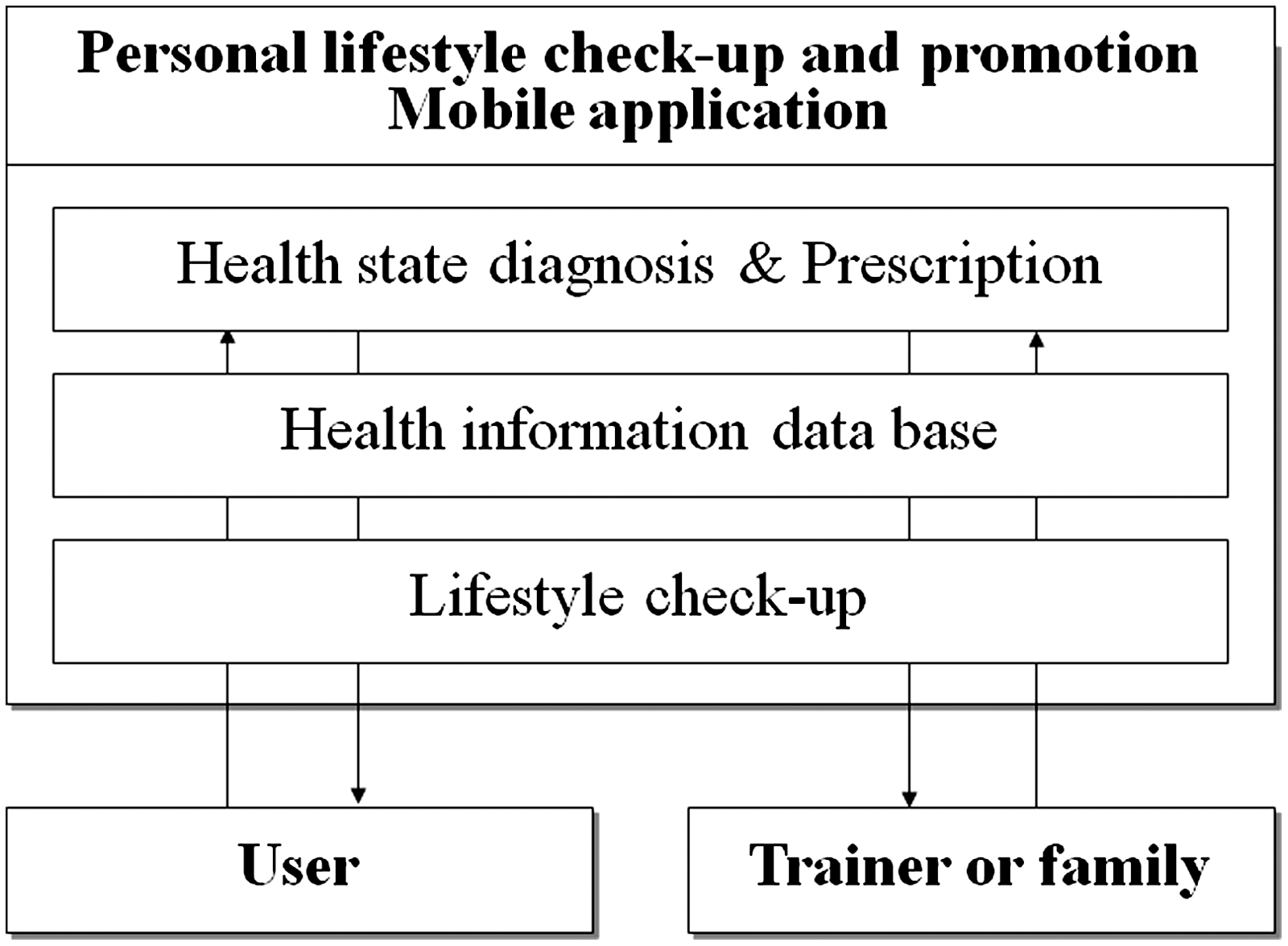
Workflow in lifestyle check-up and promotion application.
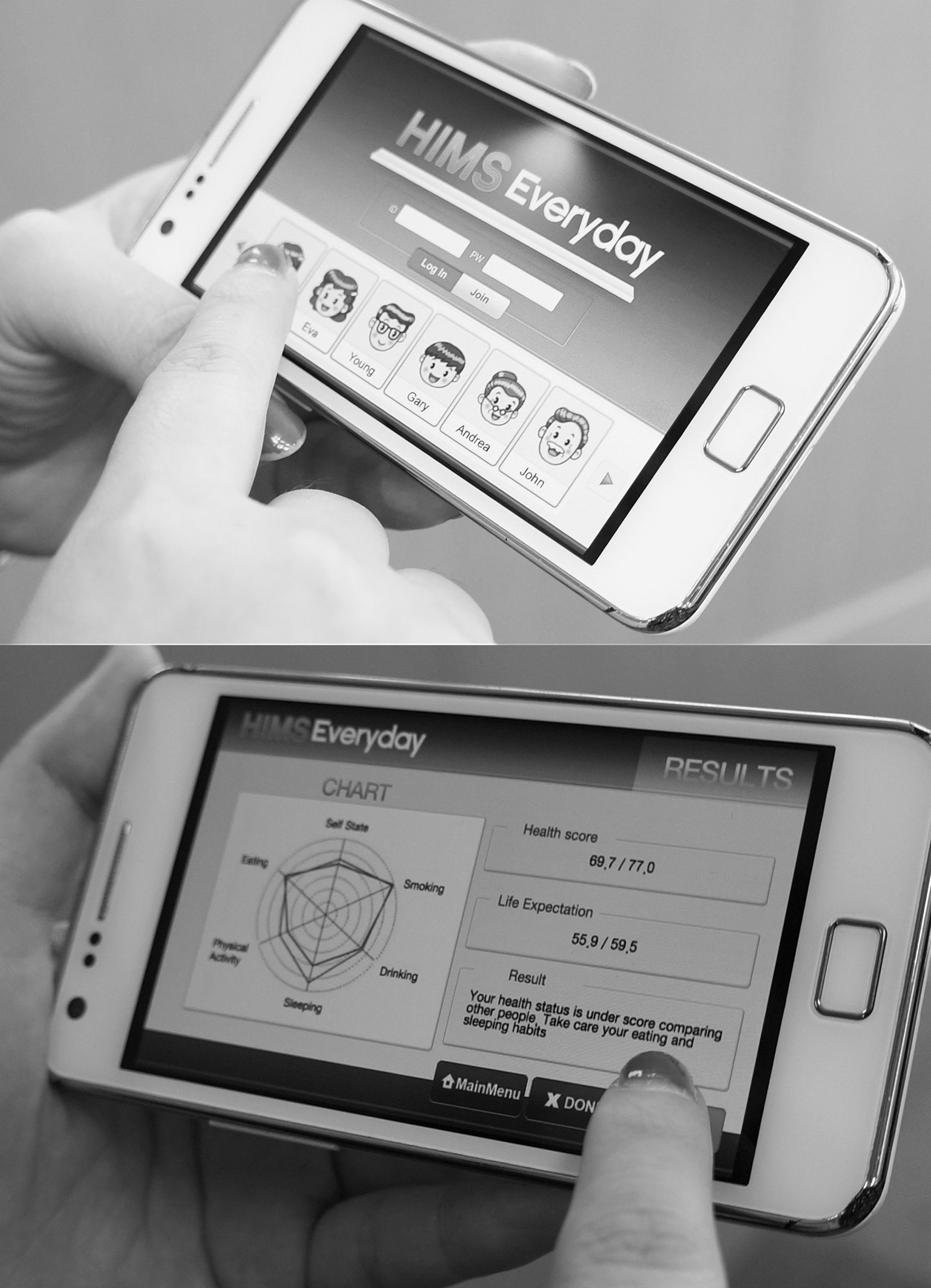
The personal lifestyle check-up and promotion application.
Application
The goal of the developed mobile application is to provide motivation for lifestyle improvement by examining an individual's health status and lifestyle, leading to an appropriate prescription. This application was initially developed for the Android® (Google, Mountain View, CA) system, and it will eventually be adapted for the Apple (Cupertino, CA) iOS.
The user provides his or her personal information to use the main functions of the application. Personal information includes medical and family history, height, and weight. The reason for providing family history is that the prevalence rate of lifestyle diseases, such as the metabolic syndrome, increases when there is a history of such conditions within the family, and it is one of the factors that require management. Height and weight are necessary information for body mass index analysis. The provided information is saved in the database and managed as user information. A registered user can log-in automatically through a selection of an avatar.
If a user selects a menu to analyze his or her lifestyle, the database provides lifestyle test questions that are appropriate for the user's age as shown in Figure 3a; subsequently, an examination of his or her lifestyle starts. The questions as shown in Table 2 are in the same form as the ones in the KNHANES. When the user completes the questionnaire (Fig. 3b), this application quantifies the answers through the use of an algorithm.
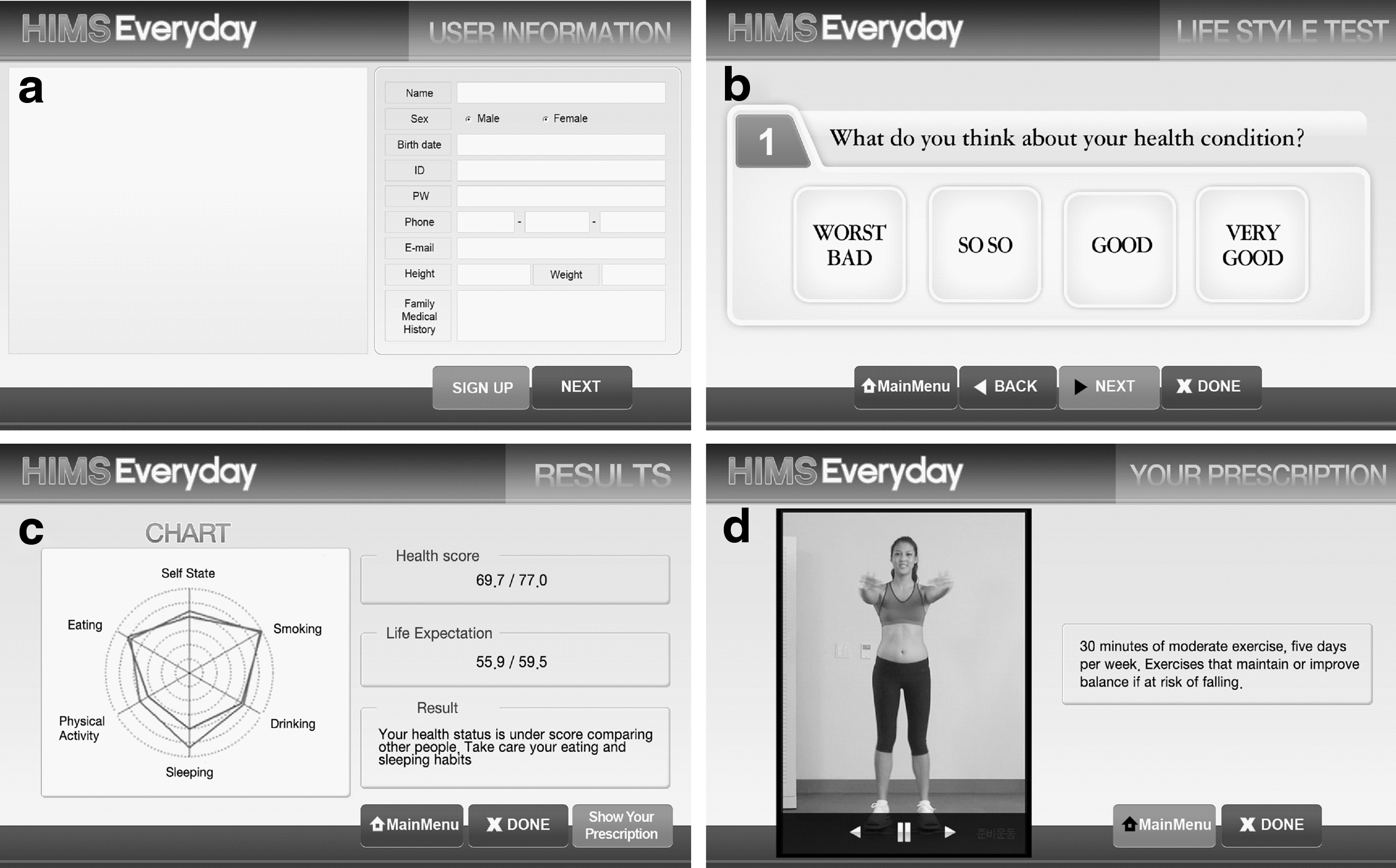
Application screen shots:
By using the analyzed KNHANES scores, the application provides a report and prescription as shown in Figure 3c and d that allow the user to be intuitively aware of his or her lifestyle. The essence of the lifestyle analysis algorithm is to provide a clear standard to grasp one's lifestyle level in the KNHANES data distribution. As the questionnaire at the start of the application is based on the survey categories of the KNHANES, it meaningfully compares the user's score with the standard. Furthermore, the application is cautious with regard to the categories that need to be improved by providing two lifestyle categories that are different from the standard scores, according to sex and age. If the user pushes the lifestyle improvement prescription button, the application recommends certain types of exercise that are appropriate for a user to improve his or her lifestyle and eating habits. As for prescriptions, the application advises the user to stop drinking and smoking when a health score is low. The Advanced Fitness Assessment and Exercise Prescription of Heyward 29 was used for reference in the prescription with regard to exercise, eating, and sleeping habits.
Evaluation
A survey on two categories—(1) health awareness before and after the application's use and (2) commitment to improve a lifestyle before and after the application's use—was conducted in order to verify the effects of the developed system. In particular, changes in commitment to improve lifestyle were defined as motivation and measured. Motivation is the power that provokes one to act, sets the direction of behavior, and enables one to maintain such behavior. 30 Previously, motivation theory was usually applied to studies of individual or group performance in a work field and used in class environments in order to explain the motives of students. 31,32 Recently, it has been used in studies that seek to develop applicable systems for people who want to use continuously information systems. In order to measure motivation, this research requested survey participants to provide 5-point scale answers to questions of whether they were aware of their lifestyles before use of the lifestyle program and how much they are trying to improve them. Moreover, it evaluated participant awareness levels of lifestyles and the levels of motivation to improve them after exposure to the lifestyle program, by using the 5-point scale answers of the participants.
In all, 152 participants took part in the experiment for the evaluation of the developed system; they are represented in Table 4. Survey recruiting was conducted in front of Seoul City Hall for 3 days, targeting passersby. For the survey, participants were asked to sign an agreement. Among 71 seniors, 29 did not have smartphones. For these seniors, the experiment was conducted with the research team's smartphone program.
Application Evaluation Targets
The survey of changes in lifestyle awareness is given in the Appendix.
A paired t test was used to analyze the results. A paired t test examines two groups and compares the differences between these groups before and after an intervention. 33
Results
This study compared the level of one's lifestyle awareness with the changes in motivation to improve this lifestyle by using the program. Table 5 presents the results of a comparison of the awareness level of one's own lifestyle with the changes in motivation to improve lifestyle before and after the use of the developed program. First, in the survey of the difference between usual lifestyles and lifestyles after using the program, the mean before using the program was 3.42, but it was reduced to 3.037 after using it; this reduction was statistically significant. The lifestyle score was lower after the examination than before estimating an actual lifestyle. Regarding the interest in lifestyle and motivation to improve a lifestyle after using the program, the value before using the program was 2.640 but increased to 3.345, which was also statistically significant. This means that people were more motivated to improve their own lifestyle after using the program.
Survey Results of Changes in Lifestyle Awareness
Indicates significant difference.
Discussion and Conclusions
This study developed a mobile application that enables individuals to be aware of their own lifestyle through examining them and that provides motivation and a prescription for lifestyle changes through the examination results. By using the KNHANES and its standards, the national data on lifestyle factors were analyzed, and the program was for an application that can be used by over 60% of Koreans and enables people to check their own health status, whenever and wherever necessary. Additionally, the survey on personal awareness level of lifestyle was conducted through the developed application in order to explore whether people are well aware of their lifestyles and of the changes in lifestyle awareness. People who used the mobile application were clearly more conscious of their health statuses than before using the mobile application. They showed greater motivation to take care of their health. The developed application plays an important role in providing motivation to be aware of and improve the users' own lifestyle.
This mobile application enables users to discover and improve the lifestyle habits that have negative effects on their health statuses. As a result, it contributes to increasing the awareness of unhealthy lifestyle habits and managing lifestyles, wherever necessary, and thus to preventing metabolic syndrome.
Future research needs to follow up on lifestyle improvement and examine long-term enhancements. In addition, as conveyed in the survey, various contents need to be developed and updated regarding prescription. After users are induced to participate, it is important to upgrade the application software based on their feedback.
Footnotes
Acknowledgments
This work was supported by the Ministry of Culture, Sports and Tourism, Korea, under the Sports Industry Technology R&D program supervised by the Korea Sports Promotion Foundation (grant APP01201204112008).
Disclosure Statement
No competing financial interests exist.
Appendix
Q1. What do you think of your lifestyle?
1— — — — 2— — — — 3— — — –4— — — –5
Very bad Very good
Q2. How much do you try to manage your lifestyle?
1— — — —2— — — —3— — — –4— — — –5
Rarely Always
Q3. After the examination, how would you reassess your lifestyle?
1— — — —2— — — —3— — — –4— — — –5
Very bad Very good
Q4. After the examination, are you planning to improve your lifestyle?
1— — — —2— — — —3— — — –4— — — –5
Not at all Very likely
(Please download the program to complete the survey on health and lifestyle.)