




Abstract
Introduction
Diabetes: A Twenty-First Century Disease
Diabetes is an illness in which the body is unable to use and appropriately store glucose, which means it remains in the blood in above-normal amounts. The analyses carried out at any time of the day provide information about glycemia when it is measured, and this information enables the patient to act accordingly by making changes to their diet, insulin dosages, or physical exercise. This means self-control is used, and the greater the control, the more information and more freedom of action there will be. 1 –5
Exercise together with diet and pharmacological intervention is one of the major aspects in the treatment of patients with diabetes. Physical activity refers to all movement or work undertaken by the human body. Energy consumption increases when physical activity increases. Regularly practicing such activity means the subject gains a whole range of benefits such as an improvement in strength and muscular elasticity, reduction in the risk of cardiovascular illnesses, help in controlling weight and arterial pressure, and also a reduction in glycemia and improvement in sensitivity to insulin in the case of patients with diabetes. 4,6 –10
Technology for Patients
Wireless communication systems have gained major prominence in recent years, as individuals may connect to a network at any time or in any place with them and thus be in a position to monitor patients by remote control. This enables the patient to be monitored from any place as long as they have some type of cellular or satellite coverage. In this way, new communication channels between patient and doctor have been opened, giving rise to a new type of medicine: telemedicine. 6
In the case of diabetic patients, diabetological information must focus on improving metabolic control and on helping patients to live in harmony with their illness. In both senses, telemedicine would appear to be a useful tool for enabling there to be better and more flexible care for some patients, thus improving their quality of life. To correctly analyze the diabetic's situation, it is advisable for the data being passed on to the doctor not to be confined exclusively to capillary glycemia, but rather that reference should be made to other values such as diet and exercise. 11 –15
First, we shall analyze the state-of-the-art by showing some other applications used to control diabetes, which are used both commercially and for research purposes.
The main indications for the treatment of diabetic patients using telemedicine are that a distinction needs to be drawn in glycemia-related data between preprandial and postprandial treatment, as well as specifying any relevant datum in metabolic control such as the dosage of insulin or orally-ingested drugs, exercise, and diet. A simple interface that is easy to use should also be used, which does not require much knowledge of computers. The information sent by the patient must be able to be seen by different members of the health team, who need to have flexible technical support at their disposal. The response to the data sent by patients must be provided within a maximum 2 weeks, and there also needs to be legislation that enables the written data to be replaced by electronic data. It is recommended that the patients and their doctor sign a document guaranteeing privacy in terms of the data sent. 16
To apply telemedicine to patients with diabetes mellitus type 2, one would have to focus on education and on ensuring changes in lifestyle. Intervening from a distance with any of the telematics systems that currently exist to help treat this type of illness is equally effective. To increase the development of telemedicine, it is crucial to gain access to tools on platforms that are both flexible and easy to handle, so as to then incorporate them into the routine care provided to patients, that is, to incorporate telemedicine into our healthcare system, which implies a change in mentality on the part of professionals when pursuing a specific form of treatment and of administering it when quantifying the resources assigned to it. Table 1 below shows 20 Web-based mobile apps geared to controlling and administering diabetes. The virtual stores Google Play Store 17 and Apple Store 18 have been analyzed. In addition, scientific articles have been sought on databases such as IEEE Xplore, Web of Science, and ScienceDirect between 2005 and the present together with commercially available apps.
Some of the Applications Focus on Controlling Diabetes
The applications shown in Table 1 offer similar functional options to the “Diario Diabetes” application. The target public for this application is of no defined age group, unlike for instance some of the apps such as OnTrack Diabetes. Users will be those who choose the most appropriate one for their application requirements.
Methodology for the Design and Evaluation of “Diario Diabetes”
The development and subsequent evaluation of a mobile Web-based platform known as “Diario Diabetes” were be developed and evaluated in this article, which may help diabetics to record the most important parameters and thus be able to better control their illness by being in a position to create tables and graphs in which their data can be better displayed and shared with health professionals both more quickly and more comfortably. This Website was to be able to be accessed from any type of device, ranging from a computer to a smartphone. HTML, CSS, JavaScript, PHP, and MySQL technologies have been used to prepare this application, and the main contribution apart from developing the app itself subject to this work is to show both technical and user evaluations carried out using the app.
It is important to mention the need to evaluate the loading time of the applications to ensure they function properly.
In the design of this application, we have been guided by the following criteria, which we believe are essential for practical application: “content,” “structure,” “presentation,” and “dynamism.”
It is also necessary to evaluate these criteria to see what users think about them. In this case, 150 users used the application, most of whom were of Spanish origin.
In the case of this application, a survey has been prepared in PHP. The server side scripting language to evaluate the application on a user level that gathers together some of the most important aspects to be perceived by the user. This survey can be viewed in Table 2.
User Evaluation
To measure the response time of the Web-based application, we used the Firebug tool. Firebug allows you to debug and optimize the scheduling and structure of the Website and all its components (Javascript, HTML, CSS, images, and so on).
Next, we describe the method used in this work (app flow chart) and the app itself.
Flow Charts
Once the user has been registered, they then access the home page and can choose from events, alarms, and the creation of graphics. They can also view their data and modify it. Figure 1 graphically and intuitively shows the different sections that make up the app.

Flowchart.
Application Developed
The application that has been developed is a personal diary, the aim of which is to control diabetes. To access the app it is necessary to fill in a personal form. Once this has been properly completed, the app services can then be accessed, among which are (as can be seen in Fig. 2) the following: the insertion of new events so that upcoming medical appointments can be remembered, any tests that need to be undertaken, and sports competitions or any other event in our daily life, which we wish to save. Another service is the configuration of alarms.
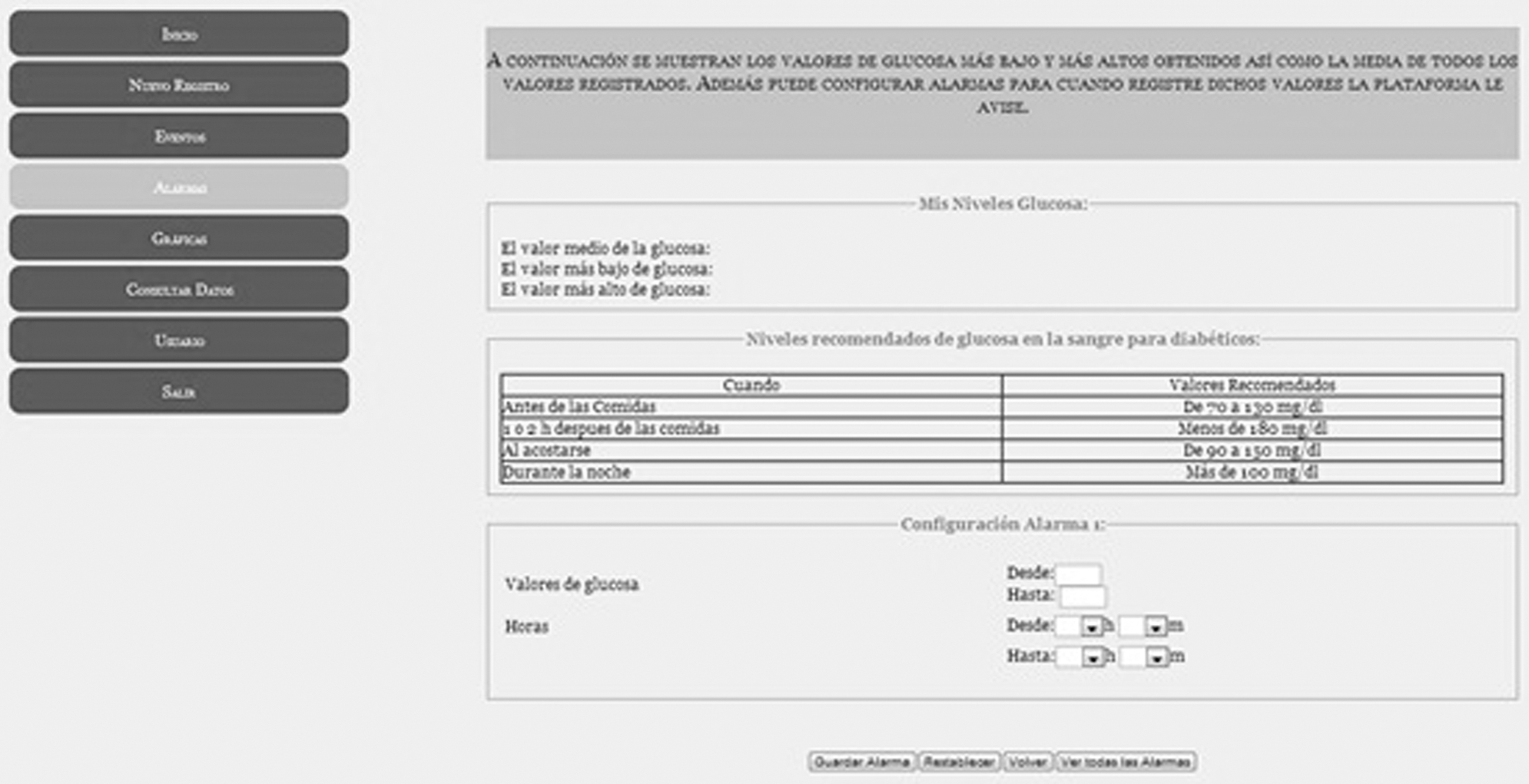
Appearance of the app (Alarms section).
To ensure that the data saved by the user are of use when improving glycemia levels in the blood and so as to in turn improve communication with the healthcare person in charge, we have the following two links that are accessed from the browsing menu. On one hand, we find the section set aside for creating graphs. In this window, the user can choose the number of days they wish to display and the parameter they wish to view depicted on the graph. Moreover, to facilitate understanding of the data being recorded, it is possible to download the graph in a PDF format and thus share it with whomever the user wishes, whether a family member or the corresponding doctor, as the PDF file can be comfortably sent by e-mail.
On the other hand, but for the same purpose, in the following link accessed from the browsing menu (Fig. 3) can be checked the data in the same way as in the graphs, but by creating tables, so as to be able to display all the data in an orderly manner. Several parameters can be displayed at the same time in this case. As in the previous case, PDF documents can also be created containing the data being sought, so as to be able share or store it. Users can create graphics with different selected parameters such as blood glucose, arterial pressure, calories, weight, proteins, and carbohydrates.
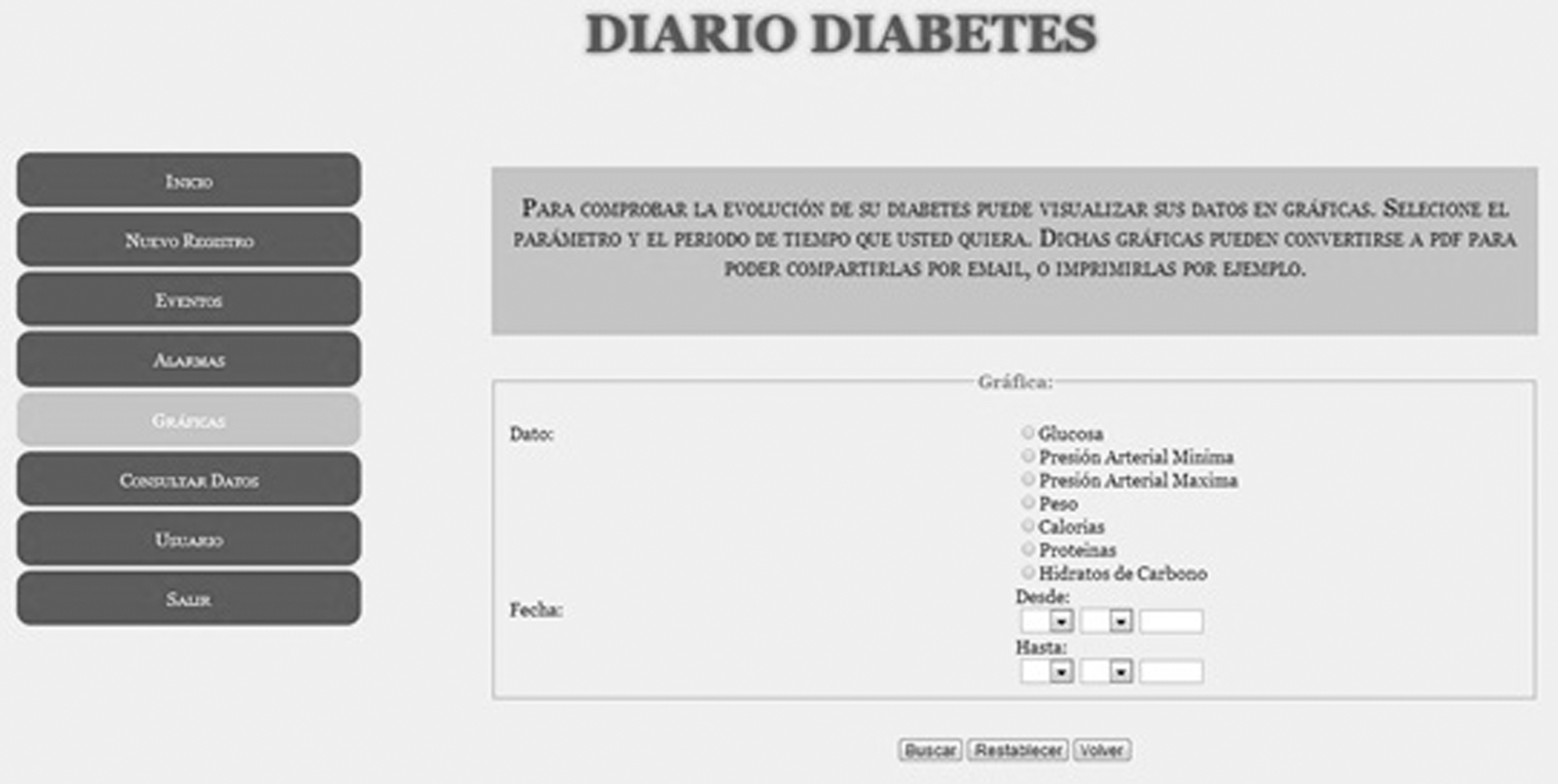
Graphs section of the app.
Results
Evaluation of the Application on a Technical Level
One of the most important things to take into account when creating an application is the time it takes to load and be completely viewed by users. Therefore, it is important to control loading time, although to conclude that a Website is loading slowly we need to see the average loading time of a Website, which should be something between 1 and 7 s at most.
Although measuring the loading time for a Website will depend on quite a major factor related to the distance of the two service providers, that is, the one carrying out the test and the one hosting the Website—and quite apart from the extent to which their saturation level will have an influence on this—we will be able to therefore gain up to 2.5 s or more if we use a server that is closer to where our hosting is located. However, this does not mean that the Website will always load just as fast. In addition, there are other factors that may influence the speed at which a page is loaded, such as the server's performance, the Internet server connection, the user Internet connection, and the speed of the browser and of the user's electronic device through which they are connected. This means that each of these factors provides their own contribution to any delays, and as delays are accumulative, no good response times will be obtained by simply improving some of the parts.
Some studies point out that it is not a good idea to exceed 2–3 s as a maximum loading time for a page. If these times are exceeded, there will be a reduction in the number of pages viewed on our Website as well as being annoying for the user. In contrast, attention should be drawn to the fact that the only files remaining in each cache memory would be the CSS files that are loaded on all the pages. We can therefore note that loading time does not exceed 2 s in any case (see Table 3).
Evaluation on a Technical Level (Loading Times)
Evaluation of the Application on a User Level
When rating the quality of a web mobile application, one of the major factors is usability: “content,” “structure,” “presentation,” and “dynamism.” Usability (is this your intent?) is the most visible attribute as it determines the degree of user satisfaction regarding the Web-based application, and this depends on whether it is being used or not. Given that no formal technology exists that stipulates how a web application should be evaluated, all evaluations of quality which are made are attached to the project itself. The criteria that are taken into account when evaluating a project are mainly the following: content refers to the information included in the application according to its objectives. Structure refers to how the content is organized in the application. Presentation refers to how the content and functions of the application are shown to users. Dynamics refers to how users move and interact with the informative elements and components. Interaction refers to how the dynamic components are used.
According to the results obtained, most users used a computer to use the application (Fig. 4) and in the case of this particular experience, 150 users with diabetes tried out the application. Of the 150 surveys sent out, only 123 were valid. The other surveys were disregarded due to incoherence or incongruence in the responses given to the questions. Second, the usefulness of the application to the users was evaluated, that is, the content. This is a very important section to be taken into account, as was explained previously. The results obtained have been positive ones, as most users gave the maximum score in this section (Fig. 5). Users therefore consider the services offered by the application to be of help to diabetics. To assess the application's structure and presentation, we found a section in the survey where the Website's design can be evaluated, and this is also important as the interface needs to be simple for any individual to be able to use the application without any difficulty. In this case, the results have also proved to be favorable, being considered very intuitive (Fig. 6). Taking into account this last-mentioned point, assessment is also made of whether the application is easy to use, with the following results being obtained (Fig. 7). The ease with which the tasks are performed evaluates whether the web application is dynamic, and this is another point to be taken into consideration when evaluating the applications, as if the user spends too much time waiting to perform a task, they may lose interest and stop using the Website. In this case, the results obtained have also been positive (Fig. 8). All users who evaluated the application stated that they would recommend this Website to other diabetics.
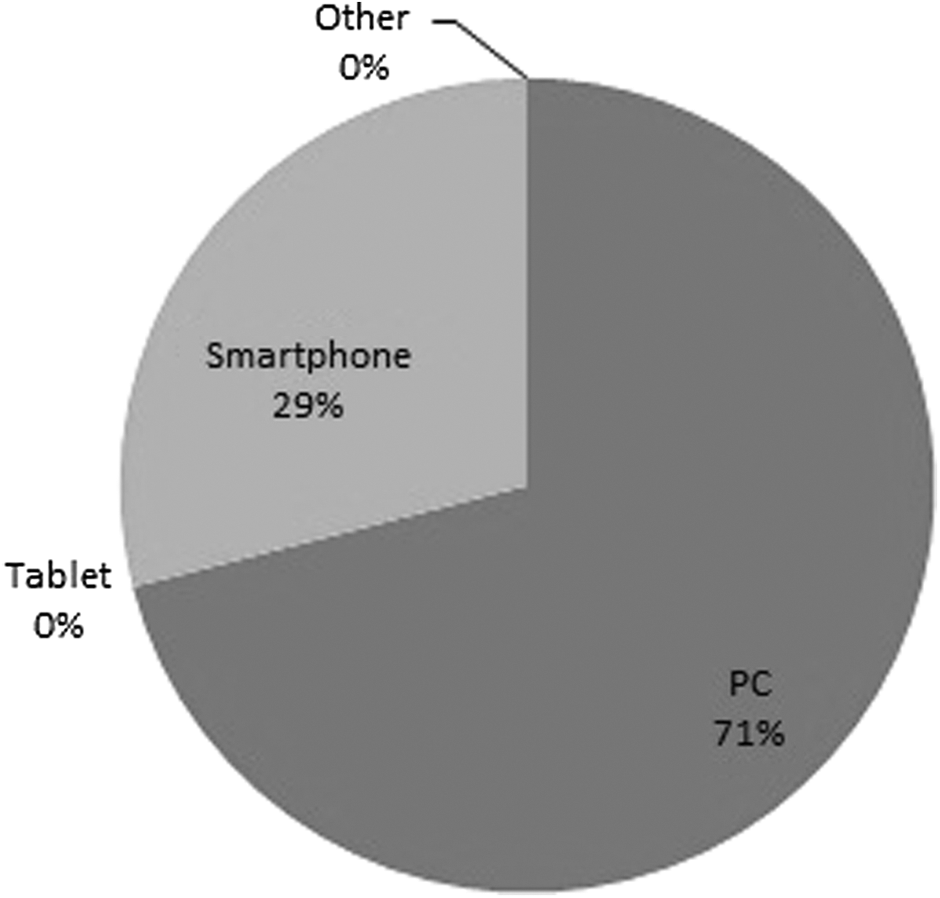
Device used.
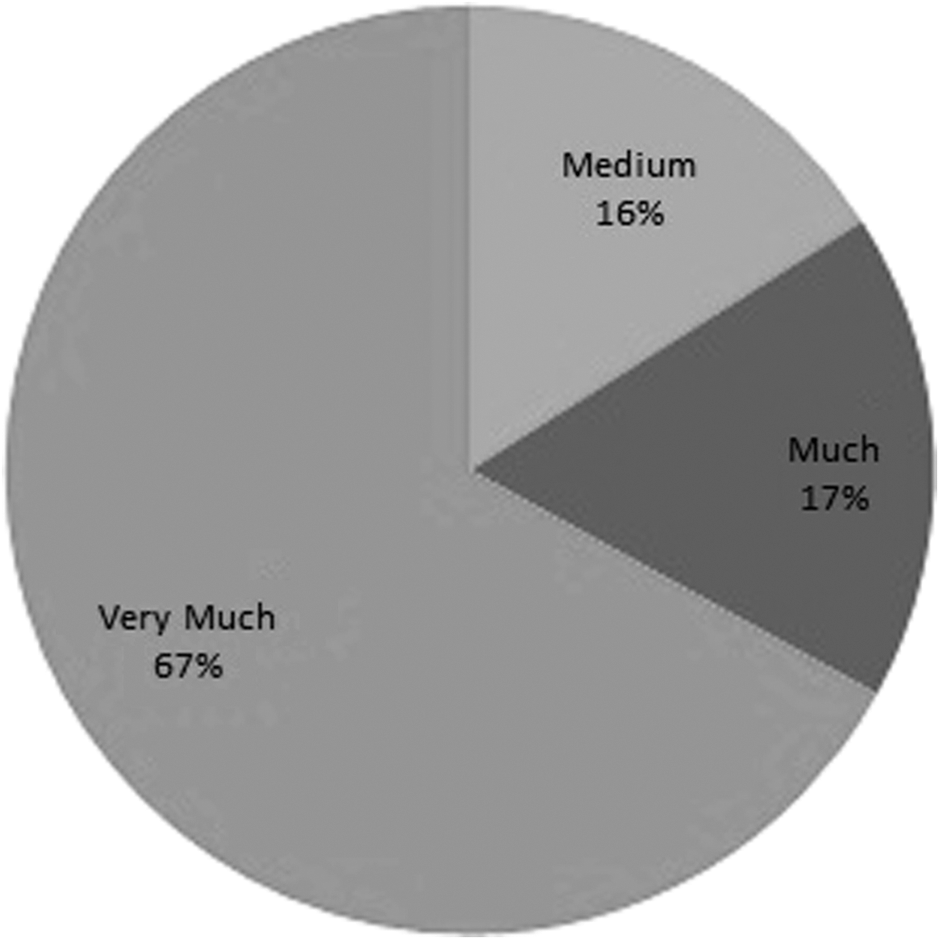
Usefulness of tasks.

Design.
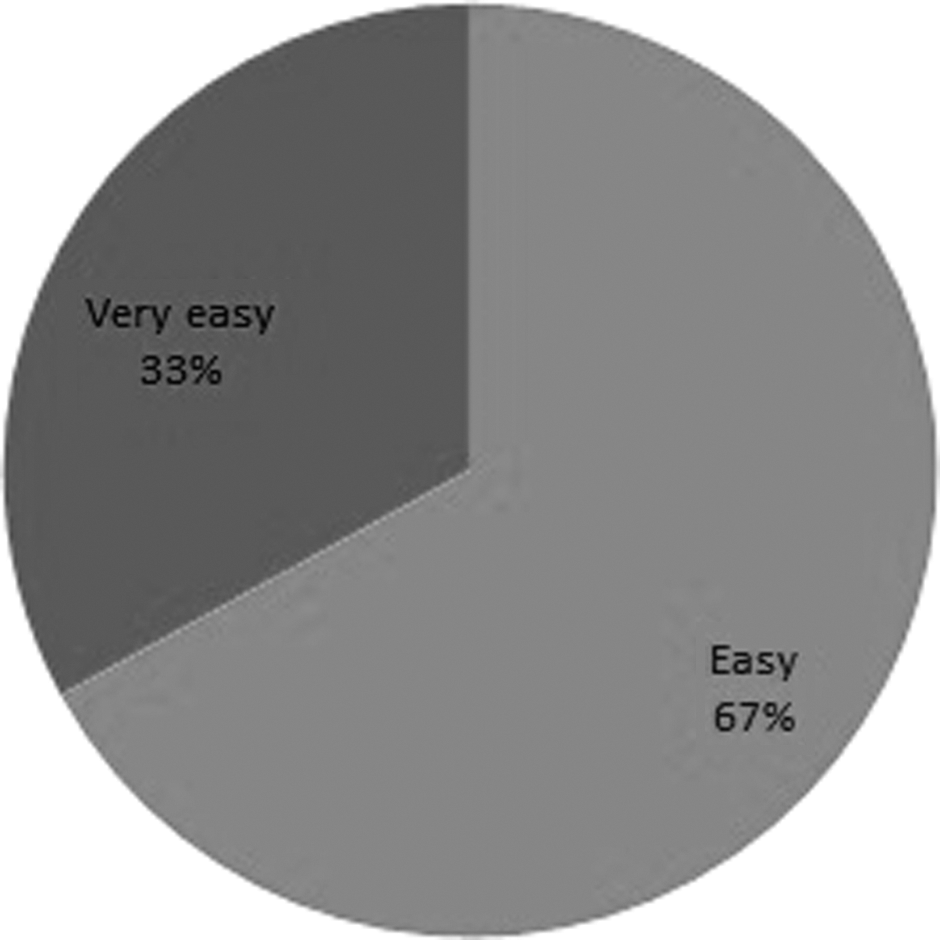
Ease with which the application is used.
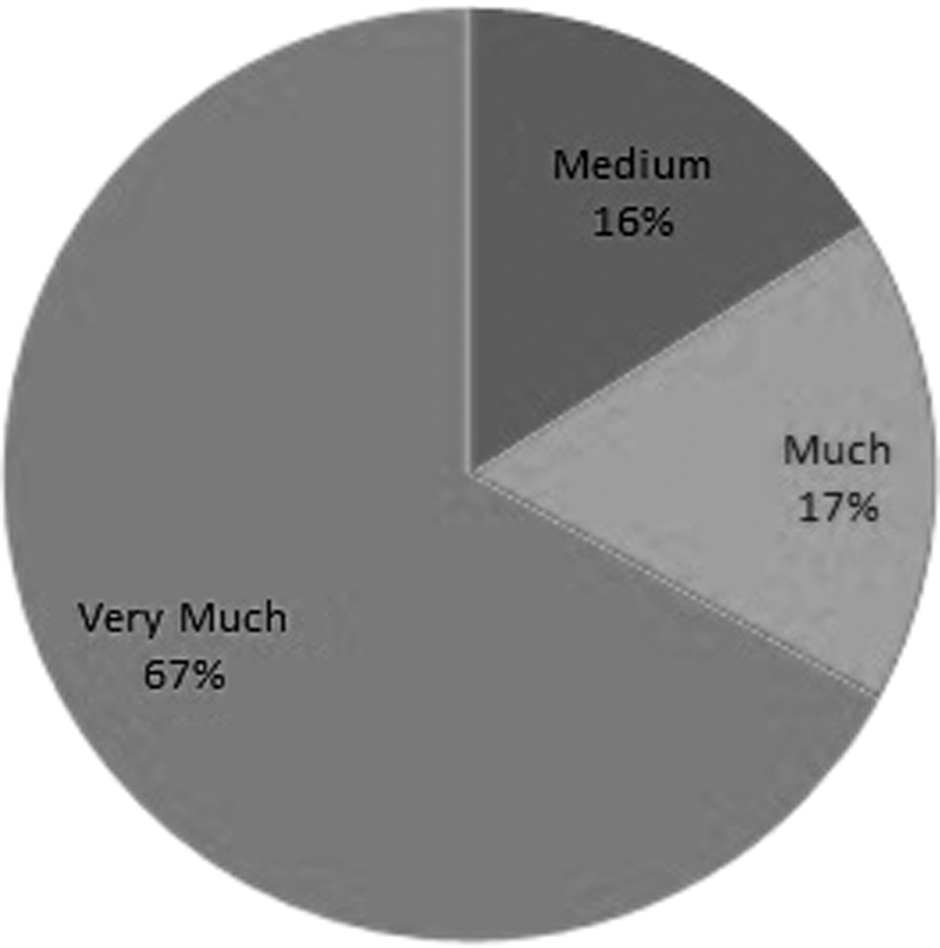
Ease with which a task is performed.
Discussion and Conclusion
The results obtained from this work show that after having set up the application and informed the various media about it such as the social networks and specific forums for diabetics, this web mobile site was then tried out by 150 users of different age groups. The general consensus has been that the application serves its purpose.
This application has been created with a view to replacing the book of entries in which diabetic patients note down the different parameters that influence their glycemia levels. Given that technological advances have a great influence on society, we have to take advantage of the resources available insofar as we may update the digital entry book online at any time and in any place using any device. If we wish to obtain a hard copy of these measurements, we can always print them after creating PDF documents with tables containing data.
This application is designed to be used by any diabetic patient who has a basic knowledge of computers, given that its design has been thought up to ensure it is very easy to use by the patient themselves and by their family members/carers. In the case of elderly persons, anyone close to the diabetic patient such as a family member or caregivers may be in charge of inserting the corresponding data.
Therefore, attention should be drawn to the simplicity of the app, which has been designed by taking into account the fact that it can be used by any diabetic patient of any age who has a basic knowledge of computers. This is a very important aspect, as the target public of this application is of no defined age group, unlike for instance some of the apps shown in Table 1 such as OnTrack Diabetes.
Second, special mention should also be made of the ease with which the tasks proposed by the Website can be performed. After filling in a single form, you can insert the parameters you consider necessary to control your diabetes, save your events, and configure alarms—and you can also access your data easily in a single form.
Furthermore, all these tasks are performed over an optimum response time, that is, less than 2 s, as more than 2–3 s may be deemed to be counterproductive for the Website since it can put off users. If these times are exceeded, there will be a reduction in the number of pages viewed on our Website, as well as being annoying for the user, and this can be a problem.
In terms of future lines of work, the application could include the following complementary information for users, which might be of great use to them: access to different diets and recipes recommended for diabetic patients to achieve normal weight or maintain that weight, as this is one of the objectives that diabetics need to fulfill to improve their glycemia levels. Future developments could also include an advanced service involving the addition of a device to calculate the required insulin dosage, to the extent that when inserting glucose measurements into the blood the application will indicate the number of insulin units needed to control the sugar level in it. Should not future research include a study of the impact of the app on diabetic management measured by, say, HgA1C?
Footnotes
Acknowledgments
This research has been partially supported by the European Commission and the Ministry of Industry, Energy, and Tourism under the project AAL-20125036 named “WetakeCare: ICT-based Solution for (Self-) Management of Daily Living.”
Disclosure Statement
No competing financial interests exist.