




Abstract
Background
Albania is a middle-income country with nearly 3.2 million people. Located in southeastern Europe, Albania is struggling to provide adequate healthcare for its citizens, especially those living in rural areas. 1,2 Despite a few initiatives, the situation has worsened, particularly in recent years, due to poor management, lack of trained personnel, and inadequate resources.
Conceptually, telemedicine was initiated in Albania in 2007 by the International Virtual e-Hospital (IVeH) Foundation. 2 By 2009, the program obtained support from the U.S. Agency for International Development (USAID)/Albania and United States European Command (U.S. EUCOM), and the Ministry of Health (MOH) of Albania. This support was both financially through grants and through in kind investment. Phase 2 of the program was completed in July 2015. 2 Using the Initiate-Build-Operate-Transfer (IBOT) model, the IVeH established the Integrated Telemedicine and e-Health Program of Albania, which has expanded to 28 hospitals and clinical specialty centers across the country. The program of Albania consists of five pillars: (1) Nationwide technical infrastructure and network; (2) Dedicated human capacity expertise; (3) Clinical telemedicine program; (4) Virtual education program; and (5) Electronic virtual library, and is spread throughout the country (Figure 1). As each pillar is created in structured phases and is tailored to the needs of the country, it takes several years for the program to be completed. 3 This model has been successfully utilized to establish telemedicine and e-health education services in other countries both in the Balkans region and in Africa. 4 –7 Currently, the Albanian program is in the last phase or Transfer phase, the final element of the IBOT strategy.

Schematic presentation of the Nationwide Telemedicine Program of Albania with detailed tertiary hospitals coverage in Tirana.
We have previously described the IBOT strategy 8 in detail, but here is a brief summary of each phase. This first phase in the IBOT strategy, the Initiation phase, is structured to provide the nation's leadership with a broader understanding of telemedicine and the necessity of establishing such a program. It starts with a needs assessment for a telemedicine program in a country or region, including whether political support to help foster such a program exists. Based on this assessment, the IVeH will seek funding, often in collaboration with, and/or on behalf of, the country. Once financial support for the project has been secured, the IVeH will organize an intensive telemedicine and e-health seminar 9 on such topics as telecommunication, clinical applications, and services that may be implemented through telemedicine, including data security, virtual educational programs, planning and implementing electronic libraries, and related business and financial issues. Bringing together the relevant local stakeholders, including key politicians and other government officials, these prestigious and informative seminars, conducted by world-renowned telemedicine experts, show how different governmental agencies and universities can collaborate to provide care to patients and support to clinicians. Most of the seminars share the same basic content and are often conducted by more than one group of experts.
The Building phase is based on the initial technical assessment and on the goals of the project. The four main steps of this phase are as follows(1) Build the network; (2) Develop the main physical telemedicine center with the necessary space for an electronic auditorium, training areas, servers, administrative offices, and, ideally, additional resource or educational rooms; (3) Establish the electronic medical library in each hospital that will be included on the network; and (4) Produce training and educational opportunities so that local personnel can independently run the program.
The backbone of any telemedicine program is its network infrastructure and available bandwidth with optimal configuration and hardware. In each country, we require the establishment of a virtual private network that connects the national telemedicine center (usually based at the country's university clinical center) with regional telemedicine centers based at major hospitals in the area. This connectivity is based on fiber-optic lines provided by the local telecommunications company or on some other form of Internet communications technology, including 3G, 4G, and so on. Regardless of what type of connection is established, it should be dedicated, secure, and compliant with the Health Insurance Portability and Accountability Act's privacy rules. One of the most important parts of the Build phase is the identification of the future telemedicine workforce and exposing them to successful examples of telemedicine programs in other countries.
The Operating phase is likely the most challenging phase of the IBOT strategy. As the capacity-building phase, this part of the process focuses on creating telemedicine experts, and local champions. In developing countries, new institutions or new concepts are often met with hesitation from those who will benefit the most—medical professionals. For this reason, the doctors and nurses themselves are encouraged to design, develop, and implement initiatives in the context of the telemedicine program, thus ensuring ownership of those initiatives from the early days. Without healthcare professionals on board who are able and willing to lead the program it cannot be sustained. Therefore, for the first 2–3 years of each telemedicine program, special attention needs to be paid to training and educating personnel who will independently run the program, including technical, educational, electronic library, clinical, research, development, financial, and overall management.
Finally, the Transfer phase of IBOT, when the completed telemedicine program is transferred to the local public institution that it primarily serves. The Ministry of Health of the country becomes the official “owner” of the telemedicine program. The institutionalization of telemedicine program within the fabric of the nation's healthcare system is vital for sustainability; it must become an integral, long-term part of the system with its standards, protocols, and procedures that governs the telemedicine program. 8 This phase of the IBOT has to be planned well in advance to be successfully executed.
The most successful aspects of the telemedicine program in Albania have been the creation of the network in all tertiary and regional hospitals and virtual educational program used for Continuous Medical Education (CME) activities. In addition, clinical telemedicine, although it has been slow to catch up, a few clinical disciplines have made significant progress.
The aim of this article is to summarize the experience of telemedicine consultations in Albania between January 1, 2014 and August 26, 2015, as well lessons that were learned and challenges identified from the first 1,065 teleconsultations. This study was approved by the Albanian Ministry of Health and the University of Arizona Institutional Review Board (Protocol No. 1509120457).
Materials and Methods
This was a retrospective study of prospectively collected data from teleconsultations in Albania between January 1, 2014 and August 26, 2015, delivered either asynchronously, synchronously, or a combination of both methods. Patient's demographics, mode of consultation technique, clinical specialty, hospitals providing referral and consultation, time from initial call to completion of consultation, and patient disposition following teleconsultation were analyzed. All teleconsultations were initiated via a low cost Web-based teleconsultation application. The total number and percent of all teleconsultations in each clinical discipline are reported. Associations between mean response time in minutes for teleconsultations by type of technology used and year were determined using Satterthwaite's t test for unequal variances. Statistical significance was set at p < 0.05. Data analyses were conducted using Stata version 14.0 (Stata Corporation, College Station, TX).
Results
During the 20-month study period, there were total of 1,065 teleconsultations. Of these 974 teleconsultations were selected for analysis (Table 1). Ninety-one patients with autism were not included in this report and will be reported separately. Radiology, neurotrauma, and telestroke represented the most frequently requested specialties for teleconsultations (54.7%, 16.1%, and 10.2% respectively) (Table 1). Other medical specialties accounted for less than 2% of all teleconsultations: pulmonary diseases (1.8%), pediatrics (1.5%), psychiatry (1.4%), nephrology (1.3%), surgery (1.3%), cardiology (1.2%), orthopedics (1.1%), toxicology (0.9%), gastroenterology/hepatology (0.8%), trauma (0.8%), urology (0.8), ICU (0.7%), oncology/hematology (0.5%), and ears, nose, and throat (ENT) (0.5%). More men (n = 520) were referred for teleconsultation than women (n = 350). There was no difference in age between men (51.9 ± 20.39 years) and women (52.0 ± 19.01 years) referred for teleconsultation. Table 2 demonstrates that asynchronous technology accounted for nearly two-thirds of all teleconsultations (74.5%), followed by combination of both modalities (24.3%), and synchronous teleconsultations (12.0%). The mean response time for both asynchronous and the combined format was significantly shorter in 2014 than 2015 (p < 0.01), whereas there was not a significant difference seen for live teleconsultations (p = 0.76). Table 3 illustrated the patients’ disposition following teleconsultation, with only 20.0% of patients in 2014 and 22.7% of patients in 2015 transferred to a tertiary hospital. When asynchronous technology was used only 2.7% of patients were transferred to the tertiary hospitals in 2014 and 9.9% in 2015. However, when live teleconsultations were used, 83.1% of patients were sent to the tertiary hospitals in 2014 and 51.7% in 2015; and when a combination of modalities was used, 46.5% of patients were transferred to the tertiary hospitals in 2014 and 34.1% in 2015.
Specialists Requested Through Telemedicine Program in 2014 and 2015
ENT, ears, nose, and throat.
Note: Other consists of allergist, endocrinologist, gynecology, infectious disease, rheumatology, and ophthalmology.
t Test of the Comparison of the Time Spent Between Teleconsultations in 2014 and 2015
Significant <0.05.
t test based on unequal variance (Satterwaite).
Recommendations of Consulted Doctor by Year and Type of Technology Used
The highest number of teleconsultations were from Vlora Regional Hospital (n = 579; 59.4%; Table 4 and Figure 2). As shown in Table 5, University Hospital Center (Mother Teresa Hospital), the main tertiary hospital of Albania received 78.7% of all teleconsultation referrals. The National University Trauma Center in Tirana performed 17.7% of all teleconsultations, while University Hospital Shefqet Ndroqi (Lung disease hospital) conducted 2.1% of consultations. Overall, hospitals within Albania were able to solve 98.5% of all teleconsultations. An independent psychiatric specialist from Vienna performed 11 consults (1.1%), the Mediterranean Institute for Transplantation and Advanced Specialized Therapies in Italy performed one (0.1%) teleconsultation for gastroenterology/hepatology, and the National Institutes of Health (NIH) in the United States performed one (0.1%) teleconsultation for radiology.
Hospitals Requesting Teleconsultations
Hospitals Consulted Through Telemedicine
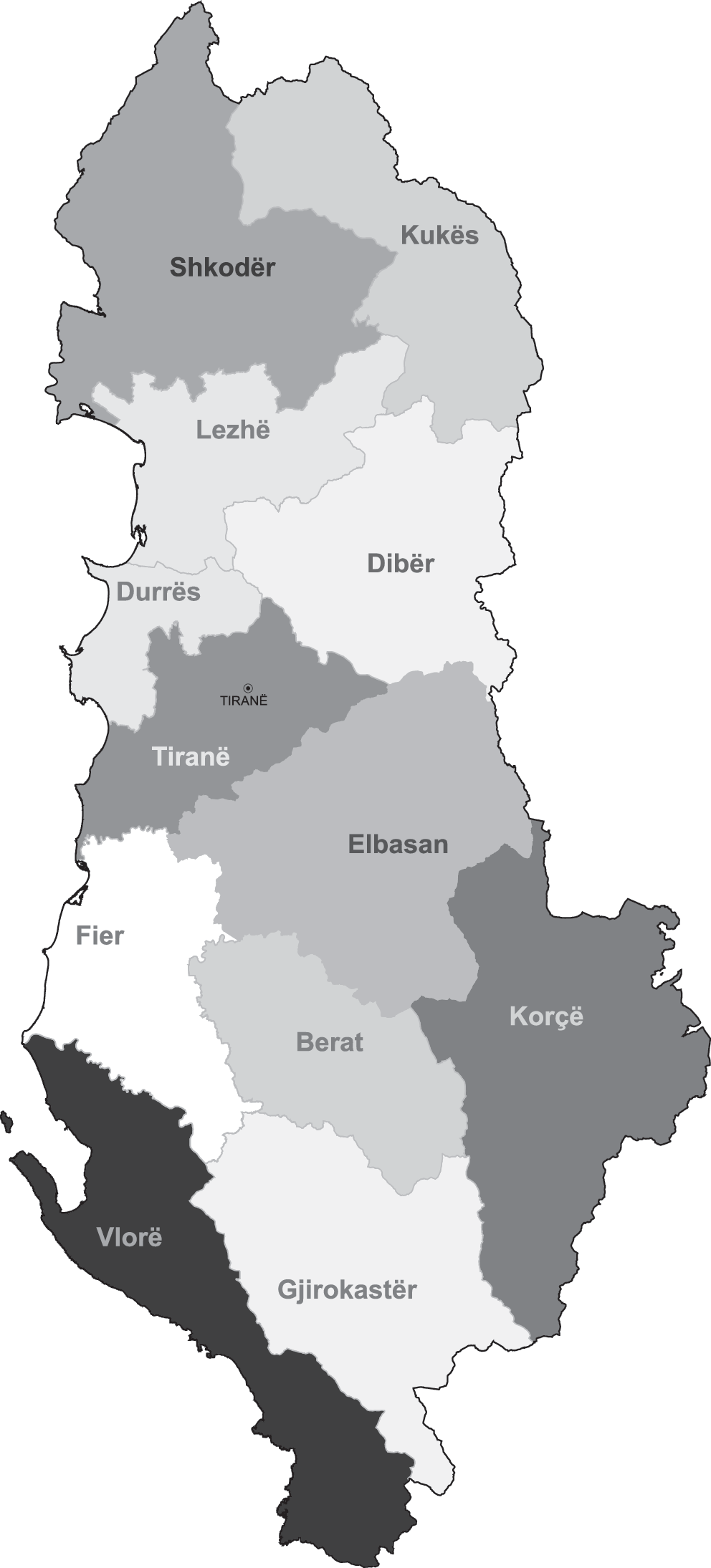
Map of Albania.
Discussion
A nationwide telemedicine program consisting of a technical infrastructure, dedicated trained telemedicine personnel, virtual education program, electronic virtual library, and most recently, clinical telemedicine componnent has been established in Albania. In total, 28 telemedicine centers and specialized telemedicine units, throughout Albania, have been created using a novel approach of interagency collaboration, including USAID/Albania and United States Army Corps of Engineers (USACE), local government organizations (Ministry of Health of Albania and local hospitals), academia (University of Arizona), and a non-governmental agency (IVeH Foundation) as designing and implementing body of this program. 2
Although still a new program, it has fulfilled an important segment for healthcare in Albania. These included the clinical disciplines of radiology, neurotrauma, and telestroke along with CME and educational programs. All teleconsultations were completed via low-cost HIPAA-compliant Web-based application, developed and maintained by the IVeH. Each teleconsultation was assigned a unique identifier and all patient information was entered into a secure database. Internationally recognized standards, such as Digital Imaging and Communications in Medicine (DICOM) viewer for radiology images, are incorporated into this dedicated teleconsultation Web site. Teleconsultations are delivered as either synchronous, asynchronous, or a combination of the two. Having a low-cost Web-based application to provide consultations has been a major contribution to the overall low-cost telemedicine program in Albania.
Lack of specialists in regional hospitals was the main findings in our study, where radiology, neurosurgery (neurotrauma), and neurology accounted for 81% of all telemedicine referrals; over half of all teleconsultations were completed using the asynchronous technology. As seen in other telemedicine programs around the world 10 –13 teleradiology, has become the most prevalent telemedicine clinical discipline. Vlora hospital, a regional hospital located 150 km from Tirana and serving a population around 200,000, accounted for over 50% of all referrals for teleconsultations; most of these teleconsultations were for radiology (Fig. 2). One of the most successful, overall clinical telemedicine program after teleradiology, was teleneurotrauma, a highly demanding and time sensitive specialized clinical discipline. During this study period, 157 cases with neurotrauma were managed by the neurotrauma team of which the majority (63.4%) did not require transfer to the trauma center. Identifying and developing a real clinical champion is the most important factor in the success of telemedicine program. As telemedicine technologies advance live teleconsultations needs to be in the proximity of doctors, nurses, and patients or make it mobile all together, such as secured tablet, iPods, or alike.
Many countries, particularly in low- and middle-income countries, lack trained medical professionals and many countries lack expertise in a number of clinical disciplines. To this end, telemedicine may improve the access to specialist such as neurosurgeons, neurologist, and other specialties by redistributing the expertise in the country virtually. Radiology, neurology, and psychiatry have long been identified as specialties that benefit from using the telemedicine technology. 14 Current trend in telemedicine, as expected is to provide services in these high demand clinical disciplines. 15
One significance of this study is that 98.5% of all teleconsultations were managed by specialist in tertiary hospitals in Tirana, the capital city of Albania. This is an important element of providing healthcare within the country it self. It is unclear, however, how many patients seek care in private hospitals. This is growing in Albania and it is unknown the numbers of patients who are actually seek care outside Albania.
Another major achievement of this program is the fact that only 20% overall and 36% for neurotrauma patients managed through the telemedicine program were transferred to tertiary hospital, saving patients travel time, but also saving the Albanian healthcare system associated costs. Keeping patients at the local hospital for further management and reducing unnecessary costly transfers is a common goal of both patients and healthcare providers. 16 Although the number of patients retained in the regional hospitals in our study is very impressive, the very low transfers rate may be mostly because most of the consultations were for teleradiology. One would expect that hospitals should have advanced radiology services, but this was not a case in Albania. It is difficult to conclude how often was telemedicine used overall, as we do not have data on overall number of patients being transferred from regional hospitals to tertiary centers in Tirana. Yet, even for highly specialized disciplines such as neurotrauma, more than 60% of patients remained in the local hospitals.
Additional questions hat will require further studies and observation of this program. While IVeH has defined sustainability as the ability of the country to adopt and make telemedicine part of the budget of the MOH; what will happen in the next few years is a matter that will need to be carefully monitored. While the economic effect of telemedicine has been previously addressed 17 –19 in many public healthcare systems, finding a way to compensate consulting doctors and other medical personnel for their time spent answering telemedicine referrals has been a difficult issue and has not been reported adequately in the literature. 20 Perhaps, this may be one of the reasons why other studies have demonstrated a resistance of adopting telemedicine even when there is clear need for it. Anecdotally, in Albania, as it is probably in other countries, we know that many referring doctors from regional hospitals will send their patients for specialty care to certain specialists even outside public health system that are part of the telemedicine network, for whatever reason. Identifying a way to involve more doctors has been a difficult task, despite tremendous work with local hospital leadership. As in many countries, each election cycle has brought new leadership in these hospitals and this has added another difficulty in maintaining the enthusiasm for clinical telemedicine.
The telemedicine program in Albania has appointed telemedicine coordinators (coordinator and associate coordinator) for each hospital, usually one doctor and on nurse or on occasion an information technology person. Appointing, training, and educating clinical coordinators (physician and nurses) at each hospital who serve as local champions of telemedicine, has made a real impact in hospitals that utilize the telemedicine services. Furthermore, the clinical program has a clinical telemedicine coordinator who serves 24/7 as the liaison between the referring hospitals and specialist answering these calls. In hospitals where we were able to identify the local champions and ensure the buy-in from the directors of hospitals, the program has been most successful, as demonstrated by hospitals in Korça and Vlora.
Assisting the MOH in preparing policies and procedures such as special orders to ask regional hospitals to use telemedicine consultations before patients are sent to Tirana for either a second opinion or to see a specialist has been an important element contributing to the increased usage of telemedicine in the country. However, maintaining continuity of the program under frequent changes in the MOH leadership has been challenging. Nevertheless, it is one of the key elements that was relatively successful in the case of Albania.
Adding clinical content to the new program is challenging, as everyone who has ever tried to create telemedicine program from the scratch knows. What kind of clinical disciplines can be added to the program is dependent on many factors, but mostly these are dictated from clinical needs of regional hospitals and physician leaders. Assessing carefully the needs and involving doctors and nurses in the early planning process was a key strategy in ensuring future compliance. The low-cost software that is currently supporting teleconsultations for teletrauma and telestroke was designed with the input of neurosurgeons and trauma neurosurgeons. However, as traction in creating enthusiasm with healthcare providers to be involved in telemedicine increased, a number of specialty programs were born, and each of these leaders wanted to have their “own” programs in their clinical units. These included telestroke, infectious disease, poison control, telemedicine for cardiothoracic ICU, lung diseases, cardiology, and others. In total 28 centers have been established that include national, tertiary, regional, and specialty telemedicine centers across all of Albania. The specialty directed telemedicine units consist of small units with ability to perform videoconferencing and use the software for telemedicine consultations.
This is one of the first articles to assess the types of specialties used in Albania's telemedicine program. It describes a number of lessons that we have learned when establishing a new telemedicine program that may be useful for others in the region or across the world.
However, this article is not without its limitations. Currently, hospitals within Albania have not adopted the use of the International Classification of Diseases (ICD), and hospital records are often incomplete or worst, the records cannot be found at all. Therefore, this study was not able to group the diagnoses from the teleconsulting doctor. Adopting the use of ICD codes in all hospitals in Albania would allow within country monitoring of clinical diagnoses. 21 We do not have follow-up data on patients, which in the most significant limitations of the study. Steps are being taken to ensure that patients that are seen by telemedicine be followed up.
Conclusions
The Albanian Telemedicine Program has grown into nationwide integrated network and it has demonstrated that telemedicine has been effective and has improved access to high quality healthcare for specialized clinical disciplines that do not exist at all or are very limited in regional hospitals. Yet, there are number of issues that we need to continue to work on, for the program to become sustainable, and become part of the healthcare fabric.
Footnotes
Acknowledgments
The Integrated Telemedicine and e-Health Program was funded by the USAID in Albania (Contract No. 182-A-00-09-00101-00). Special thanks to Dr. Petro Mercini for continuous support of the telemedicine program.
Disclosure Statement
No competing financial interests exist.