




Abstract
Background:
Health authorities recommend regular screening for the chronic complications of diabetes. The ENTRED* survey results show that insufficient screening is undertaken. The DIABSAT † program aims to improve care for diabetes patients in rural areas of the Midi-Pyrénées region, telemonitoring complications of diabetes through an itinerant screening service.
Methods:
A vehicle was equipped with a satellite dish and medical equipment for screening ophthalmological, renal, vascular, and neuropathic damage and assessing the level of risk of diabetic foot ulceration. Onboard, a nurse performs some or all of the tests on patients who have had no diabetes review for over a year. The data are entered into a computer and transmitted by satellite for interpretation by designated specialists. The results are sent to patients, general practitioners (GPs), and diabetologists.
Results:
Two hundred twenty-eight screening days were held in six departments of the Midi-Pyrénées between 2010 and 2013. 1,545 patients were screened: mean age 70.7 years, 55.8% men. 93.4% diagnosed with type 2 diabetes, mean duration 11.7 years. Recruitment was chiefly by health professionals (55%). 17–32% of tests detected pathologies: 18.7% diabetic retinopathy, 31.9% microalbuminuria, 17.2% lower limb arteriopathy, 28.3% peripheral neuropathy, and 28.2% high risk of foot ulceration (grade 2: 20.6% and grade 3: 7.6%).
Conclusion:
The large number of patients screened and the high rate of pathological results found, confirm telemonitoring viability and relevance. DIABSAT, a primary resource for healthcare professionals, improves healthcare access through its innovative organization and use of satellite technology.
Introduction
Diabetes leads to complications that are disabling for sufferers and costly to society (12.5 billion euros in 2007 in France). 1 In this context, the health authority (HAS) recommends regular screening to prevent or delay the onset of severe complications. 2 However, the latest national representative sample of diabetic population survey, (ENTRED) 2007–2010, 3 shows a significant gap between the recommended objectives and the reality of care. Only 36% of diabetic patients had benefitted from microalbuminuria or proteinuria testing in the previous year (general practice or general hospital admission). A majority (52%) of patients said they had had a fundus examination in the past year. As for the risk of diabetic foot ulceration, medical professionals indicated screening took place in 62% of cases, whereas according to the patient questionnaire, the monofilament test was performed on only 20% of patients. The survey concluded that it was necessary to optimize diabetes care for complications. The factors limiting the effectiveness of monitoring are linked to restricted access and a failure to incorporate into standard practice various preventative actions (such as diabetic foot risk assessments). 3,4
To increase diabetic patients' and their doctors' awareness of better standards of care, the DIABSAT program was set up to evaluate an itinerant telemonitoring service targeting certain complications in the Midi-Pyrénées region of France. The program was developed in 2009 by the University Hospital of Toulouse, the French National Space Research Center (CNES), the Institute for Space Medicine and Physiology (MEDES), and the Midi-Pyrénées Diabetology Care Network (DIAMIP).
Other itinerant screening initiatives exist in France, but they are focused on only one or two complications (ophthalmological and/or renal). 5 –10 DIABSAT is, to our knowledge, the only itinerant initiative in France to offer screening tests covering ophthalmological, renal, neuropathic, and peripheral vascular complications using satellite technology to transmit data in real time from any geographic area, including those without access to broadband.
The screening program first targeted areas having no medical cover. However, its role is predominantly that of supporting existing healthcare structures and working to improve coordination between health professionals without substituting recommended specialist follow-up.
The aim of this article is to present the innovative nature of this telemedicine program, to describe its organization, and to detail the screening results.
Materials and Methods
A vehicle, outfitted with the necessary screening equipment, information technology, and satellite dish, operated in the Midi-Pyrénées between 2010 and 2013 (Fig. 1).
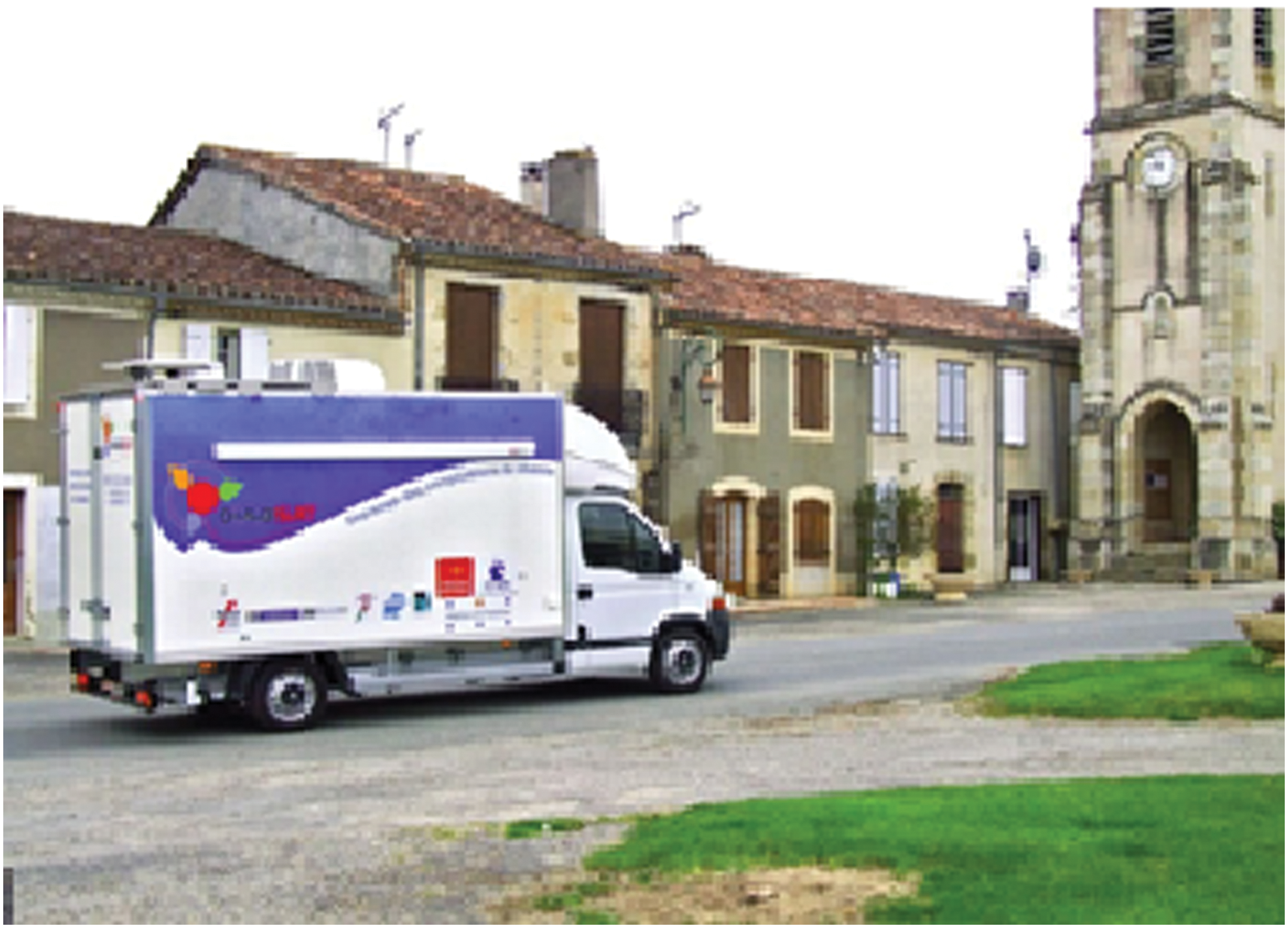
The DIABSAT screening vehicle.
Inside the vehicle, up to five screening tests can be offered, free of charge, by a specially trained nurse. These tests include: (1) Retinal photography using a TOPCON TRC-NW8 nonmydriatic retinal camera in a section of the vehicle darkened. Two images per eye (nasal and temporal) are acquired.
11
(2) Semiquantitative microalbuminuria testing is conducted using a urine sample and microalbumin nine reagent strips in a Siemens Clinitek Status analyzer. The results give albumin level (mg/L) and the albumin/creatinine ratio (mg/g). (3) Ankle-brachial pressure index (ABPI) measurement using a Doppler stethoscope, SEGA 811-B. The ratio is computer calculated to obtain the ABPI. (4) Monofilament test 10 g, on bare feet, three plantar sites per foot: on the pad of the big toe and base of first and fifth metatarsals, interpreted as recommended by the International Working Group for the Diabetic Foot (IWGDF).
12
A foot examination is performed to detect structural abnormalities, calluses, possible wounds, and amputations. Peripheral dorsalis pedis and posterior tibial pulses are taken. The results of these three examinations allow the diabetologist to assess risk of foot ulceration.
12
(5) Plantar pressure distribution measurements are recorded for patients not monitored by a podiatrist, using a pressure sensitive foot analysis platform.
These tests are performed only on diabetic patients who have not had a similar test in the 12 months preceding the screening.
Collection, transmission, and interpretation of data
A satellite dish fixed to the roof of the vehicle and connected to a modem inside is positioned at the start of every screening day. The data from the patient interview and the screening results are entered into a secure computer interface developed specifically for this purpose.
The interface stores patients' files, which hold both administrative and medical data, including the screening data from the clinical and paraclinical examinations, as well as any antecedents which might be relevant to the interpretation of the results. The data are automatically encrypted and transmitted to a secure data processing center through a satellite internet connection. Satellite technology comes as a solution to access the Internet, to open up the white areas not covered by Asymmetric Digital Subscriber Line (ADSL), especially in rural areas, despite a main ADSL coverage (98% of the population can enjoy a connection ADSL with a throughput greater than 512 kbps) and a penetration rate of the optical fiber 8% in France. The nurse can then transmit testing data from any location in the rural areas. The connecting module consists of a satellite transceiver station high speed and self-pointable antenna (satellite link enables the collection and transmission of patient data). The pointable auto satellite antenna is equipped with a motorized 85 cm satellite dish and satellite modem. Once on power, it will automatically search the satellite Astra 3 for the establishment of the Internet connection. The subscription foreseen in the project will allow a shared bandwidth of 2,048 kbps connection max for the downlink (receive) and 128 kbps max for the uplink. Sharing the Internet connection is made through a router for the wired connection of four devices, and WiFi connection for the other equipment.
The data are stored in its entirety by an authorized health body. In order for these data to be collected, patients gave their signed informed consent and a declaration was made to the National Data Protection and Privacy Commission (CNIL). Three designated specialists—an ophthalmologist, a diabetologist, and a podiatrist—access the data on a weekly basis. The specialists can thus consult patient files, interpret the screening data, and validate the information on file. The system then generates a summary of the screening results and a reminder of current recommendations to help General Practitioners (GPs) devise a care plan, including the type and level of urgency of specialist consultations and any necessary complementary tests. A letter is then edited and sent to the patient, his GP, and if it be the case, his diabetologist (Fig. 2).

Transmission of data during a DIABSAT screening campaign.
Organization of screening campaigns
Once an area is identified as being able to benefit from a screening campaign, communities are chosen based on population size (under 10,000 inhabitants) and the existence of a medical practice. Rural and semirural areas are given priority. Campaigns have lasted for 2 to 6 months.
Screening dates are set after prior consultation with local town councils. An information campaign targeting both health professionals and the general public is then launched. Screening takes place without appointment, over a whole day. Collaboration between local health professionals and the DIAMIP network developed over the course of the campaigns (medical practices, multidisciplinary primary healthcare centers). Appointment-only screening days specifically for patients from these centers were scheduled. Under the aegis of the DIAMIP network, health professionals (300–1,000 per department) and local authorities are contacted both before and during the DIABSAT campaign by direct mailing, telephone, and e-mail. The local press, radio, television, and local or regional health authorities, as well as French Association of the Diabetics, are similarly used to inform the population.
Evaluation of the use of DIABSAT program by GPs
An evaluation questionnaire was sent to 124 GPs whose patients have undergone the screening DIABSAT. This evaluation concerns the impact on practices: the revaluation of their diabetes knowledge, changes in practice in terms of treatment, patient education, and monitoring of complications.
Statistical methods
Descriptive analysis of data was performed using STATA (Version 8) software. Univariate analysis enabled calculation of number and percentages for the qualitative variables and description of the distribution of continuous quantitative variables (mean median, variance, standard deviation [SD], and minimum, maximum).
Results
Characteristics of the screening program
Number of patients screened, number of screening days, screening time, and recruitment source
Between 2010 and 2013, six of the eight districts in the Midi-Pyrénées region were covered by the program, involving 201 municipalities and 228 screening days. 1,545 patients were screened, at an average of 7 patients per day (min: 0, max: 17, SD: 3).
The total screening time per patient was 45 min. Among the 1,545 patients screened, 3.1% had a single test, 11.1% had two tests, 29.3% had three tests, 36.5% had four tests, and 19.8% had all five tests.
A majority (55%) of patients screened were referred by GP (31.2%), a nurse (7.4%), or by a pharmacist (13.3%) and 29% were informed by other ways. Between 2010 and 2013, an increase from 4 to 10 in the average number of patients screened per day was noted, together with a rise in direct referral by health professionals, with GP referrals rising from 12.9% to more than 38%.
Characteristics of the screened population
Table 1 shows the characteristics of the population screened during the DIABSAT program, based on information provided by the patients.
Characteristics of the Population Screened by DIABSAT
BMI, body mass index.
Type of treatment of the type 2 diabetes patients screened
60.5% were treated with oral antidiabetics (OAD) only, 16.4% with OAD and insulin, 16.1% with insulin only, and 6.9% by diet alone.
Medical and paramedical monitoring
40.8% of patients visited their GP at least once a month, 54% every 2 to 4 months, and 5.1% every 6 months or less. 26.7% of screened patients consulted a diabetologist, of which 29.6% were monitored at least every 3 months, 25% every 4 to 6 months, and 44.7% every year or less. 59.3% of patients reported yearly appointments with an ophthalmologist and 26.3% reported appointments every 2 years or more (14.4% did not know). 42.5% said they had previously been tested for microalbuminuria. 31.0% said they were monitored by a podiatrist.
Analysis of screening results
Table 2 shows the overall number and percentage of all five tests performed, those results interpretable by specialists, and those whose results are pathological.
Numbers and % of Exams Performed in the DIABSAT Truck, Exams Interpreted, and Pathological Results
Retinopathy
Among the 18.7% of diabetic retinopathies detected, 71.3% are minimal nonproliferative diabetic retinopathy (NPDR), 27.1% have moderate NPDR, and 1.6% have severe NPDR.
Of the 856 examinations performed, 70.6% are interpreted for other types of ophthalmological damage. Of these, 25.2% are pathological: 2.0% macular edema, 17.8% other maculopathies, 28.9% other retinopathies, and 51.3% age-related macular degeneration.
Microalbuminuria
31.9% of the microalbuminuria tests are positive. This figure is, no doubt, a slight overestimate due to the number of false positives associated with this method of measurement.
ABPI
The frequency of pathological ABPI (ABPI <0.9) is 17.2%. Frequency of ABPI >1.3 is 12.7%.
Risk assessment of diabetic foot ulceration
52.4% of patients screened show structural abnormalities. 71.8% of patients have calluses.
Grade 2 (20.6%) and grade 3 (7.6%) ulceration risk patients can be reimbursed for 4 to 6 sessions of podiatric treatment per year by the French National Healthcare System. However, only 8.8% of grade 2 patients and 19.3% of grade 3 patients said they took advantage of this.
The cost of the DIABSAT screening program
Screening for the chronic complications of diabetes is free for patients. The DIAMIP health network receives a fund grant from the Regional Health Agency. The investment cost to provide a vehicle fitted with a satellite dish, medical equipment, and supplies was 120,000€ and operating cost was ∼100€ per patient.
Evaluation of the use of the DIABSAT program
The response rate to the evaluation questionnaire using the DIABSAT program is 26.6%.
36.4% of practitioners say they reevaluated their knowledge of the HAS recommendations.
57.6% of physicians reported having strengthened the treatment of their patients in the detection of complications.72.7% say they have increased the therapeutic education. 75.8% have strengthened the monitoring of diabetes in the discovery of a complication.
Discussion
The type of screening tests proposed in the DIABSAT program was guided by the results of the ENTRED study looking at the frequency of test prescription and performance (ABPI and monofilament test rarely performed). Other considerations were the availability of such tests locally (e.g., lack of ophthalmologists), together with the practical difficulties inherent in certain tests (equipment must be operated by a nurse and acceptable to patients). The primary objective was to provide a service to GPs, which would improve the quality of monitoring for diabetic patients. Biological screening tests were excluded due to their ready availability in the region.
That the mean age of our cohort was higher compared with the national diabetic population 3 could be explained by regional demographic characteristics and repeat DIABSAT visits to residential homes for the elderly.
The subjective nature of the data must be taken into account (information from patient interview and recorded by nurse). Nonetheless, the results are similar to those of the ENTRED study. Twenty-three percent of DIABSAT patients report ophthalmological damage compared with nearly 20% in the ENTRED study. Antecedent of diabetic foot ulceration is described by 8.2% of DIABSAT and 9.9% of ENTRED patients.
As regard to the monitoring of complications, in the case of ophthalmological follow-up, the data obtained in the two studies are well matched. Nephrological data cannot be compared due to different collection methods (DIABSAT based on patient reports, ENTRED on the take up of care). Equally, the figures for podiatric monitoring are similar (73.5% DIABSAT, 76% ENTRED).
Screening tests were performed only on those patients who lacked adequate monitoring for complications (test not performed within the previous year or not at all). A high level of agreement is noted between the ENTRED data and that of DIABSAT concerning the frequency of retinal testing. As regard to lower limb vascular disease, the high percentage of patients screened by DIABSAT confirms the insufficiency of screening for this complication in general practice. One hypothesis might be that this is due to the length of time it takes to measure ABPI. The high percentage of patients requiring podiatric screening highlights the problems inherent in assuring continuing care for this complication and the importance of the service provided to GPs by the DIABSAT program.
The percentage of uninterpretable results could sometimes appear high, in particular for retinal photography. However, the results were dependent on three variables: (1) the operator, (2) the conditions under which the test was carried out, and (3) the ophthalmological state of the patient. The possible unreliability of microalbuminuria test results due to the semiquantitative method used and other factors, such as the risk of contamination, justifies their subsequent laboratory validation. Despite these limitations, it should be remembered that the primary objective was to increase doctors' awareness of the need for early screening for nephropathy. In the case of plantar pressure measurement, it was decided to limit interpretation to only grade 2 and 3 results, targeting zones at risk of ulceration to optimize conventional podiatric monitoring.
The percentage of pathological results found confirms diagnostic delay or the insufficient monitoring of these complications. The results reinforce the relevance of our program.
The interpretation of results helps participating GPs structure patients' care pathways: prioritizing tests and applying for health cover for podiatrist sessions for high-risk ulceration patients. However, a detailed analysis of patient care after DIABSAT screening has not yet been completed.
However, it seems that the DIABSAT program had a very positive impact on monitoring patients with diabetes by the GP. The evaluation questionnaire has shown that once a complication was detected, GPs declare to strengthen treatment, patient education, and monitoring of complications.
Another advantage of DIABSAT is the generalization of GPs' awareness of screening for the complications, beyond that of their own patients taking part in the study, to all diabetic patients. In fact, screening 2% of the region's diabetic population involved 30% of its GPs.
Greater collaboration with primary healthcare professionals evolved over time. During the last year of the study, 50% of patients were referred by their GP. This suggests that a take up of the program could be increased by a more appropriate selection of tests and a higher patient turnover on screening days. This continuing collaboration would enable the program to develop, allowing for GPs expectations to be taken into account and enabling further diabetes care initiatives to be set up in coordination with local healthcare professionals. 12,13 In this context of narrower collaboration with GPs, it would, in a secondary time, be necessary to set up an impact study on the optimization of the care pathway for patients and the changes in practices on the monitoring of complications. This new study would allow validating the efficiency of this program on a medical economic plan.
Comparing the DIABSAT program with that in Burgundy, which offers ophthalmological screening (retinopathy, ocular pressure), the investment costs are similar. The operating costs per patient in the DIABSAT program (for the battery of all five tests) were less than the cost of screening in Burgundy (100€ DIABSAT vs. 142€ Burgundy). 5
Recent epidemiological data from 2013, published in 2015 by the INVS, certainly show better monitoring of patients compared to ENTRED survey, but still far from the goals of recommendations. This reinforces the initial objectives of DIABSAT program in a more comprehensive approach to screening for complications and supporting GPs to improve monitoring of their diabetic patients. 14
Conclusion
The DIABSAT program is innovative in that it offers five possible screening tests for the complications of diabetes, whereas other existing programs focus on retinopathy. The viability and relevance of telemonitoring have been demonstrated by the high rate of pathologies detected.
DIABSAT meets a public health need and increases access to healthcare through the use of satellite technology. This telemedicine program is progressively becoming one of the means by which primary healthcare professionals are helped in the management of diabetic patients' care pathways.
Footnotes
Acknowledgments
The authors thank the following organizations for their help in the study. DIABSAT received funding from the Midi-Pyrénées regional council, the CNES, the CHU Toulouse, and the ARS Midi-Pyrénées, and financial support for publicity from the SANOFI laboratory.
Disclosure Statement
No competing financial interests exist.