




Abstract
Objectives:
The objective of this study was to review games for amblyopia (lazy eye) that are commercially available in mobile applications (apps) stores and assess the involvement of eye care professionals in their development.
Materials and Methods:
The Google play store and the Apple iTunes store were searched in July 2017 and updated in September 2017 for amblyopia games using the terms amblyopia, lazy eye, amblyopia therapy, lazy eye therapy, lazy eye exercises, amblyopia exercises, lazy eye games, and amblyopia games. General ophthalmology or optometry apps and apps in languages other than English were excluded.
Results:
A total of 42 games were identified, 12 Android only (28%), 20 iOS only (48%), and 10 (24%) both Android and iOS. Most of the games were available under the medical category (60%). Most of the games were released in 2015. The price of the games ranged from $0.00 to $32.00 (USD). Nearly half of the games (45%) were to be played binocularly either using red–green goggles (38%) or a virtual reality set (7%). Only 7% of the games had explicitly documented the involvement of eye care professionals during game development. Only one game (app) was developed in collaboration with a research group and a children's hospital.
Conclusions:
This study identified that most of the currently available games do not have eye care professional input. An establishment of the quality assurance by a body of qualified eye care professionals could enhance the confidence of patients and clinicians using the game.
Introduction
Smartphones have tremendous potential to improve the health of people. In recent years, there has been a rapid increase in the use of smartphones among healthcare professionals. 1,2 Mobile (smartphone) applications (apps) have been used as an adjunct for clinical decision-making, as a reference material for diagnosis of medical conditions, and even as an intervention for certain medical problems in different areas of clinical practice such as internal medicine, dermatology, and psychiatry. 3,4
Similar to many other areas, ophthalmic and optometric practice have also been revolutionized by the development of such apps. Smartphone apps in the field of eye care have been used for a variety of purposes ranging from patient education, clinical references, and clinical care guidelines to the testing of visual functions such as visual acuity, contrast sensitivity, color vision, refractive error, and visual field. 5,6 A 2014 study reported a total of 182 iPhone apps relevant to ophthalmology and optometry. They found that 51% of the apps were targeted at ophthalmologists, 43% at optometrists, and the rest at general public and non-eye care clinicians. The study noted that only 37% of the apps had documented involvement of qualified clinicians. 7
Amblyopia (lazy eye) is a developmental disorder characterized by the reduction in vision of one or both eyes without detectable structural abnormality of the visual pathway, which is caused by visual deprivation early in childhood due to conditions such as uncorrected high refractive errors, congenital cataract, or strabismus. 8 Lately, newer apps have surfaced in the mobile app stores that claim to treat amblyopia through mobile games. The emergence of such apps accelerated after the novel promising research by Li et al. 9 regarding the brain plasticity of adult amblyopes. They demonstrated that adult amblyopes can regain vision by binocular therapy and such therapy can be performed in a mobile device in the form an easy gameplay. Traditional approaches to amblyopia treatment in practice emphasize occluding the good eye and forcing the bad eye to be used, but this method has not proven successful in adults. Until now, there are only small noncontrolled case series on the efficacy of binocular therapy for adults with promising results; however, new clinical trials are underway in comparing the efficacy of this treatment. 10 If binocular therapy is found to be effective, it could be a game changer in the field of amblyopia treatment.
Smartphones and smartphone applications have unlimited potential in assisting clinical care; however, the efficacy and benefits of such apps are questionable. In particular, there are concerns surrounding their scientific basis, quality control, and the involvement of relevant experts during app development.
In this article, we aim to provide a comprehensive summary of apps that are currently available in the iOS and Android mobile app stores, which are targeted to treat amblyopia. We will discuss on their scientific evidence, experts involvement, and future directions.
Materials and Methods
The Google play store (for Android apps) and the Apple iTunes store (for iOS apps) were searched in July 2017 and updated in September 2017 for amblyopia apps using the terms amblyopia, lazy eye, amblyopia therapy, lazy eye therapy, lazy eye exercises, amblyopia exercises, lazy eye games, and amblyopia games. Apps those included any of the above terms in their description were included in the study. General ophthalmology or optometry apps, apps for general eye exercises, and apps in languages other than English were excluded (Fig. 1).

Flowchart of the search method.
Games were assessed on their operating system (iOS, Android, or both), mode of play (monocular or binocular), technological principle, category in which they are available (medical, health and fitness, and games), developers (individual, company, university or hospital), professional input (optometrists, ophthalmologists, orthoptists, or vision scientists), and price (Table 1).
Characteristics of the Smartphone Applications for Amblyopia Treatment on the iOS and Android platform.
VR, virtual reality.
Results
A total of 42 apps were identified, 12 android only (28%), 20 iOS only (48%), and 10 both android and iOS (24%). These apps were available within the app stores under various categories. Most of the apps were available under medical category (60%) followed by health and fitness (19%). Other apps were available under educational (5%), puzzle (5%) and games, causal, and action (11%) categories. Forty-one of 42 apps were targeted to enhance visual function, while 1 app was developed to increase adherence to the patching therapy.
Most of the apps (70%) were released in 2015. The earliest app for amblyopia released in 2011 was available both on the Android and iOS platform. The cost of apps ranged from free to $32.00 USD. Of the 12 apps that were available for free, 9 were available on the Android platform, 1 on the iOS platform, and 2 were available both on the iOS and Android. Some apps offered in app purchases whereby they provided some features for free and charged for higher levels. Nineteen apps were based on the dichoptic (binocular) principle, which implies these apps incorporated games in which two eyes viewed slightly different images, separated either by a septum or by a pair of different colored glasses (red–green/cyan pair) (Fig. 2). Sixteen apps of such binocular games required a pair of red–green/cyan goggles to be played and three required a virtual reality (VR) set such as Oculus, Gear VR, or any other VR set, but not the Google Cardboard. The rest of the apps did not require the use of any accessories (Fig. 3). The apps those did not require the use of any accessories were not specific about whether the game be played with one eye occluded or both eyes open. As the main aim of these games was to enhance visual function in the amblyopic eye, it was assumed that they were to be played with the better eye closed.
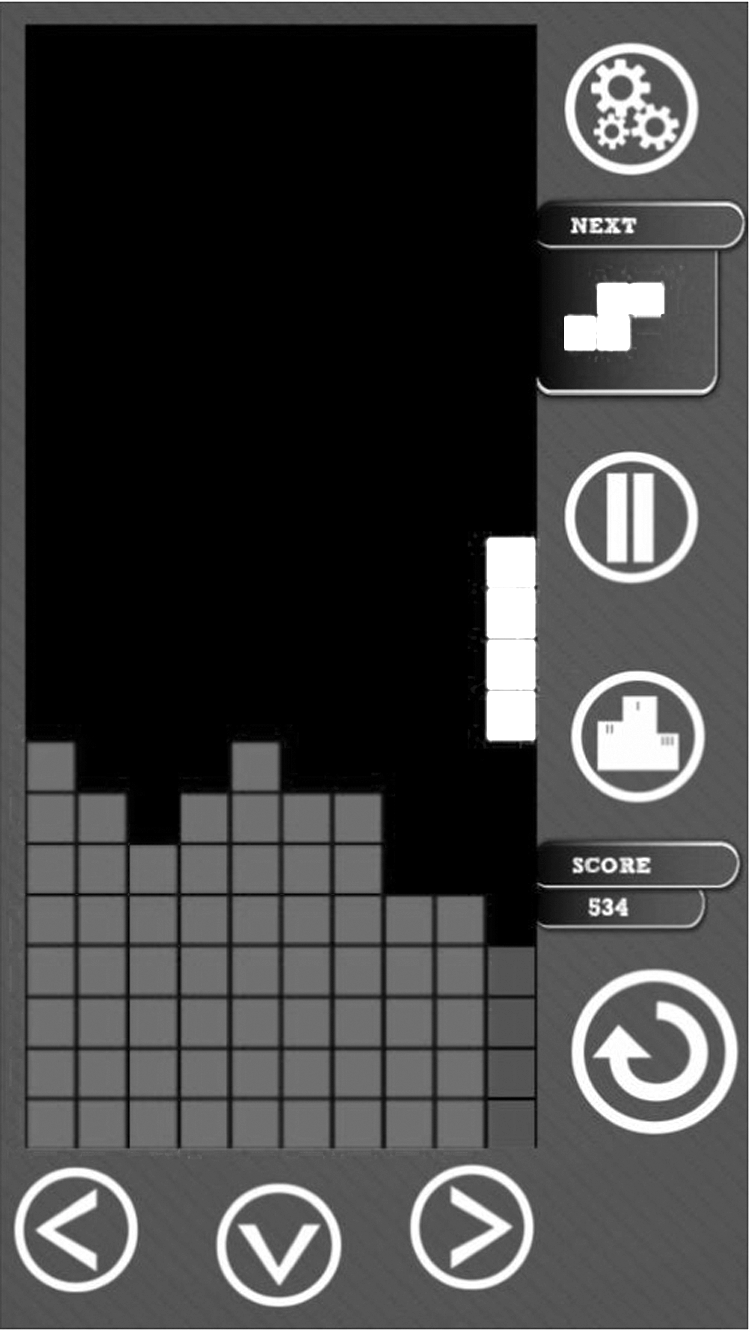
Screenshot of the amblyopia blocks game for iOS (binocular).
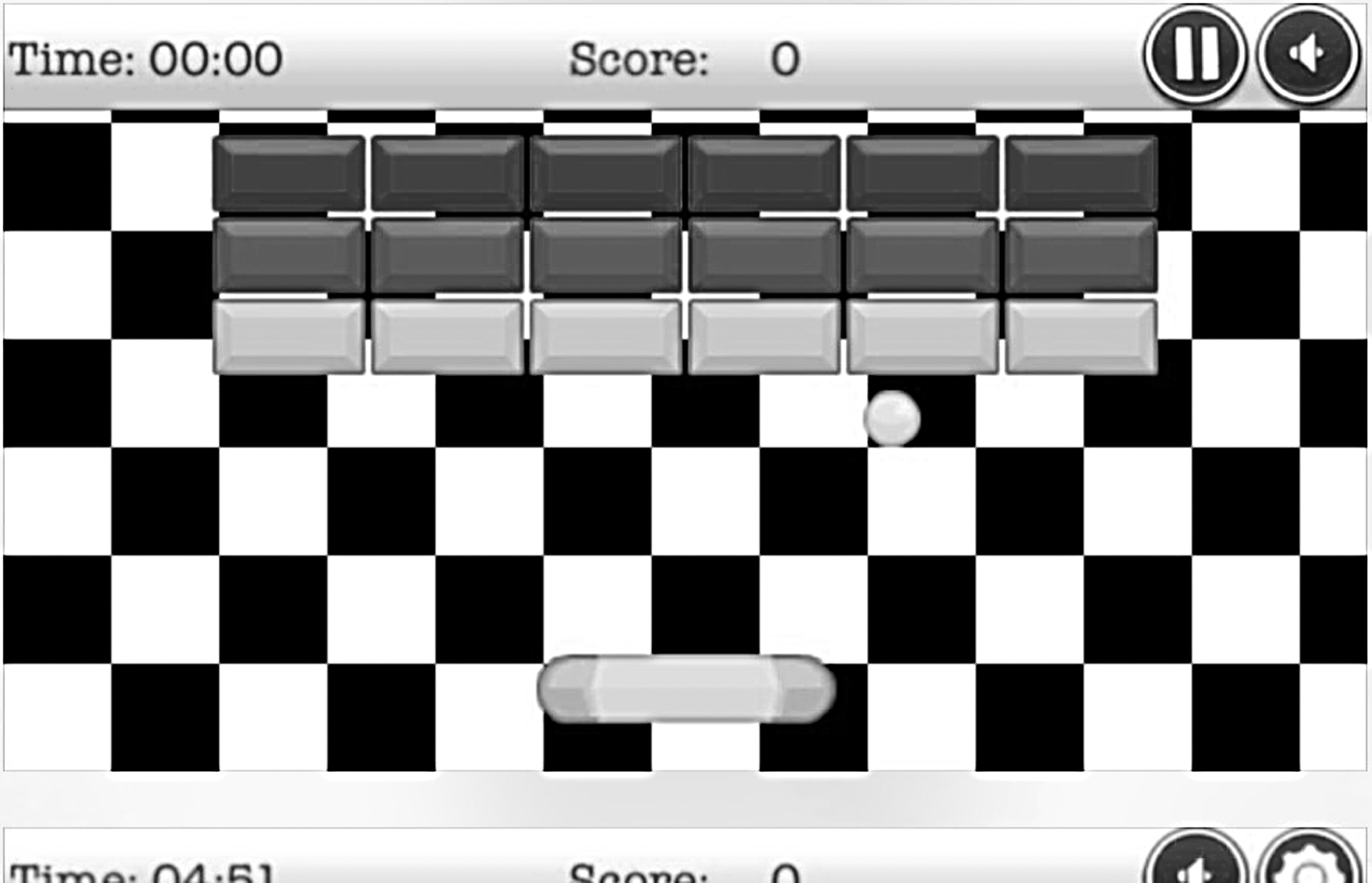
Screenshot of the lazy eye breakout game for iOS (monocular).
Even though it was not very clear whether the apps were developed by a company or an individual, according to the description on the iTunes and the Google Play stores, most of the apps (81%) were developed by individuals. Only 40% of the apps had an authentic webpage. Two apps were developed by researchers in collaboration with a children's hospital and a university.
It was surprising to note that only three apps (7%) had explicitly documented the involvement of an eye care professional during development. The rest of the apps had neither a documented scientific evidence of the effectiveness of the apps/game nor had clearly specified the role of an eye care professional.
Discussion
Undoubtedly, the use of smartphones in clinical practice is going to increase in the coming years with the current trend of rapid advancement in technology. From patient education to aid in decision-making for the treatment of various ailments of the human body, smartphones and their applications have versatile uses in medical practice. Previous reports have reported various novel uses of smartphone applications in ophthalmology and optometry. 5 The promising research findings that adult amblyopia can be treated with dichoptic (binocular) training through a simple game as common as Tetris on a smartphone has aroused an interest among app developers. Such binocular games emerged in the app stores after the wide media attention received by the research work by Li et al. that demonstrated a remarkable improvement in adults with amblyopia after a few sessions of Tetris gameplay. 9 Almost all the binocular games were released in or after 2015.
Before integrating such mobile apps in clinical practice and recommending these games for patients, various issues need to be considered. There is a considerable gap in the literature regarding the quality, accuracy, professional supervision, and efficacy of such apps/games. We report that none of the games had documented scientific evidence regarding their efficacy. Moreover, only 7% of the apps had clearly stipulated the role of professionals in their development. None of the binocular games had professional input. This low involvement of professionals in app development has also been found in other medical specialty apps such as dermatology, 11 obesity, 12 microbiology, 13 and colorectal disorders. 14 This inadequate involvement of professionals could potentially be harmful/misleading to patients, which may lead to unwanted consequences. Some of the consequences after unsupervised use of amblyopia treatment games could be diplopia, nausea, and dizziness. If used properly under adequate supervision of professionals, these games have a huge potential for amblyopia treatment. If found to be effective, the benefits of these games would include fewer clinic visits, enjoyable treatment sessions, and utilization of patients' own time in contrast to the difficulties of the current treatment protocol such as frequent clinical visits, expensive appointments, and more importantly, alleviating the psychosocial and emotional impact of patching/occlusion therapy in children. 15,16
Our findings suggest that there may be a need for the regulation of amblyopia treatment apps to reduce potential harm to patients. The United States Food and Drug Administration has initiated to regulate the development of medical apps and have released a draft with the goal to developing rigorous guidelines, while developing a medical app. 17 The current health app development process is unregulated and the only measure of reliability of the app is the user rating available within the stores. The authenticity of such ratings is questionable in various ways such as biased reviews in regard to conflict of interests and so on. Previous reports have also emphasized on the need of a proper peer review mechanism for medical apps. 13,18 This should be done in collaboration with all of relevant parties such as developers, healthcare professional bodies, and government regulatory agencies.
Conclusions
This is the first study to review interventional smartphone apps for the treatment of a visual disorder, amblyopia. This study identified that the current amblyopia apps lack documented scientific evidence, validity, reliability, and expert professional input. To reduce potential harm in patients, there is a clear need for a regulatory review system, so that the validity and accuracy of such apps can be ensured. Such a mechanism would increase confidence among clinicians to integrate such apps in clinical practice and increase confidence in patients who use these apps.
Footnotes
Acknowledgment
I would like to acknowledge Dr. Mark A Bullimore, PhD, FAAO, for editing the article.
Disclosure Statement
No competing financial interests exist.