




Abstract
Introduction
Leprosy, or Hansen's disease, is a chronic granulomatous infection caused by Mycobacterium leprae, a weakly acid-fast bacteria. Depending on the immunologic status of the host, the disease presents along a spectrum ranging from tuberculoid to lepromatous diseases. 1 The diagnosis of leprosy is considered in a patient with characteristic cutaneous lesions or neurologic deficits. Suspicion is increased in patients from high-risk endemic areas such as Brazil, India, and Indonesia 2 or in patients who have been in close contact with infected individuals.
Here we describe a patient who was referred using the teledermatology service at Cambridge Health Alliance (CHA) in Boston, Massachusetts, for evaluation of annular plaques on the lower legs. The teledermatology service at CHA is meant to provide a definitive diagnosis and management plan when possible. Initial diagnosis based on photographs and preliminary information provided was uncertain but after comprehensive chart review, a presumed diagnosis of leprosy was made. An in-person dermatology clinic visit was expedited and a diagnosis of leprosy was confirmed through histopathology. This case emphasizes the importance of full access to patients' medical records for improving diagnostic accuracy and reliability in diagnostically difficult teledermatology cases.
Case
A 55-year-old woman presented to her primary care physician with a 5-month history of asymptomatic annular plaques on bilateral lower extremities and pink-red patches on the bilateral dorsal feet (Fig. 1). Photographs were obtained by the patient's primary care doctor and a teledermatology consult was placed. It should be noted that primary care physicians in CHA do not perform punch biopsies. The primary care physician and the dermatology consultant were part of the same healthcare system and thus had access to the same electronic medical record.
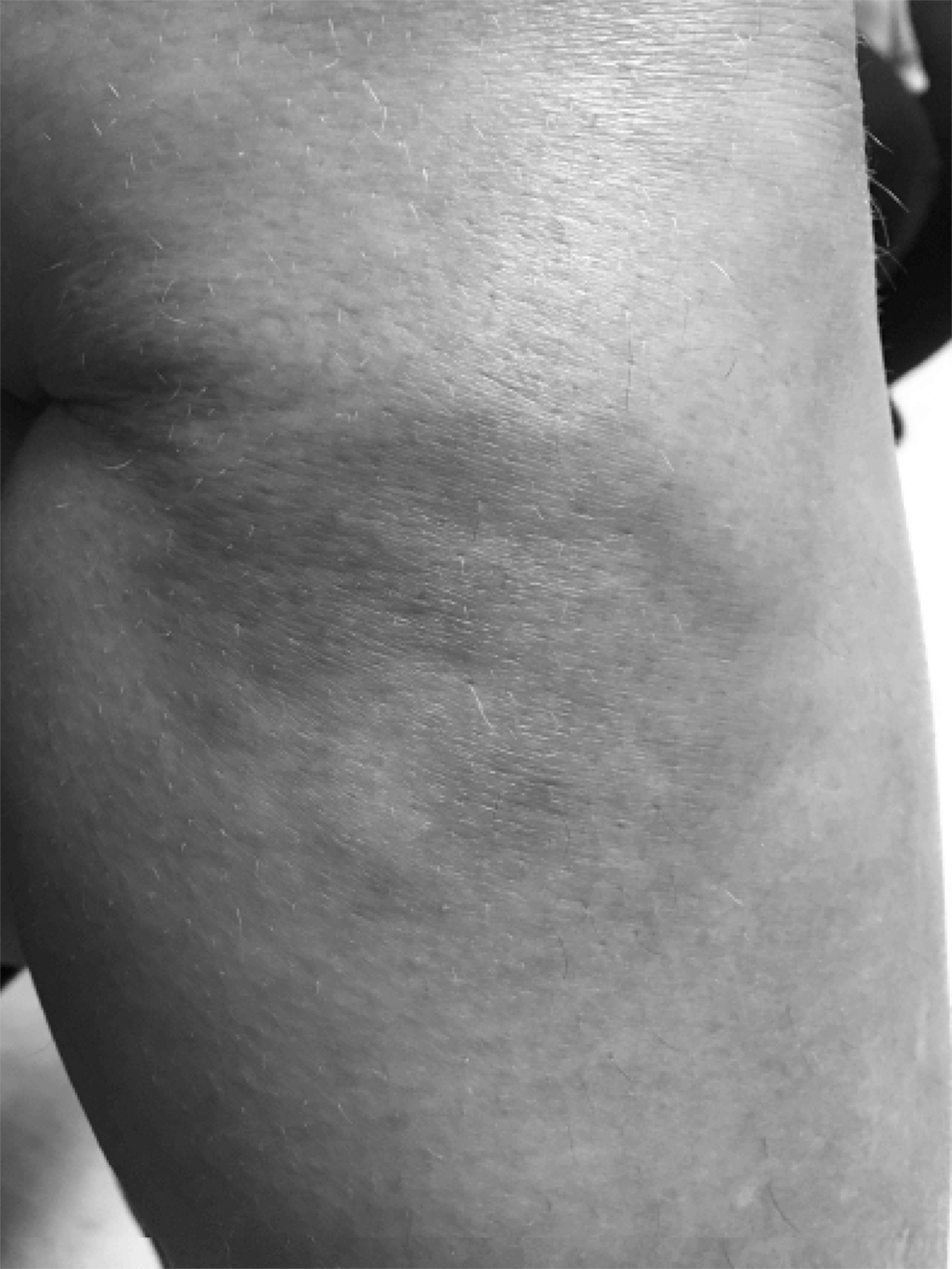
Asymptomatic annular plaques on left lower extremity.
Based on the provided photographs and limited information provided in the teledermatology referral, differential diagnoses included granuloma annulare, tinea corporis, mycosis fungoides, erythema annulare centrifugum, leprosy, and sarcoidosis. Upon a comprehensive review of the patient's medical record, two additional relevant pieces of clinical history were obtained: (1) the patient had very recently emigrated from Brazil and (2) the patient had recently complained of significant distal upper and lower extremity sensory deficits and paresthesias that had been initially attributed to a vitamin B12 deficiency. Based upon this additional information, suspicion for leprosy was high and an expedited in-person consultation for biopsy was scheduled.
A biopsy was performed of the patient's left lower leg, which revealed epithelioid granulomas and numerous mycobacterial organisms were identified with fite and acid-fast bacillus stains. A diagnosis of borderline tuberculoid leprosy was made and she was referred to a multidisciplinary leprosy specialty clinic for treatment within 10 days of the initial consult. Treatment was initiated and at follow-up 3 months later, all cutaneous and neurologic symptoms had resolved.
Discussion
Teledermatology has emerged as an important tool for dermatologists to provide faster less costly and more convenient care, and to extend the reach of dermatologists to areas of the country with limited access to specialists. 3 This interesting clinical case highlights both a strength and potential pitfall of existing teledermatology platforms. Demand for dermatologic appointments exceeds supply in many areas of the United States, leading to prolonged wait times for evaluation. This supply–demand mismatch disproportionally impacts lower socioeconomic status patients, who tend to have high burdens of dermatologic disease. 4 Teledermatology can both increase access to care and allow for more efficient use of existing dermatologic appointment slots through effective triage, when compared with traditional referral platforms. In this case, the suspicion for leprosy facilitated a shorter time from referral to biopsy and diagnosis than would have been possible in traditional referral systems. Leprosy is completely treatable and curable when diagnosed early. Prompt diagnosis and initiation of treatment are the most critical factors in preventing debilitating long-term sequela. It is possible that if leprosy had not been suspected, the patient would not have received a dermatology appointment for up to 4–6 weeks.
The diagnosis of leprosy was not on the initial differential of the primary care physician given the rarity of the disease. The suspicion for leprosy was raised, in part, due to clinical history obtained from the patient's medical record, including documented peripheral neuropathy. In teledermatology referrals from nondermatologists, the consulting dermatologist's differential diagnosis may be significantly different from that of the referring provider. Because of this, important and relevant clinical history may be omitted from the information included in the referral. The teledermatology platform used at CHA does not require any specific information from the referring provider and does not require primary care physicians to input a review of systems nor include medical comorbidities. In this case, the dermatologist's access to the patient's entire medical record allowed for a more comprehensive clinical history and ultimately a timely and accurate diagnosis was made.
In addition, this case points out the importance of training primary care physicians to include pertinent history in consult requests. Previous research has highlighted high rates of misdiagnosis for serious dermatologic conditions in cases wherein the provided history was incomplete. 5 It is possible that direct-to-consumer teledermatology models that operate independently from existing healthcare systems and services, and which do not offer immediate access to the patient's medical history, may be more prone to this pitfall.
As utilization of teledermatology services increases, careful attention should be given to the design of systems that allow for consulting dermatologists to have access to clinical history beyond what is included in the initial referral, and ideally to the patient's entire medical record. We believe that such systems will lower the risk of misdiagnosis and will help to maximize the potential of teledermatology to increase access to high-quality dermatologic consultation.
Footnotes
Disclosure Statement
No competing financial interests exist.