




Abstract
In the United States, the prevalence of pregnancy-related deaths has risen significantly over the past 20 years. Pregnant women at high risk for peripartum complications should undergo anesthesia consultation before delivery so that a management plan can be created between the obstetrician, anesthesiologist, and patient to ensure optimal outcomes for both the mother and newborn. However, few hospitals outside of major, urban, academic medical centers have dedicated anesthesiologists specially trained in obstetric anesthesia and the resources available to expedite optimization of high-risk parturient comorbidities. Telemedicine is a valuable tool by which evaluation, triaging, and multidisciplinary coordination can be provided for high-risk obstetric patients living in remote or rural communities without access to specialized, maternal care medical facilities. This review examines the existing literature regarding telemedicine use in preoperative anesthesia and antenatal obstetrics and identifies areas for future research. Furthermore, the benefits and potential barriers of implementing a telemedicine program specifically dedicated to obstetric anesthesia are discussed.
Introduction
While international trends show an overall decrease in maternal mortality, in the United States, there has been a steady increase in pregnancy-related deaths over the last two decades. Recent observational studies quote a relative increase of 26.6% between 2000 and 2014. 1 The exact etiology for this trend remains unclear, and although it is most likely multifactorial, the perceived increase in risk for complications during the peripartum period may, in part, stem from an increasing number of high-risk women (i.e., those with chronic comorbidities) attempting pregnancy and labor. 2
To encourage optimal anesthesia care in the peripartum period, the American Society of Anesthesiologists (ASA) published broad guidelines regarding the goals for good anesthesia for any hospital providing obstetric care. Briefly, the committee described the need for a credentialed licensed practitioner to be readily available to administer an appropriate anesthetic, be able to manage potential anesthetic complications, and support vital functions during an obstetric emergency. Particularly for larger centers and those designated high-risk centers, it is recommended to have anesthesia services overseen by an anesthesiologist with further training or experience in obstetric anesthesia. Overall, these broad guidelines can help guide the directors of anesthesia services in optimizing their departments in accordance with the facility's available resources and clinical needs. However, for pregnant mothers with complex medical comorbidities, more detailed guidance may be needed to help identify resource or personnel limitations in relation to the mother's and newborn's clinical needs and to enhance communication between anesthesiologists and other health care workers involved in the mother's care. 3
It has been well documented that newborns born at facilities not well equipped for their medical needs have worse outcomes, leading to creation of coordinated regional systems for perinatal care based primarily on the needs of the newborn. 4,5 Extrapolating from these findings, the American College of Obstetricians and Gynecologists (ACOG) and the Society for Maternal–Fetal Medicine (MFM) introduced in 2015 the concept of levels of maternal care (LOMC). 6 As with the newborn levels of care, standardizing the LOMC allows for a universal designation of maternal-specific care centers. The goal for creation of this system was to help centers assess resource availability and identify when transfers may be necessary to a higher level of care facility to provide risk-appropriate medical attention based on the mother's clinical condition. The facility designations described in the obstetric care consensus were birth centers, basic care (level I), specialty care (level II), subspecialty care (level III), and regional perinatal health care (level IV) centers.
With this regionalization of care, higher level facilities are placed in position to accept patient transfers, provide recommendations, offer educational support, and review cases from lower level locations. Specifically, for anesthesia, level III and IV designations should have a director of obstetric anesthesia services who is board certified in anesthesiology with specialized training or experience in obstetric anesthesia. Additionally, level IV centers must have a board-certified anesthesiologist with specialized training or experience in obstetric anesthesia present at all times, while level III designation simply requires a board-certified anesthesiologist on-site. Level II requires an anesthesiologist to be available for consult or assistance, while level I calls for only anesthesia services, but not specifically a board-certified anesthesiologist, to be available at all times. 6 Although this regionalization of care helps allocate patients to locations that have the risk-appropriate resources to manage their care, not all rural areas have access to these level III/IV institutions within a reasonable distance, creating a gap of care.
With an estimated 19.3% of the population in the United States living in rural areas, telemedicine has the potential to bridge this gap by enabling patients living in remote areas the opportunity to receive high-level specialist care locally. 7 The World Health Organization defines telemedicine as: “the delivery of health care services, where distance is a critical factor, by all health care professionals using information and communication technologies for the exchange of valid information for diagnosis, treatment and prevention of disease and injuries, research and evaluation, and for the continuing education of health care providers, all in the interests of advancing the health of individuals and their communities.” 8 Care through telemedicine has been increasingly integrated for medical fields such as radiology, psychiatry, and internal medicine; however, telemedicine in anesthesia is still in its nascent stages. Recently, institutions have been adopting telemedicine platforms for their preoperative evaluation clinics, but to our knowledge, to date, there is no formal obstetric anesthesia telemedicine program currently in place. 9 –11 The aim of this article is to review the use of telemedicine in antenatal obstetrics and anesthesia, highlighting its potential benefits in the subspecialized field of obstetric anesthesia (Fig. 1).
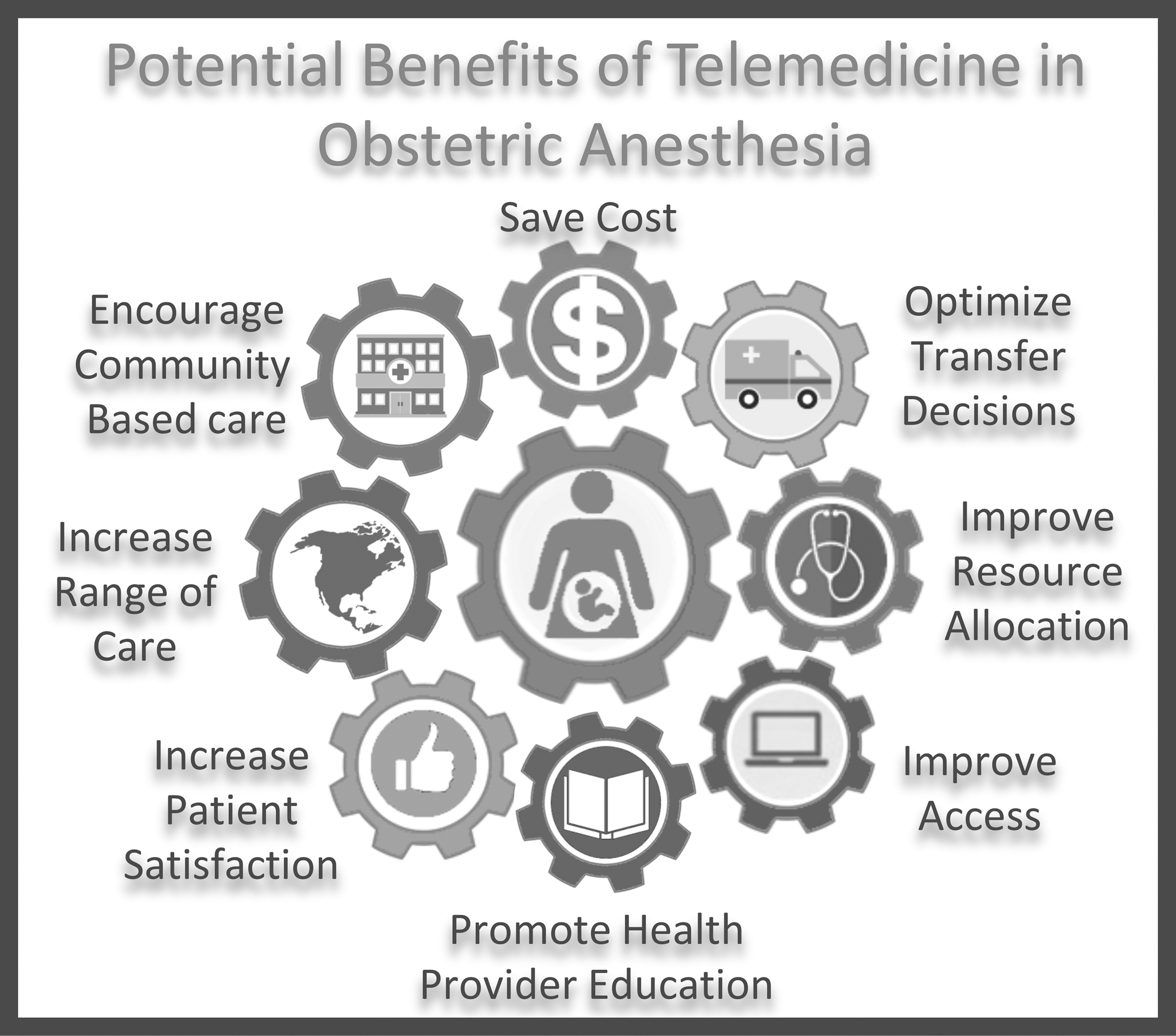
Potential benefits of telemedicine in obstetric anesthesia.
Use of Telemedicine in Preoperative Anesthesia
As per the ASA Practice Advisory for Preanesthesia Evaluation, every patient should be assessed by an anesthesiologist in advance of a procedure/operation. These consultations may be used to educate the patient, organize resources for perioperative care, and formulate plans for intraoperative care, postoperative recovery, and perioperative pain management. 12 Additional reasons why patients are referred for an anesthesia consultation in advance of a procedure/surgery include to medically optimize the individual, avoid case cancellations, and reduce postoperative complications. 13,14 However, it has been shown that the farther patients live from their preoperative anesthesia consultation, the greater the likelihood of patients missing or canceling their appointment. 15 Time missed from work, cost of travel, childcare arrangements, or lack of access to transportation can be a significant burden for patients living in rural or remote areas. 16 Moreover, as the preoperative anesthesia appointment typically occurs before the day of labor or surgery, this may require multiple long-distance trips for the patient. Telemedicine has the potential to reduce travel time, financial burden, improve accessibility, and increase patient satisfaction by enabling anesthesia specialists to remotely consult on patients utilizing such technologies as video communication, electronic stethoscopes, and airway cameras. 10
However, few studies to date have evaluated preoperative, anesthesia telemedicine programs in a rigorous manner. One pilot study assessing patient and attending satisfaction demonstrated that teleconsultations for preadmission anesthesia were deemed highly satisfactory for the majority of both patients and attending anesthesiologists, 17 while another pilot study also found that a telemedicine preanesthesia clinic was well received by participants. 11 A large retrospective review of 7,803 patients at Thomas Jefferson University Hospital compared time spent at the encounter, patient satisfaction, and the case cancellation rate between patients attending on-site presurgical assessment versus telemedicine-based evaluations. The telemedicine cohort spent less time in the evaluation, had higher patient satisfaction, and lower cancellation rates than the on-site group. 18
Only a limited number of studies have assessed the accuracy of preoperative anesthesia teleconsultation versus in-person consultation, and no study has examined patient outcomes. A retrospective analysis found that among patients scheduled for dentoalveolar surgery, 95% of cases were deemed appropriately assessed for general anesthesia and intubation through telemedicine consultation. 19 In the largest prospective study to date, 155 patients were randomized to in-person or telemedicine preoperative anesthesia evaluation. Physical examinations were found to be as accurate, and documentation superior, with the telemedicine evaluations as compared with in-person consultation. Satisfaction was rated highly among both patients and providers for both the telemedicine and in-person arms. 9 Further research is needed to assess cost savings, time savings, rates of kept appointments, surgical cancellations, and anesthetic complications for telemedicine versus in-person preanesthesia consultations.
Use of Telemedicine in MFM
Like other subspecialties, MFM practitioners tend to concentrate in major urban centers, 20 leaving over 20 million reproductive-age women in the United States without an MFM provider in their county of residence. 21 It has been shown that decreased access to MFM care is associated with increased maternal mortality. 22 Consequently, as with anesthesia, the field of MFM has begun to utilize telemedicine to improve access to care for patients living in remote or rural areas.
Several studies have objectively evaluated the effectiveness of their MFM telemedicine program. The Antenatal and Neonatal Guidelines, Education and Learning System telemedicine program established by the Arkansas Department of Health in 2004 aimed to increase obstetric health care access throughout the state by connecting rural patients and practitioners with MFM specialists based in the University of Arkansas Medical Sciences, the only tertiary center in the state. Implementation of the program enabled a significantly increased percentage of women, both healthy and those with a high-risk pregnancy, to receive a comprehensive prenatal ultrasound. 23 Additionally, this program has resulted in an increase of transfers of mothers expecting very low-birth weight babies to level III hospitals before or during birth. 24 However, among all pregnancies, telemedicine use was not associated with an increased rate of early transfer (<33 weeks of gestation) to a level III center, suggesting that telemedicine enabled patients and their local providers to manage challenging cases remotely later into the pregnancy. 25
At the University of Pittsburgh Medical Center, an MFM telemedicine program was established in 2012 to better serve the surrounding rural Western Pennsylvania region. Over 4 years of operation, the program was estimated to save patients over $90 on average in travel costs and lost wages per completed teleconsultation. Moreover, satisfaction was rated very highly among participants, with 95% of participants indicating that they would be interested in participating in future telemedicine visits. Frequencies of cesarean sections, macrosomia, and fetal deaths were no different between telemedicine and in-person consultation groups; however, premature labor and neonatal intensive care unit use were noted to be lower in the telemedicine group. Overall, the program demonstrated that most telemedicine patients were able to be managed at their local hospital, with only 15% requiring transfer to a center with higher level of care. In addition to being a cost- and time-saving alternative for patients, it achieved the goal of increased access as 11% of surveyed patients reported that they would have forgone MFM care entirely had telemedicine not been available. 26
Antenatal Obstetric Anesthesia
Obstetric anesthesia is the subspecialty of anesthesia focused on the management of parturients in the peripartum and perioperative periods. As medical care and technology have improved in this field, there has also been a noticeable increase in the frequency of parturients with significant medical comorbidities attempting labor. 2 As a result, referrals to prenatal clinics are no longer limited to patients with potentially difficult epidural placement (e.g., history of spinal disease), prior failed epidural, or concern for difficult airway. Frequently, individuals have significant disease or decreased function in one or more organ systems, including cardiovascular, pulmonary, hematological, and neurological systems, among others. Moreover, the high-risk medical condition initially responsible for referral often does not exist in isolation. 27 For example, cardiovascular disease often coexists with other comorbidities such as obesity, hypertension, diabetes, and/or smoking, making anesthetic management more complex. The trend of multiple comorbidities has been increasing with one retrospective study reporting that the proportion of parturients who attended a high-risk, obstetric anesthesia clinic with multiple major medical disorders increased from 18% in 2001 to 41% in 2006 to 53% in 2011. 28 Consequently, along with obstetric providers, anesthesiologists now play a vital role in perinatal evaluation, planning, and coordination to ensure optimal peripartum care delivery.
While anesthesia consultation well in advance of general surgery has shown to be beneficial for high-risk patients, 29 –32 in the field of obstetrics anesthesia, parturients are routinely evaluated by their anesthesiologist only on the day of their labor admission or just before epidural placement. However, depending on the patients' severity of comorbidities or the need for more invasive surgery, for example, C-section for percreta, this timing might not be ideal or supported by ASA recommendations. 12 Since prenatal encounters represent a great platform for education and formulation of a coordinated care plan between the parturient, obstetrician, and anesthesiologist, 33 –36 it has been recommended that high-risk pregnant women undergo prelabor anesthesia consultation. At the Johns Hopkins Hospital, Murphy et al. introduced the concept of a specialized center for peripartum optimization, where high-risk parturients undergo perinatal evaluation and optimization by fellowship-trained obstetric anesthesiologists. Evaluation of the proposed benefits of such a center is currently in process. 35 Shatalin et al. reported that of the 241 high-risk patients evaluated in their predelivery anesthesia consult clinic, 95% had the expected delivery plan. 36 However, despite these positive observations, the concept of a prelabor anesthesia clinic is not widely established, with only 38% and 30% of surveyed obstetric practices having a dedicated, antenatal, high-risk pre-evaluation clinic in the United States and the United Kingdom, respectively. 37,38
Nonetheless, the idea of anesthesiologist involvement earlier in the pregnancy appears to be gaining traction both in the United States and United Kingdom, with creation of guidelines recommending early anesthesia referrals. For example, for women with morbid obesity (defined as a body mass index >40 kg/m2), who are at higher risk for perinatal complications, the ACOG, 39 the Royal College of Obstetricians and Gynaecologists, 40 and the Centre for Maternal and Child Enquiries have all recommended an anesthesia consultation in the third trimester. 41
Telemedicine and Obstetric Anesthesia the Way Ahead
As medical needs and overall health problems of the population change with time, it is necessary for health care systems to continue to innovate and modify provider and patient care patterns to meet the demand. Given that prenatal obstetric anesthesia consultation is recommended for high-risk pregnancies, it is paramount for health care systems to reach a wide catchment area. However, the supply of physicians specifically trained in obstetric anesthesia is relatively lower compared with the demand and mostly concentrated in major, urban academic centers. For level III to IV centers with established perioperative and/or perinatal anesthesia clinics, the addition of telemedicine obstetric anesthesia services offers an innovative way for highly trained specialists to reach remote and rural communities.
Launching an obstetrics anesthesia telemedicine program will help improve access to subspecialty care for patients living in remote areas, while simultaneously aiding local anesthesiologists and obstetricians to manage challenging patients at their local health care facility if possible. For more complex patients, these teleconsultations will allow the obstetric anesthesia specialists to identify issues early; enable transfer of care to a higher acuity hospital in a well-planned, controlled, and coordinated manner before delivery; and obviate the need for an emergent mobilization of resources when a delivery is imminent. Similar to telemedicine programs in other specialties, this intervention may reduce patients' costs, remove barriers to care, build on local hospitals' ability to care for low-to-moderate risk pregnancies, improve maternal and fetal outcomes, and improve the overall patient and provider experience.
In generalizing this model across the United States, there are several points to consider. First, due to medical licensure rules, malpractice coverage, and state laws, it may be difficult or outright prohibited to offer telemedicine consultations to patients across state lines. 42 Second, technological hurdles can be encountered when trying to get the telecommunication equipment installed and running on both ends. Moreover, the cost of installing technology, training staff, and potential lack of adequate reimbursement, depending on the state and type of insurance, represent legitimate barriers. 43 –45 Third, the concern for privacy as information can be hacked on unsecured networks or from unsecured hardware can make patients, providers, and health systems alike hesitant to implement or participate in such a program. 46 Despite these barriers, the field of telemedicine is growing rapidly in the United States, 47 with an average of 28% annual increase in visits from 2004 to 2013 among rural Medicare beneficiaries. 43 Indeed, with increasing experience, medical systems have a better understanding of the requirements, organization, and infrastructure necessary to establish successful telemedicine programs. 48
Last, to our knowledge, guidelines for the use of telemedicine in the preanesthesia evaluation setting have not been developed by the ASA or other anesthesia governing bodies. This could be considered a limiting factor since development of these programs may not be standardized or optimized to ensure patient safety and delivery of effective quality care. However, given the successful integration of telemedicine in many other fields, this is a great opportunity to use current validated guidelines and mold them to the needs of the anesthesia field. Another future consideration that warrants further study is standardizing the definition of a high-risk pregnancy. Unfortunately, what defines a patient as “high-risk” is not universal and may vary between providers, medical centers, or societies. As such, this term poorly guides obstetric practitioners in choosing which patients would derive the most benefit from an antenatal anesthesia evaluation and multidisciplinary coordination.
In conclusion, obstetric anesthesia prelabor consultation should be an integral part of routine, high-risk, pregnancy medical care. However, due to a paucity of anesthesiologists trained in obstetric anesthesia with experience in high-risk parturients, access to care for many women in rural or remote areas is limited. Telemedicine has the potential to overcome this barrier and improve health care delivery to women at high risk for anesthetic complications at the time of delivery. Additionally, telemedicine offers remote hospitals and physicians the ability to obtain guidance from subspecialized anesthesiologists at relatively little expense, thereby improving care delivery, reducing health care cost, and minimizing burden (e.g., travel and unnecessary hospital transfers) for the patient.
However, more studies evaluating telemedicine programs in the fields of antenatal anesthesia and MFM are sorely needed. Among preoperative, anesthesia telemedicine programs, few studies assessed patient satisfaction, quality, and diagnostic accuracy, and no studies to date have evaluated cost savings or patient procedural outcomes. Similarly, studies evaluating the benefits of MFM telemedicine programs are limited in number and scope as well. Last, further research is needed to determine how best to implement a telemedicine perinatal obstetric anesthesia program and how to maximize its effects on provider engagement and collaboration, as well as patient cost, satisfaction, and outcomes.
Footnotes
Disclosure Statement
No competing financial interests exist.
Funding Information
No funding was received for this article.