




Abstract
Background:
Telemedicine systems increase access to care, particularly in remote and developing countries. Nationwide telemedicine programs in Cabo Verde and Albania have been built by the International Virtual e-Hospital Foundation (IVeH) and based on the effective Initiate-Build-Operate-Transfer (IBOT) strategy. The aim of this study was to compare the clinical results between the two programs and examine the relationship between the clinical teleconsultations as an indicator of health care system needs and the contribution of local telemedicine champions.
Methods:
Data were prospectively collected between 2014 and 2018 from Albania and Cabo Verde. Telemedicine champions were defined as programs, physicians, or hospitals who have contributed at least 100 telemedicine consultations during the study periods. Chi-squared test was utilized to analyze the data.
Results:
There were 2,442 teleconsultations in Cabo Verde and 2,724 teleconsultations in Albania during the study periods. Using the 100-consultation benchmark as the indicator of telemedicine champion, we identified radiology (n = 1,061), neurotrauma (n = 742), and general neurology or stroke (n = 489) as champion clinical disciplines in Albania. With the same method of 100 consultations, we identified eight champion clinical disciplines in Cabo Verde, including neurology (n = 720), cardiology (n = 313), orthopedics (n = 190), surgery (143), endocrinology (141), otolaryngology (n = 139), urology (n = 139), and dermatology (126). The patient transfer/nontransfer ratio was 0.5 in Cabo Verde and 0.3 in Albania (p < 0.001). Three hospitals in Albania and eight community hospitals/health care centers in Cabo Verde requested the majority of teleconsultations. Two main hospitals in Cabo Verde and Albania responded to the consultations.
Conclusion:
The successful implementation of a telemedicine program depends on many factors. However, physician champions, who eventually create clinical discipline champions, and represent the hospital champions, are the backbone of the sustainability and progress of any telemedicine program. The number of consultations reflects the lack of local specialty expertise to provide health care service and thus can be used for future planning and investment.
Background
Telemedicine programs increase the access to care in all clinical disciplines everywhere. This is particularly true in remote areas and developing countries that lack specialists and other human capacities to provide health care. This is especially evident in high-end clinical disciplines such as trauma, intensive care, neurosurgery, neurology, cardiology, and other disciplines. The telemedicine programs of Albania and the Republic of Cabo Verde were built based on the Initiate-Build-Operate-Transfer (IBOT) strategy formulated by the International Virtual e-Hospital Foundation (IVeH) and with support from U.S. government agencies such as U.S. Agency for International Development (USAID), Department of State, and United States European Command (EUCOM), and the Slovenian government (Ministry of Foreign Affairs), among other partners. These two programs have been developed based on a model from telemedicine of Kosova. 1 –3 They serve as important modalities to increase access to care in both countries.
Although geographically these two countries are on two separate continents, they share many similarities. Both have remote sites and difficult terrain to traverse and both are in the rebuilding or transition phase of health care services. Moreover, the telemedicine program of each of these countries has been built based on the IBOT strategy. This ensures the final product (transfer to Ministry of Health) as an integral part of health care services. The telemedicine program of Cabo Verde was transferred to the Ministry of Health in 2014, and the telemedicine program of Albania was transferred in 2017.
Albania, a South East European country with a population of 2,938,275 and a landmass of 27,400 km2, has a robust telemedicine program that has previously been reported. 3,4 The World Health Organization (WHO) reports that physician density per 1,000 population is 1.286 (2013) and the density of nursing and midwifery personnel per 1,000 population is 5.161 (1994). 5 Yet, provision of overall high-quality health care services is still a major challenge. 6 –8 In Albania, infant mortality rate per 1,000 live birth is 6.1 (2017) and maternal mortality ratio per 100,000 live births is 29 (2015), whereas health expenditure is 5.88% of the gross domestic product (GDP) (2014). There are a number of regional hospitals in Albania, but the majority of specialists live and work in Tirana, leaving rural Albania devoid of medical services. For example, there are only two hospitals with neurosurgery services (one of them serves as the only trauma center in the country), and both are in Tirana. Emergency services around the country have serious challenges. 6,7
The telemedicine program in Cabo Verde, which is a nation of 10 islands off the coast of West Africa, began in 2012 as a 10-center program, which later progressed to 14 centers. The population of Cabo Verde is 560,084 and the total landmass is 4,030 km2. 9 According to WHO, the density of physicians is 0.788 per 1,000 population (2015). The nursing and midwifery personnel density is 1.256 per 1,000 population (2015). Economically, 4.8% of the GDP goes toward health (2014). The infant mortality rate is 10.4 deaths per 1,000 live births (2017), whereas the maternal mortality rate is 42 deaths per 100,000 live births (2015). 10
Since independence in 1975, the medical work force in Cabo Verde has evolved, yet there is no medical school and all doctors are graduates from other countries such as Portugal, Brazil, Russia, China, and Cuba among others. 11
The distribution of physicians and nurses on the islands varies. Santiago and Sao Vicente islands are the most populated islands. The majority of physicians are concentrated in Santiago and nurses are mostly concentrated in Sao Vicente. 12
Both Albania and Cabo Verde have their own challenges in providing health care services. Cabo Verde lacks many clinical services such as cardiac surgery, neurosurgery (only recently introduced), and other advanced services, whereas in Albania most clinical services, with the exception of transplant, are provided in the private or public health care system. However, access to health care is not equally distributed across the nation in either country. Advanced care is offered only in major hospitals, whereas rural hospitals lack specialists. To this end, both countries have greatly benefited from telemedicine programs, despite their challenges. This article was designed to review the similarities and differences of the telemedicine programs from two different continents. The second aim is to explore if the frequency of clinical teleconsultations can be used as an indicator of a need for investment in new clinical services and to identify local physician and hospital champions as well as discipline champions in maintaining the telemedicine services active.
Methods
Data were prospectively collected from Albania and Cabo Verde between 2014 and 2018. For the purpose of this study, the telemedicine champions were defined as those who have contributed at least 100 telemedicine consultations during the study periods. Individual telemedicine champions were defined as an individual physician from any clinical discipline or hospital receiving and responding to or requesting telemedicine consultations. Based on this definition, we developed the new concept of clinical discipline champion and hospital champion. Categorical variables were compared with a chi-squared test. Figure 1 depicts how physician-, hospital-, and clinical discipline champions are related.
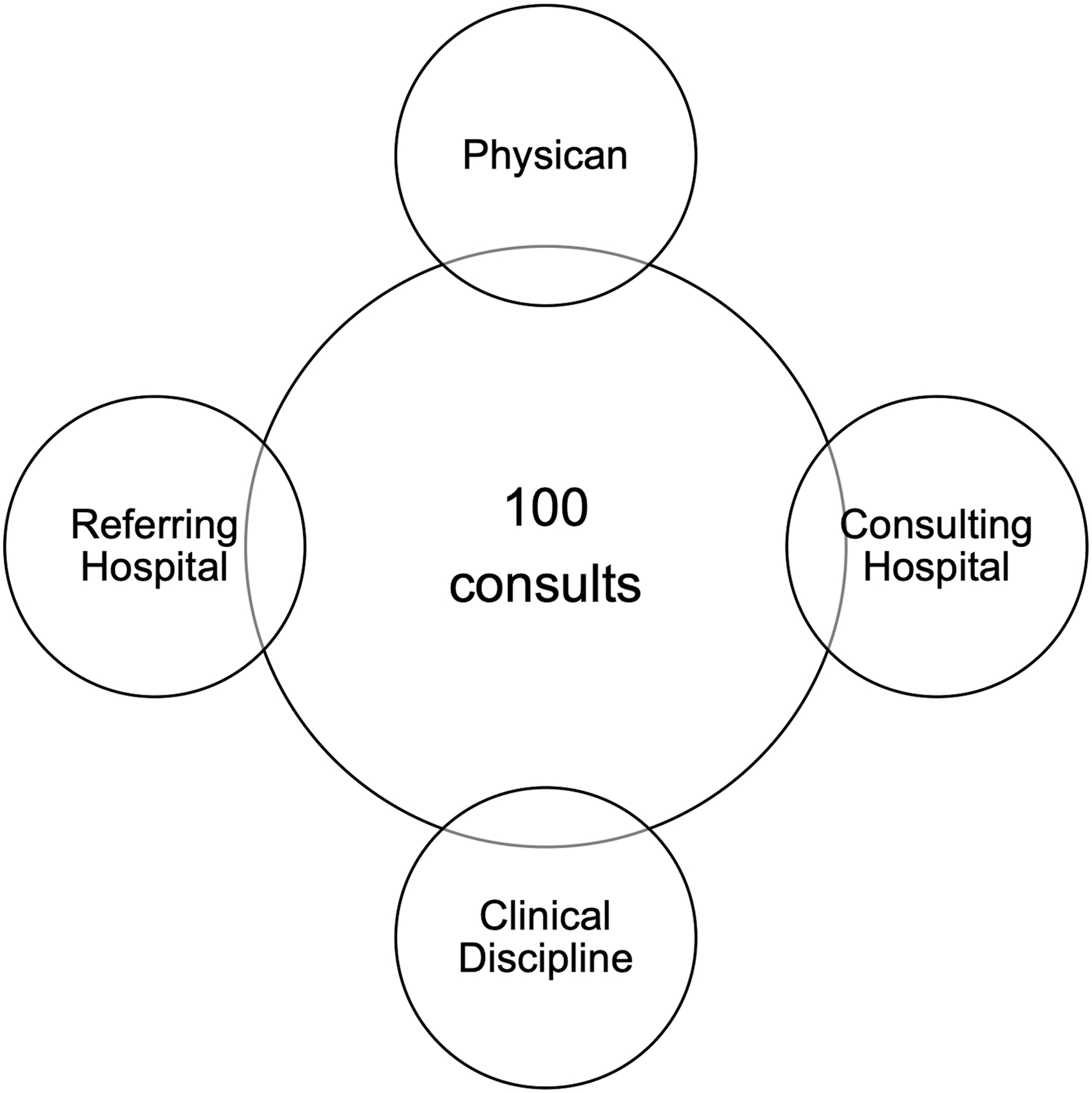
Physician-, hospital-, and clinical discipline champion based on 100 consults.
Results
There was a total of 2,442 teleconsultations in Cabo Verde and 2,724 teleconsultations in Albania during the study periods. These two telemedicine programs have similar clinical disciplines for the most part but differ in some ( Tables 1 and 2 ). In total, there were 173 physicians in Albania and 108 physicians in Cabo Verde working in different specialties and taking care of the patients through the telemedicine networks in both countries.
All Clinical Disciplines and Champions in Albania
Orthopedics 5, cardiology 20, ENT 17, gastroenterology and hepatology 17, toxicology 16, ICU 15, trauma 15, infectious disease 13, hematology 12, urology 12, pediatrics 8, maxillofacial surgery 7, rheumatology 6, thoracic surgery 6, endocrinology 5, vascular surgery 5, oncology 4, ophthalmology 4, allergology 3, gynecology 3, cardiology ICU 2, pediatrics surgery 2, pediatric ICU 1, pediatric nephrology 1, pediatric radiology 1, plastic surgery and burns 1.
Champion.
N/A, not applicable.
All Clinical Disciplines and Champions in Cabo Verde
Audiology, general clinic, critical care, nutrition and neuro-pediatrics.
Champion.
Based on the 100-telemedicine consultation definition, there were only three clinical disciplines champion in Albania: radiology (n = 1,061), neurotrauma (n = 742), and neurology or stroke (n = 489). On the other side of the study, in Cabo Verde there were eight champion clinical disciplines and thus eight local champions, including neurology (n = 720), cardiology (n = 313), orthopedics (n = 190), surgery (n = 143), endocrinology (n = 141), otolaryngology (n = 139), urology (n = 139), and dermatology (n = 126).
Using the 100-requesting teleconsultation as the indicator of local hospital champion we identified the hospital champion in seven islands in Cabo Verde and four in Albania. The Cabo Verde hospital champions were located in Fogo (n = 537), Santo Antao (n = 396), Boa vista (n = 246), Sal (n = 241), Sao Nicolau (n = 231), Brava (n = 175), and Maio (n = 157), whereas four champion hospitals in Albania were Vlora (n = 1,249), Korca (n = 740), Shkodra (n = 222), and Kukes (n = 202). Similarly, based on the indicator of 100 performing teleconsultations, in Cabo Verde, the receiving hospital champions were Hospital of Dr. Agostinho (n = 1,978) and Hospital of Dr. Bapitsa de Sousa (n = 464). The receiving hospital champions in Albania were University Hospital Center (UHC) Mother Teresa (n = 1,483) and University Trauma Hospital (n = 1,119) (Table 3).
Champion Referring Centers in Cabo Verde and Albania
UHC, University Hospital Center.
The pattern of male/female ratio of patients seen through telemedicine Cabo Verde was 0.8 (1,120/1,319), whereas in Albania it was 1.7 (1,721/1,003), (p < 0.001). The ratio of transfer/nontransfer was 837/1,605 (0.5) in Cabo Verde and it was 602/2,122 (0.3) in Albania (p < 0.001) (Table 4). Comparing the number of consults as well as the transfer rate between the telemedicine programs of the two countries for champion and nonchampion programs revealed an almost steady pattern for Albania with the lowest transfer rate in 2018. In Cabo Verde, there was an increase in transfer rate in 2018 when the total number of consults was the greatest in 4 years. Interestingly, in Cabo Verde, the number of 2018 tele-consults was greater than Albania's tele-consults (Fig. 2).

Progress and patient transfer between telemedicine programs in Cabo Verde and Albania.
Gender and Patient Distribution Between the Two Programs
p < 0.001 (in patients with recorded gender).
Discussion
Albania and Cabo Verde continue to have robust telemedicine programs that were built based on the IVeH's IBOT strategy to ensure long-term sustainability. 1 These programs have added value to the overall health care system through increasing access to care, yet there is much more potential in both programs. In Albania, there is a well-developed teleradiology (20 physicians, 4 champions), tele-neurotrauma (7 physicians, 5 champions), and neurology/tele-stroke program (16 physicians and 2 champions) (Table 1). 13 –15
Neurology and neurosurgery are needed in other countries located in the same region as Albania. Slovenia runs a similar program for tele-neurology called Telekap (TeleStroke) network. It was originally designed in 2015 for managing stroke patients, but it is helpful for trauma and neurosurgical emergencies as well. Structurally, it is very similar to tele-stroke program in Albania. It is serving a country of 1.8 million Slovenian citizens and all the hospitals in the country are connected to this network through communication technology. It has helped in fast diagnosis and management. 16 According to Albanian Ministry of Health, the health system in Albania is public for the most part. Per the statistics from Albanian Ministry of Health, cardiovascular disease was the most common cause of mortality in 2010 (209.0 per 100,000). 17 However, in our review, cardiology was not a champion in the telemedicine program of Albania. In our data, there were 20 cardiology consults that were responded to by only one cardiologist. There are not more recent statistics to assess the current situation but assuming that cardiology is still one of the most common causes of death, cardiology is a need in the telemedicine program of Albania. Denmark, Norway, France, and The Netherlands are other countries that administer telecardiology. 18 In Denmark, thanks to advanced technology, 19 telecardiology aids in rapid diagnosis of ischemic heart disease, monitoring devices, and heart failure. In France, telecardiology is used to educate elderly patients at home. The result of this program has shown decreased hospitalization due to acute heart failure in patients who were treated with telemedicine compared with a control group of patients who were treated with conventional therapy. In addition, the quality of life was the same between the two groups with decrease in mortality as an advantage. 20
In The Netherlands, telecardiology was established in 2005 after success in tele-dermatology. There is a virtual hospital called KSYOS, which is the first virtual hospital in The Netherlands. It is the telemedicine provider that serves as the contact point for patients, health care professionals, and supervisory organizations such as government. This multitasking telemedicine provider integrates a variety of clinical, technological, supervisory, and administrative tasks that together make teleconsultations feasible. General practitioners can order electrocardiograms (EKGs) that are saved online as PDF and a grader can access and read them. The grader can be a cardiologist or a trained person. The requesting general practitioner will be notified about the abnormalities in the EKG and can decide to transfer the patient or consult with the regional cardiologist through KSYOS. To maintain quality, 10% of tele-examinations will be selected at random for auditing. Since 2006, telecardiology was involved in 24,924 tele-consults with 884 general practitioners and, 256 cardiologists. The benefit of telecardiology was that only 40% of the patients who were consulted were ultimately transferred. It is important to note that in 70% of the tele-consults, the GPS mentioned learning from the cardiologist. 21
Teleradiology assists any specialty and due to its crucial role in all fields of medicine, it has to be available 24/7. In teleradiology images are captured, stored, and transmitted electronically. With improving technology, radiological studies are no longer printed on films. Picture archiving and communications systems have not only improved the quality but also allow the utilization of radiology in telemedicine. 22 Nowadays, teleradiology is everywhere. The result of a European survey with 368 radiologists endorsed the popularity of telemedicine. The respondents to this survey liked teleradiology because it was a tool for collaborative discussions, distributing workload, and obtaining a second opinion from experts. However, there were some concerns about insufficient history and integration of previous imaging as the biggest drawback. 23,24
Albania has been trying to meet medical needs for the segment of their population that lives in outreached areas. There is a 3-year agreement between the governments of Albania and Kosovo, which enables physicians from Kosovo to take care of Albanian patients in the border area. 17 As such, it is clear why telemedicine plays a crucial role in Albania. In Albania, telemedicine was accepted by politicians as well as health care professionals. The Ministry of Health of Albania has reported that in 2012–2015, tele-medicine resulted in $3 million in savings, which is evidence for the cost-effectiveness of telemedicine despite a need to telecommunication technology, which may look expensive. 17
In Cabo Verde, telemedicine champion clinical disciplines were tele-neurology (3 physicians, 2 champions), telecardiology (8 physicians, 1 champion), tele-orthopedics (11 physicians, no champion), tele-surgery (13 physicians, no champion), tele-endocrinology (3 physicians and 1 champion), tele-otolaryngology (7 physicians, no champion), tele-urology (3 physicians, no champion), and tele-dermatology (3 physicians and 1 champion) (Table 2). In Cabo Verde, there are clinical specialists in 31 specialties, including cardiology, 11 which was the first telemedicine program championed and led by Dr. Vanda Azevedo (coauthor of this article) who is currently the leader of the national telemedicine program in Cabo Verde. All children with cardiac anomalies are seen by cardiologists in Cabo Verde and their cardiac images are sent to cardiac surgeons in Portugal for surgical treatment. 12
In 2008, the most common cause of hospitalization to Hospital Dr. Baptista de Sousa (1 of the 2 major hospitals in Cabo Verde) was normal birth (23%). The first most common causes of hospitalization were obstetrics and respiratory diseases. Stroke was one of the 10 most common causes of hospitalization (1.3%). In 2008, the main causes of Hospital Dr. Baptista de Sousa occupation at a rate of >50% were psychiatry, surgery, ortho-trauma, obstetrics, and medicine. The indicators for Hospital Dr. Agostinho Neto in 2009 show the same important specialties and pediatrics. In this hospital, the occupancy rate for some specialties such as obstetrics was even >100% at almost 148%. Among the top 10 causes of hospitalization to Hospital Dr. Agostinho Neto, pregnancy issues were the first. However, in the list of mortality emergencies, adults and pediatrics were the main services that constituted the greatest portion of mortality (149/350) followed by medicine (104/350) and neonatology (38/350). 25
Looking at these numbers reveals that telemedicine can help in these services. This will be feasible with installing more equipment in the peripheral islands for normal uncomplicated deliveries and providing advice from a distance. Limited access to maternal health in sub-Saharan Africa has been acknowledged in the literature. Telemedicine can be the solution to increase access based on the factors that lead to success based on a systematic review on this concept. These factors are related to technology, user, funding, organization, and regulatory factors. 26
Tele-dermatology is classified as a champion in Cabo Verde. In the African continent, tele-dermatology is a widespread program among several countries. It is called African tele-dermatology project.* It is designed based on store-and-forward technology and links medical institutions in sub-Saharan Africa to modern units in the United States, Europe, and Australia. The consultations involve diagnosis and management along with learning resources. This initiative started in 2007 and the African countries that are linked to this telemedicine program include Botswana, Eritrea, Kenya, Lesotho, Liberia, Malawi, Mozambique, Nigeria, Somalia, South Africa, Swaziland, Tanzania, and Uganda. Any sites that submit consults need technology for picturing and trained staff to process and upload pictures. Between 2007 and 2009, there were 345 consultations through the African tele-dermatology project. 27
Tele-endocrinology is one of the most important champions in Cabo Verde because there is a champion endocrinologist as well. In the past, the main disease in African countries was infectious disease, but this has shifted toward noncommunicable diseases such as cardiovascular diseases and related risk factors such as diabetes. It is estimated that people who live in sub-Saharan Africa are at a great risk of diabetes. As such, it is very clear that diabetes must be addressed as a public health topic. If left unaddressed, it is associated with huge burden, complications, and deaths. The Lancet Diabetes and Endocrinology Commission on Diabetes in sub-Saharan Africa works to estimate the burden of diabetes in Africa and suggests operational targets. Telemedicine is one of the recognized solutions that can screen people at a low cost. 28 Efficacy of telemedicine in this concept has been documented in outreach and rural areas of developing countries; now the challenge is how to implement such a system in African countries. 29 –31 In developing countries, the concept of diabetes control through telemedicine has been considered. There is a telemedicine program in India called The Chunampet Rural Diabetes Prevention Project (CRDPP), which has been tested successfully for delivering diabetes care to rural areas in southern India. They use a van with equipment, technician, and satellite technology to screen patients in the rural areas. 32 Such a program can be useful to be tested in Cabo Verde to expand access. Being a champion indicates that it is a need in Cabo Verde.
Conclusion
In conclusion, both programs have been running progressively. They have reduced the rate of unnecessary transfers, resulting in saved resources. Although they are in two different geographical locations and have different populations and cultures, they work well under the same system. This stems from the same platform that these two programs have been established on (the IBOT strategy). Also, the key to success for these two programs is trying to assess the need, infrastructure, and resources as well as involving the host government and academic leaders from the beginning. In 2018, both countries improved their telemedicine program. There is still more room to grow and these two programs can serve their host counties better.
Footnotes
Disclosure Statement
No competing financial interests exist.
Funding Information
No funding received for this article.