




Abstract
Introduction:
The purpose of this study was to assess the impact of telemedicine on ophthalmic screening and blood glucose control for patients with diabetes in remote areas of Northern Taiwan during the coronavirus disease 2019 (COVID-19) pandemic.
Methods:
Telemedicine was implemented in Shiding and Wanli Districts using a 5G platform from April 2021 to December 2022. Patients with poorly controlled diabetes received real-time consultations from endocrinologists at Far Eastern Memorial Hospital, 50 km away, for medication adjustment, diet control, and lifestyle recommendations. The study also provided cloud-upload blood glucose meters for self-monitoring and regular medical advice from hospital nurses. Ophthalmic screenings included fundus imaging, external eye image, and intraocular pressure measurement, with instant communication and diagnosis by ophthalmologists through telemedicine. A satisfaction questionnaire survey was conducted.
Results:
The study enrolled 196 patients with diabetes. Blood glucose and glycosylated hemoglobin levels were significantly reduced after applying telemedicine (p = 0.01 and p = 0.005, respectively). Ophthalmic screenings led to hospital referrals for 16.0% with abnormal fundus images, 15.6% with severe cataract or anterior segment disorders, and 27.9% with ocular hypertension or glaucoma. Fundus screening rates remained high at 86.3% and 80.4% in 2022, mainly using telemedicine, comparable with the traditional screening rate in the past 5 years. The overall satisfaction rate was 98.5%.
Conclusions:
Telemedicine showed effectiveness and high satisfaction in managing diabetes and conducting ophthalmic screenings in remote areas during the COVID-19 pandemic. It facilitated early diagnosis and treatment of ocular conditions while maintaining good blood glucose control and fundus screening rates.
Introduction
Diabetes is a significant health care challenge in the 21st century, with an estimated 374 million people worldwide having impaired glucose tolerance. 1,2 Some individuals with diabetes may develop microvascular disease, contributing to retinopathy. Previous studies have shown that the risk of developing microvascular disease is strongly related to blood glucose control. 3,4 Cataracts and glaucoma occur at a higher incidence in patients with diabetes than in the normal population and are also correlated with blood glucose levels. 5 –7 Thus, monitoring plasma glucose levels has been an important task.
Traditionally, blood sugar control involves patients recording their blood sugar data, which doctors check in the outpatient department. Early signs of microvascular diseases, including diabetic retinopathy, are also checked. Early diabetic retinopathy is asymptomatic, although underlying structural and functional changes in the microvasculature may lead to microaneurysms, vascular occlusions, leakage, and hypoxic injuries.
Owing to its silent onset, regular screening is needed to diagnose the disease early. Classical screening of diabetic retinopathy relies on color fundus photography, with intraocular pressure measurement, slit lamp examination, and other screenings done for other ocular complications, including cataracts and glaucoma. Regular follow-up of serum sugar levels and ophthalmic screening at clinics are essential. 8,9
However, the rapid spread of coronavirus disease 2019 (COVID-19) globally and its contagious nature led to local lockdowns, canceling in-person outpatient visits, and reduced hospital schedules. 10,11 In Taiwan, similar to many countries, total and partial lockdowns were implemented after detecting cases of COVID-19. As a result, the routine management of patients with diabetes, especially those in remote areas, was affected. Telemedicine emerged as a solution to adequately support patients in remote zones. 12 –14
Patients struggle to access medical care in the remote areas of New Taipei City, Shiding, and Wanli Districts. With the permission and support of the Health Bureau in New Taipei City, the National Health Research Institute provided the concept and funding for the study. Telemedicine was performed in the local health centers of these two districts so that patients with diabetes could consult medical specialists at Far Eastern Memorial Hospital using the 5G platform. This study analyzed the effectiveness and satisfaction of telemedicine interventions for blood sugar control and ophthalmic screening.
Methods
PARTICIPANTS
One hundred ninety-six (n = 196) patients with diabetes from New Taipei City's diabetes-shared-care network were enrolled at Shiding and Wanli health centers from April 2021 to December 2022. All provided informed consent. Following the Declaration of Helsinki, the study was funded by the National Health Research Institute, the Ministry of Health and Welfare in Taiwan, and the Health Bureau in New Taipei City and approved by the National Health Research Institute's review board.
STUDY DESIGN
Research method and process
The FarEastone Telecom 5G network and Health+ Telemedicine platform were provided by FarEastone Company for remote consultation between Far Eastern Memorial Hospital and two local health centers. Nurses at local health centers performed ophthalmic screening, including fundus imaging, external eye image, and intraocular pressure measurement, and blood sugar test on the same day as the remote consultation.
After virtual consultation registration, the relevant image files were saved in the picture archiving and communication system (PACS), and the blood sugar levels were recorded in the electronic medical record (EMR). Doctors from Far Eastern Memorial Hospital conducted online consultations to take history, read images or medical records, and then sent the diagnosis, prescription, and medical advice back to the health center in real-time mode. The local health center delivered health care education and relevant medicine to the patients or referred them to the nearest hospitals.
Shiding Local Health Center performed remote ophthalmologist consultations every 2 months on six to eight patients and remote endocrinologist consultations every 2 months on three patients. At Wanli Local Health Center, remote ophthalmologist consultations were performed monthly on six to eight patients and remote endocrinologist consultations monthly on three patients.
Fundus imaging was collected using a nonmydriatic fundus camera (DEC200; Medimaging Integrated Solution, Inc., Taiwan) with communication software for remote ophthalmologist consultations and uploaded to the cloud PACS. The external eye image taken by the slit lamp (DSC300P; Medimaging Integrated Solution, Inc.) was also uploaded to the cloud PACS. Intraocular pressure was measured with a noncontact pneumotonometer (DPT100; Medimaging Integrated Solution, Inc.) and uploaded to the EMR.
The ophthalmologist diagnosed whether patients had diabetic retinopathy, other retinal, macular, and optic disc disorders, cataracts, any other anterior segment/ocular surface diseases, ocular hypertension, and glaucoma-suspect using the platform. The ophthalmologist then prescribed eye drops or gave a recommendation to visit a nearby hospital for further examination based on the diagnosis.
Patients with poor blood sugar control at the local health center were recommended for remote endocrinologist consultation. The endocrinologist advised modifying hypoglycemic agents or insulin, food content, or lifestyle based on recent blood glucose levels and associated biopsychosocial history. Cloud-upload blood glucose meters (TD-4272B; FORA, Inc., Taiwan) were also provided with a built-in narrowband internet of things network module for automatic data upload.
The device allowed patients to monitor their blood sugar from their mobile phones through the platform and APP. The data were also uploaded to the Far Eastern Memorial Hospital monitoring system. The hospital nurse provided health care education through regular telephone consultations based on blood glucose records in the monitoring system.
Intervention effect evaluation
The efficacy of the telemedicine program was determined by evaluating changes in diabetic retinopathy screening rates. The denominator was the number of patients who joined the diabetes care network or were diagnosed with diabetes in the two districts, and the numerator was those who received fundus imaging. This ratio was defined as the screening rate. Screening rates of diabetic retinopathy during the past 5 years (2016–2020) using traditional face-to-face diagnosis were compared with those during the study period using traditional and telemedicine screening.
Fundus image results were classified, including diabetic retinopathy at all levels (no diabetic retinopathy, nonproliferative diabetic retinopathy, proliferative diabetic retinopathy, and associated vitreous hemorrhage/proliferative tissue on the retina/traction retinal detachment), other retinopathies, maculopathies, and optic disc abnormalities. Results of external eye image included cataract severity, pseudophakia, and other anterior segment/ocular surface diseases. Records of high intraocular pressure (>20 mmHg) were also analyzed.
Changes in fasting blood sugar or glycosylated hemoglobin (HbA1c) of patients who received metabolic consultations or used cloud-uploaded glucose meters were compared between the 5 years before the program intervention and the study period.
SATISFACTION SURVEY
A satisfaction questionnaire was administered to literate patients at the health centers, and 150 valid responses were analyzed. Those with incomplete answers and patients who refused to answer were excluded.
STATISTICAL ANALYSIS METHODS
Statistics were performed using Prism 6, a software powered by GraphPad software company. An unpaired t test was used to compare the most proportion rates between two district and before/after the telemedicine intervention. A paired t test was used to compare blood sugar and HbA1c levels. p-Value <0.05 was considered statistical significance.
Results
One hundred ninety-six (n = 196) patients from two remote districts were enrolled in the study. Table 1 presents the demographic characteristics of the patients, stratified by district. The mean age was 66.5 years, indicating an elderly participant group. The gender distribution was balanced. The baseline blood glucose level was 152.1 mg/dL, and HbA1c was 7.4%, slightly above normal values. No significant differences were found in age, gender, and baseline blood sugar levels between the two districts, except for HbA1c.
Demographic Characteristics of Patients Enrolled in Two Remote Districts
p-Value was calculated between the two districts.
Significant with p-value <0.05.
HbA1c, glycosylated hemoglobin.
Of the total, 131 patients received ophthalmic consultations, with 44.4% from the Shiding district and 79.8% from the Wanli district. Table 2 demonstrates the clinical outcomes of fundus imaging, external eye image, and intraocular pressure measurements. Most patients had readable intraocular pressure and image quality of fundus and slit lamp. Some patients experienced difficulties in fundus image acquisition due to small pupils or media opacity. Malfunctions of the pneumotonometer and slit lamp prevented some patients from undergoing intraocular pressure or external eye image.
Ophthalmic Screening in Two Remote Districts
p-Value was calculated between the two districts.
Significant with p-value <0.05.
In fundus imaging, 84% of patients showed normal fundus images, requiring regular follow-up in local health centers. Referral to hospitals was recommended for 16% of cases, including those with diabetic retinopathy, other retinopathies, maculopathies, optic neuropathies, and nonqualified fundus images. Diabetic retinopathy screening primarily showed no diabetic retinopathy (98.4%), with only a few cases (1.6%) diagnosed as nonproliferative diabetic retinopathy. Proliferative diabetic retinopathy or severe diabetic ophthalmic complications were not observed. In addition, the incidence of maculopathies, primarily dry or wet age-related macular degeneration, was as high as 7.3%.
In external eye image, 84.4% of patients displayed mild to moderate cataracts and pseudophakia without ocular surface or anterior segment diseases, requiring only regular visits to local health centers. Referral to hospitals was suggested for 15.6% of cases, including severe cataracts, ocular surface diseases, or anterior segment diseases.
In intraocular pressure measurements, 72.1% of patients had pressure <20 mmHg without optic disc cupping enlargement or a history of glaucoma, requiring simple regular follow-up in local clinics. Referral to hospitals was necessary for 27.9% of patients, including those with ocular hypertension, normal pressure with enlarged optic disc cupping, or a history of glaucoma.
The fundus screening rate in Shiding was 61.8–91.3% and 65.9–78.4% in Wanli from 2016 to 2020, before the pandemic period. After implementing telemedicine in 2021 and 2022, the total fundus screening rate increased to 37.3% and 83.0%, respectively, in Shiding and Wanli districts in 2021 and then maintained at 86.3% and 80.4% in 2022 (Table 3 and Fig. 1).
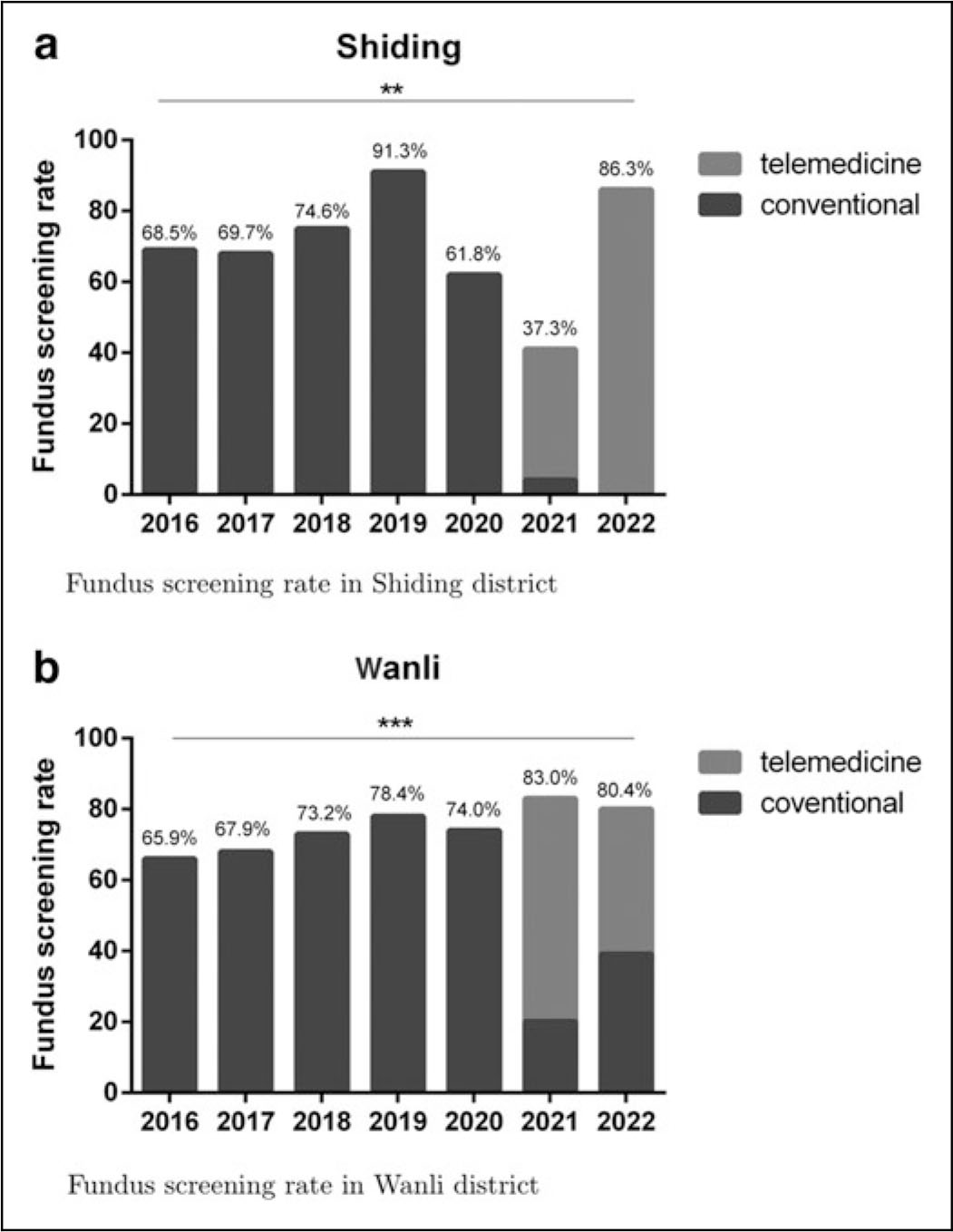
Total Fundus Screening Rate in Two Remote Districts
Significant with p-value <0.05.
We also compared the number of fundus screenings conducted using the conventional face-to-face method in 2021 and 2022. Table 4 and Figure 1 show that all patients were screened using the conventional method before 2021. The traditional method drastically decreased (p < 0.05), indicating that telemedicine largely replaced fundus screening during the study period.
Changes of Fundus Screening Between Traditional Fundus Examination and Total Fundus Screening Including Fundus Imaging Through Telemedicine During the Study Period
Significant with p-value <0.05.
Table 5 and Figure 2 show that these patients' blood glucose and HbA1c levels significantly reduced (p < 0.05) after the telemedicine intervention, including metabolic consultations and the use of cloud-uploaded blood glucose meters.
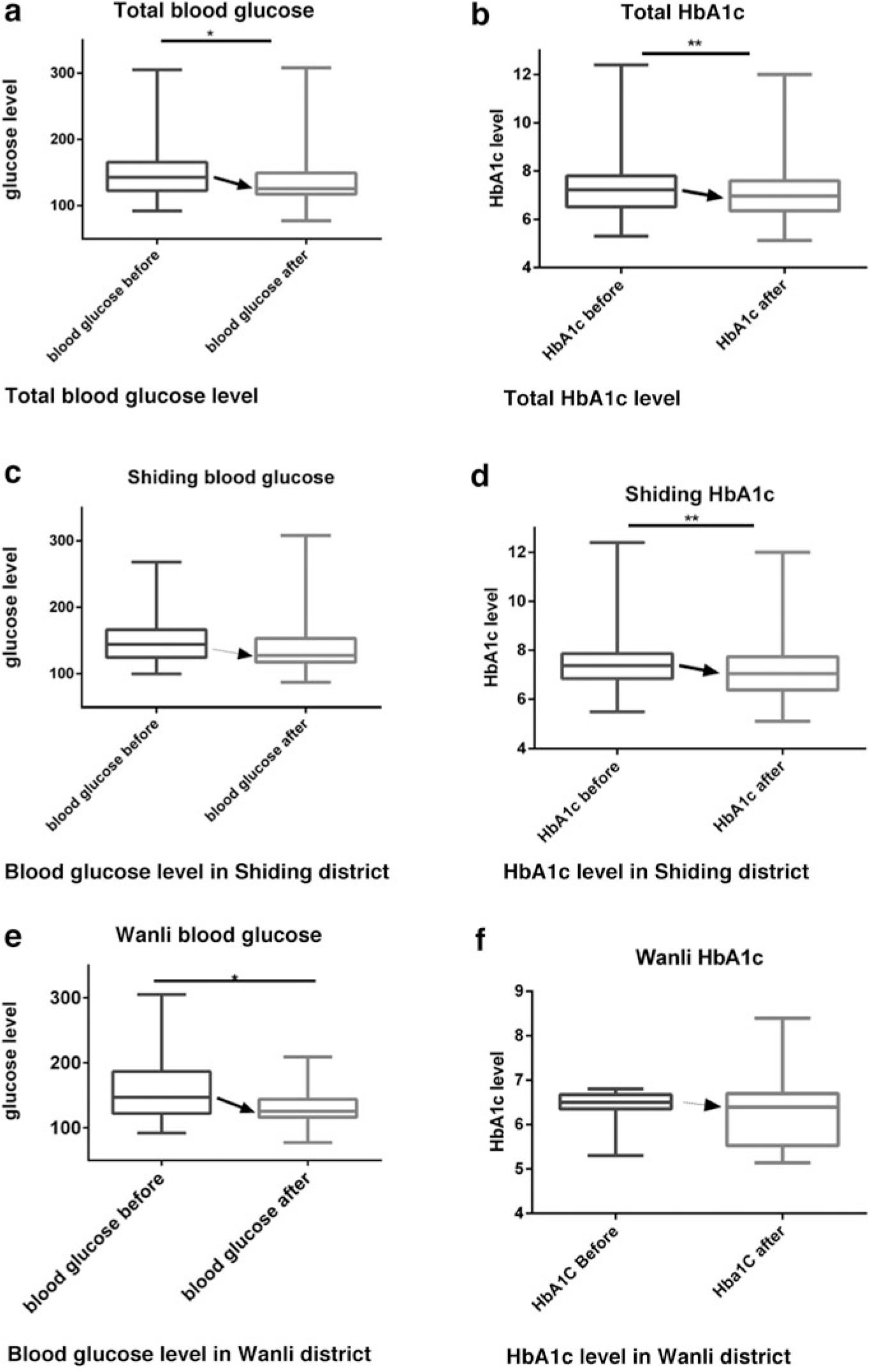
Blood Glucose and Glycosylated Hemoglobin Changes in Two Remote Districts After Telemedicine Implementation
Significant with p-value <0.05.
A satisfaction questionnaire was designed to evaluate the patient's level of satisfaction with the care received (Table 6). Each question was evaluated with a “Yes” or “No” response. The satisfaction rate was defined as the number of “Yes” responses over the total replies received from the patients. The participants rated the convenience, smooth process, and time-saving aspects of telemedicine, with a satisfaction rate of >95%. Most patients with diabetes were also satisfied with ophthalmic/metabolic consultations and the overall medical supply, with a satisfaction rate of >90%.
Results of Satisfaction Questionnaires
Discussion
Our study focused on patients with diabetes in the Diabetes Shared Care Network at two local health centers in remote areas. We employed a newly developed 5G real-time telemedicine platform with more fluent and efficient ophthalmic and metabolic consultations. We provide a real-world report on the impact of remote consultations in remote areas on residents' blood sugar and eye health status.
FUNDUS SCREENING PROGRAM
For patients with diabetes, retinopathy is a significant concern requiring regular treatment and follow-up. Early screening for nonproliferative and proliferative diabetic retinopathy can help preserve vision and prevent vision-threatening complications such as vitreous hemorrhage. Previous studies showed that patients with diabetes in rural areas were more likely to have diabetic retinopathy than those in urban areas, 15,16 possibly due to lower health awareness and self-engagement in the countryside.
In our study, 131 patients underwent ophthalmic consultation and fundus screening, with 98.4% showing no diabetic retinopathy and only 1.6% diagnosed with nonproliferative diabetic retinopathy. Proliferative diabetic retinopathy or severe diabetic ophthalmic complications were not observed. It could be due to good blood glucose control (HbA1c 7.4%) and regular fundus screening/referral (∼60–70%) before the study in local health centers. The Health Bureau of New Taipei City's supervision, which timely monitored blood glucose control and fundus screening rate as yearly indicators of local health centers, also enhanced public health performance for diabetic residents.
More than 80% of patients undergoing telemedicine fundus imaging had normal results, requiring only annual follow-up at local sites, thus avoiding the time and financial expense of traveling to the hospital for regular fundus screening. Less than 20% of cases were referred to hospitals, including those with diabetic retinopathy, other retinopathies (such as retinal vein occlusion and retinitis pigmentosa), and optic neuropathies (such as optic disc edema or atrophy). Patients with poor-quality fundus images were also referred for further diagnosis, such as pupil dilatation, ocular ultrasonography, or fundus fluorescein angiography.
Given that the study group was primarily elderly, age-related macular degeneration was observed in 7.3% of screened patients. The Shihpai Eye study, conducted in a local community in Taiwan's city center, found that 10.4% of the elderly suffered from age-related macular degeneration using fundus image screening. 17 The similar high prevalence of age-related macular degeneration among elderly Taiwanese in different communities leads us to consider using telemedicine-based portable optical coherence tomography as a screening tool for macular disorders in our study group.
SLIT LAMP SCREENING
Senile cataracts are a significant cause of vision loss in patients with diabetes, especially in the elderly. In our study, with a mean age of 66.5 years, 66% of the 128 patients receiving external eye image had mild, moderate, or severe senile cataracts. A previous nationwide survey in Taiwan showed an overall prevalence of cataracts among the elderly population at 60.2%, 18 comparable with our findings in the remote community. Referral to hospitals was mainly for severe cataracts requiring surgery to regain vision.
A previous study found that the rate of cataract surgery in Chinese rural areas was 9.2%. 19 Before the intervention, the lack of adequate medical resources in remote areas and the inconvenience of visiting the hospital were obstacles for seniors seeking resolution for their visual impairment, leading to a proportion of seniors with severe cataracts requiring surgery to restore their quality of life. The incidence of severe cataracts may be reduced after the telemedicine intervention.
More than 80% of patients with mild to moderate cataracts and pseudophakia without ocular surface or anterior segment diseases can have yearly ophthalmic consultations using telemedicine without needing long-distance hospital screening.
INTRAOCULAR PRESSURE MEASUREMENT
Glaucoma is a severe threat to patients with diabetes, especially in the senior population. Among 122 patients, 27.9% were referred to hospitals, primarily for ocular hypertension (intraocular pressure >20 mmHg) and others for normal pressure with enlarged optic disc cupping or a positive glaucoma history. The Shihpai Eye study showed that 17.2% of senior residents suffered from glaucoma, including open-angle, angle-closure, or secondary types, in a local community in Taiwan. 20
However, a visual field and thorough examination were performed to confirm the glaucoma diagnosis of patients in the Shihpai research. Since we only conducted preliminary screening by intraocular pressure measurement and optic disc morphology, more patients are needed to be transferred to the hospital for further workup. More than 70% of patients had <20 mmHg intraocular pressure without optic disc cupping enlargement or glaucoma history, requiring only regular measurements at local sites.
LOCAL FUNDUS SCREENING RATE MAINTENANCE
The traditional fundus screening rate rose to ∼90% and 80% in both Shiding and Wanli districts, respectively, from 2016 to 2020. The government has always viewed the screening rate as an important indicator of the diabetes care system and regularly monitored the outcome of fundus screening in local health centers. However, the COVID-19 pandemic broke out in 2021 and 2022 in Taiwan, and lockdown policies were imposed, even in hospitals.
The traditional fundus screening rate significantly reduced to nearly 0% and 40% in the two districts, respectively, in 2022. Our study introduced telemedicine to provide an alternative for fundus screening, maintaining a screening rate of >80% in both local spots in 2022, either telemedicine or conventional consultations. The telemedicine screening rate was equal to or more than the conventional method during the 2-year lockdown period.
BENEFITS IN BLOOD SUGAR LEVEL CONTROL
Blood glucose and HbA1c levels significantly declined in all patients after using a cloud-uploaded blood glucose meter and obtaining telemedicine metabolic consultations. Participants could monitor their blood glucose changes on the device or their cell phone linked to the meter. In addition, the nurse could notice the blood glucose data daily through the cloud in real time and provide medical education and reminders to maintain or change food content and lifestyle.
For cases with poorly controlled blood glucose, consultations from metabolic specialists delivered recommendations for adjusting dosing/type in prior hypoglycemic agents or insulin. After taking a detailed patient history, they provided thorough food, exercise, and lifestyle suggestions. The blood glucose level in the Shiding area and HbA1c level in the Wanli district did not decrease significantly, possibly because the baseline data were low before the telemedicine intervention. Further lowering the HbA1c or blood glucose level in these patients may not be helpful and could lead to deadly hypoglycemia.
SATISFACTION SURVEY
Patients' satisfaction with telemedicine is crucial in assessing clinical health care quality. A previous study revealed high patient satisfaction with video ophthalmology consultations during the COVID-19 pandemic. 14 Alhumud et al. conducted a tele-retinal screening program among patients with diabetes and reported a high patient satisfaction rate of 80.4%. 21 Our questionnaire survey revealed an overall satisfaction rate of 98.5%. More than 95% of these patients with diabetes were content with the efficacy and efficiency of the telemedicine system. They avoided the time and cost of visiting hospitals at a far distance and enjoyed high-level medical quality. The results indicated that our telemedicine intervention protocol may be ideal for remote areas.
Conclusions
Telemedicine intervention proved effective, efficient, and highly satisfactory for patients with diabetes in remote areas during the COVID-19 pandemic. Blood glucose control improved, and the fundus screening rate remained high after the introduction of telemedicine. Ophthalmic screening through real-time consultations with ophthalmologists allowed for early diagnosis and appropriate treatment of cases with abnormal findings. Patients with normal ocular findings required regular telemedicine follow-ups at local health centers, saving time and reducing expenses associated with hospital visits.
Footnotes
Authors' Contributions
Formal analysis, writing—original draft, and visualization by H.-C.C. Validation, writing—review and editing, and visualization by L.-U.W. Methodology and funding acquisition by H.-Y.C. Supervision and funding acquisition by R.-C.C. Investigation by C.-W.Y., S.-L.L., and H.-F.C. Software, resources, and data curation by K.-C.C. Resources by Y.-T.L., T.-C.L., and W.-P.C. Conceptualization, methodology, investigation, data curation, writing—review and editing, supervision, and project administration by J.-K.W.
Disclosure Statement
The authors have no commercial or proprietary interests in any product or instrument mentioned in the article.
Funding Information
This study received funding and grants from: National Health Research Institute in Taiwan, as project numbers of NHRI-110A1-PHCO-02212201 from April 1, 2021 to December 31, 2021 and NHRI-111A1-PHCO-03222201 from January 1, 2022 to December 31, 2022. Ministry of Health and Welfare in Taiwan, as project numbers of MOHW110-TDU-M-221-112007 from January 1, 2021 to December 31, 2021 and MOHW111-TDU-M-222-122001 from January 1, 2022 to December 31, 2022. Health Bureau in New Taipei City, Taiwan.