




Abstract
Introduction:
The long-lasting insecticidal nets are ready-to-use, pretreated nets, which do not require retreatment for 4–5 years. Olyset™ nets that are made of high-density polyethylene monofilament yarn with 2% w/w permethrin incorporated (corresponding to 1 g/m2) are type-2 in which insecticide is incorporated into the polymers and are wash resistant. In these, insecticide migrates to the surface of the netting fiber to be bioavailable against mosquitoes and other insect pests.
Study Site and Objectives:
The present study was a village scale, field-based trial that was conducted in Plasmodium falciparum predominant area of Assam to assess feasibility, acceptability, and sustainability of this intervention against vector populations and disease transmission. We here report the research findings of Olyset net as an intervention against Anopheles minimus–transmitted malaria in foothill area of Assam for the first year of observations beginning July 2005 till June 2006.
Results:
An. minimus, the mosquito vector species, was observed to be fully susceptible to permethrin. Follow-up investigations revealed that An. minimus mosquitoes had virtually disappeared in Olyset net villages, which was corroborated by data on human bait mosquito-landing catches. There was a consistent decline in the malarial incidence in Olyset net intervention villages, and the overall impact on the malarial transmission was significant compared to untreated net and no-net control villages for the corresponding study period. The bioavailability of insecticide on Olyset netting fiber was consistent (100% kill effect) up to 10 months of monitoring, and was observed to be wash resistant even after the 20th wash at fortnightly intervals.
Conclusions:
The Olyset nets were safe to use, wash resistant, and assessed to be operationally feasible, community-based intervention for sustainable management of disease vectors against malaria. Community compliance and acceptance was high, and users reported decreased nuisance due to biting mosquitoes.
Introduction
Materials and Methods
Olyset nets and untreated mosquito nets were supplied by the manufacturer M/S Sumitomo Chemical India Private Ltd., (Mumbai, India). In contrast to type-1 LLIN in which insecticide is coated on netting fiber, Olyset net is a type-2 LLIN with insecticide incorporated into the polymer that migrates to the surface of the fiber to be bioavailable against mosquitoes and other pest insects. The Olyset net is made of wide mesh size (4 × 4 mm), high-density polyethylene monofilament yarn (>150 denier strength) incorporated with permethrin (2% w/w; 1 g/m2). The Olyset nets distributed were blue in color of family size dimensions (130 × 180 × 150 cm), and plain nets (nets without insecticide) made of white polyethylene with same specifications were used as untreated control.
Study population and net distribution
Based on the comparable malarial endemicity, three clusters of villages were selected in the Sonapur Primary Health Centre (Dimoria block) of Kamrup district of Assam located 20 km east away from the capital city Guwahati (Fig. 1). The annual parasite incidence, that is, the number of confirmed cases per 1000 population in these villages for the preceding 3 years was >2, a criterion that qualifies for the residual spraying as per national malarial control programme. Each cluster had ∼3000 population that comprised nine villages of Olyset net (population: 2603), seven villages of untreated nets (pop. 3036), and six villages of no-net control (population: 2950) for comparative data. The populations in these villages were predominantly tribal aborigines and most people living in impoverished conditions. Typically, each household had two to three rooms made of bamboo with thatched roofing that were ideal resting places for the vector mosquitoes. The livelihood was largely based on paddy cultivation; others included handloom weaving, collecting forest produce, and working for meager daily wages. Annual rainfall associated with the monsoon is heavy (2–3 mm), and much of it occurs during April to September (wet season), and for the rest of the year there is little rainfall. The meteorological data for the study period are presented in Table 1.
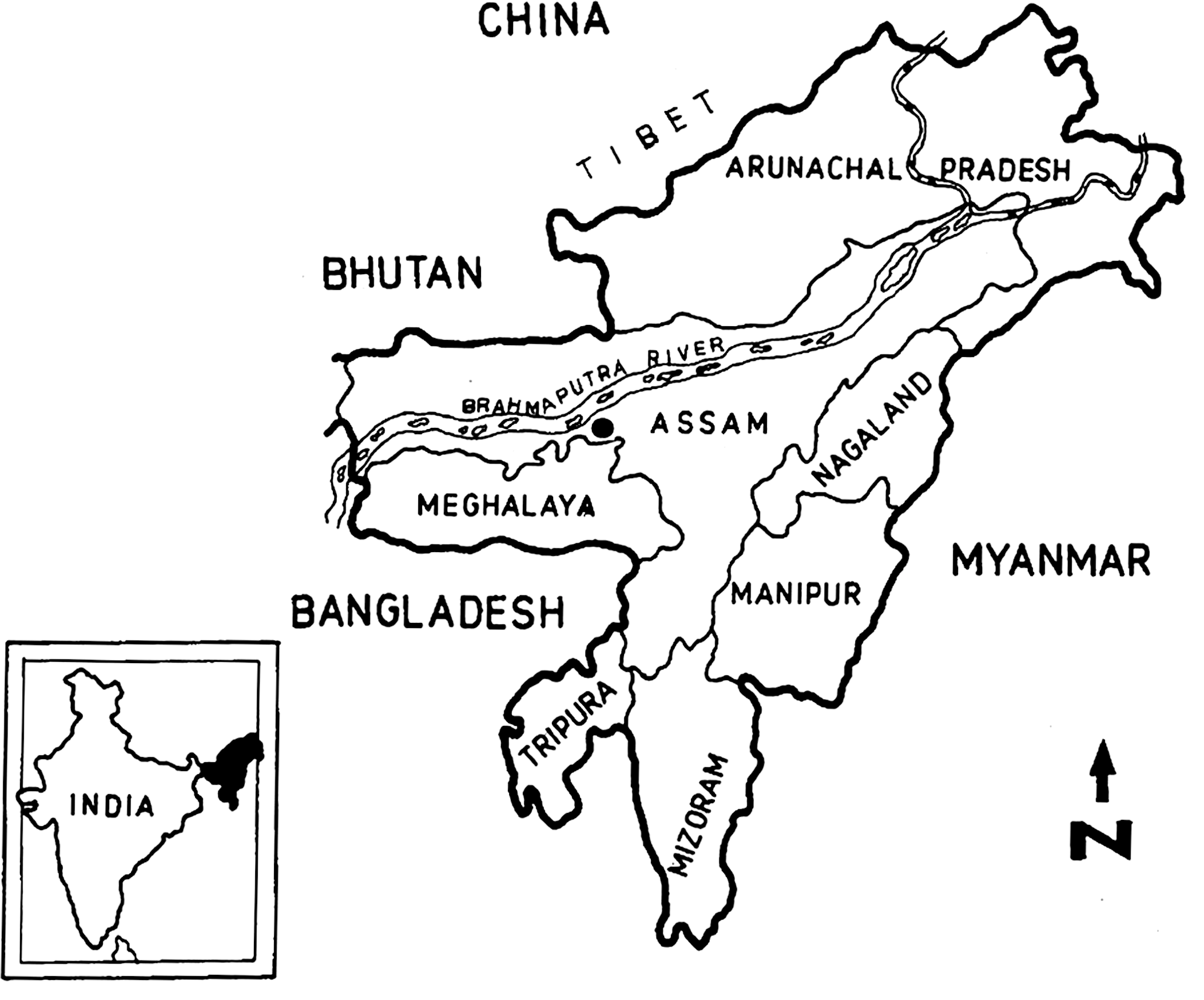
Map of the northeastern states of India. The study site located south of the Brahmaputra River is denoted by dot (•). The inset map shows the geographical location of the northeastern region of India.
Source: India Meteorological Department, Guwahati, Assam, India.
In these experimental villages, as per study protocol that was approved by the institutional scientific advisory committee (
Insecticide susceptibility status
Prior to the introduction of Olyset net as intervention, insecticide susceptible status was ascertained against An. minimus (the predominant mosquito vector species) using WHO standard test kit against DDT (4%), malathion (5%), deltamethrin (0.05%), and permethrin (0.75%). Field-collected mixed age adult females of An. minimus were exposed for 60 min to the given diagnostic concentrations, and mortality was recorded after 24 h recovery period under laboratory conditions. Data were pooled based on different replicates against each insecticide, and corrected mortality was ascertained using Abbott's formula.
Mosquito densities and relative abundance
To ascertain the impact of Olyset net intervention on prevalent mosquito species, indoor day-resting catches were made by experienced insect collectors in randomly selected houses in all three clusters of villages employing suction tube aided by torch-battery light in the early mornings (6:00–8:00 h) at fortnightly intervals. Mosquitoes were collected for 15 min in each selected structure (indoors), those resting on walls, hanging clothes, and other household articles. Mosquitoes collected were identified using standard taxonomic keys to the species level, and relative abundance was expressed as person-hour density, that is, the number of mosquitoes collected per person-hour. In addition, all-night, dusk-to-dawn (18:00–5:00h) human bait landing catches (sleeping both indoor and outdoors) were made in July 2005 (preintervention period), and then in November 2005 and May 2006 (postintervention period). Preinformed consent was obtained from the participating human baits on each count. All mosquitoes landing over the net/human volunteers were collected and pooled hourly to measure mosquito-landing rate per person per night.
Residual efficacy of Olyset net and wash resistance
As per standard procedures (WHO 2005), contact cone-bioassay tests were performed on Olyset net in use by the communities under field conditions as well as in laboratory to determine the persistence and bioavailability of insecticide on washed and unwashed nets at fortnightly intervals keeping untreated net as control. Washing and subsequent washing exercises were done using commonly available standard detergent (wheel powder) that included a teaspoon full of detergent powder dissolved in 5 L of water then rinsed thoroughly in plain water for 2–3 times and dried in open, broad daylight for at least 48 h. Bioassay tests were performed just before the next wash for which a mixture of 10 adult blood-fed, field-collected mosquitoes of An. minimus group that included An. minimus, An. varuna, An. aconitus, and other commonly available anopheline mosquito species, for example, An. nivipes and An. annularis, were exposed in WHO standard bioassay cones for 3 min, and data for different replicates (≥3) were pooled. Number of mosquitoes knocked down after 3 min exposure and mortality 24 h recovery period were recorded. In addition, ring-net bioassay tests were conducted using similar procedures in which 11 mosquitoes were exposed, and time required for the knockdown of 1st, 6th, and 11th mosquito was recorded. The time required for the knockdown of sixth mosquito was taken as the median knockdown time.
Malarial monitoring
To ascertain the impact on disease transmission in target population groups, cross-sectional mass blood surveys were conducted fortnightly in experimental villages by systematic sampling to cover a minimum of 25% of the population present at a given point of time. Peripheral blood smears were collected from the inhabitants and examined for malarial parasite. These data were supplemented by active fever surveillance based on the detection of malarial cases by door-to-door domiciliary visits (fortnightly) and passive surveillance, that is, those self-reporting with fever in the malarial clinics maintained by the state healthcare services, which were pooled monthly to ascertain disease transmission trends. Subjects confirmed malarial positive by microscopic examination of blood smear were administered antimalarials as per drug policy (in force) of the National Vector Borne Disease Control Programme of India.
Community-based surveys of Olyset net users
To ascertain community perceptions, adverse events, and collateral benefits, cross-sectional surveys were done among Olyset net users on two different occasions: first in low-transmission season (December 2005 to January 2006) and second in peak-transmission season (May 2006) using structured questionnaire.
Statistical considerations
To check if there were significant changes from baseline mosquito densities for indoor resting anopheline species and that of An. minimus against Olyset and untreated net interventions, and that for change in knockdown time for different categories of mosquitoes from baseline observations, univariate t-tests were performed. For comparison between varieties of net interventions against mosquito density, one-way analysis of variance was applied for difference from the baseline observations. Chi-square test was performed for independence to check for any significant difference in proportions of cases and mosquito-biting rates between net interventions.
Results
Entomological assessment
Susceptibility status of An. minimus vector populations
For standard diagnostic concentrations of DDT (4%), malathion (5%), deltamethrin (0.05%), and permethrin (0.75%), vector populations of An. minimus were observed to be highly susceptible. One hundred percent mortality was recorded against each insecticide for the given 60 min exposure and 24 h postrecovery period. Having ascertained the susceptibility status to permethrin (the incorporated insecticide in the netting fiber), the introduction of Olyset net intervention was considered appropriate.
Vector density and relative abundance of indoor day-resting mosquitoes
In the preintervention period (July 2005), the baseline person-hour density of An. minimus in Olyset net, untreated net, and no-net villages ranged between 0.9 and 3.7, and that for other commonly available indoor resting anophleline mosquito species viz., An. varuna, An. aconitus, An. vagus, An. annularis, it ranged between 9.6 and 13.8, which were statistically comparable for mosquito productivity in all three clusters of villages (p > 0.05). However, consequent to the introduction of net intervention in selected villages in August 2005, there was a virtual elimination of indoor resting populations of An. minimus in Olyset net intervention villages for the rest of the study period compared to the untreated net and no-net villages in which mosquito density person-hour ranged from 0.2 to 2.85 and 0.2 to 0.9, respectively (Fig. 2). But for other commonly available anopheline mosquito species, the cumulative density trends were clearly declining in Olyset net intervention villages (range 0.3–7.6), and the change from the baseline data was significant (p < 0.05) for the period observed (Fig. 3). In contrast, for untreated net intervention (range 3.1–12.9) and no-net control villages (range 2.6–15.6) decline in indoor resting mosquito species was only seasonal with the onset of winter season beginning October, but there was a sharp rise in the density beginning April as against Olyset net intervention villages that corresponded to least mosquito density (p < 0.05). For a variety of interventions against total anopheline indoor resting mosquito species inclusive of An. minimus, Olyset nets were most effective (p < 0.05) corresponding to least mosquito density (confidence interval, 4.08–10.65) in comparison to plain net intervention (confidence interval, 0.92–7.49).
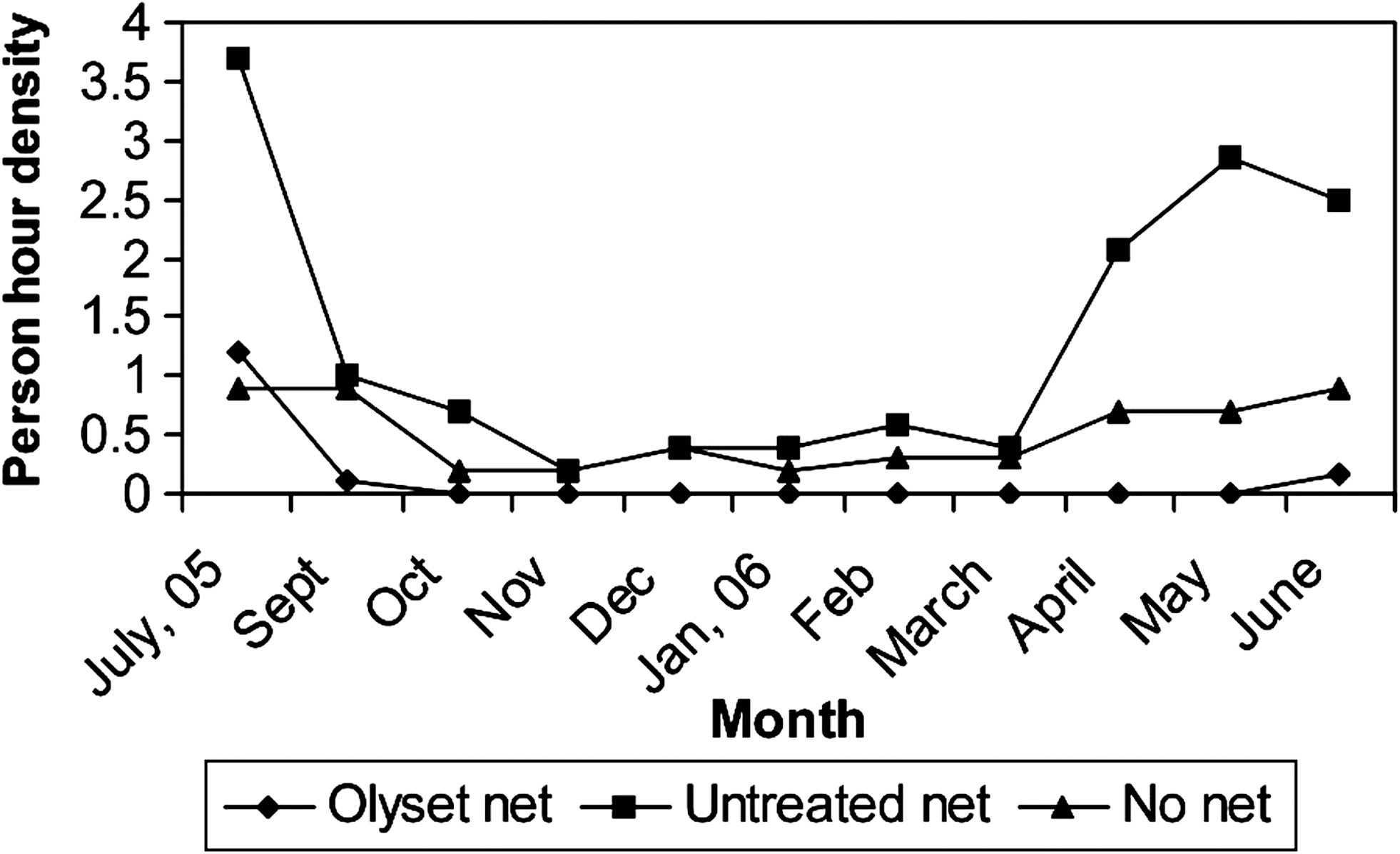
Relative abundance of Anopheles minimus in experimental villages of the Sonapur Primary Health Centre of Kamrup district of Assam, India, during July 2005 (preintervention) and September 2005 to June 2006 (postintervention) study period. No data for August 2005 in which nets were distributed.
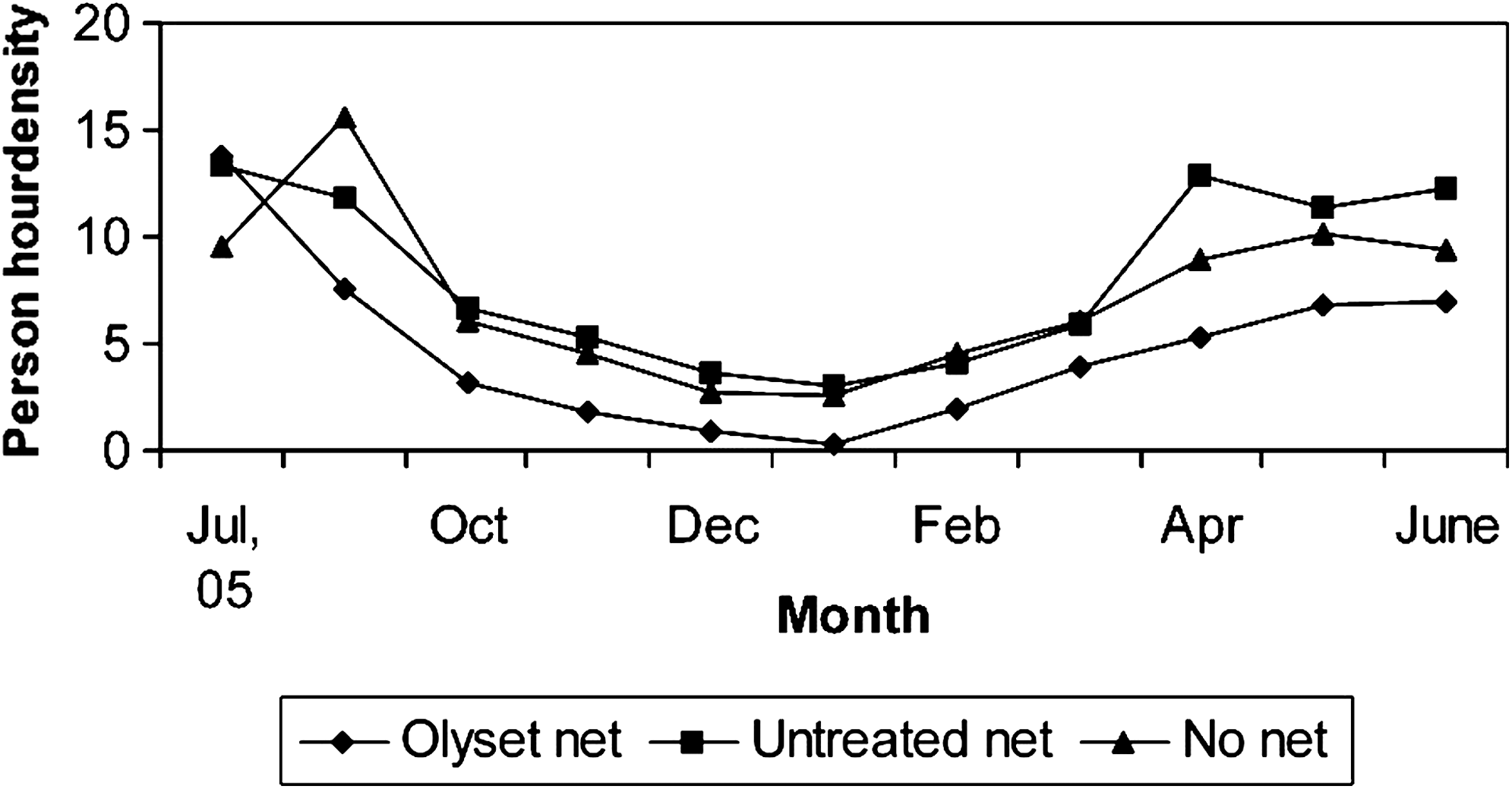
Relative abundance of anopheline mosquito species in experimental villages of the Sonapur Primary Health Centre of Kamrup district of Assam, India, during July 2005 (preintervention) and September 2005 to June 2006 (postintervention) study period. No data for August 2005 in which nets were distributed.
Human bait mosquito-landing catches
Data on dusk-to-dawn, mosquito-landing catch of human bait both outdoor and indoors in preintervention and postintervention months are presented in Table 2. Based on the vector mosquito-landing rates per person night in the preintervention period (July 2005), the given three sites were statistically comparable (p > 0.05). However, consequent to the introduction of the net intervention, there was a significant reduction in the mosquito-landing rates for total anopheline mosquito species as well as An. minimus (both indoors and outdoors) in Olyset net villages (p < 0.05) in postintervention months. In contrast, for the untreated net intervention villages, with an initial decline in November 2005 (winter month), there was a significant rise in the mosquito-landing rates in May 2006 compared to the preintervention data (p < 0.05). Nevertheless, in no-net control villages, the variance observed in the mosquito-landing rates both in the preintervention and postintervention periods was insignificant (p > 0.05). Among the different net interventions, there was a significant reduction (<0.05) in the mosquito-landing rate for the total anophleline as well as An. minimus (both indoors and outdoors) in Olyset net users compared to the untreated net for the postintervention month of May 2006 except November 2005.
Residual bioefficacy and wash resistance
Residual bioavailability of insecticide on Olyset net fiber was monitored by contact cone-bioassay test exposing mixed adult mosquito species of An. minimus, An. varuna, and An. aconitus against community-used Olyset net (monthly), and in laboratory conditions subjected to serial washings (fortnightly intervals) keeping untreated net as control. Based on the pooled data on different replicates against community-used Olyset net, 100% mortality was recorded from September 2005 to June 2006 after 24 h recovery period, whereas there was a gradual reduction in knockdown mosquitoes (79–37%) after 3 min exposure (Fig. 4). Ring-net bioassay tests against these community-used Olyset net revealed steady increase in the knockdown time for the 1st mosquito (3.15–4.50 min), 6th mosquito (5.30–7.25 min), and 11th mosquito (6.30–10 min) for the study period from November 2005 to May 2006 (Table 3). Based on the univariate t-test for change from baseline observations, the increase in knockdown time for three categories was significant (p < 0.05). Data on serial wash resistance expressed as mortality after 24 h recovery period and after 3 min exposures are presented in Figure 5. Mortality was 100%, and it was observed to be persistent even after the 20th wash to record that it was matching to data on unwashed Olyset net as against washed untreated net that varied 2.5–10%.
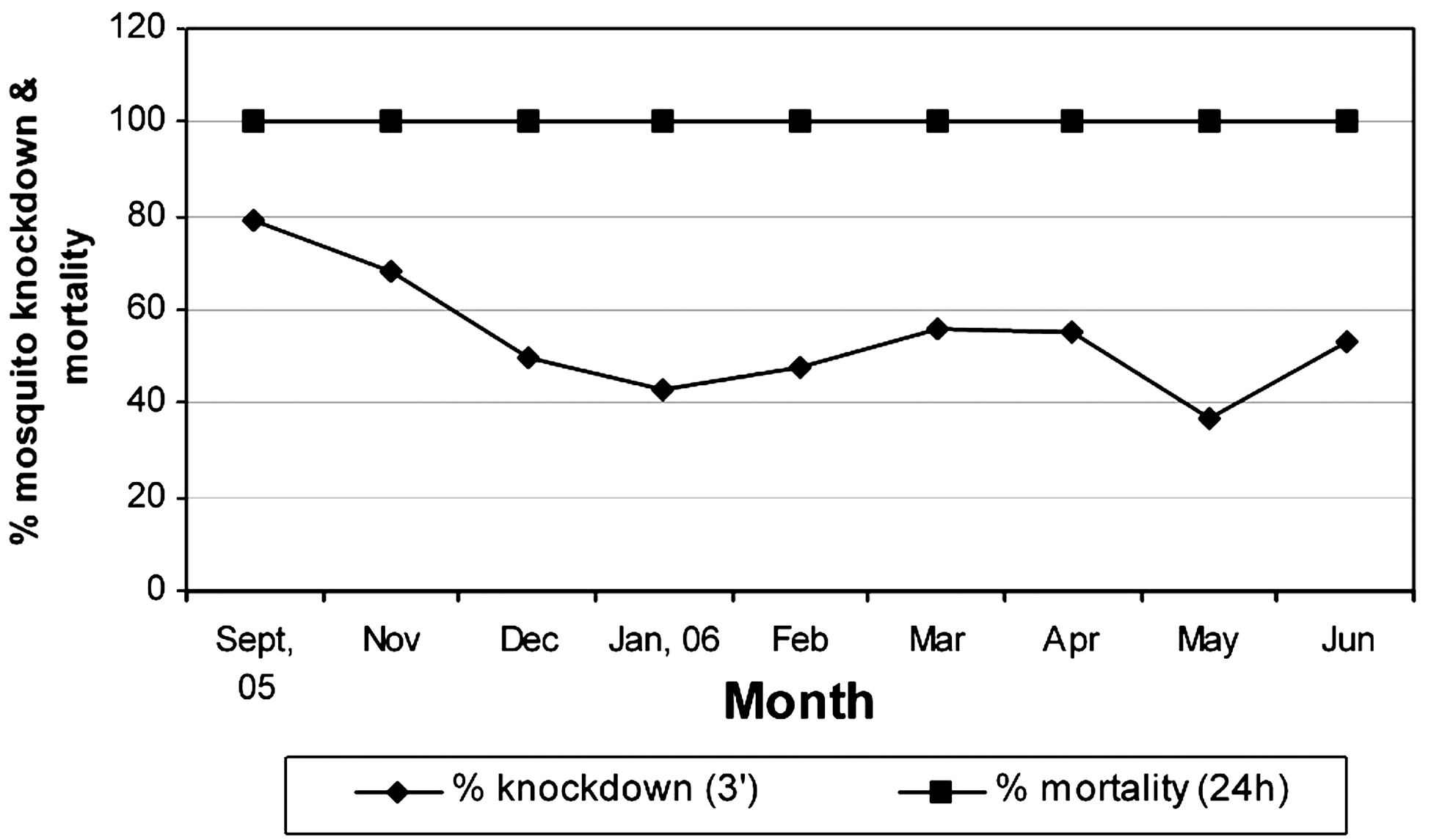
Residual bioefficacy of Olyset net in use in field conditions expressed in terms of percent knockdown of anopheline mosquito species after 3 min exposure and mortality 24 h recovery period.
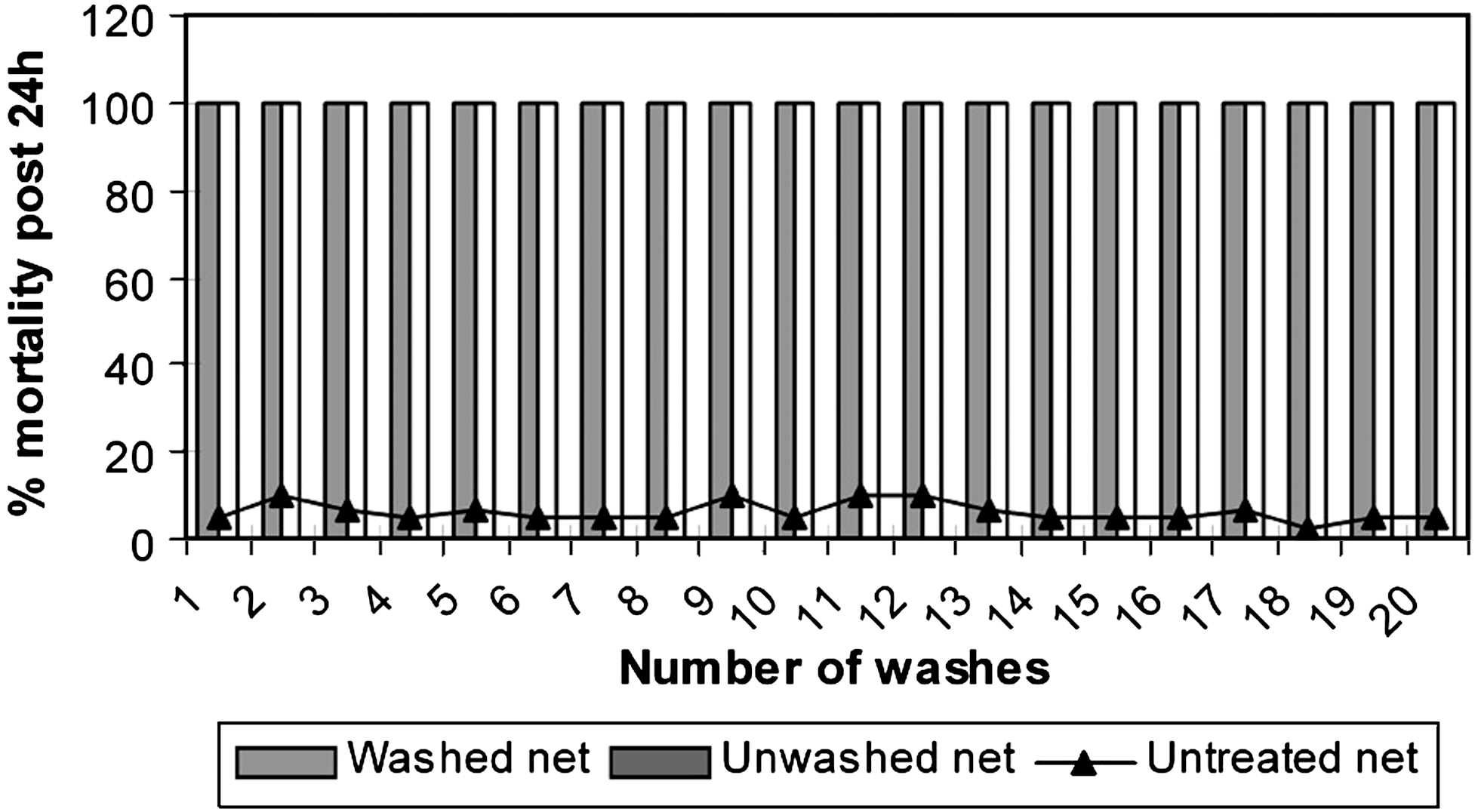
Wash resistance of Olyset net expressed in terms of percent mortality of anopheline mosquito species subjected to 3 min exposure and 24 h recovery period in laboratory conditions subjected to serial washing at fortnightly intervals.
Epidemiological assessment
Impact on the malarial transmission
To ascertain the impact on disease transmission trends, data on malarial incidences from all sources were pooled monthly for all three clusters of experimental villages (Fig. 6). Malarial cases were recorded for most part of the year, majority being during April to July (months of high rainfall). P. falciparum was the predominant malarial parasite (>80%), and the remaining were P. vivax cases. To begin with, for data based on July 2005 (preintervention period), malarial endemicity was statistically comparable in Olyset net, untreated net, and no-net village (p > 0.05). However, on the introduction of Olyset net and untreated net intervention in experimental villages in August 2005, the seasonal decline in malarial cases/P. falciparum cases was observed in all three clusters of villages that persisted till February 2006 corresponding to winter months. During these months the malarial incidences were comparable (p > 0.05) except for January 2006 in which it was significantly higher in no-net control villages compared to other categories (p < 0.05). With the onset of premonsoon showers and rise in temperatures beginning March/April, however, there were significant rise in malarial cases (p < 0.05) in untreated net intervention as well as no-net control as against Olyset net intervention villages. From the cumulative data on malarial incidence in experimental villages for the period September 2005 to June 2006 (postintervention period), it was observed that there was a manifold increase in the malarial cases (inclusive of all age groups) in the untreated net intervention as well as no-net control villages in contrast to Olyset net intervention (p < 0.05) for the corresponding study period (Fig. 7).
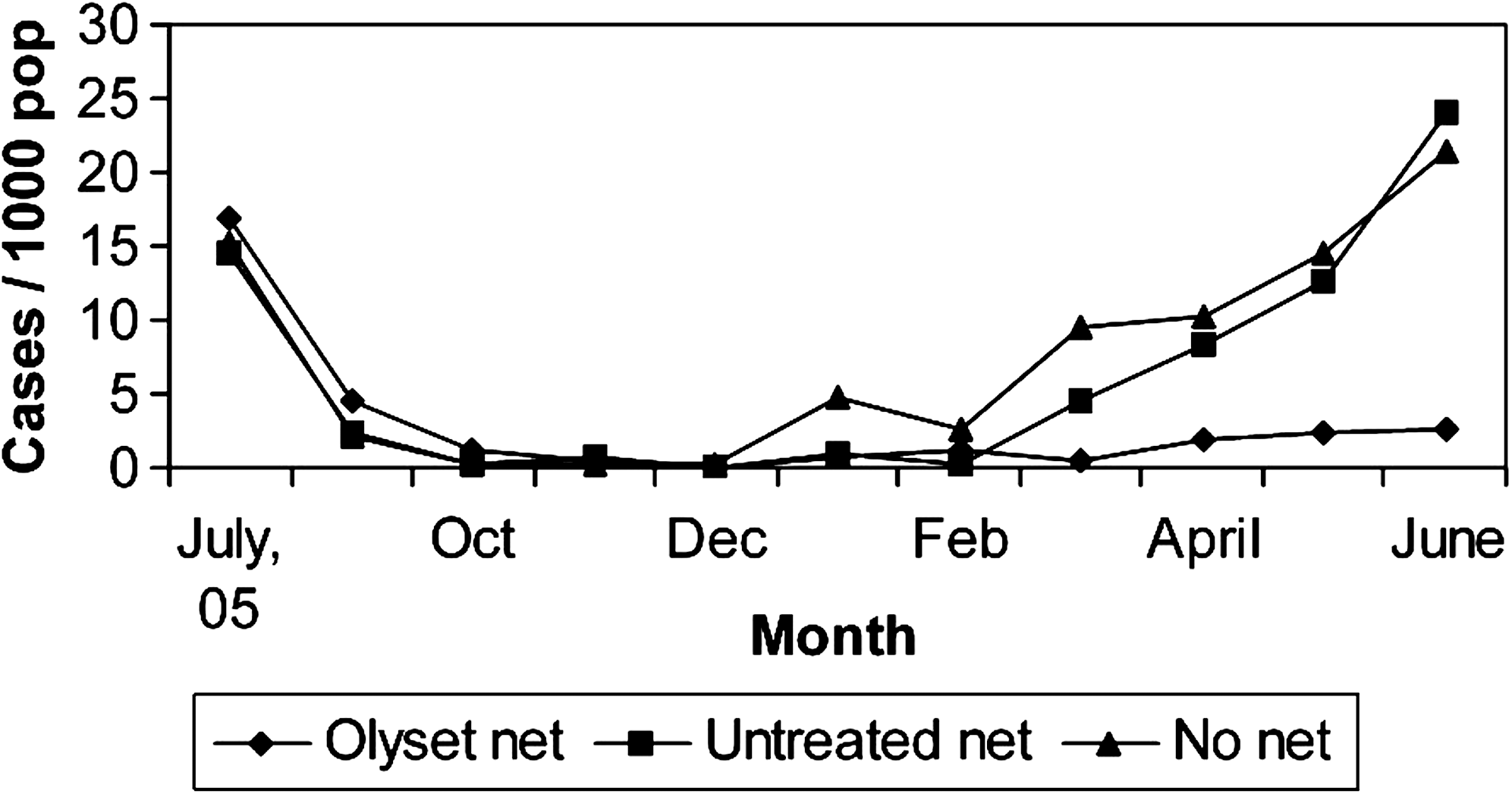
Malarial cases in experimental villages of the Sonapur Primary Health Centre of Kamrup district, Assam, India, during July 2005 (preintervention) and September 2005–June 2006 (postintervention) study period.
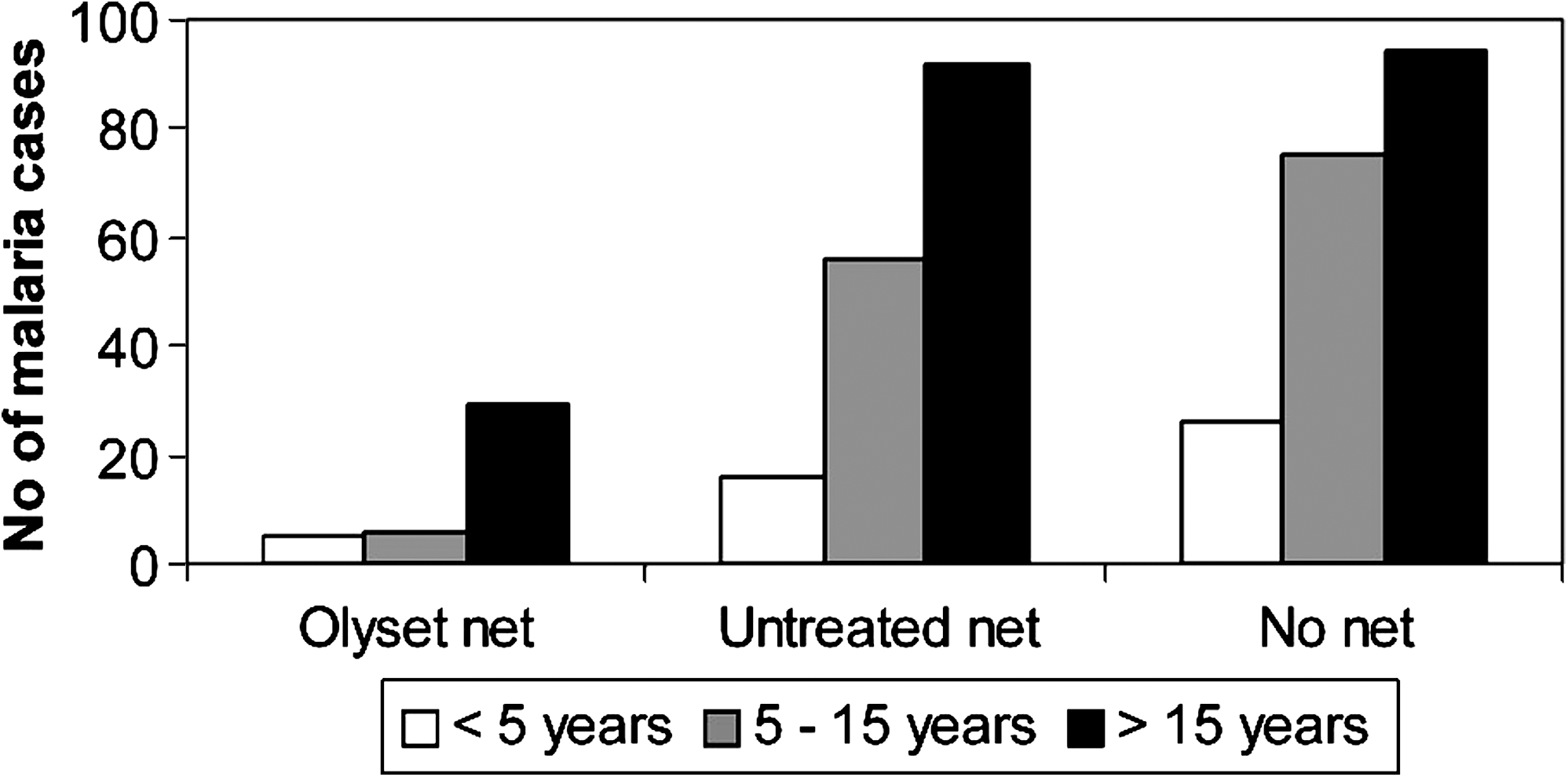
Age-wise breakup of malarial cases for the postintervention period (September 2005–June 2006) in experimental villages of the Sonapur Primary Health Centre of Kamrup district, Assam, India.
Social acceptability of Olyset net and collateral benefits
Data on community responses and perceptions based on cross-sectional surveys among the community users (aged between 20 and 80 years) of Olyset net are presented in Table 4. It was observed that all community users were fully aware of the benefit of using mosquito net as personal protection method, and compliance varied between 87% and 99.6%. The reported adverse events included skin-related dermal itching (3.3% of users) and eye irritation (<1%), but all these were transitory in nature lasting few days of usage. Majority (67–96%) reported reduction in nuisance due to biting mosquitoes, and 4–21% reported collateral benefits, viz., loss of head lice, body lice, and decreased nuisance due to bedbugs. Nearly 100% of the householders recommended the use of Olyset net as personal guard against malarial and household pests.
First survey was conducted in December 2005 to January 2006.
Second time round was done in May 2006.
Discussion
The northeastern states of India (comprising ∼4% of the country's population) are considered most endemic, and the risk of contracting drug-resistant malaria is estimated to be much greater along interstate and international borders that it shares with Bhutan, Myanmar, and Bangladesh (Dev et al. 2006). To avert the spread of drug-resistant parasite strains and focal disease outbreaks, northeastern states of India are being accorded priority under Global Fund against AIDS, Tuberculosis and Malaria by the National Vector Borne Disease Control Programme of India for strengthening interventions. For much needed transmission reduction, the advent of LLINs offers hope and opportunity as sustainable intervention against malaria and are being considered for large-scale introduction in high-risk areas reporting majority P. falciparum and death cases.
In providing research inputs to the national control programme, the present study showed that An. minimus was fully susceptible to permethrin, the active gradient used in the Olyset net. The Olyset net seemingly provided adequate personal protection to the users measured by vector abundance of An. minimus and associated mosquito-landing rate on human host in experimental villages that were supportive of deterrence and reducing human–vector contact, respectively. The fact that these nets retained bioefficacy intact in community-used nests in field conditions for the period observed as well as against repeated washings makes this intervention appropriate and sustainable, particularly in high-risk/remote, inaccessible areas in northeastern India. Similar data on wash resistance and bioefficacy have been reported in eastern India against An. culicifacies and An. fluviatilis using Olyset net intervention (Sharma et al. 2009). In Sudan, Olyset nets are reported to be efficacious after 1.5 years of use with mortality >80% after 24 h against An. arabiensis (Hassan et al. 2008), and even after 3 years of field usage against An. gambiae in Cote d'Ivoire (N'Guessan et al. 2001). Similar study results have been documented in Tanzania in which washing did not have significant effect on knockdown or mortality of vector mosquitoes (Tami et al. 2004, Malima et al. 2008).
The disease transmission trends were clearly declining, and community acceptance was high and forthcoming reporting relief not only from mosquito bites but also other household pests. However, the reported temporary loss of biological activity of Olyset net just after wash (Gimnig et al. 2005) and observed significant increase in knockdown time of vector mosquito species over just a few months of use in field conditions are some of the limitations of this product that need to be addressed by the manufacturers for future generation LLINs. Admittedly, the data reported in the present study just for 1 year (inclusive of baseline data) are too short a period against intended long-term residual efficacy of these LLINs for at least 3 years of use in field conditions as per the guidelines of the WHO Pesticide Evaluation Scheme. Among others, the present report is focused on An. minimus, the major carrier in the study area, but for An. baimaii, the study needs to be validated probably in another geographical area with predominance of the latter.
Based on the present report for the first year of observations, Olyset net–based intervention is concluded to be operationally feasible, safe, and effective against An. minimus–transmitted malaria specific to the northeastern region of India. In keeping up with the position statement of WHO on insecticide-treated mosquito nets (
Footnotes
Acknowledgments
We are thankful to Dr. A. K. Baruah, the Incharge, Sonapur Primary Health Centre for extended cooperation and access to surveillance data on malarial incidences in experimental villages. We would also like to acknowledge the assistance and cooperation of Directorate of National Vector Borne Diseases Control Programme, Delhi, for technical expertise and informal consultations on the subject. We are indebted to S.C. Anand, North Carolina State University, for statistical inputs and interpretations. Thank are due also to the village communities for active cooperation and continued support facilitating investigations. The technical assistance project staff is duly acknowledged. This study was funded by M/S Sumitomo Chemical India Private Ltd, and facts of research findings were presented in the second International Forum for Sustainable Management of Disease Vectors held in Beijing, China, during November 2–4, 2008. Meteorological data were obtained from India Meteorological Department, Guwahati, Assam.
Disclosure Statement
No competing financial interests exist.