




Abstract
Since its first detection in New York (1999), West Nile virus (WNv) has spread across the United States and Canada with the first activity reported in Canada in 2001. By 2004, WNv had been detected almost in every province of Canada and the contiguous regions of the United States with the exception of British Columbia (BC), this despite being detected in Alberta in 2003 and Washington as early as 2002. In August 2009, two human cases were serologically found to have WNv infection. They reported mosquito bites and had only traveled in the South and Central Okanagan areas of BC before their presentation. On the basis of clinical, laboratory, and epidemiological data, these two human cases have been confirmed as the first locally acquired WNv cases in BC. Various factors may have contributed to the 10-year delay in the spread of WNv to BC, including regional weather conditions and unique topography.
In August 2009, a person in his late 40s presented to a family physician requesting testing for WNv. The index case and a second adult member of the same household had developed symptoms that they felt were consistent with WNv non-neurological syndrome. On August 20, the BCCDC Public Health Microbiology and Reference Laboratory reported preliminary positive serology and real-time RT-polymerase chain reaction (PCR) results for the index case and confirmed the first WNv-positive mosquito from a sample collected in the South Okanagan region of BC (Fig. 1). Upon investigation, both adults presented with a febrile illness characterized by extreme fatigue, myalgias, headache, and photophobia consistent with WNv infection. Both individuals reported mosquito bites and had recently traveled only in the South and Central Okanagan areas of BC. WNv RNA was amplified from the clot of the initial patient's acute serum tube using a commercial RT-PCR kit (RealArt West Nile Virus; Qiagen). Subsequently, the WNv envelope gene was amplified using RT-PCR. A convalescent serum was obtained 10 days after the initial sample, and both samples were tested in parallel for WNv immunoglobulin M (IgM) and IgG by enzyme-linked immunosorbent assay (ELISA) (FOCUS Technologies) and hemagglutination inhibition tests. Seroconversion and a fourfold rise in antibody titers were observed by hemagglutination inhibition test. Anti-WNv IgM was positive by ELISA, but IgG was negative in both the acute and convalescent sera. However, a significant increase in the index value for both IgM and IgG was noted in convalescent sera compared with acute sample. The second adult also demonstrated seroconversion by WNv-ELISA. The plaque reduction neutralization test was also positive against WNv for both cases as performed by the National Microbiology Laboratory in Winnipeg, Canada.
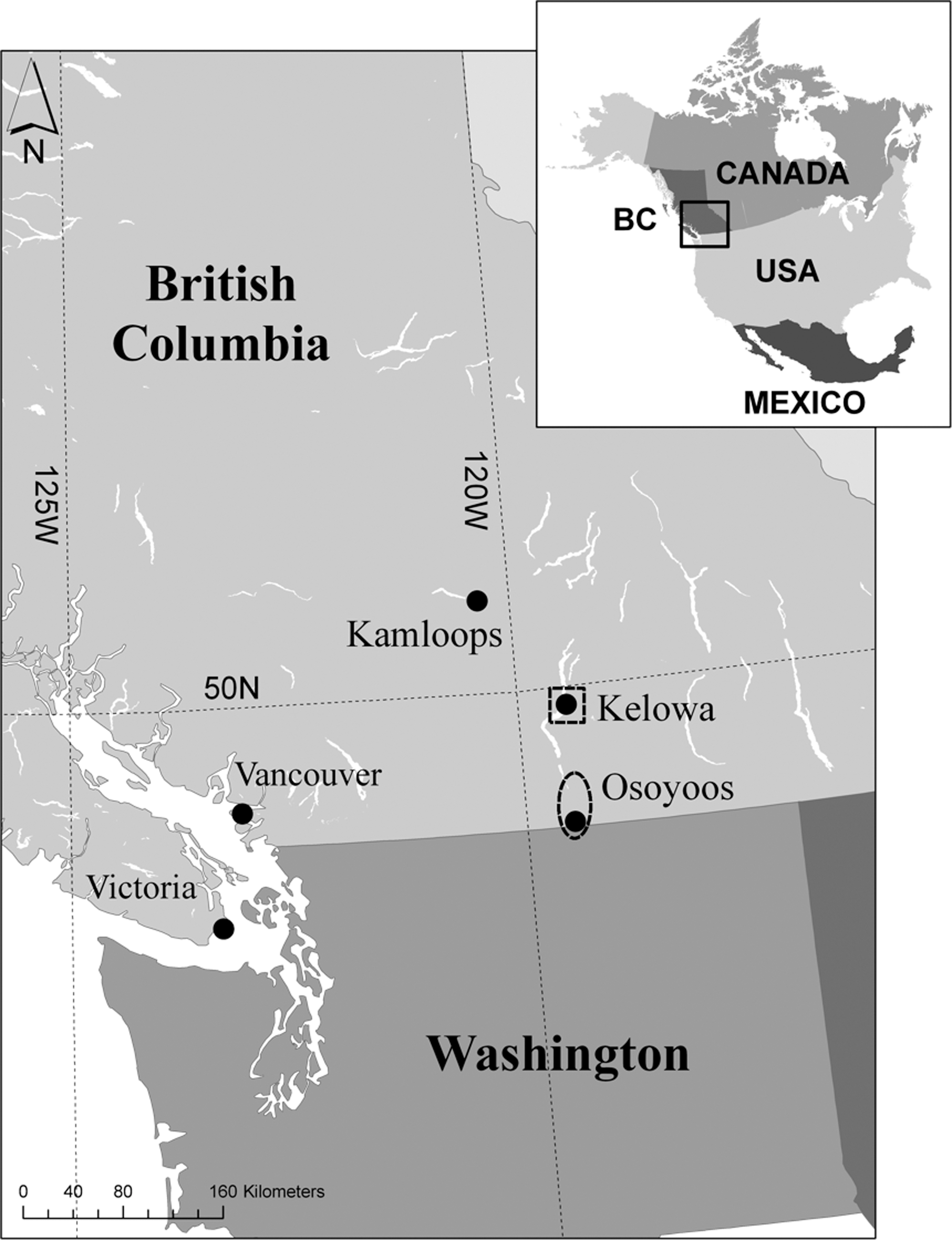
First human case and mosquito-pool-positive West Nile virus found in the Okanagan Valley in British Columbia in August 2009.
Coincidentally, a mosquito pool sample containing 26 Culex tarsalis, collected on August 7 from the South Okanagan, was found to be positive by real-time RT-PCR. The area had 26 mosquito traps distributed across the region, which were sent to the BCCDC weekly for speciation and testing of Culex spp. for WNv. Culex species have historically been identified more commonly in the South Okanagan during previous surveillance years. Mosquito breeding ground control programs and larviciding are in place in some but not in all areas in the South Okanagan, as some sections of the region are considered environmentally sensitive. The mosquito pool was screened by real-time RT-PCR assays targeting the 3′ noncoding region and NS5 gene and confirmed by second assay targeting the envelope gene (Lanciotti et al. 2000). Additional mosquito pools were found to be positive for WNv in several traps also in the South Okanagan over the subsequent monitoring periods.
On the basis of the history of travel limited to the Okanagan region, clinical signs and symptoms consistent with WNv non-neurological syndrome, IgM positivity, detection of WNv RNA, and subsequent seroconversion in the two affected individuals within the context of a coincident WNv-positive mosquito pool from the same area, these two cases have been confirmed as the first locally acquired WNv cases in BC. From May 2002 until August 2009, 40 BC residents have tested positive for WNv, but all were infected while traveling outside of BC to areas where WNv activity was known to be prevalent.
Although WNv was detected in Washington in 2002 and Alberta in 2003, WNv was not introduced into BC until 2009. An active surveillance program for WNv in mosquitoes, birds, and humans has been in place in BC since 2003. From 2003 to 2008, a total of 16,976 mosquito pools and 6125 birds were tested for WNv and all were negative (Table 1). Out of 3345 humans tested for WNv between 2003 and 2008, 40 individuals were positive for WNv, but all 40 cases were travel related. In 2009, 10 of 2482 mosquito pools and 0 of 144 birds were positive for WNv. A total of 379 individuals were tested for WNv in 2009, of which 3 cases were positive for WNv (one travel related and two described in above). In addition, 3 equine cases of WNv were detected in 2009, of which 2 were in the Okanagan Valley and 1 was from the Fraser Valley (Fig. 1). Comparing the temporality and number of locally acquired human WNv cases in BC versus the Washington and Alberta, the pattern in BC parallels that observed in Washington (Table 2). The mountainous terrain separating Alberta from BC and the lack of converging avian migration pathways between these two provinces are potential reasons for the disparate patterns of WNv activity. In Washington State, the first seasonal detection of WNv has been between weeks 29 and 34 in the years 2005–2008 (Washington State DOH website). However, in 2009, WNv was first detected in mosquito pools during week 22, suggesting a longer WNv season in this neighboring state. An increase in the number of human cases was also observed in Washington in 2009 (Table 2). This increase in WNv activity in Washington and favorable conditions for mosquito development in southern BC in the summer of 2009 are the most likely factors leading to the debut of WNv in BC.
All cases represent infection acquired within the indicated state or province except where indicated. Data sources: Government of Alberta Health and Wellness and Washington State Department of Health.
One or more travel-related cases included in total.
The BCCDC Public Health Microbiology and Reference Laboratory is currently completing whole-genome sequencing of the WNv from the positive mosquito pool isolates for molecular epidemiology and genomic characterization.
Footnotes
Acknowledgments
The authors thank the following for their assistance: Drs. Robbin Lindsay and Mike Drebot and Mr. Kai Makowski at the National Microbiology Laboratory, Winnipeg. The BCCDC WNv Team that contributed to this work includes (but is not limited to): Paul Hasselback, Min-Kuang Lee, Quantine Wong, Yvonne Simpson, Teresa Lo, David Lawrence, Annie Mak, Diane Eisler, Alan McNabb, Sunny Mak, Alan Furnell, Marsha Taylor, Mieke Fraser and Min Li.
Disclosure Statement
No competing financial interests exist.